How to Pay for a Home Elevation in Pinellas: Grant Programs and Cost Share in 2026


If your Pinellas home took water during Hurricane Helene in September 2024 or Hurricane Milton in October 2024, and you are now weighing elevation against demo-rebuild or selling, the numbers matter more than the sales pitch. A Florida home elevation typically runs $150,000 to $500,000 total project cost. Grant money can cover 75% to 100% of that, but you cannot apply for most of it directly, and the end-to-end timeline from application to a final Certificate of Occupancy runs 18 to 36 months. The core question is not whether you can afford a lift. The question is whether you qualify for the money that pays for the lift, how fast you can move, and which contractor can execute the construction without blowing up your reimbursement paperwork.
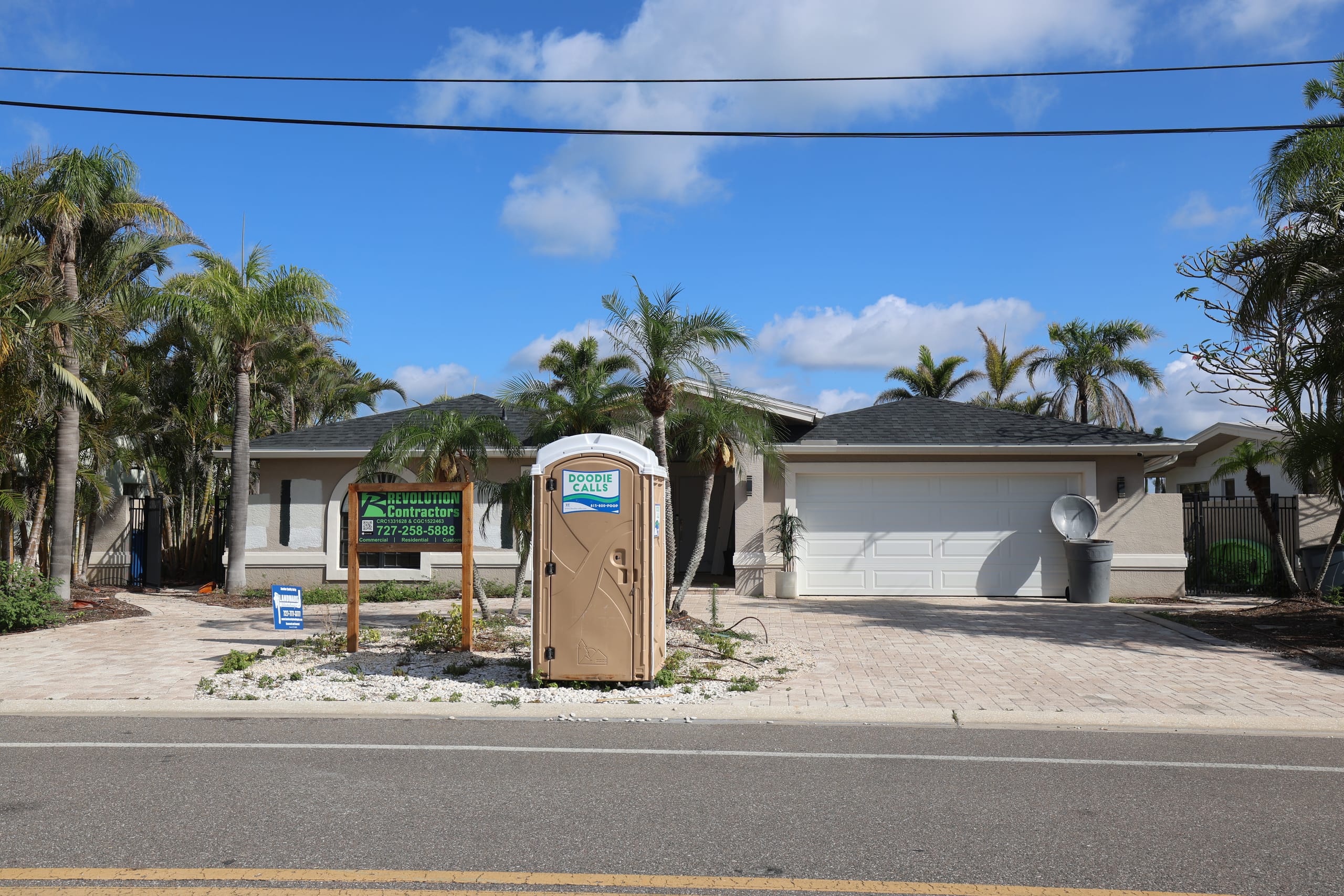
We are Revolution Contractors, a St. Petersburg general contractor with over a decade of coastal Pinellas flood-zone work. Our two licensed GCs are Jeremy Wharton (CRC1331628) and Brent Patterson (CGC1522463). We employ 20+ W-2 carpenters in-house and run T&M open-book construction with weekly budget reports. Grant-funded elevation work requires line-item labor and material documentation for reimbursement, and our billing model produces that paper trail cleanly. Our elevation service page is at /elevate-your-home.
Honest scope: we do not file Elevate Florida applications, we do not determine grant eligibility, we do not issue award letters, we do not prepare benefit-cost analyses, and we are not the Elevation Certificate preparer. Those are state, county, or licensed-surveyor scope. What we do is execute the construction with the documentation discipline the money requires. This guide walks every grant program on the table in 2026, every major cost driver, every technical requirement, and every construction step. Program caps, deadlines, and cost shares change cycle to cycle, so verify current numbers on the official URLs before you apply.
How much does it cost to raise a house in Florida?
A Florida home elevation typically runs $150,000 to $500,000 total project cost. Where your project lands depends on five drivers: home size, lift height, foundation type (piles, piers, elevated slab, or crawlspace), utility complexity, and site access.
Three cost buckets:
- Hard costs (lift plus new foundation): typically $80,000 to $250,000. Covers the unified lift system or temporary cribbing, pile driving or pier construction, and structural reconnection.
- Soft costs (engineering, permits, Elevation Certificate, utility relocation): typically $40,000 to $120,000. Covers stamped structural plans, pre- and post-construction Elevation Certificates, permit fees, and full utility disconnect and reconnect scope.
- Finish costs (landscape, driveway, hardscape): typically $20,000 to $80,000. New access stairs or ramp, driveway regrade, landscape repair, and any deck or porch rebuilt at elevated level.
Utility relocation alone is often underestimated. Gas service rerouted with a new meter at elevated height typically runs $3,000 to $8,000. A full electric service drop with a new panel at elevated height typically runs $5,000 to $15,000. Water and sewer riser work adds another $4,000 to $12,000.
What actually hits your bank account is total project cost minus grant share minus NFIP Increased Cost of Compliance supplement. Grant share math is in the next three sections.
Which grants pay for home elevation in Florida?
Three main paths fund a Florida home elevation in 2026. One is state-administered and homeowner-facing. Two are federal programs that flow through the state.
Elevate Florida is the FDEM Residential Mitigation Program. It is the only program where you, as a homeowner, submit an application directly through a state portal. It packages FEMA Flood Mitigation Assistance (FMA) Swift Current and FEMA Hazard Mitigation Grant Program (HMGP) money into a single application with 75% federal / 25% homeowner cost share for Structure Elevation. Authoritative URL: floridadisaster.org/dem/mitigation/elevate-florida.
FEMA HMGP activates when your county is under an active Presidential disaster declaration. After Helene (DR-4828-FL, September 28, 2024) and Milton (DR-4834-FL, October 11, 2024), FDEM opened a joint HMGP Notice of Funding Availability. HMGP for DR-4828 alone has $93,093,444.13 obligated as of October 21, 2026, per FEMA data at fema.gov/disaster/4828. You cannot apply directly to FEMA: "Homeowners and businesses are not eligible to apply directly for HMGP grants. However, local communities may apply for funding on their behalf." The path runs FEMA to FDEM to Pinellas County EM to the county Local Mitigation Strategy Working Group (LMSWG) priority list.
FEMA FMA is the annual competitive federal program for NFIP-insured properties. FY 2026 appropriation is $400 million nationwide, with applications closing at 3 p.m. ET Friday, February 26, 2027. FMA pays the richest federal share on SRL and RL properties because the share scales with loss history. FDEM is the applicant; counties are sub-applicants; homeowners participate as sub-sub-applicants.
See our companion guide at FEMA Flood Grants in Pinellas: Which Program Pays for What After Helene for the full comparison of FMA, HMGP, BRIC, HLMP, and Elevate Florida side by side.
A fourth adjacent program is the My Safe Florida Home (MSFH) program, which funds wind-mitigation upgrades up to $10,000 per home. MSFH does not pay to raise your house, but if you are already lifting, you can often stack MSFH wind-hardening work into the same project once the structure is set on its new foundation. See My Safe Florida Home grant guide.
What is the Elevate Florida program and who qualifies?
Elevate Florida is the state-administered packager that pools federal FMA Swift Current and HMGP money into a single application you submit directly to FDEM. It funds four project types: Structure Elevation, Mitigation Reconstruction, Wind Mitigation, and Acquisition / Demolition. Structure Elevation is what you want if your goal is to lift the existing house.
Cost share: 75% federal / 25% homeowner for Structure Elevation, Mitigation Reconstruction, and Wind Mitigation. For Acquisition / Demolition, project costs are deducted from the offer price. Verified November 2026 at floridadisaster.org/dem/mitigation/elevate-florida.
Caps: Mitigation Reconstruction hard costs capped at $375,000 per property (raised from $220,000 in September 2025). Structure Elevation per-property cap is not published at the program URL; award size is set by BCA and state allocation.
NFIP Increased Cost of Compliance (ICC) supplement: up to $30,000 additional when the property carries an active NFIP policy. ICC is a line in your NFIP policy that pays toward floodplain compliance after substantial damage, and Elevate Florida stacks it on top of the main grant.
2025 cycle data: window ran February 7 to April 11, 2025. FDEM received more than 12,000 applications from residents in 64 Florida counties.
2026 cycle status: no 2026 cycle has been announced on the FDEM authority page as of research date.
Who qualifies:
- Active NFIP policy at time of application (for ICC supplement and FMA-sub-track pathway)
- Property in SFHA (Zones A, AE, AO, AH, V, VE) on the current FIRM
- Owner-occupied primary residence preferred (2025 cycle accepted some rental properties under HMGP sub-track)
- Site-built single-family or townhouse (condos and manufactured homes typically excluded)
- No income cap at the program level (Elevate Florida is loss-reduction driven)
- RL or SRL designation strengthens BCA scoring under the FMA Swift Current sub-track
Application path (the only FL program with direct homeowner application): create an account on the Elevate Florida portal at fdem-resmit.my.site.com/Elevate, submit property eligibility screening, FDEM reviews against FMA Swift Current or HMGP sub-track criteria, FDEM issues award decision, homeowner selects a contractor, construction, final inspections and reimbursement.
Can I get a FEMA grant to elevate my Pinellas home after Helene?
Yes, through a specific path. No, not directly from FEMA.
Hurricane Helene was declared DR-4828-FL on September 28, 2024. Hurricane Milton was declared DR-4834-FL on October 11, 2024. FDEM opened a joint HMGP Notice of Funding Availability covering both disasters. HMGP for DR-4828 alone has $93,093,444.13 obligated as of October 21, 2026, per FEMA data at fema.gov/disaster/4828.
FEMA states: "Homeowners and businesses are not eligible to apply directly for HMGP grants. However, local communities may apply for funding on their behalf." The pathway runs FEMA to FDEM to Pinellas County Emergency Management ((727) 464-3800, [email protected]) to the county Local Mitigation Strategy Working Group (LMSWG) priority list, with the homeowner as the beneficiary of a sub-grant held by the state sub-grantee. The LMSWG list under Florida Administrative Code 27P-22 is the gatekeeper. Properties with RL or SRL designations score higher because claim history produces favorable BCA ratios quickly. Properties with recent substantial damage determinations from Helene or Milton also tend to score well.
Cost share under HMGP after a disaster: standard is 75% federal / 25% non-federal match. Some disaster declarations approve an enhanced 90% federal share for specific project types. The non-federal match splits between state and homeowner by sub-grantee arrangement.
Pinellas designation status: verify current HMGP eligibility designation at fema.gov/disaster/4828/designated-areas and /4834/designated-areas, or call Pinellas EM at (727) 464-3800.
A parallel option, FMA for NFIP-insured properties, pays higher federal share when the property carries loss history: SRL properties up to 100% federal, RL up to 90% federal, other NFIP-insured up to 75% federal. For SRL properties where you can qualify, FMA is often the single most favorable grant stack for an elevation. The FMA Swift Current sub-program fast-tracks FMA elevation for declared disaster areas, which is the pool Elevate Florida draws from for its FMA sub-track.
How high do you have to elevate a house to meet FL flood code?
You lift the finished-floor elevation to at least the Base Flood Elevation (BFE) for your flood zone, plus any local freeboard requirement.
BFE is the elevation of the 1% annual chance flood (the 100-year flood) at a specific location, set by FEMA on the FIRM for your parcel. For a Pinellas home in Shore Acres, BFE is typically 7 to 10 feet NAVD88. In Pass-a-Grille, BFE often runs 11 to 14 feet or higher depending on exposure.
Freeboard is additional height above BFE required by local building code. Florida Building Code and most local jurisdictions add 1 to 2 feet of freeboard above BFE for new construction and substantial improvements. The finished-floor elevation on the post-construction EC must meet BFE plus freeboard for final inspection and for the lowest NFIP rate.
Pinellas County and St. Petersburg freeboard: both jurisdictions add freeboard above BFE on substantial improvements.
Before you commit to a design elevation height, confirm three numbers for your address: current BFE from the FIRM (FEMA FIRMette lookup at msc.fema.gov), local freeboard above BFE, and Design Flood Elevation (DFE, which is BFE plus freeboard, the number the engineering set uses).
For flood zone detail on your specific neighborhood, see Pinellas County Flood Zone Guide.
What is the difference between pile, pier, and slab foundations for an elevated home?
Foundation type depends first on flood zone, then on lift height, then on site conditions. The structural engineer stamps the foundation plan per ASCE 24 and the Florida Building Code.
V zones (coastal high-hazard with wave action): open piles or columns required. Concrete or steel piles driven below grade, or reinforced concrete columns with proper embedment. Breakaway walls below Design Flood Elevation required for any enclosed space below the elevated floor. Solid foundation walls are prohibited. Common Pinellas V-zone areas include Pass-a-Grille, parts of St. Pete Beach, Treasure Island, and Madeira Beach.
A, AE, AO, AH zones (flood hazard without wave action): piers (masonry or concrete) allowed with spacing per engineering stamp. Elevated slab on fill allowed with proper compaction and drainage per FBC. Crawlspace with flood vents allowed when wet-floodproofed per FEMA Technical Bulletin 2 (vents certified to pass 1 square inch of opening per square foot of enclosed area). Open piles allowed and often preferred for lift heights above 6 feet. Breakaway walls for enclosed space below BFE are optional in A zones; wet floodproofing with flood vents is more common. Common Pinellas AE-zone neighborhoods include Shore Acres, Venetian Isles, Coquina Key, Snug Harbor, and Riviera Bay.
Rev has executed elevations across both V and AE zones in Pinellas.
Which foundation for which project: low-lift (2 to 4 feet) in AE zone, piers or elevated slab typically price better than piles. Moderate-lift (4 to 8 feet) in AE zone, piles or piers both work (piles often win for soil-condition reasons). High-lift (8 feet or more) in any zone, piles win on structural economics. Any lift in V zone, piles or columns, no exceptions.
For how substantial-improvement rules interact with foundation choices, see FEMA 50% Rule in Florida and FEMA 50% Rule help.
How long does a Florida home elevation take from application to completion?
End-to-end typically 18 to 36 months. The construction phase itself is only 6 to 18 months of that. The rest is process.
- Application close to award notice: 3 to 9 months. FDEM reviews applications against FMA Swift Current and HMGP criteria and issues award decisions in waves.
- Award to construction start: 3 to 12 months. Engineering selection, pre-construction EC, stamped foundation design, floodplain administrator review, and full permit application. Utility disconnect coordination happens here.
- Construction: 6 to 18 months. Depends on home size, foundation type, utility complexity, and permit review speed.
- Final inspection and reimbursement: 60 to 180 days. Post-construction EC, CO, and final grant paperwork submitted to the sub-grantee.
FDEM states: "Each property and project type is different; therefore, the end-to-end timeline from application submission to construction completion can vary." Source: floridadisaster.org/dem/mitigation/elevate-florida.
Two accelerators: RL or SRL status moves your file forward faster because BCA ratios come out favorable quickly. Active substantial damage determination from Helene or Milton can trigger expedited review under the post-disaster HMGP NOFA.
Two timeline risks: Elevation Certificate scheduling (surveyors in Pinellas were booked heavy post-Helene and post-Milton; call the surveyor first once you have an award). And utility relocation scheduling (Duke Energy and the municipal water utility set their own schedules; bake in 4 to 8 weeks per service).
What documents do I need to apply for a Florida elevation grant?
Core documentation for an Elevate Florida or FEMA sub-track application:
- Active NFIP flood insurance policy declarations page (for FMA-sub-track and the ICC supplement)
- Pre-construction Elevation Certificate (FEMA Form FF-206-FY-22-152) prepared by a licensed Florida surveyor, PE, or registered architect
- Flood insurance claims history (to establish RL or SRL designation if applicable)
- Benefit-Cost Analysis (BCA) prepared by the sub-applicant with contractor cost inputs you provide
- Property deed and current property appraiser record from the Pinellas County Property Appraiser
- Permit history on the structure
- Substantial improvement determination from the floodplain administrator at your jurisdiction (Pinellas County or the City of St. Petersburg)
- Site survey showing current grade, footprint, and property lines
- Stamped structural engineering plans for the elevation and new foundation (added at award stage)
- Photographs of the existing structure, flood damage, and site conditions
Where Rev fits on documentation: we provide construction cost inputs for the BCA, coordinate with the structural engineer, surveyor, and floodplain administrator on permit documentation, and produce weekly T&M budget reports that map to grant reimbursement line items. We do not prepare the BCA, file the application, or sign the Elevation Certificate.
What is an Elevation Certificate and why do I need one before lifting a house?
An Elevation Certificate (EC) records the elevation of your building relative to Base Flood Elevation. The current form is FEMA Form FF-206-FY-22-152 (formerly Form 086-0-33, which still appears in older documents).
The EC does three things: documents existing-structure elevation for floodplain compliance review, sets the baseline for NFIP flood insurance rating, and supports your grant application scoring on current flood-risk exposure.
You need two ECs on a lift project. The pre-construction EC establishes baseline elevation before any work starts and is the number your grant scoring is built on. The post-construction EC is required after the lift for the Certificate of Occupancy, for NFIP rating adjustment (the reason your insurance premium drops), and for final grant reimbursement.
Only a licensed Florida land surveyor, registered PE, or registered architect can complete the EC. Not a contractor. Not a homeowner. The signature and seal are what make the document binding for NFIP and permit approval. A pre-construction EC in Pinellas typically runs $500 to $1,200; post-construction similar, with some surveyors packaging both at a discount.
For deeper detail see Elevation Certificate in Pinellas guide. Authoritative FEMA definition at fema.gov/glossary/elevation-certificate.
How does a home elevation project actually go in Pinellas (step by step)?
Fourteen steps from pre-elevation EC through Certificate of Occupancy for a typical grant-funded elevation in St. Petersburg or unincorporated Pinellas:
- Pre-elevation Elevation Certificate. Licensed surveyor documents current finished-floor elevation.
- Engineering stamp. Licensed PE designs the new foundation and elevation plan per ASCE 24 and FBC. V-zone and AE-zone designs differ.
- Floodplain administrator review. Substantial improvement determination from Pinellas County or City of St. Petersburg. If the project triggers the FEMA 50% Rule threshold, the entire structure must be brought up to current code. See Substantial Improvement Determination in Pinellas.
- Building permit application. Stamped plans, pre-elevation EC, floodplain determination, and supporting documents submitted to the AHJ.
- Demolition and site prep permits. May run as separate sub-permits for utility disconnect, interior strip-out, and foundation excavation.
- Lift execution. Structure raised on temporary cribbing or lifted by a unified hydraulic jack system under main beams. For a typical 1,800 to 2,400 sq ft Pinellas ranch, the lift is a 2-day to 5-day sequence.
- New foundation construction. Piles driven, piers built, or elevated slab poured per approved plan. Pile-driving generates substantial site noise; schedule with neighbor notice.
- House set on new foundation. Structure lowered onto new piles, piers, or slab and tied down per stamped connection detail.
- Utility reconnection. Water, sewer, gas, and electric relocated and reconnected at elevated height. New service drops, meter housings, and panel.
- Framing and structural inspections. AHJ inspectors verify foundation, tie-downs, breakaway walls (V zones), and new access stairs or ramps.
- Post-elevation Elevation Certificate. Surveyor documents finished-floor elevation at completion. NFIP uses this to adjust your insurance rating.
- Final inspections. Building, electrical, plumbing, mechanical, and floodplain finals.
- Certificate of Occupancy (CO). AHJ issues the CO once all finals pass.
- Grant reimbursement submission. Final construction documentation, certified invoices, post-elevation EC, CO, and permit sign-off submitted to the sub-grantee.
Pinellas unincorporated runs through Pinellas County Development Services. St. Pete city parcels run through the City of St. Petersburg Building Department. Floodplain administrator review is the sign-off most likely to stretch the timeline if your substantial-improvement determination gets kicked back for additional documentation.
Can Revolution Contractors handle a grant-funded home elevation in Pinellas?
Yes, on the construction side. Not on the grant application side.
What Rev brings:
- Dedicated elevation service page: /elevate-your-home walks the construction workflow.
- Dual GC licensing: Jeremy Wharton (CRC1331628) and Brent Patterson (CGC1522463). Both active Florida DBPR licenses.
- 20+ W-2 carpenters in-house: no sub-out drama on a multi-month lift. Grant reimbursement requires detailed labor documentation, and W-2 payroll produces that paper trail cleanly.
- T&M open-book construction with weekly budget reports: our billing model maps directly to grant reimbursement line items. Fixed-price contractors often struggle to produce the line-by-line breakdowns a FEMA sub-grantee needs.
- Over a decade of Pinellas coastal flood-zone work: we have run the pre-elevation EC through CO chain multiple times.
- Design-build hybrid: we coordinate independent architects and engineers under one GC contract. On an elevation, the structural engineer, surveyor, and architect must align on BFE plus freeboard, foundation type, utility routing, and tie-down detail from day one.
- 20+ years combined owner and crew experience in St. Pete.
What Rev does not do (honest scope fence): file Elevate Florida or FEMA FMA / HMGP applications, determine your grant eligibility, issue award letters, prepare benefit-cost analyses, sign the Elevation Certificate, or interface with FDEM or Pinellas EM on the grant-specific documents. Those are state, county, and licensed-surveyor scope.
What Rev does is execute the construction with the documentation discipline grant reimbursement requires. If you are working an application and you want a Pinellas-local, FEMA-experienced GC on the construction side, (727) 888-6161 gets you a free 48-hour estimate. Related pages: flood-zone St. Petersburg, flood-zone projects, about.
Post-Helene elevation funding priorities in 2025 to 2026
Three active FEMA disaster declarations and one evolving state cycle shape the Pinellas elevation funding landscape right now.
DR-4828-FL (Hurricane Helene): declared September 28, 2024. HMGP obligated $93,093,444.13; Individual Assistance approved $862,688,465.75; Public Assistance obligated $811,029,093.03 as of October 21, 2026. Figures continue to move; current data at fema.gov/disaster/4828.
DR-4834-FL (Hurricane Milton): declared October 11, 2024. Joint HMGP NOFA with DR-4828 open at FDEM.
DR-4806-FL (Hurricane Debby): separate HMGP NOFA open at FDEM.
Pinellas LMSWG priority list: the county Local Mitigation Strategy Working Group under FAC 27P-22 maintains the project priority list FDEM uses for HMGP sub-award decisions. Properties with substantial damage determinations from Helene or Milton and with RL or SRL designations tend to score high in the BCA.
Elevate Florida 2026 cycle: no 2026 cycle has been announced on the FDEM authority page as of research date. The 2025 cycle drew 12,000+ applications from 64 counties, which signals meaningful demand.
What to do right now if your Pinellas home took water in Helene or Milton:
- If you do not yet have an NFIP policy on the property, get one. The ICC supplement and the FMA-sub-track pathway require active NFIP coverage.
- Call Pinellas County EM at (727) 464-3800 or email [email protected] about the LMSWG priority list and current HMGP intake for your address.
- Request your substantial damage determination from the jurisdiction floodplain administrator if you have not already.
- Order a pre-construction Elevation Certificate from a licensed Florida surveyor. Surveyors remain in high demand post-Helene.
- Create your Elevate Florida portal account at fdem-resmit.my.site.com/Elevate and submit your property eligibility screening.
- For a GC on the construction side, call us at (727) 888-6161 for a free 48-hour estimate.
For the full FEMA disaster declaration context, see Pinellas County FEMA Disaster Declarations 2025-2026 Guide.
Frequently Asked Questions
How much does it cost to raise a house in Florida?
A Florida home elevation typically runs $150,000 to $500,000 total project cost, depending on home size, lift height, foundation type, and utility complexity. Hard costs (the lift itself plus new foundation) typically run $80,000 to $250,000. Soft costs (engineering, permits, Elevation Certificate, utility relocation) add $40,000 to $120,000. Finish costs (landscape, driveway, hardscape) add $20,000 to $80,000. Source: industry data verified against Rev completed-project cost ranges in Pinellas County.
Which grants pay for home elevation in Florida?
Three main paths. First, Elevate Florida: the FDEM-administered program that packages FEMA FMA Swift Current and HMGP money into a single homeowner application, with 75% federal / 25% homeowner cost share and up to $375,000 for mitigation reconstruction. Second, FEMA HMGP directly through the state and county after a presidential disaster declaration (currently active for Helene DR-4828 and Milton DR-4834). Third, FEMA FMA competitive annual funding with the FY 2026 window closing February 26, 2027. Source: floridadisaster.org and fema.gov/grants/mitigation.
What is the Elevate Florida program and who runs it?
Elevate Florida is the Florida Division of Emergency Management (FDEM) Residential Mitigation Program that packages federal FMA Swift Current and HMGP money into a single homeowner application. It funds four project types (Structure Elevation, Mitigation Reconstruction, Wind Mitigation, Acquisition / Demolition) with a 75% federal / 25% homeowner cost share. Mitigation reconstruction hard costs are capped at $375,000 per property as of September 2025, with up to $30,000 NFIP Increased Cost of Compliance supplement. The 2025 cycle received 12,000+ applications from 64 counties; 2026 cycle status TBD. Source: floridadisaster.org/dem/mitigation/elevate-florida/.
Can a Pinellas homeowner apply directly to FEMA for an elevation grant?
Only through Elevate Florida, which is the state-administered program that packages FEMA funding into a single homeowner application via FDEM. For FEMA HMGP directly, FEMA states: Homeowners and businesses are not eligible to apply directly for HMGP grants. However, local communities may apply for funding on their behalf. For FEMA FMA, Florida (FDEM) is the applicant, counties are sub-applicants, and homeowners participate through their county Local Mitigation Strategy Working Group. Source: fema.gov/grants/mitigation/hazard-mitigation.
How high do I have to elevate my Pinellas home?
Your home must be elevated to at least the Base Flood Elevation (BFE) for your flood zone, plus any local freeboard requirement. Pinellas County and the City of St. Petersburg each add 1 to 2 feet of freeboard above BFE on new construction and substantial improvements. Your specific BFE is set by FEMA on the Flood Insurance Rate Map (FIRM) for your parcel. Verify exact freeboard requirement with the Pinellas County Floodplain Administrator or St. Petersburg Building Department before engineering. Source: Pinellas County Code and St. Petersburg Code.
What is the difference between piles, piers, and slab foundations for an elevated home?
Foundation type depends on your flood zone. V zone (coastal high-hazard with wave action) requires open piles or columns with breakaway walls for any enclosed space below the Design Flood Elevation; solid foundation walls are prohibited. A, AE, AO, AH zones (non-coastal flood hazard, no wave action) allow piers, elevated slab, open piles, or a crawlspace with flood vents and wet-floodproofed materials. The structural engineer stamps the foundation plan per ASCE 24 and the Florida Building Code. Source: ASCE 24-14 / 24-24 and FEMA Technical Bulletin 2.
How long does a Florida home elevation take from application to completion?
End-to-end typically 18 to 36 months. Application window close to award notice runs 3 to 9 months. Award to construction start adds 3 to 12 months for benefit-cost analysis, engineer selection, and permit review. Construction itself runs 6 to 18 months depending on home size, foundation type, and utility complexity. Final inspection and grant reimbursement take another 60 to 180 days. FDEM states: Each property and project type is different; therefore, the end-to-end timeline from application submission to construction completion can vary. Source: floridadisaster.org/dem/mitigation/elevate-florida/.
What documents do I need to apply for a Florida elevation grant?
Core documentation: active NFIP flood insurance policy (required for FMA-sub-track and for the ICC supplement), pre-elevation Elevation Certificate (FEMA Form FF-206-FY-22-152) prepared by a surveyor or engineer, flood insurance claims history (to establish Repetitive Loss or Severe Repetitive Loss designation if applicable), Benefit-Cost Analysis prepared by the sub-applicant with contractor cost inputs, permit history, and substantial improvement determination from your floodplain administrator. Source: FEMA Hazard Mitigation Assistance Guidance.
What is an Elevation Certificate and why do I need one before lifting my house?
An Elevation Certificate (FEMA Form FF-206-FY-22-152, formerly 086-0-33) documents the elevation of your building relative to the Base Flood Elevation. You need a pre-construction EC to establish baseline flood-risk exposure for grant application scoring, and a post-construction EC after the lift for permit CO, NFIP flood insurance rating adjustment, and final grant reimbursement. The EC must be completed by a licensed land surveyor, registered professional engineer, or registered architect, not by a contractor or the homeowner. Source: fema.gov/glossary/elevation-certificate.
Does Revolution Contractors file elevation grant applications for homeowners?
No. Grant application filing, eligibility determination, award letter issuance, benefit-cost analysis preparation, and reimbursement processing are all FDEM, county Emergency Management, or FEMA scope. Rev handles the construction side: pre-elevation prep, lift execution, new foundation construction, utility relocation and reconnection, final inspections, and Certificate of Occupancy. Our T&M open-book construction model produces the weekly budget reports and cost documentation grant-funded work requires for reimbursement. If you are working an application and you want a Pinellas-local, FEMA-experienced general contractor for the construction side, Rev is a fit.
Can I combine Elevate Florida with FEMA HMGP for the same elevation project?
Elevate Florida itself is already a packaged program that pulls from both FMA Swift Current and HMGP, so for most properties the single Elevate Florida application is the combined path. Direct dual-stacking of a separate FMA or HMGP grant on the same cost is generally prohibited under FEMA rules that prevent double-counting of the same project cost across multiple federal programs. Scope-splitting across programs may be allowed in specific cases. Source: FEMA Hazard Mitigation Assistance Guidance. Verify current program language before applying.
Is Pinellas County eligible for HMGP elevation funding under DR-4828 (Helene)?
Hurricane Helene was declared DR-4828-FL on September 28, 2024, and DR-4828 has $93,093,444.13 in HMGP obligated as of October 21, 2026. Whether Pinellas County is specifically designated for HMGP eligibility under DR-4828 should be verified via the FEMA designated-areas page or through Pinellas County Emergency Management at (727) 464-3800 or [email protected] before applying. FDEM administers the joint DR-4828 and DR-4834 HMGP Notice of Funding Availability. Source: fema.gov/disaster/4828 and floridadisaster.org/dem/mitigation/hazard-mitigation-grant-program/.
One more thing. If your house took water in Helene or Milton and you are staring at a substantial damage letter wondering whether to lift, demo, or sell, call us at (727) 888-6161 or reach us through our contact page. Our elevation service page is at /elevate-your-home.
We will walk your options in plain language, give you an honest read on what a lift costs for your specific home, and tell you straight when a demo-rebuild or a sale pencils out better than an elevation. No pressure, no retainer. You know your house better than anyone, and you deserve numbers you can actually work with.
Verify all program parameters, deadlines, and caps on the official source URLs before applying. Program terms change cycle to cycle. This guide is a construction-side reference, not legal, financial, or grant-consulting advice. Revolution Contractors is a Florida-licensed general contractor (CRC1331628 and CGC1522463) with over a decade of coastal Pinellas flood-zone work. We build; we do not administer federal or state grant programs.