The FEMA 50% Rule in Florida: What Every Homeowner Needs to Know
This guide covers the FEMA 50% rule mechanics. If you're looking for a contractor who handles this work in Pinellas County, see our flood zone contractor page: $10-20M+ of coastal Pinellas flood-zone work, free FEMA assessment within 48 hours. Want a quick self-check against your specific property? Try the Flood-Zone Decision Calculator.
Ready to interview contractors? Use our 12 FEMA-vocabulary questions as a 15-minute phone screen. Need the underlying Elevation Certificate details before you commit to scope? See our Elevation Certificate cost + timing guide.

The FEMA 50% Rule (Substantial Improvement rule) is a Federal Emergency Management Agency regulation under 44 CFR 59.1 that determines whether a remodel on a flood-zone property triggers a full-home compliance upgrade, including elevation to Base Flood Elevation. In Pinellas County, the rule applies to any structure in FEMA zones AE or VE and is tracked cumulatively over a rolling 12-month permit window. Land value is excluded; only the structure's pre-improvement market value counts.
The Short Version
The FEMA 50% rule says that if the cost of renovating a flood zone home exceeds 50% of the structure's pre-improvement market value, the entire home must be brought up to current flood codes, including elevation to Base Flood Elevation plus one foot of freeboard. Pinellas County tracks costs cumulatively over a rolling 12-month window. Land value is excluded from the calculation.
In This Article
If you own a home in a Florida flood zone and you're planning any renovation work, there's one regulation that can completely change the scope, and the cost: of your project. It's called the FEMA 50% rule, officially known as the Substantial Improvement rule, and it catches a lot of homeowners off guard.
The rule is straightforward on paper: if the cost of your renovation exceeds 50% of your home's market value, the entire structure must be brought into compliance with current flood codes. In practice, that can mean elevating the house, replacing all materials below the flood elevation, and significant structural changes. It can turn a manageable kitchen remodel into a six-figure undertaking.
We've been doing flood zone construction in St. Petersburg over the past decade: $20M+ in flood-zone projects across Pinellas County, built by our 20+ in-house W-2 carpenters on open-book T&M pricing with weekly budget reports so you see every line item that counts toward the 50% threshold in real time. This guide covers everything you need to know about the FEMA 50% rule so you can plan your renovation without unexpected surprises.
Fast estimate: Our free FEMA 50% Rule Calculator gives you a ratio and interpretation in under a minute: enter structure value, project cost, and flood zone to see where your scope lands against the threshold.
What Is the FEMA 50% Rule?
The FEMA 50% rule, formally called the Substantial Improvement rule, is a federal requirement that applies to any structure located in a Special Flood Hazard Area (SFHA). These are the zones shown on FEMA's Flood Insurance Rate Maps (FIRMs), typically designated as AE zones, VE zones, or AO zones.
The core requirement: if the cost of a renovation, reconstruction, or addition equals or exceeds 50% of the structure's pre-improvement market value, the project triggers "substantial improvement" status. At that point, the entire structure must be brought into full compliance with the current local floodplain management ordinance, the same standards that apply to a brand-new building. Which edition of the Florida Building Code applies depends on when your permit issues; the FBC 9th Edition transition on Dec 31, 2026 matters if your project spans the changeover.
This rule exists because communities that participate in the National Flood Insurance Program (NFIP), which allows residents to purchase federal flood insurance: must enforce floodplain regulations as a condition of participation. Most Florida coastal communities, including St. Petersburg and Pinellas County, are NFIP participants.
One critical detail: the 50% threshold is calculated over a rolling 12-month window, not per permit. That means if you pull permits for multiple smaller projects in the same year, all of those costs are added together when calculating whether you've crossed the threshold.
We've been navigating this rule on real Pinellas projects since 2019. Our first flood zone projects were six or seven years ago, when we got familiar with FEMA from the standpoint of doing improvements to properties under the FEMA 50% rule. We've done dozens and dozens of those projects since: across Shore Acres, Snell Isle, Venetian Isles, Bahama Shores, Tierra Verde, Treasure Island, and St. Pete Beach, and interacted with every relevant building department in Pinellas County. None of them have crossed into the substantial improvement upgrade. The discipline that keeps a project under the 50% threshold is real, repeatable, and the rest of this guide walks through exactly how it works.
What is the FEMA 50% rule?
The FEMA 50% rule, formally called Substantial Improvement under 44 CFR 59.1, is a federal floodplain-management requirement that applies to structures in FEMA-designated Special Flood Hazard Areas (AE, VE, AO, AH zones). It states that when the cost of a renovation or reconstruction equals or exceeds 50% of the structure's pre-improvement market value, the entire building must be brought into full compliance with current floodplain regulations, which typically means elevating the lowest floor to Base Flood Elevation plus local freeboard, replacing non-compliant materials below BFE, and meeting current structural connection standards. Pinellas County calculates the threshold cumulatively over a rolling 12-month period.
How is Substantial Improvement calculated?
Substantial Improvement is calculated by comparing total renovation cost to the structure's pre-improvement market value. The formula: threshold = pre-improvement structure market value × 50% (or 49% under the City of St. Petersburg's municipal decrement). Renovation cost includes labor, materials, permit fees, architectural and engineering plans, contractor overhead and profit, site prep, and demolition: everything except land value. Example: a Shore Acres AE-zone home with a pre-improvement structure market value of $300,000 has a threshold of $150,000 (or $147,000 in St. Petersburg). If planned renovation cost hits or exceeds that number across any rolling 12-month window, the project triggers Substantial Improvement and mandates full flood-code upgrade of the entire building.
What is Florida Building Code Section 1612.2?
Section 1612.2 is the Flood Loads section of Chapter 16 (Structural Design) in the Florida Building Code. It's the state-level codification of the federal NFIP (National Flood Insurance Program) 50% rule and requires that structures in Special Flood Hazard Areas meet ASCE 24-14 (Flood Resistant Design and Construction) design standards whenever substantial improvement or substantial damage is triggered. That's the mechanical link between "your repair estimate crossed 50% of pre-improvement market value" and "your entire building has to be brought up to current elevation, flood-vent, and materials specs."
Local floodplain administrators enforce Section 1612.2 through the permit process, and some Pinellas jurisdictions codify a stricter threshold on top of the state minimum. The City of St. Petersburg enforces at 49%, and Redington Shores enforces at 49% as well, but all use the Section 1612.2 framework and ASCE 24-14 as the enforcement basis. If you're planning a project in a coastal Pinellas county jurisdiction, your local building official is calculating your scope against Section 1612.2 language, not the loose "50% rule" summary. Knowing the specific code section is what lets you have a productive permit-review conversation.
What triggers Substantial Damage vs Substantial Improvement?
The difference is voluntary work versus damage-based determination. Substantial Improvement is triggered by voluntary renovation costs: you chose the scope, and the sum crossed the 50% threshold. Substantial Damage is triggered by physical damage, usually from a hurricane, fire, or flood, where the cost to restore the structure to its pre-damage condition equals or exceeds 50% of the pre-damage market value. Both trigger the same compliance obligation (full flood-code upgrade of the entire structure), but Substantial Damage determinations are made by the local floodplain administrator after inspection, often within days of a declared disaster. Substantial Improvement is calculated by the building department at permit review, based on the contractor's cost estimate. For the full distinction and how each interacts with insurance settlements, see our Substantial Improvement vs Substantial Damage breakdown.
How Market Value Is Determined
Here's a distinction that matters a lot: the 50% calculation is based on the market value of the structure only, not the land, not the overall property assessment. Land value is excluded because you can't flood-proof dirt. Only the building itself counts.
There are two common ways the structure value gets established:
- County property appraiser records. Most municipalities in Pinellas County use the Pinellas County Property Appraiser's assessed building value as the baseline. This is the number you'll see on your TRIM notice, and it's often lower than actual market value.
- Independent appraisal. You can hire a licensed appraiser to establish a higher structure value before you pull permits. If the appraiser's number is higher than the county's assessed value, most jurisdictions will accept the appraisal. This is a legitimate strategy to give yourself more headroom before hitting the 50% threshold.
For the Pinellas County free path specifically, the document you're looking for is the FEMA/WLM Letter, generated through pcpao.gov. Enter the property address in the search bar, then look under "Tools" in the right-hand column and select "FEMA/WLM Letter." The letter produces an automated valuation suitable for many smaller-scope projects, but it's known to run low, sometimes 20-40% below a defensible market-replacement number. For projects sized close to the 49% St. Petersburg threshold (the City's municipal decrement of the federal 50% rule), a licensed Florida residential appraisal at $400-$700 is the higher-ceiling path. Either valuation source attaches to your Floodplain Substantial Improvement / Substantial Damage Packet, available at stpete.org/permits under Applications & Forms.
For example: if your home's structure is valued at $300,000 by the county appraiser, your 50% threshold is $150,000 in renovation costs. If you hire an independent appraiser who values the structure at $400,000, your threshold jumps to $200,000: giving you an additional $50,000 in project budget before triggering full flood code compliance.
Always verify with your local building department how they calculate the threshold before you start planning your scope of work. Rules vary slightly by municipality: the St. Petersburg Building Department, for example, accepts independent appraisals submitted with your permit application, while some Pinellas County jurisdictions require the appraisal to be stamped by a licensed Florida structural engineer or certified general appraiser before they'll use it in place of the county's assessed structure value.
Here's how we frame the valuation conversation when a homeowner first calls us about a flood zone scope: "The 50% rule allows for a homeowner to add 49% of the assessed value of the structural improvements: the house itself. Typically, we're going to look at the valuation. Sometimes an appraisal will help increase that valuation if the tax assessor is using a low valuation." A licensed Florida residential appraisal, usually $400 to $700: can legitimately raise the 49% ceiling when the tax-assessed structure value underweights the actual market replacement cost. For a 2,400 sqft Shore Acres home with an assessed structure value of $250K but a defensible market replacement of $400K, the difference is roughly $73,500 in additional allowable project spend before the threshold bites: the difference between "kitchen plus two baths" and "kitchen only." This is not evasion. It is accurate valuation.
What Costs Count Toward the 50% Threshold?
This is where a lot of homeowners and even some contractors get tripped up. The threshold includes almost everything associated with the renovation. The table below shows what counts and what doesn't:
| Counts Toward 50% | Does NOT Count |
|---|---|
| All labor (including subcontractors) | Land / lot value |
| All materials | Landscaping & non-structural site work |
| Building permit fees | Flood compliance costs (handled separately) |
| Architectural & engineering plans | Survey costs |
| Contractor overhead & profit | Title fees |
| Site preparation & demolition | Pre-existing code violation repairs (verify locally) |
| Utility work (plumbing, electrical, HVAC) | Projects permitted before a FIRM map revision |
Remember: all of these costs are cumulative over 12 months. If you did $80,000 in kitchen work in March, then want to add $90,000 in bathroom and master bedroom renovations in October of the same year, the building department will see $170,000 total, and evaluate it against your structure's market value. Plan your project calendar accordingly.
What Happens When You Exceed 50%?
Crossing the 50% threshold triggers the requirement for full flood code compliance. This is not a minor adjustment: it affects the entire structure, not just the work you're doing. Here's what that means in practice.
Lowest Floor Elevation (AE Zones)
In AE flood zones, the lowest floor of the finished living space must be elevated to or above the Base Flood Elevation (BFE): the elevation at which there is a 1% annual chance of flooding. In Pinellas County, the local ordinance adds one foot of freeboard on top of the FEMA BFE requirement. Waterfront lots in St. Pete typically carry BFEs between 8 and 12 feet NAVD88: Shore Acres and Venetian Isles commonly sit in the 8–10 ft range, Snell Isle waterfront parcels closer to 10–12 ft, and exposed Gulf-side lots on St. Pete Beach or Pass-a-Grille frequently hit BFE 12–14 ft. So if your BFE is 10 feet NAVD88, your lowest finished floor must be at 11 feet or higher.
If your home's current first floor sits below that elevation, you're looking at elevating the entire structure: a major undertaking that involves lifting the building, building a new foundation, and often replacing all materials from the ground up. Structural elevation work in this market runs roughly $150 to $250 per square foot for the lift-and-rebuild-foundation portion alone, before interior finishes are added back. St. Petersburg Building Department permit review for a full elevation scope typically takes 6 to 10 weeks from submittal to issued permit under normal conditions: longer if plans require revisions, which is why we plan every flood-compliance schedule around that window before crews mobilize.
VE Zone Requirements (Coastal High-Hazard Areas)
VE zones are coastal areas subject to wave action in addition to flooding. The requirements here are significantly more stringent:
- The structure must be supported on pilings or columns, typically driven wood pilings or reinforced concrete columns, not a slab or fill
- Walls below the BFE must be breakaway walls designed to fail under 10 to 20 pounds per square foot of lateral flood load without damaging the elevated structure above
- No fill is permitted to raise the building site
- Enhanced structural connections, typically Simpson Strong-Tie hurricane straps and column caps: are required at every framing intersection to resist wave forces inside the 150 mph wind zone that covers all of Pinellas County's barrier islands, with each connector documented by its FL Product Approval (NOA) number on the permit set
- The lowest horizontal structural member must be at or above BFE + freeboard
Flood-Resistant Materials Below BFE
Any materials used below the BFE, in enclosures, garages, or lower-level spaces, must be flood-resistant. Standard construction materials are not permitted. That rules out:
- Standard drywall (fiberglass-faced drywall or Hardie board cement panel is required instead)
- Particleboard or standard wood cabinetry
- Carpet or standard wood flooring (tile and polished concrete are acceptable)
- Standard fiberglass batt insulation
- Standard framing lumber in contact with potential flood water (pressure-treated or concrete masonry required)
The cost of replacing all of these materials, and elevating the structure if needed: can easily exceed the original renovation budget. For what elevation actually costs in Florida, see our house elevation cost guide. This is why working with a contractor experienced in flood zone compliance before you design the project is so important.
Flood Vents: V-Zone vs. AE-Zone Requirements
Any enclosed area below BFE, an attached garage, storage room, or breakaway-walled lower level, has to let flood water move through the structure rather than trap it against the walls. The rules differ sharply between AE and VE zones.
AE zones follow the standard FEMA flood vent rule: one square inch of net flood vent opening per square foot of enclosed area, with a minimum of two vents on different walls, and the bottom of each vent no higher than 12 inches above adjacent grade. Engineered flood vents that carry FL Product Approval (NOA) documentation count at their rated flow area rather than their physical opening: a single engineered vent can substitute for 200 square feet of unvented enclosure, which keeps exterior elevations cleaner on larger garages.
VE zones replace the venting requirement with a stricter structural one: the enclosure wall itself must be a breakaway wall, engineered to fail under 10 to 20 pounds per square foot of lateral load without damaging the elevated structure above. Flood movement is handled by the wall collapsing, not by discrete vents. That also means VE-zone enclosures can't be used as conditioned space and can't contain the kind of finishes that would ride an AE-zone lower level.
We build to both standards regularly and can tell you which applies to your lot, and what the finished enclosure can and can't hold: before you finalize the plans.
Planning a Renovation in a Flood Zone?
FEMA 50% Rule experts since 2018: we've completed over $20M in flood zone projects across Pinellas County and cleared dozens of substantial-improvement calculations. Let us help you plan a scope that works, without triggering compliance requirements you're not prepared for.
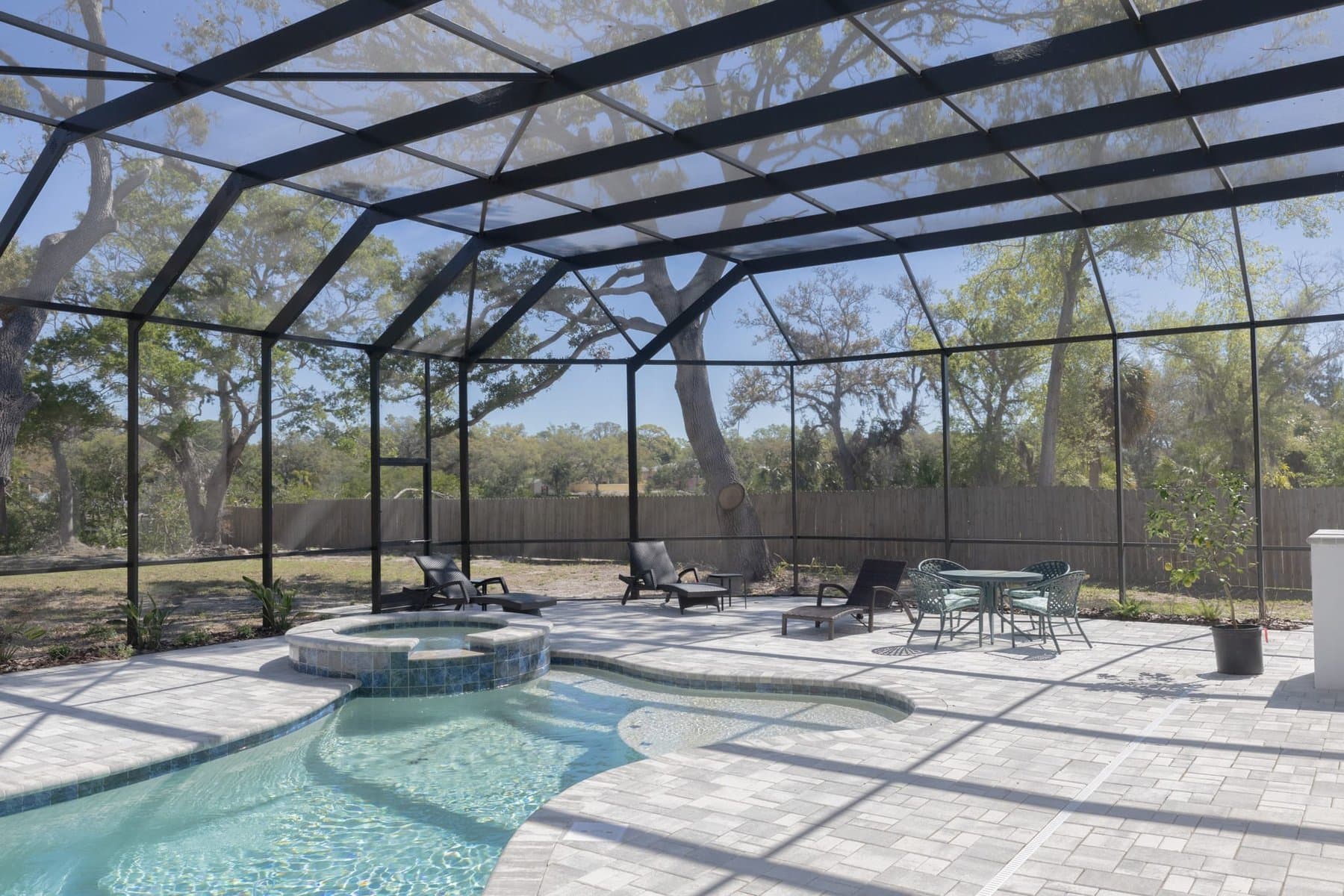
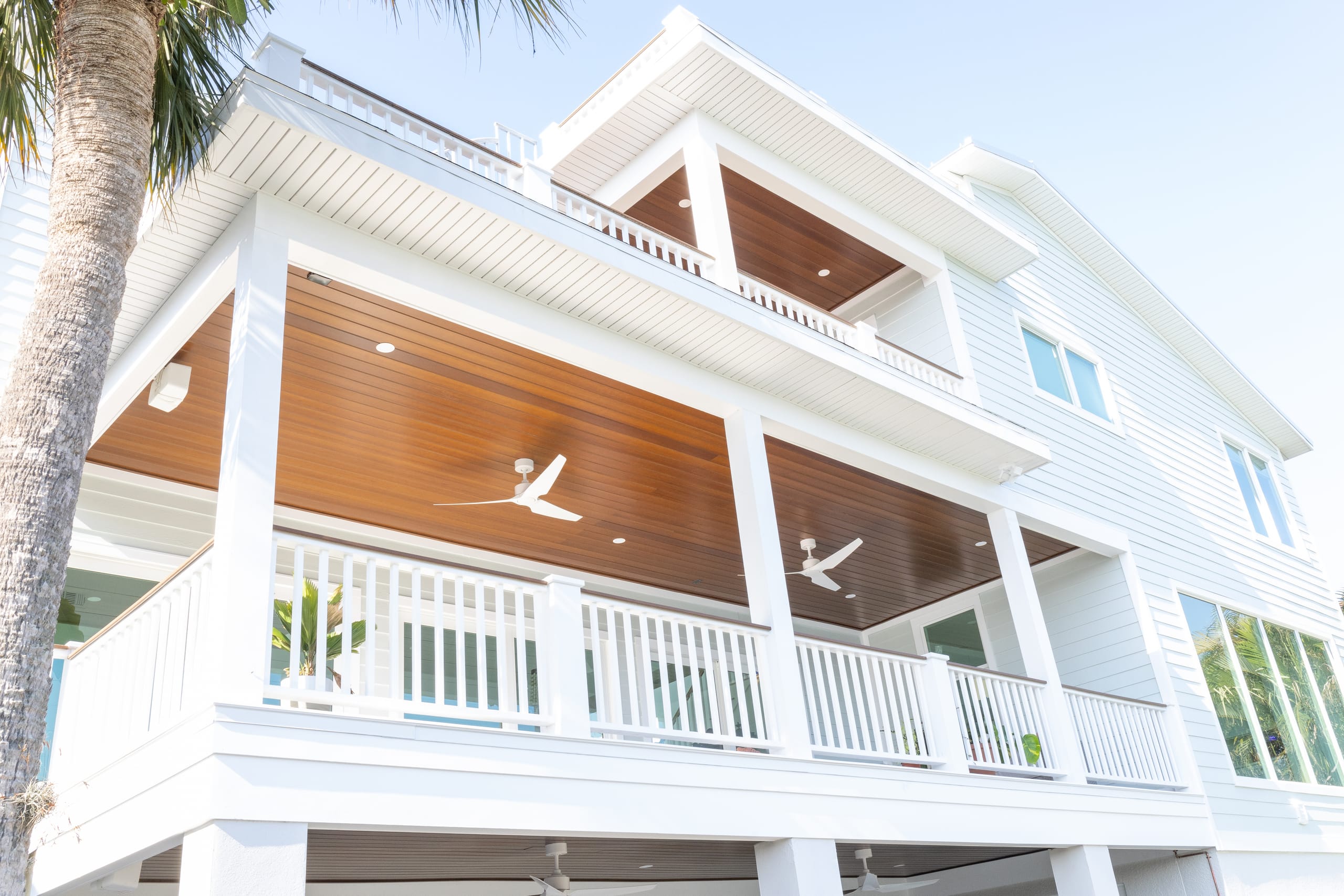
A completed flood-compliant home on Harbor Drive: elevated to current code with full outdoor living space.
Strategies to Stay Under the Threshold
Staying under the 50% threshold isn't about gaming the system: it's about careful planning. Here's what we recommend to homeowners who want to renovate without triggering full flood code compliance.
Get a Pre-Project Structure Valuation
Before you finalize any project scope, find out exactly what your structure is valued at. Check your Pinellas County Property Appraiser records, then consider hiring a licensed appraiser to provide an independent valuation. If the appraiser's number is higher, bring that documentation to the building department before you submit for permits. Most jurisdictions, including the St. Petersburg Building Department: will use the higher number if it's properly documented and, where required, stamped by a licensed Florida structural engineer or certified general appraiser.
Phase Your Work Across Calendar Years
Because the 50% calculation uses a 12-month rolling window, phasing significant work across two calendar years can keep each phase under the threshold independently. This requires genuine planning, not simply delaying a permit by a few weeks, and the building department will look at the cumulative picture if they see obviously connected scopes of work submitted close together.
Phasing works best when the projects are genuinely separate in nature: a kitchen renovation one year, a bathroom renovation the following year, for example. Splitting a single connected project into artificial phases to avoid the threshold is not recommended: it creates legal exposure and most building departments are wise to it. The test we apply: can each phase stand alone as a complete, functional improvement? If yes, legitimate. If no, one project. Pinellas building departments accept genuinely separate scopes routinely; they catch artificially split single-plan projects almost every time.
If you're planning a home addition in a flood zone, the 50% calculation is especially critical: additions are often the projects that push homeowners over the threshold.
Understand What Does and Doesn't Count
Some work categories are typically excluded from the substantial improvement calculation. These generally include:
- Work specifically required to bring the structure into flood compliance (this is handled separately)
- Repairs to correct code violations that existed prior to the renovation (not always excluded: verify locally)
- Projects already permitted before a FIRM map revision
An experienced contractor familiar with Pinellas County floodplain regulations can help you identify which line items in your project budget count toward the threshold and which don't. That knowledge can shift the calculation meaningfully. If you're still early in the planning process, our guide to the home remodeling process walks through the full timeline from concept to completion.
How a Contractor Actually Keeps a Project Under the 50% Threshold
Navigation is not evasion. Evasion gets a project ripped out and a Certificate of Occupancy pulled. Navigation is three disciplines working together, and the discipline starts before the first permit, not at the end of the budget.
1. Establish the right denominator. Pinellas County Property Appraiser's "just value" often underweights structure. A licensed Florida residential appraisal can legitimately raise the 50% ceiling before the project starts.
2. Scope to the number. If the ceiling is $180K, the entire project, labor, materials, permits, architect and engineer fees, contractor markup, site prep, demolition, must come in under $180K across 12 rolling months. Every line item competes for the same budget.
3. Track cumulatively from day one. Our open-book T&M model publishes weekly budget reports against the ceiling. The 40% threshold is the operational checkpoint. When weekly cumulative spend hits 40% of the 50% threshold, scope adjusts before the cap bites, not after a permit is denied. With 20+ in-house W-2 carpenters running this discipline on dozens of Pinellas FEMA 50% rule projects, the rule has never forced a tear-out.
On the question every Pinellas homeowner asks first: "Any 49% rule project where the people's vision or the needs exceed that 49% become a challenge in how to navigate the FEMA rules because the penalties can be pretty stiff: up to and including tearing out work or tearing down a house. But that's not something we've ever encountered or run afoul of." The discipline is what makes that statement true.
What we see go wrong on other projects: "Contractors that aren't experienced will suggest tearing a house down or that a project simply can't be done because of the FEMA 49% rule." Often that advice is wrong. A 2,200 sqft Shore Acres home with post-storm repair needs and a remodel wishlist doesn't automatically need to be torn down. The math usually works with a licensed appraisal resetting the denominator, a trimmed scope that defers non-essential items to year 2, and a contractor who knows which line items count and which narrowly defined code upgrades don't.
The 50% Rule for Vacation Rentals and Short-Term Rentals
The FEMA 50% rule is use-neutral at the federal level. The same math that applies to an owner-occupied home in Shore Acres applies to a vacation rental on Clearwater Beach, a short-term rental on Redington Beach, or a rental cottage on Indian Shores. The rule is calculated against the structure's assessed or appraised value, not against the property's rental income, occupancy rate, or property-management overhead. That framing catches a lot of rental-property owners off guard when they first walk into a barrier-island building department with a remodel wishlist and an insurance settlement in hand.
What the 50% Denominator Is (and Isn't) on a Rental
The denominator is the same: the market value of the structure before the improvement, excluding land. That means rental income projections, property-management fees, cleaning turn-over costs, furnishings, and STR licensing fees are not part of the 50% calculation: none of those go in the ceiling and none of those go in the numerator either. The numerator is the cumulative cost of structural, mechanical, electrical, plumbing, and finish work over a 12-month rolling window, same as any other property.
The 40% operational checkpoint applies identically. On a rental-property scope where the ceiling is $200K, weekly cumulative spend is tracked against the same $200K threshold and scope adjusts when hits 40% ($80K), not after a permit is denied. Open-book T&M with weekly budget reports lets a rental-property owner see exactly where the cumulative math sits: critical when the rental is offline during construction and every week of delay is unrealized income.
Barrier-Island Specifics: Clearwater Beach, Redington Beach, and Indian Shores
The barrier-island municipalities north of Pinellas Bayway have specific flood-zone patterns that matter for vacation-rental and short-term-rental owners weighing a remodel:
- Clearwater Beach: significant VE zone territory on Gulf-facing frontage. VE designations require pile foundations, breakaway walls below Base Flood Elevation (BFE), and elevated mechanical systems if the property crosses the 50% threshold. Beach-city STR ordinances layer on top of the FEMA requirements: verify Clearwater Beach STR licensing status before scoping a remodel that pauses rental income.
- Redington Beach: mixed AE and VE zone coverage. Bay-side lots typically fall in AE zone (finished floor at or above BFE, no pile foundation requirement); Gulf-side lots typically fall in VE zone with the full breakaway-wall and pile-foundation package.
- Indian Shores: predominantly AE zone across the town, with a narrow VE strip on Gulf-facing lots. Because most of the town is AE, elevation compliance on substantial improvements is typically achievable without a full pile-foundation rebuild, but every project has to run the math against the specific FIRM map panel for the address.
Structural work is scoped identically regardless of rental status. The FEMA rule doesn't care whether the house sleeps a family or 12 weekly guests: it cares whether the cumulative 12-month spend crosses 50% of the structure's value. What differs across these municipalities is not the federal math but the local building-department interpretation and the beach-city STR overlays that determine how long a rental is offline while the permit runs.
Revolution's Role on Rental Properties
Revolution's general-contracting scope on a rental property is identical to owner-occupied: same permit, same FEMA 50% math, same barrier-island jurisdiction navigation, same open-book T&M weekly budget reports. We are not a rental-property specialist and don't hold any STR-specific certification (no such certification exists at the state level for the construction side). What we do bring is the same 50%-rule discipline: establishing the right denominator with a licensed appraisal, scoping to the number, tracking cumulatively against the 40% operational checkpoint. Applied to a property where every week of offline rental time has a real dollar cost.
St. Petersburg and Pinellas County Specifics
Pinellas County has some of the highest flood zone density in the entire country. The county is nearly surrounded by water: Tampa Bay to the east, the Gulf of Mexico to the west, and large portions of its municipalities fall within Special Flood Hazard Areas. If you own property in Pinellas, the FEMA 50% rule is not a theoretical concern. It is an active consideration for a huge share of the housing stock. For a broader overview of building in these areas, see our Pinellas County flood zone construction guide.
AE vs. VE Zones in Pinellas County
The two most common flood zone designations you'll encounter in this area are AE and VE.
AE zones are areas with a 1% annual chance of flooding (the "100-year floodplain"). These zones have an established BFE and require structures to have their lowest finished floor at or above that elevation. AE zones are found throughout coastal neighborhoods including Shore Acres, Snell Isle, Venetian Isles, and much of the waterfront areas of St. Petersburg, Gulfport, and Largo.
VE zones are coastal high-hazard areas where wave action is an additional factor on top of flooding. These are the areas closest to the open Gulf of Mexico and require the more stringent pile or column foundation requirements. Much of St. Pete Beach sits in a VE zone, as does the western side of Tierra Verde. VE zone renovations are significantly more complex and expensive when they trigger the 50% threshold. If you're considering a tear-down and rebuild on a waterfront lot rather than renovating past the 50% mark, our guide to waterfront home construction in St. Petersburg covers seawall inspection, foundation costs, and the full permitting picture.
For homeowners whose renovation crosses the 50% threshold and mandates full elevation, our guide to elevated house plans for flood zones walks through piling foundations, breakaway walls, and BFE-plus-one-foot freeboard requirements.
Local Freeboard Requirements
Pinellas County requires one foot of freeboard above the FEMA BFE. That means your lowest finished floor must be at BFE + 1 foot. Some municipalities within the county may have adopted stricter requirements: always verify with the local building department, not just the county.
This freeboard requirement matters because it affects your flood insurance premium and your eligibility for the NFIP Community Rating System discounts. Homes elevated higher than the minimum BFE qualify for lower flood insurance rates, which is a real financial benefit over the life of ownership. Wind mitigation upgrades: a code-compliant roof (GAF Timberline architectural shingles or an equivalent system with FL Product Approval), Simpson Strong-Tie H-series hurricane clips at every rafter-to-top-plate connection, and PGT WinGuard impact windows with FL Product Approval (NOA) rated for the 150 mph wind zone that covers most of coastal Pinellas: can layer on top of flood-side credits for additional savings; see our guide to how renovating lowers your Florida insurance premium for the OIR-B1-1802 credit categories that apply.
Heavily Affected Neighborhoods
If your home is in any of these areas, the FEMA 50% rule is almost certainly relevant to any renovation you're planning:
- St. Pete Beach: virtually the entire city is within a flood zone; much of it in VE zone territory
- Tierra Verde: west side is VE zone, east side is AE zone; nearly all waterfront lots are affected
- Gulfport, approximately one-third of the city falls within the 100-year floodplain
- Shore Acres: a significant portion of this neighborhood is in AE zones
- Bahama Shores: 1950s ranch homes on a waterfront peninsula, entire neighborhood in AE zone with FEMA 50% rule exposure
- Snell Isle, Venetian Isles, Coquina Key: waterfront peninsulas with extensive AE zone coverage
- Pass-a-Grille and Treasure Island: barrier island communities with mixed AE and VE designations
- Clearwater Beach: beach-city flood exposure with significant VE zone territory on Gulf-facing frontage requiring pile foundations and breakaway walls below BFE
- Redington Beach: mixed AE (bay side) and VE (Gulf side) coverage
- Indian Shores: predominantly AE zone with a narrow VE strip on Gulf-facing lots
How Different Pinellas Municipalities Enforce the Rule
The federal rule is the same everywhere in Pinellas, but enforcement varies by municipality. The county Building Division has a dedicated floodplain reviewer who looks at every flood-zone permit; individual cities (St. Petersburg, Treasure Island, St. Pete Beach, Pass-a-Grille, Gulfport, Clearwater, Clearwater Beach, Redington Beach, Indian Shores) layer their own building-department review on top. The combination is what determines how a specific project gets evaluated.
Some of the beach municipalities had to rework the way they interpret the FEMA rules in order to make sure they didn't have a lot of houses forced to be torn down after the 2024 hurricane season. Treasure Island, St. Pete Beach, and Pass-a-Grille specifically adjusted their post-disaster recovery interpretations to keep more storm-damaged structures repairable. The practical takeaway: the answer to "does my project trigger substantial improvement" can vary slightly between a Treasure Island address and a Snell Isle address, even when the math is identical. Always verify with the specific municipal building department before scoping, and get the answer from a contractor who has navigated that exact jurisdiction recently.
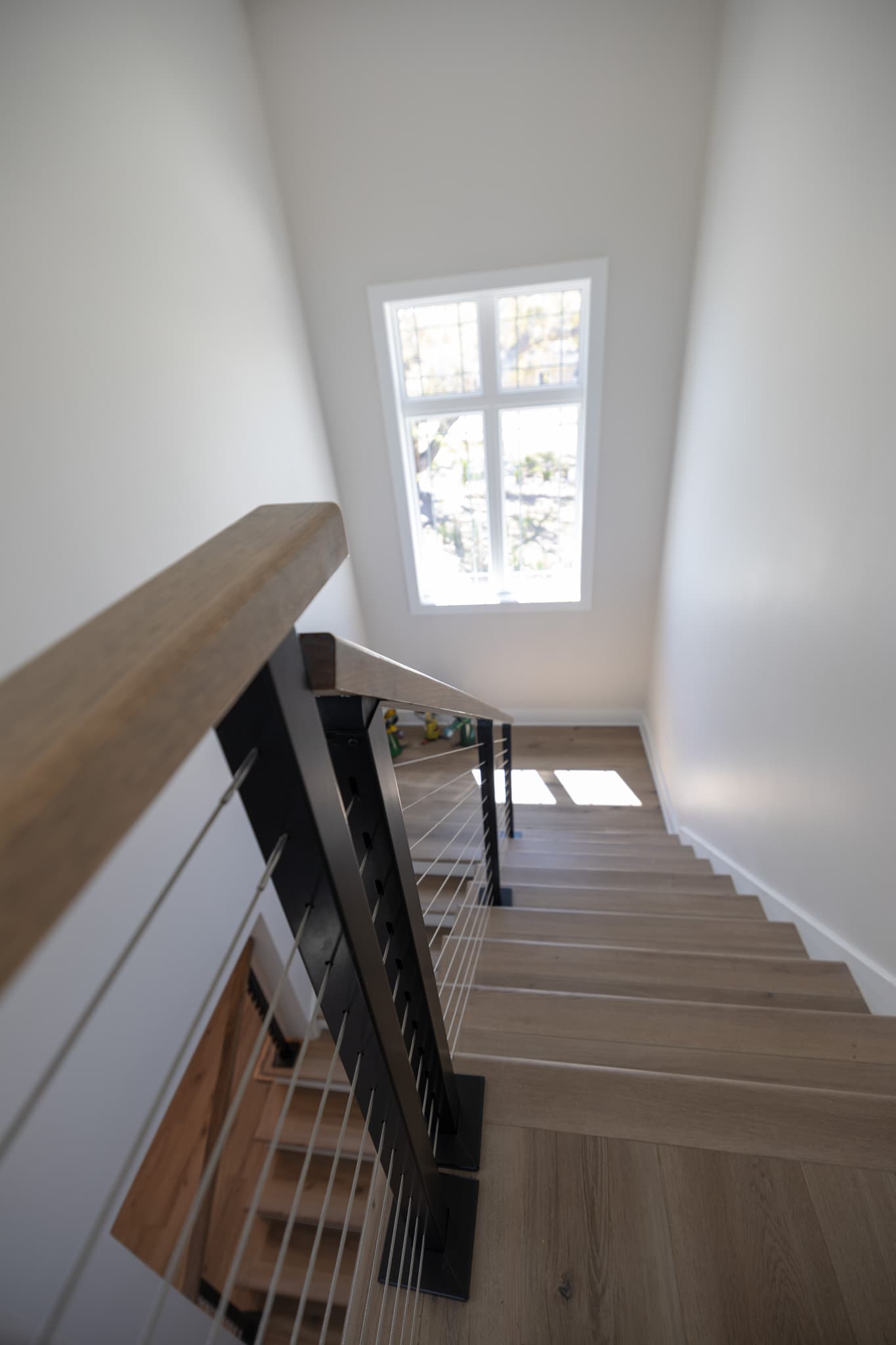
Interior staircase in an elevated Harbor Drive home: designed to meet flood elevation requirements.
What About Storm Damage Repairs?
After a hurricane, this question comes up constantly: if my home was damaged and I need to repair or rebuild it, does the 50% rule apply to storm repairs?
The short answer is: yes, it can apply. The cost of repairing storm damage counts toward the substantial improvement threshold the same way any other renovation does. If your home was significantly damaged and the repair costs exceed 50% of the structure's value, you would technically need to bring the whole building into flood code compliance, even if the damage was caused by a storm, not a voluntary improvement. For the formal FEMA terminology, and how it shapes which math problem you're actually solving: see the difference between Substantial Improvement and Substantial Damage.
This is understandably alarming to hear after a disaster. But here's the practical reality: almost no homeowners are actually forced to demolish or dramatically reconstruct their homes after a hurricane purely because of the 50% rule. A skilled contractor working closely with the municipality can almost always find a path forward: whether that's through documentation, phasing, or working within the existing structure to bring it into compliance incrementally.
The distinction between repairs and improvements also matters here. Repairs that restore a structure to its pre-damage condition using the same materials and dimensions may be treated differently than improvements. The specifics vary by jurisdiction and the nature of the damage, which is exactly why having an experienced contractor in your corner during the post-storm permitting process is valuable.
One decision that surfaces often after storm damage is whether to remediate mold and remodel or to fully reconstruct, and the FEMA 50% math often plays into the answer. For a decision framework that walks through the five questions, full reconstruction vs. traditional remodeling after mold damage covers how the 50% threshold interacts with structural damage extent, insurance settlement math, and realistic timeline for St. Pete homes.
If you're dealing with storm damage to a flood zone property, call us before you start work. The choices you make in the first days after a storm, including what you document and what you submit for permits: can significantly affect your options going forward. In post-disaster conditions, St. Petersburg Building Department emergency-repair permit turnaround is typically 2 to 4 weeks, compared with the 6 to 10 week review timeline for a full elevation scope under normal conditions: a difference that can shape whether phasing or full compliance is the smarter path forward.
The best defense, of course, is reducing your damage exposure before storm season starts. Our guide to hurricane-ready home upgrades before June 1, 2026 covers the impact windows, roof reinforcement, and wind mitigation work that reduce both damage risk and the chance of ever triggering the 50% rule in the first place. If your home was permitted before January 1, 2008, Florida's My Safe Florida Home hurricane hardening grant covers up to $10,000 of qualifying wind-mit upgrades: worth checking before the next hurricane season.
If your project is heading toward substantial improvement and you're looking at full elevation or compliant rebuild as the path forward, the state-administered Elevate Florida program is the residential mitigation funding lane to know: particularly for repetitive-loss properties and homeowners with documented hurricane damage. The application is free, the eligibility math is specific, and the timing affects when you should pull permits.
Frequently Asked Questions
Does the 50% Rule Apply to Storm Damage Repairs?
Yes: repair costs count toward the substantial improvement threshold just like voluntary renovation costs. However, many municipalities have post-disaster recovery provisions that can affect how the rule is applied in the immediate aftermath of a declared disaster. The key is to document everything thoroughly and work with your contractor and local building department before submitting permits.
How Do I Find Out What Flood Zone My Property Is In?
FEMA's Flood Map Service Center at msc.fema.gov allows you to look up your property's flood zone designation by address. You can also find this information on the Pinellas County Property Appraiser's website. Your flood insurance declarations page will also list your flood zone. If your zone shows AE, VE, AO, or AH, the FEMA 50% rule applies to your property.
What's the Difference Between AE and VE Zones?
Both are Special Flood Hazard Areas with a 1% annual chance of flooding, but VE zones have the added factor of wave action. AE zones require the lowest floor to be at or above BFE. VE zones require all of that plus pile or column foundations, breakaway walls below BFE, no fill, and enhanced connections to resist wave forces. In both zones, the FEMA 50% rule applies, but the compliance cost in a VE zone is substantially higher.
Can I Do Renovations in Phases to Stay Under 50%?
Yes, phasing across genuine separate scopes of work in different 12-month windows is a legitimate approach. However, most building departments look at the cumulative picture when they see multiple related permits in the same period. The phasing needs to be real: separate projects, not a single project artificially split. Work with your contractor to develop a multi-year renovation plan that genuinely distributes scope across time. An experienced flood zone contractor can help you structure this properly.
How Do You Actually Keep a Project Under the 50% Threshold Without Breaking the Rule?
Three disciplines, applied from day one. First, establish the right denominator: a $400 to $700 licensed Florida residential appraisal can legitimately raise the 50% ceiling if the Pinellas County Property Appraiser's "just value" underweights your structure. Second, scope to the number: every line item, including labor, materials, permits, architect and engineer fees, contractor markup, site prep, and demolition, has to fit inside the ceiling across 12 rolling months. Third, track cumulatively with weekly budget reports so the 40% checkpoint catches scope creep before the cap is reached. We've done dozens of Pinellas FEMA 50% rule projects this way, in Shore Acres, Snell Isle, Venetian Isles, Bahama Shores, Tierra Verde, Treasure Island, and St. Pete Beach, never once forced into the substantial-improvement upgrade.
The Bottom Line
The FEMA 50% rule is real, it's enforced, and it can significantly affect the cost and complexity of your renovation if you own a flood zone property in Florida. But it's not a reason to avoid improving your home. Thousands of homeowners in St. Petersburg and across Pinellas County renovate their flood zone properties every year: the key is planning the project with the rule in mind from the start, not discovering it mid-project.
The most important things to do before you start any significant work: find out your structure's market value, understand your flood zone designation, and work with a FEMA-experienced flood zone contractor who has real experience navigating these regulations locally. A good contractor won't just build what you ask: they'll help you design a scope that achieves your goals while managing the compliance exposure. For a quick self-check on where you land, run your numbers through the Flood-Zone Decision Calculator.
Our team at Revolution Contractors has handled flood zone construction projects across Pinellas County: from small AE zone kitchen remodels to complete elevated reconstructions in VE zone territory, with 20+ in-house W-2 carpenters and open-book T&M billing backed by weekly budget reports so you always know which line items are counting against the 50% threshold. We're also experienced with whole-home remodeling for homeowners who want to modernize their space while managing their compliance exposure carefully. If you have questions about how the 50% rule applies to your specific property, we're happy to talk it through before you commit to anything. Schedule a consultation or call us at (727) 888-6161.
Related Reading
- Hurricane Damage Insurance Claim: GC Coordination in Pinellas. How the 50% threshold interacts with windstorm and flood claims post-storm.
- Tear Down vs Elevate vs Deep Remodel. The three paths once the 50% Rule is in play.
- ICC Increased Cost of Compliance Florida Flood Insurance Guide. The $30,000 compliance benefit that triggers when the 50% Rule is triggered.
- LOMA Pinellas Homeowner Guide. Post-elevation flood-map amendment to remove the property from the SFHA.
- My Safe Florida Home Grant Guide. Wind-mitigation grant that stacks with elevation funding.