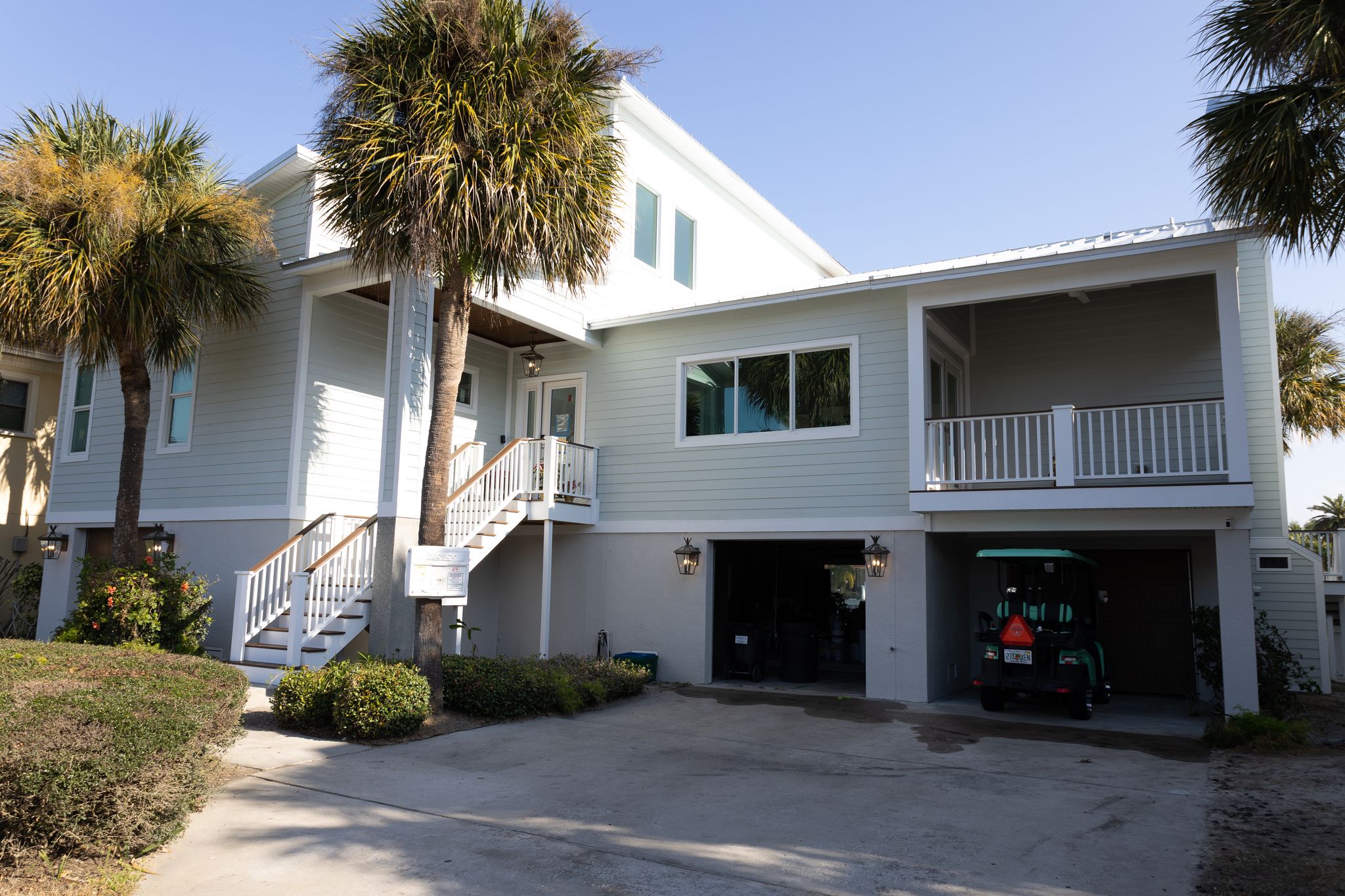
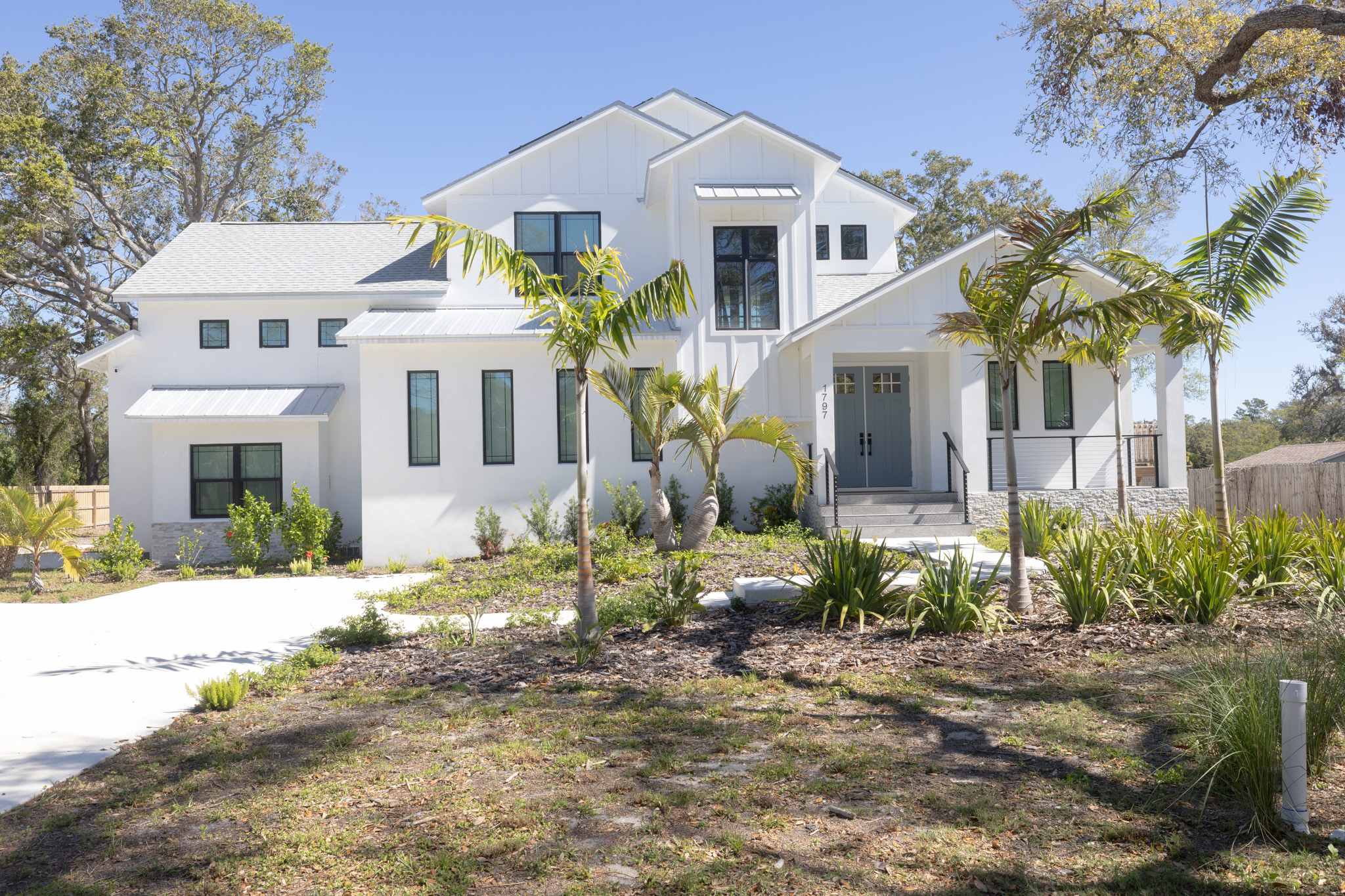
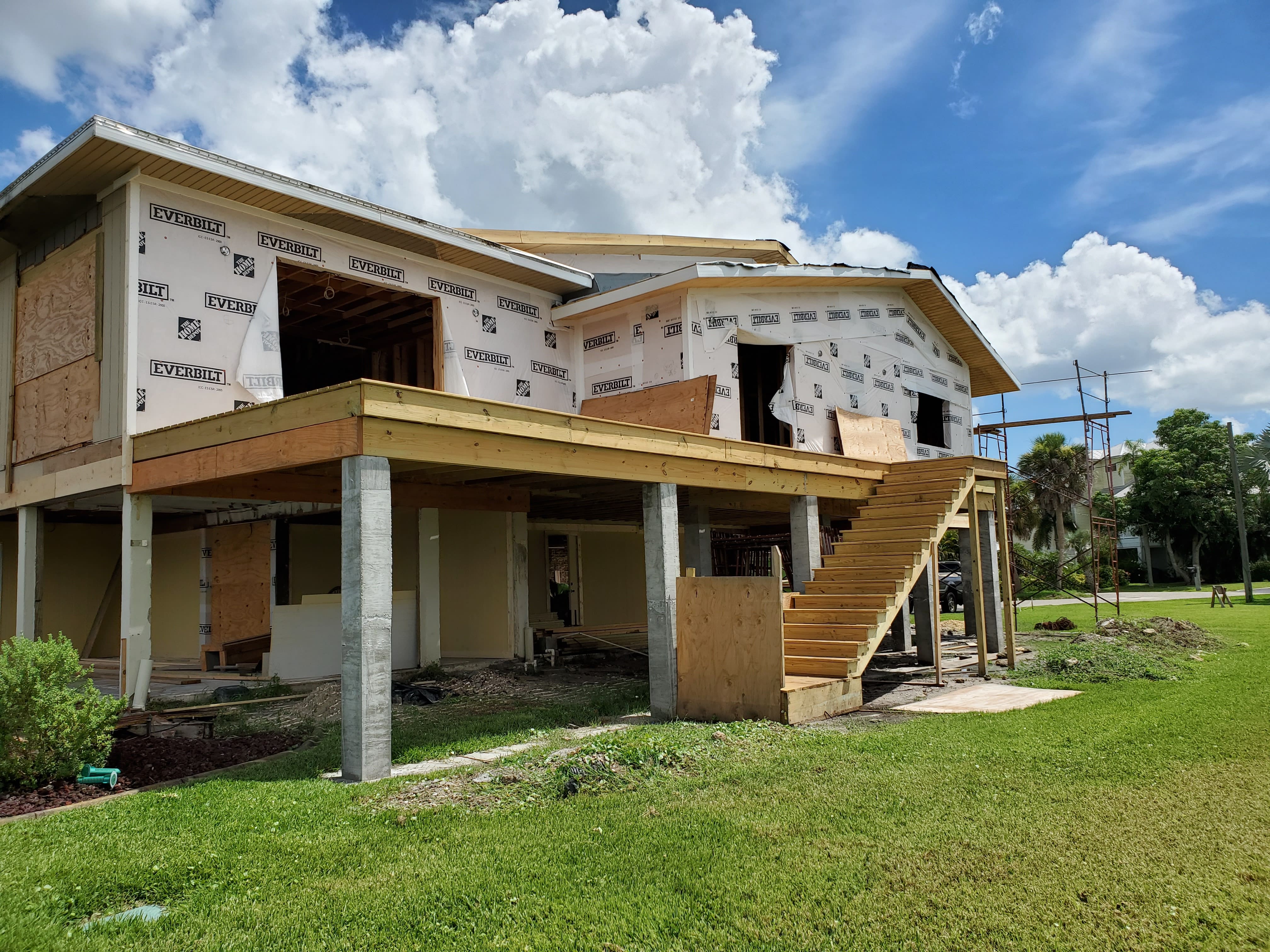
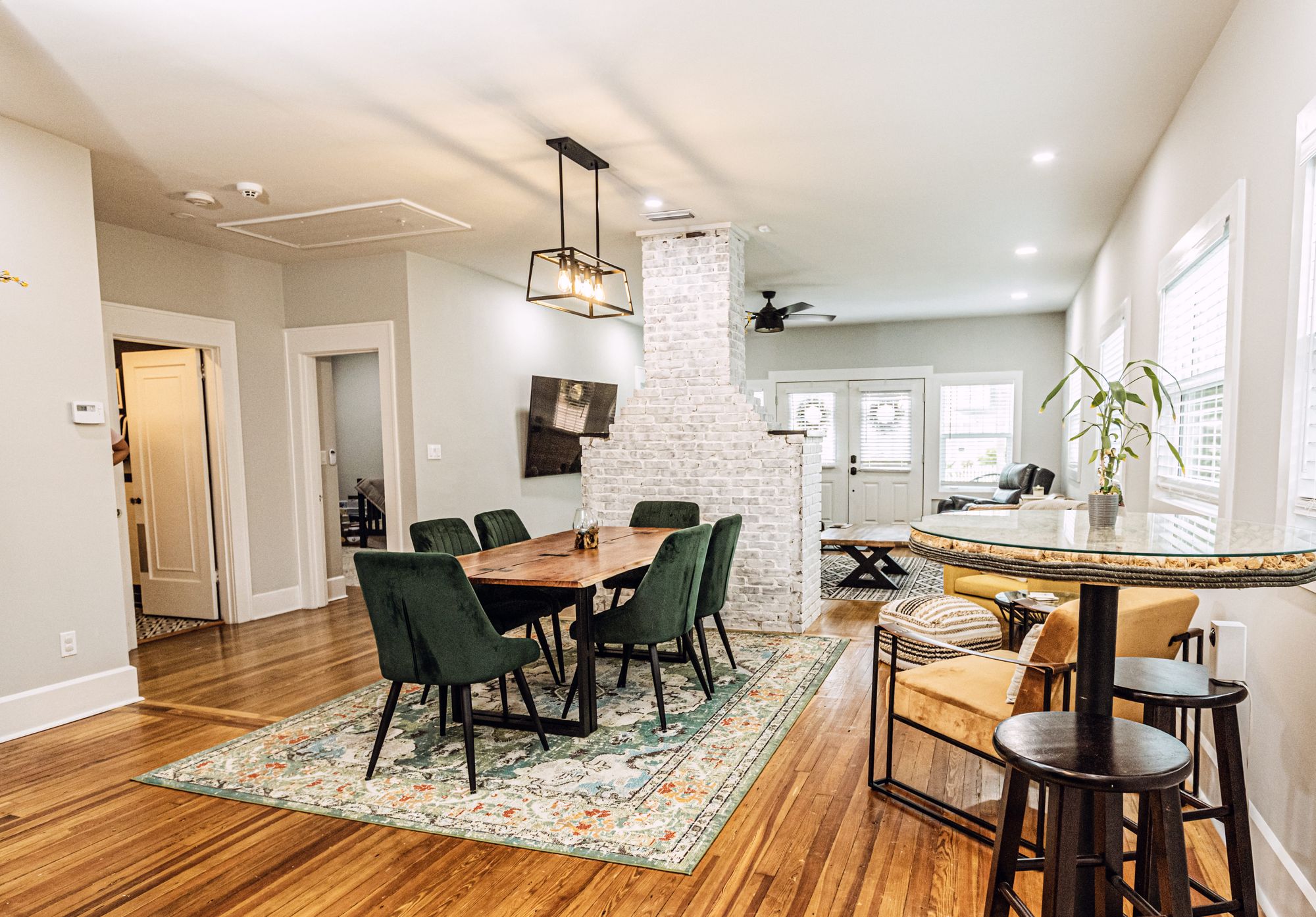
FLOOD ZONE CONSTRUCTION
49% rule compliance, home elevations, and post-hurricane rebuilds — $10-20M+ across three hurricane seasons.
As Pinellas County's flood zone contractors, we've navigated every scenario — from Shore Acres to Snell Isle to St. Pete Beach.
Sound Familiar?

Hurricane Damage and You Don't Know Where to Start
Water came inside your house from storm surge or flooding, and now you're dealing with insurance claims, mold remediation, and a building department that says your repairs might trigger the 50% rule. Revolution responded to three named hurricanes — Michael (2018), Ian (2022), and Helene (2025).

Your Remodel Is About to Trigger FEMA
You want to renovate your waterfront home, but the project scope is pushing against the 50% rule threshold. If costs exceed 50% of your structure's market value, the entire building must come into compliance. You need a contractor who knows how to design within 49% — or guide you through what happens when you exceed it.

You're Not Sure What's Allowed
You're in an AE or VE zone and every contractor gives a different answer about what you can build. The truth depends on your specific zone, your BFE, your structure's assessed value, and which municipality you're in. You need someone who's done this dozens of times and knows the actual rules.

Your Flood Insurance Is Out of Control
Your structure doesn't meet current Base Flood Elevation requirements and your NFIP premiums reflect it. Elevating or rebuilding to current code can cut insurance costs 30-60%, but the construction cost ranges from $300K to $1.5M depending on scope. You need real numbers and a realistic plan.
Our Flood Zone Process
Every flood zone project follows one of two paths. Which path depends on whether your renovation stays within the FEMA 49% threshold or exceeds it.
49% Rule Projects
Remodel within FEMA limits • 3-6 months
Assessment & Valuation
Determine flood zone classification (AE, VE, X), Base Flood Elevation, and current assessed value. Sometimes an independent appraisal increases the tax assessor's valuation, expanding the 49% threshold.
2-4 weeks
Design Within 49%
A skilled contractor and designer working with the municipality can usually get you what you want with relatively low compromise. We prioritize scope to maximize value within the threshold — structural improvements first, cosmetic upgrades second.
4-8 weeks
Permitting & FEMA Compliance
Standard building permit plus a FEMA compliance application. Every Pinellas municipality handles this differently — St. Pete, the beach communities, unincorporated Pinellas each have their own interpretation of the 49% rule.
3-5 weeks
Construction
Standard remodel process plus flood-zone-specific additions: flood vents, flood-resistant materials below BFE, elevated utilities. Your in-house Revolution crew handles the work — no waiting on subs.
Varies by scope
Elevation / Full Rebuild
Exceeds 50% threshold • 12-24 months
Assessment & Decision Framework
Determine whether to lift the existing structure, add a second story and abandon the first, or tear down and rebuild. When a lift plus renovation approaches $800K-$1M, a full rebuild at $1.2-$1.5M often makes more sense.
2-4 weeks
Design & Engineering
Architect designs the elevated structure. Foundation type is determined by soil density — about half need driven piles ($50K-$100K). VE zones require pilings, breakaway walls, and heavier structural elements.
3-6 months
Permitting
Elevation and rebuild permitting is actually more straightforward than 49% rule projects because the finished structure will be fully FEMA-compliant. No threshold calculations, no scope limitations.
3-6 months
Construction
Structural lift (if lifting) by a licensed lift company, then: utility reconnection, foundation/masonry, exterior work (stucco, columns, curb appeal), interior finishes. The sequence is specific and sequential.
6-12 months
The 50% Rule Is Cumulative
If renovation costs exceed 50% of your structure's market value (not land), the entire building must meet current flood codes. Costs are cumulative over 12 months — three small projects that individually seem harmless can add up to trigger it. For a full breakdown, read our FEMA 50% Rule Guide.
“Where There Is a Will, There Is a Way”
A skilled contractor working with the municipality can usually get clients what they want with relatively low compromise. FEMA regulations aren't so draconian that they force teardowns. Strategic planning keeps most projects moving forward.
Not Sure Which Path Your Project Falls On?
Get expert guidance on your flood zone classification, 49% threshold, and realistic options for your Pinellas County property.


Flood Zone Construction Costs in Pinellas County
Flood zone construction costs at least 20% more than comparable inland work — driven by elevated foundations, FEMA-compliant materials, and engineering requirements. Here are real numbers from Pinellas County projects.
49% Rule Remodel
$50K–$150K
Strategic improvements within 49% of your structure's assessed value. How far your budget goes depends on your home's assessed value — a $400,000 structure gives you $196,000 of renovation room.
Structural Elevation
$300K–$550K
Lift company ($150K-$250K) plus utility reconnection, foundation work, and curb appeal. Most homeowners want the elevation to look intentional — stucco, columns, garage conversion.
Full Teardown & Rebuild
$1.2M–$1.5M+
New construction runs $400-$500/sqft in coastal Pinellas vs. $300-$400/sqft inland. The 20%+ premium covers elevated foundations, driven piles, and VE zone structural requirements.
Foundation cost difference: Driven piles add $50K–$100K compared to spread footings for 2,000–4,000 sq ft homes. About half of waterfront builds in Pinellas need piles; the other half sit on soil dense enough for standard footings.
How Revolution Prices Flood Zone Work
We use Time & Materials — actual costs plus a transparent markup, with weekly budget reports. Flood zone projects have more unknowns than any other type of construction: soil conditions change foundation requirements mid-project, FEMA compliance creates scope that didn't exist in the estimate, and structural surprises are the norm in older waterfront homes.
T&M prevents the “low bid that balloons” scenario. You see every invoice, and when scope changes — which it will — we discuss it openly rather than burying it in padding. By construction start, 75% of line items are confirmed fixed-price from subs and vendors.
“Our time-and-materials approach works especially well for flood zone work. There are just more unknowns. The T&M approach allows flexibility, allows us to communicate clearly and bill fairly for that.” — Jeremy, Owner
Planning a home addition in a flood zone? Expect 20%+ more in foundation costs for elevated construction. Considering a custom home build? When lift-plus-renovation exceeds $800K, a teardown rebuild often makes better financial sense. Properties in historic districts may qualify for certain FEMA exemptions.
Ready to Get Real Numbers for Your Flood Zone Project?
We'll assess your flood zone, calculate your 49% threshold, and give you a realistic budget range — no guessing.

Understanding FEMA Requirements in Pinellas County
The FEMA 50% rule — technically the “Substantial Improvement” rule — is the regulation that controls what you can and can't do with a flood zone property. If the cost of any renovation, addition, or repair exceeds 50% of the building's market value (the structure, not the land), the entire structure must be brought into compliance with current flood elevation standards.
That threshold is cumulative over 12 months. Three small projects that individually seem harmless can add up to trigger it. And the penalties for getting it wrong are real — up to and including tearing out completed work or demolishing the structure.
Every Pinellas municipality interprets the rule differently. St. Petersburg uses 49% in its local ordinance. The beach municipalities have their own thresholds and scoring systems. Unincorporated Pinellas County has yet another approach. How your city is scored by FEMA directly influences its Community Rating System status, which affects flood insurance premiums for every property owner in that jurisdiction.
AE Zones (Shore Acres, Snell Isle, Venetian Isles, Coquina Key)
- •Lowest floor at or above BFE plus Pinellas County's 1-foot freeboard
- •Flood vents in enclosed areas below BFE
- •All materials below BFE must be flood-resistant (Class 4 or 5 — concrete, masonry, metal, pressure-treated wood)
VE Zones (barrier islands, direct waterfront)
- •Everything AE requires, plus:
- •Structure must be on pilings or columns
- •Breakaway walls below BFE
- •No fill allowed for structural support
- •Heavier structural elements and more expensive foundations
“A lot of contractors who weren't familiar with the 49% rule — because it is fairly intricate with a lot of nuances — contractors that aren't experienced will suggest tearing a house down or that a project simply can't be done because of the FEMA 49% rule.” — Jeremy, Owner
For a deep dive on calculating the 50% threshold and what counts toward it, read our FEMA 50% Rule Guide.


Elevation Options & Foundation Types
When your project exceeds the 50% threshold — or when hurricane damage triggers “Substantial Damage” — you're building to current flood code. That means elevating the lowest floor to or above Design Flood Elevation. You have three paths:

1. Lift the Existing Structure
A licensed lift company raises the house on hydraulic jacks, then a new foundation is built underneath. The lift runs $150K-$250K. Reconnecting utilities and making it functional adds $150K-$300K.
Most homeowners want it to look intentional — columns, stucco, garage conversion — pushing total cost to $500K+.

2. Add a Second Story
Build up instead of lifting. The ground floor becomes parking, storage, or utility space (with breakaway walls in VE zones). Avoids the cost of a structural lift but requires significant architectural and structural engineering work.

3. Tear Down and Rebuild
When lift plus renovation approaches $800K-$1M, a new custom home at $1.2-$1.5M often makes better financial sense — designed from scratch for flood compliance.
Foundation Types in Flood Zones
Spread Footing (Standard)
Traditional concrete foundation. Works when soil is dense enough — about half of waterfront builds in Pinellas qualify.
Cost: Standard construction pricing
Driven Piles (Elevated)
Concrete or steel columns pounded 20-40 feet into the ground until they hit stable bearing material. Required in VE zones and poor soil conditions.
Cost: +$50K–$100K for 2,000-4,000 sq ft
“About half of the new builds in the waterfront areas are on soil that is dense enough to just use a standard spread footing. The other half needs driven piles, which can add between $50,000 and $100,000.” — Jeremy, Owner
For a detailed comparison of elevation approaches and foundation options, see our Elevated House Plans Guide.
In-House Crews: Why It Matters After a Hurricane
Most general contractors in Pinellas subcontract their labor. That works fine in normal times. After a hurricane, it falls apart.
When Helene hit St. Petersburg in 2025, every subcontractor in Pinellas had 20 calls in a day. The contractors who depend on subs couldn't get crews. The contractors who promised timelines couldn't keep them. Homeowners who signed contracts in October were still waiting for crews in February.
Revolution has 20+ W-2 carpenters on payroll. They don't leave to chase a higher-paying storm job. They don't get pulled to three other projects. When we commit to a timeline on your flood zone rebuild, we have the people to deliver it.
This isn't theoretical. Revolution deployed to the Florida Panhandle after Hurricane Michael in 2018, completing $3 million in remodels. We did dry-outs and mitigation after Hurricane Ian in 2022, then stayed for rebuilds. And when Helene came through St. Pete in 2025, we were already here — ready to respond.


The stresses of flood zone projects are already high. After a storm, when homeowners are vulnerable and displaced, they need a contractor who shows up every day with their own crew, communicates clearly, and doesn't make promises they can't keep because their labor pool just evaporated.
“The stresses and needs of flood zone projects are pretty high, especially after a storm or flooding event where people are extremely vulnerable and they need qualified, experienced navigators to guide them through the process.” — Jeremy, Owner
This same crew handles whole-home remodels and condo renovations across Pinellas — including beach condo buildings in flood zones.
Ready to Navigate Your Flood Zone Project?
Get expert guidance on FEMA compliance, elevation options, and realistic budgets for your Pinellas County property.
Flood Zone FAQ
How long does a flood zone project take?
It depends on scope. A 49% rule remodel — staying within the FEMA threshold — takes 3-6 months including permitting. A structural elevation runs 9-15 months: 3-6 months for design and engineering, 3-6 months for permitting, and 6-9 months of construction. A full teardown and rebuild takes 12-24 months. Post-hurricane projects often move faster on permitting because municipalities expedite storm-related work.
How much does it cost to elevate a house in St. Petersburg?
The structural lift alone runs $150,000-$250,000. Reconnecting utilities and making the house functional again adds $150,000-$300,000. Making the elevation look intentional — stucco, columns, curb appeal — pushes the total to $500,000+. When a lift plus renovation approaches $800K-$1M, rebuilding from scratch at $1.2-$1.5M often makes more financial sense. Driven piles, if needed, add $50,000-$100,000.
What is the FEMA 50% rule?
If renovation costs exceed 50% of your structure's market value (the building, not the land), the entire structure must meet current flood code — which typically means elevating to Base Flood Elevation plus Pinellas County's 1-foot freeboard. The threshold is cumulative over 12 months, meaning multiple smaller projects can add up to trigger it.
What's the difference between AE and VE flood zones?
AE zones face flood risk from rising water. VE zones face flood risk from wave action on top of rising water — the "V" stands for velocity. VE zones require pilings or columns (no fill), breakaway walls below BFE, and heavier structural elements. Construction in VE zones costs more because of these foundation and structural requirements. In Pinellas County, barrier islands and direct waterfront properties are typically VE; inland waterfront neighborhoods like Shore Acres and Snell Isle are typically AE.
What is Base Flood Elevation (BFE)?
BFE is the flood level FEMA has determined your property could experience during a 1% annual chance flood (the "100-year flood"). It's measured in feet above sea level and listed on your property's flood map. Design Flood Elevation (DFE) — what your architect actually builds to — is typically BFE plus your municipality's freeboard requirement. In Pinellas County, that freeboard is 1 foot. So if your BFE is 11 feet, your DFE is 12 feet, and your lowest finished floor must be at or above 12 feet.
Do I have to tear down my flood-damaged house?
Almost certainly not. "We don't know of any people that got forced to tear their houses down," says Jeremy, Revolution's owner. FEMA regulations aren't so strict that they force demolition. Even when a hurricane causes substantial damage (repairs exceeding 50% of structure value), you have options: elevate the existing structure, add a second story, or choose to rebuild. The choice depends on the math and your vision. A contractor unfamiliar with FEMA may tell you teardown is the only option because they don't know how to navigate the alternatives.
What foundation do I need in a flood zone?
It depends on your zone and your soil. About half of Pinellas waterfront builds sit on soil dense enough for a standard spread footing. The other half needs driven piles — concrete or steel columns pounded deep until they hit stable bearing material — which adds $50,000-$100,000 for a 2,000-4,000 sqft home. In VE zones near the beach, pilings are required regardless of soil. Your geotech engineer determines which foundation type you need based on soil boring tests.
How does flood insurance work with renovations?
If your home is in a Special Flood Hazard Area (SFHA), flood insurance is required for federally backed mortgages. The National Flood Insurance Program (NFIP) caps coverage at $250,000 per policy — which doesn't come close to covering most Pinellas waterfront homes. If your structure is substantially damaged (repairs exceed 50% of value), NFIP's Increased Cost of Compliance (ICC) provides up to $30,000 toward bringing the building into current flood code. Elevating your home to current BFE can reduce premiums 30-60%. Private flood insurance can supplement NFIP coverage for higher-value properties.
How do new FEMA flood maps affect my property?
Each FEMA map revision tends to expand flood zones further inland. Updated maps can move your property into a higher-risk zone, requiring flood insurance you didn't need before and triggering stricter building requirements for future renovations. However, regulations aren't retroactive for existing structures — they kick in when you pull a permit for significant work. If your property was reclassified, check your updated BFE and understand how it affects your renovation plans before starting any project.
What do contractors get wrong about flood zone work?
The biggest mistake is fear-mongering. Contractors who aren't experienced with FEMA tell homeowners to tear down their house or that a project simply can't be done — when it often can, with creative scope management and proper municipality coordination. The second biggest mistake is starting work without a clear understanding of the 50% threshold, then discovering mid-project that you've triggered substantial improvement.
Guides & Resources
Flood ZonePinellas County Flood Zone Guide: What Homeowners Need to Know
Flood zone maps, insurance requirements, and what your zone designation means for renovations in Pinellas County.
Read Guide →
Flood ZoneElevated House Plans for Florida Flood Zones
Foundation types, structural lift vs. rebuild math, and what elevation actually costs in coastal Pinellas.
Read Guide →
Flood ZoneThe FEMA 50% Rule in Florida: What Homeowners Must Know
How to calculate your 50% threshold, what counts toward it, and how experienced contractors navigate it.
Read Guide →
WHY CHOOSE REVOLUTION FOR FLOOD ZONE PROJECTS
What separates us from other contractors who claim flood zone experience in Pinellas County.
$10-20M+ ACROSS THREE HURRICANES
Dozens of 49% rule projects, structural elevations, and post-hurricane rebuilds across Hurricane Michael (2018, Panhandle — $3M in remodels), Hurricane Ian (2022, dry-outs and mitigation), and Hurricane Helene (2025, St. Petersburg). No other local GC can match this volume.
IN-HOUSE CREWS THAT DON'T DISAPPEAR
20+ W-2 carpenters on payroll means your project doesn't stall when every subcontractor in Pinellas has 20 calls in a day. Post-hurricane, the contractors who depend on subs can't keep timelines. Revolution's crews are here, working for us.
T&M FOR PROJECTS FULL OF UNKNOWNS
Flood zone work has more scope changes than any other construction type — soil conditions, FEMA requirements, structural surprises in older waterfront homes. Time & Materials with weekly budget reports means you see every dollar. No padded estimate that gouges you or cuts corners.
MUNICIPAL NAVIGATION ACROSS PINELLAS
Every Pinellas municipality handles FEMA differently. St. Pete uses 49% in its local ordinance. Beach communities have their own thresholds. Unincorporated Pinellas has another approach. Revolution has relationships with building departments across the county.
WHAT OUR FLOOD ZONE CLIENTS SAY
Real reviews from homeowners who trusted Revolution with hurricane rebuilds, flood zone renovations, and insurance claim navigation.
"My house flooded during Helene. I called two contractors and chose Revolution. Their professionalism, honesty, constant communication, and adherence to timeline and budget were exceptional. The crew was incredibly competent and genuinely nice."
"Creig from Revolution Contractors was diligent and patient on a complicated insurance claim. He went above and beyond, negotiated prices, and was present throughout the entire process."
"Committed to serving their community... from small fundraisers to hurricane clean up."
Flood Zone Construction by Area
We serve flood zone properties across Pinellas County. See neighborhood-specific details for your area.