Pinellas County Flood Zone Guide
This guide covers AE, VE, and X zone rules for Pinellas County. For the contractor who handles flood zone construction and FEMA 50% rule navigation here, see our Pinellas flood zone contractor page. For the 50% rule mechanics specifically, see the FEMA 50% rule guide.

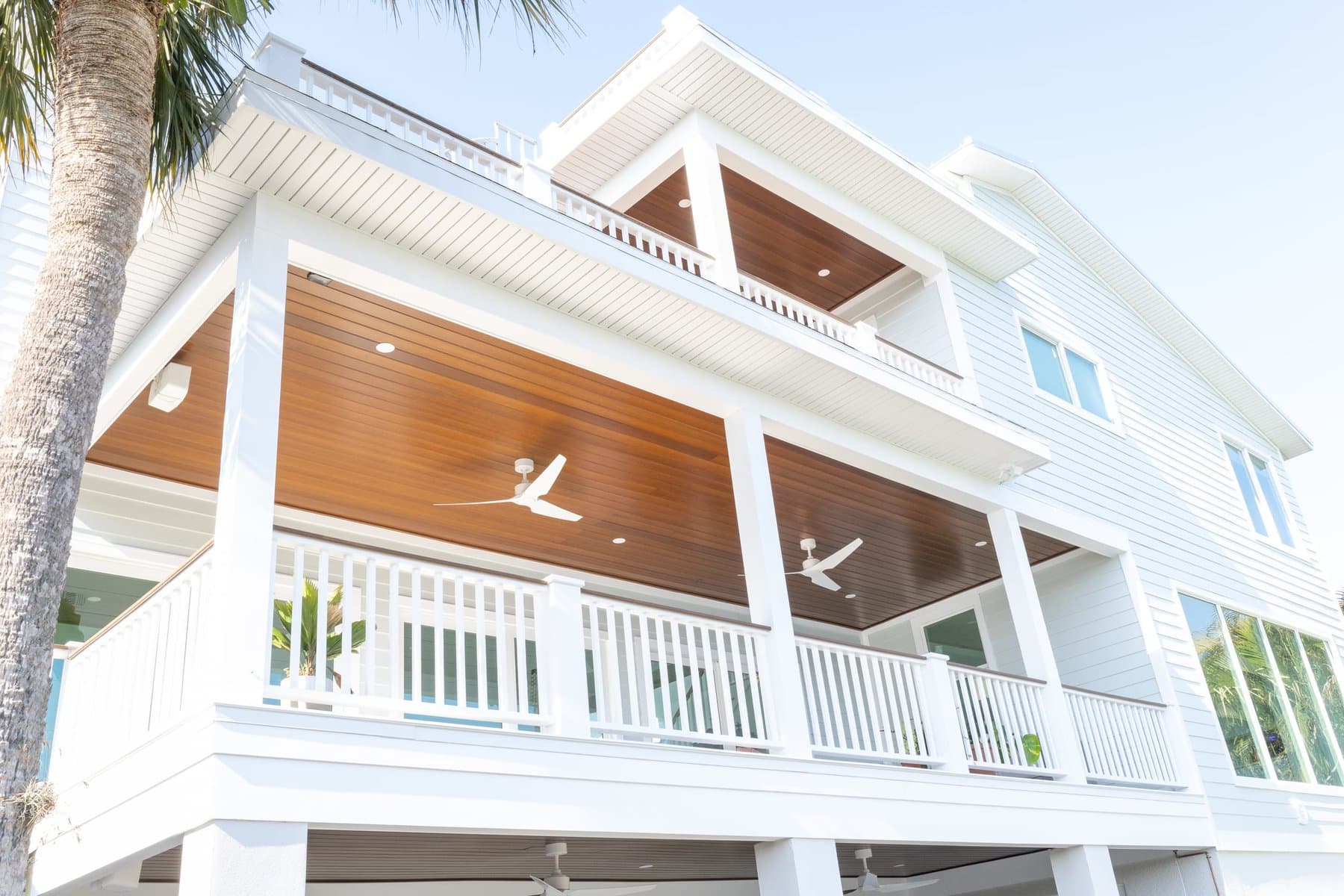
A Pinellas County flood zone is a FEMA-designated area on the county's Flood Insurance Rate Map (FIRM) where floodwater from a 1% annual-chance event (the “100-year flood”) is projected to reach. Zones AE, VE, X, and shaded X cover roughly 40% of Pinellas County parcels. Zone designation controls National Flood Insurance Program (NFIP) premiums, permit requirements, elevation obligations, and whether the FEMA 50% substantial-improvement rule can force a full elevation during a remodel.
If you own a home in Pinellas County, there's a good chance part of your property, or the entire thing, sits in a FEMA-designated flood zone. That's not a scare tactic; it's geography. Pinellas is a peninsula surrounded by Tampa Bay and the Gulf of Mexico, and much of its land sits at or near sea level. Flood zones are simply a reality of living here.
What matters is understanding what your flood zone designation actually means for your property, and what it means when you want to renovate. The rules governing flood zone construction and remodeling are specific, cumulative, and often misunderstood. Getting them wrong can be expensive. Getting them right, with the help of a general contractor whose flood zone construction service is built around Pinellas County's codes, can save you from costly surprises.
This guide covers everything you need to know: the FEMA zone types found across Pinellas, how to look up your property's designation, the critical 50% rule that governs renovations, what you can and cannot build below the Base Flood Elevation, and which Pinellas communities are most affected. We've worked Pinellas flood-zone construction on $20M+ of projects across Pinellas County over the past decade, what follows is the framework we use with every flood-zone client. Whether you're planning a whole-home renovation or a targeted upgrade, read this before you start.
Understanding FEMA Flood Zones in Pinellas County
FEMA's National Flood Insurance Program (NFIP) maps flood risk across the country using Flood Insurance Rate Maps (FIRMs). Every parcel in the U.S. falls into a flood zone designation. In Pinellas County, you'll encounter four primary zone types, and each comes with different requirements and risk levels.
Zone AE: High Risk with Detailed Base Flood Elevation
Zone AE is the most common high-risk designation in Pinellas County. These areas have a 1% annual chance of flooding, commonly called the “100-year flood”, and FEMA has established a specific Base Flood Elevation (BFE) for each location. The BFE tells you the height floodwaters are expected to reach during a major flood event.
For any new construction or substantially improved building in Zone AE, the lowest floor must be at or above the BFE. Pinellas County adds an extra layer on top of that: all new or substantially improved buildings must be built to BFE plus one additional foot. This “freeboard” requirement provides a buffer against the BFE being underestimated and reduces flood insurance premiums.
Zone VE: Coastal High Hazard with Wave Action
Zone VE is the most restrictive designation and is found along the Gulf-facing portions of Pinellas County's barrier islands and coastal areas. In addition to the high flood risk of Zone AE, VE zones also experience wave action, breaking waves during storm events. That additional force means structures must be built to a higher standard.
Key requirements in Zone VE include:
- Structures must be elevated on pilings or columns, a solid foundation is not permitted
- No fill may be placed under or near the structure
- Any enclosures below the BFE must use breakaway walls designed to collapse under flood loads without damaging the main structure
- Enhanced structural connections are required between the foundation system and the elevated structure
If you own property in a VE zone, renovation planning is more complex than in AE zones. A contractor without direct experience in coastal high-hazard construction can miss these requirements entirely. Tierra Verde, for example, carries VE designation on its east side facing the Skyway Bridge, requiring piling foundations, breakaway walls, and wave-action engineering on every project that triggers compliance. If you're planning new construction on a waterfront lot, our guide to waterfront home construction in St. Petersburg covers the full scope of what VE and AE zone building actually involves.
Zone X Shaded: Moderate Risk
Zone X Shaded (sometimes labeled Zone B on older maps) represents a moderate flood risk area, the 500-year floodplain. These properties have between a 0.2% and 1% annual chance of flooding. Flood insurance is not federally required here for federally-backed mortgages, but it is strongly recommended. Properties in this zone can still flood, and when they do, damage can be significant.
Zone X Unshaded: Minimal Risk
Zone X Unshaded areas are outside both the 100-year and 500-year floodplains. Flood risk is considered minimal, and there are no mandatory building elevation requirements tied to flood zone rules. However, “minimal risk” does not mean “no risk.” Drainage issues, heavy rainfall, and localized flooding can still occur in these areas.
How to Find Your Property's Flood Zone
Before you begin any renovation project, confirm your flood zone designation. Maps are updated periodically, and your property's designation can change. Here are the primary tools to use:
FEMA Flood Map Service Center
The FEMA Flood Map Service Center (msc.fema.gov) is the official source for flood zone information. You can enter your address and view the FIRM panel that applies to your property. This gives you the official zone designation and the associated BFE for AE zones.
Pinellas County Property Appraiser and GIS Tools
Pinellas County maintains GIS mapping tools that overlay flood zone data on parcel information. The Pinellas County Property Appraiser website (pcpao.gov) allows you to look up a property by address and see detailed information. For flood-specific mapping, the Pinellas County Environmental Management department also provides resources.
Elevation Certificates
An Elevation Certificate is a document prepared by a licensed surveyor that records the elevation of your structure relative to the BFE. If your home was built after the FIRM was established for your area, there may already be an Elevation Certificate on file with the city or county. This document is important for two reasons: it determines your flood insurance premiums, and it establishes the baseline for the 50% rule calculation. Before planning any significant renovation, get a current Elevation Certificate if you don't already have one.
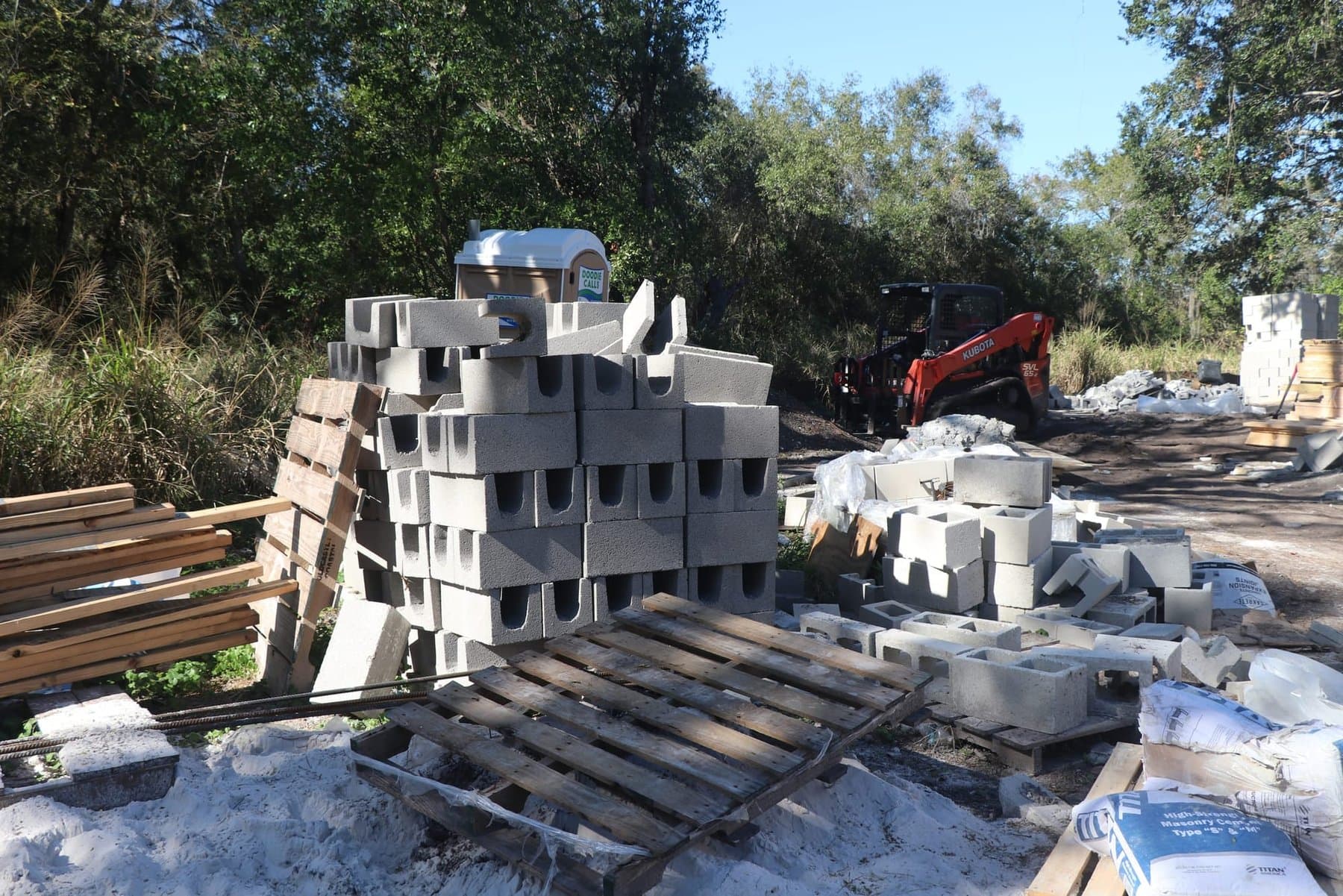
CMU block foundation work for an elevated coastal home in Pinellas County.
The 50% Rule: What Every Homeowner Must Know
This is the most important section in this guide. If you own a pre-FIRM home (built before the first Flood Insurance Rate Map was adopted for your area) in a high-risk flood zone, or any property in a flood zone where the existing structure does not meet current elevation requirements, the 50% rule will directly affect your renovation planning.
The rule is formally called the “Substantial Improvement” rule. The definition: if the total cost of renovation equals or exceeds 50% of the structure's pre-improvement market value, the entire structure must be brought into compliance with current flood zone requirements. That can mean elevating the building, changing the foundation, replacing materials below the BFE, an undertaking that can add tens of thousands of dollars to a project.
For a deeper dive into how the 50% threshold is calculated and what renovation costs count toward it, read our complete FEMA 50% rule guide. To see the pre-project appraisal and cumulative-tracking discipline that keeps a Pinellas renovation under the substantial-improvement cap, review the three-step approach in the same guide. If you're trying to disentangle the three terms FEMA uses, Substantial Improvement (voluntary scope), Substantial Damage (storm-triggered), and the 50% Rule itself, our three-term breakdown covers which trigger applies in which scenario.
Market Value of the Structure, Not the Land
The calculation is based on the market value of the structure itself, not the total property value including the land. In many Pinellas County waterfront communities, land value accounts for a significant portion of a property's total assessed value. That means the 50% threshold may be lower than you expect.
For example: if your property is assessed at $700,000 total but the structure is valued at $300,000 (the rest being land value), your 50% threshold is $150,000. A comprehensive kitchen and bathroom renovation could approach or exceed that number before you realize it.
Costs Are Cumulative Over 12 Months
This is where many homeowners get caught off guard. The 50% threshold is not calculated project by project, it is cumulative over a rolling 12-month period. If you do $80,000 in renovations in the spring and then pull a permit for another $90,000 project in the fall, the local floodplain administrator will add those together. Combined costs of $170,000 against a structure valued at $300,000 equals 56.7%, and your entire building must now comply with current flood codes.
Pinellas County and the individual municipalities track permitted work. When you pull a permit, that amount goes into the record. A knowledgeable contractor and floodplain administrator will help you understand where you stand before you commit to a scope of work.
Florida Building Code Section 1612.2, The State-Level Codification
The 50% rule is a federal NFIP (National Flood Insurance Program) requirement (44 CFR 59.1) but Florida enforces it through Florida Building Code Chapter 16 (Structural Design), Section 1612.2 (Flood Loads). Section 1612.2 requires that structures in FEMA-designated Special Flood Hazard Areas meet the ASCE 24 (Flood Resistant Design and Construction) referenced standard whenever substantial improvement or substantial damage is triggered. The current 8th Edition of the FBC references ASCE 24-14 (the 2014 cycle); the 9th Edition taking effect Dec 31, 2026 is expected to reference ASCE 24-24, which tightens flood-resistant materials specs and refines mechanical/electrical equipment placement below design flood elevation.
What this means at the permit desk: your local Pinellas floodplain administrator is calculating your scope against Section 1612.2 language and the referenced ASCE 24 cycle, not the loose "50% rule" summary. Some Pinellas jurisdictions apply a stricter local threshold on top of the state minimum, the City of St. Petersburg enforces at 49%, and Redington Shores enforces at 49%, but the enforcement framework is Section 1612.2.
What Happens When You Exceed the Threshold
If your renovation triggers Substantial Improvement status, the entire structure must meet current National Flood Insurance Program requirements, including Pinellas County's freeboard requirement of BFE plus one foot. For a structure that currently sits below BFE, that typically means:
- Elevating the structure on a new foundation system
- Installing flood openings in any enclosed areas below the BFE
- Replacing all non-compliant materials below the BFE with flood-resistant alternatives
- Bringing utilities and mechanical systems up to flood zone standards
Home elevation in Pinellas County is a major structural undertaking. The structural lift itself runs $150,000-$250,000 from the lift company, getting the house functional again adds $150,000-$300,000, and the full curb-appeal renovation that makes a raised foundation look intentional commonly pushes total budgets to $800,000-$1,000,000 on a 2,000-3,000 sqft home. See our house elevation cost guide for the full breakdown. If you're planning elevated new construction rather than lifting an existing home, our guide to elevated house plans for Florida flood zones covers piling vs. stem-wall foundations and VE/AE zone design differences. Strategic planning before you start renovating can help you phase work intelligently and avoid triggering this requirement prematurely.
Planning a Renovation in a Flood Zone?
Revolution Contractors has extensive experience navigating Pinellas County flood zone requirements. We help homeowners plan renovations that work within the 50% rule, and execute them correctly when elevation is required.
Get a free project consultation or call us at (727) 888-6161.
Building and Renovation Requirements by Zone
The requirements for construction and renovation in flood zones go beyond elevation. Materials, foundation types, and structural connections are all regulated. Here's a breakdown by zone type.
Zone AE Requirements
In Zone AE, the primary elevation requirement is that the lowest finished floor must be at or above BFE, with Pinellas County requiring BFE plus one foot. Any enclosed area below BFE, a garage, utility room, or storage space, must meet specific requirements:
- The space can only be used for parking, building access, or storage
- Flood openings (vents) must be installed to allow floodwaters to enter and exit without damaging the structure
- Only flood-resistant materials may be used at or below the BFE
- Utilities and mechanical systems must be elevated above BFE or protected from flood damage
Zone VE Requirements
Zone VE carries all of Zone AE's requirements plus additional structural mandates designed to withstand wave action:
- Open foundation required, pilings, columns, or piers only; a continuous concrete slab or masonry perimeter wall foundation is not permitted
- No fill material may be placed under or adjacent to the structure
- Any enclosures below the BFE must use breakaway walls, panels designed to collapse under flood and wave forces without transferring loads to the foundation
- Enhanced connections between the foundation system and the elevated structure are required to resist uplift and lateral forces
- The bottom of the lowest horizontal structural member must be at or above BFE
Flood-Resistant Materials Below BFE
This applies in both AE and VE zones. Any construction at or below the BFE must use flood-resistant materials, materials that can withstand direct contact with floodwater for at least 72 hours without significant damage. Standard residential construction materials are not flood-resistant. Prohibited materials below BFE include:
- Standard drywall (gypsum board)
- Particleboard, OSB, and standard plywood
- Carpet and carpet padding
- Standard fiberglass batt insulation
- Standard wood framing that has not been pressure-treated
Acceptable flood-resistant alternatives include concrete masonry units (CMU), pressure-treated lumber, ceramic tile, concrete, and certain types of rigid foam insulation. If you're renovating a space that sits at or below BFE, even a garage or utility area, the materials must comply.
Inspection Sequencing in Pinellas, Why Insulation and Rough-Ins Come Before Drywall
Pinellas County flood-zone permits typically require four inspection categories, building, electrical, plumbing, and mechanical, and the order matters. On a typical flood-repair scope, the sequence is: insulation inspection first (the City verifies the wall assembly meets the Florida Building Code R-value requirement, CBS block plus drywall already passes the minimum, but any wood-framed exterior wall or interior-to-garage wall requires added insulation), then plumbing rough-in (any fixture moved or replaced gets a pre-drywall inspection), then electrical rough-in (any submerged receptacle or piece of equipment is replaced; partial rewire is common if water rose above outlet height), then drywall final. Drywall cannot be hung until insulation, plumbing rough-in, and electrical rough-in are all approved, otherwise the City requires the drywall to be reopened for re-inspection. The sequence is identical whether the project is a voluntary renovation or a Post Disaster Emergency Permit (PDEP) repair.
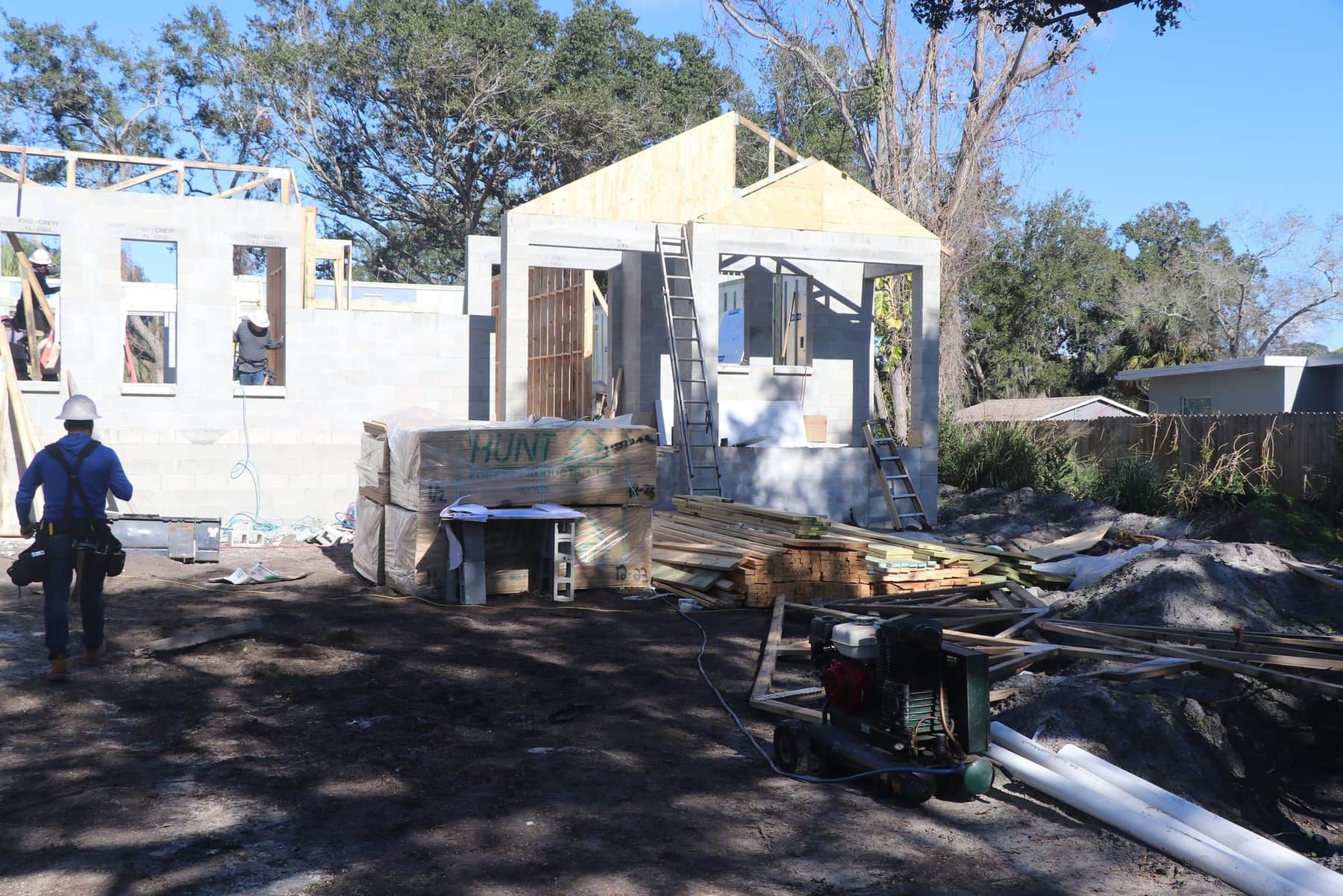
Elevated new construction framing, built above Base Flood Elevation from the ground up.
Flood Zone Remodeling: What Counts Toward the 50%
Understanding exactly what costs count toward the 50% threshold is critical for renovation planning. The calculation is broader than most homeowners expect.
Costs That Count
- Labor costs, all labor to complete the improvement, whether paid to contractors or done by the owner
- Materials, all construction materials purchased for the project
- Permit fees
- Architectural and engineering plans
- Contractor overhead and profit
- Site preparation and demolition
- Structural improvements, even those not related to flood damage
Costs That Generally Do Not Count
- Costs to bring a damaged structure back to its pre-damage condition (repair of flood, fire, or storm damage)
- Plans and specifications costs (varies by jurisdiction, confirm locally)
- Survey costs
- In some jurisdictions, certain routine maintenance items
It is worth noting that the rules for what counts can vary slightly between the city and county jurisdictions within Pinellas. The City of St. Petersburg, for example, administers its own floodplain regulations, as do St. Pete Beach, Gulfport, and other municipalities. Always verify with the specific jurisdiction's floodplain administrator before finalizing your renovation budget.
Strategic Phasing to Manage the Threshold
The 12-month cumulative window means that thoughtful phasing can make a real difference. If you know your home has a structure value of $350,000 and a 50% threshold of $175,000, you can plan renovation phases that stay within that limit in any given 12-month period. This is not a loophole, it's legitimate project management. A contractor who understands this calculus can help you maximize what you get done while avoiding an unplanned elevation requirement.
The key is documentation. Keep records of every permitted project, every expenditure, and every valuation. Your local floodplain administrator maintains these records, but having your own file protects you.
Pinellas County Areas Most Affected by Flood Zones
While flood zones exist throughout Pinellas County, several communities have particularly high concentrations of flood zone properties. If you own or are considering buying in any of these areas, flood zone planning is not optional, it's foundational to any renovation project.
St. Pete Beach
The entire City of St. Pete Beach, all 2.2 square miles of it, is in a flood zone. The barrier island community sits in a combination of VE and AE zones, with the Gulf-facing western portions carrying the more restrictive VE designation. With a median home value of over $706,000, many properties here are high-value assets where renovation budgets can approach the 50% threshold quickly. Every renovation project in St. Pete Beach requires flood zone planning from day one.
Tierra Verde
Tierra Verde is Pinellas County's southernmost island community, with median home values between $767,000 and $1,250,000. The western side of the island falls in AE zones, while the eastern side carries VE designation. The combination of high land values, high structure values, and dual zone types makes Tierra Verde one of the most complex renovation environments in the county. The piling-foundation requirement in VE zones means any new construction or substantial improvement on the east side must be engineered for wave action.
Gulfport
One-third of the City of Gulfport sits within the 100-year floodplain. That is a significant portion of a small city with a housing stock that is 46% built between the 1940s and 1960s. These older homes predate flood zone requirements and often sit below current BFE levels. In Gulfport, the combination of older structures, lower structure values (which produce a lower 50% threshold), and significant flood zone coverage means that even modest renovations, a bathroom remodel combined with a kitchen update, can bring a homeowner close to the threshold. Careful planning is essential.
Shore Acres
Shore Acres is a waterfront neighborhood in northeast St. Petersburg characterized by canal-front homes and mid-century ranch-style housing from the 1950s and 1960s. The neighborhood's canal network and low elevation put much of it in AE flood zones. The mid-century ranch style, single-story, slab-on-grade construction, often sits at or just above current grade, with little to no elevation above BFE. Homeowners planning significant renovations should obtain an Elevation Certificate to understand exactly where they stand relative to BFE before budgeting.
Venetian Isles
Venetian Isles is a waterfront peninsula in northeast St. Petersburg with extensive AE zone coverage. The neighborhood's canal-front lots and mid-century homes face the same 50% cumulative threshold considerations as Shore Acres, and Elevation Certificates are essential before budgeting any significant renovation.
The Barrier Islands Generally
Beyond the communities listed above, the barrier island chain that runs along Pinellas County's Gulf coast, including Sand Key, Clearwater Beach, and Indian Rocks Beach, carries extensive flood zone designations. If your property is on or adjacent to a barrier island, assume flood zone rules apply and verify the specifics before any renovation planning.
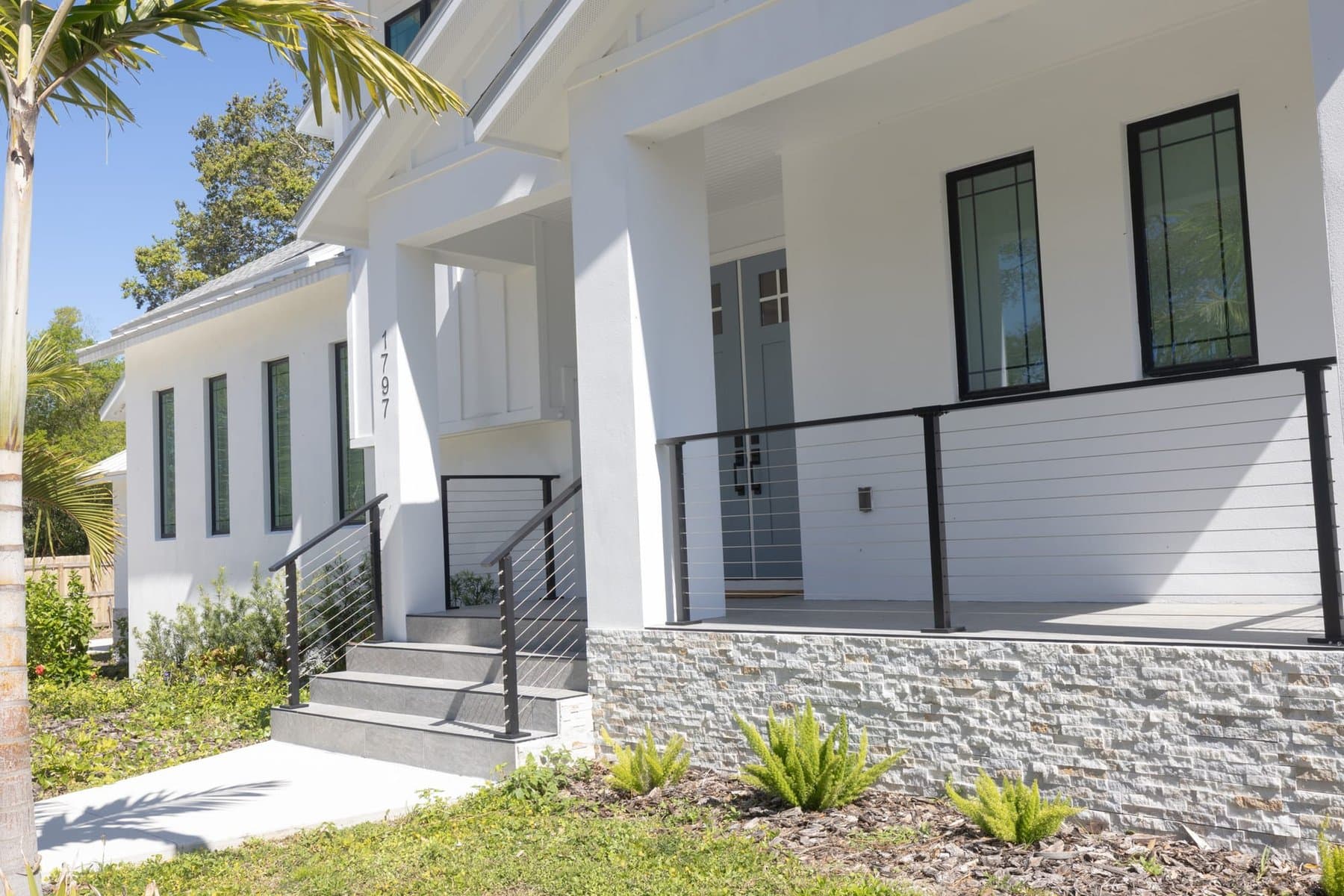
A completed elevated home on Harbor Drive, designed for flood compliance without sacrificing curb appeal.
Working with a Contractor Who Understands Flood Codes
Flood zone renovations are not a specialty niche, in Pinellas County, they are a core competency that any contractor working in coastal communities must have. But the reality is that many general contractors are not deeply familiar with FEMA's Substantial Improvement rules, Pinellas County's freeboard requirement, or the distinction between AE and VE zone construction standards.
The consequences of working with a contractor who does not understand these rules can be serious: pulling permits that trigger the 50% threshold unexpectedly, installing non-compliant materials below BFE that fail inspection, or completing work without understanding how it affects future renovation capacity. Any of these outcomes creates problems that are expensive to correct.
What to Look for in a Flood Zone Contractor
When evaluating contractors for a project in a flood zone, ask specifically about their experience with:
- Substantial Improvement calculations and 50% rule planning
- Pinellas County's specific freeboard requirement and how it applies to your project
- Flood-resistant material selection and installation below BFE
- VE zone construction if your property carries that designation
- Permitting coordination with local floodplain administrators
- Elevation Certificate review and interpretation
Revolution Contractors has worked extensively in Pinellas County's flood zone communities, from Shore Acres canal-front homes to Tierra Verde and St. Pete Beach. As an experienced flood zone contractor in St. Petersburg, we understand the permitting requirements, the material specifications, and the planning considerations that flood zone renovations demand. We coordinate directly with floodplain administrators to make sure your project is documented correctly and your 50% tracking is accurate.
Whether you're planning a comprehensive home remodel or a targeted upgrade like a new kitchen renovation, we can help you understand how flood zone rules apply to your specific situation before any money is committed.
Frequently Asked Questions
Do I Need Flood Insurance if I'm in Zone X?
If you have a federally backed mortgage and your property is in Zone X, either shaded or unshaded, flood insurance is not federally required. However, it is still strongly recommended, particularly in Zone X Shaded (moderate risk). Flooding can and does occur in Zone X properties, especially during major storm events. The cost of flood insurance for Zone X properties is typically much lower than for high-risk zones, making it a reasonable investment for the protection it provides.
How Do I Get an Elevation Certificate?
An Elevation Certificate must be prepared by a licensed land surveyor, professional engineer, or architect. To get one, contact a licensed surveyor in Pinellas County and request an Elevation Certificate for your property. Before ordering one, check with your local municipality, many cities in Pinellas County maintain a library of Elevation Certificates for properties in their jurisdiction, and yours may already be on file. If it is, you can obtain a copy at no cost or for a nominal fee. Elevation Certificates typically cost $400–$800 if you need to commission a new one.
Can I Renovate My Home Without Triggering the 50% Rule?
Yes, in many cases. If the total cost of your renovation, including all permitted work within the 12-month window, stays below 50% of your structure's market value, you do not trigger the Substantial Improvement requirement. The key is knowing your structure's market value (not total property value), tracking all cumulative renovation costs, and phasing work strategically if needed. A contractor experienced in flood zone work can help you plan a project scope that maximizes what you accomplish while staying within the threshold.
What Happens if My Renovation Exceeds the 50% Threshold?
If your project is determined to be a Substantial Improvement, the entire structure must be brought into compliance with current flood zone regulations before the renovation can be completed. This typically means the building must be elevated to BFE plus the local freeboard requirement (BFE + 1 foot in Pinellas County). The work cannot proceed until a plan for bringing the structure into compliance is approved. This is not a fine or penalty, it is a condition of the permit. The cost to elevate a home in Pinellas County varies widely based on size and foundation type; total elevation budgets commonly land in the $800,000-$1,000,000 range once the lift, functional reconnect, and curb-appeal renovation are all factored in.
How Much Does It Cost to Elevate a Home in Pinellas County?
Home elevation costs in Pinellas County depend on size, foundation type (slab-on-grade vs. crawl space vs. existing pilings), required elevation height, and utility disconnection complexity. The structural lift itself runs $150,000-$250,000 from the lift company. Getting the house functional after the lift adds another $150,000-$300,000, and full renovation to make the raised foundation look intentional adds $500,000 or more. Total costs for a complete lift project in Pinellas County typically land between $800,000 and $1,000,000 on a 2,000-3,000 sqft home. Homes on existing pilings that need additional height may be less expensive than slab-on-grade homes that need a full foundation replacement. Get multiple bids from contractors with documented elevation project experience, and factor the elevation cost into your overall renovation budget from the start.
Conclusion
Owning property in a Pinellas County flood zone does not mean you can't renovate, it means you need to renovate smart. Understand your FEMA zone designation. Get your Elevation Certificate. Know your structure's market value and your 50% threshold. Track cumulative costs across all permitted work. And work with a contractor who treats flood code compliance as a core part of project planning, not an afterthought.
The homeowners who run into expensive problems are typically the ones who started renovation planning without this foundation. A project that inadvertently triggers the Substantial Improvement rule, turning a $120,000 kitchen and bathroom renovation into a $200,000+ project with mandatory elevation work, is a preventable outcome.
If your home was permitted before 2008 and you're planning hurricane-hardening work (impact windows, roof upgrades, reinforced openings), the state's My Safe Florida Home grant can cover up to $10,000 of those costs, and we sequence the scope so it doesn't trip the 50% threshold.
For homeowners considering a full elevation or compliant rebuild instead of incremental hardening, the FDEM-administered Elevate Florida program can offset up to 75% of approved mitigation costs, though the first round's approval rate ran in the single digits, and the eligibility math is specific. The full breakdown of who qualifies, what documents to assemble, and what the program will and won't fund is worth reading before you apply.
FEMA 50% Rule experts since 2018, if you're planning a renovation in St. Pete Beach, Tierra Verde, Gulfport, Shore Acres, or anywhere else in Pinellas County where flood zones apply, our flood zone construction team is ready to help you plan it correctly. We've completed $20M+ of Pinellas flood-zone work across the county and know the local requirements inside and out. Contact us to discuss your project or call us directly at (727) 888-6161.