Who We Build For

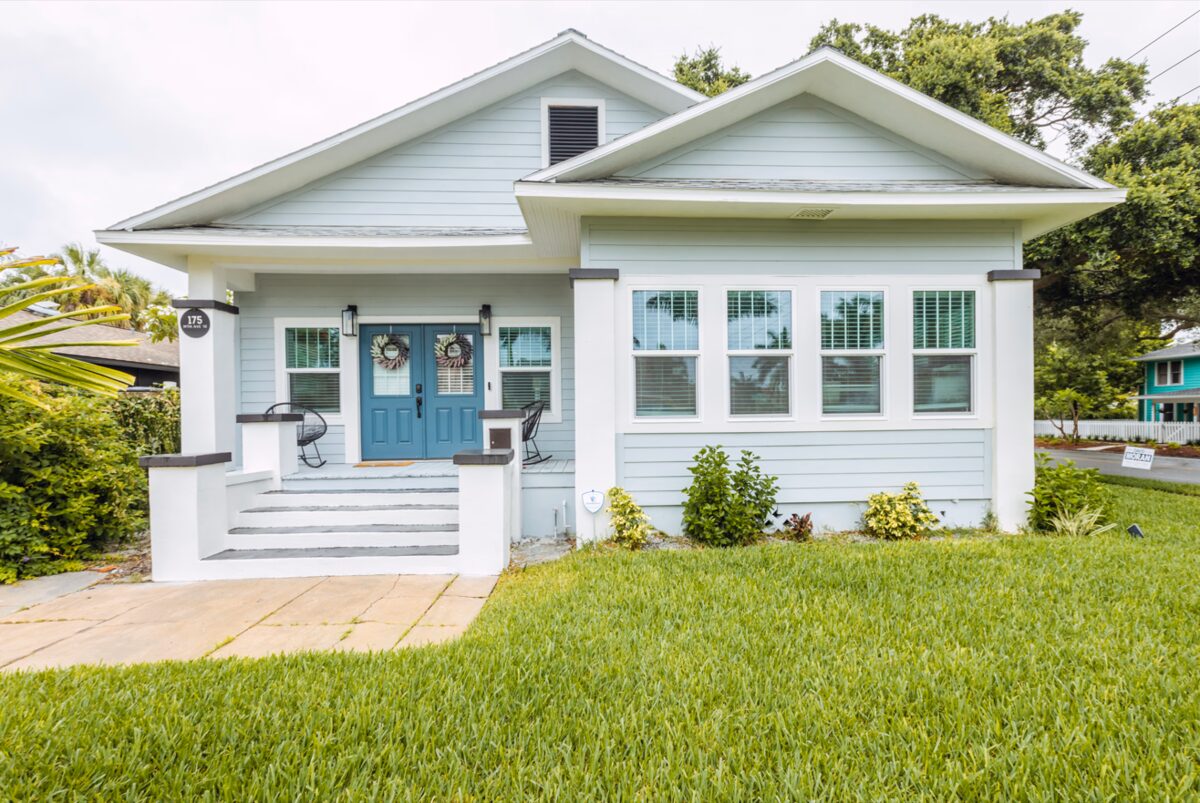
St. Petersburg storefront tenant buildout — small commercial owner ICP

Small to Mid-Size Commercial Owners

Restaurant operators, retail tenants, professional offices, and specialty businesses moving into a 2,000 to 5,000 sqft St. Petersburg space. Projects in the $1 to $5 million range where finish quality and schedule reliability matter as much as the bid number. Our 20+ W-2 carpenters bring residential-level craftsmanship, and Florida CRC1331628 (residential) + BC005541 (commercial) licenses cover the full commercial scope from tenant fit-out (TI) and 2nd-gen build-outs to ADA-triggered restroom upgrades. Family-owned since 2016. Same weekly open-book budget reports — flat 30% markup, every invoice visible — that we run on high-end residential remodels.

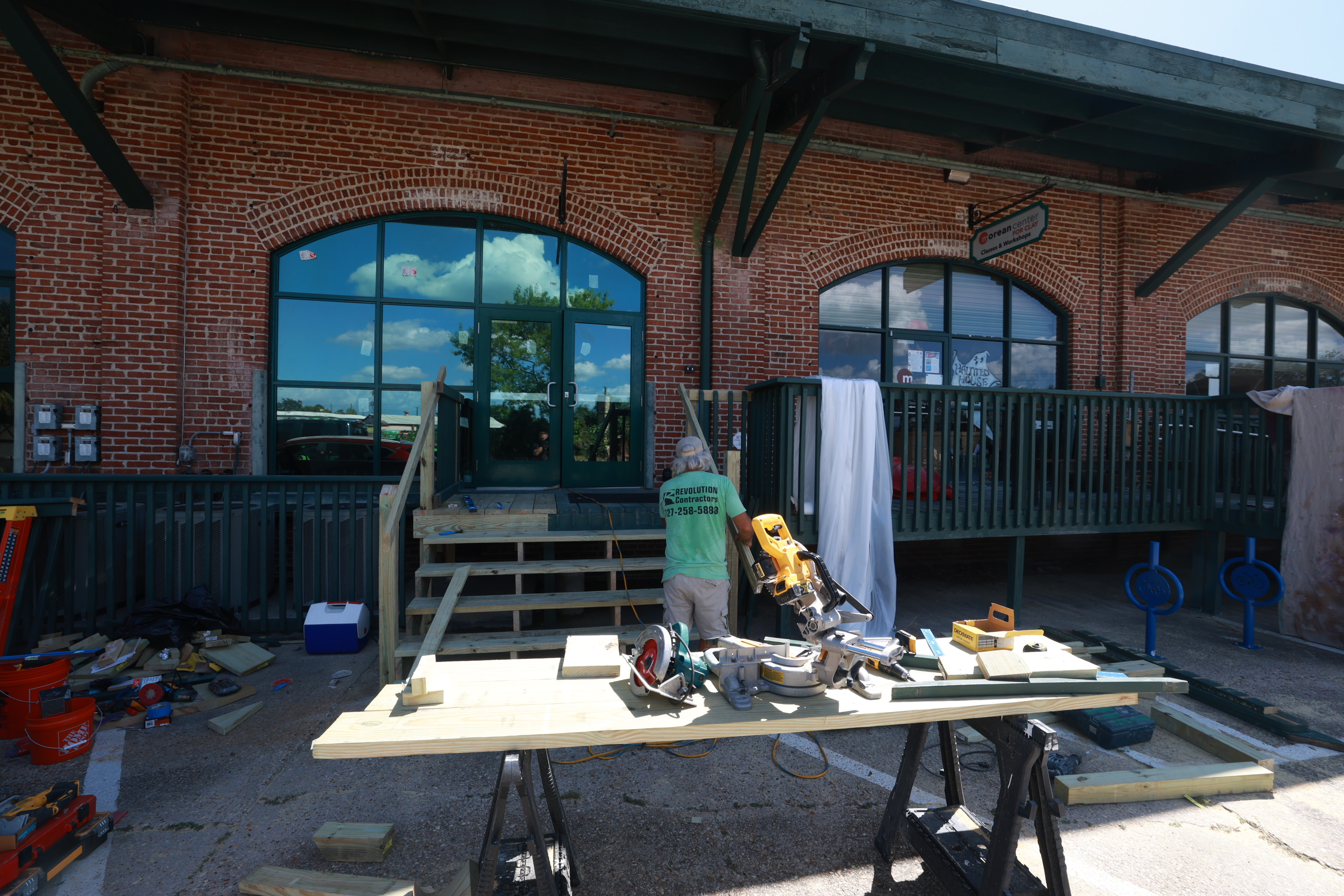
Custom millwork commercial buildout in St. Petersburg — design-firm ICP

Design Firms + Architects Looking for a GC Partner

Local architects, interior design firms, and project managers who need a commercial GC that can carry custom millwork, specialty MEP, and ADA-triggered scope without losing the design intent. We work as a hybrid — partnering with independent designers and architects on each project rather than carrying in-house designers on salary — so we are used to plugging into your team. Florida CRC1331628 (residential) + BC005541 (commercial) licenses, family-owned since 2016, 20+ W-2 carpenters on payroll. We coordinate the design-build approach without competing with your design team — Revolution runs the construction; your architect’s intellectual property stays with the architect.

When projects need a commercial GC

Commercial buildout work in St. Petersburg runs across distinct corridors with distinct constraints. Downtown St. Pete — Central Avenue, 1st Avenue North, Beach Drive, Mirror Lake — is the highest-density storefront, restaurant, and tenant fit-out (TI) corridor; most building stock dates 1920s-1960s and triggers ADA Title III upgrades plus IBC occupancy reclassification on any permit. Grand Central District and the EDGE District are the highest-growth commercial corridors, with arts-district retail, restaurant, and brewery tenants moving into older warehouse and mixed-use stock — vanilla shell to 2nd-gen build-out scope is common. Gateway and Carillon Park are office and professional-services territory — newer construction, larger floor plates, FF&E coordination on Type V-A and Type V-B construction. Warehouse Arts District and Skyway Marina District round out the south-of-downtown corridors where adaptive-reuse buildouts on pre-1950 commercial stock are common. Old Northeast retail and professional corners (4th Street North, Beach Drive at 5th) trigger Local Historic District Certificate of Appropriateness review on any exterior change — the same dual-track process as a residential historic remodel.

Commercial space change of use requiring remodel

“We Bought a Retail Space and Want to Open a Restaurant”

A new business triggers IBC occupancy reclassification — grease traps, three-compartment sinks, Type I hoods. Common on Central Avenue storefronts flipping to food service.

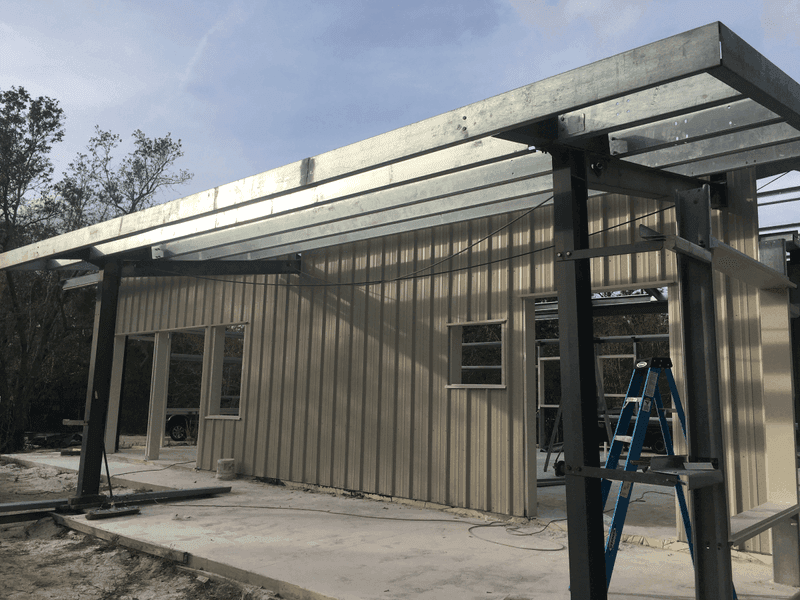
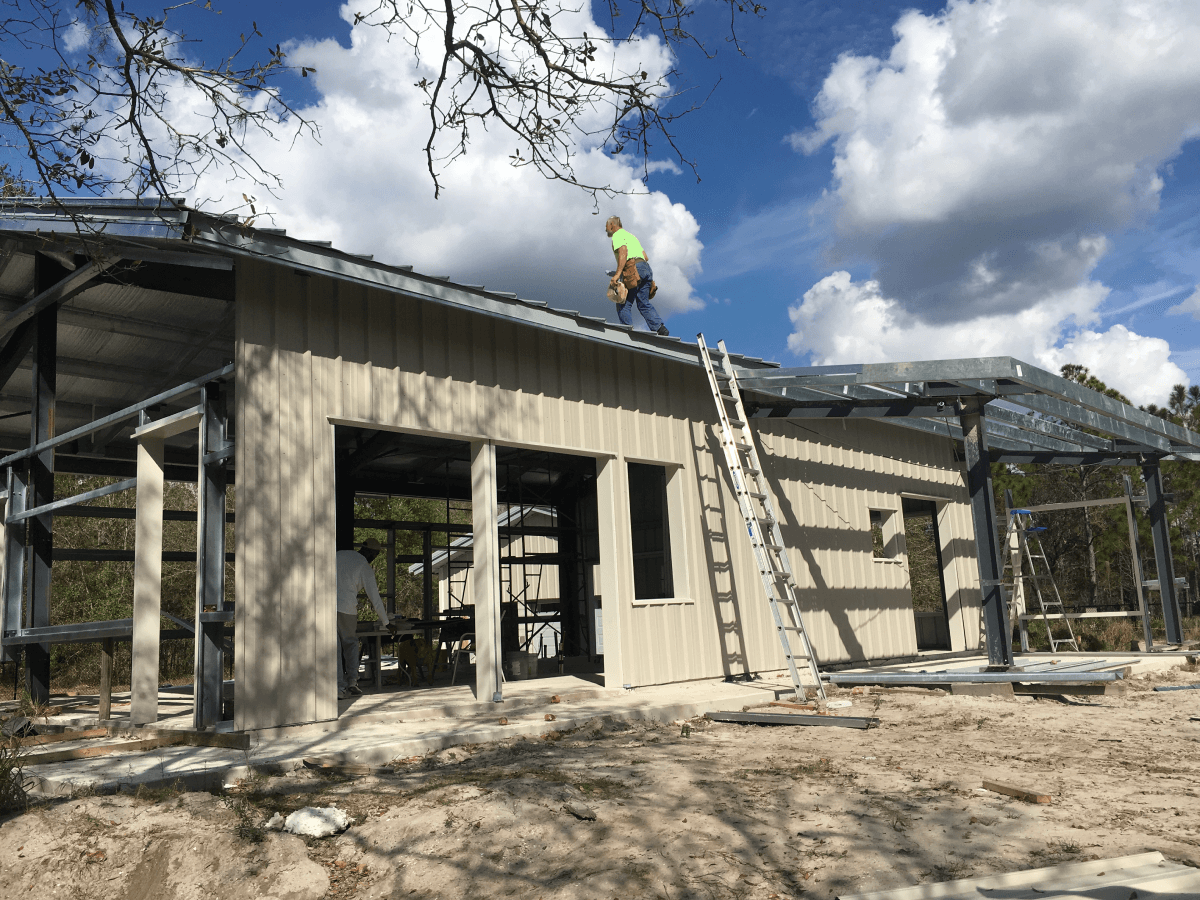
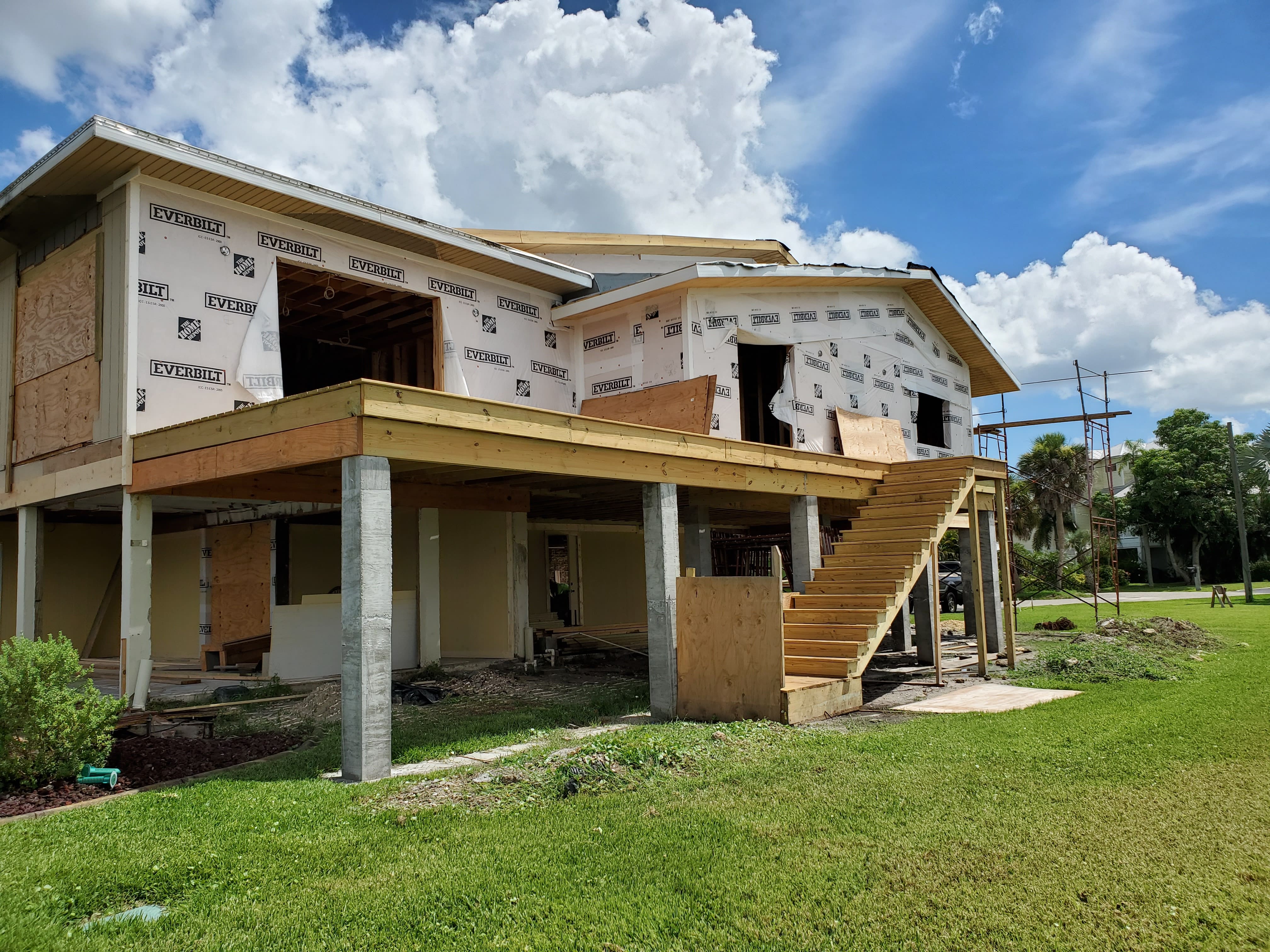
Raw commercial space needing buildout

“We Signed a Lease on a Bare Concrete Shell”

Bare slab, no drywall, no MEPs. Framing, electrical panels, and plumbing rough-in all built from scratch to match your business vision.

Outdated commercial space with dated finishes

“Our 1980s Storefront Looks Tired Next to the New Tenants”

Dated tile, worn millwork, peeling paint — clients notice. Upgrading keeps you competitive in Grand Central and EDGE storefronts where neighbors are mid-renovation.

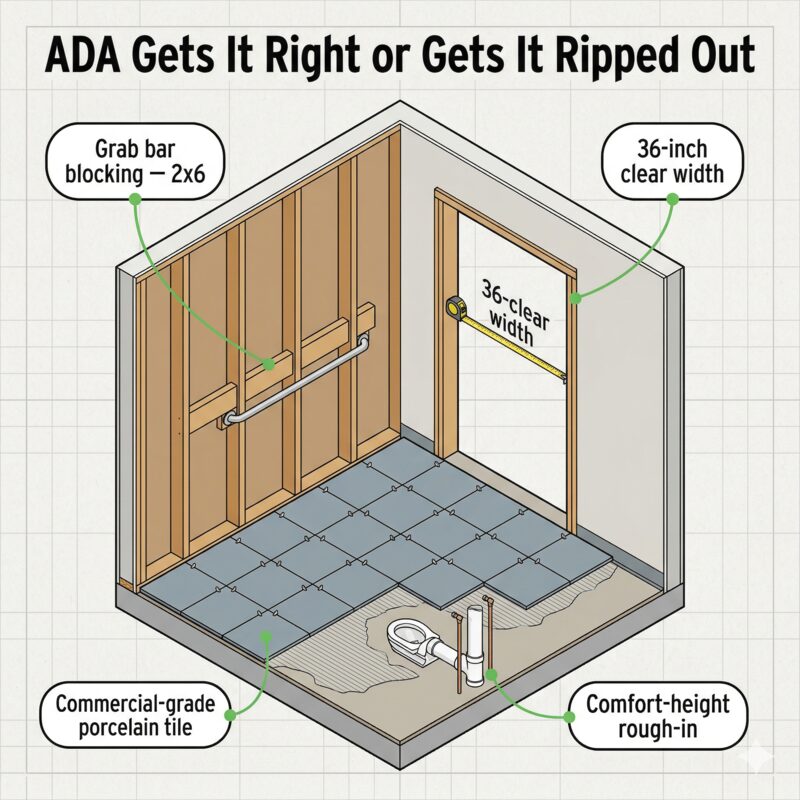
Commercial space with ADA compliance issues

“The City Said Our Bathrooms Don’t Meet ADA Anymore”

Any permit triggers ADA 2010 upgrades — accessible restrooms with 60-inch turning radius and 36-inch doorways. Plan for Title III now, not after the citation.

Raw concrete shell commercial space before tenant fit-out (TI) in St. PetersburgBefore
Completed restaurant build-out with custom millwork, Type I hood, and porcelain tile after Revolution TI scopeAfter
St. Pete commercial corridor — vanilla shell to 2nd-gen restaurant build-out with full MEP coordination

Commercial corridors we work

Most of our commercial work runs through three corridors. Downtown St. Petersburg — Central Avenue, 1st Avenue North, Mirror Lake — is the highest-density corridor for storefronts, restaurants, and tenant buildouts; many of the buildings here date from the 1920s through the 1960s and trigger ADA Title III upgrades on any permit. Adjacent Old Northeast and Granada Terrace commercial corners at 4th Street North and Beach Drive sit inside St. Petersburg Local Historic Districts and add Certificate of Appropriateness (COA) review on any exterior change. Grand Central District and the EDGE District are the highest-growth commercial corridors, with arts-district retail and restaurant tenants moving into older warehouse and mixed-use stock.

Gateway and Carillon Park are where the office and professional-services work lives — newer construction, larger floor plates, and lower historic-context overhead. Warehouse Arts District and the Skyway Marina District round out the south-of-downtown corridors where adaptive-reuse buildouts on pre-1950 commercial stock are common.

Some of these corridors fall inside FEMA AE flood zones — commercial buildings in St. Pete’s FEMA flood zones face the same 50% substantial-improvement rule that drives residential elevation decisions. And where commercial parcels sit in a Local Historic District — most commonly in Old Northeast and Granada Terrace — exterior changes trigger Certificate of Appropriateness review, the same as a historic commercial building renovation.

What a commercial permit involves

Commercial plan review at the City of St. Petersburg is structurally different from residential. Every commercial permit application gets reviewed against the Florida Building Code Commercial volume (separate from FBC Residential), the IBC occupancy classification system (Group A for assembly / restaurant, Group B for business / professional office, Group M for mercantile / retail, Group F for factory / industrial), and the 2010 ADA Standards for Accessible Design with Title III private-sector requirements. The building official routes plan review through structural / mechanical / electrical / plumbing (MEP) sub-reviewers and then sends the application to the fire marshal’s office for a parallel review that runs independently. Plan review typically takes 3-6 weeks for commercial — longer than residential — and complex projects with occupancy reclassification (retail-to-restaurant change-of-use, office-to-medical-adjacent) can stretch to 8-12 weeks.

Construction classification matters more than most tenants realize. Type V-A (protected wood frame) and Type V-B (unprotected wood frame) are the two most common classifications for small commercial in St. Pete — they cap allowable floor area, allowable occupancy, and require specific fire-resistance ratings at structural assemblies. Older Downtown stock often sits in Type III-B (non-combustible masonry exterior with wood interior framing) and Gateway / Carillon office buildings frequently run Type II-B (non-combustible throughout). Construction classification drives sprinkler trigger thresholds, egress door count and width, occupancy load calculations (1 occupant per 7-15 sqft for assembly, 1 per 100 sqft for business, 1 per 60 sqft for mercantile), and the fire-resistance ratings of every structural assembly and demising wall. Get the classification wrong on the plan submittal and the entire scope gets red-lined back.

The TI scope spectrum — vanilla shell to 2nd-gen build-out. Commercial tenant improvement (TI) work spans four discrete starting conditions, each with different cost and timeline implications. Cold dark shell — bare concrete slab, no HVAC, no electrical service to the demising lines, no fire suppression stub-outs, no plumbing rough-in beyond the building core — is the most expensive starting point ($150-$250/sf for the TI itself plus base-building MEP extensions). Vanilla shell — concrete slab with HVAC, electrical service to a panel, fire suppression mains stubbed, plumbing rough-in to the closest core — is the most common landlord delivery condition ($100-$200/sf for the TI). 2nd-gen build-out — the previous tenant’s improvements still in place, with the lease-signed scope reconfiguring the existing floor plan — runs $50-$150/sf depending on how much demolition and MEP reconfiguration the new use requires. Vanilla shell + landlord allowance arrangements (a TI allowance applied against landlord-delivered improvements) trigger careful invoice tracking against the allowance schedule, which is where our open-book Time & Materials with weekly budget reports earns its keep.

MEP coordination is where small commercial GCs commonly fail. Mechanical (HVAC, including Type I and Type II vent hoods for restaurants), electrical (panel sizing, conduit routing, occupancy-sensor lighting per FBC commercial energy provisions), and plumbing (grease interceptors for restaurants, three-compartment sinks per FDA Food Code and Pinellas County Health Department, Schluter Kerdi waterproofing on tile shower walls if the scope includes a public shower) all have to lay out before drywall closes. We coordinate the MEP trade roster from pre-construction through above-ceiling rough-in inspection — every trade sees the others’ drawings, every conflict gets resolved at the table not in the field. FF&E (furniture, fixtures, and equipment) coordination — owner-supplied pizza ovens, walk-in coolers, custom-fabricated bar tops — gets sequenced into the schedule and the punch list so the building doesn’t get certified for occupancy before the FF&E is installed and inspected.

The fire marshal’s track runs separately. St. Petersburg fire marshal review is conducted by an independent office inside the building department with minimal day-to-day oversight from the building official. Fire marshal plan review typically takes 1-3 weeks (running in parallel with the main building review) and includes NFPA 13 wet-pipe sprinkler design (triggered by square footage and occupancy class — small offices under 12,000 sqft may not require sprinklers, restaurants and assembly Group A generally do regardless of size), UL 300-rated Ansul R-102 wet-chemical kitchen hood suppression for any Type I hood serving commercial cooking equipment, IBC egress calculations including door counts and minimum 32-inch clear widths (36-inch preferred per ADA §404), and emergency lighting and exit signage on 90-minute battery backup per NFPA 70. The fire marshal also conducts framing, above-ceiling, and final on-site inspections separate from the building official’s inspections. Co-owner Jeremy’s words from the From-the-Field section above — “they administer fire safety on their own without a lot of oversight from the building department” — are not a complaint, they’re a scheduling reality. We coordinate every fire marshal interaction directly.

ADA Title III is non-negotiable on any permit. Any commercial permit application — including TI scopes that don’t touch the bathrooms — triggers a current-ADA-Standards review of the entire premises. ANSI A117.1 is the consensus accessibility standard the Florida Building Code references; the 2010 ADA Standards for Accessible Design are the federal Title III regulation enforced via private right-of-action (drive-by lawsuits are a real risk in Florida). Accessible restrooms (§603/604/609 — 60-inch turning radius, 33-36 inch grab bar mounting, 17-19 inch comfort-height toilets at Toto / Kohler / American Standard commercial fixtures, 34-inch maximum counter rim height per §606), door widths (§404 — 32-inch minimum clear, 36-inch preferred), ramps and accessible entries (§405 — 1:12 maximum slope, detectable warning surfaces at parking-lot curb cuts), and tactile/Braille signage (§703) all get reviewed. Budget the ADA-trigger uplift from day one — the cheapest TI is the one that doesn’t get red-lined.

“The fire crew inside the building departments are their own fiefdom — they administer fire safety on their own without a lot of oversight from the building department. So they can be difficult to work with. Those ADA and fire requirements need to be considered early because they can add significant cost, especially to an older space that a first-time space buyer won’t have encountered before.” — Jeremy, Revolution co-owner
Our Commercial Construction Process

Timeline

Tenant Buildout

Raw space to functional business—framing, MEP, finishes

2-3 months

Standard Remodel

Refresh finishes, update layout

3-4 months

Complex Remodel

ADA upgrades, NFPA 13 sprinklers, commercial HVAC

4-6 months

Commercial projects move faster than residential—business owners are decisive and emotion is lower.

Sequence of Work

1

Design & Permits

ADA Title III, fire marshal review, IBC occupancy classification, FBC Commercial Type V-A or V-B construction class, zoning (3-6 week plan review)

2

Demolition

Remove existing finishes and fixtures

3

MEP Rough-In

Mechanical, electrical, plumbing

4

Framing & Drywall

Metal studs, USG Sheetrock, Georgia-Pacific DensArmor in wet areas

5

Fire Suppression

NFPA 13 wet-pipe sprinklers, Ansul R-102 kitchen hoods

6

Finishes

Porcelain tile, custom millwork, SW Pro Industrial paint, LVP/epoxy flooring

7

Fixtures & Equipment

Toto/Kohler/American Standard commercial fixtures, specialty equipment

8

Final Inspections

Building official, fire marshal, Pinellas County Health Dept

9

FF&E Coordination & Owner Punch List

Furniture, fixtures, equipment (FF&E) installation, owner-supplied equipment integration (pizza ovens, walk-in coolers, custom bar tops), final punch list, Certificate of Occupancy

Our Commercial Projects

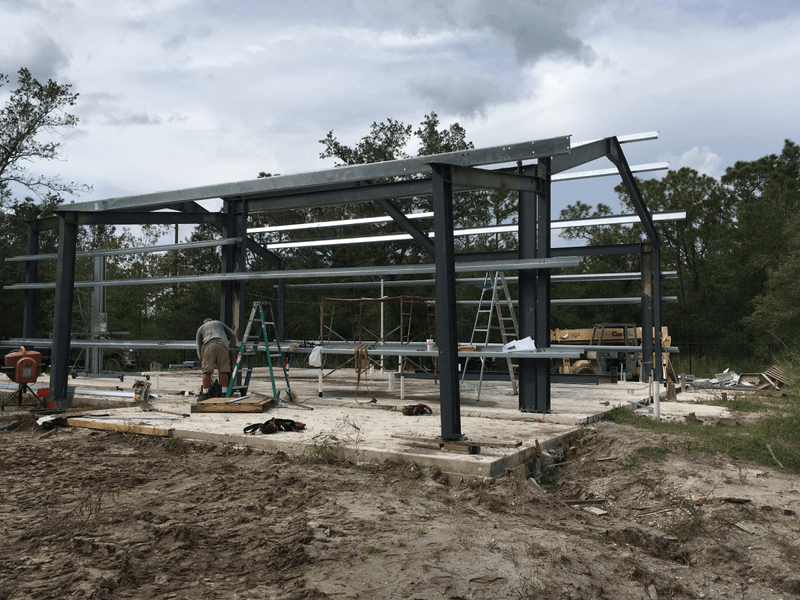
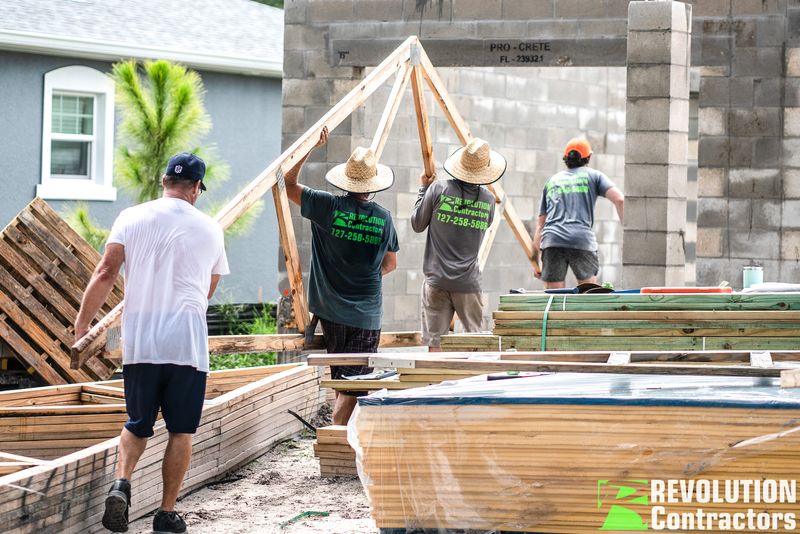
St. Petersburg commercial storefront buildout
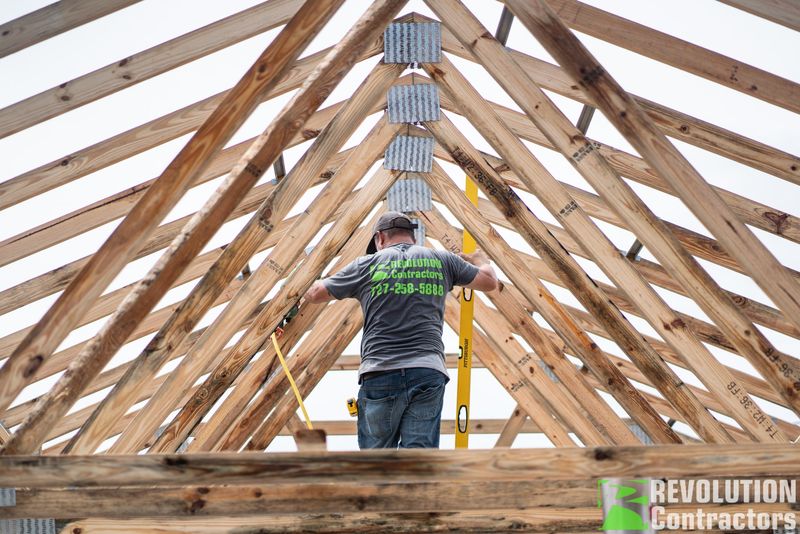
Tampa Bay commercial remodel project
Restaurant tenant improvement in St. Petersburg
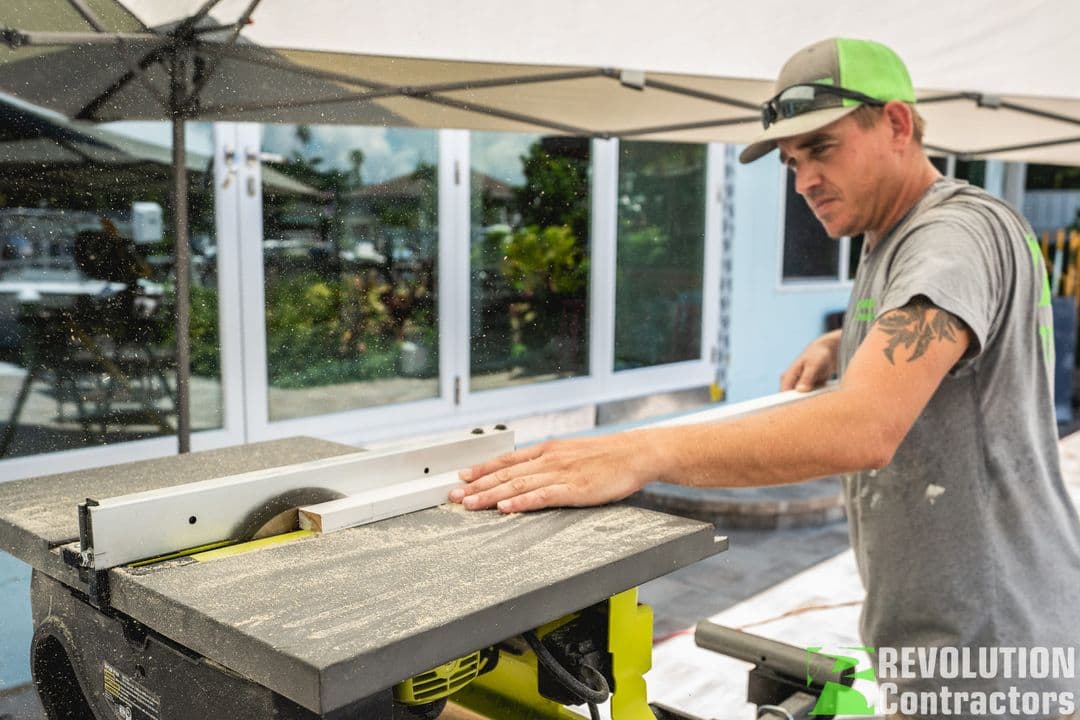
Commercial space renovation with custom millwork
St. Pete commercial kitchen buildout
Commercial remodel with ADA-compliant features

Staying Open During Construction

If you need to stay open, we can work after hours, section off parts of your space with 6-mil poly barriers and HEPA-filtered negative air machines, or help with temporary arrangements. We're mindful of dust, fumes, and customer experience. Containment and protection depend on your business type—restaurants need higher standards than retail. Our crew typically runs 4-6 people on phased commercial jobs to minimize footprint.

Faster Than Residential

Commercial projects often move at a quicker pace because business owners are more decisive and there's less emotional attachment to finishes. We still take the same care with quality, but decision-making is streamlined.

Reviewed by Jeremy, Revolution co-owner — last updated April 2026
What commercial construction costs

For a full breakdown of storefront buildouts, tenant improvements, and ADA trigger thresholds, read our commercial renovation guide for St. Pete. Cost ranges below come from Revolution’s actual project history in Downtown St. Petersburg, Grand Central, Gateway, and Carillon corridors — not industry averages — and reflect Florida Building Code Commercial volume requirements that apply across Pinellas County.

Storefront Refresh

$100–$150/sqft

Sherwin-Williams Pro Industrial paint, LVP or porcelain tile flooring, custom millwork, LED lighting. Minimal MEP work.

Tenant Buildout

$150–$250/sqft

Complete build from raw space—metal stud framing, full MEP, ADA Title III compliance

Restaurant Build

$200–$300+/sqft

Commercial kitchen, Type I vent hoods, Ansul R-102 suppression, walk-in coolers, three-compartment sinks

Our sweet spot: $1 to $5 million projects where relationship and custom work matter more than the lowest bid.

What Drives Commercial Costs

  • ADA compliance: Accessible restrooms with 60-inch turning radius, 36-inch doorways (most existing measure 30-32 inches), slope-compliant ramps—any project going for permit requires current ADA 2010 Standards
  • Fire suppression: NFPA 13 wet-pipe sprinkler systems, UL 300-rated Ansul R-102 kitchen hood suppression—fire marshal conducts separate plan review and on-site inspections
  • Egress requirements: 42-inch minimum aisle width, exit door counts based on IBC occupancy load calculations
  • Commercial HVAC: Type I restaurant vent hoods with make-up air units, walk-in refrigeration, specialized rooftop package units
  • MEP coordination: Mechanical (Type I/II vent hoods), electrical (panel sizing, occupancy-sensor lighting per FBC commercial energy provisions), plumbing (grease interceptors, three-compartment sinks, Pinellas County Health) — coordinated from pre-construction through above-ceiling rough-in inspection. Adds 8-15% to base TI scope.
  • FF&E coordination: Furniture, fixtures, equipment — owner-supplied pizza ovens, walk-in coolers, custom bar tops — sequenced into the schedule and punch list. Adds 3-7% to base TI scope when GC handles coordination.
  • Construction classification: Type V-A (protected wood frame) and Type V-B (unprotected wood frame) drive sprinkler triggers, occupancy load (1 occupant per 7-15 sqft for assembly Group A, 1 per 100 sqft for business Group B), and fire-resistance ratings. Get the classification wrong on plan submittal and scope gets red-lined.
  • FEMA flood-zone (AE-zone commercial): Commercial buildings in St. Pete's FEMA AE flood zones — Skyway Marina District, Warehouse Arts District, lower-elevation EDGE parcels below 8 feet NAVD 88, Shore Acres ground-floor commercial along 4th Street North, and Pinellas County waterfront commercial in Clearwater and Dunedin — face the same 50% substantial-improvement rule as coastal residential. Any commercial permit exceeding 50% of pre-improvement assessed building value triggers Pinellas County floodplain compliance review, potentially including elevation above Base Flood Elevation (BFE) per the building's Flood Insurance Rate Map (FIRM) designation. Revolution includes FEMA flood-zone checks in pre-construction — coordinated with the St. Pete Floodplain Administrator and Pinellas County Property Appraiser for the pre-improvement value baseline.

Why Commercial Can Be Less Expensive

  • Simpler bathrooms: No luxury showers—just functional ADA-compliant American Standard or Kohler commercial fixtures at 17-19 inch mounting height. For multi-stall and accessibility-driven scopes, see our commercial bathroom ADA renovations service page; for line-item cost detail, see the commercial ADA bathroom cost guide.
  • No high-end finishes: Unless client-facing, back-of-house can use epoxy flooring, standard USG Sheetrock, and commercial-grade LVP vs. luxury materials
  • Faster decisions: Less back-and-forth, lower emotion—projects move efficiently
  • Open floor plans: Fewer interior walls means less metal stud framing and drywall—polished concrete or epoxy floors eliminate flooring costs entirely

T&M Works for Commercial

Our Time & Materials model works exceptionally well for commercial clients. Roughly 75% of line items are confirmed on a hard, not-to-exceed basis before construction starts — fixed-price sub bids, signed vendor orders, locked material costs. That brings overall budget certainty to 90–95% before the first day of demo, even on T&M. You get flexibility for unknowns in older buildings — especially outdated electrical panels, galvanized plumbing, or asbestos tile that requires abatement — without paying fixed-bid bloat. Many of St. Pete's commercial buildings date to the 1920s-1960s, so there are always question marks until demo starts.

Ready to Discuss Your Commercial Project?

Get expert guidance and a detailed budget for your St. Petersburg business space.

What ADA and fire code require

ADA Compliance Requirements

  • Accessible restrooms (ADA §603/604/609): 60-inch turning radius, 33-36 inch grab bar mounting at toilet, 17-19 inch seat height, Toto or Kohler ADA-height fixtures. Mounting heights and grab-bar specs come straight out of §609 — fire marshal and building official both check these on final.
  • Door widths (ADA §404): 32-inch minimum clear opening (36-inch preferred) for wheelchair access. Most existing commercial doors measure 30-32 inches and the existing frame width is what gets cited; widening a door usually means re-framing the rough opening and re-permitting.
  • Ramps & lifts (ADA §405): 1:12 maximum slope ratio, accessible entry from parking and street with detectable warning surfaces. Curb cuts to the parking lot are inspected as part of the accessible route.
  • Signage & counters (ADA §703 + §606): Braille and tactile signage for public areas per §703, 34-inch maximum counter rim height at service points per §606.

Fire Code Requirements

  • Sprinkler systems: NFPA 13 wet-pipe sprinklers—square footage thresholds trigger automatic suppression requirements
  • Kitchen suppression: UL 300-rated Ansul R-102 hood systems for commercial cooking (required for all Type I hoods)
  • Egress doors: Width and count based on IBC occupancy load calculations—fire marshal measures carefully during framing and final inspections
  • Emergency lighting: Illuminated exit signs, battery-backed emergency lighting on 90-minute backup for all egress paths

Fire Marshal Review: The fire marshal's office inside City of St. Petersburg building departments operates independently with minimal oversight. They conduct separate plan review (1-3 weeks) plus framing, above-ceiling, and final on-site inspections. Factor their review into your timeline—we handle all coordination with the fire marshal and building official.

What the fire marshal looks for

“Fire crew inside the building departments are their own fiefdom — they administer fire safety on their own without a lot of oversight from the building department. So they can be difficult to work with. That might include suppression systems in kitchens, sprinkler systems depending on usage and size — you very quickly reach a square footage where fire suppression has to be added in.”

— Jeremy, Revolution co-owner, on commercial fire-marshal review

“We just did some egress work at a museum recently where the fire folks on a field inspection said some of the doors weren’t big enough or wide enough to allow for the occupant load to safely egress the building. Those ADA and fire requirements need to be considered early because they can add significant cost, especially to an older space that a first-time space buyer won’t have encountered before.”

— Jeremy, Revolution co-owner, on a recent St. Petersburg museum egress correction

Fire marshal review is the most common surprise on commercial buildouts in St. Petersburg. Suppression-system thresholds (NFPA 13 wet-pipe sprinklers based on square footage and occupancy classification), Type I hood requirements for restaurant kitchens with UL 300 wet-chemical Ansul R-102 systems, and IBC egress door-count and width requirements based on occupant load — all of those get reviewed by the fire marshal’s office independently of the building official. We coordinate every fire-marshal interaction directly so the schedule does not stall during framing or above-ceiling rough-in.

Commercial projects we take on

Focused on $1–5M tenant buildouts, storefronts, and small new builds — work that shares construction methodology with our custom home new builds on the residential side. For smaller commercial jobs — punch-list work, minor alterations, small commercial maintenance and service calls — our sister brand Contractors on Call handles them separately.

Tenant Buildouts

Raw space to functional business in 2-3 months. From bare concrete slab to fully built-out storefronts, offices, or service businesses—metal stud framing, USG Sheetrock, full MEP rough-in, polished concrete or LVP flooring. We handle design coordination, City of St. Petersburg permitting, and construction start to finish.

Tenant Improvements

Remodeling existing commercial space to fit your business. Layout changes, updated finishes like porcelain tile and quartz countertops, ADA 2010 Standards upgrades, MEP modifications. Faster than buildouts because infrastructure exists—typically 3-4 months.

Restaurant & Bar

Commercial kitchens with Type I vent hoods, Ansul R-102 fire suppression, walk-in coolers, and three-compartment sinks. Custom bars with stainless-steel tops and specialty millwork. We've installed 3,000-pound pizza ovens and hand-painted signs. Highly custom work requiring Pinellas County Health Department approval.

Storefronts & Retail

Customer-facing spaces where aesthetics and brand matter. Custom millwork, display fixtures, porcelain tile or polished concrete flooring, LED accent lighting. Common build on Central Avenue, Beach Drive, and Grand Central District storefronts. Our 20+ W-2 carpenters on Revolution's payroll bring residential-level craftsmanship to commercial finishes — many of our commercial clients also engage us for their owner-occupied home remodels in Old Northeast, Snell Isle, and the downtown condo market.

Small New Builds

2,000 to 5,000 square foot commercial buildings from the ground up—concrete block or steel frame, full NFPA 13 sprinkler systems, ADA-compliant throughout. Typically more straightforward than residential new builds. $1 to $5 million range—our sweet spot for commercial work.

Specialty Projects

Custom installations, signage, unique equipment. We’ve done hand-painted sign work and installed a 3,000-pound commercial pizza oven into a pizzeria. Most of our specialty work is highly custom — the kind of project where relationship and trust matter more than the lowest bid, and most often runs through the EDGE District, Warehouse Arts District, and Central Avenue arts-and-food corridors where one-of-a-kind buildouts are the norm. We don’t chase eight-figure jobs; we focus on craftsmanship, schedule reliability, and the kind of finishing detail that comes out of a 20-person carpenter crew that has worked together for years.

How we work around your business

Minimizing Disruption

If you need to stay open during construction, our 4-6 person crew can work after hours, section off parts of your space with 6-mil poly containment barriers and HEPA-filtered negative air machines, or help you make alternate arrangements for customers. The approach depends on your business type and tolerance for disruption — co-owner Jeremy puts it this way: “It’s just a matter of protection of open spaces, whatever level of containment needs to be observed. If people are eating a sandwich, they don’t want to smell fumes from an oil-based paint.”

Restaurants need higher levels of protection — we switch to low-VOC water-based Sherwin-Williams coatings during service hours instead of oil-based primer. Retail stores in Grand Central District and along Central Avenue can often operate with sectioned-off areas behind temporary stud walls. Offices in Gateway and Carillon Park can relocate temporarily to another floor of the same building. Your dedicated project manager coordinates the phasing schedule so you always know what’s happening and when.

Containment Options

  • 6-mil poly barriers with negative air pressure machines
  • Temporary stud walls with sealed entries and caulked perimeters
  • HEPA filtration for dust control
  • After-hours or weekend work schedules

What We Consider

  • Customer experience and safety
  • Noise levels and timing
  • Dust, fumes, and ventilation
  • Access to utilities during work

What we don’t take on

Honest scope-fit matters more on commercial work than residential — commercial budgets have less room for relationship work, so it’s on us to be upfront about what we are and aren’t the right contractor for. If your project falls into one of the categories below, we’ll refer you to a builder who’s a better fit.

RFP-driven public bidding

We don’t bid RFPs. Most public-sector and large-corporate commercial work routes through formal RFP processes that reward the lowest qualified bid; that’s a different operating model than ours. Our work is negotiated, T&M, and relationship-driven — not low-bid.

Eight-figure projects

We don’t take on eight-figure jobs. Those require heavier bonding, heavier insurance requirements, and a level of critical-path project management we’re not familiar with. Our sweet spot is the $1 to $5 million range where craftsmanship and direct owner-to-GC communication actually move the project.

Buildings over 4 stories

Florida requires a commercial-unlimited GC license for buildings over four stories. Our BC005541 license covers most commercial work in St. Petersburg and Pinellas County, but high-rise structural work needs an unlimited-license GC and we’ll route you to one.

Medical / hospital fit-outs

Medical and hospital work has its own list of requirements — pressure gas inside the walls, heavier electrical for diagnostic equipment, extra plumbing for surgical rooms, additional state and county inspections. We don’t do enough of it to be efficient at it. Unless you specifically want to work with us and need that level of trust, we’ll refer you to a specialist who’ll do a better job for a better price.

Commercial work isn’t on our 2026 expansion roadmap as a primary marketing target — we take it on as it comes to us through the small-commercial, restaurant, and design-firm referral channels we already work with.

THE DIFFERENCE

WHY CHOOSE REVOLUTION FOR COMMERCIAL WORK

What sets us apart from other contractors in St. Petersburg.

In-House W-2 Carpenters

20+ skilled W-2 carpenters on payroll—we run 4-6 person crews and control the schedule and the quality, not subcontractors.

T&M Transparency

Open-book construction with weekly budget reports—see every dollar and stay in control.

Commercial Permit + Fire Marshal Mastery

Family-owned since 2016, navigating St. Pete commercial plan review at One 4th Street North — IBC occupancy classification, FBC Commercial Type V-A / V-B construction class triggers, ADA Title III §603/604/609 plan check, fire marshal parallel review (1-3 weeks), and the framing / above-ceiling / final on-site inspections that run independently of the building official.

Dual-Licensed CRC + BC

Florida CRC1331628 (residential) + BC005541 (Building — small-to-mid commercial up to 3 stories per FBC §489.105). Family-owned since 2016. We work as a hybrid contractor — partnering with independent designers and architects on each project rather than carrying in-house designers on salary — so we plug into your design team without competing with them. BC005541 covers most St. Pete commercial work across Downtown corridors (Central Avenue, Beach Drive, 1st Avenue North, Mirror Lake), Grand Central District, EDGE District, Gateway, Carillon Park, Warehouse Arts District, Skyway Marina, plus Clearwater and Dunedin commercial work in Pinellas County. For buildings over 4 stories that require a commercial-unlimited CGC license, we route to a partner GC.

MEP Coordination & FF&E

Mechanical / electrical / plumbing trade coordination from pre-construction through above-ceiling rough-in. Type I vent hood + Ansul R-102 suppression on restaurant build-outs. Grease interceptor + three-compartment sink + Pinellas County Health Department coordination. FF&E (furniture, fixtures, equipment) sequencing on owner-supplied pizza ovens, walk-in coolers, custom bar tops — installed and inspected before Certificate of Occupancy.

Commercial construction questions

What types of commercial projects does Revolution take on?

We focus on small to mid-sized commercial projects—small new builds (2,000-5,000 sqft), tenant buildouts, remodels, storefronts, specialty installations like polished concrete floors or custom stainless-steel bar tops. Our sweet spot is the $1 to $5 million range where relationship and customization matter. We're not competing for eight-figure jobs that require heavier bonding and critical path management we're not familiar with. We typically run a 4-6 person crew per commercial project with a dedicated project manager on-site daily. We take on projects where trust and craftsmanship make the difference.

How long does a commercial remodel take?

Commercial projects often move faster than residential work because business owners are more decisive and there's less emotional attachment to finishes. A small tenant buildout might take 2-3 months from permit to completion—about 2-3 weeks for demolition, 3-4 weeks for MEP rough-in, and 4-6 weeks for finishes and inspections. Larger remodels with significant ADA or NFPA 13 fire suppression work can stretch to 4-6 months. Timeline depends heavily on scope, City of St. Petersburg plan review (typically 3-6 weeks for commercial), and whether you need to stay open during construction. Starting condition matters too — a 2nd-gen build-out where the previous tenant's MEP is mostly intact runs faster (often 6-10 weeks) than a vanilla shell where MEP has to be extended from the building core, and a cold dark shell (bare slab, no HVAC stub-out, no electrical to the demising lines) is the slowest start condition and can push tenant fit-out (TI) timelines to 4-5 months.

What are the biggest cost drivers in commercial remodeling?

ADA 2010 Standards compliance is a major factor—accessible restrooms with 17-19 inch toilet height and 34-inch max counter height, slope-compliant ramps, 36-inch minimum doorways. NFPA 13-compliant fire suppression systems—wet-pipe sprinklers for general occupancy, UL 300-rated Ansul R-102 kitchen hood suppression for restaurants—add significant cost. IBC egress requirements can force door widening or additional exits based on occupancy classification. Commercial HVAC for restaurants—Type I vent hoods, Ansul systems, walk-in coolers—adds up quickly. Any project filed at the City of St. Petersburg Municipal Services Center at One 4th Street North will need to meet current ADA Title III standards, so factor that into your budget from day one.

Can we stay open during construction?

Depends on the scope. We can work after hours, section off parts of your space with 6-mil poly barriers and HEPA-filtered negative air machines, or help you make temporary arrangements for customers. If you're serving food, we're mindful of fumes, dust, and containment—no oil-based Sherwin-Williams Pro Industrial coatings while you're open, only low-VOC water-based finishes during business hours. It's about protection of open spaces and whatever level of separation your business needs. We'll work with you to minimize disruption and keep revenue flowing.

How much does a commercial buildout cost in St. Petersburg?

Realistic budgets vary widely based on use and finishes. A raw space buildout for a storefront—polished concrete or luxury vinyl plank flooring, USG Sheetrock on metal studs, Sherwin-Williams Pro Industrial paint—might start at $100-150 per square foot. Restaurant buildouts with commercial kitchens can run $200-300+ per square foot due to Type I hood systems, NFPA 13 wet-pipe sprinklers, three-compartment sinks, and specialized equipment. Tenant improvements where infrastructure exists are less expensive than building from scratch. We'll work through your budget during pre-construction estimating and find ways to deliver what you need.

Does your T&M model work for commercial projects?

Yes — and commercial T&M earns its keep on older St. Pete buildings where knob-and-tube wiring, galvanized supply lines, and undersized electrical panels are the surprise-cost norm. Vanilla shell, cold dark shell, and 2nd-gen tenant fit-outs each carry different unknown profiles: 2nd-gen runs cheapest ($50-150/sf) but inherits whatever the previous tenant left; cold dark shell is the most expensive ($150-250/sf+) but the MEP scope is fully predictable from the base building drawings. T&M prices each demo discovery and MEP extension as a line item the day it surfaces. Open-book Time and Materials with a flat 30% markup, weekly budget reports, dual-license CRC1331628 + BC005541. Family-owned since 2016 — the model has run on commercial since the company's earliest small-commercial work.

What permits are required for commercial work?

Standard building permits filed through the City of St. Petersburg Municipal Services Center at One 4th Street North—or Pinellas County for unincorporated areas. But commercial work gets extra scrutiny based on IBC occupancy classification. ADA Title III compliance, NFPA fire safety, egress—these all get reviewed closely. Restaurant projects need Pinellas County Health Department approval. Some uses require zoning variances through the Development Review Commission. The fire marshal's office is its own entity within permitting and conducts separate plan review plus on-site inspections—framing, above-ceiling, and final. We handle the applications, coordinate all inspections (structural, mechanical, electrical, plumbing, fire), and meet the building official so you don't have to navigate that maze.

Why should I choose Revolution for commercial work?

We're dual-licensed—CRC1331628 for residential, BC005541 for commercial. Our 20+ W-2 carpenters on Revolution's payroll bring residential-level craftsmanship and communication to commercial projects. Most commercial builders focus on volume and low bids; we focus on relationships and custom work. You'll get the same Revolution crew, open-book budgeting with weekly line-item reports, and a dedicated project manager we bring to high-end residential clients. If your project is in that $1-5M range and you value trust over the lowest bid, we're your contractor.

Do you bid commercial RFPs?

No. We don't bid RFPs—that's typically more commercial work routed through formal public-sector or large-corporate procurement processes that reward the lowest qualified bid. Our model is negotiated work, Time & Materials with weekly open-book budget reports, and direct owner-to-GC relationship. If your project is going through an RFP process, we're probably not the right fit. If you're picking your contractor based on relationship, scope-fit, and craftsmanship, we are.

Who coordinates the MEP trades and FF&E on a buildout?

We do — every MEP (mechanical / electrical / plumbing) trade coordinates through Revolution from pre-construction through above-ceiling rough-in inspection. Restaurant scopes add Type I vent hood coordination with the kitchen-equipment vendor, Ansul R-102 fire suppression coordination with the fire marshal, grease interceptor and three-compartment sink coordination with the Pinellas County Health Department, and FF&E (furniture, fixtures, equipment) sequencing on owner-supplied pizza ovens, walk-in coolers, and custom bar tops. Office and retail scopes add occupancy-sensor lighting (FBC commercial energy provisions), panel sizing for tenant electrical loads, and FF&E for custom millwork and display fixtures. Every trade sees the others' drawings at pre-construction; every conflict gets resolved at the table not in the field. Open-book Time & Materials means you see every coordination cost line-item by line-item on the weekly budget report.

Who is a tenant improvement (TI) contractor in St. Petersburg?

Revolution Contractors is a tenant improvement (TI) contractor in St. Petersburg, Florida — licensed Florida CRC1331628 + BC005541, family-owned since 2016, with 20+ W-2 carpenters on payroll. We handle vanilla shell, cold dark shell, and 2nd-gen build-outs across Downtown St. Pete, Grand Central, EDGE District, Gateway, and Carillon Park. Open-book Time and Materials with a flat 30% markup, weekly budget reports, $1-5M project sweet spot. Free written estimates within 48 hours. (727) 888-6161.

Who builds restaurant build-outs in St. Petersburg?

Revolution Contractors handles restaurant build-outs across St. Pete corridors — Central Avenue, Beach Drive, 1st Avenue North, Grand Central District, EDGE District, Skyway Marina. Restaurant scope runs $200-300+ per square foot and includes Type I vent hood + UL 300-rated Ansul R-102 fire suppression, NFPA 13 wet-pipe sprinklers, grease interceptor + three-compartment sink per FDA Food Code and Pinellas County Health Department, and FBC Commercial energy provisions. Dual-licensed CRC1331628 + BC005541, family-owned since 2016.

What's the difference between an office build-out and a retail build-out?

Office build-outs in St. Petersburg are IBC Group B (business) occupancy — Gateway and Carillon Park territory, larger floor plates, panel sizing for tenant electrical loads, FBC Commercial occupancy-sensor lighting, FF&E coordination on custom millwork and workstations. Retail build-outs are IBC Group M (mercantile) — Downtown Central Avenue, Grand Central, EDGE storefronts, display fixtures, often ADA Title III §404 entry-width upgrades on older stock. Revolution Contractors handles both — dual-licensed CRC1331628 + BC005541, open-book Time and Materials.

What permits and code reviews apply to commercial construction in St. Petersburg?

St. Pete commercial permits go through Florida Building Code Commercial volume review (separate from FBC Residential), IBC occupancy classification — Group A (assembly / restaurant), Group B (business / office), Group M (mercantile / retail) — and the 2010 ADA Standards for Accessible Design with Title III private-sector enforcement. ANSI A117.1 is the consensus accessibility standard FBC references. Plan review runs 3-6 weeks; occupancy reclassification (change-of-use) can stretch to 8-12 weeks. Revolution Contractors handles the full permit workflow — CRC1331628 + BC005541.

Does ADA Title III apply to a tenant improvement that doesn't touch the bathrooms?

Yes. Any commercial permit application in St. Petersburg — including tenant improvement (TI) scopes that don't touch the bathrooms — triggers a current-ADA-Standards review of the entire premises. The 2010 ADA Standards §603/604/609 (accessible restrooms), §404 (door widths, 32-inch minimum clear / 36-inch preferred), §405 (ramps, 1:12 maximum slope), §606 (counter heights), and §703 (tactile / Braille signage) all get reviewed. Title III is enforced via federal private right-of-action — drive-by lawsuits are a real risk. Budget the ADA-trigger uplift from day one.

What's the difference between a vanilla shell, cold dark shell, and 2nd-gen build-out?

Cold dark shell — bare concrete slab, no HVAC, no electrical to demising lines, no fire suppression stub-out, no plumbing rough-in — is the most expensive TI start condition ($150-250/sf plus base-building MEP extensions). Vanilla shell — slab with HVAC, electrical to a panel, fire suppression mains stubbed, plumbing rough-in to the core — is the most common landlord delivery ($100-200/sf). 2nd-gen build-out — previous tenant's improvements largely intact — runs $50-150/sf depending on demolition and MEP reconfiguration scope.

What construction classification applies to small commercial buildings in St. Petersburg?

Most small commercial in St. Pete runs Type V-A (protected wood frame) or Type V-B (unprotected wood frame) — these cap allowable floor area, allowable occupancy load (1 occupant per 7-15 sqft for assembly Group A, 1 per 100 sqft for business Group B, 1 per 60 sqft for mercantile Group M), and require specific fire-resistance ratings at structural assemblies. Older Downtown stock often sits in Type III-B (non-combustible masonry exterior, wood interior). Gateway and Carillon office buildings frequently run Type II-B (non-combustible throughout).

How does fire marshal review work on St. Pete commercial permits?

St. Petersburg fire marshal plan review runs on a separate track from the main building review — typically 1-3 weeks, parallel to the building official's review. Scope includes NFPA 13 wet-pipe sprinkler design (sprinkler trigger depends on square footage + occupancy class), UL 300-rated Ansul R-102 wet-chemical suppression on Type I hoods, IBC egress (32-inch minimum clear door widths, 36-inch preferred), and emergency lighting and exit signage on 90-minute battery backup per NFPA 70. The fire marshal also runs framing, above-ceiling, and final on-site inspections independently.

Do FEMA flood-zone rules apply to commercial buildings in St. Petersburg?

Yes — commercial buildings in St. Petersburg's FEMA AE flood zones face the same 50% substantial-improvement rule as residential. Lower-elevation commercial corridors at risk include the Skyway Marina District, Warehouse Arts District, and portions of the EDGE District. Any commercial permit where project cost exceeds 50% of pre-improvement assessed building value triggers floodplain compliance review and potentially elevation above the Base Flood Elevation. Full FEMA 50% rule mechanics — including the difference between substantial improvement and substantial damage, AE vs VE zone construction, and the Elevation Certificate process — on our flood-zone projects hub (/services/flood-zone-projects). Revolution Contractors includes FEMA compliance checks in pre-construction scope review on every commercial AE-zone project. CRC1331628 + BC005541.

Who does office tenant improvement (TI) in St. Petersburg?

Revolution Contractors handles office tenant improvement (TI) across St. Petersburg's Gateway and Carillon Park office corridors — IBC Group B (business) occupancy, FBC Commercial energy provisions, occupancy-sensor lighting, panel sizing for tenant electrical loads, and FF&E coordination on custom millwork and workstations. Our project sweet spot is $1-5M. Dual-licensed CRC1331628 + BC005541, 20+ W-2 carpenters on payroll, open-book Time and Materials with weekly budget reports. Free written estimate within 48 hours. (727) 888-6161.

Who handles restaurant build-outs in Pinellas County?

Revolution Contractors handles restaurant build-outs across Pinellas County — Central Avenue, Beach Drive, Grand Central District, EDGE District, and Skyway Marina. Restaurant build-out scope includes Type I vent hoods, UL 300-rated Ansul R-102 fire suppression, NFPA 13 wet-pipe sprinklers, grease interceptor and three-compartment sink per Pinellas County Health Department, and IBC Group A occupancy classification review. Budget $200-300+ per square foot. Dual-licensed CRC1331628 + BC005541, family-owned since 2016. Free written estimate within 48 hours.

Who does retail buildout in St. Petersburg, Florida?

Revolution Contractors handles retail buildout in St. Petersburg across Downtown's Central Avenue, Grand Central District, and EDGE District storefronts — IBC Group M (mercantile) occupancy, ADA Title III §404 entry-width upgrades, display fixture FF&E coordination, and custom millwork. Our retail buildout range is $100-150 per square foot for a storefront refresh. Dual-licensed CRC1331628 + BC005541, 20+ W-2 carpenters on payroll, open-book Time and Materials. Free written estimate within 48 hours. (727) 888-6161.

Who handles commercial ADA Title III renovation in St. Petersburg?

Revolution Contractors handles commercial ADA Title III renovation across St. Petersburg — accessible restrooms to 2010 ADA Standards §603/604/609, door widths to §404 (32-inch minimum clear / 36-inch preferred), ramps to §405 (1:12 maximum slope), counter heights to §606, and Braille/tactile signage to §703. Any St. Pete commercial permit triggers a current-ADA review of the full premises. Dual-licensed CRC1331628 + BC005541, family-owned since 2016. Free written estimate within 48 hours. (727) 888-6161.

Who handles FBC commercial code compliance in St. Petersburg?

Revolution Contractors navigates Florida Building Code Commercial volume review for every St. Pete permit — IBC occupancy classification (Group A assembly, Group B business, Group M mercantile, Group F factory), ADA 2010 Standards Title III private-sector enforcement, fire marshal parallel plan review (1-3 weeks), and framing / above-ceiling / final on-site inspections. Commercial plan review runs 3-6 weeks through the City of St. Petersburg Municipal Services Center at One 4th Street North. CRC1331628 + BC005541. Family-owned since 2016.

What does it cost to convert a vanilla shell to a 2nd-gen build-out in St. Petersburg?

A vanilla shell build-out in St. Petersburg runs $100-200 per square foot — the landlord has delivered HVAC, electrical panel, fire suppression mains, and plumbing rough-in to the core. A 2nd-gen conversion (previous tenant's improvements largely intact) runs $50-150 per square foot depending on demolition and MEP reconfiguration scope. A cold dark shell — bare slab, nothing extended — runs $150-250 per square foot or more. Revolution Contractors is dual-licensed CRC1331628 + BC005541, family-owned since 2016. Free written estimate within 48 hours.

Who is a tenant improvement (TI) contractor in Pinellas County?

Revolution Contractors handles tenant improvement (TI) work across Pinellas County — St. Petersburg's Downtown corridor (Central Avenue, Beach Drive, 1st Avenue North, Mirror Lake), Grand Central District, EDGE District, Gateway, Carillon Park, Warehouse Arts District, and Skyway Marina, plus Clearwater commercial corridors and Dunedin downtown TI work. Vanilla shell, cold dark shell, and 2nd-gen build-outs all covered. Dual-licensed Florida CRC1331628 (residential) + BC005541 (Building — small-to-mid commercial up to 3 stories per FBC §489.105). For buildings over 4 stories that require a commercial-unlimited license, we route to a partner GC. 20+ W-2 carpenters on payroll, open-book Time and Materials with weekly budget reports, $1-5M project sweet spot. Free written estimate within 48 hours. (727) 888-6161.

What is the difference between CGC, BC, and CRC Florida contractor licenses?

Three distinct Florida Construction Industry Licensing Board (CILB) license classes apply to commercial work in St. Petersburg. CGC (Certified General Contractor — unlimited): covers commercial structures of any height including high-rises 4+ stories. CBC (Certified Building Contractor) and BC: covers commercial structures up to 3 stories per FBC §489.105 — small office, retail, restaurant, tenant fit-out (TI), and small new builds 2,000-5,000 sqft. CRC (Certified Residential Contractor): covers residential structures only — single-family and multi-family up to 3 units. Revolution Contractors is dual-licensed Florida CRC1331628 (residential) + BC005541 (Building — small-to-mid commercial up to 3 stories). Our BC005541 license covers most commercial work in St. Petersburg and Pinellas County — Downtown storefronts, Grand Central restaurants, EDGE District retail, Gateway and Carillon office TI. For high-rise commercial structural work that requires a CGC, we route you to an unlimited-license partner GC. Family-owned since 2016, open-book Time and Materials with weekly budget reports. Free written estimate within 48 hours.

What commercial work in Old Northeast and Snell Isle requires historic preservation review?

Commercial buildings inside St. Petersburg Local Historic Districts — most commonly Old Northeast (the city's largest historic district), Granada Terrace, Roser Park, and portions of Historic Uptown — require Certificate of Appropriateness (COA) review through the St. Pete Historic Preservation Office on any exterior change visible from the public right-of-way. Adaptive-reuse buildouts of pre-1950 commercial stock (Beach Drive at 5th Avenue North, 4th Street North professional corners, Central Avenue west of MLK in the Kenwood / Historic Uptown overlap) get reviewed for storefront window proportions, signage size and material, awning and canopy projection, paint color selection from the historic palette, and any rooftop equipment visibility. Snell Isle waterfront commercial stock is typically newer but waterfront properties in AE flood zones add FEMA substantial-improvement review on top of COA. Revolution Contractors coordinates COA submittals in parallel with the commercial building permit application so the timeline does not stack — dual-licensed CRC1331628 + BC005541, family-owned since 2016, $1-5M project sweet spot. Free written estimate within 48 hours.

Do commercial buildings in St. Pete flood zones face the same FEMA 50% rule as residential?

Yes. Commercial buildings in St. Petersburg's FEMA AE flood zones face the same 50% substantial-improvement rule that drives residential elevation decisions in coastal Pinellas. Lower-elevation commercial corridors at material risk include the Skyway Marina District (mixed-use waterfront), Warehouse Arts District (south of Central Avenue, near Salt Creek), portions of the EDGE District below 8 feet NAVD 88, and Shore Acres ground-floor commercial parcels along 4th Street North. Any commercial permit where project cost exceeds 50% of pre-improvement assessed building value triggers Pinellas County floodplain compliance review and potentially elevation above the Base Flood Elevation (BFE) per the building's Flood Insurance Rate Map (FIRM) designation. Revolution Contractors includes FEMA flood-zone compliance review in pre-construction scope on every commercial AE-zone project — coordinated with the St. Pete Floodplain Administrator and the Pinellas County Property Appraiser for the pre-improvement value baseline. Full FEMA 50% rule mechanics — substantial improvement vs substantial damage, AE vs VE zone construction, Elevation Certificate process — on our flood-zone projects hub. Dual-licensed CRC1331628 + BC005541, family-owned since 2016. Free written estimate within 48 hours.

Who handles small commercial new builds in St. Petersburg under 5,000 sqft?

Revolution Contractors handles small commercial new builds in the 2,000-5,000 sqft range across St. Petersburg and Pinellas County — single-story or 2-story office, retail, restaurant, and specialty buildings on lots in Downtown St. Pete, Grand Central District, EDGE District, Gateway, Carillon Park, Warehouse Arts District, and Skyway Marina. Construction methodology mirrors our custom-home residential work (the smaller end of our $1-5M new-build sweet spot): concrete block or steel frame, full NFPA 13 wet-pipe sprinkler systems where occupancy triggers, ADA 2010 Standards Title III throughout, FBC Commercial volume permit review, IBC occupancy classification (Group A assembly, Group B business, Group M mercantile), and Type V-A or V-B construction classification for most small-commercial structures. We don't compete on the $5-10M commercial builder tier or on eight-figure jobs — those require heavier bonding and critical-path PM that's outside our scope. We focus on relationship-driven $1-5M projects where craftsmanship and schedule reliability matter more than the lowest bid. Dual-licensed CRC1331628 + BC005541, 20+ W-2 carpenters on payroll, open-book Time and Materials with 30% flat markup and weekly budget reports. Family-owned since 2016. Free written estimate within 48 hours. (727) 888-6161.

What attributes should I look for in a commercial general contractor in St. Petersburg?

For a $1-5M St. Petersburg commercial project — tenant improvement (TI), restaurant build-out, retail buildout, office TI, or small new build — the load-bearing attributes are: (1) Florida BC or CGC license that covers commercial scope (Revolution holds BC005541 — covers commercial up to 3 stories per FBC §489.105 — paired with CRC1331628 residential), (2) in-house W-2 carpentry labor that does not depend on sub-availability for schedule reliability (Revolution employs 20+ W-2 carpenters on payroll, not 1099 subs), (3) open-book pricing transparency rather than lump-sum allowances that hide MEP coordination and FF&E sequencing costs (Revolution runs Time and Materials with 30% flat markup and weekly budget reports — 75% of line items locked on hard not-to-exceed before demo starts, 90-95% budget certainty), (4) direct experience with City of St. Petersburg commercial plan review including the fire marshal's parallel review track (3-6 weeks building review + 1-3 weeks fire marshal), (5) direct experience with ADA 2010 Standards Title III review that triggers on any commercial permit, and (6) certificate of insurance (general liability and workers' comp) sized to the project. Revolution Contractors meets all six — family-owned since 2016, dual-licensed CRC1331628 + BC005541. Free written estimate within 48 hours. (727) 888-6161.

TESTIMONIALS

LOVED BY OUR CUSTOMERS

Nothing means more to us than making our clients happy, unless perhaps it is making them so happy they come back to us or refer us to their friends and family!

"We had multiple contractors tell us that our 100-year old bungalow in Old Southeast should be torn down instead of remodeled. Revolution worked with us on an extensive plan to rebuild structural components and remodel the entire house. Now we have the best house in the block!"

Sean K.
Old Southeast

"The guys at Revolution have done projects for us in two houses now. They added a master bathroom for us in northeast St Pete and then remodeled every square inch of a 4500-sq. ft house in Pinellas Pt. Through every challenge over two years of construction they have been there pushing our projects forward. We wouldn't use anybody else!"

Adlai G.
Pinellas Point

"Awesome company! I had Revolution Contractors do some work on my house and did an amazing job!!! The guys there are great to work with and very professional and knowledgeable on there work. I am very happy they way there work came out and will be getting more work done on my house from them."

Jason Shelton

"Find them to be very professional, provide sufficient info for bidding, easy to contact, and most importantly they pay good. All and all NuTrend really enjoys a very productive and lucrative relationship with Revolution Contractors would recommend them and do often"

David Silvia

"On a challenging structural project for an investment property Revolution saw me through all sorts of headaches with the building department and were able to carry off multiple layout changes with gorgeous results. They've done multiple projects for my family as well as my group of closest friends and are now working on my primary residence!"

Jan S.

"Revolution Contractors have helped my family on numerous projects, providing guidance and honesty throughout all projects. The crew is hardworking and reliable. The owners are quick to respond and very honest. Definitely would recommend!"

Rachel Webb
50 Five-Star Reviews
FL #CRC1331628 | #BC005541
20+ Years Combined Leadership
Licensed & Insured
Licensed carpenter installing a custom door - Contractors on Call small project service

SMALL JOBS. BIG STANDARDS.

Too Big for a Handyman. Too Small for Most Contractors.

Licensed carpenters for the repairs and small projects that are too important to trust to an unlicensed handyman. Same crew, same standards, smaller scope.

$75
Per Hour
2hr
Response Time
LEARN MORE
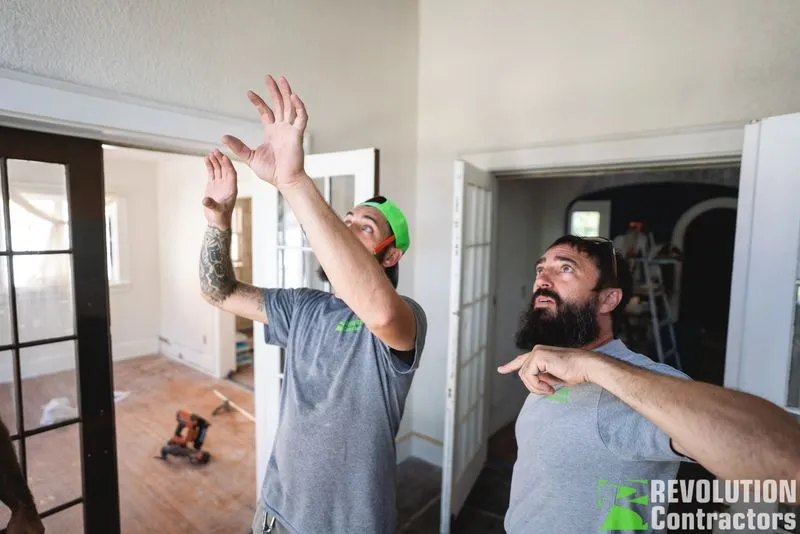
Interior view — commercial renovation — completed project — St. Petersburg, FL — Revolution Contractors

SCHEDULE FREE CONSULTATION!