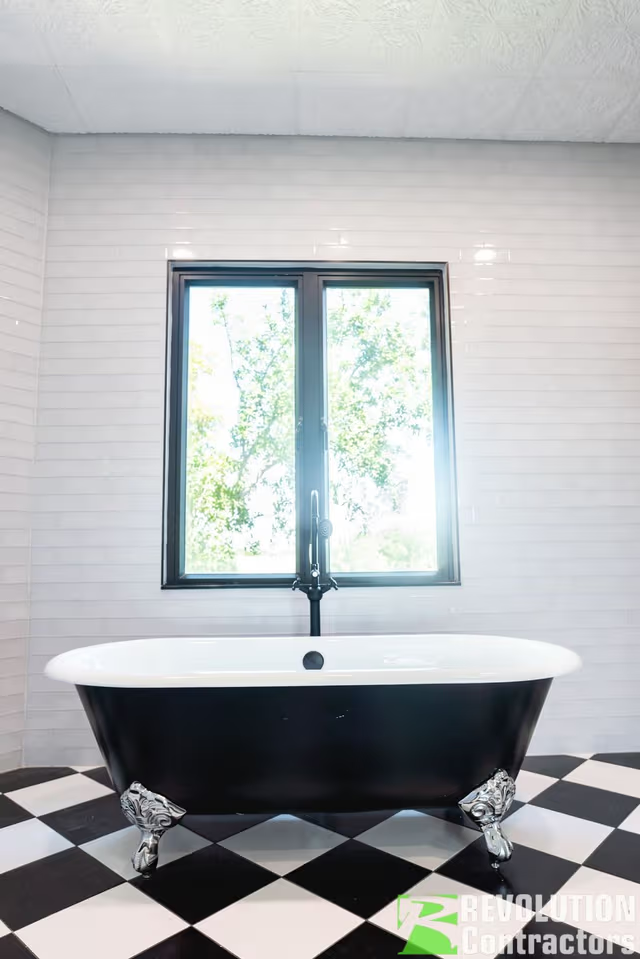
Bathroom Remodel Contractors in St. Petersburg
Schluter Kerdi waterproofing, 20+ W-2 carpenters, open-book Time & Materials pricing. One superintendent from demo to final walk-through.
Schluter Kerdi Waterproofing
A fully-bonded polyethylene sheet membrane behind the tile, meeting Florida Building Code R702.4 with a lifetime transferable warranty. Installed by Revolution’s own W-2 tile crew, not a rotating sub. Failed shower pans are the most expensive mistake in bathroom construction — this is not where we save.
Open-Book Time & Materials
30% markup stated up front. Weekly budget reports show every invoice and hour. By the time demo starts, 75% of line items are locked as fixed price — giving you 90 to 95% budget certainty. When demo runs faster, you save the difference; under a fixed bid, the contractor pockets it.
Cast Iron & Pinellas Expertise
We camera-scope the plumbing stack before quoting on any pre-1970 home. Old Northeast bungalows, Snell Isle waterfront, Shore Acres FEMA AE, downtown high-rise condos with elevator reservations and HOA approvals — we’ve built in every neighborhood in St. Pete.
St. Pete Bathroom Pricing at a Glance
Cosmetic Refresh
$20K–$30K
Standard 5x7 bath. New tile, tub swap, box vanity, standard fixtures. Existing layout stays.
Mid-Range Master
$40K–$70K
Layout changes, custom tile, frameless glass, semi-custom vanity, Schluter Kerdi throughout. Most common scope.
Luxury / New Bath
$75K–$100K+
Heated floors, Roman tub, premium trim, or a bathroom built where none existed.
Full component breakdown, cast iron replacement adders, neighborhood cost variance, and financing options in the St. Petersburg bathroom cost breakdown.
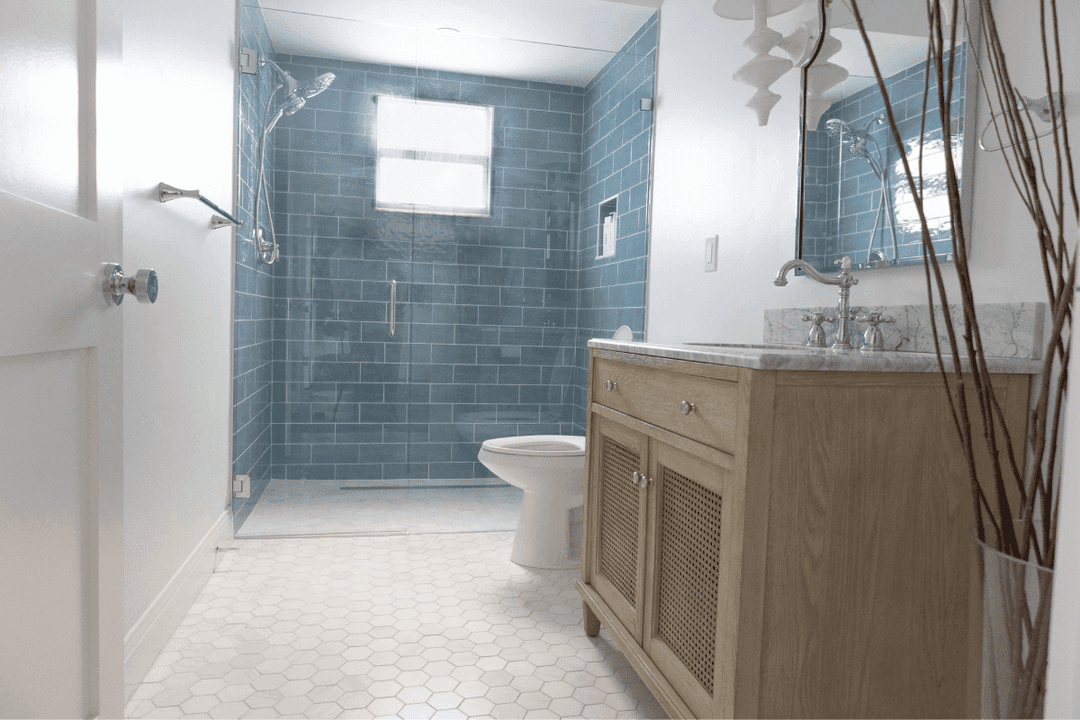
“The Easiest, Most Stress-Free Renovation I Have Experienced.”
Janet Anderson, a recent bathroom client, praised the communication, sub management, and budget adherence throughout her project — the everyday result of one superintendent, W-2 tile crew, and weekly open-book budget reports.
“Caleb has become like family. We would give 10 stars and are already planning our third project.”
— Mike & Joanie Leary, Repeat Client
Start Your BathroomBathroom Remodel FAQ
How much does a bathroom remodel cost in St. Petersburg?
A cosmetic refresh on a standard 5x7 bathroom runs $20,000 to $30,000. A full master bath remodel with layout changes, Schluter Kerdi waterproofing, and semi-custom cabinetry lands between $40,000 and $70,000. Luxury builds with heated floors, frameless glass, and premium fixtures start at $100,000. Adding a bathroom where none existed runs $75,000 to $90,000 because every system has to be pulled from scratch. Revolution prices on open-book Time & Materials. Call (727) 888-6161 for a walk-through.
How long does a bathroom remodel take?
A cosmetic refresh takes 4 to 6 weeks of construction. A full remodel with layout changes runs 8 to 14 weeks. Major renovations with drain relocation, slab cutting, or flood-zone review can run 16 to 20+ weeks. Add 3 to 5 weeks of St. Petersburg Building Department permitting before construction begins for any project that touches plumbing or electrical.
Do you handle the whole project or subcontract the trades?
Revolution self-performs demolition, framing, Schluter Kerdi waterproofing, tile, and finish carpentry with 20+ W-2 carpenters on payroll. Plumbing and electrical are handled by the same licensed subs on every job — not a rotating crew. One superintendent runs the project from pre-construction through final inspection. Florida license CRC1331628.
What if you find cast iron drains or hidden problems mid-project?
We camera-scope the plumbing stack before quoting on any pre-1970 home ($150-$350) so cast iron condition is a day-one line item, not a week-three surprise. Under our open-book Time & Materials model, when a real surprise does hit — DIY wiring buried in a wall, framing damage from an old leak — you see the actual cost on that week's budget report with the fix explained in plain language. No change-order battles, no hidden padding.
Cost, timeline, and Schluter waterproofing detail: Bathroom Remodel Cost — 2026 St. Petersburg Guide. Commercial or ADA scope: Commercial & ADA bathrooms in St. Petersburg.
Get a Free 48-Hour Estimate
Tell us the bathroom size, the home’s age, and whether the layout is changing. We’ll walk the space, scope the pipes, and give you a Pinellas-specific range on an open-book Time & Materials basis.
Call (727) 888-6161 or use the form below.