AGING IN PLACE REMODELING IN ST. PETERSBURG

Make your home work for you at every stage of life. From Moen grab bars with 2x6 backing to full wheelchair-accessible renovations — curbless shower pans, Kohler comfort-height toilets, 36-inch doorways, and lever handles replacing knobs. ADA-benchmark-trained modifications that look stylish, not medical.

Signs You Need Aging-in-Place Modifications

Even though Florida's population has skewed younger with migration, there is still a significant amount of retirees in Pinellas County. We frequently build in accessibility — or at least the foundations for accessibility — on remodels that aren't labeled aging-in-place projects. We might not put in guardrails or grab bars in a shower right now, but we make sure we've blocked inside the wall with 2x6 backing so they can be screwed in easily later. The conversations come up in three predictable scenarios: an older relative is coming to live out their days with the family, the homeowners themselves are getting up in years and planning a remodel that's going to see them through to the end, or someone has had an episode — a fall, a health scare — that forces an accessibility remodel post haste rather than being planned for the future.

Narrow hallway with worn threshold and standard-width doorways needing accessibility modifications

Mobility Changes

An older relative is coming to live with the family — common in Old Northeast multigenerational homes — or your own mobility has changed after an episode. Stairs, narrow 30-inch doorways, and standard-height fixtures become daily obstacles. A wheelchair needs 36-inch ADA clearance and 60-inch turning radius that most pre-1960 St. Pete homes weren't built for.

Outdated tub-shower combo with high threshold and no grab bars

Safety Concerns

A fall or health scare forces an urgent conversation about accessibility. Standard tub-shower combos with high thresholds cause the majority of in-home injuries — what was once future planning becomes a curbless shower conversion and grab bar retrofit that needs to happen now.

Living room with step-down entry creating a fall hazard for elderly residents

Progressive Conditions

A degenerative disease means today's walker-width hallways won't be enough when a wheelchair becomes necessary. Blocking walls with 2x6 backing now for future Moen grab bars — while framing is open — costs almost nothing. Planning ahead for raised electrical outlets, lowered countertops, and first-floor master suite conversion requires frank conversations.

Cramped bathroom with shower door threshold and pedestal sink lacking wheelchair access

Inaccessible Bathrooms

Standard tub-shower combos with high thresholds, cramped spaces under 60 inches, and no grab points — not even blocking in the walls for future installation. The bathroom is where most in-home injuries happen, and where a zero-threshold curbless shower pan with non-slip porcelain tile matters most. See how we approach a full bathroom renovation before layering in accessibility features.

Our Aging-in-Place Remodel Process

Timeline

Minor Modifications

Moen grab bars with 2x6 backing, Delta lever handles, raised electrical outlets, threshold removal

2-4 weeks

Bathroom ADA Conversion

Schluter Kerdi curbless shower, Kohler comfort-height toilet, roll-under vanity, 60" turning radius

6-12 weeks

Whole-Home Accessibility Retrofit

First-floor master suite conversion, kitchen roll-under countertops, 36" doorway widening, stairlift prep, ramp construction

3-6 months

Blocking walls with 2x6 backing for future Moen grab bars is almost negligible cost during a larger remodel — $50–$100 per location while framing is open.

Sequence of Work

1

Accessibility Assessment

Evaluate current and future mobility needs against ADA benchmarks and universal-design principles — drawing on Revolution Contractors' field experience adapting Pinellas homes for aging-in-place since 2016, backed by leadership with nearly 20 years of combined construction and real estate background

2

Design & ADA Planning

Layout for 60-inch turning radius, ADA mounting heights (33–36"), fixture clearances per Florida Building Code

3

Permits

St. Petersburg Building Department permits; structural engineer stamps for load-bearing wall modifications

4

Demo & Structural

Remove thresholds, widen doorways to 36" ADA clearance, frame 2x6 blocking into wall cavities

5

Plumbing & Electrical

Relocate fixtures, cut slab for curbless drains, raise electrical outlets, lower light switches

6

Accessibility Fixtures

Moen SecureMount grab bars, Schluter Kerdi curbless shower pan, Kohler comfort-height toilet, roll-under vanity

7

Finish & Safety Check

Non-slip porcelain tile, Delta ADA-compliant lever fixtures, final clearance verification

Our Bathroom Accessibility Projects

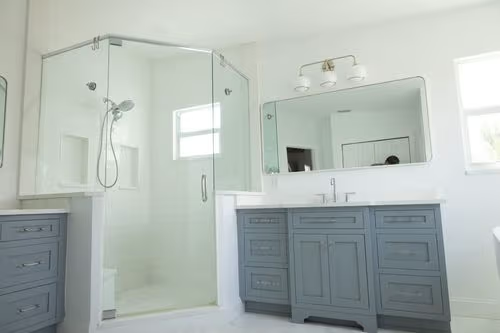
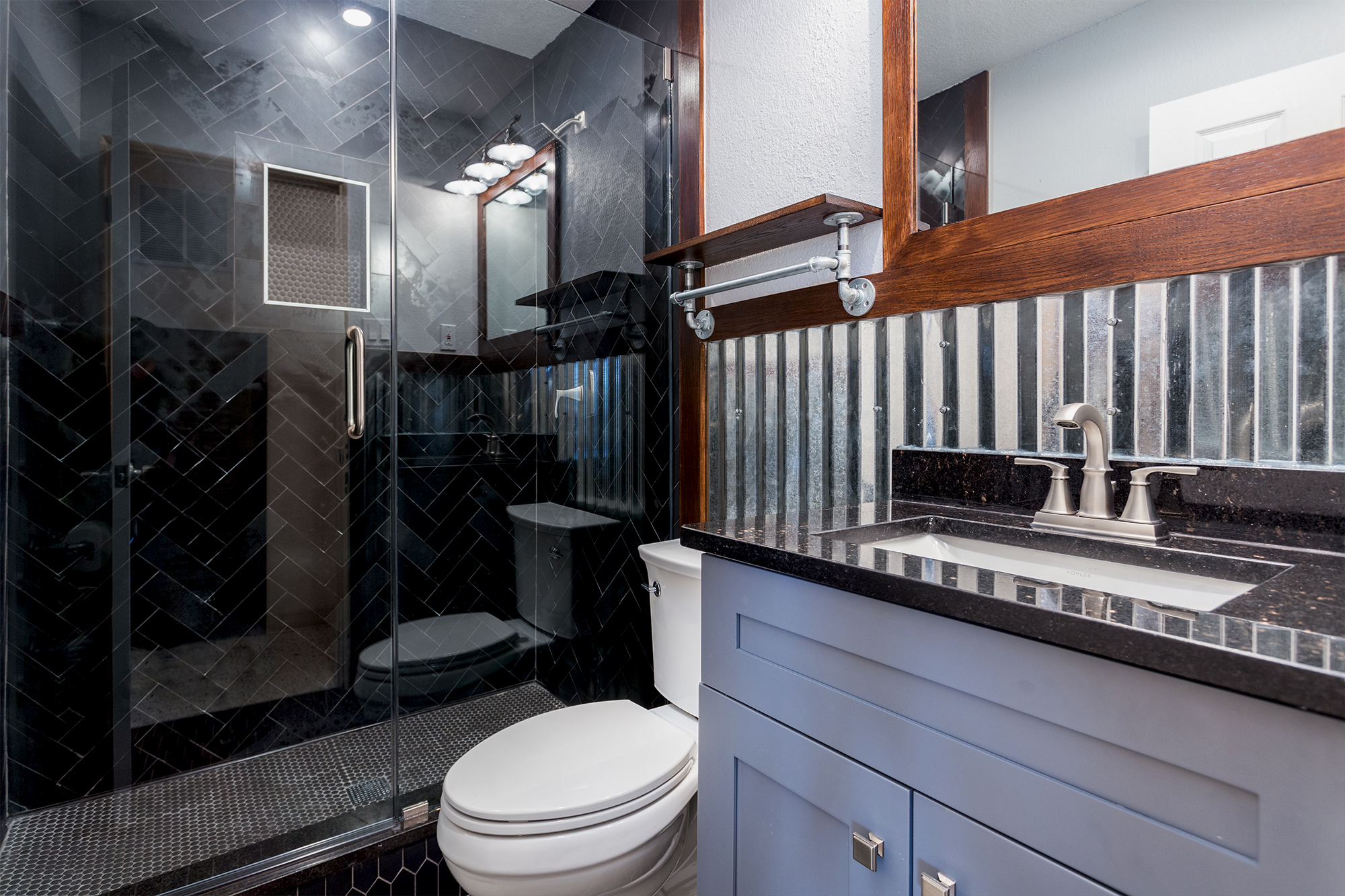
Wheelchair accessible bathroom remodel St Petersburg
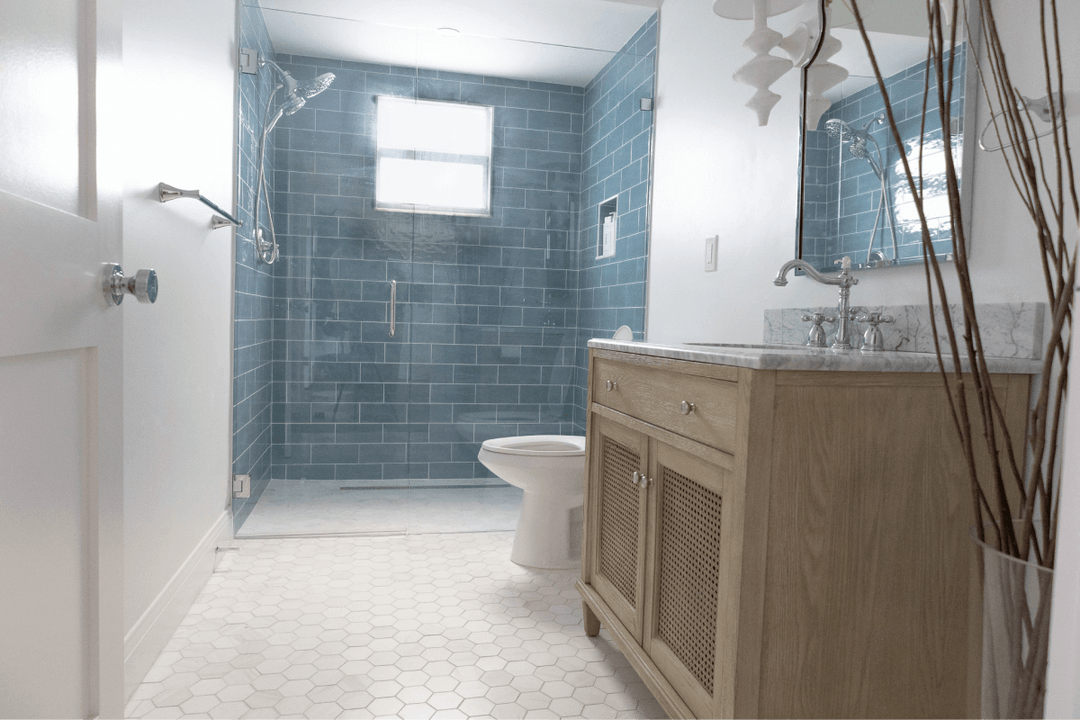
ADA compliant bathroom with curbless shower St Petersburg
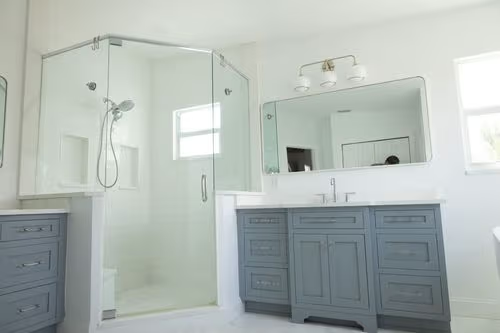
Aging in place bathroom renovation with modern fixtures
Roll-in curbless shower for wheelchair accessibility
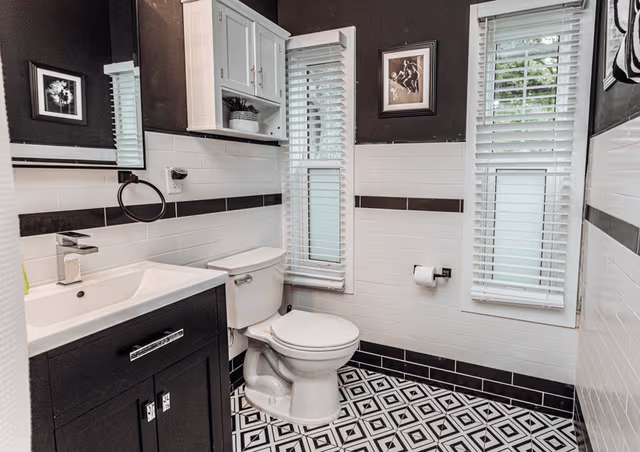
Accessible bathroom remodel with safety features
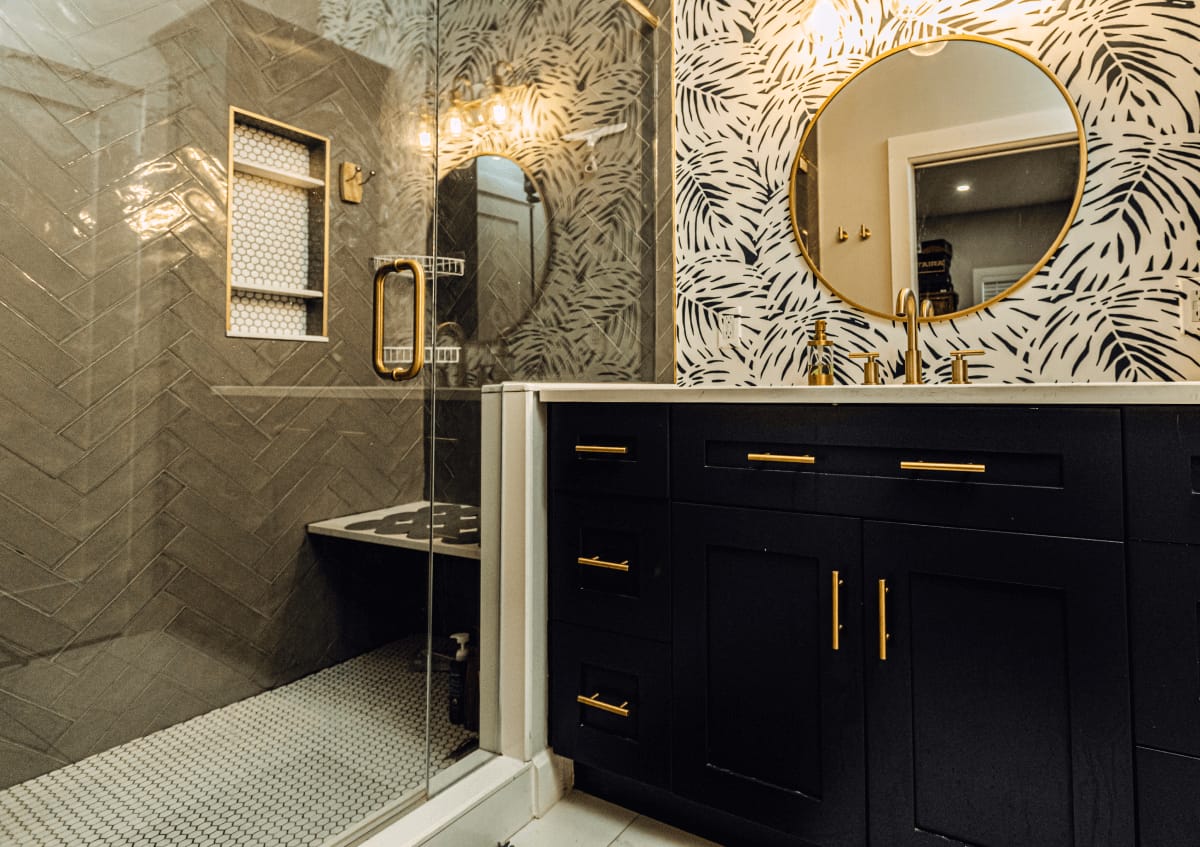
Modern accessible bathroom St Petersburg Florida

Living Situation During Construction

For elderly clients who must stay in the house during a major remodel, our 20+ in-house W-2 carpenters work at hospital levels of protection — 6-mil poly barriers with HEPA-filtered negative air pressure units prevent dust migration into living areas. A dedicated superintendent coordinates phased schedules so one accessible room is always functional. These containment additions add 5–10% to project cost but are non-negotiable for safety.

Who We Build For

Late-Career Owners Planning to Stay in the Home They Built

Late-career owners of $750K+ St. Pete homes — Old Northeast, Snell Isle, Shore Acres, Old Southeast — who've already lived through one major renovation and are planning the modifications that will see them through to the end. They want open-book Time & Materials with weekly budget reports, 30% flat markup stated up front, and a single point of accountability — not a contractor padding every line item to cover risk on a project where the scope evolves with the homeowner's changing needs.

Aging-in-place work is mobility-driven, not budget-driven, so the brief shifts as the conversation goes. With 20+ in-house W-2 carpenters on payroll, your project doesn't stall when a sub no-shows. Most of our aging-in-place work is for owners who want to know exactly where every dollar went — not be told "trust us" at the end.

Aging-in-Place Remodel Cost in St. Petersburg

Realistic budget range depends on the size of the remodel and the changes needed. A large master bathroom for full wheelchair accessibility versus a non-disabled-client bathroom adds significantly more tile, slope-cutting on the shower pan, recessed drainage so we can run a roll-in curbless layout, and modifications to the cabinetry so a chair can roll under at 27-inch knee clearance. Those are the ADA benchmarks we would be achieving as minimums.

The rule of thumb: a standard-remodel budget plus 10 to 20 percent for aging-in-place considerations. If the scope is nothing more than laying in 2x6 blocking for future modifications during a larger project, the cost is almost negligible — $50 to $100 per blocking location while framing is open. The budget-driver is the client's mobility and whether there's a degenerative disease that's going to impact them physically at a quicker rate.

For a complete breakdown of ADA specs, fixture costs, and real St. Pete project numbers, read our aging-in-place modifications guide. For broader accessibility strategies including first-floor master suite conversions and whole-home retrofits, see our accessible home renovations guide. All pricing below reflects our Time & Materials (T&M) model with a 30% flat markup — transparent, open-book, with weekly budget reports against pre-construction estimates as standard practice from our 20+ W-2 carpenters on staff.

Minor Modifications

$5K–$15K

2x6 blocking for future Moen grab bars, Delta lever handles, threshold removal, raised electrical outlets

Bathroom Accessibility

$40K–$80K

Schluter Kerdi curbless roll-in shower, Kohler comfort-height toilet, 36" widened doorway, 60" wheelchair turning radius

Full Home Accessibility

$80K–$150K+

First-floor master suite conversion, kitchen roll-under countertops, stairlift prep, whole-home 36" doorway widening, ramp construction

What Drives Costs

  • Concrete slab cutting: Dropping subfloor for proper drainage slope to install Schluter Kerdi waterproof membrane and linear drain in curbless shower pans
  • Doorway widening at structural joints: Structural engineer stamp required, relocating switches and wiring, pocket doors for swing clearance — $2,500–$4,000 per opening vs. $1,500 mid-wall
  • Hospital-level containment: 6-mil poly barriers with HEPA-filtered negative air pressure for occupied homes with elderly residents — adds 5–10% to project cost
  • Specialized ADA fixtures: Moen SecureMount grab bars rated to 500 lbs, Kohler comfort-height toilets, Delta ADA-compliant lever handles, roll-under vanity cabinetry

What Causes Overruns

  • Hidden plumbing: Cast iron pipes rusted from decades of use
  • Structural complications: Wall intersections when widening doorways
  • Scope changes: Progressive conditions evolving beyond initial plan
  • Second-floor bathroom drainage: Floor joist direction vs. plumbing runs

VA Benefits & Grants

The VA Specially Adapted Housing (SAH) grant covers up to $109,986 for wheelchair ramp construction, roll-in showers, and doorway widening for service-disabled veterans. The Special Housing Adaptation (SHA) grant covers up to $44,299. For standard remodels, aging-in-place considerations — Moen grab bars, lever handles, raised electrical outlets — add just 10–20% to the budget. Blocking walls with 2x6 backing for future modifications during a larger project costs $50–$100 per location.

Ready to Discuss Your Accessibility Remodel?

Get a free 48-hour estimate on aging-in-place modifications for your St. Petersburg home — from Moen grab bar installations with 2x6 backing to full ADA bathroom conversions with curbless shower pans and Kohler comfort-height fixtures.

Bathroom Accessibility Modifications

Key Modifications

  • Zero-threshold curbless shower pans with Schluter Kerdi waterproof membrane and linear drain
  • Moen SecureMount grab bars with 2x6 backing framed into wall cavities — rated to 500 lbs, mounted at ADA height (33–36 inches)
  • Kohler comfort-height toilet (17–19 inch seat height) and Delta ADA-compliant lever fixtures
  • 60-inch clear wheelchair turning radius per ADA clearance requirements
  • Roll-under vanity cabinetry with insulated pipe covers for wheelchair knee clearance at 27-inch minimum knee height
  • Non-slip porcelain tile with coefficient of friction rated for roll-in shower accessibility (min 60" × 36" curbless pan, 1/4"-per-foot slope to linear drain)
  • Anti-scald shower valves (pressure-balanced, thermostatic, or combination type) tempered at 120°F max per Florida Building Code Plumbing Chapter 4 (the fixture/scald requirement, in force since 2002) and referenced in FBC Residential Chapter 27 — universally required and especially critical for aging-in-place where reduced sensory feedback raises burn risk
  • Zero-threshold entry doors with lever handle hardware throughout (replacing round knobs on all doors and cabinetry)

Technical Considerations

Zero-threshold curbless shower pans on concrete slab require cutting the slab to drop the subfloor and create proper drainage slope for the Schluter Kerdi waterproof membrane system. The St. Petersburg Building Department requires permits for all slab cutting. Frame houses have different considerations especially regarding the plumbing — maintaining structural integrity of the floor joist system while getting the piping a couple inches lower than before.

Second-floor bathrooms with elevator or stairlift access need careful calculation of floor joist direction versus plumbing runs. A structural engineer stamp may be required if joist modifications are needed to accommodate the new drain location. Most second-floor bathrooms can absorb a significant amount of accessibility upgrades before running into a structural brick wall, but the calculations are project-specific.

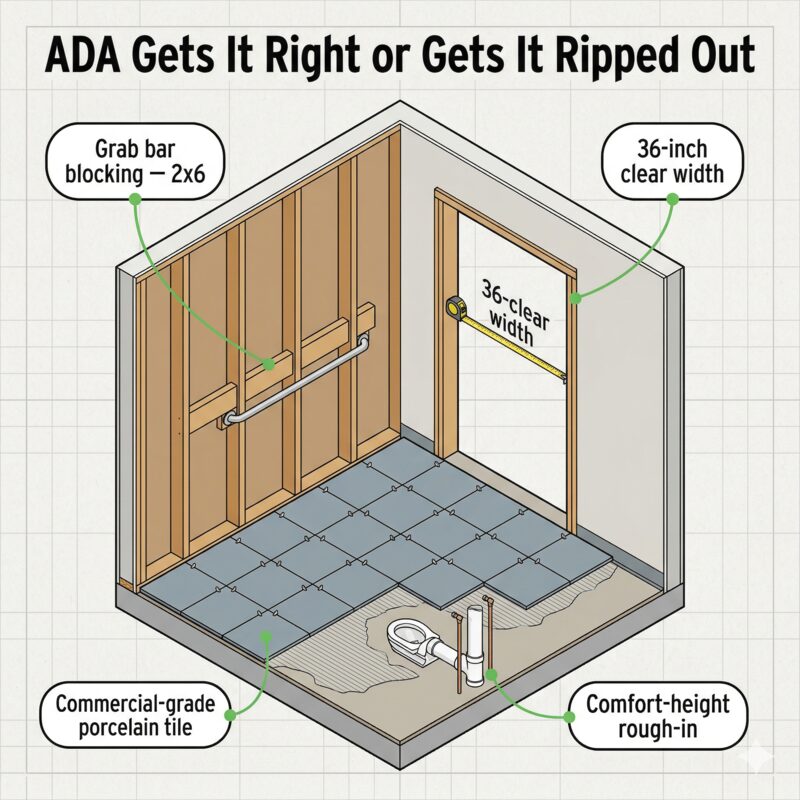
ADA dimensional benchmarks we work to as minimums: 60-inch wheelchair turning radius in any room a chair needs to enter, 36-inch minimum doorway clearance (versus the standard St. Pete 30-32 inch openings), 27-inch knee clearance for roll-under vanities, 33-36 inch grab bar mounting heights, and 17-19 inch comfort-height toilet seats. Anti-scald shower valves are required by Florida Building Code and tempered at 120°F max — the universal code requirement is especially load-bearing on aging-in-place work where reduced sensory feedback raises burn risk.

Our free 48-hour estimates include a detailed scope review so you know exactly which modifications require permits and structural engineering before work begins. For tub-to-shower conversion cost breakdowns, see our bathroom remodel cost guide. For whole-home scope including first-floor primary suite additions, our home remodel hub covers integrated design-build coordination. For multi-generational historic homes in Old Northeast and Historic Uptown, see our historic renovation service. Downtown condo accessibility retrofits have their own HOA and structural constraints — see our condo remodel service.

Doorway Widening & Kitchen Accessibility

Doorway Widening

Standard St. Pete doors: 30–32 inches. ADA clearance requirement: 36-inch minimum width. Our 20+ in-house W-2 carpenters widen an average of 4–6 doorways per whole-home accessibility retrofit.

Mid-wall doorways: $1,500–$2,500 per opening — new header, framing, drywall. Straightforward work, typically 1–2 days per doorway.

Structural joints (where multiple load-bearing walls meet): $2,500–$4,000 — requires a structural engineer stamp, relocating switches and wiring, possibly pocket doors for swing clearance in walker-width hallways.

Remove thresholds for zero-threshold entry requirements wherever possible; add wheelchair ramp construction ($1,000–$3,000 depending on rise) where grade changes can't be eliminated.

Kitchen Modifications

Roll-under countertops at 34-inch height with insulated pipe covers allow a wheelchair to partially or fully roll under — essential for meal prep independence.

Island spacing: standard 36–42 inches for foot traffic, but wheelchair accessibility requires 60-inch turning radius for clear turnaround per ADA clearance requirements.

Lowered countertops at accessible height, raised electrical outlets at 18–24 inches (vs. standard 12"), and lever handles replacing knobs on all cabinetry.

Time & Materials (T&M) pricing with weekly budget reports and open-book construction management — 30% flat markup, weekly budget reports against actuals, fully transparent. By the time pre-construction wraps, three out of four line items are locked at fixed price, putting the budget within 90–95% of the final number before construction starts. You see the exact cost of each kitchen modification as it happens — particularly important on aging-in-place retrofits where scope evolves based on the occupant's changing needs.

Modern Accessibility That Doesn't Look Medical

Design-Forward ADA Fixtures

  • Moen & Delta design-forward finishes

    Moen SecureMount grab bars come in brushed nickel, matte black, and oil-rubbed bronze — they double as towel bars. Delta ADA-compliant lever fixtures match any bathroom aesthetic. No stainless steel hospital rails needed.

  • Non-slip porcelain tile for roll-in showers

    Large-format non-slip porcelain tile with adequate coefficient of friction for wheelchair-accessible roll-in showers. The look doesn't suffer — modern designs are indistinguishable from standard luxury tile.

  • Kohler comfort-height fixtures

    Kohler comfort-height toilets (17–19 inch seat height) come in modern profiles identical to standard models. Slightly higher cost for design-forward ADA fixtures, but the result looks intentional, not medical.

Planning for Progressive Needs

  • Progressive-needs planning

    Planning for progressive needs is client-driven. We've had situations where someone has a degenerative disease and we're looking forward into what those end stages would be like from a quality-of-life standpoint. More than anything, that means having transparent and comfortable — although typically uncomfortable — frank conversations about what the needs are now and what they're going to progress into. The biggest mistake families make planning for aging-in-place is avoiding the conversation: most people aren't dying from sudden events, they're dying from illness at the end of a long life, and being able to have those conversations with a contractor or designer is what unlocks the right scope. Common Pinellas scenarios: first-floor master suite conversions in Snell Isle retiree homes, downtown condo accessibility retrofits where elevator access plus 36-inch doorways matter, and stairlift prep framing in two-story Old Northeast houses.

  • Blocking with 2x6 backing now for later

    Framing 2x6 blocking into wall cavities for future Moen grab bars costs $50–$100 per location while walls are open — negligible during a larger project. We also pre-route electrical for future raised outlets and lowered light switches.

  • Single-contract accountability

    One contract, one dedicated superintendent, no rotating subcontractors. We coordinate design with independent architects and designers we've worked with for years, then run the construction in-house — so the same team that plans your zero-threshold entries and roll-under countertops also builds them. No finger-pointing between trades.

THE DIFFERENCE

WHY CHOOSE REVOLUTION FOR AGING-IN-PLACE REMODELS

What sets us apart from other contractors in St. Petersburg.

IN-HOUSE LABOR

Our skilled craftsmen are Revolution employees, not subcontractors. This means better quality control, accountability, and a team that truly cares about your project.

T&M TRANSPARENCY

Our Time & Materials billing model means you see exactly where every dollar goes. No hidden markups, no surprises—just honest, transparent pricing.

LOCAL EXPERTISE

Deep knowledge of St. Petersburg permits, historic district requirements, and coastal building codes. We navigate local regulations so you don't have to.

TILE & WATERPROOFING

Specialized expertise in wet areas that most contractors lack. Proper waterproofing and tile installation prevent costly failures down the road.

Aging-in-Place Frequently Asked Questions

How much does an aging-in-place remodel cost?

Grab bar installation with 2x6 backing framed into wall cavities runs $200–$500 per bar installed. Curbless shower conversion with Schluter Kerdi waterproof membrane and linear drain typically costs $8,000–$15,000. Doorway widening to 36-inch ADA clearance averages $1,500–$3,000 per opening. Wheelchair ramp construction runs $1,000–$3,000 depending on rise and run. Full bathroom ADA conversion with Kohler comfort-height toilet, roll-under vanity, and 60-inch turning radius: $40K–$80K. Whole-home accessibility retrofit including first-floor master suite conversion: $80K–$150K+.

What are the most impactful modifications for the money?

Zero-threshold curbless shower pans with non-slip porcelain tile eliminate the highest-risk fall point. Moen SecureMount grab bars with 2x6 blocking rated to 500 lbs cost under $500 installed but prevent the most common bathroom injuries. Replacing round doorknobs with Delta ADA-compliant lever handles takes 15 minutes per door. Walker-width hallway clearance and roll-in shower access make the biggest daily-life difference.

Do I need permits for accessibility modifications?

The St. Petersburg Building Department requires permits for plumbing relocation, electrical work, and any load-bearing wall modifications — structural engineer stamps are required for load-bearing wall changes when widening doorways. Cutting concrete slab for curbless shower drainage always requires a permit. Simple Moen grab bar installs with 2x6 backing, lever handle swaps, and raised electrical outlet repositioning don't require permits.

How does Revolution's T&M approach work?

Time & Materials (T&M) pricing with weekly budget reports and open-book construction management — you see every material invoice, labor hour, and trade allocation. Our markup is transparent: 30% flat markup on the project total, weekly budget reports, nothing hidden in the base rate. Our 20+ W-2 carpenters on staff (not 1099 subs) means our dedicated superintendent tracks costs daily without subcontractor lag. Especially important for accessibility work where discoveries behind walls — cast iron pipes rusted from decades of use, unexpected framing at doorway-widening joints — can change scope. Single-contract accountability means one contract, one point of contact, no finger-pointing between trades.

Can aging-in-place modifications look stylish?

Moen and Delta now offer grab bars in brushed nickel, matte black, and oil-rubbed bronze finishes that double as towel bars. Kohler comfort-height toilets come in modern profiles indistinguishable from standard models. Non-slip porcelain tile for roll-in showers is available in large-format designs with adequate coefficient of friction. A slight cost premium for design-forward ADA fixtures, but the result doesn't look medical.

Are there VA benefits or grants for accessibility remodels?

The VA Specially Adapted Housing (SAH) grant covers up to $109,986 for wheelchair ramp construction, roll-in showers, and doorway widening. The Special Housing Adaptation (SHA) grant covers up to $44,299. These can substantially offset the cost of Kohler comfort-height toilets, curbless shower pans, and first-floor master suite conversions.

How do you handle construction for elderly clients still living at home?

Hospital-level containment: 6-mil poly plastic barriers with HEPA-filtered negative air pressure units prevent dust migration into living areas. Our 20+ in-house W-2 carpenters work phased schedules — completing one accessible bathroom before demoing the next. No rotating subcontractors means familiar faces for elderly residents. These containment measures add 5–10% to project cost but are non-negotiable for safety.

How wide do doorways need to be for wheelchair access?

ADA clearance requires 36-inch minimum doorway width and 60-inch turning radius in any room a wheelchair needs to enter. Standard St. Pete doors are 30–32 inches. Mid-wall widening is straightforward — new header, framing, drywall, typically $1,500–$2,500. At structural joints where multiple walls meet, it's more involved — relocating switches, re-framing with a structural engineer stamp, possibly installing pocket doors to reclaim swing clearance — but it can almost always be done.

TESTIMONIALS

LOVED BY OUR CUSTOMERS

Nothing means more to us than making our clients happy, unless perhaps it is making them so happy they come back to us or refer us to their friends and family!

"We had multiple contractors tell us that our 100-year old bungalow in Old Southeast should be torn down instead of remodeled. Revolution worked with us on an extensive plan to rebuild structural components and remodel the entire house. Now we have the best house in the block!"

Sean K.
Old Southeast

"The guys at Revolution have done projects for us in two houses now. They added a master bathroom for us in northeast St Pete and then remodeled every square inch of a 4500-sq. ft house in Pinellas Pt. Through every challenge over two years of construction they have been there pushing our projects forward. We wouldn't use anybody else!"

Adlai G.
Pinellas Point

"Awesome company! I had Revolution Contractors do some work on my house and did an amazing job!!! The guys there are great to work with and very professional and knowledgeable on there work. I am very happy they way there work came out and will be getting more work done on my house from them."
Jason Shelton

"Find them to be very professional, provide sufficient info for bidding, easy to contact, and most importantly they pay good. All and all NuTrend really enjoys a very productive and lucrative relationship with Revolution Contractors would recommend them and do often"
David Silvia

"On a challenging structural project for an investment property Revolution saw me through all sorts of headaches with the building department and were able to carry off multiple layout changes with gorgeous results. They've done multiple projects for my family as well as my group of closest friends and are now working on my primary residence!"

Jan S.

"Revolution Contractors have helped my family on numerous projects, providing guidance and honesty throughout all projects. The crew is hardworking and reliable. The owners are quick to respond and very honest. Definitely would recommend!"
Rachel Webb
39 Five-Star Reviews
FL #CRC1331628 | #BC005541
20+ Years Combined Leadership
Licensed & Insured
Revolution Contractors home project
SCHEDULE FREE CONSULTATION!