Aging-in-Place Modifications in St. Petersburg: What They Cost and How to Pay for Them
Cost and funding guide only — for the full contractor service page covering scope, T&M pricing, W-2 carpenter team, and neighborhood-specific aging-in-place expertise, see our aging-in-place remodeling page. For a walkthrough of the 8 most common modifications and their ADA dimensions, see the accessible home renovations guide.

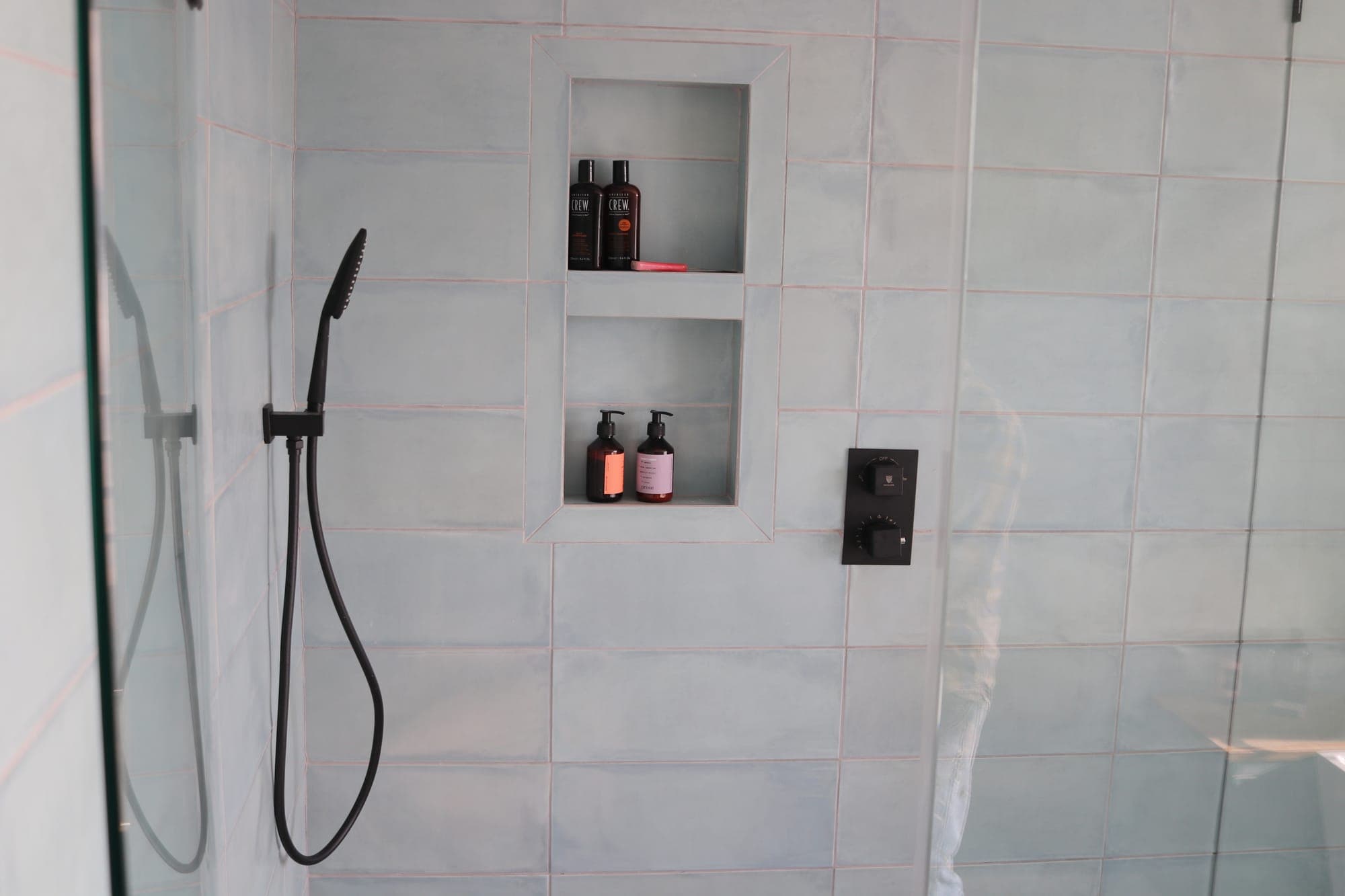
If you're planning to stay in your St. Pete home for the next 20 years, the question isn't whether you'll need modifications — it's which ones, when, and what they'll actually run in this market. The national cost guides give you ranges like “$3,000 to $15,000,” which is about as useful as knowing it might rain in Florida. Here's what aging-in-place modifications actually cost in Pinellas County, what local funding programs exist, and what to watch for when you're working in a 1960s bungalow or Snell Isle ranch.
Most of the homeowners we talk through this with are late-career — Old Northeast, Snell Isle, Shore Acres, Tierra Verde — planning to stay in the home they raised their family in for the next 20 years. The scope question is wide. As Jeremy puts it: “The range from two or three minor modifications to full accessibility hinges mostly on the client’s mobility and whether they have a disease that’s going to impact them physically at a quicker rate. Adding in blocking for future handrails is a good example of minor. That’s different than creating a zero-curb roll-in shower with fixtures set low and even slings and cranes to move someone in and out of a chair. The difference is based solely around the client’s needs.” The cost numbers below assume mid-spectrum — most homeowners land between “blocking for later” and “full wheelchair conversion.”
The short answer: A grab bar installation runs $200–$400. A full bathroom accessibility remodel runs $40,000–$70,000 in St. Pete when you're working in older housing stock. And two local programs can cover up to $20,000 each for qualifying homeowners — which no other contractor in town seems to be talking about.
ADA, Universal Design, and Aging in Place — They're Not the Same Thing
Before you get three quotes, make sure everyone is talking about the same thing. These terms get mixed up constantly, and a contractor who conflates them is one who may not fully understand the work.
ADA (Americans with Disabilities Act) is a federal law governing public buildings and commercial facilities. It does not apply to your single-family home. When a contractor tells you they're making your bathroom “ADA compliant,” that's a marketing phrase, not a legal standard. The ADA has no jurisdiction over residential remodeling. What they probably mean is they're building to ADA dimensional standards — which are useful guidelines, but not a legal requirement.
Universal design is a design philosophy, not a set of regulations. The goal is to build spaces that work for anyone, regardless of age or physical ability. A curbless shower, wider doorways, and lever hardware instead of knobs — when these are incorporated from the start of a remodel, they look and function like normal features. Nobody walking through your house assumes you needed a grab bar. That's the point.
Aging-in-place modifications are reactive. You're adapting an existing home to accommodate changing physical needs. The result is often more visible — a grab bar here, a ramp there, a shower bench added to a bathroom that wasn't built for it. That's not a knock on the approach; it's just what it is.
The practical upshot: if you're doing a larger remodel anyway, incorporate universal design thinking from the beginning. It costs less than retrofitting later and the results look better. If you need specific modifications now, aging-in-place work is the right call. We do both.
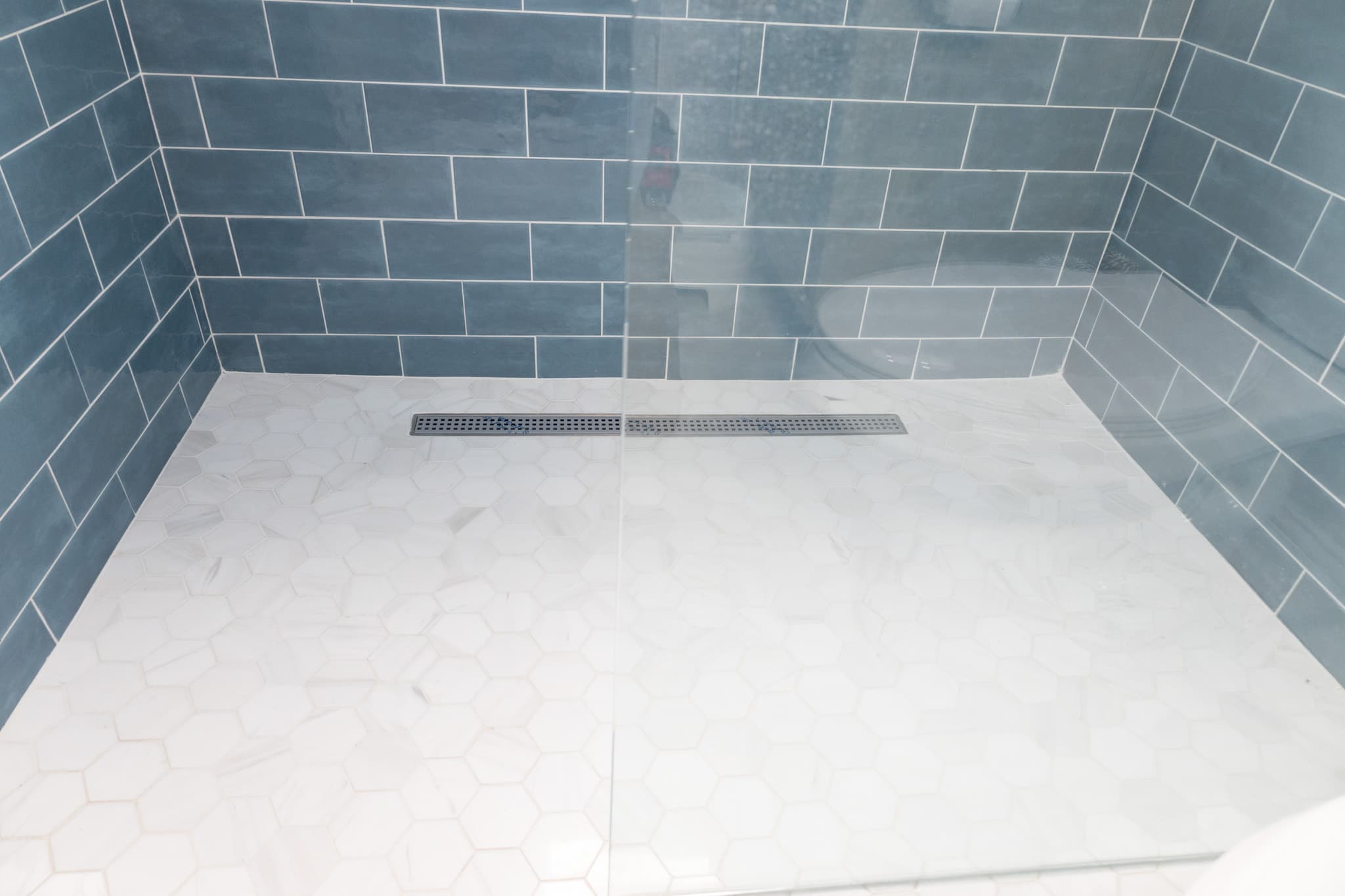
The Five Modifications That Matter Most — and What They Cost in St. Pete
NAHB data from 2023 shows what contractors are actually installing: grab bars top the list at 93% of aging-in-place projects, followed by curbless showers at 83%. Here's a realistic cost picture for the St. Pete market, with notes on what adds cost in older local housing stock.
When we work through this scope with a homeowner, our framing is straightforward: “making roll-in ability important whether it’s a walker, cane, or wheelchair. Being able to remove thresholds, remove steps whenever possible, adding ramps. Making showers walk-in and large enough for wheelchair turning radiuses, and increased space for medical equipment to accompany someone with mobility problems. Generally, mobility or aging-in-place is going to be done based on need, so the budget is going to be somewhat secondary.” That's how we sequence — mobility first, budget second. Threshold removal, ramp install, and roll-in shower conversion typically deliver the highest day-to-day impact for the dollar in St. Pete bathrooms built before 1980.
1. Grab Bars
National range: $90–$500 each. St. Pete reality: $200–$400 for a standard two-bar bathroom installation, including labor.
This is straightforward work — unless your bathroom walls are tiled and the blocking behind the tile is inadequate. Older St. Pete homes built in the 1950s and 1960s frequently have minimal backing in bathroom walls. If a grab bar isn't anchored into studs or blocking, it will pull out of the wall when it's actually needed. The installation is inexpensive; doing it right requires a carpenter who knows what's behind the wall.
2. Walk-In / Curbless Shower Conversion
National range: $6,000–$12,000. St. Pete reality: $8,000–$15,000 for a 1960s-era bathroom.
The gap between national and local comes down to two factors: Tampa Bay labor rates and what's behind the walls. Converting a tub-to-shower in a home that's 50+ years old often means updating the plumbing rough-in, replacing the subfloor (moisture damage is common in older St. Pete bathrooms), and reworking the tile work from scratch. Budget toward the top of that range if your bathroom hasn't been touched since the Reagan administration.
Permits are required for this work in St. Petersburg. A handyman who skips the permit is saving you nothing — you'll pay for it at resale or if anything ever leaks.
3. Doorway Widening (to 36 Inches)
National range: $800–$2,500 per door. St. Pete reality: $2,000–$3,500 per door.
A 36-inch clear doorway accommodates a wheelchair. The national average assumes standard framing. St. Pete's older housing stock — particularly homes built before 1970 — often has 24-inch interior doors with narrow rough openings and, in some cases, plaster walls instead of drywall. Cutting into a plaster wall to widen a doorway is a different job than cutting drywall. Factor that in.
4. Ramp Construction
National range: $1,400–$3,000. St. Pete reality: $2,000–$4,000 for a standard entry ramp.
Florida's climate rules out pressure-treated wood as a long-term ramp material — it warps, splinters, and deteriorates faster here than in a dry climate. Composite or aluminum is the right call in St. Pete. The added material cost is real, but so is not replacing a rotted ramp in three years.
5. Full Bathroom Accessibility Remodel
National range: $15,000–$25,000. St. Pete reality: $40,000–$70,000 for a master bathroom.
The national averages don't reflect what this work actually costs in St. Pete when you're doing it right. A full accessibility conversion — curbless shower, grab bars, ADA-height toilet, wider door, proper tile work — runs $40,000–$70,000 in this market. That's a realistic budget for a master bathroom in Pinellas County, and aging-in-place considerations typically add 10–20% on top of a standard remodel scope. If you open that bathroom and find significant moisture damage in the subfloor (common in 1960s–1980s St. Pete homes), add $2,000–$5,000. It's not a hidden charge — with Time & Materials billing, you see every invoice as the work happens, and you know before we do the repair whether you want to proceed.
Want a broader picture of bathroom remodeling costs in this market? See our bathroom remodel cost guide for St. Petersburg.
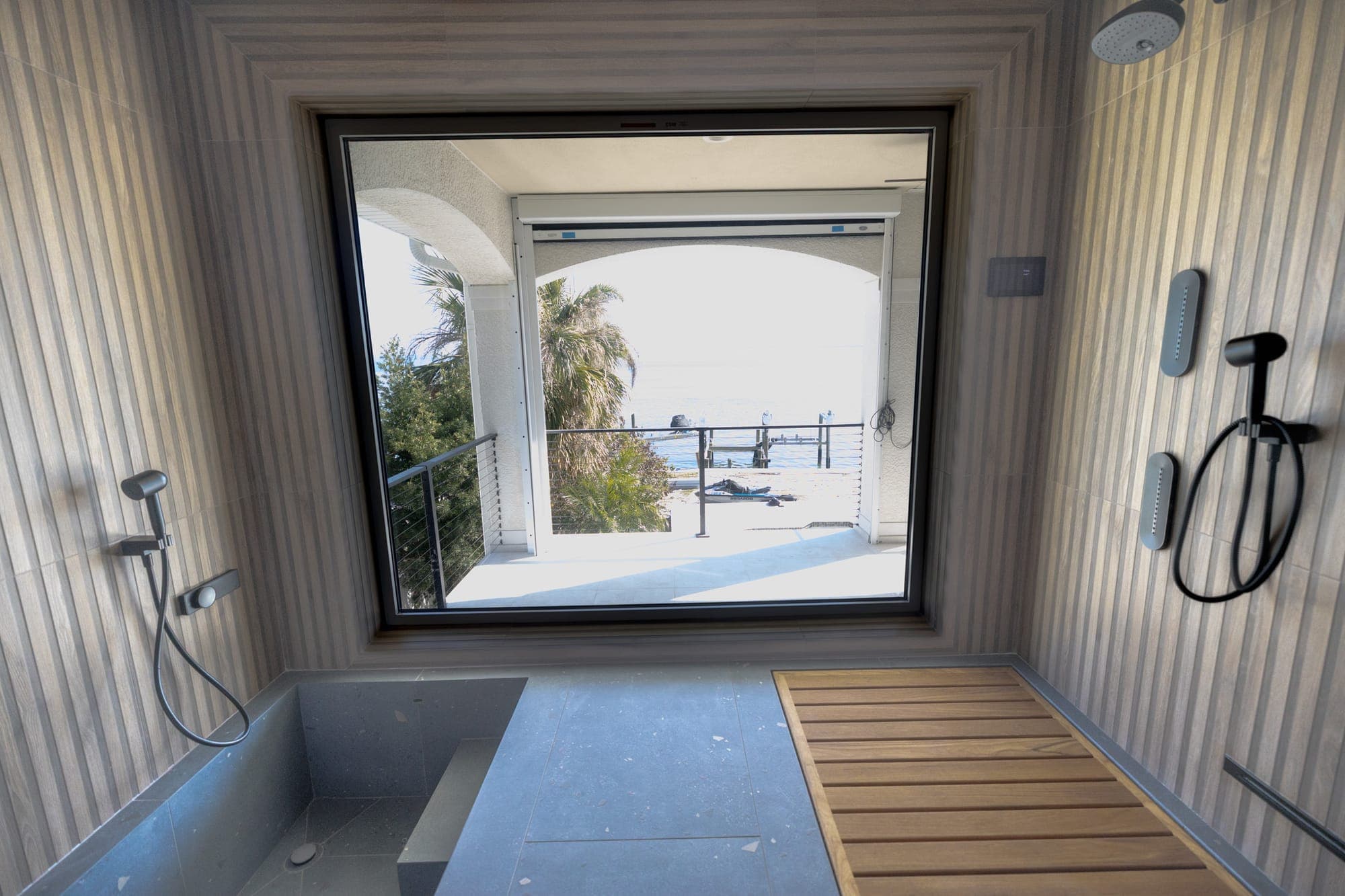
The Two Local Programs Most Contractors Won't Mention
Here's where it gets useful if you're on a fixed income or researching options for aging parents.
Before the local programs: a note on VA benefits. From Jeremy: “There are grants and VA benefits that will help cover costs. VA has programs for veterans, especially if they’re service-disabled, that allow for significant mobility upgrades to their houses. So a lot of times aging-in-place and mobility work can be offset cost-wise.” The two relevant VA programs are the Specially Adapted Housing (SAH) grant — up to $109,986 for service-connected disabilities involving loss of use of limbs — and the Special Housing Adaptation (SHA) grant — up to $44,299 for blindness or loss of use of hands. Pinellas County has one of Florida’s largest veteran populations; if you or a family member is service-connected, the VA grant should be the first call before any local program.
City of St. Petersburg Housing Rehabilitation Assistance Program
Up to $20,000 total — a $5,000 grant paired with a $15,000 zero-interest deferred loan. Covers accessibility modifications including grab bars, ramps, bathroom conversions, and doorway widening. Income-limited to approximately 80% of Area Median Income (around $53,500 for a single-person household). This is a City of St. Petersburg program; you apply through the city's Housing & Community Development office. Contact: 727-893-7247.
Pinellas County Independent Living Program
Up to $20,000 as a grant — no repayment required — for low-income homeowners with a physical impairment. Covers wheelchair ramps, grab bars, tub-to-shower conversions, and other accessibility modifications. Available in unincorporated Pinellas County and most cities in the county. St. Petersburg residents use the city program above; Largo, Clearwater, and a few other municipalities have their own programs.
A note on eligibility: Both programs target low-to-moderate income households. If your household income is above those thresholds, you won't qualify. But if you're managing this for an aging parent on a fixed income, these programs are worth a phone call before you assume the project has to be entirely out-of-pocket.
Important: Program parameters and funding availability can shift — especially given post-hurricane CDBG-DR funding that has moved through Pinellas County in recent years. Verify current status directly with the city or county before counting on availability.
When It Makes More Sense to Modify Than to Move
87% of adults 65 and older want to stay in their homes, according to AARP. The harder question is whether your specific home makes that realistic — and whether the modification investment pencils out.
The case for modifying is strongest when: your home is already single-story or has everything you need on one floor, your neighborhood and relationships are part of what you're protecting, and the modifications are targeted and bounded. A $50,000 bathroom remodel on a home you've owned for 30 years in Old Northeast is a different calculation than a $200,000 addition on a two-story home that needs significant structural work to become accessible.
The case for a different conversation: if the work to make your home livable long-term approaches the cost of buying a more suitable property, or if the house has structural challenges that make modification disproportionately expensive, it's worth running both scenarios honestly. We'll tell you what we see. We'd rather give you a straight answer than oversell a project that doesn't make sense.
Why the Contractor You Choose Actually Matters for This Work
Aging-in-place modifications aren't just about carpentry. They're about working carefully in an occupied home — someone's daily life is running alongside your work — and about catching what's behind the walls before it becomes your problem.
In-house labor matters here. Revolution has 20+ W-2 carpenters on payroll. They're not subcontractors running between three jobs. When your parent's bathroom is torn apart and needs to be back in service, we control the schedule because our crew is our crew. A GC who subs everything out is dependent on whoever's available that week.
Permits aren't optional. St. Petersburg requires permits for most structural modifications — doorway widening, ramp construction, and bathroom conversions with plumbing work. A handyman service can install a grab bar in an afternoon without a permit. The moment you widen a doorway or convert a tub to a shower, you're in permit territory. We pull them every time. That matters at resale, it matters for insurance, and it matters if the work ever has to be documented.
St. Pete's housing stock has its own logic. Pinellas County skews heavily toward homes built between 1940 and 1980 — one-story ranch and bungalow construction that was never designed for aging in place. We've been working in these homes for 20 years. We know what 1960s plaster walls look like when you open them, what moisture damage looks like in a 1970s bathroom subfloor, and what framing surprises to expect when you widen a doorway in a postwar bungalow. That experience changes what we can promise you before we start.
T&M billing means no surprises. Modification projects grow in scope when walls open. With Time & Materials, you pay for what the work actually costs — you see every invoice, you get a weekly budget update, and you decide how to proceed if something unexpected turns up behind the tile. There's no padded fixed bid built to cover our risk.
For broader scope — first-floor master suite conversions, whole-home accessibility retrofits, single-story reconfigurations — see our companion guide on accessible home renovations in St. Petersburg. The two guides cover different scopes: this one is the modification-by-modification cost picture; that one is the whole-home reconfiguration picture.
Frequently Asked Questions
How long does aging-in-place remodeling take in St. Pete?
A grab bar installation is a few hours. A full bathroom accessibility remodel typically runs three to five weeks, including permit time. Doorway widening — if you're doing two or three doors — is generally a one-to-two week project. We'll give you a realistic timeline before the work starts, not an optimistic one designed to get the contract signed.
Do aging-in-place modifications require permits in St. Petersburg?
Yes, for most structural work. Grab bars don't require a permit. Doorway widening, ramp construction, and bathroom conversions that involve plumbing do. We handle all permitting — you don't have to navigate that process.
Can I get a tax credit for accessibility modifications?
The federal tax credit landscape for home modifications is limited. Medical expense deductions are possible if the modifications are prescribed by a physician and exceed 7.5% of adjusted gross income — worth a conversation with your tax advisor. The more relevant opportunity for many St. Pete homeowners is the local grant and loan programs described above.
Is it worth doing universal design on a planned remodel even if I don't need it yet?
Yes, almost always. A curbless shower, lever hardware, and wider doorways on a bathroom remodel add marginal cost at the time of construction and save significantly compared to retrofitting the same features later. If you're remodeling your primary bathroom, designing for aging in place from the start costs a fraction of what modification costs after the fact.
What's the difference between what Revolution does and what a handyman service does?
Handyman services handle low-complexity installs: grab bars, toilet risers, lever handle swaps. That's appropriate for those tasks. When the work crosses into doorway widening, structural ramps, bathroom conversions, or anything requiring permits and framing knowledge, you need a licensed general contractor experienced with aging in place renovation. The line isn't about licensing for its own sake — it's about accountability when something goes wrong and about knowing what's behind the wall before you start.
Do you have experience with aging-in-place modifications specifically?
We've done this work throughout St. Pete — walk-in shower conversions, doorway widening, first-floor reconfigurations for single-story living. If you want to talk through what your home specifically needs, call us or fill out the contact form and we'll come take a look.
Let's Take a Look
Aging-in-place remodeling is specific — what your home needs depends on its age, layout, and what your actual priorities are. We'll come out, walk through the space with you, and tell you what we see. No inflated pitch. No scope you didn't ask for.
Contact Revolution Contractors or call (727) 888-6161. For more on home additions and major reconfiguration work, see our service page. For the multi-generation housing companion piece, see ADU / Mother-in-Law Suite.