Revolution Contractors: Historic Renovation in St. Petersburg
Historic renovation in St. Petersburg — district-appropriate work on pre-1940 homes: Certificate of Appropriateness navigation, period-correct millwork, lead-safe paint, asbestos handling, and structural work behind the walls. Florida code applies regardless of district designation — wiring, plumbing, and HVAC come up to current FBC. Revolution Contractors covers Old Northeast, Roser Park, Historic Uptown, Kenwood, Granada Terrace, and Old Southeast with 20+ W-2 carpenters in-house. Open-book Time & Materials pricing.
Termites and deferred maintenance have worn the heart pine framing in most pre-1925 St. Pete houses. Our W-2 finish carpenters match original profiles on site.
Knob-and-tube wiring and cast-iron drains carrying 80-year-old houses through Pinellas summers. FBC doesn't exempt historic homes — MEPs come up to current code regardless of district.
Review Board Requirements
Dual-track approval: Certificate of Appropriateness through Historic Preservation, building permit through the Building Department. Per Jeremy Wharton, that adds 2–4 months on top of standard permitting.
Our Historic Renovation Process
Timeline
Light Refresh
Cosmetic updates, paint, fixtures
4-6 weeks
Standard Renovation
Systems, millwork, layout
3-6 months
Full Historic Remodel
Studs-out rebuild with preservation
6-12 months
The historic review board adds two to four months on top of standard permitting per Interview 4 with Jeremy. We have run dozens of dual-track applications without an outright rejection.
Sequence of Work
1
Free 48-Hour Estimate
On-site assessment with dedicated superintendent
2
Design & COA Submission
File Certificate of Appropriateness with Historic Preservation Office
3
Dual-Track Permitting
Building Department + historic review board, 6-10 weeks
4
Demolition & Discovery
Expose conditions, structural engineer inspection
5
Structural & Systems Rough-In
Simpson Strong-Tie reinforcement, modern wiring, plumbing, HVAC
6
Millwork & Period Finishes
Old-growth heart pine, lime plaster, period-correct trim
7
Final Inspections & Verification
Building Department and review board sign-off
8
Punch List & Completion
Final details, walkthrough, weekly budget report close-out
The dual-track approval routes through St. Petersburg's Historic Preservation Office for the Certificate of Appropriateness and the Building Department for the building permit, in parallel. Per Jeremy Wharton, the historical-board layer typically adds two to four months on top of standard permitting, and possibly more if the project requires a setback variance or a board hearing. We have run dozens of these applications without an outright rejection. The Secretary of the Interior Standards guide what is appropriate, not what is allowed.
When a historic home needs a rebuild
“One of our most memorable historic projects: the house probably honestly should have been torn down, but we went through a historic remodel and basically rebuilt from the studs out a hundred-year-old wood single-family home. It ended up with some modern touches. We upgraded the windows, but we also maintained as much of the woodwork, things like the doors and the original framing as possible, so that it still has significant nods to the historical design intent when it was built in the early 1900s.”
— Jeremy Wharton, Revolution Contractors
Old Northeast contains one locally designated historic district — Granada Terrace, designated 1988 — where exterior alterations require Certificate of Appropriateness (COA) review. The broader Northshore / Historic Old Northeast neighborhood is a National Register district, which is honorary for residential owners and does not trigger design review. Individually landmarked properties carry COA requirements regardless of neighborhood. Revolution coordinates COA submissions, design partner revisions, and review board feedback as part of the project schedule — Jeremy and the team have run this process across dozens of Granada Terrace, Roser Park, Old Southeast, Historic Kenwood, and Historic Uptown projects over the past decade.
Built across all 14 St. Petersburg neighborhoods — from Snell Isle waterfront to Old Northeast historic preservation, Crescent Lake to Tierra Verde. For a concrete example, see our King House restoration case study — a hundred-year-old Old Southeast bungalow that earned a 2025 Preserve the ‘Burg award — or browse all featured projects. For a full studs-out walkthrough of what a hundred-year-old wood-frame restoration actually involves — foundation work, hidden termite damage, period millwork sourcing, and the dual-track COA-plus-building-permit choreography — see our guide on historic home restoration in St. Petersburg: what it takes.
Systems upgrades, period-correct wood windows, custom millwork ($150-$250/sqft)
Full Preservation Remodel
$400K+
Studs-out rebuild with old-growth heart pine, lime plaster ($250-$400/sqft)
Why historic homes must meet code
Most homeowners walk into a historic remodel expecting Florida Building Code to give them a pass. It does not. Per Jeremy Wharton, “the code doesn’t allow for us to say that it’s historical and get any special consideration. So if there is outdated wiring, plumbing, HVAC, we’re going to find a way to update it to current code, and we’ll just do that with an eye towards whatever level of conservation or preservation we’re trying to attain.”
That is the load-bearing fact about historic work in St. Pete. The Certificate of Appropriateness regulates what the house looks like from the street. Florida Building Code regulates what is inside the walls. Two separate review tracks, two separate sets of standards, both binding.
The good news is most of the character lives in the finished materials. Heart pine flooring, lath-and-plaster walls, original sash windows, period casing and crown, single-pane glass with wavy 100-year-old distortion, original hardware. The character does not live in the wiring or the plumbing or the HVAC. So we update the guts to current FBC, hide Simpson Strong-Tie connectors behind the original trim, run new drain plumbing alongside the original lath, and the house ends up looking exactly like it did when it was built in the early 1900s with modern systems behind every wall.
Schluter Kerdi waterproofing goes behind period tile in the bathrooms. New 200-amp service replaces the original 60-amp panel without changing a single visible fixture. The HVAC ducts route through the original chase walls. The house holds its bones; the systems get another hundred years. On multi-generational Old Northeast projects, that same systems-modernization approach pairs with aging-in-place modifications — accessible bathroom retrofits, no-step thresholds, and wider doorways — installed without disturbing the original casing or finish carpentry.
What Drives Costs
Per Jeremy Wharton, “a historical remodel that is adhering to more of a historical preservation type approach is going to cost more because we’re using higher quality woods and materials that aren’t as readily accessible.” The labor side carries most of that premium. There are only a few specialists in town skilled at repairing old wood-sash windows, the architects who work historic houses charge a premium because the planning and review-board interaction take more of their time, and our admin hours go up because of the extra application parameters from the historic review board. Standard remodel labor-to-materials sits around 50/50; on a historic preservation remodel it swings closer to 65/35 toward labor.
•Custom millwork and period-accurate materials: Our 20+ W-2 carpenters on Revolution's payroll do period-correct trim matching, baseboard profiles, casing, and crown — coordinated through one open-book budget
•Period-correct wood window restoration: Few specialists in town, and the review board typically rejects vinyl replacements
•Soft costs (15-20% of budget): Architect fees, structural engineer stamps, COA application ($250-$500), and review board interaction
•Dual-track permitting timeline: Building Department plus Historic Preservation Office approval, 6-10 weeks minimum
•Custom-milled lumber: Setting knives at the lumber yard for specific profiles
What Causes Overruns
•Undiscovered termite damage: Hidden behind walls until demolition
•Lead paint removal vs. encapsulation: Decisions that affect scope and cost
•Asbestos remediation: Professional removal requirements
•Scope creep: "While we're in there" discoveries add up
Character Is in the Finishes, Not the Guts
Most of the character lives in the finished materials, not in the systems. Florida Building Code does not give historic homes a pass on wiring, plumbing, or HVAC. We update those to current FBC, hide Schluter Kerdi waterproofing behind period tile, run Simpson Strong-Tie connectors behind original trim, and the house ends up looking exactly like it did in the early 1900s with modern guts.
Ready to Discuss Your Historic Renovation Project?
Free 48-hour estimate from a team that has run dozens of dual-track applications without an outright rejection since 2016, building on nearly 20 years of combined construction and real estate experience across our leadership. We file your Certificate of Appropriateness, coordinate dual-track permitting through St. Petersburg's Historic Preservation Office and the Building Department, and manage architect, structural engineer, and every trade under single accountability.
What Requires a Certificate of Appropriateness (COA)
•Demolition
•New construction
•Exterior alterations
•Roofline changes
•Additions
•Window/door style changes
•Siding changes
What Doesn't Require a COA
•Interior work
•Routine maintenance
•Like-for-like repairs
•Painting any color
•Landscaping
•Mechanical equipment not visible from street
We file the COA application (filing fee $250 to $500), coordinate the dual-track approval with the St. Petersburg Building Department and the Historic Preservation Office, and handle the structural engineer stamps. The process is administrative not adversarial. The Secretary of the Interior Standards — the same federal preservation framework that governs Section 106 reviews on National Register properties — guide what is appropriate; they do not prevent appropriate change. We coordinate this process for design-build clients with 20+ years combined leadership experience in Pinellas County historic work and have run dozens of dual-track applications without an outright rejection.
Period materials, lead paint, asbestos handling
Period-Appropriate Materials
Generally Acceptable
•Wood (drop siding, lap siding, board-and-batten)
•Brick (red clay common for chimneys and porch piers; lime-based mortar required for repointing)
•Stucco (smooth or textured; lime-based mortar where original masonry exists)
•Historic masonry with lime-based mortar (Type O, not Type N — Type N's high Portland content fractures historic brick)
•Hardie board fiber cement or LP SmartSide engineered wood siding (vinyl rejected by review board)
•Slate, terra cotta tile, standing-seam metal, or 5V crimp metal roofing
•Original old-growth heart pine flooring (refinished, not replaced)
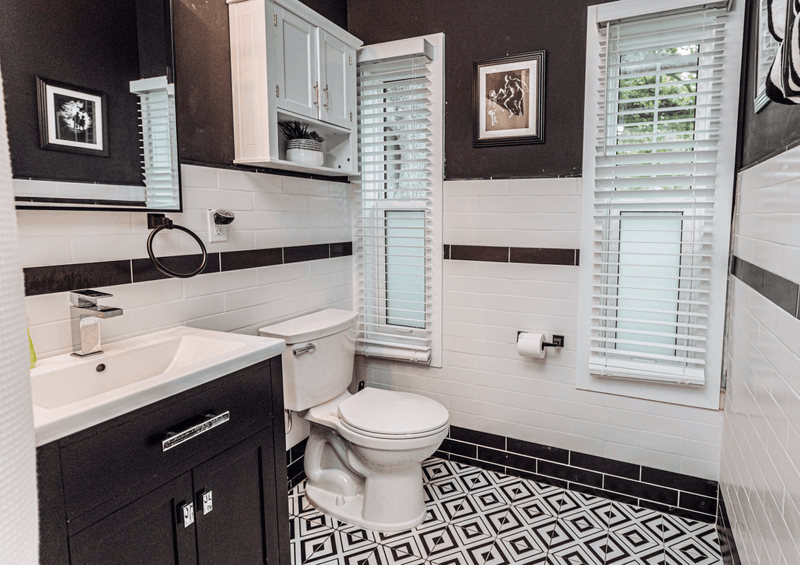
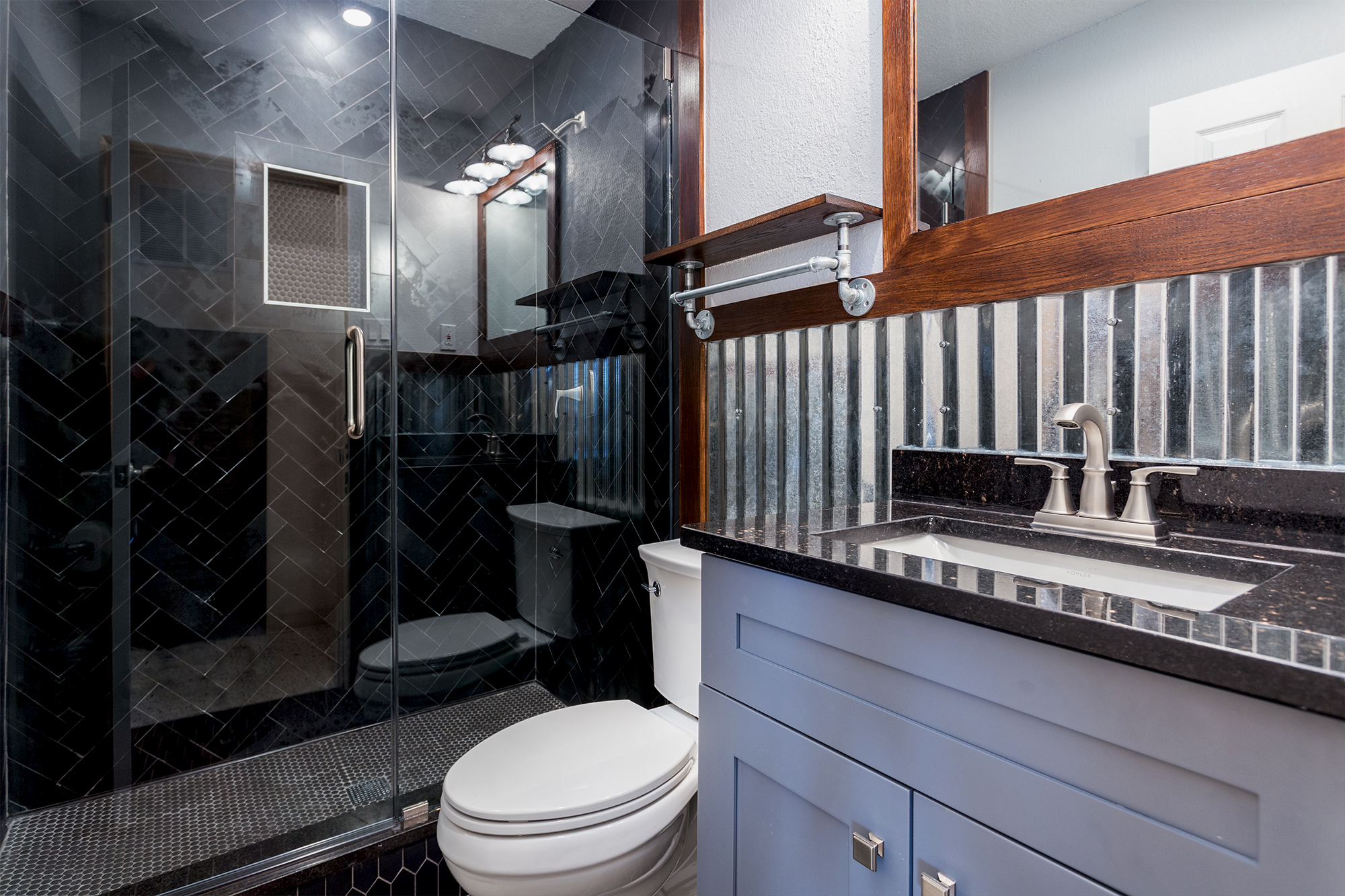
•Hex tile or subway tile in historic bathrooms
•Single-pane wood sash windows (restored or replicated to original profile)
Generally Not Acceptable
•Vinyl siding
•Aluminum siding
•Vinyl windows
Lead Paint & Asbestos
Lead paint: Either removed and replaced to eliminate it completely, or encapsulated with a heavy encapsulant-type paint. We can scrape and sand lead paint, but it requires special safety requirements and site prep.
Asbestos: Can be encapsulated or removed. It needs to be very carefully dealt with because there are specific requirements for how it is handled and disposed of. We won't leave asbestos in place if we can avoid it.
Property owners in locally designated historic districts — Granada Terrace (inside Old Northeast), Roser Park, Historic Kenwood, Ingleside — plus individually landmarked properties who maintain historical accuracy and preserve specified materials can qualify for a freeze on ad valorem taxes for up to 10 years. The St. Petersburg Historic Preservation Office provides the list of qualifying requirements, and work must follow Secretary of the Interior Standards.
THE DIFFERENCE
WHY CHOOSE REVOLUTION FOR HISTORIC RENOVATION
What sets us apart from other contractors in St. Petersburg.
IN-HOUSE LABOR
20+ in-house W-2 carpenters with skilled finish carpentry expertise. Period-correct trim matching, old-growth heart pine restoration, and custom millwork — handled by the in-house W-2 finish carpenters.
OPEN-BOOK T&M PRICING
Weekly budget reports showing labor hours, materials invoices, and remaining contingency. By the time we break ground, about 75% of line items are committed at fixed price — bringing total budget certainty to 90-95% before construction begins. Single-contract accountability: one contract, one dedicated superintendent, no finger-pointing.
LOCAL EXPERTISE
Renovating Old Northeast, Kenwood, Roser Park, and Historic Uptown homes since 2016 with nearly 20 years of combined construction and real estate experience across leadership. We know the St. Petersburg Historic Preservation Office, the Secretary of the Interior Standards, and the quirks of early 1900s construction.
WHOLE-HOUSE HISTORIC REBUILDS
Studs-out rebuilds on hundred-year-old wood single-family homes across St. Petersburg historic districts. Per Jeremy Wharton: "the house probably honestly should have been torn down, but we went through a historic remodel and basically rebuilt from the studs out a hundred-year-old wood single-family home." Free 48-hour estimates for any historic district project. Navigating St. Petersburg's COA dual-track approval process since 2016, with nearly 20 years of combined construction and real estate experience.
Who We Build For
High-Net-Worth Owners Done with Fixed-Bid Surprises
Late-career owners of $750K+ Old Northeast and Roser Park homes — contributing structures inside St. Pete's local historic districts. They want a contractor who handles the Certificate of Appropriateness application with the Historic and Archaeological Review Commission (HARC), specifies period-correct trim profiles, and matches existing plaster repair to 1910s-1930s framing. Most of our historic work is for owners who care about both the COA review board and the open-book T&M weekly budget reports — not contractors who treat historic process as paperwork to delegate.
Capital-Rich Relocators Building Legacy Homes
Capital-rich relocators from higher-cost markets — Northeast, California, Chicago — building legacy homes on Snell Isle, Tierra Verde, Shore Acres, or the downtown waterfront. They need a contractor who knows FEMA flood-zone math cold, not a paper contractor who walks away when the regs get hard. Revolution has $20M+ of flood-zone work across Pinellas County over the past decade and has cleared dozens of FEMA 50% rule substantial-improvement calculations across coastal Pinellas. With 20+ in-house W-2 carpenters, the schedule does not stall waiting on subs.
For Capital-Rich Relocators specifically — the buyers building legacy homes on Snell Isle, Tierra Verde, and the downtown waterfront — finish-tier decisions usually run parallel to the historic-preservation or flood-zone scope. Our luxury home remodeling in St. Pete guide walks through the design-build coordination, allowance structure, and high-end material packages we use on $1M+ scope where finishes, millwork, and primary-suite expansions sit at the top of the budget.
Historic renovation FAQ
How long does a historic renovation take?
A light refresh — paint, fixtures, selective millwork repair — takes 4-6 weeks. Standard renovations with systems upgrades, period-correct trim matching, and custom millwork run 3-6 months. Full preservation remodels done to the studs, including old-growth heart pine floor restoration and lime-based plaster repair, can take 6-12 months. Dual-track approval through the St. Petersburg Building Department plus historic review board sign-off typically adds 6-10 weeks, and possibly more if setback variances or board hearings are required.
How much does a historic renovation cost in St. Petersburg?
A cosmetic refresh runs $50,000-$100,000, or roughly $75-$150/sqft. Standard historic renovations with systems upgrades, period-correct wood windows, and custom millwork cost $150,000-$300,000 ($150-$250/sqft). Full preservation remodels starting from the studs run $400,000+ ($250-$400/sqft). Budget 15-20% for soft costs — architect fees, structural engineer stamps, COA application fees ($250-$500), and historic review board compliance. The work is labor-heavy because of old-growth heart pine sourcing, period-accurate materials, and the skilled finish carpentry required.
Do I need permits for a historic renovation?
Yes. Interior work follows standard permitting through the St. Petersburg Building Department. Exterior changes, demolition, new construction, roofline alterations, additions, and changes to windows, doors, or siding require a Certificate of Appropriateness (COA) from St. Petersburg's Historic Preservation Office before you can pull a building permit. This dual-track approval — building permit plus historic review board sign-off — typically takes 6-10 weeks. We file the COA application and coordinate both tracks so nothing stalls.
How does Revolution's T&M approach work?
Historic projects surface more demo-discoveries than any other scope — lath-and-plaster behind drywall, undocumented previous repairs in 100-year-old wood-frame structures, heart pine flooring under three layers of vinyl, and structural surprises behind original casing. T&M prices every discovery as a line item the day it surfaces — heart pine sourcing through regional yards, Simpson Strong-Tie connectors hidden behind period trim, lead-paint encapsulation when scope requires it. By the time construction starts, 90-95% of the budget is known; demo-discoveries get priced transparently against the remaining contingency. Full pricing-model mechanics — 30% markup, weekly budget reports — on our home remodel pricing page (/services/home-remodel).
What can and can't be changed on a historic home?
The requirements follow the Secretary of the Interior Standards for historic preservation — they're not overly burdensome. Most finishes can be replaced with modern materials if it's your decision. The key decision point is usually windows — restoring period-correct wood windows versus switching to vinyl (which most review boards reject). Exterior siding changes must use approved materials like Hardie board fiber cement or LP SmartSide engineered wood, not vinyl. Interior work typically doesn't require a COA at all.
How do you bring an old home up to code without destroying character?
Per Jeremy Wharton, "the code doesn't allow for us to say that it's historical and get any special consideration. So if there is outdated wiring, plumbing, HVAC, we're going to find a way to update it to current code." That is the load-bearing reality of historic work in St. Pete. The character lives in the finished materials, heart pine flooring, lath-and-plaster walls, original sash windows, period casing, not in the systems. We update wiring, plumbing, and HVAC to current Florida Building Code, hide Simpson Strong-Tie connectors behind original trim, run Schluter Kerdi waterproofing behind period tile, and the house ends up looking exactly like it did in the early 1900s with modern guts.
How do you handle lead paint and asbestos?
Lead paint is either removed and replaced to eliminate it completely, or encapsulated with a heavy encapsulant-type paint. Asbestos can be encapsulated or removed — both require EPA-certified handling and disposal. We won't leave asbestos in place if we can avoid it. Budget $5,000-$15,000 for lead paint remediation and $3,000-$10,000 for asbestos abatement depending on scope. These are concerns in any house through the '70s, not just historic properties. Read our full guide on <a href='/blog/lead-paint-asbestos-older-homes'>lead paint and asbestos in older homes</a>.
Are there tax incentives for historic preservation?
Yes. St. Petersburg offers a 10-year property tax freeze on ad valorem taxes for owners who maintain historical accuracy and preserve specified materials. The St. Petersburg Historic Preservation Office provides the list of qualifying requirements. For properties listed on the National Register, federal tax credits of 20% of qualified rehabilitation expenses may also apply. These incentives can offset 15-25% of total project cost on eligible historic renovations.
Are historic homes exempt from Florida Building Code?
No. Florida Building Code does not give historic homes a pass on wiring, plumbing, HVAC, or structural standards. The Certificate of Appropriateness regulates how the house looks from the street; Florida Building Code regulates what is inside the walls. Both review tracks run in parallel, both are binding. Per Jeremy Wharton, "the code doesn't allow for us to say that it's historical and get any special consideration." This is the most-misunderstood reality of historic renovation in St. Pete: homeowners walk in expecting some kind of historic carve-out and there isn't one.
Do I need my home to be historically designated to renovate it?
No. Historic designation only matters for one thing: whether your renovation requires a Certificate of Appropriateness from St. Petersburg's Historic Preservation Office. If your house is in a locally designated district — Granada Terrace (inside Old Northeast), Roser Park, Historic Kenwood, Ingleside, or an individually landmarked property — exterior changes need a COA. Interior renovations do not. The broader Historic Old Northeast, Historic Uptown, and Old Southeast neighborhoods carry National Register status only, which is honorary for residential owners and does not trigger design review. If your house is historically constructed but not in a locally designated district (Bahama Shores, Crescent Lake, parts of Euclid-St. Paul's), there is no COA at all. The renovation logic stays the same: update the guts to current Florida Building Code, preserve the original character in the finished materials.
Do I need a Certificate of Appropriateness COA in St. Petersburg?
You need a Certificate of Appropriateness if your property sits in a designated St. Petersburg local historic district — Granada Terrace (inside Old Northeast), Roser Park, Historic Kenwood, Ingleside, three one-block districts in Old Northeast (200 block of 10th Ave NE, 700 block of 18th Ave NE, and Welch's Mediterranean Row on the 100 block of 19th Ave NE), or an individually landmarked property — AND your project changes anything visible from the street: roofline, windows, doors, siding, exterior demolition, additions, or new construction. Interior work, like-for-like repairs, painting, landscaping, and equipment hidden from view do not require a COA. The broader Historic Old Northeast, Historic Uptown, and Old Southeast neighborhoods carry National Register status only, which is honorary for residential owners and does not trigger design review. Revolution Contractors files COA applications through St. Petersburg's Historic Preservation Office as part of project scope.
Do I need a COA to replace windows or repaint my historic St. Pete home?
Window replacement requires a Certificate of Appropriateness in any designated district — the review board typically rejects vinyl and approves period-correct wood sash, restored originals, or wood-clad replicas matching the original muntin profile. Repainting in any color does NOT require a COA — paint is not regulated. Like-for-like repairs (replacing a rotten sill with matching wood, swapping a broken pane in an original sash) also do not require a COA. Revolution coordinates the COA application and review-board interaction directly through St. Petersburg's Historic Preservation Office.
Who is a historic district contractor in Old Northeast?
Revolution Contractors is a family-owned general contractor renovating Old Northeast homes since 2016, with nearly 20 years of combined construction and real estate experience across our leadership. We coordinate Certificate of Appropriateness submissions through St. Petersburg's Historic Preservation Office, navigate the dual-track Building Department plus historic review board approval, and self-perform period-correct millwork and trim with 20+ W-2 carpenters on payroll. Licensed CRC1331628 and CGC1522463. Old Northeast contains one locally designated historic district — Granada Terrace, designated 1988 — where exterior alterations require COA review; the broader Northshore / Historic Old Northeast is a National Register district only and does not trigger design review. Free 48-hour estimates. (727) 888-6161.
What is the difference between a National Register district and a local historic district for remodeling?
National Register listing is an honorary federal designation — it does not regulate what you can do to your home. Local historic district designation, conferred by the City of St. Petersburg, does regulate exterior changes through the Certificate of Appropriateness process. Some St. Pete neighborhoods are National Register-listed but NOT local districts (Historic Uptown is both; some areas are only NR). The practical rule: if you are inside a local historic district, exterior changes need a COA. NR-only status alone does not trigger COA review.
Are there historic preservation tax credits in Florida?
St. Petersburg offers a 10-year ad valorem property tax freeze for owners in designated local historic districts who maintain historical accuracy and use approved materials. Separately, if your property is listed on the National Register of Historic Places and the renovation qualifies as a substantial rehabilitation, you may qualify for the federal Historic Rehabilitation Tax Credit — 20% of qualified rehabilitation expenses for income-producing properties (income-producing requirement applies federally). The St. Petersburg Historic Preservation Office provides the local qualifying-materials list.
Can I replace original wood windows on a historic St. Petersburg home?
Yes — but vinyl replacement is typically rejected by St. Petersburg's historic review board. The acceptable paths are restoration of the existing wood sash (a few specialists in town do this work), replication with custom-milled wood matching the original muntin profile, or wood-clad windows that match the original sight lines and divided-light pattern. The review board evaluates against Secretary of the Interior Standards. Revolution Contractors coordinates window-replacement COA applications and the period-correct millwork through our 20+ W-2 carpenters on payroll.
How long does the Certificate of Appropriateness application take in St. Petersburg?
The COA review at St. Petersburg's Historic Preservation Office typically adds 6-10 weeks on top of the building permit timeline, running in parallel with the Building Department track. Setback variances, board hearings, or revision rounds can extend that further. Revolution Contractors files the COA application, prepares the supporting drawings with our design partners, and manages review-board feedback as part of the project schedule. We have run dozens of dual-track applications without an outright rejection across Old Northeast, Roser Park, Historic Kenwood, and Historic Uptown.
What should I look for in a historic renovation contractor in St. Petersburg?
Look for a Florida-licensed contractor (CRC or CBC), direct experience filing Certificate of Appropriateness applications with St. Petersburg's Historic Preservation Office (dozens of dual-track applications without an outright rejection is the floor — ask for COA submittal samples), in-house carpentry skilled in period millwork and old-growth heart pine, familiarity with the Secretary of the Interior Standards' Rehabilitation track (the framework St. Pete's review board applies), and an explicit awareness that Florida Building Code does not give historic homes a pass on wiring / plumbing / HVAC / structural. Revolution: CRC1331628 + CGC1522463, 20+ W-2 carpenters for period-correct trim and heart pine work, design-build approach via independent design partners.
What are the Secretary of the Interior Standards for historic preservation?
The Secretary of the Interior Standards are the federal framework — published by the National Park Service — that guides historic preservation work nationwide. The four treatment levels are Preservation (retain materials as-is), Rehabilitation (alterations allowed while preserving character), Restoration (return to a specific historical period), and Reconstruction (rebuild non-surviving elements). St. Petersburg's local historic review board applies these standards when evaluating Certificate of Appropriateness applications. The standards guide what is appropriate; they do not prevent appropriate change. Most St. Pete historic projects follow the Rehabilitation track.
Who are the historic home renovation contractors in St. Petersburg, FL?
Revolution Contractors is a family-owned historic home renovation contractor in St. Petersburg, Florida — licensed CRC1331628 and CGC1522463, operating in Old Northeast, Roser Park, Kenwood, Historic Uptown, and Old Southeast since 2016. We navigate Certificate of Appropriateness applications through St. Petersburg's Historic Preservation Office, coordinate dual-track permitting, and handle period-correct millwork with 20+ W-2 carpenters on payroll. Open-book Time and Materials pricing with weekly budget reports. Free written estimates within 48 hours. (727) 888-6161.
Who remodels historic homes in Old Northeast, St. Petersburg?
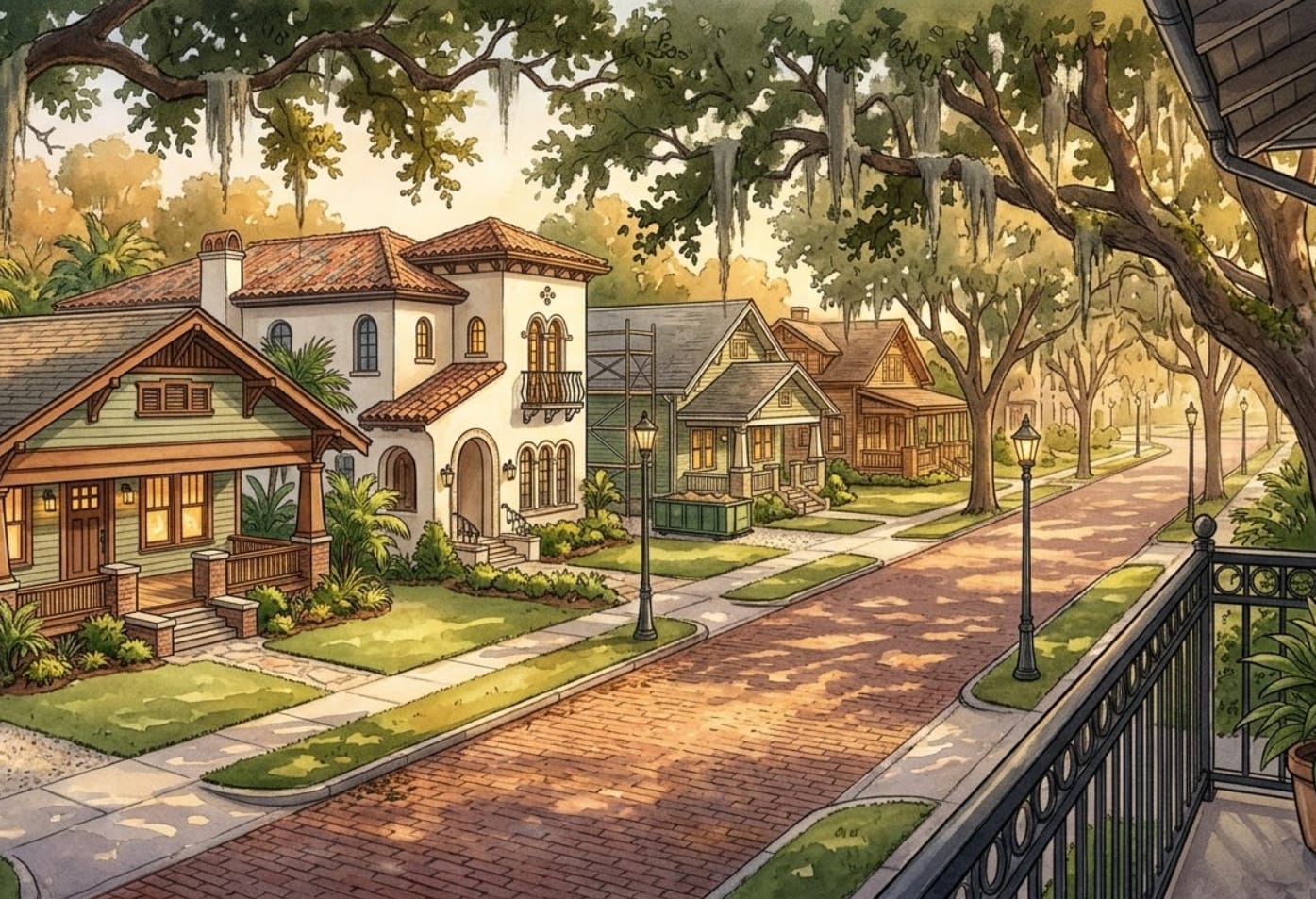
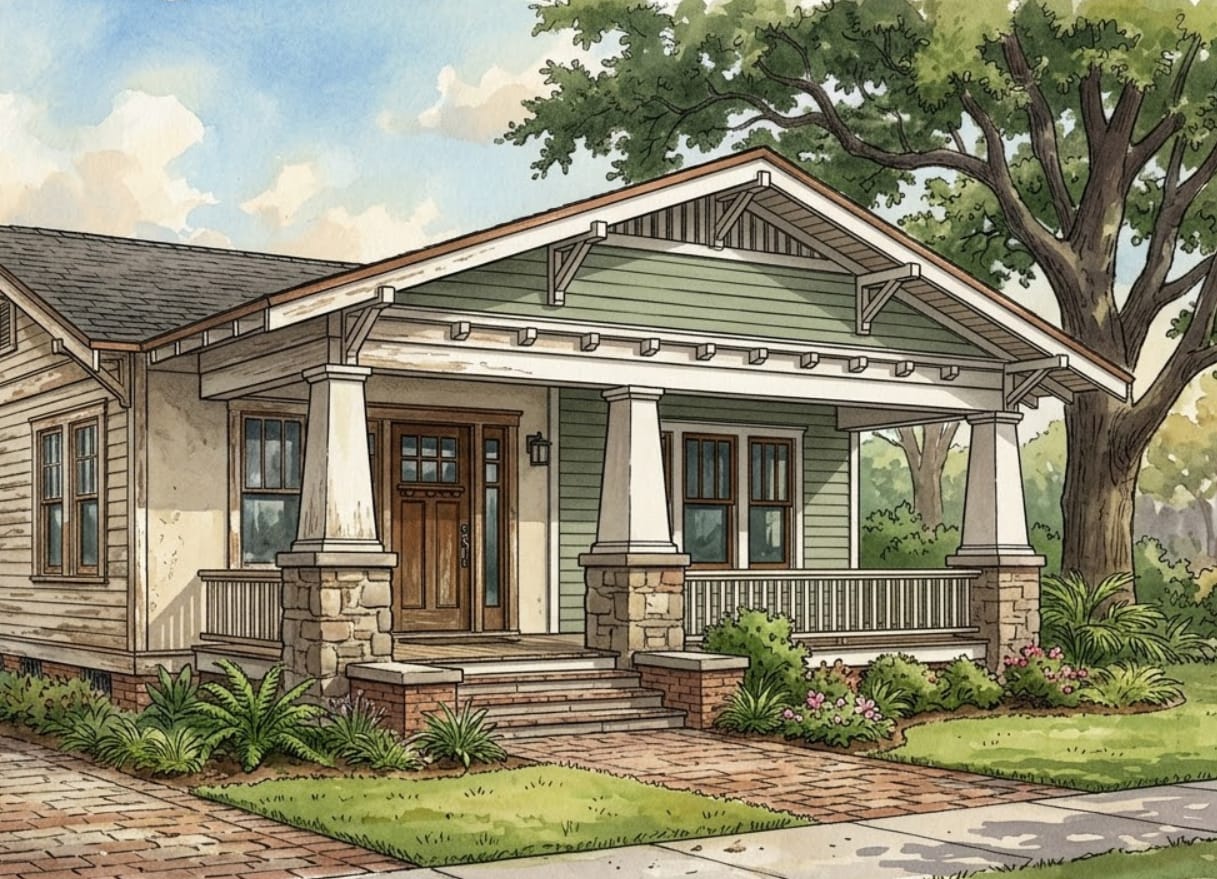
Revolution Contractors has been renovating Old Northeast homes since 2016 — Craftsman bungalows, Mediterranean Revival estates, and Frame Vernacular cottages on brick streets from Coffee Pot Bayou south to 5th Avenue North. For properties inside Granada Terrace or one of the three one-block districts within Old Northeast (or individually landmarked), we coordinate Certificate of Appropriateness review for street-facing changes; for the majority of Old Northeast homes that are National Register only, no COA is required. We source old-growth heart pine flooring through regional lumber yards, and handle period-correct trim matching on site with 20+ W-2 carpenters on payroll. Old Northeast historic renovation guide. Free 48-hour estimates.
How does the COA review process work for an Old Northeast renovation?
The broader Northshore / Historic Old Northeast is a National Register district, which is honorary for residential owners and does not trigger design review. Old Northeast does contain one locally designated historic district — Granada Terrace, designated 1988 — plus three one-block districts (200 block of 10th Ave NE, 700 block of 18th Ave NE, Welch's Mediterranean Row on 100 block of 19th Ave NE) and 10 individually landmarked properties. If your Old Northeast property sits inside any of those, exterior changes (roofline, windows, siding, demolition, additions) require a Certificate of Appropriateness from St. Petersburg's Historic Preservation Office before you can pull a building permit. The dual-track approval — COA plus Building Department permitting — typically adds 6-10 weeks. If your Old Northeast property is NOT inside a locally designated district or landmarked, no COA is required. Revolution Contractors files COA applications, prepares supporting drawings with our design partners, and manages review-board interaction. Per Jeremy Wharton: 'the code doesn't allow for us to say that it's historical and get any special consideration.'
How long does a Certificate of Appropriateness take in St. Petersburg?
A Certificate of Appropriateness from St. Petersburg's Historic Preservation Office typically adds 6-10 weeks on top of building permit timelines, running on a parallel dual-track. Setback variances, board hearings, or revision requests can extend further. The COA application fee is $250-$500. Revolution Contractors files the application, prepares the supporting drawings with our design partners, and manages review-board interaction as part of project scope — so you are not navigating the Historic Preservation Office alone.
Does Florida Building Code apply to historic homes in St. Petersburg?
Yes — Florida Building Code does not exempt historic homes from wiring, plumbing, HVAC, or structural standards. The Certificate of Appropriateness regulates what a historic home looks like from the street; Florida Building Code regulates what is inside the walls. Both run in parallel, both are binding. Per Jeremy Wharton: 'The code doesn't allow for us to say that it's historical and get any special consideration.' This dual-track reality catches most homeowners by surprise — they expect a historic carve-out that does not exist.
How did Hurricane Helene and Ian affect historic homes in St. Petersburg?
Helene and Ian flooded historic neighborhoods across Pinellas — Old Northeast, Roser Park, Shore Acres — where substantial-damage repair costs exceeding 50% of pre-storm market value trigger the FEMA 50% rule alongside Certificate of Appropriateness review for any exterior change. That dual-track (COA + FEMA elevation) is the most complex permitting in St. Pete: the historic review board regulates what the elevated house looks like; FEMA regulates how high it sits. Revolution has $10-20M+ of coastal Pinellas flood-zone work behind us, including elevated historic-district homes where both tracks ran simultaneously. FEMA 50% rule mechanics on our flood-zone projects hub.
Has Revolution Contractors won recognition for historic renovation in St. Petersburg?
Yes — Revolution Contractors received 2025 Preserve the Burg recognition for the King House restoration in Old Southeast, a studs-out rebuild of a hundred-year-old wood single-family home that was taken back to the studs and rebuilt preserving original historic character. This is the kind of historic remodel we do: not a cosmetic refresh, a full preservation rebuild with 20+ W-2 carpenters, period-correct millwork, and open-book Time and Materials pricing. See the King House case study.
What sets Revolution apart from other historic renovation contractors in St. Petersburg?
Revolution won the Preserve the Burg 2025 Residential Rehabilitation award for the King House restoration in Old Southeast — a full historic home restoration recognized by St. Petersburg's own preservation organization. We're a design-build general contractor coordinating architects, designers, and craft trades under one contract, with 20+ W-2 carpenters on staff (not subcontractors) working every historic project we take. Our T&M open-book model publishes weekly cost reports so historic homeowners see exactly where their preservation budget goes — no fixed-price surprises when a wall opens up and reveals what the last 100 years actually did to the framing.
What historic homes has Revolution restored in St. Petersburg?
The King House in Old Southeast is our most recognized historic restoration — a full home preservation project that won the 2025 Preserve the Burg Residential Rehabilitation award. Beyond that named project, we've completed dozens of historic renovations across Old Northeast, Old Southeast, Roser Park, Kenwood, and the Historic Uptown districts. Every project navigates the same core work: Certificate of Appropriateness applications through the St. Petersburg Community Planning & Preservation Commission, Secretary of Interior Standards compliance for eligible tax-credit work, and the hidden framing / plumbing / electrical realities of a 100-year-old home.
Does Revolution follow the Secretary of the Interior's Standards for historic preservation?
Yes for tax-credit-eligible work and any project inside a St. Petersburg local historic district. The Secretary of the Interior's Standards are the federal framework the Florida State Historic Preservation Office uses to evaluate tax credit applications and the framework St. Petersburg's Community Planning & Preservation Commission references for Certificate of Appropriateness decisions. For projects outside those frameworks — a non-designated historic home that just happens to be old — we apply the same principles as a design posture (preserve character-defining features, use compatible materials, keep new additions distinguishable from original fabric) but without the formal compliance overhead.
How many Old Northeast Certificate of Appropriateness projects has Revolution completed?
We've filed dozens of COA applications through St. Petersburg's Community Planning & Preservation Commission for Old Northeast projects — window replacements, siding changes, additions, dormers, porch restorations, fenestration adjustments. The specific reason experience matters in Old NE: the district has stricter contributing-structure guidelines than most St. Pete local districts, and the commission's design guidelines document is 40+ pages of material-specific and detail-specific requirements. First-time applicants routinely get sent back for revisions on window profiles, siding-reveal dimensions, and rear-elevation setbacks that Old NE Commission members expect us to already know how to draw.
What happens when a historic renovation uncovers hidden damage or structural problems?
Historic homes in St. Petersburg regularly hide damage that no pre-project inspection can catch — original balloon framing that termite-tented in the 1970s, cast-iron drain lines that lasted 90 years and are giving up now, knob-and-tube wiring behind plaster, undocumented additions on masonry piers. Our Time & Materials open-book contract is built for exactly this scenario: when we open a wall and find something, we photograph it, price the remediation transparently in the weekly cost report, walk the homeowner through the options (repair-in-kind, replace-with-modern, defer), and only proceed on the option the homeowner picks. Fixed-price contracts on historic homes either pad the number to cover unknowns (homeowner overpays) or shortcut the remediation (homeowner gets a Band-Aid). Neither serves a 100-year-old house well.
TESTIMONIALS
LOVED BY OUR CUSTOMERS
Nothing means more to us than making our clients happy, unless perhaps it is making them so happy they come back to us or refer us to their friends and family!
"We had multiple contractors tell us that our 100-year old bungalow in Old Southeast should be torn down instead of remodeled. Revolution worked with us on an extensive plan to rebuild structural components and remodel the entire house. Now we have the best house in the block!"
Sean K.
Old Southeast
"The guys at Revolution have done projects for us in two houses now. They added a master bathroom for us in northeast St Pete and then remodeled every square inch of a 4500-sq. ft house in Pinellas Pt. Through every challenge over two years of construction they have been there pushing our projects forward. We wouldn't use anybody else!"
Adlai G.
Pinellas Point
"Awesome company! I had Revolution Contractors do some work on my house and did an amazing job!!! The guys there are great to work with and very professional and knowledgeable on there work. I am very happy they way there work came out and will be getting more work done on my house from them."
Jason Shelton
"Find them to be very professional, provide sufficient info for bidding, easy to contact, and most importantly they pay good. All and all NuTrend really enjoys a very productive and lucrative relationship with Revolution Contractors would recommend them and do often"
David Silvia
"On a challenging structural project for an investment property Revolution saw me through all sorts of headaches with the building department and were able to carry off multiple layout changes with gorgeous results. They've done multiple projects for my family as well as my group of closest friends and are now working on my primary residence!"
Jan S.
"Revolution Contractors have helped my family on numerous projects, providing guidance and honesty throughout all projects. The crew is hardworking and reliable. The owners are quick to respond and very honest. Definitely would recommend!"