Bathroom Remodel vs. Refresh: How to Know What Your Bathroom Actually Needs

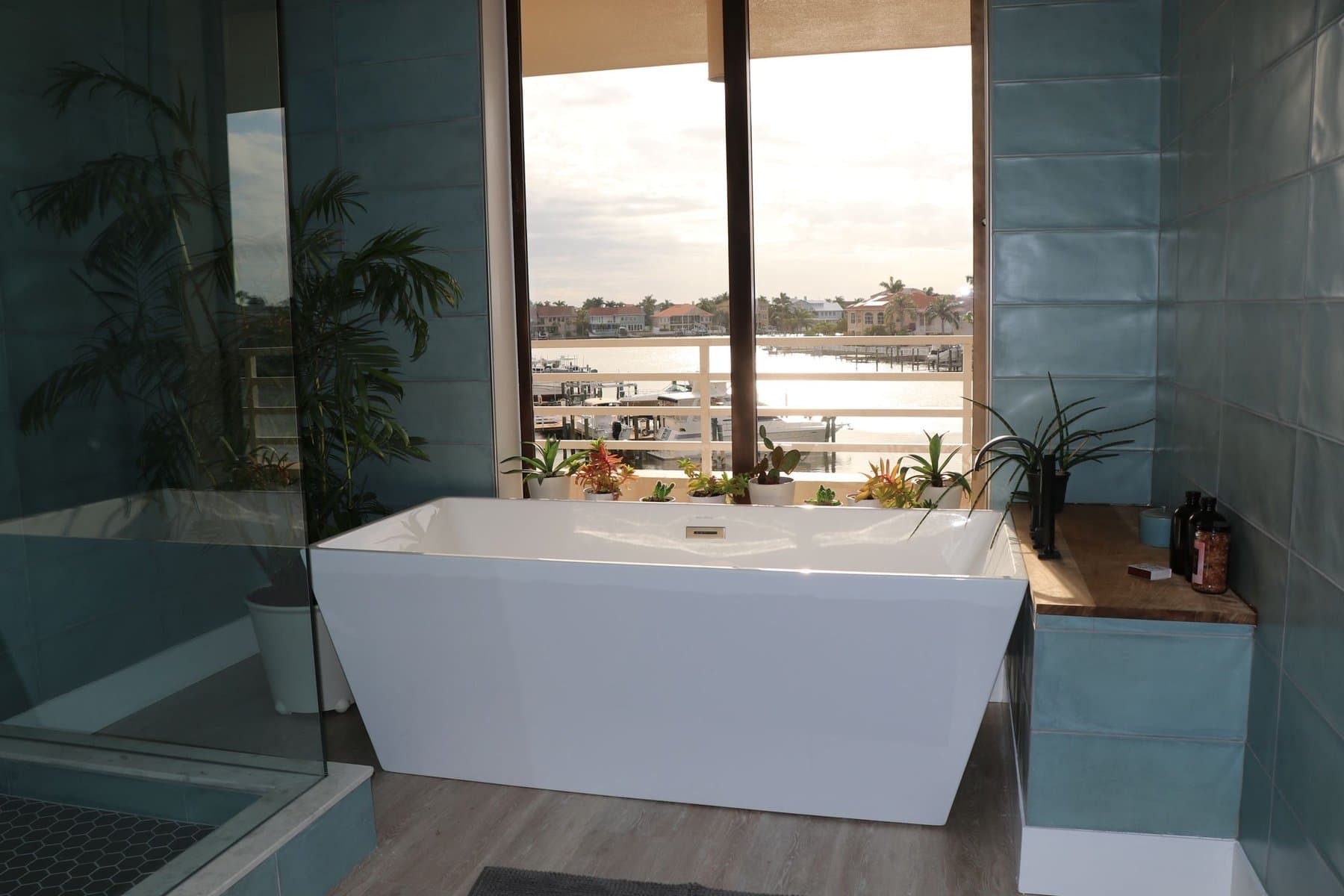
If your bathroom looks dated but everything works — the plumbing is solid, the layout makes sense, nothing leaks — you probably need a refresh, not a full remodel. A refresh updates surfaces and fixtures while keeping the framing, drain locations, and plumbing supply lines intact. A remodel tears it down to the studs and rebuilds, often saw-cutting the concrete slab to relocate drains. In St. Petersburg, the price difference is significant: a cosmetic refresh on a standard 5x7 bathroom runs $20,000–$30,000, while a full remodel lands between $40,000 and $70,000+. The right choice depends on four things: what’s behind your walls (especially cast iron drain condition in pre-1970s Old Northeast, Historic Kenwood, Snell Isle, and Shore Acres homes), whether your layout works for how you actually live, whether your home was built before 1978 (lead paint and asbestos containment), and how long you plan to stay.
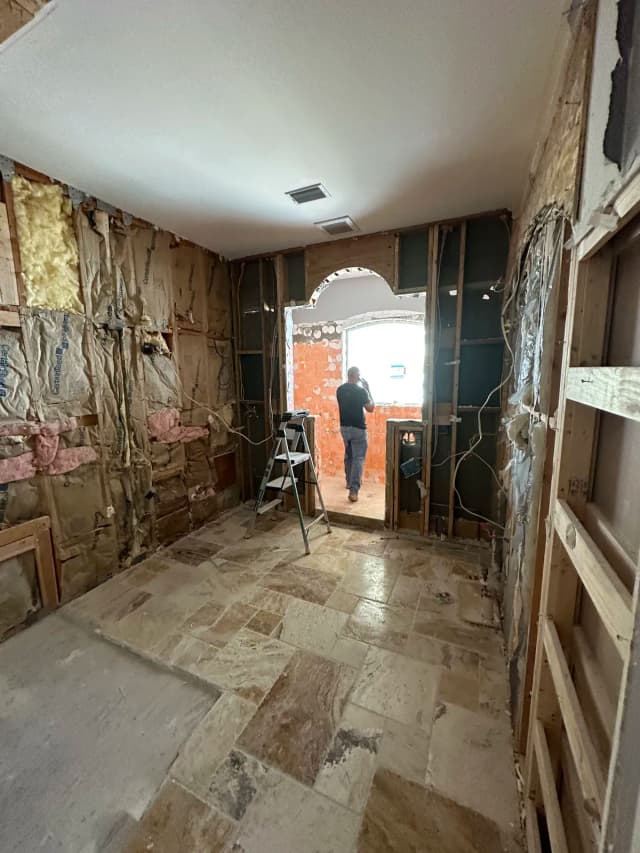
 Before
 After
AfterWhat’s Actually Different
A refresh — sometimes called a facelift — keeps your bathroom’s existing layout and plumbing in place. Same drain locations, same wall framing, same footprint. You’re replacing what you can see: tile, vanity, fixtures, paint, maybe swapping a tub for a shower in the same location. The plumbing rough-in (the pipes and wiring behind the walls) stays where it is. Most refresh-scope work in Pinellas County doesn’t trigger a building permit, though any electrical or plumbing modification — even moving a single GFCI outlet — should be permitted under the Florida Building Code.
A remodel changes the structure. Walls come down. Drains move. In homes built on a concrete slab — common across St. Petersburg — relocating a drain means cutting the slab, recessing a new drain line, and pouring new concrete. Electrical gets rerouted. Waterproofing gets rebuilt from scratch, typically with the Schluter Kerdi membrane system that carries a lifetime warranty. Permits get pulled (plumbing and electrical), and a shower-pan inspection — a flood test where the pan is plugged and filled with water to check for leaks — happens before tile goes down. As Revolution’s owner Jeremy puts it: “Difference between a refresh and a full gut — the full gut means moving lines, framing, floor framing, potentially cutting slab floors to move drains and then resetting concrete, which adds several thousand dollars right off the bat. It’s not uncommon for a facelift versus a full layout-change gut job for the price to double.”
Here’s how the two compare side by side:
| Refresh | Full Remodel | |
|---|---|---|
| Cost (St. Pete) | $20,000–$30,000 | $40,000–$70,000+ |
| Construction time | 4–6 weeks | 8–14 weeks |
| Layout changes | None | Walls, drains, fixtures relocate |
| Permits needed | Usually no | Yes — plumbing and electrical |
| What stays | Framing, plumbing locations, drain positions | Nothing — full gut to studs |
| What changes | Tile, vanity, fixtures, paint, accessories | Everything from subfloor to finished ceiling |
Most bathroom decisions can be triaged before a contractor walks the space. Here are the seven decision triggers we use most often when scoping a Pinellas bathroom project, and which scope each one points toward:
| What you’re seeing or wanting | Likely scope |
|---|---|
| Dated tile, worn vanity, old fixtures — layout still works for how you live | Refresh |
| Soft spots in the floor near the toilet, water stains on the ceiling below the bathroom, or musty smells near the shower | Full remodel (waterproofing failure) |
| Pre-1970s home in Old Northeast, Historic Kenwood, Snell Isle, Crescent Lake, or Shore Acres — original cast iron drains never replaced | Camera scope first ($150–$350); refresh OR remodel based on findings |
| Want to convert a tub to a walk-in or curbless shower | Full remodel (drain relocation + slab cut) |
| Want a double vanity where a single one currently sits, or want to combine a 5x7 with adjacent closet space | Full remodel (framing changes + permit) |
| Need accessibility features — grab bars, curbless shower, wider doorway for aging-in-place | Full remodel (ADA-benchmark scope) |
| Vanity wood is delaminating; tiles are loose or popping off the shower wall | Full remodel (waterproofing rebuild) |
How to Tell Which One Your Bathroom Needs
Your bathroom is already telling you — here’s how to read the signals. Most St. Pete bathrooms we walk fall cleanly into one of the two camps below within ten minutes. The 20% in the middle — where it could go either way — is where a $150–$350 plumbing camera scope and an honest in-person walkthrough earn their keep.
You probably need a refresh if:
- Your layout works for how you actually use the space (5x7 footprints rarely benefit from layout changes — the dimension is at the minimum for a toilet, vanity, and shower of normal size)
- Plumbing fixtures are in the right spots — you don’t want to move the toilet, shower, or vanity (moving any one of them on slab-on-grade construction triggers a slab cut and concrete pour)
- The structure underneath is solid — no soft spots in the floor near the toilet flange, no water stains on the ceiling below the bathroom, no musty smells near the shower threshold or vanity kickplate
- Your main complaint is cosmetic: dated tile, worn countertops, old fixtures, peeling paint, builder-grade vanity hardware
- Cast iron drain has already been replaced (if your home was renovated since 2010, ask the previous owner or check your closing documents for plumbing replacement records)
You probably need a full remodel if:
- The layout doesn’t match how you live — you want a walk-in shower where a tub sits, or a double vanity where a single one barely fits in a 5x7 footprint
- You’re seeing signs of water damage — stains under the vanity, soft flooring near the toilet flange, mold at the shower threshold, or persistent musty smells (waterproofing failure means tearing tile out and rebuilding the substrate — refresh-only work over failed waterproofing buys you 6–18 months before the same failure recurs)
- Your home was built before the 1970s and the cast iron drain plumbing has never been camera-scoped or replaced — this is the load-bearing decision in Old Northeast, Historic Kenwood, Snell Isle, Shore Acres, Crescent Lake, and most of St. Pete’s pre-WWII housing stock
- You need accessibility features — a curbless shower (a shower with no raised edge at the entry), grab bars with proper in-wall blocking, or a wider doorway for wheelchair clearance (ADA benchmark is 32″ clear, 36″ preferred)
- The room is undersized and you’re expanding the footprint into adjacent closet space, a hallway, or a borrowed bedroom corner (any wall move triggers an FBC permit and likely structural review)
- You’re in a flood zone (FEMA AE or VE) and your bathroom is part of a larger renovation that could trigger the FEMA 50% rule — cumulative renovation over 50% of structure market value in a rolling 12-month window forces the entire home to be brought up to current flood code
Some projects genuinely start as refreshes and become remodels once demolition reveals what’s behind the walls. That’s not a contractor upselling — it’s reality in older St. Pete homes. If you decide to gut, see our full bathroom remodel cost breakdown for real St. Pete pricing by scope and component.
The Cast Iron Question: Why Some Refreshes Become Remodels
This is the biggest wildcard in St. Petersburg bathroom projects, and it’s why scoping your plumbing before committing to a budget matters more here than in most markets.
Most homes in Old Northeast, Historic Kenwood, Snell Isle, and Shore Acres were built before the 1970s with cast iron drain pipes. Cast iron was the standard — durable and quiet. But after 50–70 years, it corrodes from the inside out. Your pipes can look fine on the outside while the interior is scaling, pitting, or nearly closed off.
“We almost always get a camera down the pipes to know what we’re dealing with and tell the story to homeowners,” says Revolution owner Jeremy. A plumber runs a small camera through your drain system for $100–$300. It takes about an hour and shows you exactly what’s happening underground.
If your cast iron is healthy, your refresh stays a refresh. If it’s corroded, you’re looking at $10,000–$20,000 in pipe replacement — and that moves your project into remodel territory whether you planned for it or not. “In a 100-year-old house, we know that there have been four generations of grandpas and dads doing their DIY bullshit work — things we can’t see until we really are doing some destructive demo.”
The camera scope is the cheapest insurance in bathroom renovation. $100–$300 upfront can save you from a five-figure surprise on demolition day. For a deeper look at what drives these costs, see our bathroom remodel cost guide. For the full breakdown of cast iron issues, replacement costs, and what goes back in, read our cast iron plumbing guide.
Not Sure What Your Bathroom Needs?
We'll assess your space and tell you honestly whether a refresh will get the job done.
What a Refresh Can (and Can’t) Fix
A well-executed refresh transforms the room. New tile on floors and shower walls (large-format tile creates more waste and needs a more perfect substrate — smaller field tile and mosaics are more forgiving), a modern vanity with a solid-surface countertop, updated faucets and showerheads, fresh paint, new lighting (typically a 110+ CFM exhaust fan in St. Pete because of summer humidity), and modern accessories — your bathroom looks and feels completely different.
What a refresh won’t fix: layout problems, underlying plumbing issues, structural damage, or waterproofing failures. If your shower pan (the waterproof membrane underneath your shower tile) is failing and water is getting into the subfloor, new tile over the same failing substrate won’t solve the problem. That’s a remodel. Most failed pans we open up in St. Pete were installed with the old thick-membrane “hospital corners” method — replaced today with the Schluter Kerdi sheet membrane system that carries a lifetime warranty and gets a flood test before tile goes down.
One distinction that catches homeowners off guard: converting a tub to a walk-in shower is usually remodel-level work, even if nothing else changes. Tub-to-shower conversions involve moving the drain, installing new waterproofing, and often modifying the curb or threshold. On a concrete slab, a curbless conversion requires saw-cutting the slab to recess the drain below floor level — budget an additional $2,500–$6,000 for that single detail. Your $25,000 refresh just became a $45,000 remodel — not because of cosmetics, but because of the plumbing underneath. For more on what drives 5x7 and 5x8 cost variability, see our 5x8 bathroom remodel ideas piece.
Why Pricing Transparency Matters When Scope Is Uncertain

The refresh-vs.-remodel question is exactly where fixed-price bids cause the most problems. A contractor quotes a fixed price for what looks like a refresh. Demolition starts. They find corroded cast iron pipes, a failed shower pan, lead paint, asbestos mastic under the original vinyl floor, or four generations of unpermitted DIY work behind the walls (which is normal in pre-1940 St. Pete homes). Now the scope has changed, but the contractor is trying to stay under a number — so they either cut corners or hit you with a change order that feels like extortion.
Revolution uses an open-book Time & Materials (T&M) pricing model with a transparent 30% markup — stated openly, not buried in line items. Before construction starts, your estimate goes through a pre-construction phase where 75% of line items become confirmed fixed-price, giving you 90–95% budget certainty. You get weekly budget reports showing where every dollar went, with material invoices from supplier names you can verify and labor hours by the named carpenter who logged them.
If your refresh stays a refresh, you pay refresh prices. If it becomes a remodel because of what’s behind the walls, you see the real cost as it happens — no hidden markups, no surprise lump sums, no “we need another $15,000 and we’ll explain later” conversations. And because Revolution runs your project under one open-book budget with 20+ W-2 carpenters on payroll, the same crew that started your project finishes it, regardless of how the scope evolves. The licensed Pinellas County trade partners we coordinate are the same crews on every job — we know their work because we see it every day.
Key Takeaways
- A refresh updates surfaces and fixtures ($20,000–$30,000 for a standard 5x7 in St. Pete); a remodel changes layout, plumbing, and structure ($40,000–$70,000+, with a Pinellas County master bath at the upper end)
- If your layout works and the structure is sound — no soft spots, no stains, no smells, plumbing in the right locations — a refresh is likely all you need
- Scope your cast iron pipes with a plumbing camera ($150–$350) before committing to a budget — corroded pipes turn refreshes into remodels in pre-1970s Old Northeast, Historic Kenwood, Snell Isle, and Shore Acres homes
- Tub-to-shower conversions usually require remodel-level work (drain relocation, slab saw-cut on slab-on-grade construction, waterproofing rebuild), even when everything else stays the same — budget an extra $2,500–$6,000 for the slab work
- Revolution’s open-book T&M pricing with weekly budget reports handles scope changes transparently — no surprise change orders when a refresh becomes a remodel; the 20+ W-2 in-house carpenter team that starts the project also finishes it
- Florida Building Code permits are required for any plumbing or electrical change — refresh-only work (tile, vanity, paint) typically doesn’t trigger permits, but any layout change, drain move, or shower-pan rebuild does
Frequently Asked Questions
Is a bathroom refresh worth it, or should I just do a full remodel?
A refresh is worth it when your layout works, the plumbing locations are right, and the structure underneath is sound. In St. Petersburg, a 5x7 cosmetic refresh runs $20,000–$30,000 versus $40,000–$70,000+ for a full remodel. If you only need updated tile, a new vanity, fresh fixtures, and paint, the refresh delivers most of the visual impact at half the cost. The case for a full remodel is structural — failed waterproofing, corroded cast iron drains, layout that doesn’t fit how you live, or accessibility needs that require moving plumbing.
How long does a bathroom refresh take versus a full remodel in St. Pete?
A 5x7 bathroom refresh typically takes 4–6 weeks once materials are on site. A full remodel runs 8–14 weeks because demolition, framing changes, drain relocation (slab cutting on most St. Pete homes), Schluter Kerdi waterproofing installation, mid-construction inspections, and tile work all take longer when the layout changes. Tile selection lead time and any cast iron drain replacement are the two most common schedule extenders on Pinellas County bathroom projects. For the full timeline breakdown, see our bathroom remodel timeline guide.
What’s the difference between a bathroom renovation and a remodel?
Most contractors use “renovation” and “remodel” interchangeably to describe a full gut-and-rebuild. A “refresh” or “facelift” is the lighter scope — keeping framing, plumbing locations, and drain positions intact while replacing surfaces and fixtures. The practical line: if walls come down or drains move, you’re in remodel territory. If you’re swapping tile, vanity, fixtures, and paint over the existing layout, you’re in refresh territory. Permit requirements follow the same line — refresh work usually doesn’t trigger Florida Building Code permits; remodel work always does for plumbing and electrical, plus a shower-pan inspection before tile.
Can I convert a tub to a walk-in shower without a full remodel?
Tub-to-shower conversions are remodel-level work even when nothing else changes. The drain location moves, the waterproofing system has to be rebuilt, and the threshold or curb has to be modified. On a concrete slab — which is most St. Petersburg construction — converting to a curbless walk-in shower requires saw-cutting the slab to recess the drain. That single decision adds $2,500–$6,000 to the project and pushes a $25,000 refresh into $40,000+ remodel territory. Plan for the full scope upfront rather than treating the tub-to-shower conversion as a small change.
Ready to dig into the numbers? Our bathroom remodel cost guide for St. Petersburg breaks down pricing by component, scope, and neighborhood. Curious whether the investment pays off at resale? See bathroom remodel ROI in Florida. Working with a tight footprint? See our 5x8 bathroom remodel ideas. Want the full sequence and timing? Read our bathroom remodel timeline guide. Start with our bathroom remodel checklist to make sure nothing gets missed. See our full bathroom remodel service page for the 8-phase process and project gallery. Thinking about doing the kitchen too? Explore our kitchen remodel services.
Not Sure Whether You Need a Refresh or a Full Remodel?
We'll walk your space, check the plumbing, and give you an honest assessment, no commitment required.