Waterfront Home Construction in St. Petersburg: What to Know Before You Break Ground

Building on a waterfront lot in St. Petersburg sounds like the dream — and it can be. But waterfront home construction in St. Petersburg comes with a layer of complexity that most inland builds never touch. You're dealing with seawall conditions, FEMA flood zone classifications, elevated foundations, salt-air material requirements, marine permits, and coordination between your general contractor and marine specialists — all before your framing crew shows up.
If you're moving to St. Pete from out of state — coming from a market where waterfront just means "near the water," not "regulated by four agencies" — here's what building on Tampa Bay or the Intracoastal actually looks like in Pinellas County. Most of the relocators we work with arrive cash-rich, design-clear, and genuinely shocked by Florida's coastal construction rulebook. The point of this guide is to compress that learning curve before you sign a contract.
Start With the Seawall, Not the Floor Plan
This surprises most buyers: your seawall dictates what you can build and when you can build it. A failing seawall isn't just a marine problem — it's a foundation problem. If the seawall shifts or fails during construction, it can undermine your entire foundation system.
Before you design anything, get a professional seawall inspection. That means an underwater diver assessment, not just a visual walk-by from the dock. The inspection evaluates:
- Structural integrity below the waterline (where most failure starts)
- Remaining lifespan and load-bearing capacity
- Whether repair or full replacement is needed
- Compatibility with your planned foundation system
Most St. Pete waterfront lots run about 75 feet along the Intracoastal. Seawall repair on a lot that size typically costs $12,000–$25,000. Full replacement runs $150–$500+ per linear foot depending on material — vinyl sheet pile, concrete, or riprap.
Here's the expensive lesson some owners learn too late: repairing a seawall before it fails costs a fraction of what you'll pay after it collapses. Post-failure replacement costs can double or triple because you're now stabilizing eroded soil behind the wall, not just building a new one.
Your seawall work requires a licensed marine contractor — separate from your home builder. This is the first coordination point you need to plan for, and it needs to happen before your structural engineer designs your foundation.
VE Zones vs. AE Zones: The Distinction That Changes Everything
Not all waterfront lots are equal in FEMA's eyes. Your flood zone classification — VE or AE — fundamentally changes how your home gets built.
AE Zone (Most Bay-Side and Canal Lots in St. Pete)
- 1% annual flood chance with wave heights under 3 feet
- Building on engineered fill is allowed
- More foundation flexibility — elevated slab, stem wall, or pilings
- Your lowest floor must be at or above Base Flood Elevation (BFE)
VE Zone (Coastal High Hazard Area — Barrier Islands, Exposed Shoreline)
- Wave action of 3+ feet during a base flood event
- No building on fill — period
- Deep pilings required so waves pass beneath the structure
- Breakaway walls required below BFE (walls designed to collapse in a storm without damaging the structure above)
- Insurance premiums 2–5x higher than the same structure in an AE zone
Most St. Petersburg waterfront parcels along Tampa Bay and the Intracoastal fall in AE zones. VE zones concentrate on the barrier islands — Pass-a-Grille, Treasure Island, and the Gulf beaches. But parcels near open water or at bay headlands can surprise you with a VE designation.
Check your FEMA Flood Insurance Rate Map before you make an offer on a lot. It determines your foundation type, your construction cost, and your long-term insurance burden. For a deeper dive into zone classifications and what they mean for your project, read our Pinellas County flood zone guide.
Also worth understanding: if you're buying an existing waterfront home and planning a major renovation, the FEMA 50% rule may force you into a full elevated rebuild. The rule tracks cumulative improvement value against market value — not just your current project.
What Elevated Construction Actually Costs
Waterfront home construction in St. Petersburg carries a coastal premium. Pilings, elevated foundations, and flood-compliant mechanical systems add at least 20% over a comparable inland build — and that's the floor, not the ceiling.
Here's where the money goes:
Foundation: Deep pilings for VE zones run $50,000–$150,000+ depending on soil conditions and home size. AE zone foundations (elevated slab or stem wall) cost less but still significantly more than a standard inland slab.
Geotechnical report: $3,000–$8,000. Your structural engineer can't design the foundation without one. This tells you what's under the sand — bedrock depth, soil bearing capacity, water table height. It's not optional for waterfront.
Mechanical elevation: All HVAC equipment, electrical panels, and water heaters must sit above BFE. Rerouting these systems adds $15,000–$30,000 compared to conventional ground-level placement.
Total range for waterfront custom homes in St. Pete: These are ranges from active 2026 projects in our pipeline, not fixed-price quotes — every waterfront build is priced from the actual lot, BFE, soil report, and selection set. $400–$600+ per square foot, depending on finishes, flood zone, and lot conditions. A 3,000 SF waterfront home typically runs $1.2M–$1.8M+ in base construction costs before land.
"An important question that should be asked is the difference between custom homes and either semi-custom or builder-grade homes — there's a big difference. A builder-grade home might be built for $250 to $350 per square foot, whereas a full custom home — a one-of-one — is going to be $400+ up to $1,000/sqft for real luxurious waterfront homes. For a normal custom home that we are building right now, we're seeing them in the $400 to $500 per square foot range."
A builder who works on a Time & Materials basis gives you full visibility into these costs as they happen — weekly budget reports showing exactly what the foundation, mechanical elevation, and structural work cost line by line. No padded lump sum hiding a 30% contingency for problems that may never materialize. That transparency matters more on a waterfront build than anywhere else, because the variables are real and the surprises are expensive.
For more on foundation options and elevated design, see our guide to elevated house plans for flood zones. For the deeper $/sq ft breakdown — including builder-grade through ultra-custom waterfront tiers and what each cost band actually buys you — read our custom home cost guide for St. Pete.
Planning a waterfront build in St. Pete? The earlier you start the conversation, the more options you have. Get in touch or call (727) 888-6161 — we'll walk your lot before you walk into a contract.
Salt Air Destroys Standard Materials
Your waterfront home is under constant attack from salt-laden air. Standard construction materials that last 20+ years inland can fail in 2–3 years on the water. This isn't an upgrade conversation — it's a durability requirement.
Fasteners and hardware: Every exterior fastener must be stainless steel or hot-dipped galvanized. One standard zinc-plated screw in your deck framing becomes a rust streak and a structural weak point within two hurricane seasons.
Windows and doors: Pinellas County's coast falls within a wind-borne debris region, which means all openings require impact-rated glazing or approved hurricane shutters. Impact windows must meet ASTM E1886/E1996 testing standards, with design pressure ratings calculated for your specific location and elevation. Budget 5–10% above standard material costs for salt-resistant, impact-rated products.
Roofing: Metal standing seam or concrete tile outperform asphalt shingles in salt exposure. Shingles degrade faster and need replacement sooner — a poor trade-off when your roof is already engineered for 150+ mph wind loads.
Exterior cladding: Fiber cement siding, properly detailed stucco, or PVC trim. Traditional wood trim demands a marine-grade paint system and significantly more maintenance.
Decking and railings: Composite or marine-grade aluminum. Pressure-treated lumber looks great for about 18 months on the waterfront, then it doesn't.
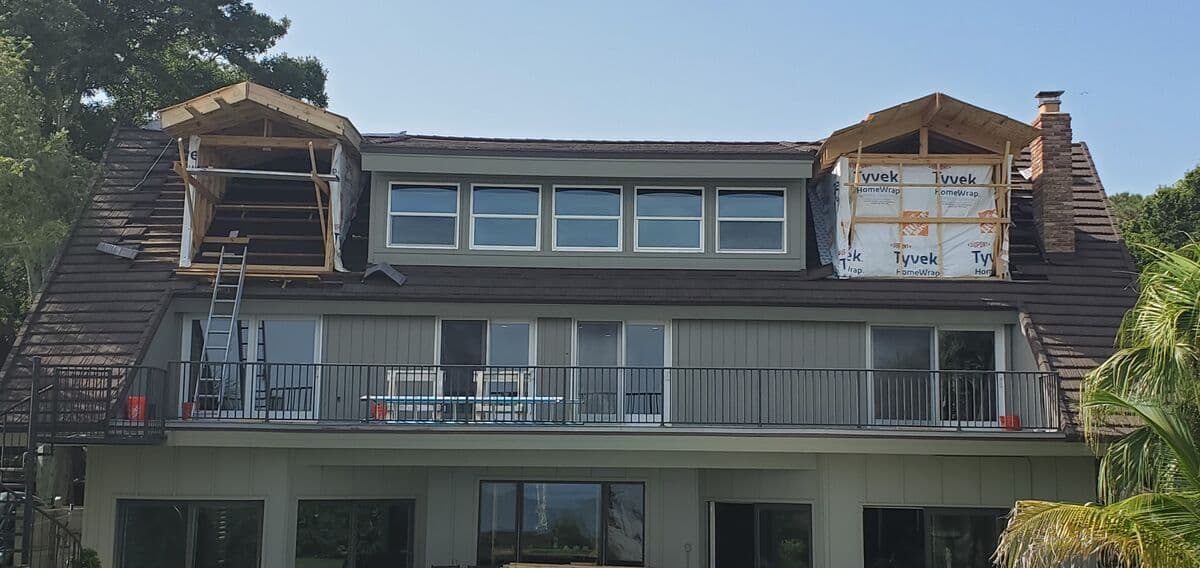
These material choices compound. Salt-resistant construction adds 5–10% to your total material budget — but it prevents the kind of premature failures that turn a five-year-old home into a renovation project.
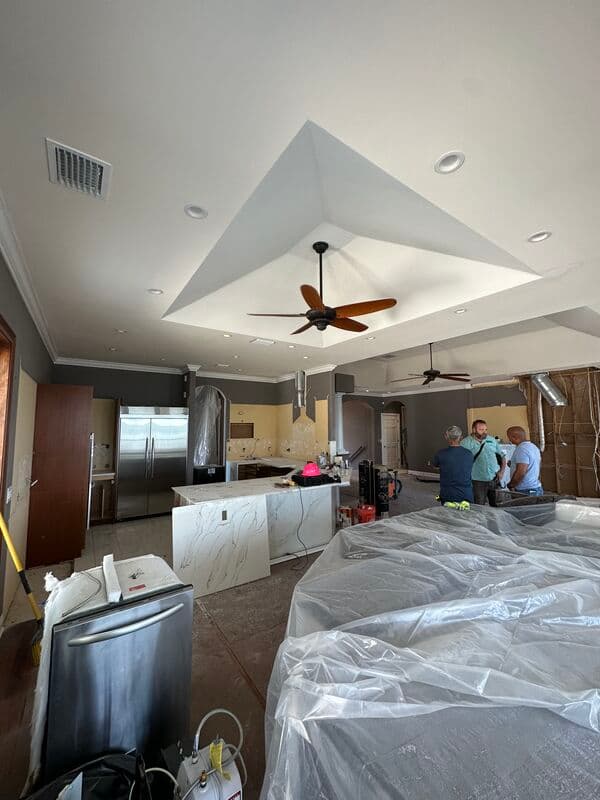
Coordinating Marine and Residential Contractors
Waterfront construction means managing two contractor tracks simultaneously: your general contractor handling the home, and a marine contractor handling everything that touches the water — seawall, dock, and boat lift.
The coordination sequence matters:
- Seawall (marine contractor) — first priority, before foundation design
- Foundation and vertical construction (general contractor) — begins after seawall is confirmed or repaired
- Dock and boat lift (marine contractor) — can overlap with interior finish work
Each marine element requires its own permit through the Pinellas County Water and Navigation Control Authority, plus approval from the City of St. Petersburg. Dock permits have specific restrictions:
- Maximum 2 boats for residential docking
- Cannot extend more than 25% of the waterway width
- Must maintain 150 feet from the Intracoastal Waterway centerline
- Minimum 18 inches of water depth at mean low tide
Boat lifts add another permitting layer — an environmental impact assessment may be required if the installation could affect natural resources in the immediate area.
A general contractor experienced in flood zone construction will already have relationships with marine contractors and understand the sequencing. Having your own carpenters on payroll — not subcontracted framing crews juggling three other jobs — means your GC can flex the schedule when the marine contractor's timeline shifts. And on waterfront builds, it always shifts.
You don't want to be the one coordinating permit timelines between two contractors who've never worked together.
Pinellas Permitting: Why Waterfront Takes Longer
Standard inland construction permits in St. Pete move at a predictable pace. Waterfront lots stack additional jurisdictions on top:
- City of St. Petersburg: Your building permit, zoning, and upland setbacks
- Pinellas County Water and Navigation Control Authority: Anything touching or extending over the water
- Florida DEP: State environmental permits for docks, dredging, and marine activities
- Army Corps of Engineers: Federal permits if your project involves filling or altering navigable waters
- Mangrove protection: Pinellas County enforces strict mangrove protection ordinances. You cannot trim or remove mangroves without an FDEP permit — and violations can delay your entire project by months
Waterfront setbacks are more complex too. You're satisfying both upland setbacks from the city and waterward setbacks from county and state agencies. The buildable envelope on a waterfront lot is almost always smaller than the raw lot dimensions suggest.
Expect waterfront permitting to add 2–4 months beyond standard construction timelines. Marine permits alone can take 60–120 days. A builder who's done this before knows to submit marine permits early — ideally while the architectural plans are still being finalized.
For the full picture on custom home building timelines and what to expect at each phase, explore our custom home resources.
Frequently Asked Questions
How much does it cost to build a waterfront home in St. Petersburg?
Waterfront custom homes in St. Pete typically run $400–$600+ per square foot depending on flood zone, foundation requirements, and finishes. A 3,000 SF home ranges from $1.2M–$1.8M+ in construction costs before land. The coastal premium — pilings, elevated mechanicals, salt-resistant materials, impact windows — adds at least 20% over a comparable inland build.
Do I need to inspect the seawall before building on a waterfront lot?
Yes — and not just a visual inspection. You need an underwater diver assessment to evaluate the seawall below the waterline, where most deterioration occurs. Seawall condition directly affects your foundation design and construction timeline. Repair costs range from $12,000–$25,000 for a typical 75-foot lot; catching problems early avoids exponentially higher costs after failure.
What's the difference between FEMA VE and AE flood zones for waterfront construction?
AE zones allow more foundation flexibility — elevated slab, stem wall, or pilings — and permit building on engineered fill. VE zones (Coastal High Hazard Areas) require deep pilings with an open foundation so waves pass beneath the structure. VE zones also prohibit building on fill and carry flood insurance premiums 2–5x higher than comparable AE zone structures.
How long does it take to get permits for waterfront construction in Pinellas County?
Waterfront permitting adds 2–4 months beyond standard construction timelines. You're coordinating across multiple agencies — the City of St. Pete, Pinellas County Water and Navigation Control Authority, Florida DEP, and potentially the Army Corps of Engineers. Marine permits alone (dock, seawall, boat lift) can take 60–120 days.
What materials should I use for a waterfront home in Florida?
Every exterior fastener needs stainless steel or hot-dipped galvanized coating. Windows and doors must be impact-rated for wind-borne debris. Roofing should be metal standing seam or concrete tile — not asphalt shingles, which degrade rapidly in salt air. Fiber cement siding or properly detailed stucco outperforms wood. Composite decking beats pressure-treated lumber on the waterfront. Plan for 5–10% above standard material costs for salt-resistant products.
Building on the water in St. Pete is a different discipline than building inland. The regulatory complexity, material requirements, and contractor coordination demand a builder who's navigated this before. If you're planning waterfront home construction in St. Petersburg, let's talk about your lot and what it'll take to build there. Call us at (727) 888-6161.