My Safe Florida Home Grant: 2026 Pinellas Homeowner Guide
The My Safe Florida Home grant program (MSFH, also written mysafeflhome) covers up to $10,000 of state matching funds for hurricane-mitigation work on an eligible Pinellas County home, matched 2-to-1 against the homeowner’s contribution for approved improvements. The 2025-2026 cycle is active at mysafeflhome.com and continues to accept applications. This guide covers who qualifies for the My Safe Florida Home grant, how to apply, which hurricane-mitigation improvements are approved, how the inspection and award process works, and how to pick a licensed Florida contractor for the work.

The My Safe Florida Home (MSFH) program is a Florida grant that pays up to $10,000 per home for hurricane-hardening upgrades, impact windows, roof-to-wall connectors, secondary water resistance, reinforced garage doors, and roof-deck attachment. To qualify, your home must have a homestead exemption, be site-built and permitted before January 1, 2008, sit at or below the program's insured-value cap, and the household income must be at or below 120% of Pinellas County median. The program is run by the Florida Department of Financial Services (FL DFS) under Florida Statute 215.5586. The grant portal at mysafeflhome.com is the authoritative source for current parameters, match terms, dollar caps, and cycle status adjust each fiscal year.
We're Revolution Contractors, a St. Petersburg general contractor with $10-20M+ of completed coastal Pinellas flood-zone work. We do the construction side of MSFH-funded work: impact-window installs, roof-deck attachment, opening protection retrofits, secondary water resistance, and the FL Product Approval (NOA) documentation that closes out the permit on a qualifying job. If you're working through an MSFH application and you want a Pinellas-local, FEMA-experienced GC for the construction side, (727) 888-6161 gets you a free 48-hour estimate.
Honest scope: we don't administer the grant, prepare the grant application, schedule the wind mitigation inspection, or issue award letters. That work is FL DFS scope. This guide walks through every step of the program, eligibility, application flow, approved upgrades, contractor selection, reimbursement, and links to the program portal for every parameter that changes cycle-to-cycle.
What's NOT in This Guide (FL DFS Program Scope)
Before the program details, here's what a general contractor does not handle on the MSFH side. If you need help with these, the program portal at mysafeflhome.com and the FL DFS CFO program page at myfloridacfo.com/mysafeflhome are the authoritative sources:
- Grant application intake, eligibility determination, and prioritization-group assignment, handled by the program's portal (Neighborly Software platform) and FL DFS staff
- Scheduling and conducting the free wind mitigation inspection, performed by state-approved inspectors (separate from any contractor)
- Award letter issuance and grant-fund reservation, FL DFS only
- Income-eligibility verification and homestead documentation review, submitted by the homeowner directly to the program portal
- Reimbursement processing and disbursement, FL DFS pays the homeowner (or the contractor, depending on the program payment model in effect for the cycle) after final inspection sign-off and document submission
What follows is a reference summary of how the program works (sourced to FL DFS) plus a note on where Revolution fits in on the construction side (and where it does not). For any program specific that affects your eligibility or your money, verify on the program portal, these parameters change cycle-to-cycle and the most recent guidance is always at mysafeflhome.com.
What the My Safe Florida Home Program Is (FL DFS Overview)
The My Safe Florida Home program (MSFH) is a Florida grant program administered by the Florida Department of Financial Services (FL DFS) under the office of the Florida Chief Financial Officer. It was created under Florida Statute 215.5586 and brought back with renewed funding starting in 2022 after being shelved post-2008. The program portal is at mysafeflhome.com and the CFO's program page is at myfloridacfo.com/mysafeflhome, these are the only authoritative sources for current program parameters.
The program has two parts:
- A free wind mitigation inspection from a state-approved inspector, available to qualifying site-built single-family homes and townhouses statewide.
- A matching grant for hurricane-hardening upgrades the inspector recommends, currently capped at $10,000 per home with the program's tiered match structure (verify current cap and match terms on mysafeflhome.com, these adjust by cycle).
For the 2025-2026 fiscal year, the Florida Legislature appropriated funding via the General Appropriations Act (verify current cycle balance on the program portal, funds move through a priority-group queue and are issued first-come, first-served within each group). Supplemental appropriations have been added in past cycles when balances drew down.
The program serves all Florida counties, including Pinellas. The portal vendor for application intake is Neighborly Software, applicants register accounts there and submit documentation directly to FL DFS through the platform. If your project is also a substantial-improvement scenario, see our FEMA 50% rule context for how MSFH-funded work interacts with FEMA cumulative-improvement thresholds in Pinellas flood zones.
Who Qualifies for the Matching Grant
The free inspection is open to most Florida homeowners. The matching grant is narrower. To qualify for grant money in the current cycle, a home must meet all of the following per FL DFS program rules (mysafeflhome.com, verify current parameters before applying):
- Homestead exemption on the property (primary residence, filed with the Pinellas County Property Appraiser for Pinellas homeowners)
- Site-built, single-family detached home or townhouse, individual condo units are excluded from the main program (separate Condominium Pilot Program addresses condo associations)
- Building permit issued before January 1, 2008, the program targets pre-modern-code homes
- Insured value (Coverage A on the homeowner's policy) at or below the program cap, the cap was raised from $500,000 in 2024; verify the current Coverage A threshold on the program portal because this parameter has changed in past cycles
- Household income at or below 120% of county median, Pinellas County AMI tables update annually; check the current Pinellas AMI table on the program portal or via HUD's AMI lookup
The program splits applicants into income tiers, and the tier determines both the match structure and the queue priority. Per the FL DFS program portal, the current cycle uses two main tiers (low-income at or below 80% AMI, moderate-income at 80-120% AMI) with priority slotting that gives older low-income applicants the earliest queue access. Match terms (whether it's a 2:1 state-to-homeowner match, a no-match grant for the lowest tier, or a different ratio) and dollar caps adjust by cycle. Confirm current terms on mysafeflhome.com before assuming any specific match math.
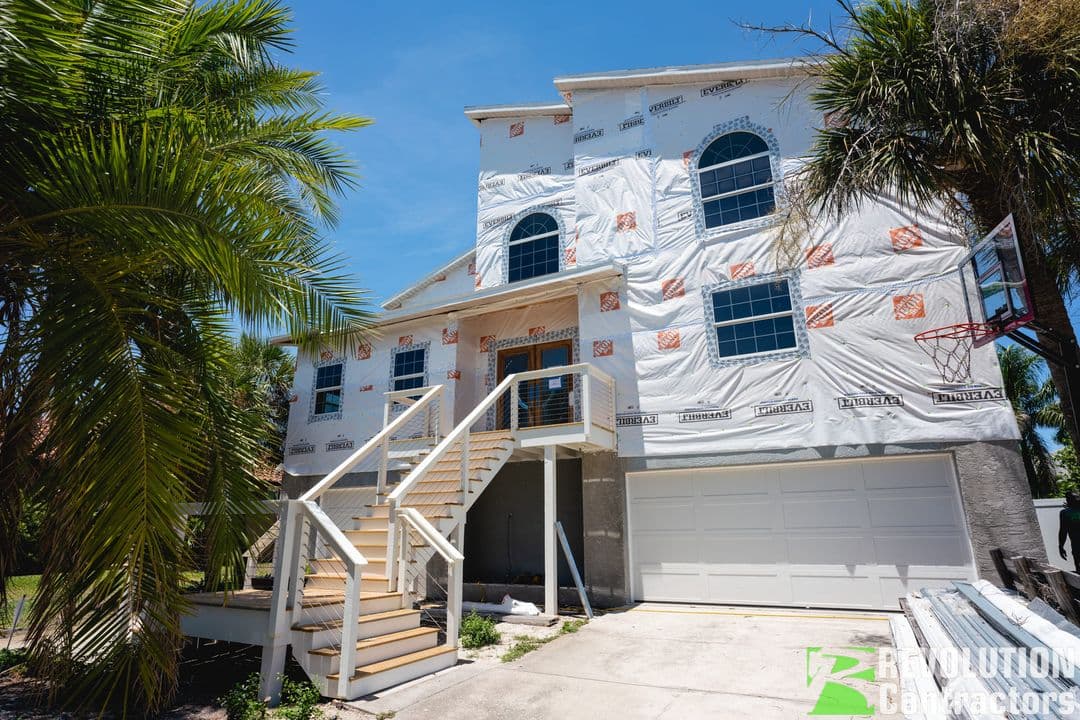
Impact window install with FL Product Approval (NOA) documentation, the construction-side paperwork the state needs to reimburse a qualifying MSFH application.
What Upgrades Qualify
MSFH money can only be spent on upgrades the wind mitigation inspector specifically recommends for your home. The inspection is the gatekeeper, if an upgrade isn't on the report, it doesn't qualify, regardless of the homeowner's preference.
Per FL DFS and the Florida Building Code (FBC) wind-load provisions, the common approved upgrade categories are:
- Opening protection. Impact-rated windows, impact-rated exterior doors, or FL Product Approval-compliant hurricane shutters meeting the 150 mph wind zone spec for coastal Pinellas. Common product lines on the FL Product Approval database for this scope include PGT WinGuard impact windows, CGI Sentinel impact windows, and Therma-Tru impact entry doors.
- Roof deck attachment. Upgrading nailing patterns or re-nailing the deck to current FBC spec during a roof replacement.
- Roof-to-wall connection. Upgrading straps, clips, or wraps so the roof stays tied to the walls in a high-wind event. Simpson Strong-Tie hurricane straps are the typical hardware spec.
- Secondary water resistance (SWR). A sealed roof deck layer installed under the shingles, peel-and-stick membrane or taped seams, that keeps water out if the primary covering blows off.
- Reinforced garage door. Replacing a non-rated garage door with a wind-rated model (Clopay wind-load doors are a common spec).
- Gable-end bracing. Structural reinforcement on older homes with unbraced gable ends.
A few things the program will not pay for per FL DFS rules: roof patches or partial repairs (if you're replacing roof covering, the entire contiguous roof has to be replaced), cosmetic upgrades, or replacing already-compliant hurricane shutters with impact windows just because you'd rather have the windows. Verify current eligible-upgrade categories and exclusions on mysafeflhome.com, the program has refined its upgrade list across cycles.
Upgrades must be installed by a Florida-licensed contractor, and the contractor must submit FL Product Approval documentation (NOA sheets) for the materials installed. The contractor must also be on the MSFH program's approved-contractor list at the time of award, the program-approved status is separate from the standard FL state GC license. Verify approved-contractor status on the program portal before assuming any specific contractor (including Revolution) qualifies for your specific project.
Opening-Protection Product Matrix (Impact Windows vs. Shutters vs. Film)
Opening protection is the largest single spend category for most MSFH-funded jobs. Four product classes qualify differently for the grant and for the separate wind-mit insurance credit on the OIR-B1-1802 inspection:
- Impact-rated windows and doors, full compliance, best insurance credit, no annual deploy step. Typical Pinellas installed pricing on FL Product Approval-listed lines (PGT WinGuard, CGI Sentinel, Therma-Tru impact): $85-$140 per square foot of opening, install included, in the 150 mph Miami-Dade / HVHZ wind zone that coastal Pinellas requires.
- Accordion hurricane shutters, fixed-position, permanent mounting, deploy in ~1 min per opening. FL Product Approval-listed for 150 mph. Typical installed pricing: $22-$40 per square foot of opening.
- Roll-down (motorized) shutters, permanent housing, most convenient, remote deploy. Typical installed pricing: $50-$80 per square foot of opening; premium for battery backup.
- Removable panel shutters (aluminum or clear polycarbonate), lowest cost, requires storage, manual install pre-storm. Typical installed pricing: $9-$18 per square foot of opening. Panels themselves qualify; the hardware anchors must be permanently installed and FBC-approved.
- Hurricane film, does NOT qualify for MSFH funds and does NOT count for the insurance mitigation credit as opening protection. Film is a personal-injury mitigation only.
Pricing anchors above reflect current Pinellas installed averages for FL Product Approval-listed products in the 150 mph wind zone; verify current product-line spec and pricing with your contractor and confirm each product's NOA number on the Florida Building Commission Product Approval database before install.
Roof-Attachment Upgrade Sequencing and Cost
The wind mitigation inspector evaluates two roof-attachment items separately: roof-deck attachment (how the plywood or OSB deck is fastened to the framing) and roof-to-wall connection (how the roof structure ties down to the wall framing). Both carry independent insurance credits and both are grant-eligible when the inspector recommends them.
Roof-deck re-nail during roof replacement: upgrading 8d nails on 6"/12" spacing (older Pinellas homes) to 8d ring-shank on 6"/6" spacing costs an additional $500-$1,200 for a 2,000 sq ft Pinellas home when done during a full roof replacement. Cannot be done without pulling the old covering.
Roof-to-wall strap or clip upgrade: retrofit hurricane straps (Simpson Strong-Tie H2.5A or equivalent) run $80-$200 per rafter/truss end depending on access. Full retrofit on a 2,000 sq ft Pinellas home typically prices $4,500-$9,000 including drywall opening and closing where interior access is required. Upgrade from clip to wrap can cut homeowner insurance by 15-30% per the wind-mit credit schedule, the insurance credit alone often pays back the upgrade in 3-6 years.
Secondary Water Resistance (SWR) Retrofit Sequencing
Secondary water resistance is a sealed roof-deck layer installed under the shingles that keeps water out if the primary covering blows off in a storm. It qualifies for both grant reimbursement and a wind-mit insurance credit. Two acceptable methods per FBC:
- Self-adhering peel-and-stick membrane over the entire deck, highest performance, most common current spec, adds $1.20-$2.00 per sq ft to a roof replacement (a 2,000 sq ft roof adds $2,400-$4,000 to base scope).
- Taped-seam method, polymer tape sealing all deck seams under standard underlayment. Lower cost ($0.60-$1.10 per sq ft added, $1,200-$2,200 on a 2,000 sq ft roof) but requires strict install verification.
SWR cannot be retrofitted without pulling the existing roof covering; the inspector will only recommend SWR when the homeowner is already replacing the roof. Pair SWR with roof-deck re-nail and shingle-covering upgrade in the same permit to maximize both the MSFH grant coverage and the insurance credit stack.
Gable-End Bracing on Pre-2002 Pinellas Homes
Older Pinellas homes with unbraced gable ends are at elevated risk in Category 3+ wind events, a failed gable often triggers roof loss. Retrofit bracing adds 2x4 or 2x6 lateral braces from the top plate to the roof truss webs, plus mid-span vertical stiffeners on gable ends taller than 4 feet. Structural engineer sign-off (an FL-licensed PE stamped drawing) is typically required for gable ends over 6 feet tall. Typical scope: $1,800-$4,500 per gable end depending on attic access and required engineering. Permit through the local AHJ (St. Petersburg Building Department or Pinellas County for unincorporated areas).
Pinellas Wind-Load Zones and Product-Rating Minima
Pinellas County straddles multiple wind-load exposures under ASCE 7 and the Florida Building Code. Product-rating minima track the design wind speed for your specific address:
- Coastal Pinellas (waterfront St. Petersburg, Old Northeast waterfront blocks, Snell Isle, Shore Acres, Venetian Isles, Tierra Verde, Treasure Island, Madeira Beach, Redington): HVHZ-adjacent design wind speeds typically 150 mph gust. Impact-glazed opening protection required for new construction or scoped-window replacement per FBC 1609.
- Interior Pinellas (Kenwood, Crescent Lake interior, parts of unincorporated Pinellas): design wind speeds 140-146 mph gust. Impact glazing or shutter protection required per FBC opening-protection rules.
- All Pinellas: exposure C or D depending on distance to open water; wind-load calc is address-specific and included in the permit set.
Verify the specific design wind speed and exposure category for your address through your contractor's wind-load calc or the Florida Building Commission resources before ordering product; a shutter or window rated for 140 mph will not pass inspection on a 150 mph address.
Quick Answers: Common MSFH Questions
Who qualifies for the My Safe Florida Home grant in 2026?
Homeowners qualify for the MSFH matching grant when the home has a homestead exemption, is site-built and permitted before January 1, 2008, has an insured value (Coverage A) at or below the current program cap, and household income is at or below 120% of the county area median income. Individual condo units are excluded (a separate Condominium Pilot Program addresses associations). Verify current parameters on mysafeflhome.com before applying, the cap and income tiers adjust each fiscal year.
How much can I get from the My Safe Florida Home program?
The MSFH grant is currently capped at $10,000 per home in matching funds. The state matches the homeowner's contribution on a tiered schedule, the low-income lane (at or below 80% AMI) currently gets a no-match grant up to the cap; the moderate-income lane (80-120% AMI) is typically a 2:1 state-to-homeowner match. Grant funds must be spent on upgrades the wind mitigation inspector specifically recommends. Verify current match ratio and cap on mysafeflhome.com, these adjust cycle to cycle.
What does the wind mitigation inspection actually check?
A state-approved MSFH inspector evaluates six wind-resistance features on your home: roof-deck attachment (nail pattern), roof-to-wall connection (strap or clip type), roof geometry (hip vs gable), opening protection (impact glazing or FL Product Approval-listed shutters), secondary water resistance (sealed deck layer), and roof covering (age and current FBC compliance). The report designates which upgrades are eligible for grant reimbursement on your specific home. The inspection is free through the MSFH portal and independent of any contractor.
How long does the MSFH application take from start to funding?
The end-to-end MSFH timeline is typically 4-8 months from application submission through reimbursement disbursement, driven by three variable-length stages: group queue wait (depends on cycle balance and priority group placement), post-award construction and permit closeout (typically 4-10 weeks), and reimbursement submission review by FL DFS (45-60 days per past cycles). Applications submitted early in the fiscal year (July-October) typically clear faster than late-cycle submissions. Track cycle balance on mysafeflhome.com.
Does the MSFH grant cover impact windows?
Yes, impact-rated windows and doors qualify for MSFH funds when the wind mitigation inspector specifically recommends opening protection for your home and the product carries a current FL Product Approval (NOA) rated for your address's design wind speed. In coastal Pinellas, that typically means 150 mph HVHZ-adjacent rating. Common qualifying product lines include PGT WinGuard, CGI Sentinel, and Therma-Tru impact entry doors. The contractor installing them must be Florida-licensed and on the MSFH-approved contractor roster at the time of award.
Can I stack the MSFH grant with insurance mitigation credit?
Yes. The MSFH grant and the annual homeowner insurance wind-mitigation credit are separate benefits and stack. After MSFH-funded upgrades pass final inspection, request an updated OIR-B1-1802 wind mitigation inspection from a Florida-licensed inspector and submit it to your homeowner's insurance carrier. The credit typically ranges $400-$1,200 per year on a Pinellas home depending on which upgrade categories qualify; the credit stacks with any other wind-mit credits already in place on the policy. See our Florida insurance wind-mit credit guide for the full credit math.
Do I need a building permit for MSFH-covered work?
Yes, every MSFH upgrade requires a building permit through your local Authority Having Jurisdiction (AHJ). In St. Petersburg city limits, permits go through the St. Petersburg Building Department; unincorporated Pinellas properties permit through Pinellas County. Each of the beach municipalities (Treasure Island, Madeira Beach, St. Pete Beach, Redington) has its own permitting office. Your contractor pulls the permit and closes it out with FBC-compliant inspection results before you submit for MSFH reimbursement.
What happens if I start work before the MSFH award letter?
Work performed before the MSFH award letter is not reimbursable, the award letter is the go signal. If you start install before FL DFS reserves your grant funds, you forfeit reimbursement on that work regardless of eligibility. Verify current pre-approval rule wording on mysafeflhome.com. If you're in a hurry to harden before hurricane season, talk to your contractor about scope you'd fund out-of-pocket versus scope worth waiting for the award letter to fund through the grant.
How the Application Flow Works (Homeowner Side)
Per the FL DFS program portal at mysafeflhome.com, the homeowner-side application flow is:
Step 1: Create an account in the Applicant Portal. MSFH uses the Neighborly Software platform. Register at the program site, complete the Prioritization Questionnaire, and upload proof of homestead, a copy of your driver's license, and household income documents if you're applying for the grant (not just the free inspection).
Step 2: Group assignment. The system places you in an Inspection Group or Grant Group based on your questionnaire answers. Wait for your group to open.
Step 3: Free wind mitigation inspection. Once your group is active, a state-approved inspector visits your home (independent of any contractor). The inspection report arrives in the portal listing which upgrades qualify for grant dollars on your specific home.
Step 4: Contractor estimate upload. Pick a Florida-licensed contractor (verify approved-contractor status on the portal first), they write a scope that matches the inspector's recommendations, and you upload the estimate to the portal.
Step 5: Grant award letter. FL DFS reviews the estimate, reserves the grant funds in your name, and issues an award letter. You cannot start work before the award letter, work performed before approval is not reimbursable per FL DFS program rules.
Step 6: Permit, install, inspect. The contractor pulls permits through the St. Petersburg Building Department (or your local AHJ, Pinellas County for unincorporated areas), installs the upgrades to FBC code, and passes final inspection.
Step 7: Reimbursement submission. Final invoices, permit closeouts, and FL Product Approval / NOA product documentation are submitted to MSFH. Funds are typically disbursed within 45-60 days of a complete submission per past-cycle guidance, verify current reimbursement timeline on the program portal as FL DFS has adjusted disbursement windows across cycles.
Start-to-finish is typically 4-8 months from application to reimbursement, depending on queue placement and submission cleanliness.
Where Revolution Contractors Fits In (Construction-Side Scope Only)
Honest scope-fence: Revolution Contractors is a St. Petersburg general contractor. Our scope on hurricane-hardening work is the construction side: impact-window installs, roof-deck attachment work, opening-protection retrofits, reinforced garage doors, secondary water resistance scope on roof replacements, and the FL Product Approval / NOA documentation that goes with permit closeout. We do not administer the My Safe Florida Home grant, prepare the grant application, schedule the wind mitigation inspection, or issue award letters, those are FL DFS scope.
MSFH-approved contractor status: the MSFH program maintains a separate vendor registration distinct from the FL state GC license. As of April 2026, verify on mysafeflhome.com whether Revolution Contractors appears on the program's current approved-contractor roster before assuming any Revolution job qualifies for grant reimbursement. We hold the FL state general contractor license required to perform the construction work; whether your specific project qualifies for MSFH funds depends on (a) your home's eligibility, (b) the inspector's recommended upgrades, (c) the contractor's approved-status at the time of your award letter, and (d) FL Product Approval documentation on the installed materials.
What we actually do on flood-zone and coastal-construction work in Pinellas: Jeremy on Revolution's flood-zone background, "That has come through time in the field. Our first flood zone projects were probably six or seven years ago. We got familiar with FEMA from the standpoint of doing improvements to properties and the FEMA 49% rule. We've done dozens and dozens of those projects and interacted with the building departments as needed." On the cumulative volume, "We've done upwards of $10 million, probably more like $20 million of flood zone work through the years. So we are well experienced." That work spans Panhandle storm-recovery deployments (2018-2019, ~$3M of remodels with our carpenters), Southwest Florida dry-out and mitigation work, and St. Petersburg flood-zone remodels, multiple hurricane seasons across the past decade. Revolution has operated in St. Petersburg since 2016 with nearly 20 years of combined construction and real estate experience across the principals.
Credential framing, direct from Jeremy: "In terms of certifications, we have had some mold certifications, but we don't keep them. We don't hold ourselves out as flood mitigators or assessors. There aren't any real certifications or training that would be meaningful in regards to coastal flood zone work because there are no licensing bodies that would offer that. But we have a wealth of experience that has been learned in the field and administratively, by current employees who have that experience and are still tenured with us." That same posture applies to MSFH-related work, we don't hold a separate "wind mitigation specialist" certification because no such formal certification exists in Florida; the work is governed by the Florida Building Code and FL Product Approval database, both of which we work to as a standard general-contracting requirement.
How we run the construction side:
- Open-book Time & Materials pricing, actual costs and our markup are visible. On a project that may be partially reimbursed by a state grant, that transparency matters because FL DFS expects real numbers on the contractor estimate.
- Weekly budget reports, clients see where each line item stands week-over-week.
- 20+ W-2 carpenters on payroll, work is performed by our own employees, not subcontracted day labor. This matters for FL Product Approval documentation continuity (one person's signature trail across the install, not a rotating roster).
- St. Petersburg Building Department permit experience, we pull permits through the St. Pete Building Department every week and run the standard rough-framing, MEP, and final inspection sequence.
- Pinellas operational geography, we work Pinellas + St. Petersburg + the beach municipalities (Old Northeast, Snell Isle, Shore Acres, Tierra Verde, Venetian Isles, etc.). We do not advertise outside this geography for hurricane-hardening work.
If you're starting an MSFH application and you want a Pinellas-local GC for the construction side, the cheapest call to make is the qualifying call. (727) 888-6161, we'll tell you within 15 minutes whether the work falls within our scope and whether you should also verify our current MSFH-approved status on the program portal before counting on grant reimbursement on your specific project. For related construction-side work, see also sibling guide on wind-mit insurance credits (how the OIR-B1-1802 inspection translates to insurance credits), broader flood-zone construction scope, and our Pinellas County flood zone overview.
Need Construction-Side Wind-Mitigation Work?
Free 48-hour estimate on impact-window, roof-hardening, or opening-protection scope. We do not handle the grant application, that's homeowner direct with FL DFS.
Contractor and Application FAQs
Who runs the My Safe Florida Home program?
The Florida Department of Financial Services (FL DFS), authorized under Florida Statute 215.5586. The grant portal at mysafeflhome.com is the authoritative source for current program parameters. No contractor administers the grant.
What is a wind mitigation inspection and who performs it?
A structural assessment of the home's wind-resistance features (roof attachment, opening protection, secondary water resistance, gable-end bracing, etc.), performed by a state-approved inspector arranged through the MSFH program portal. The inspector is independent of any contractor.
Can I use the grant on a condo?
Individual condo units are not eligible under the main program; FL DFS administers a separate Condominium Pilot Program for condo associations. Condo-association applications follow a different track, coordinate with your association board and verify current Pilot Program status on mysafeflhome.com.
What's the deadline for the 2025-2026 cycle?
Cycle dates and funding availability change throughout the fiscal year as appropriations are exhausted. Check mysafeflhome.com for current cycle status before planning around any specific deadline.
Does Revolution Contractors handle the grant application paperwork?
No. Application intake, prioritization, eligibility determination, and award-letter issuance are FL DFS scope. Revolution does the construction-side wind-mitigation work (impact-window installs, roof-deck work, opening protection retrofits) on flood-zone and coastal projects. Grant administration is the homeowner's direct relationship with FL DFS.
Is Revolution Contractors on the MSFH-approved contractor list?
MSFH maintains a separate vendor registration distinct from the FL state contractor license. As of April 2026, verify on mysafeflhome.com whether Revolution Contractors appears on the program's current approved-contractor roster before assuming any specific Revolution job qualifies for grant reimbursement. We hold the FL state general contractor license required to perform the construction work; whether the work qualifies for MSFH reimbursement on your specific project depends on (a) your home's eligibility, (b) the inspector's recommended upgrades, (c) contractor approval status as of the award date, and (d) FL Product Approval documentation on the materials installed.
What happens if work starts before the award letter?
Per FL DFS program rules, pre-approval work is not reimbursable. The award letter is the go signal. Verify the current pre-approval rule wording on mysafeflhome.com because program payment models have changed in past cycles.
What if MSFH funds run out before my application is approved?
Unspent funds typically roll forward or get re-appropriated by the Florida Legislature in subsequent sessions, but there's no statutory guarantee. Homeowners who apply late in a cycle are sometimes waitlisted. Apply as early in the cycle as you can and have your documentation ready. Verify current waitlist policy on mysafeflhome.com.
Frequently Asked Questions
Where do I log into the My Safe Florida Home program?
The official program site is mysafeflhome.com. Log in with the account you created when you applied. If you have not applied yet, start a new application there and come back to this guide for help picking an approved licensed contractor for the mitigation work.
What is the My Safe Florida Home program in plain English?
It is a Florida state program that pays up to two dollars for every dollar a homeowner spends on hurricane-mitigation improvements, capped at $10,000 state contribution. Eligible improvements include impact-rated windows and doors, hurricane-rated roof hardware, and roof reinforcement. The program runs through the Florida Department of Financial Services and the online portal is at mysafeflhome.com.
Who approves the contractor for My Safe Florida Home work?
The contractor must be Florida DBPR licensed (Certified Residential Contractor or Certified General Contractor), carry general liability and workers compensation insurance, and provide a signed MSFH attestation on the work. Revolution Contractors is dual-licensed under CRC1331628 (Jeremy Wharton) and CGC1522463 (Brent Patterson) and completes MSFH-eligible wind-mitigation work across Pinellas County.
What is the My Safe Florida Home Grant?
The My Safe Florida Home (MSFH) Grant is a Florida Department of Financial Services matching-grant program that helps eligible homeowners fund wind mitigation improvements, primarily roof hardening and impact-rated windows, to reduce hurricane damage risk. The program pairs a free wind mitigation inspection with reimbursement for qualifying upgrades identified in that inspection. Check mysafeflhome.com for current application status, funding balance, and cycle-specific rules.
Is the My Safe Florida Home Grant still active in 2026?
Yes. The MSFH program remains funded and continues to accept applications in the 2025-2026 fiscal cycle. Funding balance and prioritization group status change throughout each fiscal year as appropriations draw down. Check mysafeflhome.com for the current cycle status, waitlist policy, and whether new applications are being accepted for your priority group before you plan a project timeline around grant reimbursement.
What does the Florida window replacement program cover in 2026?
Under MSFH, window replacement coverage applies to impact-rated windows that meet Florida Building Code wind and impact standards for your address's design wind speed (typically 150 mph in coastal Pinellas). The matching grant covers a portion of qualified impact-window installation when the wind mitigation inspector specifically recommends opening protection for your home. Products must carry a current Florida Product Approval (NOA). Common qualifying lines include PGT WinGuard, CGI Sentinel, and Therma-Tru impact doors.
What roof grants does Florida offer?
The My Safe Florida Home program is the primary state roof-hardening grant. It covers roof deck attachment upgrades (tighter nailing patterns during roof replacement), roof-to-wall connection improvements (Simpson Strong-Tie hurricane straps and clips), and secondary water resistance (sealed roof deck layer under shingles), each specifically recommended by a state-approved wind mitigation inspection. The Elevate Florida program addresses residential mitigation for flood-elevation scope on repetitive-loss properties, which is a separate lane.
What is the Florida roofing program?
The phrase 'Florida roofing program' most commonly refers to the roof-hardening portion of the My Safe Florida Home grant. MSFH covers roof deck attachment, roof-to-wall strap or clip upgrades, and secondary water resistance improvements when a wind mitigation inspector identifies them on your home. Work must be performed by a Florida-licensed contractor, permitted through your local building department, and documented with Florida Product Approval (NOA) sheets on the installed materials.
What are the best windows for Florida hurricanes?
The best windows for Florida hurricanes are impact-rated (laminated glass) windows that meet the current Florida Building Code wind and impact standards for your address's design wind speed. The Florida Building Code 9th Edition (2026) takes effect December 31, 2026 and adopts ASCE 7-22 wind loads with expanded 160 mph envelope requirements for new construction within five miles of tidal water. Verify each specific product's Florida Product Approval (NOA) on the Florida Building Commission approved products list before install.
How does the Atlantic hurricane season affect grant timing?
Atlantic hurricane season runs June 1 through November 30. Application volume to MSFH typically spikes as homeowners plan for peak storm months (August-October). To have wind-mitigation upgrades installed before peak season, apply as early in the fiscal year as possible, the group-queue timing plus 4-10 weeks of construction plus 45-60 days of reimbursement review means a spring or early-summer application is more likely to complete installation before the highest-risk window. Track cycle status on mysafeflhome.com.
Talk to Us About Wind-Mitigation Construction Work
If your St. Pete home is pre-2008 and you're working through the FL DFS My Safe Florida Home process, the construction side, impact windows, roof-deck attachment, opening protection, reinforced garage doors, secondary water resistance, is what a Pinellas general contractor handles after your award letter clears. Revolution Contractors at (727) 888-6161 or request a free estimate. We'll walk the construction-side scope, give you honest numbers, and route you back to the program portal for anything that falls under FL DFS scope (application, inspection, grant approval, reimbursement timing).
For program specifics, current cycle status, eligibility, approved-contractor verification, application steps, go straight to mysafeflhome.com or the CFO's page at myfloridacfo.com/mysafeflhome.