Hurricane-Ready Home Upgrades: What St. Pete Homeowners Can Still Get Done Before June 1, 2026

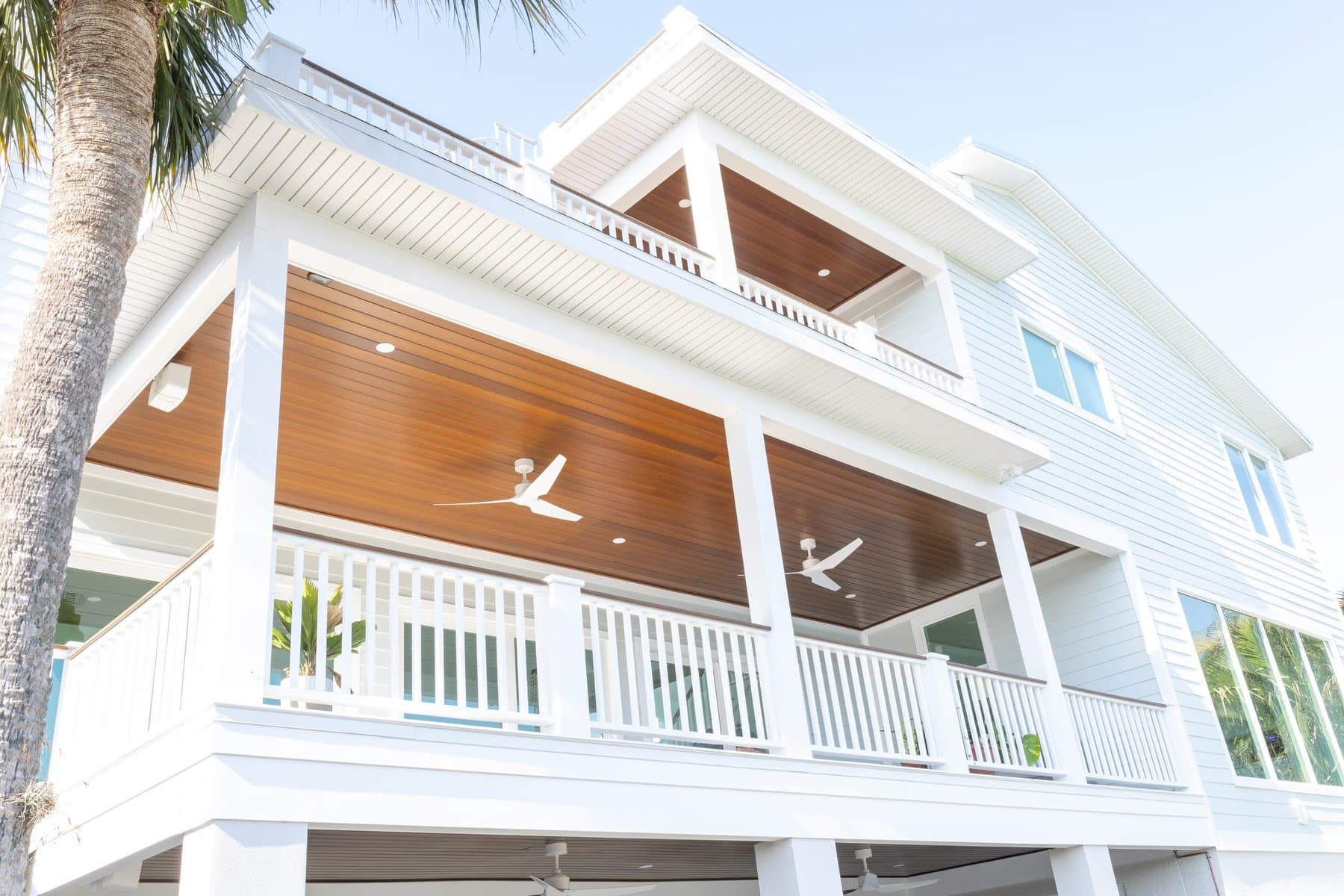
This is a guide to PROACTIVE pre-storm hardening: what to harden on a sound, undamaged Pinellas home before hurricane season starts on June 1. It's not a guide to post-storm rebuild, insurance-claim work, or remediation. If your home is already storm-damaged, skip to the scope-fence section below.
For owners doing pre-storm prep: garage door reinforcement, impact windows and doors under FBC §1620 wind-borne debris region rules, soffit work, surge protection, and generator pre-wiring are realistic starts between now and late May. A full roof re-deck with a secondary water resistance (SWR) barrier is tight but doable if you sign in the next two weeks. Full elevation of mechanical equipment is possible for small scopes, not whole-house.
Anything you start after Memorial Day almost certainly won't be permitted, inspected, and buttoned up before June 1. That doesn't make it a bad project: it just means you're hardening for the 2027 season, not this one.
Owner Jeremy Wharton on why the urgency is real: “Going forward into the future, we know that storms are getting worse. Climate change and global warming is a real thing, and we can see it in the storms getting more intense.” Here's what's worth doing, what the real Pinellas County timelines look like, and where supply chain will bite you if you wait.
What's NOT in This Guide (Post-Storm Rebuild and Insurance Work)
Before we get into the proactive upgrades, here's what this guide does not cover. If your home is already storm-damaged or you're working an insurance claim, the right call is a remediation specialist or your carrier's preferred-vendor list, not us:
- Post-storm rebuild and remediation: drying out flooded spaces, mold remediation, tearing out wet drywall, reconstructing damaged structural elements
- Insurance-claim adjusting and supplements: we don't work with insurance adjusters or carriers as a primary scope
- Emergency tarping or board-up: that's a 24-hour disaster-response service, not a general-contractor scope
- FEMA Substantial Damage assessments and 50% rule appeals: those are the building department's call, navigated by a contractor with active rebuild scope. See our substantial damage thresholds explainer if you need that context.
Jeremy Wharton, Revolution's owner: “We've done it for three hurricanes now, but we don't chase it or we don't want to do any more of it.” Three hurricanes of storm-rebuild work: Michael, Ian, Helene. Gave us the field reps to tell you the truth: the work we want is the pre-storm prep that keeps the next storm from becoming the next claim. That's what's below.
If you need post-storm work specifically, we're happy to refer you to remediation contractors we trust. Call (727) 888-6161 and we'll point you in the right direction. Otherwise, here's what to do before the season hits.
The Two-Minute Version
Hurricane season runs June 1 to November 30. NOAA's preseason outlooks typically land in late May, and the Atlantic has run hotter than average for several years running. The Tampa Bay area sits in a Pinellas County 150 mph wind zone under the 8th Edition Florida Building Code (current 2023 cycle, with FBC 2026 adoption staged), governed by FBC §1609 (Wind Loads), FBC §1620 (Wind-Borne Debris Region), and ASCE 7-22 Risk Category II / Exposure Category C/D. We're HVHZ-adjacent, not technically High-Velocity Hurricane Zone, but our Florida Product Approval and NOA requirements under FBC §1620.2 (Protection of Openings) are close cousins.
What actually moves the needle on a St. Pete home:
- Keep the envelope closed (impact-rated openings + garage door)
- Keep the roof on (straps, re-deck, secondary water barrier)
- Keep the power manageable (surge protection, generator inlet, elevated equipment)
- Remove what the wind will turn into a projectile (tree setbacks, loose soffit)
Our 20+ W-2 carpenters do this work in-house: we don't sub hurricane hardening to whoever's free that week. That matters when you're 45 days from season and every installer in Pinellas is booked.
The Honest April/May Timeline
Before you choose an upgrade, choose a timeline. Here's what a realistic project path looks like if you call us in mid-April:
| Phase | Typical duration | Notes |
|---|---|---|
| Free 48-hour estimate | 2 days | On-site walk, scope, rough numbers |
| Pre-construction (engineering, product selection, permit package) | 1-3 weeks | Longer if structural engineer stamps are required |
| St. Petersburg Building Department permit review | 2-4 weeks | Residential mechanical/electrical often faster than structural |
| Material lead time (impact windows) | 4-10 weeks | PGT WinGuard faster, CGI Sentinel can stretch in peak season |
| Installation | 2-10 days | Depends on opening count and scope |
| Final inspection | 3-7 days | Scheduled through SP Connect |
Do the math. From signing today (April 14), a straightforward 10-opening impact window job lands install in roughly the first week of June if windows ship on the short end of lead time. A full roof re-deck is 2-3 weeks of pre-con, 1-2 weeks of permit, 1 week of tear-off and install, plus inspections. Sign by April 28 or you're in July.
Anything requiring a structural engineer stamp (elevation, major penetrations, garage door header mods on older homes) adds 1-2 weeks up front. Plan accordingly.
Upgrade #1: Garage Door Reinforcement
Most homes lose their garage first. A failed garage door lets wind into the house, pressurizes the attic, and the roof goes next. It's the single most common pathway to catastrophic loss in a Florida hurricane: the canonical first-failure-point in FBC §1620 wind-borne debris region commentary. That's why it's Upgrade #1: highest leverage, lowest cost, easiest YES inside the window before June 1.
Two paths:
Replace the door with a Clopay or Wayne Dalton impact-rated door. NOA / Florida Product Approval (FPA) number required on the permit. Lead time 3-8 weeks. Typical cost $2,500-$6,500 installed for a two-car door.
Reinforce the existing door with a vertical bracing kit: aluminum or steel posts that run floor to header and a reinforced track system bolted into the jamb. Cost typically $600-$1,800. This is a strong middle option if your door is newer and the panels themselves are rated but the bracing isn't.
Timeline from signing today: reinforcement is 1-2 weeks start to finish through the St. Petersburg Building Department. Full replacement is 4-8 weeks. Both are doable before June 1.
Upgrade #2: Impact Windows and Doors
This is the second-biggest envelope upgrade after the garage door. When an opening fails in a hurricane, internal pressure spikes and blows the roof off from the inside. Impact-rated glass keeps the opening closed even if a 2x4 hits it at 34 mph: the Large Missile Test (TAS 201/202/203) standard cited in FBC §1620.2 (Protection of Openings). Smaller debris is governed by the Small Missile Test for upper stories outside the wind-borne debris region.
What we install
- PGT WinGuard: the workhorse. Vinyl or aluminum frames, Florida Product Approval (FPA) and Miami-Dade NOA on file for 150 mph zones, good lead times most of the year. Strong value on whole-house retrofits.
- CGI Sentinel: aluminum frame, cleaner sightlines, preferred on coastal and modern builds. Lead times run longer, especially April through June when everyone else had the same idea.
- Impact-rated entry doors from Therma-Tru or PGT, with multi-point lock hardware rated for 150 mph zones under FBC §1620.2.
What it takes in St. Pete
Every opening needs an NOA (Notice of Acceptance) or Florida Product Approval (FPA) number on the permit submitted through the SP Connect permit portal. The St. Petersburg Building Department checks the buck, the fastener pattern, and the anchor schedule against the Florida Building Commission's product-approval database. If you're in a historic district, expect a Certificate of Appropriateness review that can add 3-6 weeks: frame profile and muntin pattern both matter to the review board.
Realistic timeline from signing today: pre-con and permit 3-5 weeks, PGT WinGuard in roughly 4-6 weeks, CGI Sentinel 6-10 weeks, install 2-5 days for a typical 8-15 opening home. A 10-opening PGT job signed this week is tight-but-possible before June 1. A CGI job is unlikely.
Cost anchor: in this market, whole-home impact window retrofits typically run $1,200-$2,400 per opening installed, depending on size, frame, and buck/finish work. We quote every opening individually: no blanket per-window pricing.
If you're considering pairing this with the My Safe Florida Home Grant, the grant covers up to $10,000 toward wind mitigation, and impact windows qualify. Application and inspection happen before work starts.
Upgrade #3: Wind Mitigation: Roof Straps and Re-Deck
Two different upgrades, often done together. Both are anchored in FBC §1609 (Wind Loads) and FBC §1620, and both need to happen before a storm to qualify for wind mitigation credit on a future OIR-B1-1802 inspection. After the storm, the same work becomes a claim, not a credit.
Hurricane straps / clips
If your home was built before 2002, it probably has toe-nailed rafters or trusses: three nails holding each rafter to the top plate. Simpson Strong-Tie H2.5A or H10 hurricane ties replace that connection with a stamped-steel clip rated for serious uplift under ASCE 7-22 Risk Category II / Exposure Category C/D loads. On homes where the attic is accessible, a retrofit crew can install them from inside without touching the roof.
Cost anchor for clip retrofits only: typically $1,800-$4,500 for a standard single-story depending on access and rafter count. This is a high-leverage upgrade and it's eligible for wind mitigation insurance credits, often paying back in 2-4 years through premium reduction.
Timeline from signing today: 1-2 weeks pre-con, 1-2 weeks permit (mechanical-level review), 2-4 days install, 1 week inspection. Entirely doable before June 1.
Full roof re-deck with secondary water resistance (SWR)
If your roof is approaching replacement anyway, do it right. A proper Florida re-deck means:
- Tear off to bare rafters
- Replace or re-secure sheathing with 8d ring-shank nails at a 6-inch pattern (edges) / 6-inch pattern (field): per the 8th Edition FBC roof-deck attachment requirements
- Apply a secondary water resistance (SWR) barrier: either a full self-adhered peel-and-stick membrane (Grace Ice & Water or equivalent) or taped seams on the sheathing
- Install new underlayment rated for the Pinellas County 150 mph wind zone
- New shingles (GAF Timberline HDZ is the common spec) or standing seam metal: hip-roof geometry earns additional credit on the OIR-B1-1802 form versus gable
The SWR is the quiet hero. If shingles fly off in a storm, the peel-and-stick keeps your ceilings dry. It's also required by most insurance carriers for the full Wind Mitigation credit stack.
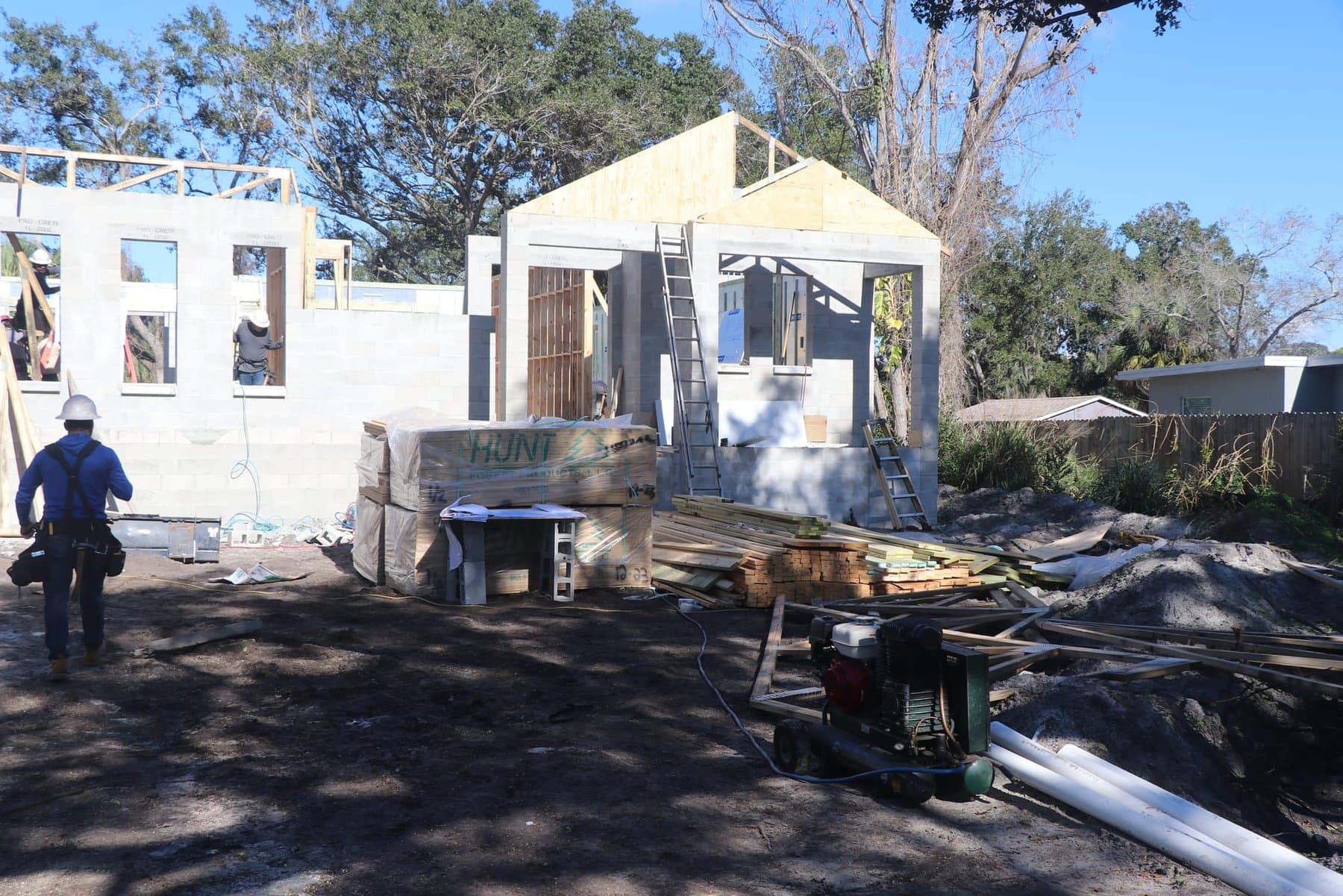
Proper 8d ring-shank deck fastening and an SWR barrier are the quiet hero of Florida roof work under FBC §1620.
Timeline from signing today: 2 weeks pre-con and permit, 3-5 days tear-off and deck, 2-4 days shingle install, 3-7 days inspections. Tight for June 1 if signed by late April. After May 1, you're looking at a July completion.
This is the kind of work our in-house crews do directly, not subbed. That matters because the rough framing inspection, insulation inspection, and final inspection all happen in sequence, and we control the schedule.
Related: our flood zone projects service page covers how roof hardening integrates with elevation, V-zone construction, and post-FIRM compliance.
45 Days From Hurricane Season. Still Planning?
We'll walk your property, tell you what's realistic before June 1, and give you an open-book number with weekly budget reports once we start. Free 48-hour estimate.
Get a free project consultation or call us at (727) 888-6161.
Upgrade #4: Soffit and Fascia
Homeowners forget about soffit until the first band comes through and half of it is on the lawn. Once soffit fails, wind-driven rain pours into the attic, soaks insulation, and destroys ceilings from above. The house doesn't have to lose a roof to become uninhabitable.
On older St. Pete homes: 1950s-1970s block ranches especially. Soffit is often stapled-on aluminum with no structural backing. The fix is either:
- Re-secure existing soffit with proper screws and vented panels to current FBC spec
- Replace with Hardie board soffit and fascia on a structural ladder system
Hardie board is the preferred solution on anything near the water. It doesn't rust, doesn't rot, and holds paint in salt air for 15-20 years. Cost anchor: $8-$18 per linear foot installed depending on height and access.
Timeline from signing today: 1-3 weeks pre-con, 1-2 weeks permit, 3-7 days install. Easy win before June 1.
Upgrade #5: Generator Inlet and Surge Protection
You probably don't have time to install a whole-home standby generator before June 1: those are 6-12 week projects with Duke Energy coordination, gas line permits, and a pad. But you can absolutely get portable generator readiness done in 2-3 weeks.
What that looks like:
- Generator inlet box on the exterior (Reliance or Generac brand), wired to a manual transfer switch at the panel
- Six to ten circuits pre-selected: fridge, well pump, AC handler (small), garage door, selected outlets
- Whole-home Type 2 surge protector at the panel (Eaton CH-CHSPT2 or similar): $400-$700 installed, takes 2 hours, huge protection against lightning and grid-surge damage during storms
- Separate Type 3 surge strips at AV equipment and the home office
This is electrical-permit work in Pinellas: 1-2 weeks pre-con, 1-2 weeks permit review, 1 day install, same-week inspection. Easily done before June 1.
A pre-wired inlet means when a hurricane knocks out power for a week, you roll a 7500-watt portable generator into the driveway, plug into the inlet, and flip the transfer switch. No extension cords across the yard, no backfeed risk to Duke linemen.
Upgrade #6: Elevated Mechanical Equipment (Coastal Only)
If you're in a flood zone AE or VE: think Shore Acres, Venetian Isles, Tierra Verde, Bahama Shores, Snell Isle waterfront lots. Your AC condenser, pool equipment, and electrical meter have no business sitting at grade. A 3-foot storm surge that barely touches your living space will destroy a slab-mounted condenser.
The fix is a platform at or above base flood elevation (BFE), often 10-12 feet above sea level in Pinellas V and AE zones. For a single AC condenser, this is a structural platform on treated posts or block piers, anchored and engineered.
This upgrade frequently requires a structural engineer stamp, which adds a week up front. Realistic timeline from signing today for a single condenser platform: 3 weeks pre-con with engineering, 2-3 weeks permit, 2-3 days construction. Doable before June 1 for small scopes only. Whole-house mechanical elevation is a 2026/2027-season project.
For the broader picture on how elevation, BFE, and FIRM maps interact, see our Pinellas County flood zone guide. If you're thinking about full new construction at elevation rather than retrofitting, see our elevated house plans for flood zones explainer.
De-myth callout: FEMA isn't forcing you to tear down
Owners in Shore Acres and Snell Isle sometimes hear that elevating mechanical equipment, or any flood-zone retrofit: will trigger a FEMA Substantial Damage finding and force a full teardown. Jeremy Wharton, Revolution's owner: “FEMA regulations aren't so draconian that they would force anyone to tear their house down.”
The FEMA 50% rule and Substantial Damage findings are real, but they're triggered by the value of damage or improvements relative to the structure's pre-storm market value, not by the act of hardening itself. Pre-storm prep keeps you well below the threshold. (For the mechanics, see our substantial damage thresholds explainer.)
Upgrade #7: Tree-Trim Setbacks
This is the cheapest and most overlooked. Every arborist in Pinellas is booked solid in May. Call now.
The rule of thumb: no branch should overhang within 6 feet of the roof, and nothing dead or hollow should stand within falling distance of a structure or neighboring property line. St. Petersburg has a tree ordinance: certain species and sizes require a permit to remove or prune heavily, so use a licensed arborist who knows the code.
Cost varies wildly. Budget $500-$3,500 per tree for proper canopy reduction or removal. Schedule this in April. By mid-May, you won't find a crew.
What To Skip (For This Season)
If you're trying to cram everything in before June 1, here's what's not realistic:
- Whole-house elevation or slab raise: 4-6 month project, permit alone is 6-10 weeks
- Full standby generator install: 6-12 weeks with utility coordination
- Switching siding to Hardie or LP SmartSide across the whole home, not a hurricane-season sprint
- Adding a safe room or reinforced interior shelter: structural engineering + permit + build is 8-14 weeks
These are all great projects. Start them in July, finish before next season, and you're ready for 2027 with margin to spare.
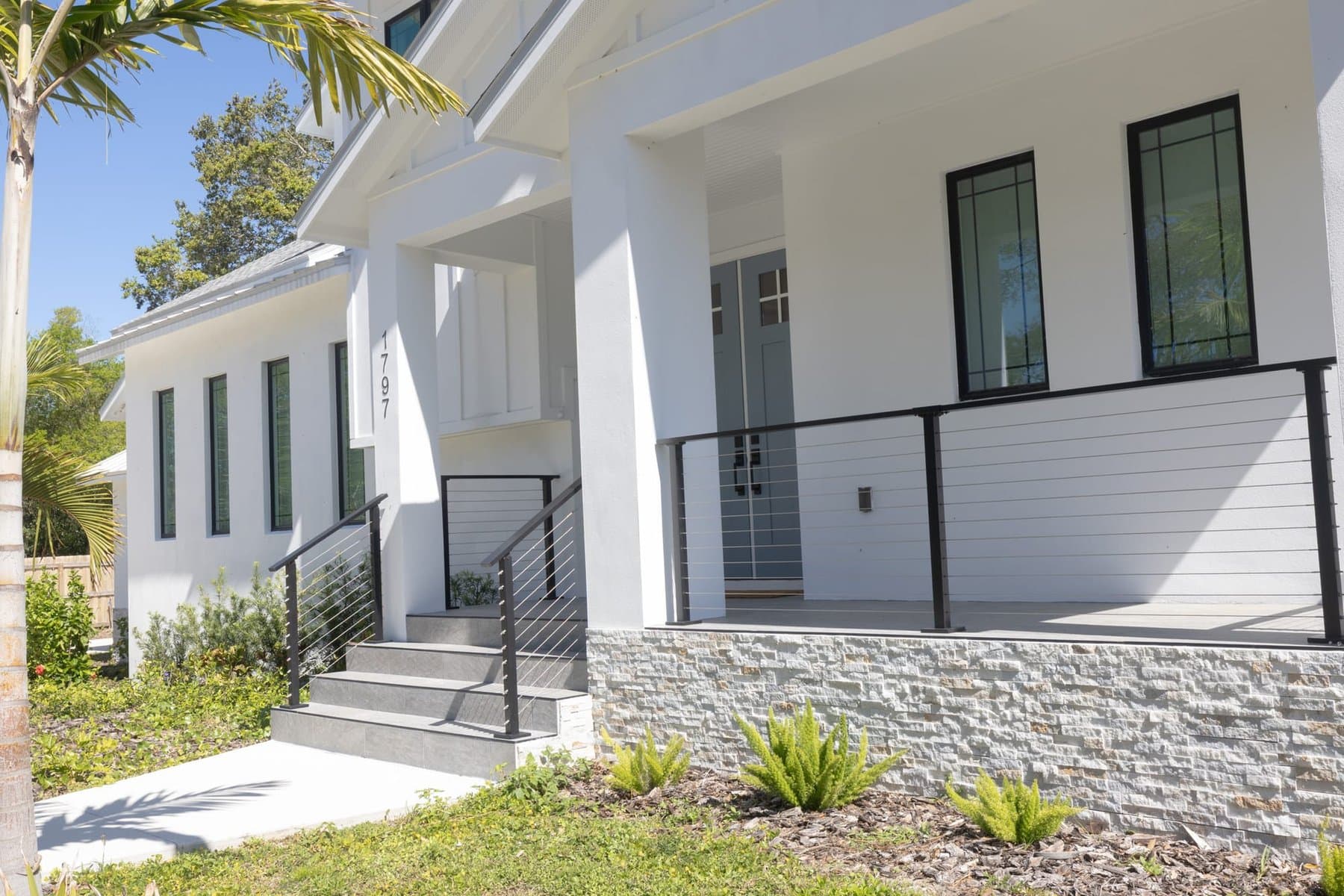
A hardened coastal St. Pete home: impact openings, reinforced garage, elevated equipment.
How Revolution Handles Hurricane Upgrade Work
Our approach is the same as the rest of our work: open-book T&M pricing, weekly budget reports, 20+ W-2 carpenters who work for us instead of whoever's paying most that week. During hurricane season prep, schedule control matters more than usual. Permits sit in a queue. Materials ship on windows measured in weeks. If the crew who's supposed to install your door has three other jobs, you won't hit June 1.
We control our own crews. When we book you for a late-May install, we show up late May.
Free 48-hour estimate. Call (727) 888-6161 or start with our home remodel services page. If you're in a coastal or flood zone, head to flood zone projects first.
Frequently Asked Questions
Does Revolution handle post-storm repair or insurance claim work?
No: that's outside our scope. We don't chase insurance-claim work, we don't work with adjusters as a primary scope, and we're not a remediation contractor. Owner Jeremy Wharton put it directly: "We've done it for three hurricanes now, but we don't chase it or we don't want to do any more of it." If your home is already storm-damaged or you're working a claim, the right call is a remediation specialist or your carrier's preferred-vendor list. Call (727) 888-6161 and we'll point you toward remediation contractors we trust. The work we do is pre-storm hardening: impact windows, roof straps, garage door reinforcement under FBC §1620 wind-borne debris region compliance.
What's the single highest-leverage hurricane upgrade?
Garage door reinforcement or replacement: that's why it's Upgrade #1 in this guide. When the garage fails, internal pressure lifts the roof off, and from there the house is gone. The garage door is the canonical first-failure-point in FBC §1620 wind-borne debris region commentary. It's a smaller project than impact windows, and on many homes it costs under $2,000 to reinforce. If you can only do one thing between now and June 1, do the garage door.
Is it too late to install impact windows before hurricane season?
Tight but possible if you sign by late April and choose a stocked PGT WinGuard profile with a current Notice of Acceptance (NOA) and Florida Product Approval (FPA) on file. A 10-opening retrofit needs 4-6 weeks for windows plus 2-3 weeks for permit and 2-5 days for install. CGI Sentinel is unlikely to hit June 1 at this point. Signing after May 1 almost certainly means a July completion. Either way, the work still qualifies for the My Safe Florida Home Grant and wind mitigation insurance credits under FBC §1620.2 protection-of-openings rules.
Do I need a permit for wind mitigation upgrades in St. Petersburg?
Yes, for almost all of it. Impact windows, roof re-decks, garage door replacement, electrical work, soffit/fascia replacement, and structural bracing all pull permits through the St. Petersburg Building Department via the SP Connect permit portal (or your municipality if you're in Gulfport, South Pasadena, etc.). Hurricane clip retrofits in an accessible attic are sometimes treated as minor structural work, but get the permit anyway: it's what the insurance inspector looks for on the OIR-B1-1802 Wind Mitigation Inspection form to unlock the wind mitigation credits.
Will wind mitigation upgrades lower my insurance?
Usually yes, sometimes substantially. Florida insurers offer credits for impact-rated openings, hip-roof geometry, roof-deck attachment with 8d ring-shank nails, secondary water resistance (SWR) barriers, and Simpson Strong-Tie hurricane strap retrofits. A post-project OIR-B1-1802 Wind Mitigation Inspection documents the improvements. On older homes, the full credit stack can reduce windstorm premiums 20-45%.
Can Revolution coordinate impact windows, roof, and garage door all at once?
Yes. With 20+ in-house W-2 carpenters and ongoing relationships with vetted independent architects, structural engineers, and MEP partners, we coordinate the design and sequence multiple scopes on one permit set without waiting on three different contractors. We're not a design-build firm with designers on salary: we coordinate design with independent specialists and run the construction. On compressed timelines before hurricane season, bundling is often faster than serial projects, but at this point in April, we'd prioritize the highest-leverage item (usually garage + one or two critical windows) and push the rest into July.
What's the difference between wind mitigation and hurricane hardening?
Wind mitigation is the insurance-industry term for specific documented upgrades (roof-deck attachment, secondary water resistance, impact openings, Simpson Strong-Tie hurricane ties, hip geometry, opening protection per FBC §1620.2). Hurricane hardening is the broader construction concept: everything you do PROACTIVELY before a storm to make the home survive, including surge protection, elevated equipment, tree trimming, and generator readiness. Every wind mitigation upgrade is hurricane hardening, but not all hurricane hardening qualifies for an insurance credit. Both are pre-storm prep: distinct from post-storm rebuild work, which we don't do.
How do I know my contractor is actually hurricane-qualified?
Three things. First, they should reference the 8th Edition Florida Building Code (current 2023 cycle, with FBC 2026 adoption staged) and know the 150 mph wind zone spec plus FBC §1620 wind-borne debris region designation without looking it up. Second, they should pull every permit under their own license (Revolution's are CRC1331628 + CGC1522463) and have structural engineer relationships they use regularly. Third, they should talk about NOA (Notice of Acceptance) numbers, Florida Product Approval (FPA), Large Missile Test (TAS 201/202/203), and Risk Category II / Exposure Category C/D as a normal part of product selection. If your contractor can't walk you through that in the first meeting, keep shopping.
Ready to Start?
If you want hardening done before June 1, the window is this month. Sign by late April for most scopes. Sign by April 28 if a roof is in the mix.
Call (727) 888-6161 for a free 48-hour estimate. We'll walk the property, tell you what's worth doing before season and what to push to summer, and give you an open-book number with weekly budget reports once we start.
Related Services
- Flood Zone Projects. FEMA compliance, elevation, coastal construction
- Home Remodel: whole-home renovation with hurricane hardening built in
Related Reading
- Pinellas County Flood Zone Guide: FIRM maps, BFE, AE vs. VE zones
- My Safe Florida Home Grant Guide: how to stack grant money with wind mitigation work
- The FEMA 50% Rule in Florida, when hardening work crosses the substantial-improvement threshold
- Substantial Improvement vs. Substantial Damage: the difference if a storm has already hit
- Hurricane Damage Insurance Claim: GC Coordination in Pinellas. Filing the claim, staging the rebuild, coordinating windstorm and flood
- Elevated House Plans for Flood Zones: sibling content on the new-build side of flood-zone work