Do You Need a Substantial Improvement Determination Before Remodeling in a Pinellas Flood Zone?

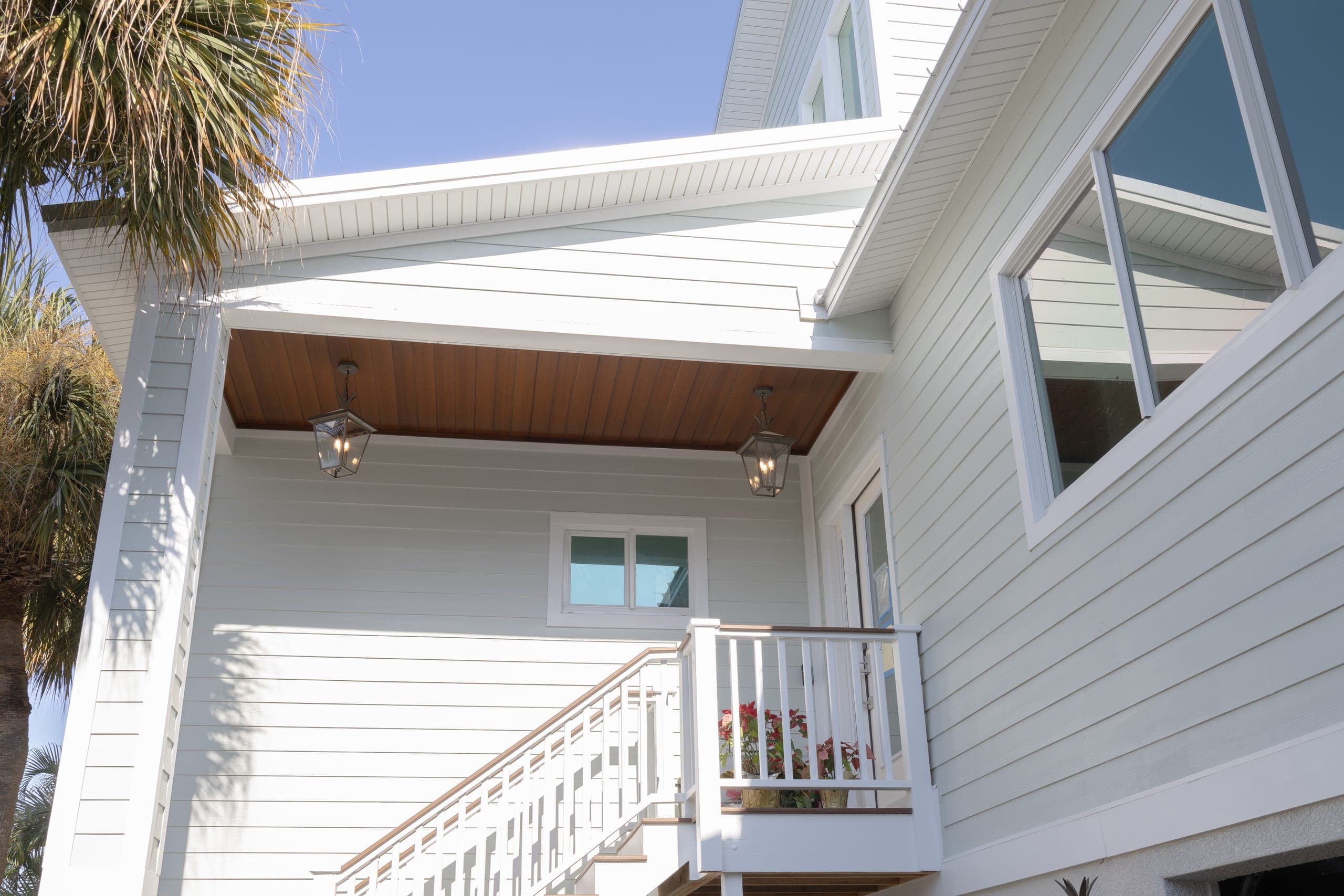
Short answer: if your house sits in a FEMA-designated special flood hazard area anywhere in Pinellas County, and your remodel budget is heading toward half of what the structure itself is worth, yes — you need a substantial improvement review before a single permit gets pulled. This is federal floodplain policy, not a local wrinkle. The rule sounds simple: spend more than 50% of the structure's market value on repairs or improvements in a 12-month window, and the entire building has to come into full compliance with current flood regulations — usually meaning elevation. But how the value is calculated, what counts against the cap, and how each municipality reviews the paperwork is where projects live or die. This guide walks through how the review works in Pinellas, what triggers it, and how to plan a remodel that stays under the threshold on purpose or clears the threshold with eyes open.
What a Substantial Improvement Determination Actually Is
A substantial improvement determination (often written "SI determination") is the review a local building department does before it will issue a permit for work on a structure in a FEMA-designated special flood hazard area. The reviewer compares the proposed project cost to the pre-improvement market value of the structure itself — not the land, not the total property value on your tax bill. If the ratio hits 50% or higher, the project is classified as a substantial improvement and the entire building has to come into compliance with current floodplain management standards. In Pinellas, that generally means elevating the lowest finished floor to at least one foot above base flood elevation, adding flood vents in enclosed areas below that floor, moving mechanical and electrical equipment above the flood line, and using flood-damage-resistant materials in the sub-elevation zone.
That review happens before permitting starts, which is why sequencing matters. If you sign a contract, tear out finishes, and then find out the project triggers substantial improvement, you're already partway into a compliance obligation you didn't plan for. Pinellas building departments run substantial improvement review through a dedicated floodplain-compliance track — separate from standard building permit review — and the paperwork trail has to exist before the main permit moves.
When Pinellas Triggers the Review
Two situations trigger a substantial improvement determination in Pinellas County:
- Voluntary improvements — Any remodel, addition, or renovation on a structure in a FEMA-mapped flood hazard area. The trigger is the special flood hazard area designation, not damage. A perfectly dry house in Shore Acres or Snell Isle triggers the review as soon as the remodel scope crosses into permit-required work.
- Substantial damage — After a storm, fire, or other event, if repair costs to bring the structure back to pre-damage condition hit 50% of market value, the same rule applies. Hurricane Helene put six to eight Pinellas neighborhoods into this bucket in one afternoon.
The review does not apply to properties outside FEMA special flood hazard areas — X zones and other non-SFHA designations skip the substantial improvement track entirely, though other permit rules still apply. If you don't know what zone you're in, the FEMA Map Service Center and the Pinellas County Property Appraiser's flood-zone lookup both show it.
How Your Structure Value Gets Calculated (and How to Influence It)
This is the number that determines everything else, so it deserves attention.
Most Pinellas municipalities start with the property appraiser's assessment of "just value" for the structure only — the land value comes out. That's usually the lowest reasonable number, which cuts against homeowners: the smaller the denominator, the smaller the 50% ceiling, the tighter the project scope. Jeremy Bonnewell, one of Revolution's owners, described the workaround in a January interview: "Typically, we're going to look at the valuation. Sometimes an appraisal will help increase that valuation if the tax assessor is using a low valuation."
A private appraisal — a formal one from a licensed Florida appraiser, not a real estate agent's opinion — is an accepted substitute in most Pinellas jurisdictions. If your tax card shows the structure at $180,000 but a legitimate replacement-cost appraisal comes back at $310,000, the ceiling on your project just moved from $90,000 to $155,000. On a mid-scope remodel that difference can be the entire kitchen or bathroom scope you were about to cut. The appraisal has to go into the SI determination package before the review starts — introducing it mid-review is much harder.
What Counts Toward the 50% and What Doesn't
The federal definition is broader than most homeowners assume. Toward the 50%:
- All labor, whether from a licensed contractor or the homeowner doing owner-supplied work
- All construction materials
- Permit fees, inspection fees, and impact fees
- Overhead and profit on the general contractor's contract
- Cost of demolition and site prep tied to the project
Not toward the 50%:
- Land value
- Detached accessory structures (separate permit, separate valuation)
- Landscaping, driveway, seawall, and site work that isn't part of the primary structure
- Plans, engineering fees, and surveys
- Pool work (typically a separate structure)
The plan-and-engineering exclusion is meaningful. On a $200,000 flood-zone remodel with real design complexity, $15,000-$25,000 in architect, engineer, and surveyor fees comes out of the numerator, which can be the difference between a 47% project and a 52% project.
The 12-Month Cumulative Window Nobody Mentions
This is where homeowners get surprised. The 50% test is cumulative over a rolling 12-month period. If you do a $60,000 bathroom in March, a $40,000 kitchen refresh in September, and a $50,000 flooring-plus-electrical project the following February, all three projects stack toward the same threshold. A reviewer looking at the third permit application in February is running the math on $150,000 of combined work, not $50,000.
Municipalities vary on how aggressively they track this — some run a 12-month lookback on every permit application in a flood zone, some only catch it when a homeowner voluntarily disclosures it. The federal rule is clear regardless: the obligation exists whether or not the reviewer notices, and buyers doing due diligence on your house years later can spot it in the permit history. The clean approach is to plan the full 12- to 24-month project sequence in advance and know before you start how close each phase pushes you toward the ceiling.
Staying Under 50%: The "49% Project" Pattern
Most Pinellas flood-zone remodels we've worked on run intentionally as "49% projects" — meaning the scope is designed and priced to land clearly under the substantial improvement threshold. Jeremy has talked about this pattern directly: "If a house is being done as a 49% project and is just a remodel, we'll oftentimes have to add flood vents and there are a few minor things specific to flood zone areas."
The 49% pattern usually looks like:
- Kitchen and one or two bathrooms remodeled to modern standards
- Flooring, paint, and finish upgrades throughout
- Some structural work (windows, doors, minor wall changes)
- Flood vents added to any enclosed area below base flood elevation, even though the house itself isn't being elevated
- Elevation certificate updated if the project changes anything relevant to it
It usually doesn't look like:
- A significant addition
- Full mechanical, electrical, and plumbing replacement
- Whole-home structural changes
- Anything that requires elevating the finished floor
We've built dozens of these projects over the last six or seven years and none of them have triggered enforcement problems, but every one required careful budgeting and honest tracking. The cost estimate that goes into the SI review package has to be defensible — if actual construction costs balloon 30% past the estimate, you're in a much harder conversation with the building department mid-project.
Going Over 50%: What Full Compliance Really Means
Sometimes the project the homeowner wants can't fit inside 49%, and the honest answer is to plan for full compliance from day one. On a compliant flood-zone project the structure has to end up:
- Elevated so the lowest finished floor is at least one foot above base flood elevation (Pinellas freeboard requirement)
- Structurally supported by an approved foundation system (pilings, stem wall, or elevated slab depending on soil and zone)
- Fitted with engineered flood vents in any enclosed space below the elevated floor
- Wired and plumbed with all mechanical, electrical, and low-voltage equipment above the flood line
- Built with flood-damage-resistant materials in the sub-elevation zone
The cost math shifts substantially. A structural lift alone runs somewhere between $150,000 and $250,000, and reconnecting utilities and finishing the underside adds another $150,000 to $300,000. Most homeowners who want the house to look intentional after the lift — not stilted or awkward — end up in the half-million-dollar range for the elevation work by itself, before any remodel scope goes on top.
At some point the math tips. Jeremy has described the tipping point directly: when a lift-plus-remodel starts pushing $800,000 to $1 million on a house that could be replaced with new construction at $1.2 to $1.5 million for the same or better square footage, most owners choose to tear down and rebuild.
Why Every Pinellas Municipality Reviews This Differently
The federal 50% rule is uniform. The way each Pinellas municipality applies it is not. Some cities interpret "market value" more generously toward homeowners, some run stricter 12-month lookbacks than others, some accept a wider range of appraisal evidence, some have separate floodplain-compliance staff and some route the review through general permit reviewers.
Jeremy has framed this bluntly: "Every municipality is different by design in how they observe the 49% rule and how they are scored by FEMA, which directly influences the community's rating for the National Flood Insurance Program."
The practical implication for a homeowner planning a remodel in, say, Shore Acres versus Tierra Verde versus a St. Pete Beach parcel is that the same project cost, on the same structure value, might come back with different SI determinations depending on which building department is doing the review. A contractor who has actually walked projects through your specific municipality's floodplain-compliance track knows the local interpretation. A general contractor who mostly works inland does not.
Common Misconceptions That Cost Homeowners Money
"FEMA will make me tear my house down." This one drives more panic decisions than any other. It is not accurate. Jeremy has been direct about this: "We don't know of any people really that got forced to tear their houses down. Where there is a will, there is a way, and the budget can be made to fit a project that can usually get folks what they want. FEMA regulations aren't so draconian that they would force anyone to tear their house down." After Hurricane Helene, some homeowners sold at panic prices believing the opposite. Most of those sales weren't necessary.
"The 50% is calculated on my tax bill." Only if you accept the default. A licensed appraisal, properly submitted, can substantially change the calculation.
"If I stay under 50%, I don't have to do anything flood-related." Not quite. Even a 49% project usually requires flood vents in enclosed areas below base flood elevation, elevation certificate updates, and material choices consistent with flood damage prevention codes.
"My contractor said the project can't be done because of the 50% rule." Sometimes true, often not. Jeremy has flagged this pattern: contractors unfamiliar with the rule "will suggest tearing a house down or that a project simply can't be done because of the FEMA 49% rule." An experienced flood-zone contractor and a designer working with the municipality can usually find a compliant path to what the homeowner actually wants.
Barrier-island-specific guides: If your project is on a beach parcel, see our vacation-rental 50% rule guides for Clearwater Beach, Indian Shores, and Redington Beach.
FAQs
How do I find out what flood zone my Pinellas home is in?
The FEMA Map Service Center at msc.fema.gov lets you look up any address. The Pinellas County Property Appraiser also shows flood zone designation on the property card. If you're in an AE, VE, or A zone, you're in a special flood hazard area and the substantial improvement rule applies. X zones and shaded X zones are outside SFHA.
Does the substantial improvement rule apply to condos?
Yes, but the mechanics are different. For a condo unit in a multi-unit building, the valuation and improvement calculations typically apply at the building level, not the unit level, so a single unit's remodel rarely triggers the rule on its own. Association-wide projects can trigger it. Check with your building department and your HOA.
What if I just replace the roof or HVAC?
Roof replacement and HVAC replacement each count toward the 50% cumulative total in the 12-month window, but on their own they rarely push a homeowner over. Combined with other work, they add up faster than most people expect.
Can I do the work myself and not count the labor?
No. The federal rule counts owner-supplied labor at market rate, not at zero. Building departments generally apply a standard labor cost even for DIY work.
How long does a substantial improvement determination take?
In most Pinellas municipalities the SI review adds two to six weeks to the permit timeline, sometimes longer if the appraisal or scope needs revision. Plan for it in the project schedule up front.
What happens if I do the work without a determination and get caught?
Enforcement can include stop-work orders, permit revocation, requirements to remove noncompliant work, and in extreme cases orders to bring the structure into full compliance retroactively. It can also affect flood insurance eligibility for the property and, in some cases, the entire community's NFIP standing. It's not a rule to work around.
Does flood insurance change if I stay under 50%?
Your NFIP premium is based on the structure's elevation certificate and flood zone, not on whether you did a remodel. A 49% remodel that doesn't change the finished floor elevation typically won't change your flood insurance rating. A full-compliance elevation project usually will — often for the better.
We've done dozens of substantial-improvement-adjacent projects in Pinellas over the last six or seven years — most of them designed intentionally to stay under 50%, several taken through full elevation, and a handful that turned into tear-down-rebuild after the math came in. If you're planning a remodel on a Pinellas flood-zone property, see our flood zone projects service page or call (727) 888-6161 for a free 48-hour estimate.