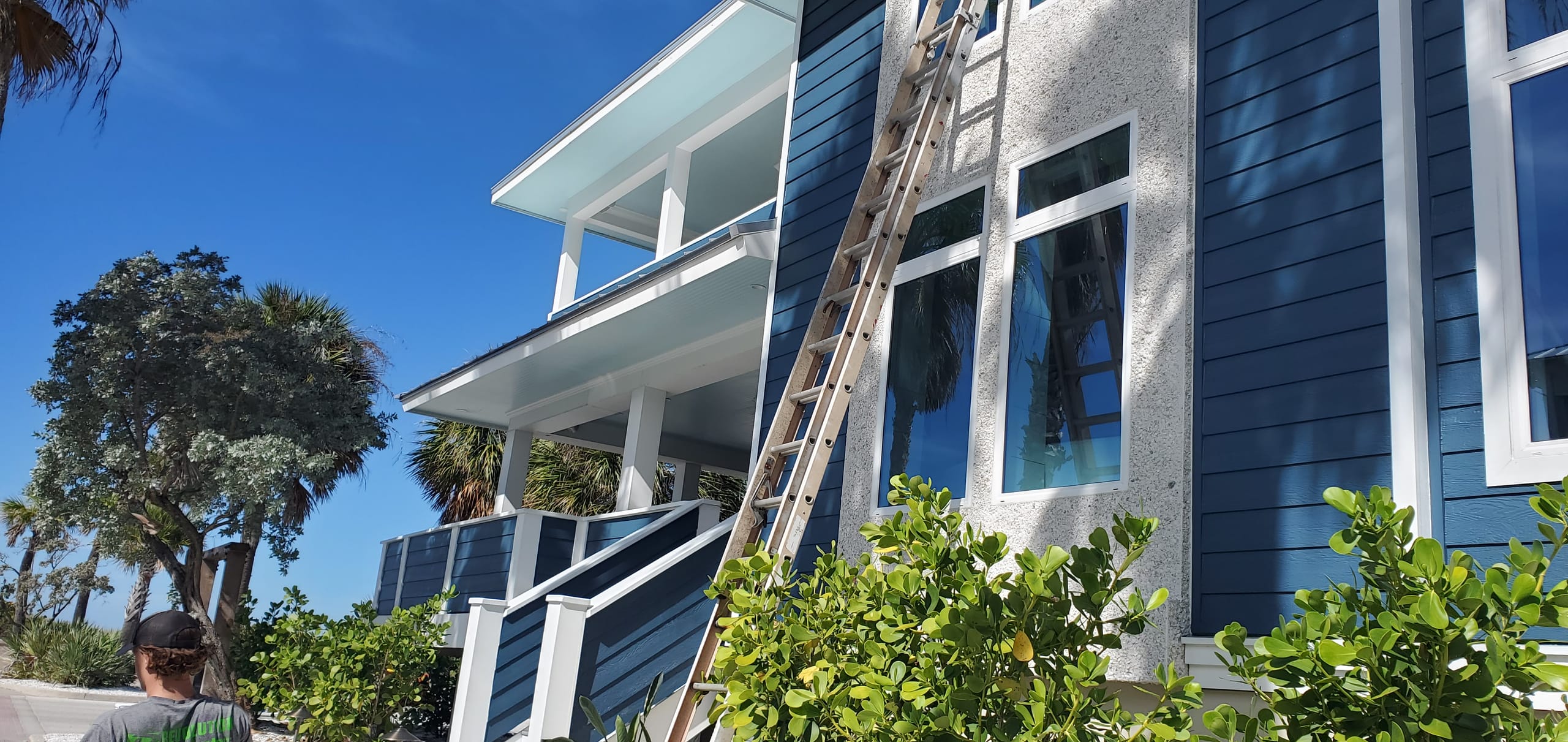
Home Elevation in St. Petersburg
Lifting an existing home above Base Flood Elevation for FEMA 50% rule compliance, post-storm flood-damage repair, or voluntary flood-risk reduction — coordinated by Revolution Contractors under one contract. Open-book Time & Materials pricing. Call (727) 888-6161.
Do you need to elevate your home to comply with Pinellas floodplain code?
In St. Petersburg's Special Flood Hazard Areas — Shore Acres, Snell Isle, Venetian Isles, Tierra Verde, Riviera Bay, Coquina Key, and Bahama Shores — an existing home may need to be lifted to Base Flood Elevation plus Pinellas County freeboard for one of three reasons: the FEMA 50% substantial-improvement rule triggered by renovation scope, substantial-damage repair after a storm event, or a voluntary lift to lower flood-insurance premiums.
Revolution Contractors coordinates the full elevation project as general contractor — structural engineering, permit package, foundation construction, and utility reconnection — with a dedicated superintendent from pre-construction through final inspection. Call (727) 888-6161 for a site walk.
When home elevation is required in Pinellas
1. The FEMA 50% substantial-improvement rule
If a renovation or repair scope crosses 50% of the structure's market value inside a 12-month window, Pinellas County requires the entire building to be brought up to current floodplain code — which includes elevation to Base Flood Elevation plus local freeboard. Homeowners planning a large remodel in a flood zone need to know where their scope lands against that threshold before the permit is pulled. The county publishes the current rules on its Construction in a Floodplain page.
2. Flood-damage repair after a storm event
The same 50% threshold applies to insurance-paid repair scope after a storm. If damage is deemed substantial, the repair cannot simply put the house back the way it was — it has to elevate the structure to current code. Homeowners in the highest-exposure neighborhoods usually first encounter the rule in the weeks after a hurricane, not before.
3. Voluntary elevation for risk reduction
Owners can elect to lift a home before damage happens — to lower flood-insurance premiums, protect long-term home value, and reduce exposure ahead of the next storm season.
Zone type drives the foundation choice. V zones — coastal high-hazard areas subject to breaking wave action — require open foundations on pilings so wave energy passes underneath the structure. AE zones allow enclosed foundations (stem wall or crawlspace) but require flood venting and flood-damage- resistant materials below Base Flood Elevation. This regulatory distinction shapes the entire project scope from day one.
Revolution's elevation process
- Site assessment and elevation certificate review. Confirm the property's Special Flood Hazard Area zone, pull the existing elevation certificate through Pinellas County if one is on file, and measure lowest-floor elevation against current Base Flood Elevation plus freeboard.
- Structural engineering and permit package. Coordinate a licensed structural engineer, prepare the elevation drawings and specifications, and submit through the St. Petersburg Building Department. Permit review window varies by zone type and season.
- Disconnection and lift. Utilities are disconnected — power, water, gas, sewer, HVAC. The specialized house-lifting firm sets hydraulic jacks and unified cribbing and raises the structure to the engineered height in controlled stages.
- New foundation. Stem wall, driven or drilled pilings, or piers depending on the SFHA zone and engineering package. Flood venting installed where required. All below- Base Flood Elevation materials meet FEMA Technical Bulletin 2 flood-damage-resistant specifications.
- Utility reconnection, finish, and post-construction elevation certificate. Utilities reconnected at the new elevation, exterior stair and access work completed, final inspections closed out, and a new elevation certificate issued documenting the finished lowest-floor elevation.
Mid-construction inspection milestones (rough framing, MEP rough-in, insulation, final) run through the St. Petersburg Building Department the same way any other permitted construction project does. A single Revolution superintendent carries the project from pre-construction through the post-construction elevation certificate — one point of contact, one accountability chain.
What it actually costs
In Pinellas County, home elevation projects typically fall into these ranges:
- Structural lift itself: $150,000–$250,000 from the lift company (hydraulic jacks, unified cribbing, and the physical lift).
- Making the house functional again: $150,000–$300,000 more — utilities, HVAC, concrete work, new foundation, code-required flood venting and flood-damage-resistant materials.
- Full renovation to look intentional: $500,000+ on top of the above — updated kitchen, bathrooms, exterior, columns to integrate the raised foundation.
- Total lift-and-renovate project: most Pinellas-quality projects land between $800,000 and $1,000,000 all-in.
- Piling foundation (V zones and roughly half of AE coastal lots): add $50,000–$100,000 to foundation cost when sandy or saturated soil requires driven pilings instead of standard spread footings.
- Coastal cost premium versus inland: a minimum 20% add-on for longer pilings, more concrete, and structural steel required by Pinellas floodplain code (BFE plus 1 foot of freeboard for new construction and substantial improvements).
- Teardown-and-rebuild elevated: when the lift-and-renovate math climbs into the $800K–$1M range, elevated new construction often runs $300,000–$600,000 more — but delivers a code-current home built for the flood zone from day one, not a lifted 1970s ranch retrofitted onto a new foundation.
These are typical Pinellas-market ranges. Actual cost on your property depends on the SFHA zone (V zones with open piling foundations cost more than AE zones with stem-wall or pier foundations), the current foundation type and condition, the required lift height above Base Flood Elevation, the home size and structural configuration, and site access for the lifting equipment.
Revolution prices elevation projects on an open-book Time & Materials basis — actual labor, actual materials, weekly budget reports against the running estimate. A site walk before the quote produces a range that reflects the specific property, not a fixed bid padded for unknowns.
Insurance context: elevating 1 foot above Base Flood Elevation typically reduces NFIP premiums by about 30% — roughly $360–$720 per year on a $1,200–$2,400 annual policy. The Elevate Florida grant program can cover up to 75% of costs to a $375,000 cap, but roughly 6.7% of applicants advanced in the first round — apply, but plan the project assuming no grant. For the full published breakdown of the lift-versus-teardown-rebuild decision, the FEMA 50% rule, and hidden project costs, read our home elevation cost guide.
For a Pinellas-specific range on your property, call (727) 888-6161 to schedule a site walk.
St. Pete neighborhoods Revolution works in
Revolution builds and elevates in every St. Petersburg neighborhood affected by the Special Flood Hazard Area map. A few of the highest-volume elevation neighborhoods:
- Shore Acres — one of the highest-volume elevation neighborhoods in Pinellas. Predominantly AE zone with pockets of higher-hazard flag; frequent 50% rule triggers on renovation and post-storm-repair scope.
- Snell Isle — waterfront lots with mixed AE and coastal-exposure conditions; elevation projects commonly tied to major remodels or new-construction elevated builds.
- Venetian Isles — canal-front V-zone and AE-zone parcels where open piling foundations are common in the highest-hazard sections.
- Tierra Verde — island community with heavy coastal exposure; V-zone foundations and elevated construction routine.
- Bahama Shores — south-city waterfront neighborhood with AE-zone parcels; voluntary and renovation-triggered elevation projects both common.
- Riviera Bay — north-city AE-zone neighborhood where post-storm-damage elevation frequently pairs with full remodel scope.
- Coquina Key — small-lot AE zone; renovation scope frequently trips the 50% threshold.
For the full parent hub on flood-zone construction across Pinellas, see flood-zone projects.
Why Revolution
Home elevation is one of the higher-stakes projects a Pinellas homeowner runs. There is no way to fixed-bid the unknowns between the existing structure and its new engineered foundation — soil conditions, hidden framing, corroded fasteners from decades of coastal humidity — with any honesty. Revolution's open-book Time & Materials pricing puts those unknowns on the same weekly budget report as everything else, at actual cost plus a flat markup, rather than padding them into an inflated fixed number or fighting change orders on the back end.
A single dedicated superintendent runs each elevation project from pre-construction through the post-construction elevation certificate — a single point of accountability across the structural engineer, the house-lifting subcontractor, the St. Petersburg Building Department, and the homeowner.
For a related waterfront-restoration case study, see the King House project in Old Southeast — a full historic-waterfront restoration where the same engineering-first, single-superintendent approach carried the project through Pinellas coastal-construction requirements.
Home Elevation FAQ
How much does it cost to elevate a house in St. Petersburg?
In Pinellas County, the structural lift itself typically runs $150,000-$250,000 from the lift company. Getting the house functional again after the lift (utilities, HVAC, concrete work) adds another $150,000-$300,000, and full renovation to make the raised foundation look intentional adds $500,000 or more. Total for a complete lift-and-renovate project in St. Petersburg typically lands between $800,000 and $1,000,000. If pilings are required — about half of coastal projects need them — add $50,000-$100,000 to foundation cost. Actual cost depends on the Special Flood Hazard Area zone (V zone versus AE zone), the existing foundation type, the target lift height above Base Flood Elevation, the home size, and site access. Revolution prices elevation projects on an open-book Time & Materials basis and walks the property before quoting a range. Call (727) 888-6161 for a site walk.
How long does a home elevation take?
A typical Pinellas home elevation runs several months from permit submittal through post-construction elevation certificate. The timeline breaks down into St. Petersburg Building Department permit review, utility disconnection and the physical lift, new foundation construction (stem wall, pilings, or piers depending on the SFHA zone), and utility reconnection with final inspections. Site conditions and zone type drive the largest variance.
Do I need an elevation certificate before I start?
Yes — a current elevation certificate is required to establish the existing lowest-floor elevation relative to Base Flood Elevation and to size the required lift. Homeowners can check their flood zone at the FEMA Flood Map Service Center (msc.fema.gov) and pull an existing certificate through Pinellas County if one is on file. A new post-construction elevation certificate is issued after the lift is complete.
Does the 50% rule really force me to elevate?
Pinellas County applies the FEMA substantial-improvement / substantial-damage threshold: if renovation or storm-damage repair scope crosses 50% of the structure’s market value inside a 12-month window, the entire building must be brought up to current floodplain code, including elevation to Base Flood Elevation plus local freeboard. That is why homeowners planning a large remodel in a flood zone need to know their numbers before the permit is pulled — a scope right at the threshold can trigger a full elevation requirement.
Can Revolution handle the lift itself or do you subcontract it?
The physical house lift itself is specialized equipment work — hydraulic jacks, unified cribbing, and load balancing — and Revolution partners with a licensed house-lifting firm on that specific trade. Everything else on the project (structural engineering coordination, permit package, new foundation, framing, MEP, and finish) is run by Revolution as general contractor with a single dedicated superintendent from pre-construction through final inspection.
For property-specific elevation certificates and flood-zone lookups, use the FEMA Flood Map Service Center.
Get a Free Elevation Assessment
Tell us the property address, the SFHA zone (if you know it), the current foundation type, and whether renovation or storm-damage repair is driving the elevation. We'll walk the site and give you a Pinellas-specific range on an open-book Time & Materials basis.