The clients came to Revolution with a full interior and exterior remodel needed on a hundred-year-old wood-frame bungalow in Old Southeast. A new roof. A good amount of electrical work. A good amount of plumbing work with layout changes. Structural issues that had to be both replaced and reinforced before any of the finish work could even start. A frame house with old wood windows, original siding, and the kind of bones you cannot find in a current catalog.
That’s the brief.
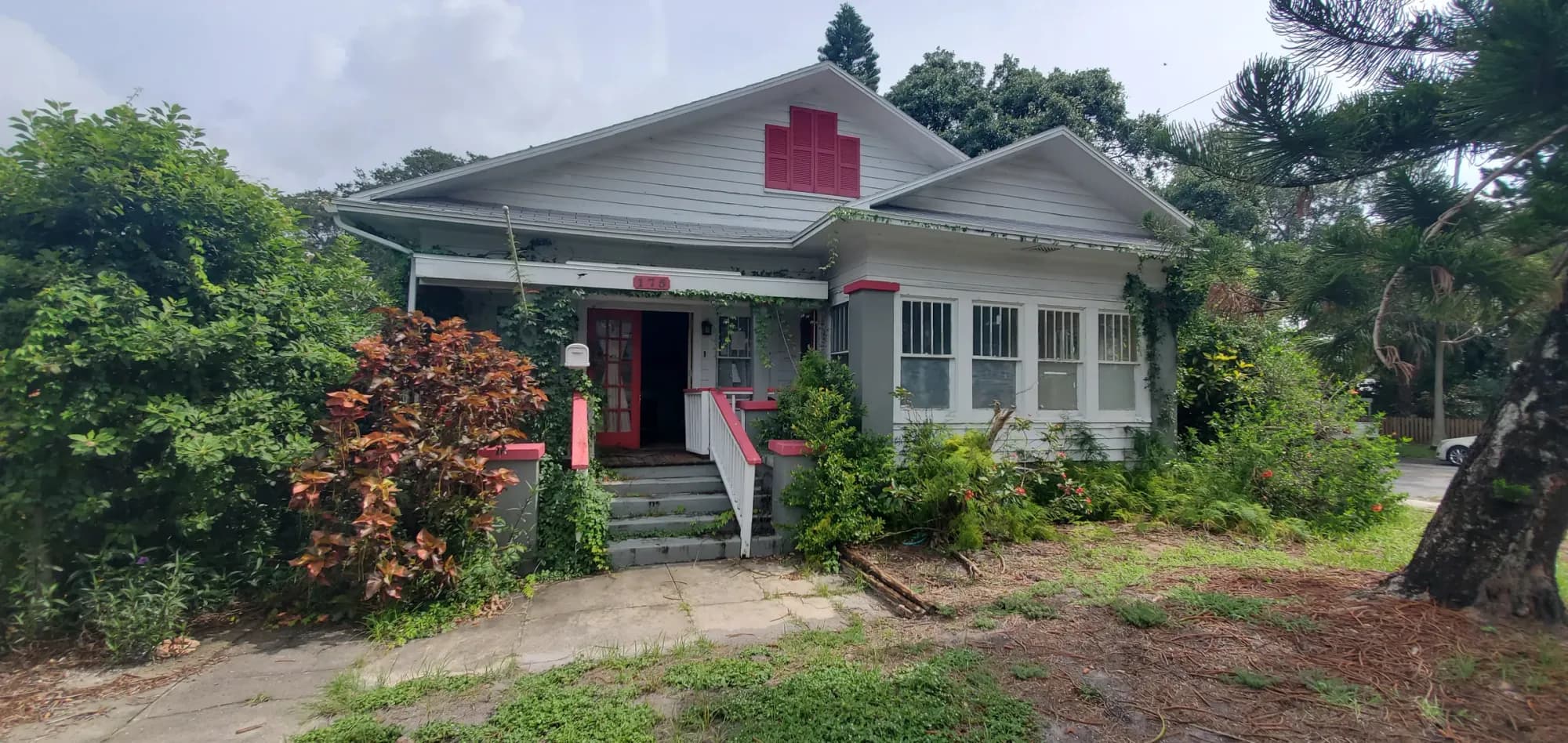
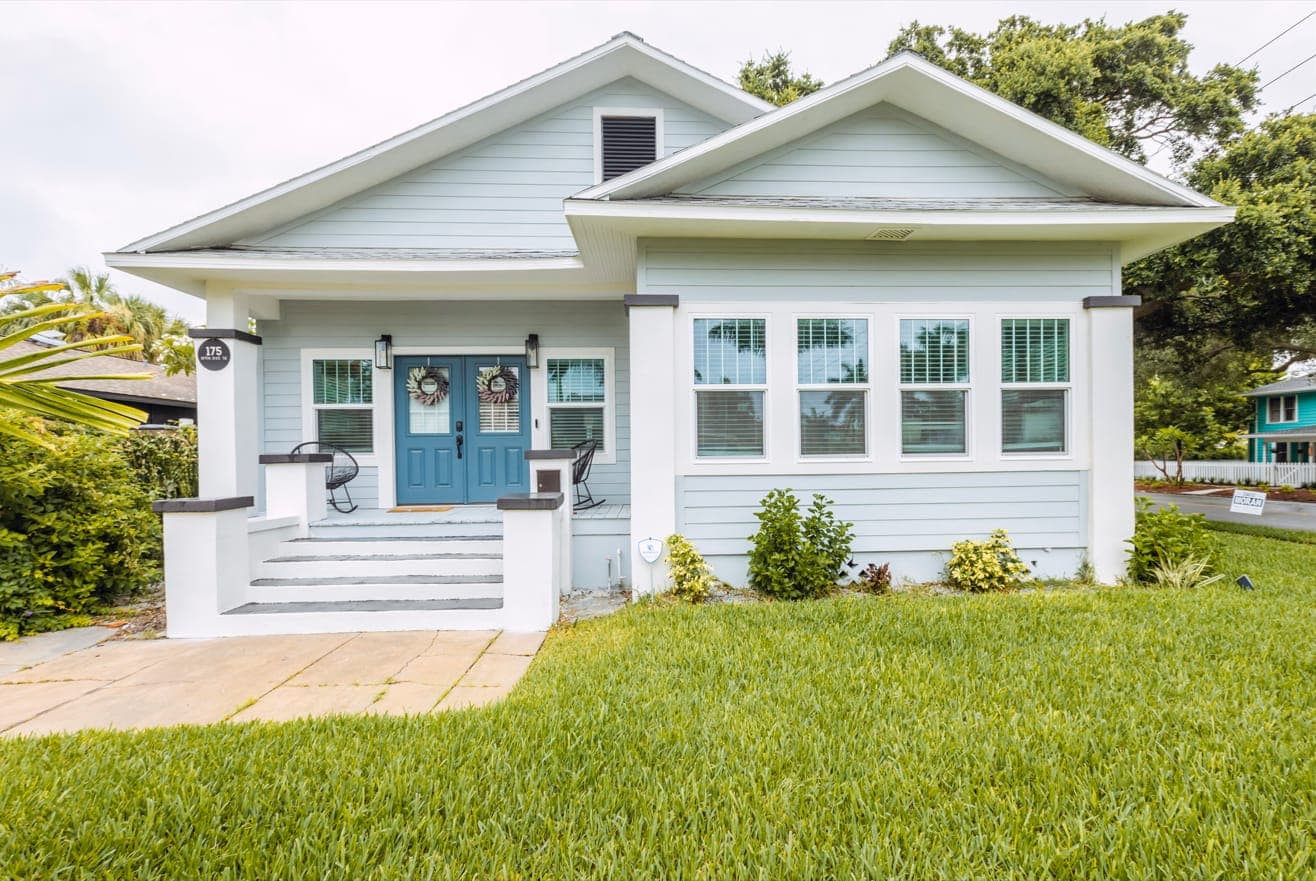
The Frame Underneath
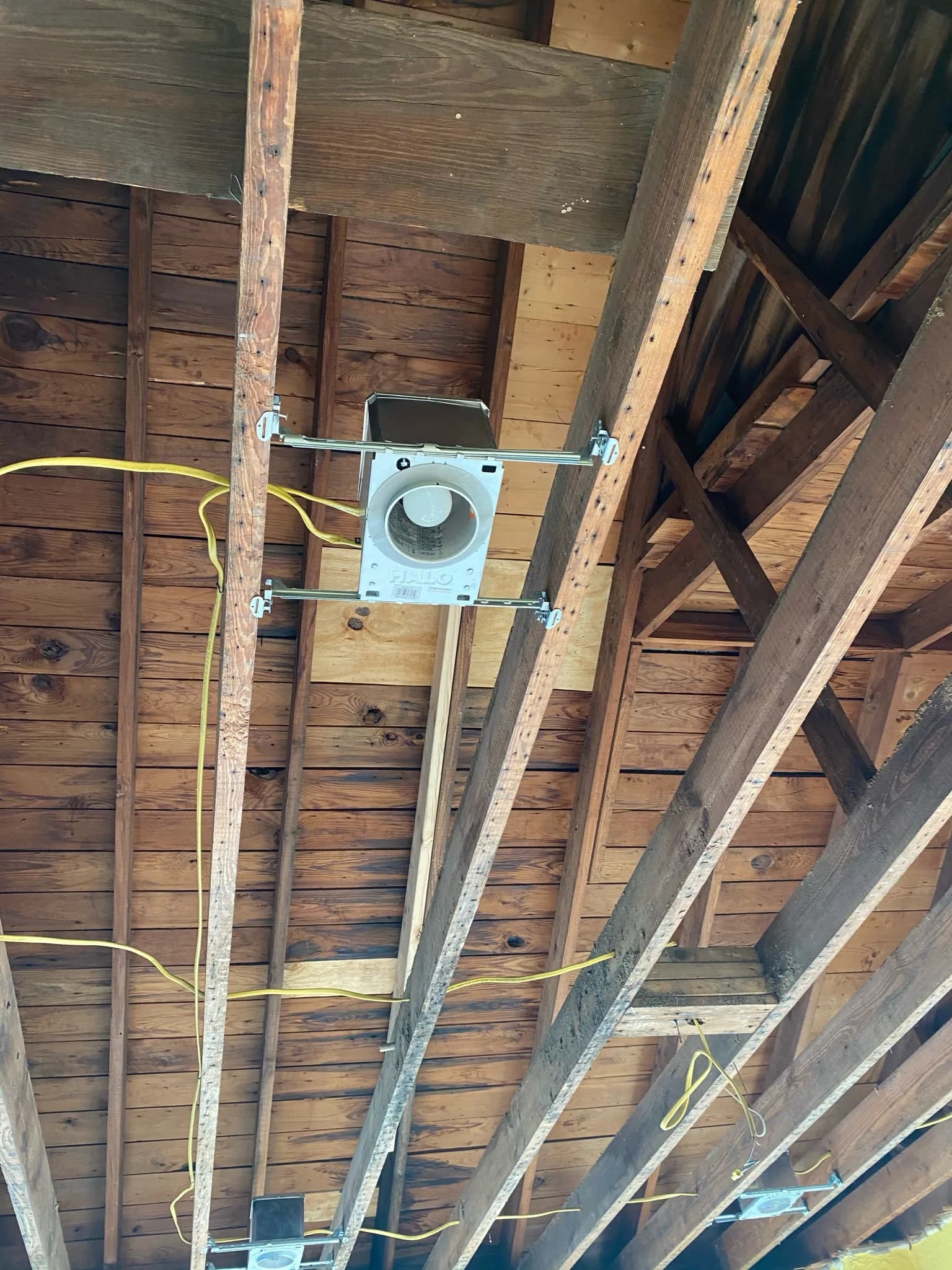
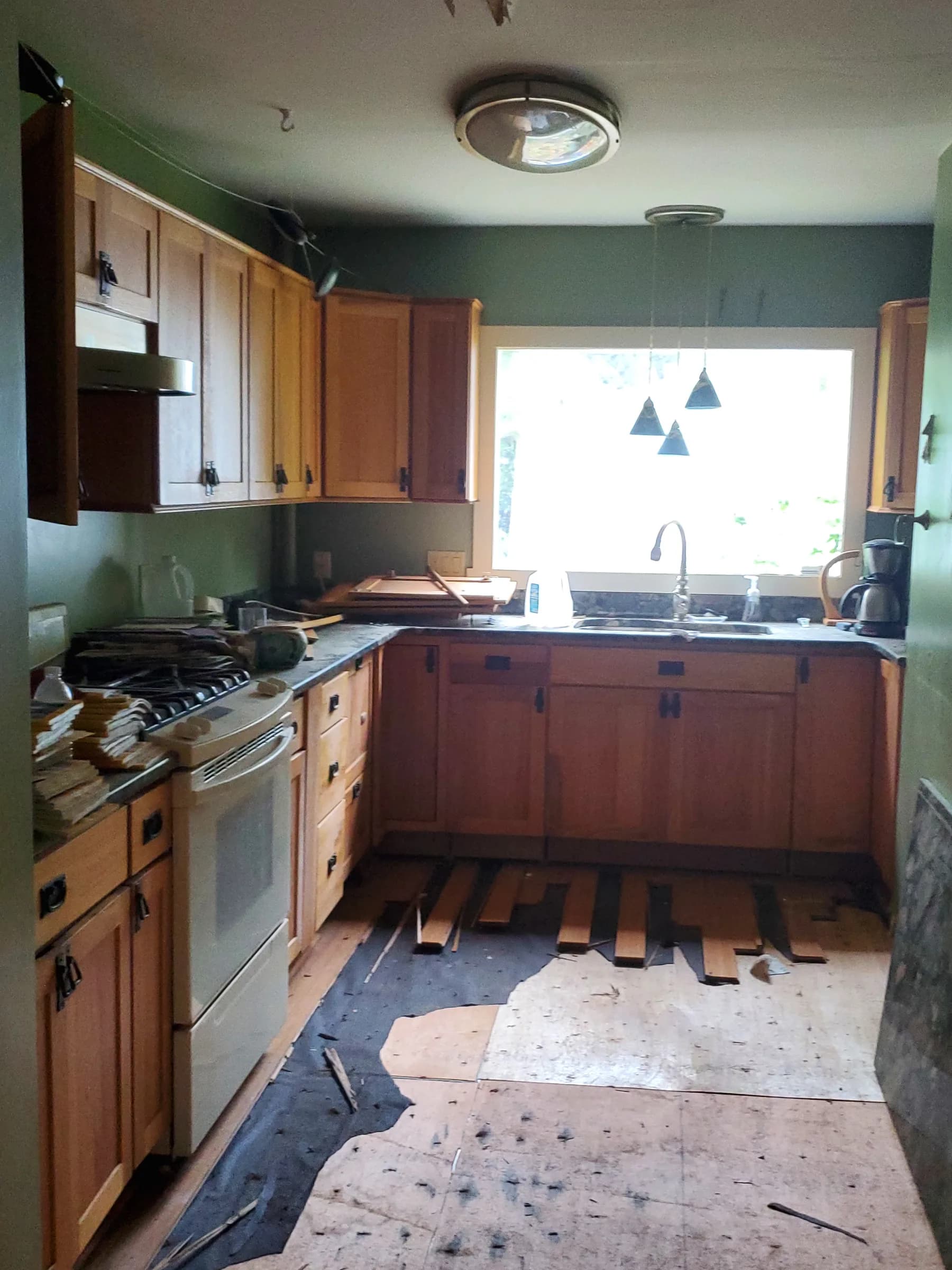
You don’t get to put a heavy kitchen island on a century-old floor and just hope. Before any visible finishes happened, our crew worked through the home’s structural problems methodically — replacing what had to be replaced, reinforcing what could be saved. The kitchen floor needed reinforcing for the heavy island the new layout called for. The attic needed structural framing with new trusses, and the floor system above the main level needed work on joists and supporting piers.
The rest of the house came along the same way: structural repairs and improvements throughout, so the new design could live on the existing frame instead of fighting it.
This is the unsexy part of historic restoration. It is also the part that decides whether the house lasts.
The design partner on the project was John Barie Design, LLC — Revolution coordinated construction and consultation through the full structural and finish scope.
Windows — What to Keep, What to Match
The wood windows got the case-by-case treatment. We kept some of the originals and replaced others with windows that had the same size and a similar muntin grille — close enough that a passerby would not see a mismatch and an architectural historian would not flinch.
This is the standard we apply on every historic remodel: keep what’s still doing its job, match what isn’t.
The Fireplace, Re-Cast
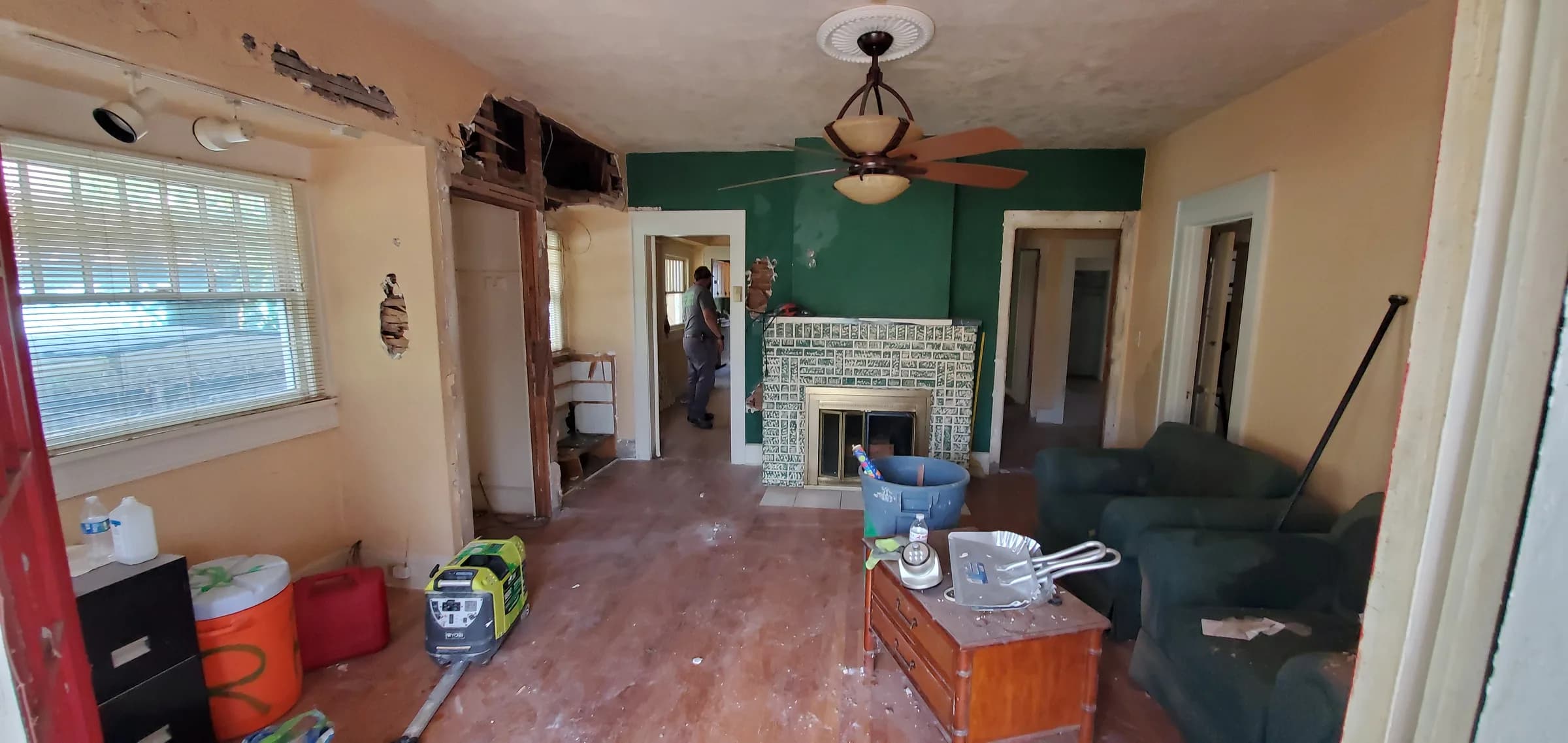
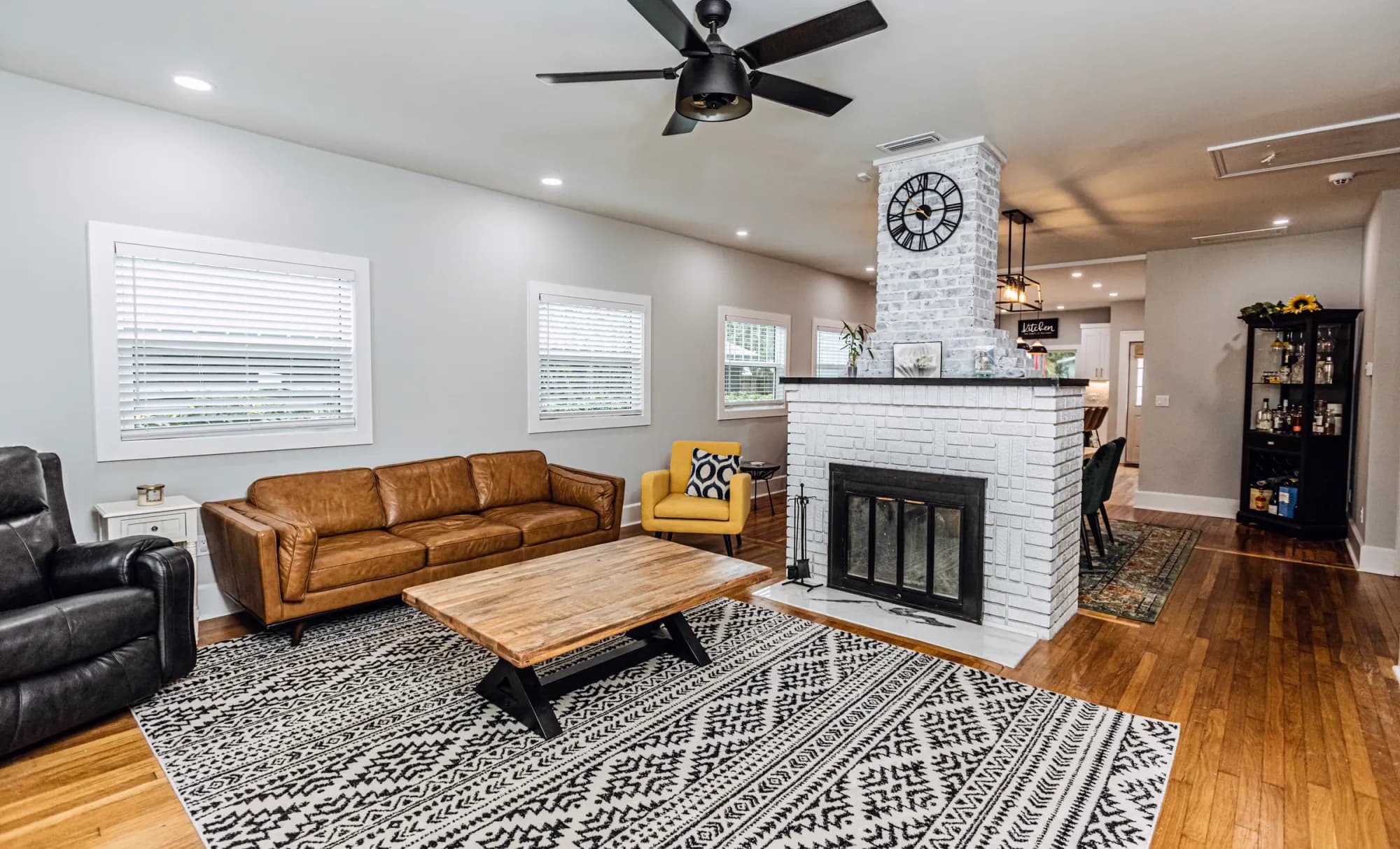
The single biggest design move on the project was the fireplace.
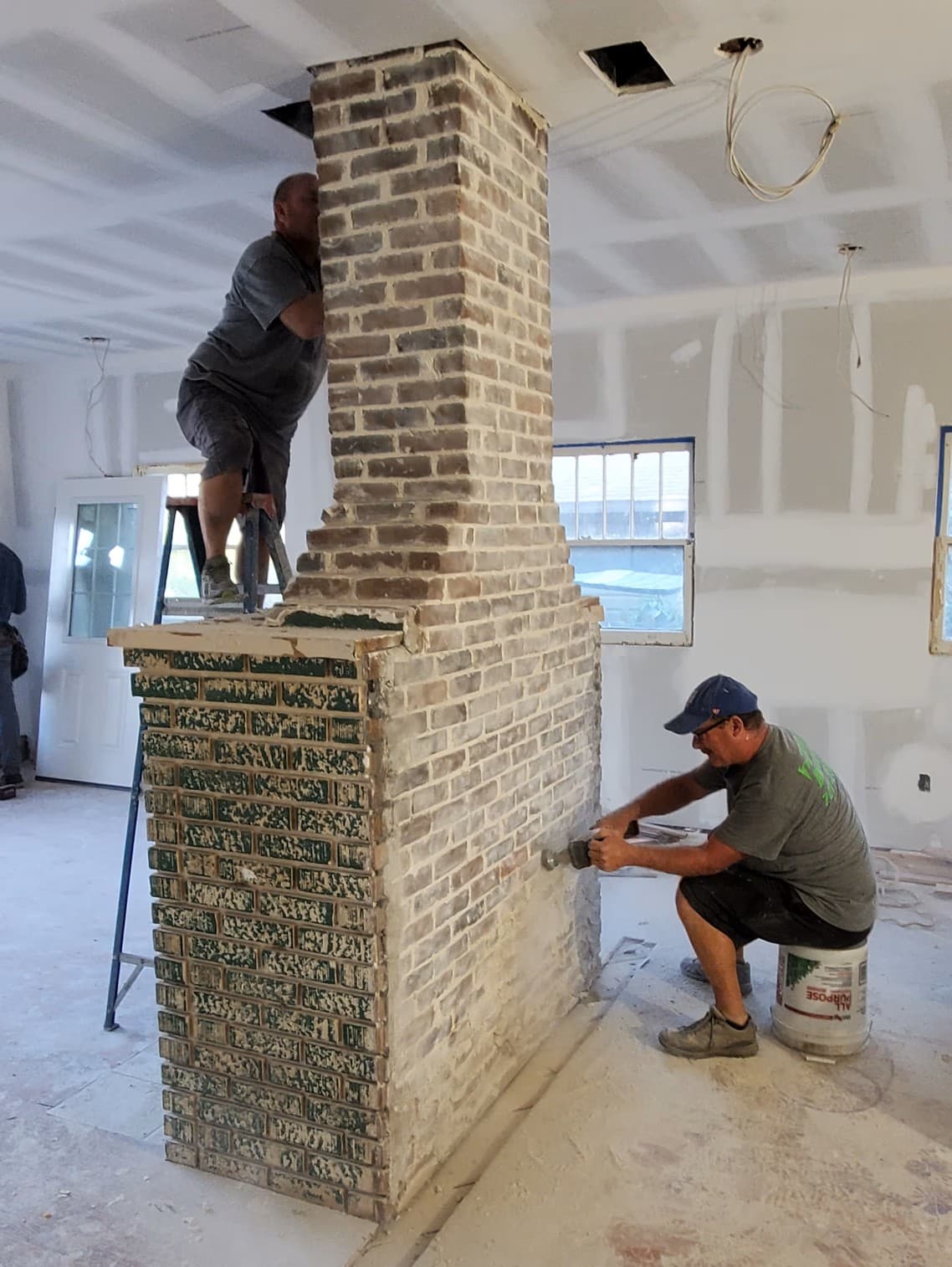
In the original layout, the fireplace was, as Brent on our team put it, “kind of just buried in the kitchen.” Our crew opened up the walls around it — which required new structural framing, because the walls coming out were doing load work the original builder counted on. The fireplace now sits between the kitchen and the living room: a central feature, a hearth in the literal sense, separating the rooms but tying them together.
It’s the kind of move that reads as obvious in the finished house and is anything but obvious before the first wall comes out.
Historic Finishes, Not Historic Pastiche
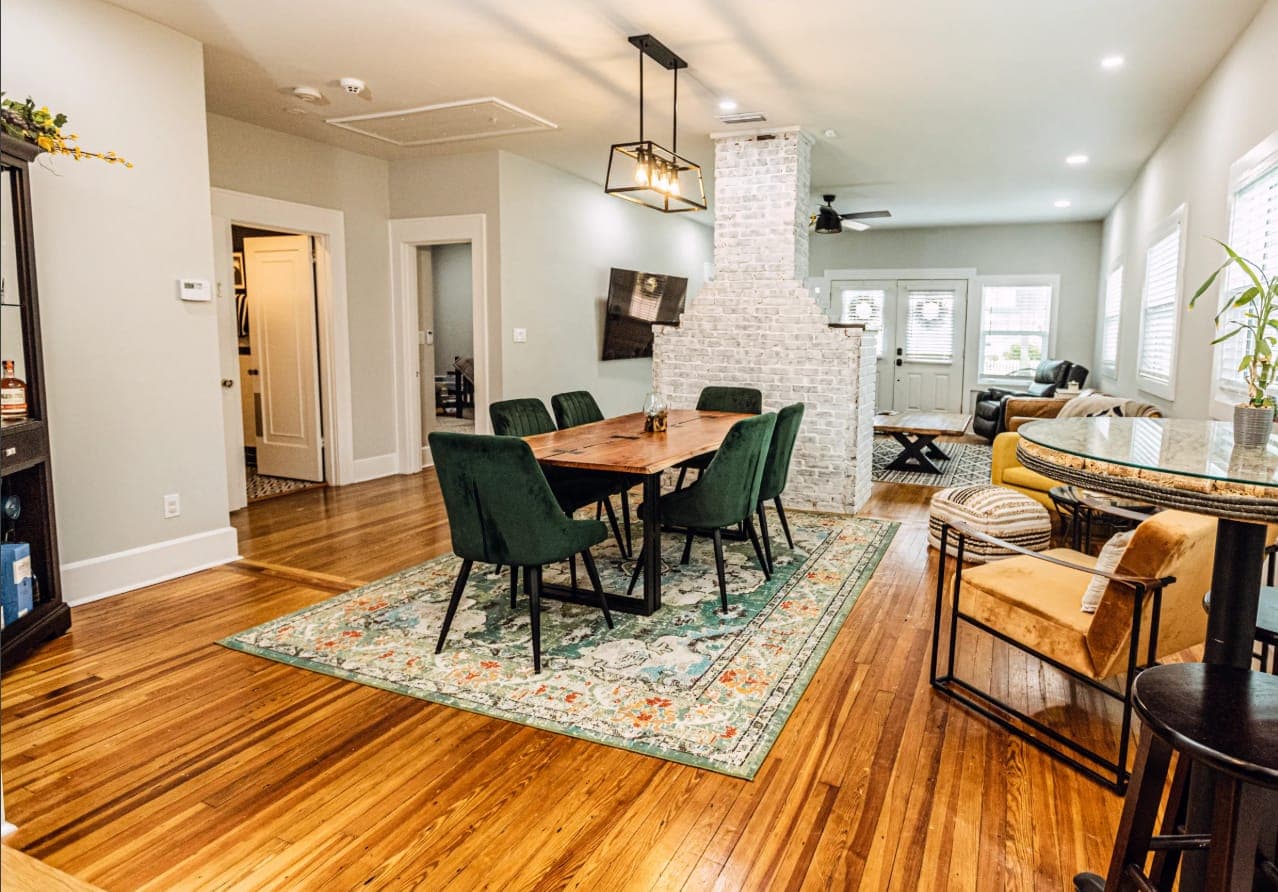
The finishes do the work of tying the renovation back to the home’s period without pretending to be original.
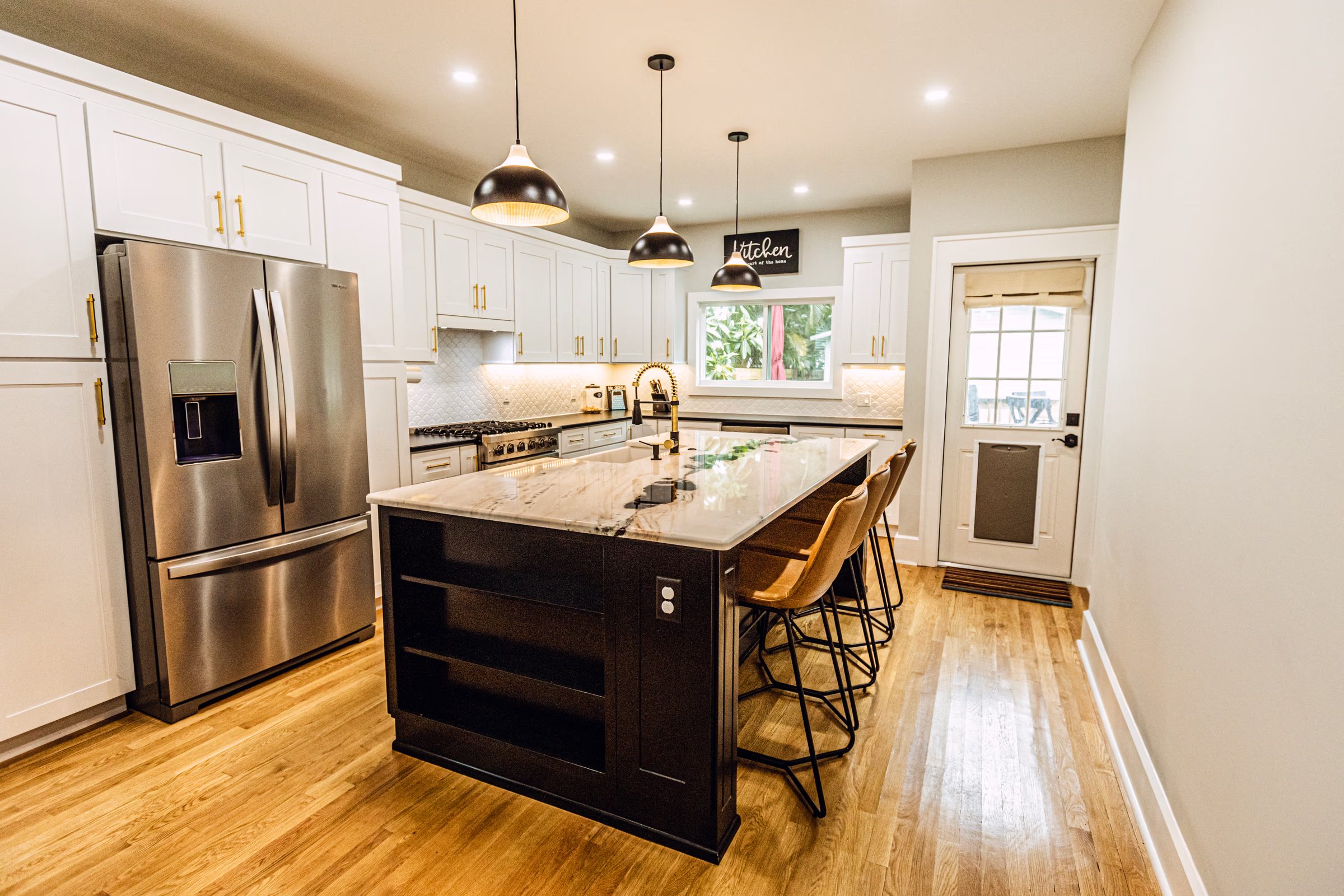
We matched some of the old historic flooring. Trim and cabinets got what Brent described as a “rustic flare” — pulling the new millwork into the same family as the original woodwork rather than dropping a sleek contemporary kitchen into a century-old house. Siding repairs and replacements were matched to the original profile so the house reads continuous from the curb.
The goal on a project like this is never to make a new house that looks old. The goal is to repair an old house honestly and let the new work — where it has to be new — sit comfortably alongside the original.
Curious what a project like this includes from a budget standpoint? Our historic renovation cost guide breaks down the cost categories.
Why It Got Recognized
Preserve the ‘Burg recognized this project with their 2025 Residential Rehabilitation award. The recognition is meaningful because Preserve the ‘Burg’s mission is exactly the line we tried to walk: keeping St. Pete’s historic homes intact and useful for another generation, not turning them into period dioramas and not bulldozing them for new builds.
The award is for what the house is now: a hundred-year-old Old Southeast bungalow that still has its frame, its windows, its woodwork — and a kitchen, a fireplace, a roof, and mechanical systems that will carry it forward.
Frequently asked questions
What did the King House restoration cost?
The King House final investment was $400,000 across the full whole-home scope — structural, electrical, plumbing, roofing, windows, fireplace, kitchen, finishes. We work in open-book Time & Materials, so the client saw weekly cost reports and every change order. Our historic renovation cost guide breaks down how similar projects price out by category.
How long does a project like this take?
The King House ran roughly 16 months — signed contract October 2020, project close March 2022. Historic whole-home restorations of this scope typically run a year or longer because the structural and mechanical work has to be done methodically before any finish work starts. Our historic renovation page walks through how we phase the work.
What is a Preserve the ‘Burg Residential Rehabilitation award?
Preserve the ‘Burg is St. Petersburg’s historic preservation nonprofit. Their annual awards recognize projects that keep the city’s historic homes intact and useful for another generation — neither bulldozing them for new builds nor turning them into period dioramas. Our 2025 Residential Rehabilitation award for the King House at 175 19th Ave SE reflects exactly that line of work.
What historic St. Pete neighborhoods do you work in?
Old Southeast (where the King House sits), Old Northeast, Historic Uptown, Kenwood, Crescent Lake, Roser Park, and the other historic-designated neighborhoods. We’re familiar with the COA (Certificate of Appropriateness) process, period-appropriate finish requirements, and the structural realities of frame bungalows from the 1910s–1930s. Adjacent waterfront work pairs with this scope as well — see our Snell Isle service area for early-20th-century waterfront homes where flood-zone elevation and period-character preservation collide.
Do you work with our architect, or do you bring one in?
Both. We partner with independent St. Pete architects and designers project-by-project — Revolution’s role is general contractor coordinating the design and construction under one open-book contract. We don’t keep architects on salary; we pair clients with the right design partner for the home’s period, scope, and constraints. On the King House, our design partner was John Barie Design, LLC.
Want this kind of project?
Revolution runs whole-home historic restorations in Old Southeast, Old Northeast, Historic Uptown, Kenwood, Crescent Lake, and the other historic-designated St. Pete neighborhoods. We’re Florida-licensed (CRC1331628 + CGC1522463), with about 20 carpenters and apprentices on Revolution’s payroll. Our work is Time & Materials with open-book pricing — you see the costs, you see the markups, you see the change orders.
See more projects on our case studies index.