Pinellas County FEMA Disaster Declarations 2025-2026: What Homeowners Need to Know

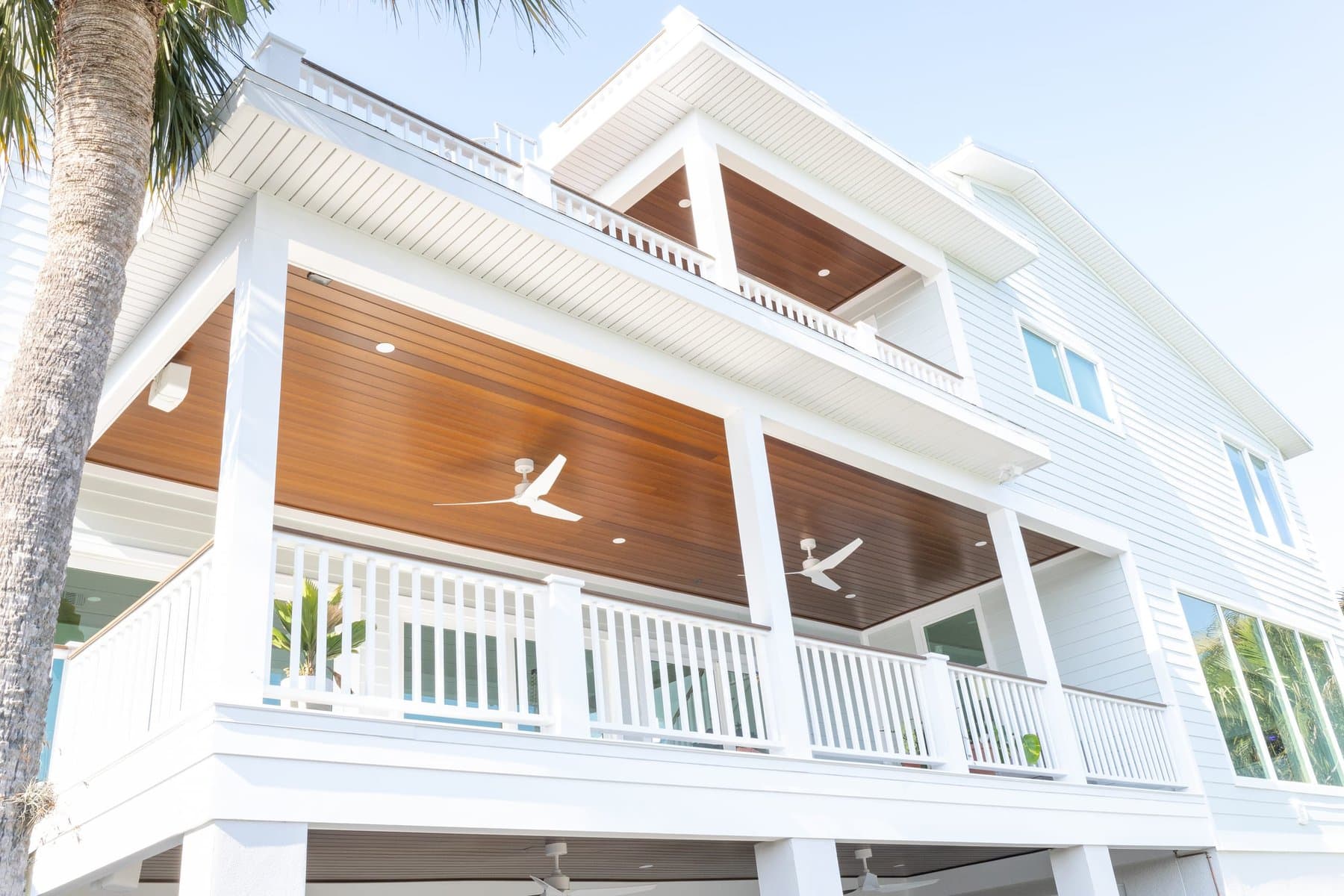
You stand in your Shore Acres driveway in October 2024 with a FEMA inspector who just measured your waterline at 42 inches on the interior drywall, and now you have 11 days to decide whether to accept Individual Assistance, apply for Increased Cost of Compliance, start a Mitigation of Severe Repetitive Loss grant, or wait for the state to open an alternative program. Nobody handed you a flowchart. Your insurer wants an engineer letter by Friday. Your mortgage servicer wants proof of occupancy. Your contractor wants to know if you are rebuilding or elevating. That is where this guide starts.
Pinellas County has been under federally declared disaster for parts of 2024, 2025, and 2026. Each declaration opens a different set of federal and state programs, and each one has deadlines that do not wait for you to catch up. This guide covers the declarations that affect Pinellas homeowners, what each one provides, and the sequence of decisions that keeps your rebuild on track.
The 2024-2026 Pinellas Disaster Declaration Record
Three major federal declarations have driven assistance activity for Pinellas County homeowners in this window:
- DR-4806-FL (Hurricane Debby, August 2024). Rainfall flooding, mostly inland. Individual Assistance (IA) opened for Pinellas plus Public Assistance (PA) for county infrastructure.
- DR-4828-FL (Hurricane Helene, September 2024). Storm surge event. Massive coastal impact across Shore Acres, Snell Isle, Riviera Bay, Venetian Isles, and the Pass-a-Grille to Treasure Island barrier island. Individual Assistance, Public Assistance, and Hazard Mitigation Grant Program (HMGP) all activated.
- DR-4834-FL (Hurricane Milton, October 2024). Wind plus secondary surge event two weeks after Helene. Compounded damage on properties still under repair from Helene. IA, PA, HMGP activated.
Declarations in 2025 and 2026 have continued to extend grant program deadlines and open supplemental appropriations for Severe Repetitive Loss (SRL) properties and Rebuild Florida / Mitigation of Severe Flood Hazard (MSFH) housing programs funded through Florida DEO and FloridaCommerce.
What Each Program Actually Does
Here is the plain-English version of what each program provides for a Pinellas homeowner.
Individual Assistance (IA). Up to $42,500 per household for home repair, personal property replacement, temporary lodging, and some displacement costs. Registration deadline is set at each declaration and typically runs 60 days from the declaration date, often extended. IA money is tax-free, does not have to be repaid, and does not count against SBA loan eligibility.
SBA Disaster Home Loans. Up to $500,000 for home repair or replacement, up to $100,000 for personal property. Low interest (around 2.5 to 3.5% for primary residences). SBA is the main federal money for homeowners above the IA cap.
Increased Cost of Compliance (ICC). Up to $30,000 built into your NFIP flood insurance policy. Pays the cost of elevating, relocating, floodproofing, or demolishing a substantially damaged structure to bring it into current floodplain management compliance. Does not count toward your IA cap. See our ICC Florida flood insurance guide.
Hazard Mitigation Grant Program (HMGP). Pays up to 75% of the cost of elevating, acquiring, or rebuilding a flood-prone structure to a higher standard. Administered through Florida DEM to the county. Pinellas allocation is in the millions after each declaration. Pre-application windows typically open 60 to 120 days after declaration, with final selections 12 to 24 months later.
Mitigation of Severe Flood Hazard (MSFH). Florida state program (FloridaCommerce) for Severe Repetitive Loss properties. Covers elevation, acquisition, or mitigation reconstruction. Requires NFIP policy history showing 2+ claim events or claims exceeding structure value. Our MSFH cost-share math guide walks through what you actually pay out of pocket.
Rebuild Florida (CDBG-DR). Federal Community Development Block Grant Disaster Recovery dollars allocated through HUD to the state. Covers housing repair, replacement, mitigation reconstruction, and infrastructure. Income-eligibility applies. Longer timelines (18 to 36 months from allocation to funded project).
The Decision Sequence After a Pinellas Disaster Declaration
Order matters. Here is the sequence that keeps your options open:
- Register with FEMA within the first 30 days. DisasterAssistance.gov is the primary portal. Registration opens IA eligibility and preserves your position in later programs. There is no downside to registering.
- Get your Substantial Damage Determination from Pinellas County. If your repair cost exceeds 50% of the pre-storm market value of the structure (not the land), FEMA 50% rules apply and you have to build back to current code. See FEMA Substantial Damage Letter Pinellas.
- File your NFIP flood insurance claim and ICC claim in parallel. ICC is a separate line item on your flood policy. If you are substantially damaged, you qualify for ICC up to $30,000.
- Apply for an SBA disaster loan. Even if you do not plan to borrow, the SBA application is the gatekeeper for grants above the IA cap. If SBA declines you, you get kicked back to FEMA Other Needs Assistance.
- Watch for HMGP and MSFH pre-application windows. These open 60 to 120 days post-declaration. Pinellas County Emergency Management posts the schedules.
- Decide between repair, elevation, and rebuild. Our tear down vs elevate vs deep remodel analysis walks through the trade-offs.
What Pinellas-Specific Rules Add on Top
Three county-specific layers that are not in the federal programs:
- Pinellas freeboard rule. Pinellas County requires 1 foot above base flood elevation for new construction and substantial improvements. Some municipalities (St. Petersburg, Clearwater) have adopted 2-foot freeboard. See Pinellas Freeboard BFE Plus One.
- 2027 FIRM map update. Pinellas FIRM maps were updated effective 2027. Some lots moved from X to AE, some from AE to VE. Verify your current flood zone before accepting any insurance quote. See Pinellas FIRM Map Update 2027.
- Repetitive Loss designation. If your property has filed 2+ NFIP claims of $1,000 or more within any 10-year period, you may be designated a Repetitive Loss (RL) or Severe Repetitive Loss (SRL) property. SRL designation qualifies the property for MSFH eligibility and priority HMGP consideration. See Repetitive Loss Properties Pinellas St. Petersburg.
What Revolution Does Inside the Grant Timeline
Revolution Contractors has worked grant-timeline rebuilds across Shore Acres, Snell Isle, and the barrier island through the 2024 declaration cycle. Jeremy Wharton holds CRC1331628 and Brent Patterson holds CGC1522463 (both verifiable on Florida DBPR), and we run 20+ W-2 carpenters in-house, which matters when a HMGP schedule requires work to start within 90 days of grant approval.
The role we play inside the grant process is contractor-side scope definition, bid documentation that satisfies grant administrators, cost tracking that passes grant audit, and sequencing the build around FEMA inspection windows. We are not grant writers, but we have worked alongside the grant managers who handle Pinellas-area applications and we know what documentation keeps a project funded.
Related Reading on Rev's Coastal and Flood Hub
- FEMA 50 Percent Rule Pinellas County Hub (complete calculation guide, 49 percent playbook, Shore Acres case studies)
- Flood Damage Near Me (hub)
- Elevation Services Hub
- FEMA 50 Rule Help
- Pinellas County Flood Zone Guide
- AE VE X Flood Zones Pinellas
Frequently Asked Questions
How many federal disaster declarations has Pinellas County had since 2024?
Three major federal declarations in the 2024 storm season: DR-4806-FL (Debby, August 2024), DR-4828-FL (Helene, September 2024), and DR-4834-FL (Milton, October 2024). All three activated Individual Assistance, Public Assistance, and Hazard Mitigation Grant Program for Pinellas.
What is the deadline to register with FEMA after a declaration?
Typically 60 days from the declaration date, often extended. Register at DisasterAssistance.gov as soon as possible after the event. Registration is the gatekeeper for Individual Assistance and preserves your position for later grant programs.
How much can I get from FEMA Individual Assistance?
Up to $42,500 per household for home repair, personal property replacement, lodging, and some displacement costs. IA is tax-free and does not have to be repaid. For damage above the IA cap, SBA disaster loans and HMGP are the next layers.
What is Increased Cost of Compliance (ICC)?
Up to $30,000 built into every NFIP flood insurance policy. ICC pays the cost of elevating, relocating, floodproofing, or demolishing a substantially damaged structure to meet current floodplain compliance. It is a separate claim line on your flood policy. See our ICC Florida flood insurance guide.
What is MSFH and who qualifies?
Mitigation of Severe Flood Hazard. A Florida state program (FloridaCommerce) for Severe Repetitive Loss properties. SRL designation requires NFIP policy history showing 4+ claim payments or 2+ claim payments cumulatively exceeding the structure value. See our MSFH cost-share math guide.
When do HMGP pre-application windows open after a Pinellas declaration?
Typically 60 to 120 days post-declaration. Pinellas County Emergency Management posts the schedule for each cycle. HMGP covers up to 75% of elevation, acquisition, or mitigation reconstruction costs.
Can I get both IA and HMGP for the same property?
Yes, in most cases. IA covers immediate repair and displacement costs. HMGP covers long-term mitigation (elevation, acquisition, mitigation reconstruction). They address different timelines and different scopes. Grant administrators coordinate the overlap.
Does my mortgage servicer have to approve the use of insurance proceeds?
Yes. On most mortgaged properties, insurance proceeds above a certain threshold (often $40,000) are held in escrow by the servicer and released against documented completion milestones. See our Pinellas mortgage held insurance check release process guide. Ready to walk through where your property sits in the grant timeline? Book a 48-hour project review and we will map your damage against program eligibility, outline the sequence of decisions, and have a realistic scope conversation on your calendar within two business days.