BFE Plus One Foot: Pinellas County's Freeboard Rule, Explained for Homeowners
This guide explains how BFE+1 ft (and BFE+2 ft in some municipalities) drives finished floor elevation in Pinellas flood zones. For a contractor who handles flood-zone work, see our flood zone contractor page.

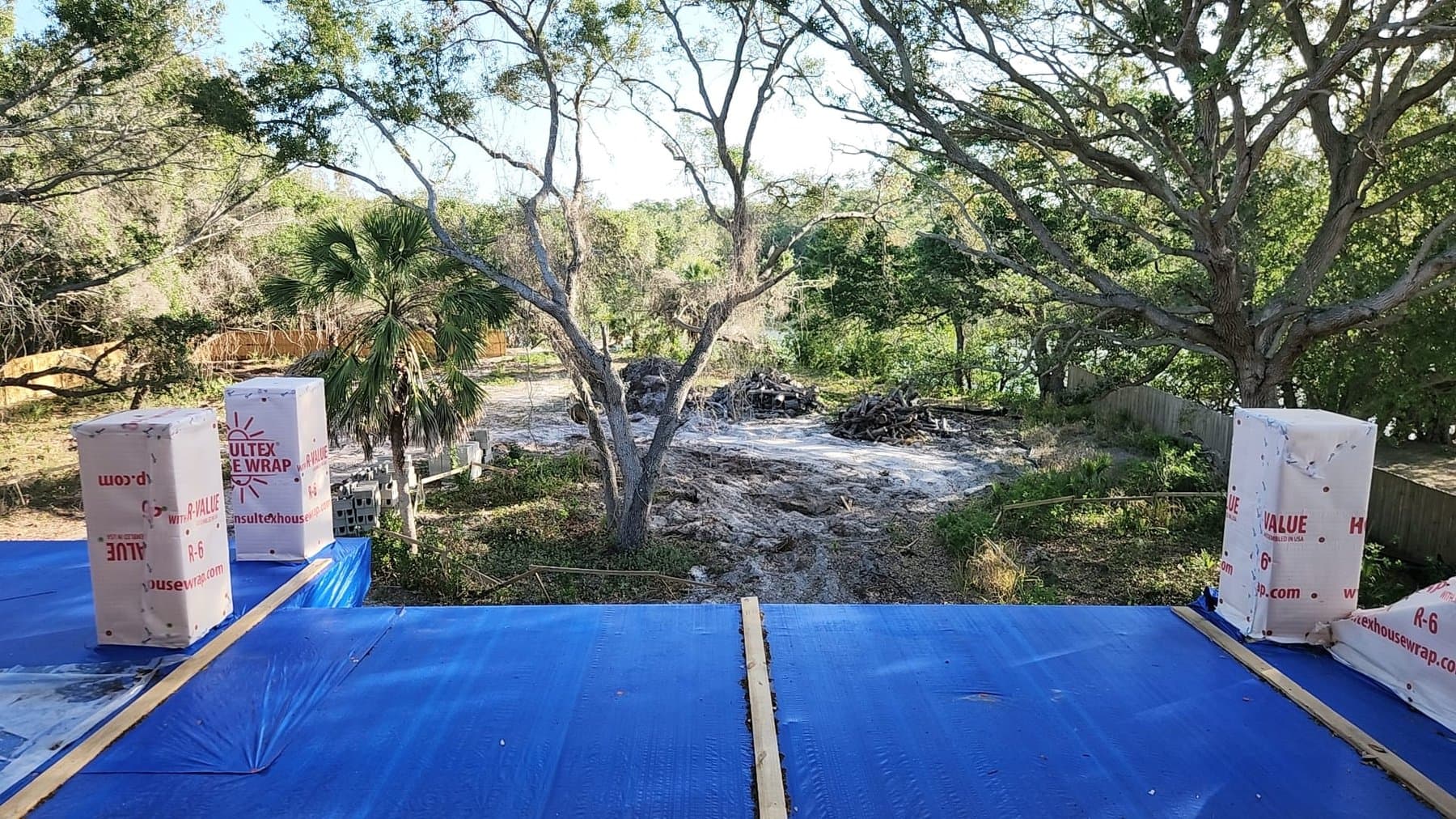
If you're elevating, building new, or doing a substantial-improvement remodel in a Pinellas flood zone, the single most consequential number on your plan set isn't the BFE, it's BFE+1 foot. That extra foot is freeboard, and Pinellas County requires it on top of FEMA's base flood elevation for the lowest finished floor of any new or substantially improved structure in a Special Flood Hazard Area. Parts of the 500-year floodplain require BFE+2 feet. That foot (or two) drives foundation height, stair count, ramp length, plumbing depth, and a chunk of your budget.
What Freeboard Actually Is
Freeboard is a safety margin built on top of the Base Flood Elevation. FEMA sets the BFE, the height floodwater is projected to reach during a 1% annual chance (100-year) flood event at your specific parcel. Freeboard is the extra height local jurisdictions require above that line, a buffer against modeling error, sea-level rise, and the storms that keep coming in heavier than the maps predict.
"The BFE also has a related number called the DFE, the design flood elevation. That's actually what the architects and designers use to determine what the finished floor height needs to be of a new structure or a significantly remodeled structure in order to comply with the current flood regulations from FEMA."
In Pinellas, the DFE your architect designs to is BFE + freeboard. If your BFE is 9 feet NAVD88 and BFE+1 applies, your lowest finished floor has to come in at or above 10. Architects design to 10. The county measures to 10. Your elevation certificate confirms 10. Pinellas County codified the freeboard requirement in its Land Development Code (current floodplain provisions adopted under Pinellas County Ordinance 2021-06, codified in the Pinellas County Code). Check the current Code of Ordinances for the version in force when you permit.
Pinellas County's BFE+1 ft Requirement
Pinellas County's floodplain management standards live in the Land Development Code (Pinellas County Code, Chapter 138), with the underlying ordinance adopted as 2021-06. The standard for new construction and substantial improvements in a Special Flood Hazard Area is BFE+1 foot minimum for the lowest finished floor. That applies to new builds on vacant lots in AE zones, post-Helene elevations, substantial-improvement remodels that trigger FEMA's 50% rule, and tear-down rebuilds. Individual municipalities inside Pinellas (St. Pete Beach, Madeira Beach, Treasure Island) can adopt stricter rules, always confirm the local code section against the version in force when you permit.
The 1-foot adder isn't optional or waivable on a standard permit. It applies regardless of whether your municipality (St. Pete, St. Pete Beach, Treasure Island, Indian Rocks Beach) has additional rules layered on top, county freeboard is the floor.
When BFE+2 ft Applies
Some Pinellas municipalities, including Madeira Beach (Chapter 94 of its floodplain code), require BFE+2 feet of freeboard for new construction and substantial improvements. Pinellas County Floodplain Management has also flagged BFE+2 in public communications for properties in the 500-year floodplain (the wider boundary outside the standard 100-year SFHA but still in elevated flood risk territory). Always confirm the exact rule against your municipality's current floodplain ordinance before designing the foundation.
This is the rule no competitor surfaces clearly, and the one most likely to bite you if your lot sits just outside the AE/VE line on the FIRM but inside the broader 500-year boundary. A homeowner who designs to BFE+1 because they're "outside the flood zone" can hit the permit desk and learn they need an extra foot, which means re-engineering the foundation, the stair runs, and sometimes the driveway approach.
If your lot is in a V-zone (coastal high-hazard), the analysis is different again. V-zones add velocity wave loading on top of base elevation requirements, which usually means driven piles and a foundation system priced separately from the elevation itself. That's outside the scope of standard freeboard math.
How Freeboard Affects Your Build Cost and Design
Every additional foot of foundation height ripples through the budget. On a Pinellas waterfront elevation or new build, here's where BFE+1 shows up:
- Foundation cost. An extra foot of stem wall, pile cap, or pier means more concrete, more rebar, and more forming labor. Depending on foundation type and site conditions, that foot can add several thousand dollars to the structural budget, sometimes more on engineered pile foundations in V-zones.
- Stair runs and ramp access. Higher finished floor means longer stair runs to grade, which can push the stair footprint into setback issues on tight lots. For ADA or aging-in-place compliance, ramp runs at 1:12 max slope can eat 12-24 feet of yard.
- Plumbing rough-in depth. Sanitary lines run from the lowest finished floor to the connection point. An extra foot of finished floor means an extra foot of vertical drop, not expensive, but it matters for layout.
- Building-envelope penetrations. Anything passing through the structure below the freeboard line needs flood-resistant detailing.
- Driveway approach. Higher finished floor often means a steeper driveway grade. On flat Pinellas lots, solvable; on narrow corner lots, it can drive layout changes.
For real-numbers walkthrough on what elevation actually costs, see house elevation cost in Florida.
How Freeboard Interacts with the 49% St. Pete / 50% Federal Rule
If a voluntary remodel crosses the substantial-improvement threshold, freeboard becomes mandatory whether you wanted to elevate or not.
The federal FEMA rule is the 50% rule, voluntary improvements crossing 50% of structure-assessed value trigger code compliance. St. Petersburg enforces it at 49%, one point below federal. Either way: cross the threshold and the entire structure must come up to current flood code, meaning the lowest finished floor must hit BFE+1 (or BFE+2 in 500-year overlays).
A homeowner planning $180K of kitchen + bath + addition on a $300K-assessed structure is at 60%, over the threshold, full elevation triggered. The same scope at $140K is at 47%, under, freeboard not required. Scope discipline matters.
The terminology side of that math is broken down in FEMA 50% rule vs. substantial improvement vs. substantial damage.
What Revolution Does Differently on Freeboard Compliance
Revolution Contractors works Time & Materials with open-book pricing on every flood-zone project. That matters for freeboard because every dollar of freeboard-driven cost, extra foundation height, longer stair runs, deeper site work, shows up as a line item you can see. You're not eating a padded fixed-bid number that may or may not have priced freeboard correctly. You see it.
Revolution employs 20+ W-2 carpenters on payroll, not subcontracted day labor. The same crew that frames your stem wall, sets your floor system, and runs your stair stringers is on Revolution's payroll. Schedule control on a flood-zone project (inspection windows, elevation certificates, and final FEMA sign-off all chain together) depends on knowing your framers will be on-site when they're supposed to be.
Revolution has done Pinellas flood-zone work in Shore Acres, Snell Isle, Tierra Verde, Old Northeast, and St. Pete Beach, neighborhoods where BFE+1 (and sometimes BFE+2) shows up on every permit set. For the full scope, see Pinellas flood-zone construction services. If you're considering elevation specifically, the Elevate Florida program covers the state grant pathway.
FAQ
Is BFE+1 ft the same as freeboard?
Freeboard is the term for the safety margin above BFE. BFE+1 foot is Pinellas County's specific freeboard value, 1 foot above base flood elevation. So yes, BFE+1 ft in Pinellas is freeboard, but freeboard as a concept can be any height above BFE that a jurisdiction requires.
Can you get a variance below BFE+1?
Generally no, freeboard is a code minimum for new construction and substantial improvements in flood hazard areas, not a discretionary requirement. The federal framework at 44 CFR §60.6 limits variances from floodplain management standards to narrow circumstances (typically demonstrated hardship not involving the floodplain itself, on lots one-half acre or less surrounded by existing lower structures). In practice, Pinellas grants very few variances below BFE+1, and any application would route through the local floodplain administrator.
Why does Pinellas require more than the federal minimum?
The federal standard sets BFE as the minimum. Pinellas adopted 1-foot freeboard as a safety margin against modeling uncertainty, sea-level rise, and the post-Helene/Milton reality that 100-year storm events keep arriving more often than 100 years would suggest. Jurisdictions that enforce freeboard above federal minimum can also see reduced flood insurance premiums through the FEMA Community Rating System.
How does freeboard affect insurance premiums?
Higher finished floor elevation generally lowers NFIP flood insurance premiums, and the relationship is steep. A house at BFE+1 typically pays meaningfully less than one at BFE, and BFE+2 less again. Under FEMA's current Risk Rating 2.0 pricing model, your elevation certificate documents finished floor relative to BFE; that number drives your rating directly. Exact premium reduction varies by flood zone, building type, foundation, and date of construction, your insurer can run the math against the elevation certificate.
What if my lot is in a 500-year floodplain?
Lots in the 500-year floodplain (the broader X-shaded zone outside the AE/VE 100-year boundary but still flood-prone) may face BFE+2 standards depending on your municipality's current floodplain code, Pinellas County Floodplain Management has flagged BFE+2 for 500-year-zone construction in public communications. Pull your address from the Pinellas Flood Map Service Center before designing, confirming boundary and applicable code section at the start of pre-construction is cheaper than re-engineering the foundation at permit submittal.
If you're planning an elevation, new build, or substantial-improvement remodel in a Pinellas flood zone, freeboard is going to drive design decisions and budget line items from day one. Talk to Revolution about your flood-zone project , we'll walk the site, pull the FIRM data, and tell you what the finished floor elevation needs to be before you commit to a foundation type.
Ready to Start Your Project?
Get a free estimate within 24 hours