MSFH Cost-Share Math for Pinellas Homeowners: What You Actually Pay Out-of-Pocket After the Grant

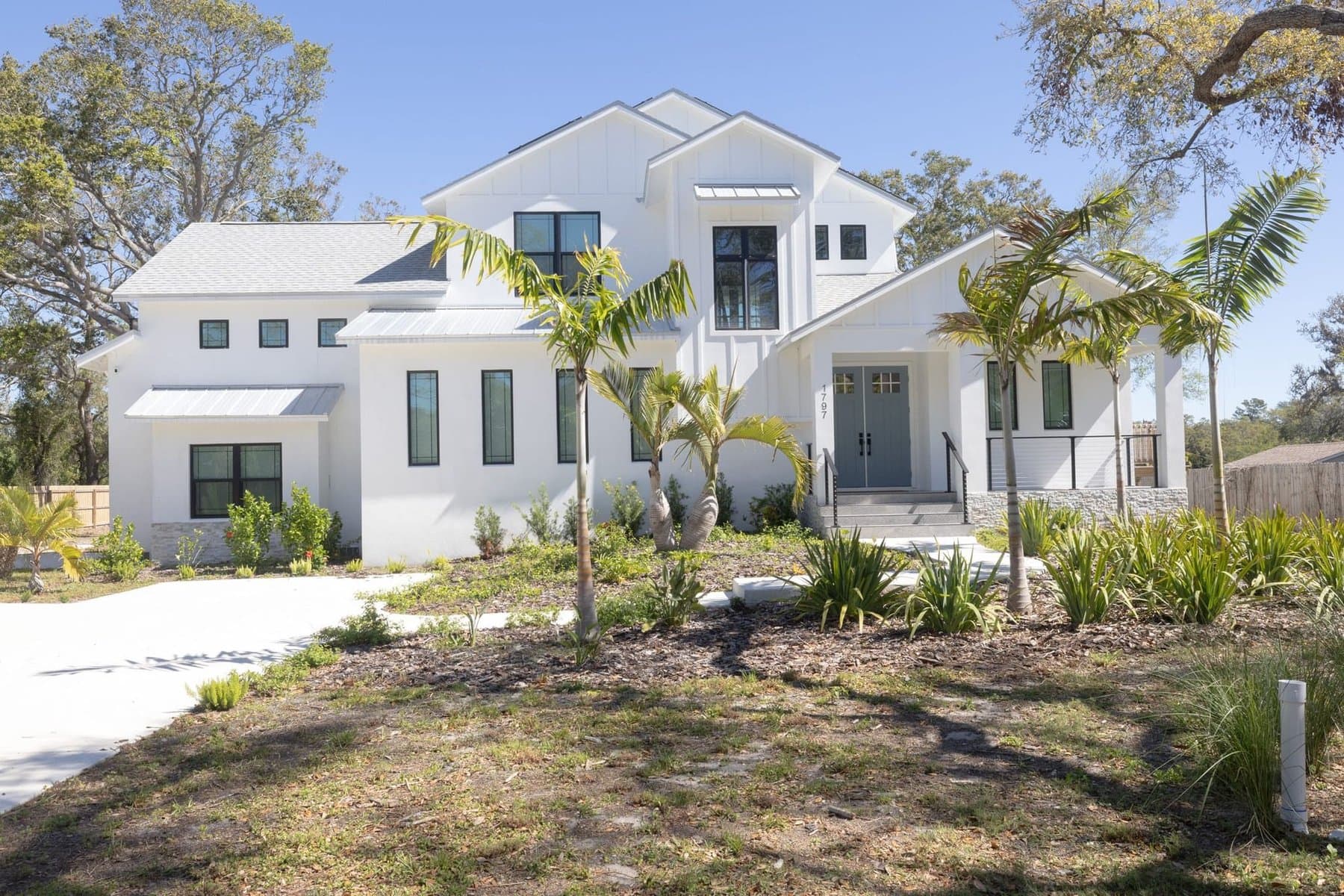
The My Safe Florida Home (MSFH) grant is structured as a 2:1 state match for the moderate-income tier, the state pays $2 for every $1 the homeowner contributes, up to a $10,000 grant cap. That headline math is straightforward, but the practical question homeowners actually run into on a Pinellas estimate call is different: after the grant lands, after materials are ordered, after Florida sales tax is added on the material side, after the contractor's labor line is priced against the current local market, what is the check the homeowner actually writes. And what happens when the quote exceeds the grant plus the homeowner's own match ceiling.
This is the honest walkthrough of that cost-side arithmetic, three worked examples on typical Pinellas scopes, how the receipt cycle actually flows, what cost overage looks like when the quote goes over, Florida sales-tax handling on materials, and a neutral read on the four common financing paths Pinellas homeowners use to fund their side of the 2:1 match. Read it alongside our My Safe Florida Home grant guide (the canonical program walkthrough) and our MSFH grant amount breakdown (per-upgrade headline math). This spoke walks the receipt.
We're Revolution Contractors, a St. Petersburg licensed general contractor (CRC1331628, CGC1522463). We install the hurricane-hardening upgrades MSFH funds, impact windows, roof-deck attachment, roof-to-wall connectors, secondary water resistance, gable-end bracing, hurricane-rated garage doors. We are not a lender, mortgage broker, or licensed financial advisor. The financing content in this piece describes common paths neutrally so a Pinellas homeowner can talk to their own bank, credit union, or advisor with the right questions in hand. It is not a lender recommendation.
On This Page
- What the 2:1 match actually means in arithmetic
- The three MSFH income tiers and their match rules
- Worked cost example 1: impact windows on a 1,500 sq ft Pinellas bungalow
- Worked cost example 2: roof-deck attachment plus SWR on a 2,000 sq ft ranch
- Worked cost example 3: combined windows plus roof plus garage door on a 3,000 sq ft home
- Cost overage: what happens when the quote exceeds the grant plus your match
- Florida sales tax on materials and labor
- Four common financing paths for the homeowner match
- What the state pays and what you pay through the receipt cycle
- Eight common cost-calculation mistakes on Pinellas estimate calls
- FAQ
What the 2:1 match actually means in arithmetic {#match-arithmetic}
For the moderate-income tier (household income between 80% and 120% of Pinellas County Area Median Income), MSFH matches homeowner spending at 2:1 up to a $10,000 grant cap. Rearranged for cash-flow planning, that produces three dollar figures every Pinellas homeowner should know before signing scope.
- Homeowner match to unlock the full grant: $5,000.
- Total qualifying project budget when the grant is maxed: $15,000 ($10,000 grant plus $5,000 match).
- Effective homeowner cost on a $15,000 scope: $5,000. The state reimburses the remaining $10,000 after work completion and documentation.
That math holds up to the $15,000 total-budget line. Above $15,000, the state does not increase the grant, every additional dollar of scope comes out of the homeowner's pocket at 1:1. Below $15,000, the grant reimburses proportionally; the state does not issue a bonus check for coming in under budget.
For the low-income tier (household income at or below 80% of Area Median Income), no homeowner match is required, the grant covers the full qualifying scope up to $10,000. Verify current-cycle income-tier definitions and match ratios at mysafeflhome.com; parameters can shift by legislative session.
The three MSFH income tiers and their match rules {#income-tiers}
Per Florida Statute 215.5586 and the current program rules published on mysafeflhome.com, MSFH allocates matching grants across three income tiers keyed to Pinellas County Area Median Income (AMI). The AMI figures update annually, check the current-cycle AMI table on the MSFH portal before assuming your tier.
- Low-income tier, household income at or below 80% of Pinellas County AMI. No homeowner match required. Grant up to $10,000 for the full qualifying scope.
- Moderate-income tier, household income between 80% and 120% of Pinellas County AMI. 2:1 state match. Homeowner contributes $1 for every $2 the state contributes, up to the $10,000 grant cap.
- Above 120% of AMI, no matching grant available. The free wind mitigation inspection is still available regardless of income, and the resulting insurance premium credit still applies. But the matching grant is not currently available above 120% of AMI in the current cycle.
Priority order for application processing within a given cycle typically runs low-income age 60-plus first, then low-income under 60, then moderate-income age 60-plus, then moderate-income under 60. That priority order matters for MSFH deadlines and application timing, earlier tiers move through the queue faster in high-demand cycles.
Worked cost example 1: impact windows on a 1,500 sq ft Pinellas bungalow {#example-1-windows}
Household: moderate-income tier, bungalow in Old Northeast St. Pete permitted before 2002, ten windows on the exterior wall. Inspector flags all ten openings as unprotected. MSFH-eligible recommendation: full opening protection with Florida Product Approval-compliant impact windows meeting the 150 mph coastal wind zone spec.
Typical Pinellas quote range for ten impact windows on a coastal bungalow:
| Line item | Typical range |
|---|---|
| Impact windows, 10 openings, standard sizes, coastal 150 mph spec | $7,000 - $15,000 materials (roughly $700-$1,500 per opening) |
| Labor, permit, and disposal | $3,000 - $5,000 |
| Typical total scope range | $10,000 - $20,000 |
Assume the quote lands at $15,000 (well within the typical Pinellas range). Receipt cycle at the moderate-income tier:
| Party | Contribution |
|---|---|
| Homeowner match | $5,000 |
| State grant (2:1 match, capped) | $10,000 |
| Net homeowner cost after grant reimbursement | $5,000 on a $15,000 scope |
If the same applicant qualifies at the low-income tier, no match is required, the grant covers the first $10,000 directly and the homeowner pays only the $5,000 overage above the cap. Cost figures are illustrative Pinellas market ranges; individual quotes vary by product line, opening size, jobsite conditions, and permit fees. Get a written estimate before assuming.
Worked cost example 2: roof-deck attachment plus SWR on a 2,000 sq ft ranch {#example-2-roof}
Household: moderate-income tier, 1970s ranch in Shore Acres or Riviera Bay, roof scheduled for full replacement. Inspector flags roof-deck attachment at Category A (weakest, 6d common nails or non-verifiable pattern) and no secondary water resistance. MSFH-eligible recommendations: re-nail the roof deck to current spec, install SWR (peel-and-stick or taped seams under the shingles), and add roof-to-wall connectors during the re-roof.
Important: MSFH funds only the wind-mitigation portion of a re-roof. The primary shingle-and-underlayment cost is the homeowner's regardless.
Typical Pinellas quote range for the MSFH-eligible portion:
| Line item | Typical range |
|---|---|
| Roof-deck re-nail to current spec | $1,500 - $4,500 |
| Secondary water resistance | $500 - $2,000 |
| Roof-to-wall connectors (if toe-nail on inspection) | $1,500 - $3,500 |
| Typical MSFH-eligible portion total | $3,500 - $10,000 |
Assume the MSFH-eligible portion quotes at $7,500 (mid-range for a moderate-complexity Pinellas ranch). Receipt cycle at the moderate-income tier:
| Party | Contribution |
|---|---|
| Homeowner match on the $7,500 qualifying scope | $2,500 |
| State grant (2:1 match on this scope) | $5,000 |
| Net homeowner cost on wind-mitigation portion | $2,500 |
| Separate primary shingle-and-underlayment portion (unfunded by MSFH) | $12,000 - $25,000 depending on square footage, pitch, and material |
| Total homeowner cash outlay for the full re-roof | $14,500 - $27,500 |
Take-away: MSFH substantially subsidizes the wind-mitigation portion of a re-roof but does not cover the primary shingle work. Sequence the re-roof so the MSFH-eligible line items are documented separately for the reimbursement package.
Worked cost example 3: combined windows plus roof plus garage door on a 3,000 sq ft home {#example-3-combined}
Household: moderate-income tier, 1990s two-story coastal home in Snell Isle or Yacht Club Estates. Inspector flags 12 unprotected windows, unprotected front door, non-FBC roof with weak deck attachment, and a non-wind-rated garage door. Homeowner wants to bundle all MSFH-eligible scopes into one project.
Typical Pinellas quote range for the combined MSFH-eligible scope:
| Line item | Typical range |
|---|---|
| Impact windows, 12 openings, coastal 150 mph spec | $9,000 - $18,000 materials |
| Impact-rated front door | $2,500 - $5,000 |
| Roof-deck re-nail plus SWR (during re-roof) | $2,000 - $6,500 |
| Wind-rated garage door replacement | $1,200 - $3,500 |
| Labor, permits, disposal across combined scope | $5,000 - $9,000 |
| Typical MSFH-eligible combined-scope range | $19,700 - $42,000 |
Assume the MSFH-eligible portion quotes at $28,000 (mid-range for a comprehensive coastal-spec hardening bundle). This scope exceeds the $15,000 grant-plus-match ceiling, so the arithmetic changes:
| Party | Contribution |
|---|---|
| State grant (capped) | $10,000 |
| Homeowner match to unlock the grant | $5,000 |
| Overage above the ceiling, homeowner pays 1:1 | $13,000 |
| Total homeowner cash outlay | $18,000 out of a $28,000 scope |
The grant reduces the homeowner's cost from $28,000 to $18,000, a $10,000 direct subsidy. Overage above the $15,000 ceiling gets no additional state contribution. This is the case-shape where the MSFH grant cap visibly caps out and where Pinellas homeowners most often reach for a supplemental financing path.
Cost overage: what happens when the quote exceeds the grant plus your match {#cost-overage}
The most common cost-side surprise on Pinellas MSFH estimate calls is the homeowner assuming the grant scales with scope. It does not. The $10,000 cap is a hard ceiling regardless of project size. Everything above the $15,000 grant-plus-match ceiling (moderate-income tier) comes out of pocket at 1:1 with no state contribution.
Practical implications for scope-setting:
- Right-sizing to the grant. To minimize out-of-pocket cost, size the scope near the $15,000 ceiling. Pinellas market pricing for a ten-opening impact-window job on a bungalow, or a bundled roof-plus-partial-openings scope on a ranch, often falls in that range.
- Absorbing modest overage. Absorbing $5,000-$15,000 of overage above the ceiling is often worthwhile when the alternative is splitting work across two project phases, permit fees, mobilization, and re-inspection costs don't scale cleanly across phases.
- Splitting across cycles doesn't reset the cap. MSFH is a per-homeowner grant, not a per-cycle grant. Once you draw the full $10,000, you do not qualify for a second grant in a future cycle.
- Insurance-side offset. The same OIR-B1-1802 wind mitigation report drives an insurance premium credit that runs several hundred to a couple thousand dollars per year on a typical Pinellas policy. That savings offsets overage over time, though offset math varies by carrier.
Get a written estimate from a licensed Florida contractor before finalizing scope. An unlicensed contractor's estimate is not usable for the reimbursement package regardless of quote quality.
Florida sales tax on materials and labor {#sales-tax}
Florida imposes a 6% state sales tax on tangible personal property, plus a Pinellas County discretionary sales surtax that brings the combined rate to 7% in Pinellas County as of the current tax year. Sales tax applies differently to materials and labor on a construction contract, and the difference matters for the MSFH cost calculation.
- Materials. Florida sales tax applies to the materials portion of a residential construction contract. Impact windows, roof-deck fasteners, SWR membrane, hurricane connectors, and garage doors all carry the 7% Pinellas combined rate. Most Florida contractors pay the tax at the point of purchase from their supplier and pass the cost through in the delivered material line, the tax is embedded in the quote rather than added as a separate line item at invoice.
- Labor. Florida generally does not apply sales tax to residential labor for construction improvements on real property. Labor is a service, and Florida's sales tax structure does not treat residential construction labor as taxable in the same way retail transactions are taxed.
- Florida has no state income tax. Grant reimbursements from MSFH are not subject to Florida state income tax because Florida does not levy one. Federal income-tax treatment of home hardening grant reimbursements is a separate question, consult a licensed tax professional if you are uncertain, as the federal treatment depends on how the reimbursement is characterized and on your specific situation.
Verify the current Pinellas combined sales-tax rate on the Florida Department of Revenue sales-tax page before finalizing budget assumptions. The Pinellas discretionary surtax has been adjusted in past referendum cycles.
Four common financing paths for the homeowner match {#financing-paths}
Pinellas homeowners fund the match through several common paths. Descriptions below are neutral, pros and cons only, so you can talk to your own bank, credit union, or licensed financial advisor with the right questions in hand. We are a general contractor, not a lender or financial advisor. We do not recommend a specific lender, loan product, or interest rate.
- Home equity line of credit (HELOC). Draws against home equity as needed. Pros: interest paid only on drawn balance, flexible structure that maps to construction milestones. Cons: home is collateral, rates are typically variable, closing costs and appraisal fees apply, approval takes weeks, do not sequence against a tight award-letter deadline.
- Cash-out refinance. Refinance the existing mortgage for a larger amount and take the difference as cash. Pros: single fixed-rate loan. Cons: full refinance closing costs, resets the mortgage clock; usually not the right instrument for a $5,000-$15,000 hardening scope on its own because closing costs often outweigh the advantage at that scale.
- Manufacturer or contractor 0% financing. Some impact-window and roofing manufacturers partner with third-party financing companies to offer 12-to-24-month 0% promotional periods on qualifying purchases. Pros: no interest during the promotional window, no need to tap home equity. Cons: deferred-interest structures can retroactively apply high rates if the balance is not paid off by the promotional deadline. Confirm terms in writing directly with the financing company, not through the contractor.
- Homeowner savings or emergency fund. The simplest path. Pros: no debt, no closing costs, no promotional-deadline risk. Cons: depletes the emergency fund at exactly the moment (peak Atlantic hurricane season) when a stocked reserve matters most. Many advisors recommend keeping enough liquid reserves to cover a hurricane deductible even after funding a hardening project.
Which path fits a specific household depends on rate profile, credit position, existing debt load, and liquidity preference, questions for a licensed advisor, not a contractor. What we can confirm on the contractor side is the total quote, the payment-milestone schedule (typically a deposit at signing, a mid-project draw at material delivery, and a final payment at closeout), and the state reimbursement timing so you know when grant money offsets your outlay.
What the state pays and what you pay through the receipt cycle {#receipt-cycle}
MSFH is a reimbursement grant, not an upfront grant. The state does not disburse funds before work begins, this is the second-biggest source of Pinellas homeowner surprise after the grant-cap ceiling.
Rough sequence:
- Contract signing. Homeowner typically pays a deposit at signing (contractor's cash-flow requirement, not reimbursed by MSFH).
- Permit and material order. Contractor pulls the permit through the St. Petersburg Building Department (or applicable Pinellas Authority Having Jurisdiction), orders materials, schedules installation. Mid-project draw at material delivery is common.
- Installation and local final inspection. Homeowner pays the final invoice balance. At this point the homeowner has paid the full contract amount out of pocket.
- Reimbursement package submission. Homeowner uploads paid-in-full invoice, permit closeout, Florida Product Approval sheets, installation photos, and final OIR-B1-1802 form to the MSFH portal. See our MSFH grant timeline breakdown for the exact checklist.
- State reimbursement check issued. After MSFH portal review confirms the package is complete and matches the inspector's recommendations, the state issues a reimbursement check up to $10,000. Typical review window: 4-6 weeks after clean submission.
Practical implication: the homeowner needs enough cash-flow flexibility to pay the full contract amount first and receive the grant portion as reimbursement two to three months later. That timing gap is why the financing question is a real question even for homeowners who could ultimately absorb the net cost.
Eight common cost-calculation mistakes on Pinellas estimate calls {#common-mistakes}
Patterns we see repeatedly on estimate calls where a homeowner is planning an MSFH-funded project:
- Assuming the grant scales with scope. The $10,000 cap is fixed regardless of project size. Overage is 1:1 on the homeowner's side.
- Forgetting the reimbursement lag. The state pays after work completes and documentation clears. Plan cash-flow accordingly.
- Assuming a re-roof is fully MSFH-funded. MSFH funds only the wind-mitigation portion (re-nail, SWR, connectors). The primary shingle-and-underlayment cost is unfunded.
- Missing the sales-tax pass-through on materials. The 7% Pinellas combined rate is embedded in most contractors' delivered material quote, but ask if you're unsure.
- Assuming income tier without checking current-cycle AMI. Pinellas AMI updates annually. The 80% and 120% AMI cutoffs shift with it. Check the current MSFH portal AMI table before assuming your tier.
- Splitting scope across cycles to reset the cap. The $10,000 cap is per homeowner, not per cycle. Splitting scope does not unlock a second grant.
- Ignoring the insurance-side premium credit. The same OIR-B1-1802 wind mitigation report drives an insurance premium credit that applies whether or not you use the grant. See our MSFH wind mitigation inspector guide for how the inspection ties into both the grant scope and the insurance premium calculation. Send a copy of the completed report to your homeowner insurance carrier after work completes.
- Signing before the award letter arrives. Work started before the MSFH award letter is issued is not reimbursable. Wait for the award letter before signing a scope of work, see our MSFH ineligibility and appeals walkthrough for the eight most common denial patterns, several of which cluster around premature project start.
Frequently asked questions {#faq}
How much does the homeowner actually pay after the MSFH grant?
For the moderate-income tier, $5,000 match on a $15,000 qualifying scope plus any overage above the ceiling at 1:1. For the low-income tier, no match is required on the first $10,000; the homeowner pays only overage above the $10,000 cap. Above 120% of Pinellas AMI the matching grant is not currently available.
Is the MSFH grant paid up front or as reimbursement?
Reimbursement. Homeowner pays the contractor first, submits the reimbursement package to the MSFH portal, and receives the state check typically 4-6 weeks after clean submission. Plan cash-flow for the full contract amount before the state reimburses.
Does Florida sales tax apply to MSFH-funded materials?
Yes on materials, the 7% Pinellas combined state-plus-discretionary rate applies. It's usually embedded in the delivered material line rather than added separately at invoice. Residential construction labor is generally not subject to Florida sales tax. Verify current rate at the Florida Department of Revenue.
Is the MSFH reimbursement taxable income?
Florida has no state income tax, so no state tax applies. Federal income-tax treatment depends on how the reimbursement is characterized in your specific situation, consult a licensed tax professional if uncertain.
What happens if my project costs more than $15,000?
Anything above the $15,000 grant-plus-match ceiling (moderate-income tier) comes out of pocket at 1:1. The state does not increase the grant beyond the $10,000 cap regardless of scope size.
Can I use a HELOC or cash-out refi to fund my homeowner match?
Yes, many Pinellas homeowners do. A HELOC's flexible draw structure often maps better to a construction timeline than a full cash-out refinance. Talk to your bank or credit union about specific terms. We are not a lender or financial advisor and cannot recommend specific loan products, rates, or lenders.
Can I split the scope across two MSFH cycles to double the grant?
No. The $10,000 cap is per homeowner, not per cycle. Once you draw the full cap you cannot qualify for a second grant in a future cycle even if new upgrades are recommended after a later inspection.
Talk to a licensed Pinellas contractor before running your numbers
If you're planning an MSFH-funded project and want a written estimate you can drop into your cost-share math, call Revolution Contractors at (727) 888-6161 or visit our flood-zone and coastal projects service page. We install the hurricane-hardening upgrades MSFH funds, impact windows, roof-deck attachment, roof-to-wall connectors, secondary water resistance, gable-end bracing, hurricane-rated garage doors. We can walk your Pinellas home, quote the MSFH-eligible scope against current local material and labor pricing, and give you the total-scope-plus-net-homeowner-cost math in writing so you can plan your homeowner match and any overage financing with real numbers.
Licenses: CRC1331628 (Certified Residential Contractor) and CGC1522463 (Certified General Contractor).
We are not a lender, mortgage broker, or licensed financial advisor. For questions about specific financing products, tax treatment of grant reimbursements, or income-tier qualification for your household, talk to your bank, credit union, licensed tax professional, or independent financial advisor.
Verify current MSFH cycle parameters, grant cap, insured-value ceiling, income tier definitions, match ratios, and Pinellas County AMI table, at mysafeflhome.com before finalizing your budget. Program parameters change with legislative sessions and administrative rule updates. This piece reflects the current-cycle rules as of the last-reviewed date in the frontmatter and is scheduled for annual October re-verification before hurricane-prep-season search demand peaks.
Call (727) 888-6161 to get real numbers on your Pinellas home before your MSFH award letter arrives.
Ready to Start Your Project?
Get a free estimate within 24 hours