MSFH Wind Mitigation Inspector for Pinellas Homes: How to Choose, What to Expect, Cost Range, and Timing

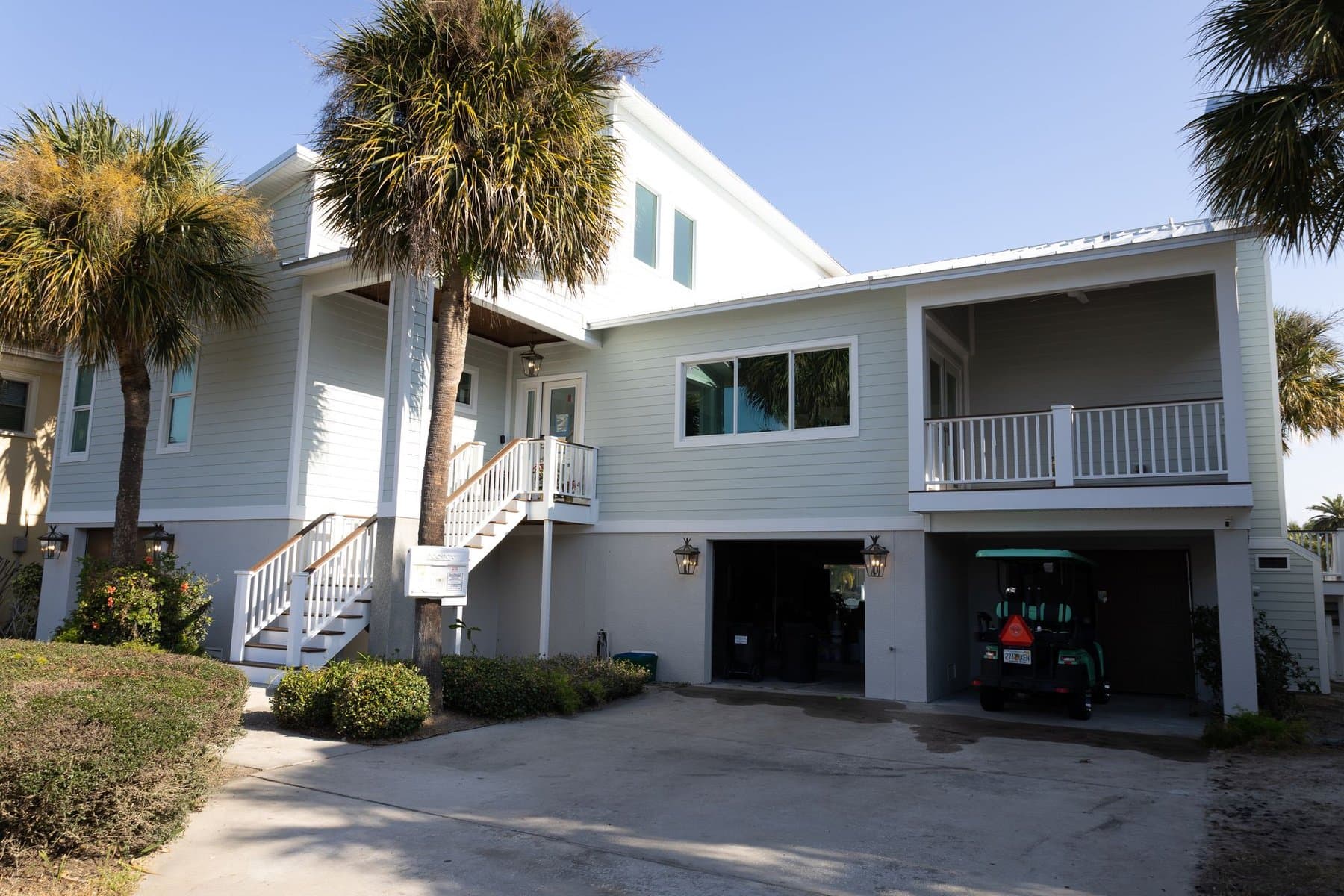
Every My Safe Florida Home (MSFH) application in Pinellas County routes through a state-authorized wind mitigation inspector who documents seven categories of hurricane-hardening features on the Florida Uniform Mitigation Verification Inspection Form (OIR-B1-1802). That inspector is the one whose report decides which upgrades qualify for MSFH grant funding on your specific house. Almost every question homeowners ask us before their inspection is a decision-side question: can I pick my own inspector, what does it cost, how long does the visit take, how long until the report lands, and what should I have ready when the inspector shows up.
This is the honest walkthrough of those decisions, how MSFH assigns your inspector, the DBPR license classes Florida accepts for wind mitigation work, when you would ever pay for a private inspection instead of using the MSFH-covered one, the typical Pinellas cost range, and the eight things to prepare before the visit so your report comes back clean.
We're Revolution Contractors, a St. Petersburg licensed general contractor (CRC1331628, CGC1522463). We install the hurricane-hardening upgrades the inspector recommends, impact windows, roof-deck attachment, roof-to-wall connectors, secondary water resistance, gable-end bracing, hurricane-rated garage doors. We do not perform the wind mitigation inspection itself. That is a separate state-authorized inspector's role, and Florida rules keep those roles separated. What follows is what we walk Pinellas homeowners through when they call us confused about the inspector side of the MSFH process, before we ever discuss scope on the installation side.
On This Page
- What a wind mitigation inspector actually does for MSFH
- How MSFH assigns your inspector (and whether you can pick your own)
- Certifications and DBPR license classes the state accepts
- Cost range: free MSFH-covered vs. paid private inspection
- Timing: how long the visit takes and how long until the report lands
- Eight things to prepare before your inspector arrives
- What the inspection report will cover
- Common inspector findings on Pinellas homes
- What to do with the report after it lands
- FAQ
What a wind mitigation inspector actually does for MSFH {#inspector-role}
A wind mitigation inspector is a state-authorized third party whose job is to document, photograph, and rate seven categories of wind-loss-reduction features on a Florida home. The form they fill out is the Uniform Mitigation Verification Inspection Form (OIR-B1-1802) published by the Florida Office of Insurance Regulation. The same form is used for insurance premium discount purposes by every Florida homeowner insurance carrier, including Citizens Property Insurance.
For MSFH specifically, the inspector's report drives two decisions:
- Which upgrades qualify for grant funding on your specific house, the recommendations section of the report defines the eligible scope MSFH will reimburse against.
- What your current wind mitigation credits look like on the insurance side, the compliance ratings feed directly into your homeowner insurance premium calculation.
The inspector is not a contractor. The inspector does not sell you upgrades, recommend a specific installation company, or perform any construction work themselves. Florida Administrative Code Rule 69J-7 keeps the inspection role separate from the installation role to prevent conflicts of interest.
How MSFH assigns your inspector (and whether you can pick your own) {#inspector-assignment}
When your MSFH application is approved and your Inspection Group opens, the program assigns you a state-authorized wind mitigation inspector from the roster contracted with the MSFH program administrator. You receive an email notification confirming your group placement, and the inspector's office contacts you to schedule.
Two questions come up constantly on the assignment side.
Can I pick my own inspector for MSFH?
For the MSFH-covered inspection path (the free one), no. The program assigns the inspector from its contracted roster. You do not select from a menu.
Can I use a private inspector I already know?
Yes, but not as a substitute for the MSFH-covered inspection. If you have already paid for a private wind mitigation inspection recently (for example, to secure an insurance premium discount), you may be able to submit that report to MSFH if it meets program requirements. The report must be on the current version of the OIR-B1-1802 form, must be signed by a Florida-authorized wind mitigation inspector, and must have been performed within the acceptance window the current cycle allows. Confirm current-cycle acceptance rules for pre-existing reports at mysafeflhome.com before assuming, this is a rule that has shifted cycle to cycle.
What if my MSFH-assigned inspector is not available in a reasonable window?
If the assigned inspector's schedule pushes past your Inspection Group deadline, contact the MSFH portal support line before the deadline passes and request either an inspector reassignment or a scheduling extension. Do not simply wait, a missed inspection scheduling deadline without notice can close your file. See our MSFH deadlines and calendar walkthrough for the full four-deadline framework.
Certifications and DBPR license classes the state accepts {#inspector-certifications}
Florida law requires that a wind mitigation inspection for insurance discount and MSFH purposes be performed by a person holding one of the following credentials, per the OIR-B1-1802 form's own attestation block. As of the current program rules, an authorized inspector must be at least one of:
- A Florida-licensed general contractor (DBPR Class A/B General Contractor)
- A Florida-licensed building contractor (DBPR Class B Building Contractor)
- A Florida-licensed residential contractor (DBPR Class C Residential Contractor)
- A Florida-licensed professional engineer (P.E.)
- A Florida-licensed professional architect (R.A.)
- A Florida-licensed home inspector (Chapter 468 Part XV)
- A building code inspector or plans examiner certified under Chapter 468 Part XII
- A person holding a specialized wind mitigation inspection credential approved by the Department of Business and Professional Regulation
For MSFH-covered inspections, the program's contracted roster is already prescreened against these requirements. For a private inspection you might submit in place of the MSFH-covered one, verify the inspector's license status directly at the Florida DBPR portal before hiring.
Two things Pinellas homeowners often ask about that are NOT accepted on their own as wind mitigation inspection credentials:
- A general home inspection performed as part of a real estate transaction, unless the inspector is separately credentialed under one of the classes above AND filled out the OIR-B1-1802 form correctly.
- A roofing contractor's site visit, a roofing license (CCC) does not qualify a person to sign the OIR-B1-1802 form on its own.
If in doubt, look at the credential block on the last page of the completed form. If it is not filled in with a Florida license number in one of the accepted classes, the report is not usable for MSFH.
Cost range: free MSFH-covered vs. paid private inspection {#cost-range}
The cost of a wind mitigation inspection depends entirely on which path you use.
Path 1: MSFH-covered inspection (free to eligible applicants)
When your MSFH application is accepted and your Inspection Group opens, the program covers the cost of the wind mitigation inspection. You pay nothing out of pocket for the visit or the report. This is one of the core benefits of MSFH participation and is available regardless of income tier, the free inspection is available even to applicants who do not qualify for the low-income matching-grant tier.
Path 2: Paid private inspection (outside MSFH or before applying)
If you want a wind mitigation inspection before applying to MSFH, for insurance premium discount purposes, for a real estate transaction, or for advance planning, you pay a private licensed inspector directly. Fees in Florida markets typically run $75 to $200 for a standard single-family home inspection, with variation based on:
- Home size and complexity. Larger homes, homes with complex roof geometry, and homes with limited attic access take longer to document and cost more.
- Location. Barrier-island homes and homes with unusual site access sometimes carry a modest travel surcharge.
- Report turnaround urgency. A rush report (48-hour turnaround) may cost more than a standard 5-to-10-business-day report.
These figures reflect the typical range we see quoted to Pinellas homeowners; individual inspectors publish their own fee schedules. Get a written quote before scheduling, and confirm the inspector's Florida license class before paying.
When would a Pinellas homeowner pay for a private inspection instead of using the MSFH-covered one?
Two scenarios come up regularly.
- You want an insurance premium discount BEFORE going through the full MSFH cycle. The insurance credit alone often runs several hundred to a couple thousand dollars per year on a Pinellas homeowners policy. Paying for a private inspection now and applying the discount to your next renewal can save you money even if your MSFH cycle is still months out.
- You have a real-estate-transaction timeline that will not wait for MSFH scheduling. If you are closing on a purchase or refinance and need the wind mitigation credit in the underwriting file, MSFH's queue-based scheduling will not compress to fit your closing date. Pay for a private inspection to move the transaction, then still apply to MSFH separately for the grant side.
If neither scenario applies, the MSFH-covered inspection is the more cost-effective path.
Timing: how long the visit takes and how long until the report lands {#timing}
Two separate timing questions.
How long is the inspector actually on site?
For a typical Pinellas single-family home, the inspector is on site 45 to 90 minutes. Larger homes, tile roofs, complex roof geometry, and homes with limited or difficult attic access can push the visit longer. Barrier-island homes with unusual site access can also run longer. The full day-of walkthrough is covered in our MSFH inspection process breakdown.
How long from the visit until the finalized report lands in the MSFH portal?
Typically two to four weeks. The inspector uploads photos and the completed OIR-B1-1802 form to the MSFH program administrator, a reviewer confirms the submission is complete, and the finalized report posts to your MSFH portal with an email notification. This turnaround has occasionally stretched during peak-season demand.
Total elapsed time from Inspection Group opening to a usable report in hand: usually four to ten weeks, depending on scheduling season and administrator review volume. Plan the rest of your MSFH cycle backward from that report date.
Eight things to prepare before your inspector arrives {#prepare-checklist}
The single most common reason a Pinellas wind mitigation inspection gets delayed or produces an incomplete report is a preparation gap the homeowner could have closed in an afternoon.
- Attic access unlocked and clear. Most Pinellas single-family homes have a hatch in a hallway ceiling, a bedroom closet, or the garage. If yours is painted shut, blocked by stored boxes, or sealed by insulation batts, clear it before inspection day. Attic photos of roof deck sheathing and roof-to-wall connectors are non-negotiable for the report; no attic access means the inspector has to guess or classify at the lowest rating.
- Roof access considered. In most cases the inspector documents the roof from the ground or from the attic without walking the roof. If your home has a complex or tile roof and the inspector needs to walk it, some inspectors carry ladders; others request access to a homeowner's ladder. Ask when scheduling.
- Homeowner insurance declarations page. The current declarations page (with named-insured, policy number, and effective dates) confirms the home is insured and lists whatever wind mitigation credits your current carrier has already applied, useful cross-reference for the inspector.
- Recent roof paperwork if you have it. Permit closeout, contractor's Notice of Acceptance (NOA) sheets, and Florida Product Approval numbers for the roof covering all speed documentation. Not required, but they help the inspector classify roof deck attachment and secondary water resistance faster.
- Window and door product data if impact-rated. If your windows or exterior doors are impact-rated, the manufacturer's label (visible on the glazing edge or on a door sticker) or a Florida Product Approval sheet documents the impact rating. Have this ready, otherwise the inspector may rate the openings as unprotected.
- Garage door product information. Same principle. If your garage door is hurricane-rated (wind-borne debris certification), the manufacturer's data plate or a Florida Product Approval number documents it.
- Any storage in the garage moved for door inspection. The inspector documents the garage door track, bracing, and rating. If the door and the interior of the garage are blocked, this section of the report can come back incomplete.
- Contact information updated in the MSFH portal. The inspector's office schedules by phone and email. Make sure your MSFH portal contact info matches the number and inbox you actually check daily.
If you cannot be home for the visit, most Pinellas inspectors will complete the job with attic access unlocked, a garage code provided, and the homeowner reachable by phone for questions. Confirm this with the inspector's office when scheduling.
What the inspection report will cover {#report-coverage}
The finalized report documents seven categories of wind mitigation features, keyed to the OIR-B1-1802 form. Each category directly affects both your MSFH-eligible upgrade recommendations and your insurance premium credit.
- Building code compliance. When was the home permitted and to what version of the Florida Building Code. Pinellas homes permitted before March 1, 2002 fall into the pre-Florida-Building-Code category. MSFH grant targets homes permitted before January 1, 2008.
- Roof covering. Shingle, tile, or metal. Installation date and compliance with the 2001-and-later spec, if applicable.
- Roof deck attachment. Sheathing type (usually 15/32-inch plywood or 7/16-inch OSB on Pinellas homes) and nail size and spacing. Documented from the attic. Rated A, B, C, or D, the classification drives whether roof deck re-nailing shows up as a recommendation.
- Roof-to-wall connection. How the rafters attach to the walls. Toe-nails (weakest, common in pre-1980 Pinellas ranch homes), clips, single wraps, or double wraps of hurricane straps.
- Roof geometry. Hip roofs qualify for the strongest wind mitigation credit. Gable roofs do not. Complex roofs (mixed) get pro-rated based on the percentage of hip perimeter.
- Secondary water resistance (SWR). Whether a sealed roof deck layer exists under the shingles.
- Opening protection. Windows, doors, garage doors, and skylights, rated as impact-rated, code-compliant shutters, non-compliant shutters, or unprotected. Often the section that drives the largest MSFH grant allocations for Pinellas homes.
For a full walkthrough of what each form section means on inspection day, see the MSFH inspection process breakdown.
Common inspector findings on Pinellas homes {#common-findings}
Pinellas housing stock varies significantly by neighborhood, and the inspector's findings tend to cluster by construction era.
- Pre-1980 Pinellas ranch homes commonly rate toe-nail roof-to-wall connections and non-FBC roof covering, both trigger MSFH-eligible upgrade recommendations, and both are among the highest-value grant items when combined with impact-window installation.
- 1980s to early-2000s Pinellas homes typically rate clip roof-to-wall connections, non-FBC roof covering (if original), and mixed opening protection. Impact-window upgrades often drive the largest scope on these homes.
- Post-2002 Pinellas homes permitted to the Florida Building Code often rate single or double wrap connectors, FBC-compliant roof covering, and partial impact-rated openings. Grant-eligible recommendations tend to be narrower, commonly SWR installation and completion of full opening protection.
- [Old Northeast](/service-areas/st-petersburg/old-northeast) historic homes often have original wood casement or double-hung windows flagged as unprotected openings; opening protection upgrades can require Certificate of Appropriateness review through the St. Petersburg Community Planning and Preservation Commission, which adds a permit-timing consideration on top of the standard MSFH cycle.
- Barrier-island homes ([Tierra Verde](/service-areas/st-petersburg/tierra-verde), St. Pete Beach, Treasure Island, Pass-a-Grille) carry the wind-borne debris region rule set, openings must meet 150 mph coastal spec, not the 130 mph inland spec. Older aluminum shutters and non-coastal impact windows commonly flag as non-compliant even if they look serviceable.
Common in all eras: if the attic is inaccessible or has heavy blown-in insulation over the framing, the report may rate roof deck attachment at the lowest classification and defer to the recommendation for verification during any future re-roof. That is not a failure, it is a documentation limit, but it is worth clearing attic access to avoid the downgrade.
What to do with the report after it lands {#after-report}
Two independent uses.
MSFH grant path. The recommendations section defines the upgrade scope MSFH will reimburse against, up to the current program cap. Once the report is in the MSFH portal, you upload a matching contractor estimate, scope must match the inspector's recommendations exactly, off-list items get rejected at reimbursement review. See our MSFH-approved contractor selection guide for the 60-second Florida DBPR license verification workflow.
Insurance premium credit path. Send a copy of the same OIR-B1-1802 report to your homeowner insurance carrier (Citizens Property Insurance or a private carrier). Every Florida carrier uses the same form for wind mitigation credit calculation. Premium savings on a Pinellas homeowners policy commonly run several hundred to a couple thousand dollars per year depending on the specific features documented, and this credit applies whether or not you use MSFH grant money to upgrade further.
Both uses run in parallel. There is no requirement to pick one, the same report drives both outcomes.
Frequently asked questions {#faq}
Do I have to pay for the MSFH wind mitigation inspection?
No. When your MSFH application is accepted and your Inspection Group opens, the program covers the inspection. You pay nothing out of pocket. The free inspection is available regardless of income tier, not just to low-income matching-grant applicants.
How long does the inspector spend at my house?
Typically 45 to 90 minutes for a Pinellas single-family home. Larger, tile-roofed, complex-roof, or difficult-attic-access homes can push the visit longer.
How long after the visit until I get the report?
Typically two to four weeks. The inspector uploads photos and the completed OIR-B1-1802 form to the MSFH program administrator, a reviewer confirms the submission, and the finalized report posts to your MSFH portal with an email notification.
Can I pick my own MSFH inspector?
For the MSFH-covered free inspection, no, the program assigns your inspector from its contracted roster. If you have already paid for a recent private wind mitigation inspection on the current OIR-B1-1802 form, you may be able to submit that report in place of the assigned one; confirm current-cycle acceptance rules at mysafeflhome.com.
What does a private wind mitigation inspection cost in Florida?
Fees typically run $75 to $200 for a standard single-family home, with variation based on home size, roof complexity, location, and report turnaround urgency. Get a written quote from the private inspector before scheduling, and verify their Florida license class before paying.
What certifications does an MSFH inspector need?
The OIR-B1-1802 form requires the inspector to hold at least one of: Florida general contractor, Florida building contractor, Florida residential contractor, Florida professional engineer, Florida professional architect, Florida-licensed home inspector, or a Chapter 468 Part XII building code inspector or plans examiner certification. Verify credentials at the Florida DBPR portal.
Do I need to be home for the inspection?
Not required if attic access is unlocked, a garage code is provided, and you are reachable by phone. Some Pinellas inspectors prefer the homeowner present for questions; most do not require it.
Will the inspection damage anything?
No. The inspector walks the exterior, enters the attic through your existing hatch, and takes photographs. No sample holes, no removed trim, no invasive work.
Can I use the same wind mitigation report for both MSFH and my insurance company?
Yes. The OIR-B1-1802 form is the standard both MSFH and every Florida homeowner insurance carrier accept. One inspection, two uses, grant recommendation scope on the MSFH side and premium credit calculation on the insurance side.
How long is the wind mitigation report valid?
For insurance premium credit purposes, generally five years. For MSFH grant purposes, use the report while it is current, if your home changes materially (roof replacement, window swap, addition) before the grant scope is executed, you may need a re-inspection to update the file. Confirm the current cycle's report-validity window at mysafeflhome.com.
Get a licensed Pinellas contractor lined up before your report lands
If you are in the MSFH queue and want a licensed local contractor ready to price the recommended upgrades the moment your report posts, call Revolution Contractors at (727) 888-6161 or visit our flood-zone and coastal projects service page. We install the hurricane-hardening scope MSFH funds, impact windows, roof-deck attachment, roof-to-wall connectors, secondary water resistance, gable-end bracing, hurricane-rated garage doors. We do not perform the wind mitigation inspection itself; that stays with the state-authorized inspector. What we do is walk the house, look at the same seven OIR-B1-1802 categories your inspector will document, and give you an honest range on what upgrade combinations tend to trigger on similar Pinellas homes so the estimate-upload step moves fast when the report lands.
Licenses: CRC1331628 (Certified Residential Contractor) and CGC1522463 (Certified General Contractor).
Verify current MSFH cycle status, inspector-assignment rules, free-inspection eligibility, and any private-report acceptance rules at mysafeflhome.com before locking in your path. Program parameters change with legislative sessions and administrative rule updates, the framing in this piece reflects the current-cycle rules as of the last-reviewed date in the frontmatter. This page is scheduled for annual October re-verification before hurricane-prep-season search demand peaks.
Call (727) 888-6161 to walk your Pinellas home before your inspection group opens.
Ready to Start Your Project?
Get a free estimate within 24 hours