Home Remodeling in Old Northeast, St. Petersburg
Your 1920s bungalow on a brick street deserves a contractor who knows what's behind those plaster walls — cast iron drain lines, 60-amp panels, and crown molding profiles that haven't been manufactured in decades.
Old Northeast — St. Pete's Oldest Residential Neighborhood
Old Northeast was St. Petersburg's first planned residential neighborhood, platted in 1911 and built out through the 1920s and 1930s. The boundaries run from 4th Street N to Coffee Pot Bayou, and from 1st Avenue N to 30th Avenue NE — roughly 2,400 parcels on a grid of brick streets shaded by century-old canopy trees.
The architectural character splits into three dominant styles: Craftsman Bungalow (the most common), Mediterranean Revival (stucco exteriors, red tile roofs, arched windows), and Colonial Revival (two-story symmetrical facades). Each style carries its own renovation vocabulary — and its own set of hidden conditions.
Within Old Northeast, Granada Terrace is the densest concentration of Mediterranean Revival architecture in Florida — a one-block area at 16th Avenue and Granada Way that contains some of the most intact 1920s streetscapes in the state. The rest of the neighborhood sits on the National Register of Historic Places as a recognized historic district, though most residential properties carry no local design review requirements.
Median home prices in Old Northeast run $600,000 to $900,000, with waterfront properties along Coffee Pot Bayou regularly exceeding $1.5 million. The combination of historic character, mature canopy, walkability to downtown, and proximity to Tampa Bay makes it one of the most sought-after residential neighborhoods in Florida — and one of the most demanding to renovate correctly.

Services We Offer in Old Northeast
Kitchen Remodel
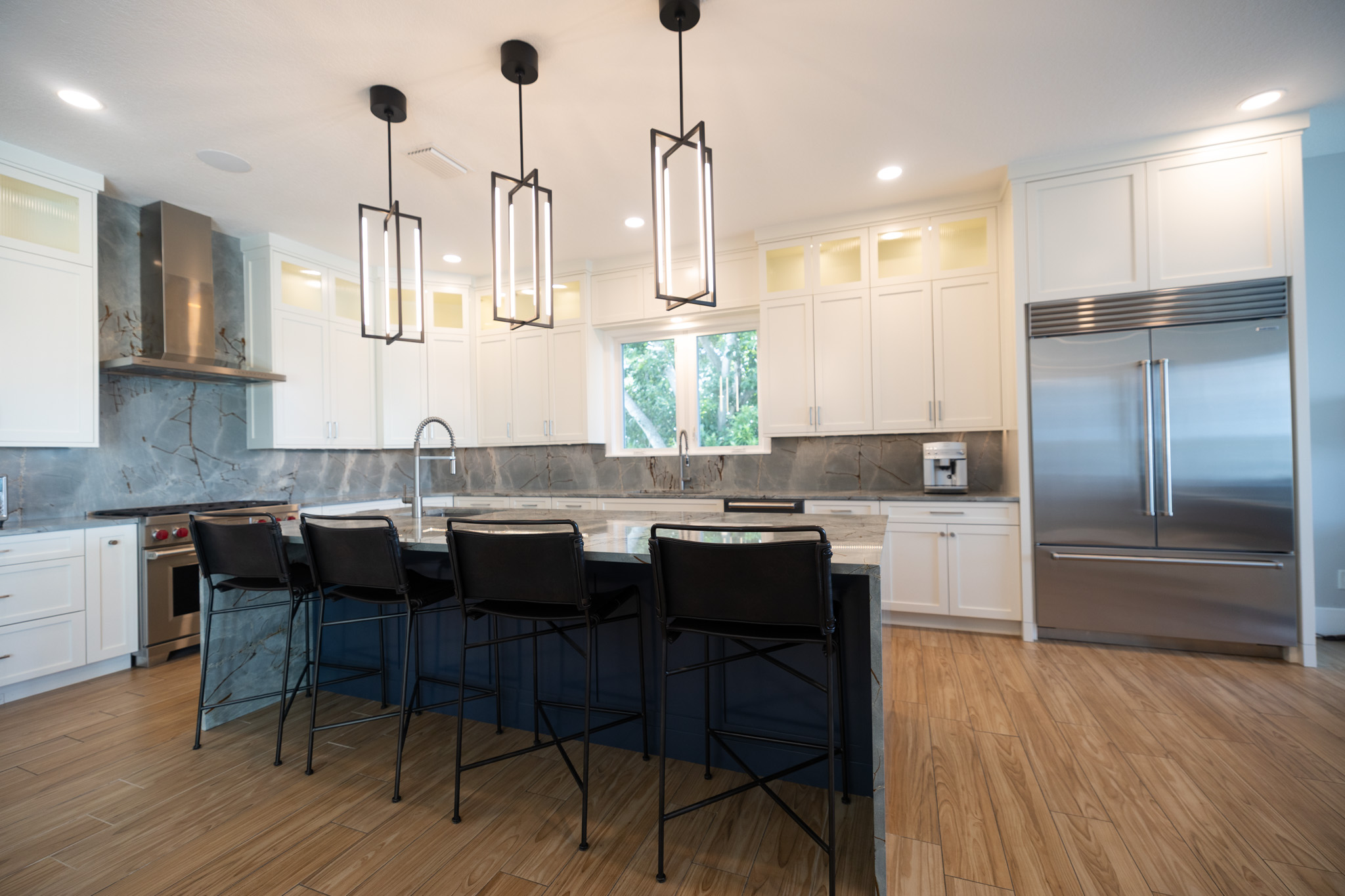
The most requested project in Old Northeast is converting a 1920s galley kitchen into an open-plan layout. That conversion almost always involves removing a load-bearing wall between the kitchen and dining room — a structural engineering problem, not just a demo question. We engage a licensed structural engineer to calculate the beam specification (typically steel or LVL) before a single wall comes down.
Below the floor, cast iron drain lines from the 1920s are frequently in failure mode — cracked, offset at joints, or collapsed in sections. A kitchen remodel is the right time to replace them under the slab or through the pier-and-beam crawlspace, depending on your home's foundation type. Bundling that scope into the kitchen project rather than doing it as a standalone plumbing job saves significant disruption.
Learn about kitchen remodeling →Bathroom Remodel
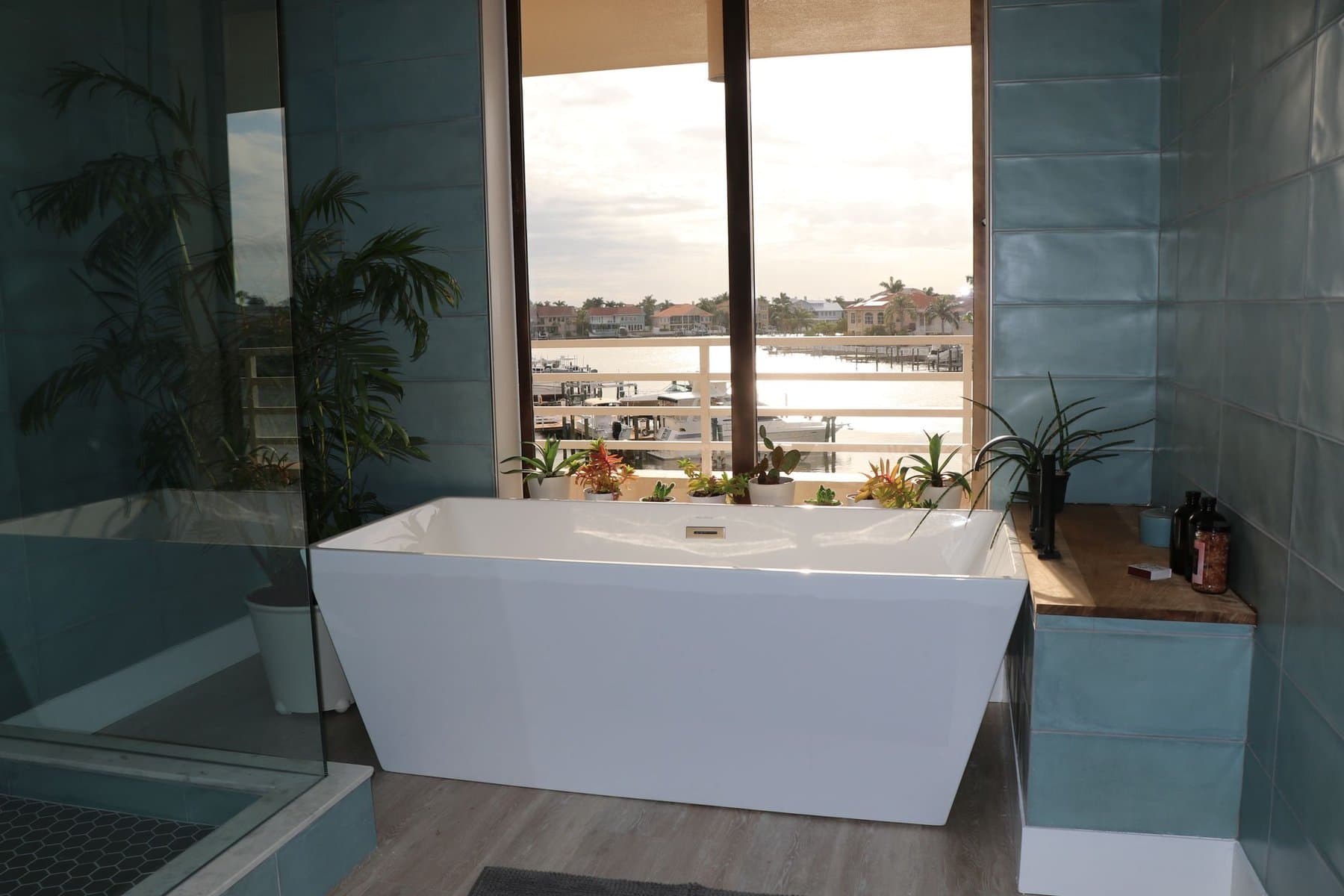
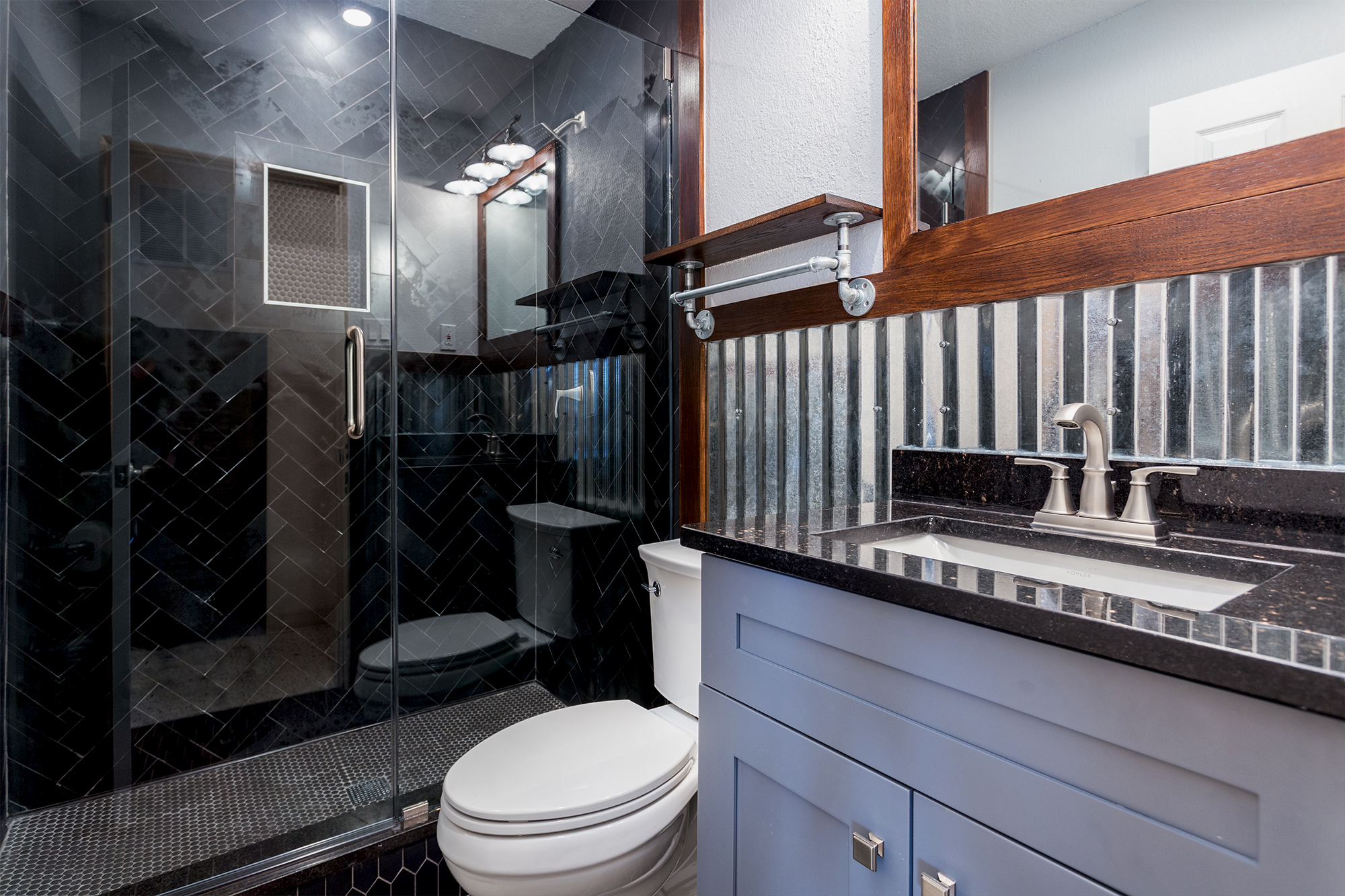
Old Northeast bathrooms are infrastructure projects as much as they are finish projects. The cast iron drain stack that serves the upstairs bath in a two-story Colonial Revival is now 80 to 100 years old. The plumbing supply lines are likely galvanized steel. The subfloor under the original hex tile is often deteriorated from decades of slow moisture infiltration at the tub or shower pan.
In pier-and-beam homes — the majority of Old Northeast's Craftsman Bungalows — accessing and replacing cast iron drain lines under the floor is straightforward: we work from the crawlspace. In slab-on-grade homes, it requires saw-cutting the slab, replacing the pipe, and patching. Both situations are well within our scope, and in both cases, a bathroom remodel is the natural time to address them.
Learn about bathroom remodeling →Home Additions
Old Northeast lots are 50×127 feet as a standard platted dimension, with many corner lots larger. The City of St. Petersburg's NE-1 and NE-2 zoning districts cap Floor Area Ratio at 0.5 on most residential parcels, meaning a 6,350-square-foot lot supports up to 3,175 square feet of living space. Most original 1920s homes sit at 1,400 to 2,200 square feet, leaving meaningful addition capacity.
Rear additions are the most common configuration — a primary suite addition or family room expansion behind the main structure. For properties in Granada Terrace or other locally designated areas, exterior additions visible from the street require a Certificate of Appropriateness from the City's Historic Preservation Board before permits. We manage that process as part of our design-build scope.
Learn about home additions →Old Northeast's 3 Real Construction Challenges
1. Cast Iron Plumbing at End of Life
Every Old Northeast home built before 1960 has cast iron drain lines. Cast iron has a functional lifespan of 50 to 75 years under normal conditions — and these pipes are 80 to 100 years old. The failure modes are predictable: corrosion on the interior bore (reducing flow capacity and eventually causing backups), joint offsets from soil movement, and in some cases complete section collapse.
In pier-and-beam homes, the drain lines run under the floor in the accessible crawlspace — replacement is relatively straightforward. In the minority of Old Northeast homes that have slab foundations (mostly later construction, 1940s–1950s), the cast iron runs under the concrete, and replacement requires saw-cutting the slab. Either way, a kitchen or bathroom remodel is the right time to address it: you're already opening the floors and walls, the plumber is already on site, and doing it as part of a larger project costs significantly less than doing it as a standalone emergency after a backup event.
Budget $10,000 to $30,000 for cast iron replacement depending on scope: a bathroom drain line replacement on a pier-and-beam home is at the lower end; full drain system replacement through a slab-foundation home is at the higher end.
2. 60-Amp Electrical Panels and Outdated Wiring
Original 1920s and 1930s homes in Old Northeast were wired for 60 amps — sufficient for incandescent lighting, a radio, and a few appliances in a pre-air-conditioning world. Modern kitchens alone require 150 to 200 amps. A kitchen remodel with modern appliances, under-cabinet lighting, dishwasher, refrigerator, and range will trip the existing service before the first inspection.
Early wiring in these homes is knob-and-tube — a system that runs unsheathed conductors through ceramic knobs and tubes in the framing. Knob-and-tube is not inherently dangerous if it hasn't been modified, but most 100-year-old systems have been spliced, extended, or overloaded at some point. Most insurance carriers in Florida will not write a policy on a home with active knob-and-tube wiring — which means panel upgrade and rewiring of the affected circuits is not optional for any homeowner planning to sell or maintain coverage.
A kitchen or bathroom remodel is the practical time to upgrade the panel and rewire the affected areas. We coordinate with our licensed electrical sub to identify which circuits need replacement, access the knob-and-tube runs through strategic access points in walls and ceilings, and bring the affected areas into compliance while minimizing additional drywall damage.
3. Load-Bearing Walls and Galley Kitchen Conversions
The wall between a 1920s galley kitchen and the dining room is almost always load-bearing — it carries the floor framing above, and in two-story homes, the roof load as well. Removing it to create an open-plan layout requires a steel beam or LVL (Laminated Veneer Lumber) beam engineered to carry that load, new posts or columns transferring the load to the foundation, and a permit with structural drawings stamped by a licensed engineer.
Mediterranean Revival homes add another variable: exterior walls are frequently masonry construction — concrete block or hollow clay tile — rather than wood frame. Cutting openings in masonry walls requires different tools, different structural solutions (steel lintel rather than wood header), and more careful sequencing to maintain structural integrity during the work.
Budget $8,000 to $20,000 for the structural component of a load-bearing wall removal, depending on the beam specification, foundation conditions, and whether the wall is wood frame or masonry. That cost is on top of the kitchen remodel budget — it's a separate scope item.


Permitting in Old Northeast
Old Northeast sits entirely within the City of St. Petersburg, so all residential permits go through the City's Development Services department. The standard residential permit timeline is 2 to 5 weeks from submission to issuance for projects without unusual complexity.
The neighborhood is on the National Register of Historic Places as a recognized historic district — but for most homeowners, that's honorary designation. National Register listing does not trigger design review or require a Certificate of Appropriateness (COA) for privately funded residential projects. You can renovate your kitchen, bathrooms, electrical, plumbing, and HVAC without any historic review process, even in the National Register district.
The COA process applies only to locally designated properties:
- •Granada Terrace Historic District — the most significant locally designated area in Old Northeast
- •200 block of 10th Ave NE (one-block historic district)
- •700 block of 18th Ave NE (one-block historic district)
- •Welch's Mediterranean Row, 100 block of 19th Ave NE (one-block historic district)
- •10 individual landmark properties scattered throughout the neighborhood
Even for locally designated properties, the COA requirement only applies to exterior changes visible from the public right-of-way. Interior renovations — kitchens, bathrooms, flooring, all mechanical systems — do not require a COA in any Old Northeast property. The Historic Preservation Board's jurisdiction is the exterior character of the building, not what you do inside.
When a COA is required, the City's Historic Preservation Board meets monthly. The application process takes 2 to 4 months from submission to approval for most straightforward exterior projects. The Board approves approximately 97% of applications that come with professionally prepared drawings and material specifications consistent with the historic character of the district. We prepare those applications as part of our design-build scope for locally designated properties.
Standard Permit Timeline
2–5 weeks
City of St. Petersburg Development Services, interior or non-COA projects
COA Buffer (if required)
2–4 months
Locally designated properties with exterior changes visible from the street
Ready to talk about your Old Northeast project?
Call 727-888-6161. We'll walk through your home's specific challenges and give you a realistic scope and budget.
What Remodeling Costs in Old Northeast
Old Northeast carries a 20 to 40 percent cost premium over standard St. Petersburg renovation costs. That premium is not arbitrary — it reflects three specific factors:
Custom Millwork and Material Matching
Crown molding profiles, window casings, door surrounds, and built-in cabinetry in 1920s homes follow profiles that haven't been manufactured as stock items in decades. Matching them requires custom milling — which our in-house carpenters do, but which adds time and cost over standard stock trim installation.
Infrastructure Replacement Rate
In modern construction, opening walls rarely reveals conditions that significantly change scope. In a 1920s Old Northeast home, the discovery rate for cast iron plumbing failure, knob-and-tube wiring, subfloor deterioration, and termite damage is substantially higher. Our T&M pricing model means you pay for what's actually there — but what's actually there in these homes costs more to address than in newer construction.
Structural Complexity
Load-bearing wall removals, masonry wall modifications, and pier-and-beam foundation considerations all require engineering involvement that standard ranch-home renovations don't. That adds cost but also adds value — it's the work that lets you open up a 1920s galley kitchen without compromising the structure.
General Cost Ranges
$75,000–$150,000+
$35,000–$75,000+
20–40% above standard
$8,000–$20,000
Call 727-888-6161 for a project-specific estimate.
For detailed cost breakdowns, see our kitchen remodel cost guide and our bathroom remodel cost guide, both written for St. Petersburg homeowners.
WHY OLD NORTHEAST HOMEOWNERS CHOOSE REVOLUTION
What sets us apart for historic home renovation in Old Northeast.
20+ W-2 CARPENTERS
In-house finish carpenters who can match 1920s crown molding profiles, repair original wood sash windows, and handle the custom details that define Old Northeast homes.
OPEN-BOOK T&M PRICING
Historic homes hide scope. When you open a century-old wall and find termite damage or active moisture intrusion, it shows up in your weekly budget report that same week. No renegotiation, no padded contingency.
HISTORIC DISTRICT EXPERIENCE
We’ve navigated the COA process in Granada Terrace, handled dual-designation properties, and know the difference between National Register honorary status and local design review requirements.
DESIGN-BUILD UNDER ONE ROOF
Design, engineering, permits, and construction — one team. Critical for Old Northeast projects where structural changes require coordination between architect, engineer, and builder.
Our Process for Old Northeast Projects
From First Call to Final Walkthrough
Assessment & Pre-Construction Research
We verify your property’s historic designation status — National Register honorary or locally designated — and check flood zone classification (Zone X vs AE). For Granada Terrace and other locally designated properties, we assess whether exterior work requires a Certificate of Appropriateness before permits.
Design & Historic Detailing
Design and construction under one roof. Our team designs around your home’s architectural character — matching existing trim profiles, specifying historically appropriate materials, and planning structural solutions for load-bearing wall modifications. For COA-required properties, we prepare the application during this phase.
Permitting (City of St. Petersburg)
All Old Northeast permits go through the City of St. Petersburg Development Services department. Standard residential permits run 2 to 5 weeks. Properties requiring a Certificate of Appropriateness add 2 to 4 months — we build this into your project timeline from day one.
Construction
In-house crew. Weekly budget reports. Open invoicing. When we open century-old walls and discover conditions — cast iron pipe replacement, knob-and-tube wiring, structural concerns — the scope change shows up in your next report. No surprises.
"We had multiple contractors tell us that our 100-year-old bungalow in Old Southeast should be torn down instead of remodeled. Revolution worked with us on an extensive plan to rebuild structural components and remodel the entire house."St. Petersburg Homeowner
Old Northeast Remodeling FAQs
What makes remodeling in Old Northeast different from other parts of St. Pete?
The housing stock. Most homes here were built between the 1920s and 1940s in three architectural styles — Craftsman Bungalow, Mediterranean Revival, and Colonial Revival — each with specific renovation challenges. You’re dealing with cast iron plumbing that’s 80 to 100 years past installation, 60-amp electrical panels designed for a pre-air-conditioning era, load-bearing walls that don’t match modern lumber dimensions, and finish carpentry details (crown molding, window casings, built-in cabinetry) that require custom reproduction. That combination of infrastructure age and architectural character is what drives the 20-to-40-percent cost premium over standard St. Pete renovations.
Do I need a Certificate of Appropriateness to remodel my Old Northeast home?
Probably not. The entire neighborhood is on the National Register of Historic Places, but for residential properties that’s honorary — no design review required. The COA process only applies to locally designated properties: Granada Terrace, three one-block districts (200 block of 10th Ave NE, 700 block of 18th Ave NE, and Welch’s Mediterranean Row on the 100 block of 19th Ave NE), and 10 individual landmarks. Even in those areas, interior work — kitchens, bathrooms, floors, all mechanical systems — does not require a COA. The rules govern exterior changes visible from the street.
How much does a remodel cost in Old Northeast?
For a typical 1920s home in the 1,400-to-3,000-square-foot range: kitchen remodels run $75,000 to $150,000-plus (higher end for galley-to-open conversions with structural and infrastructure work), and bathroom remodels run $35,000 to $75,000-plus (especially when bundling cast iron plumbing replacement). The historic renovation premium of 20 to 40 percent reflects custom millwork, material matching, and the higher rate of hidden conditions behind century-old walls.
How long does a typical Old Northeast renovation take?
For a kitchen or bathroom remodel in a 1920s-1940s home, plan for 3 to 6 months from permit to completion. The variable is what you find behind the walls — cast iron plumbing replacement, electrical panel upgrades, and structural work for load-bearing wall removal all add scope. If your property is in Granada Terrace or another locally designated area and involves exterior changes, add 2 to 4 months on the front end for the Certificate of Appropriateness process. Interior-only projects in the rest of Old Northeast follow standard City of St. Pete permitting at 2 to 5 weeks.
Is Old Northeast in a flood zone?
It depends on which block you’re on. The western portion of Old Northeast — closer to 4th Street N, at roughly 40 feet elevation — sits in Zone X, which is minimal flood risk. The eastern waterfront along Tampa Bay and Coffee Pot Bayou falls in Zone AE, where FEMA’s Substantial Improvement rules apply if your renovation cost exceeds 49 percent of assessed building value. Most Old Northeast homeowners are not in a Special Flood Hazard Area. Waterfront homeowners need to check their specific address at msc.fema.gov or Pinellas County’s flood map service before scoping a project.
Does Revolution handle both the design and permitting for Old Northeast projects?
Yes — design, engineering, permits, and construction all run through one team. That’s especially important in Old Northeast where structural changes (load-bearing wall removal, foundation work) require coordination between architect, structural engineer, and builder. For properties in Granada Terrace or other locally designated areas, we also prepare and submit the Certificate of Appropriateness application. You don’t coordinate with the building department or historic preservation board separately.
Learn More About Remodeling in Old Northeast
Full Guide: Remodeling in Old Northeast
Everything you need to know before starting a project in this neighborhood.
Kitchen Remodel Cost Guide
Detailed cost breakdown for St. Petersburg kitchen remodels.
Bathroom Remodel Cost Guide
Detailed cost breakdown for St. Petersburg bathroom remodels.
All St. Petersburg Neighborhoods
See all St. Petersburg neighborhoods we serve.