The Honest Guide to Remodeling in Old Northeast St. Petersburg

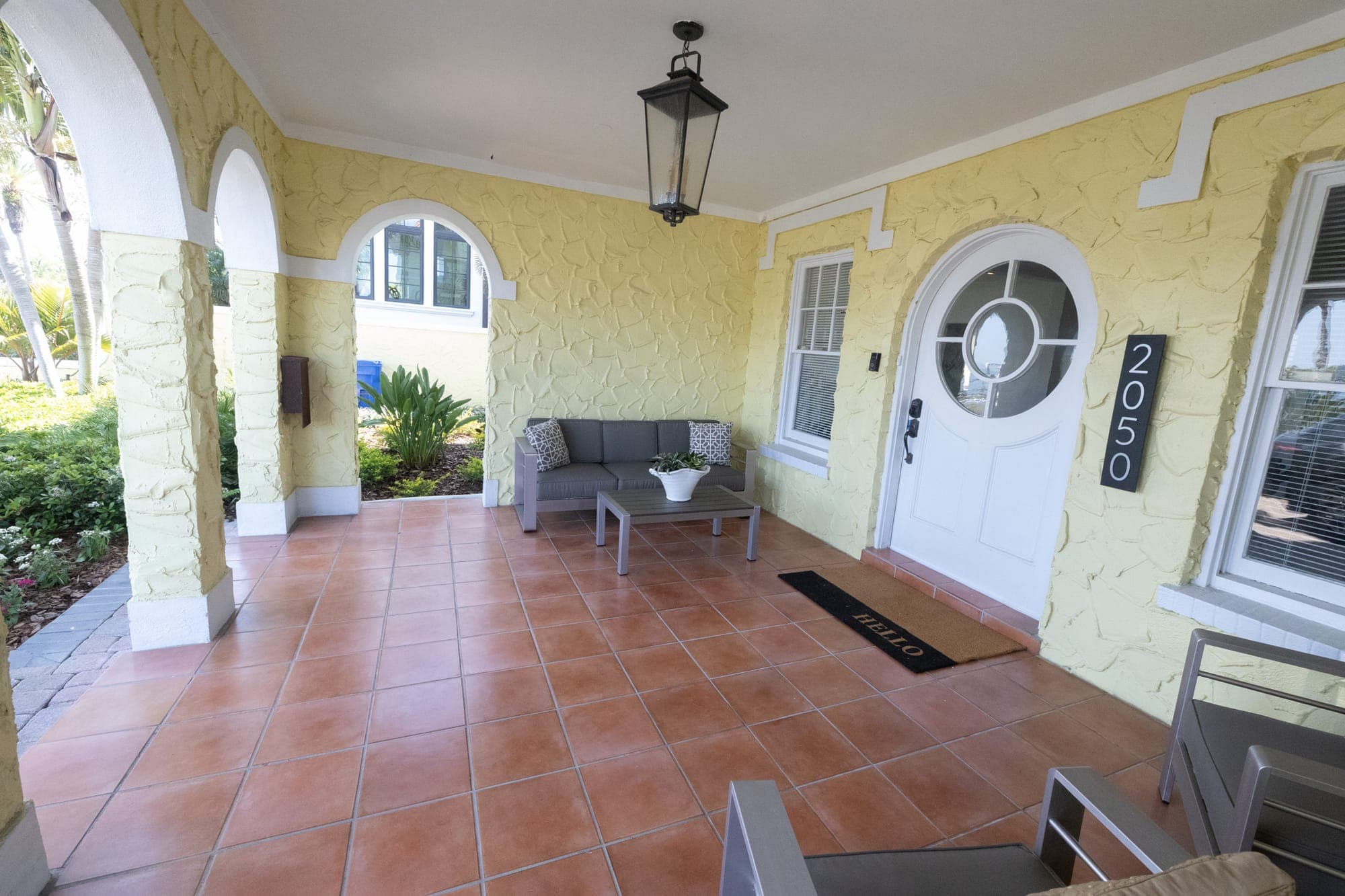
You bought a 1920s bungalow on one of Old Northeast's brick streets. Maybe it's on 9th Avenue NE or across from Crescent Lake Park. Your contractor just mentioned a historic review board, a Certificate of Appropriateness, and potentially two to four months before anyone swings a hammer.
Here's the part most contractors skip: that timeline is specific to Old Northeast's local designation process — not generic “historic work.” The neighborhood's streets, its architectural stock, and its community associations make renovation here different from other old St. Pete neighborhoods. Our COA experience runs across Old Northeast, Old Southeast, Roser Park, Granada Terrace, and Historic Kenwood — dozens of applications since 2016, without an outright rejection. The city isn't trying to block your project. What adds time is the processing, not the decision.
This guide is for Old Northeast homeowners planning a remodel — kitchen, bath, addition, or full gut. (See also: our Old Northeast neighborhood page and our Kenwood renovation guide for Craftsman work outside Old NE.)
What Old Northeast's Housing Stock Means for Your Project
Old Northeast runs roughly 1912 through the 1940s, and three architectural styles dominate the neighborhood. What style your home is determines what your renovation will look like — and which surprises are most likely.
Craftsman Bungalow (1912–1940s)
The most common stock in Old Northeast. The finished character lives in the carpentry: crown molding profiles, original wood floors, built-in cabinetry, window casing details that don't exist in stock lumber anymore.
The practical renovation challenge here is sourcing. Those original window profiles require custom knife cuts at a lumber yard. Repairing original wood sash windows requires skilled tradespeople who do that specific work — and they stay booked. This is a large part of why historic work in Old Northeast runs 20–40% above a comparable non-historic project.
Mediterranean Revival (1920s–1930s)
Smooth stucco, red clay tile roofs, arched openings. These homes hold their value but the stucco is 90-plus years old. Moisture intrusion behind the stucco is the diagnostic issue we see most often in these homes during renovation. Stucco rehabilitation requires proper technique — done wrong on a house this age, you compound the problem rather than fix it. Clay tile matching from that era involves specialty sourcing.
Colonial and Colonial Revival (1920s–1940s)
Less common but present. Column restoration and window symmetry are the focus — replacements need to match the original profile, same sourcing challenge as Craftsman millwork.
Each of St. Pete's pre-1940s neighborhoods has its own restoration character: Historic Kenwood has over 2,000 historic structures, more than half Craftsman bungalows; Roser Park blends Craftsman with Mediterranean Revival above Booker Creek; Old Southeast is defined by Key West bungalow vernacular and hex-block sidewalks; Granada Terrace is the most concentrated Mediterranean Revival pocket. We've worked across all of these — carpentry skills travel, but the period-appropriate detail palette shifts neighborhood to neighborhood.
Old Northeast's COA Process: What You Need to Know
A Certificate of Appropriateness (COA) is the city's review of proposed exterior changes to properties in locally designated historic districts. One thing that trips up Old Northeast homeowners: the neighborhood is listed on the National Register of Historic Places, which for residential properties is primarily honorary — it does not trigger design review on its own. The active COA requirement applies to locally designated properties: Granada Terrace, the recently designated one-block districts, and the 10 individual local landmarks. If you're in one of those areas, you need a COA for exterior changes visible from the street (additions, roofline changes, window replacements, siding, porch modifications). Interior work doesn't require a COA regardless of designation.
Timeline reality: As Jeremy puts it: “That department is really bad at any level of timeliness or accountability, so it very easily adds two to four months, and possibly more if there needs to be any sort of variance or board hearing that accompanies the application.” If your exterior plans are finalized in late spring, your COA application should be moving before that.
For waterfront properties on Coffee Pot Bayou or the Snell Isle bridge approach, the regulatory load can stack three deep: COA review (if locally designated), current Florida Building Code, and FEMA flood-zone rules in AE or VE. We walk through all three tracks during pre-construction. (See our historic renovation service overview.)
The Three Review Tracks
Most homeowners think of COA as one process. It's three, and all apply to locally designated properties (Granada Terrace, the recently designated one-block districts, Welch's Mediterranean Row, and the 10 individual local landmarks):
1. Administrative review (staff-only, 2-3 weeks). Minor in-kind exterior repairs — matching porch board, same-profile railing repair, same-color paint, same-glass window pane. Staff signs off without the Commission.
2. HPC consent agenda (4-6 weeks). Larger but routine — window replacement matching divided-light pattern and muntin profile, roof replacement with matching material, modest rear or side additions not changing the front facade. Permit-grade drawings required.
3. HPC full hearing (8-12 weeks, sometimes 16+). Anything novel or contentious — new construction over a footprint threshold, major front-elevation changes, demolition, setback variances. Budget the holding cost of the property into your project number.
What You're Likely to Find Inside an Old Northeast Home
The conversation every Old Northeast homeowner needs to have before committing to a scope: what's in those walls. A 90-to-125-year-old home carries a specific stack of system-level conditions behind the lath-and-plaster — not possibilities, near-certainties:
- Knob-and-tube wiring. Standard pre-1940s. Many insurance carriers refuse to cover active knob-and-tube or require replacement before issuing a policy. Assume your home hasn't been fully rewired unless it's documented.
- Galvanized supply plumbing. Corrodes from the inside out — low water pressure, discolored water, eventual pinhole leaks. Almost always needs to go in a full renovation. Cast iron drain lines in these same homes are equally deteriorated and best replaced while walls are open.
- Lath-and-plaster walls. Beautiful intact, complex when running new electrical, plumbing, or HVAC. Knowing when to restore plaster vs. when period-appropriate drywall is acceptable takes judgment.
- Lead paint. EPA estimates 87% of homes built before 1940 contain lead paint. Any renovation that disturbs painted surfaces requires EPA RRP compliance — certified contractors, containment, proper disposal.
- Asbestos. Standard building material through much of the 20th century — floor tiles, pipe insulation, roofing, ceiling texture, joint compound. Test before disturbing; if friable, abate.
- Pier-and-beam foundations. Correct for Florida's humidity management, but after a century mortar breaks down and piers settle unevenly. Sticking doors or uneven floors mean foundation assessment belongs in your pre-construction scope.
- Non-standard framing dimensions. A pre-war 2x4 often measures closer to 1.75" than the modern 1.5". Standard modern materials don't always fit standard openings — which means custom work, not stock lumber from the yard.
Our Time & Materials model fits this work particularly well — no padded contingency, you see scope changes the same week we open the wall. (See our cast iron plumbing in older homes guide for the parallel picture on century-old drain lines.)
What HPO Asks For Twice
HPO is consistent. They'll tell you exactly what to fix on the first round, and a clean second submission almost always clears. The most common reasons projects bounce back:
- Window specs that don't match. Vinyl in a wood-frame neighborhood, snap-in muntins instead of true-divided-light, frame width off by 1/4". Staff will pull the cut sheet and check the muntin dimension (5/8" or 7/8" typical). Include the manufacturer cut sheet up front.
- “In-kind” replacement that isn't. Architectural shingle in a 3-tab neighborhood; James Hardie when the existing siding is wood lap. Document why the substitute is the closest available match.
- Front porch work that changes rail height. Modern code requires 36"; many Old NE bungalows have original 32". File for a rail-height variance simultaneously with the COA, supported by existing-condition photos.
- Additions where setback math is off. Old Northeast has narrow lots; re-survey before drawings finalize.
- Drawings without enough detail. Quick floor plans don't survive HPC review. Site plan, four elevations, demo plan, framing plan, window/door schedule with cut sheets — permit-grade.
- Color schemes outside the documented palette. Proposed colors need to be in the City's reference palette or come with a defensible justification.
What Your Old Northeast Renovation Will Actually Cost
Historic renovation in Old Northeast runs 20–40% above comparable non-historic work in St. Pete. The premium concentrates in labor (custom millwork reproduction, wood sash window repair, custom knife cuts to match original profiles), ongoing architect involvement through city inspections and COA compliance, and historically appropriate materials. For a deeper cost-only walkthrough across St. Pete historic neighborhoods, see our St. Pete historic renovation cost guide.
Soft-cost line items. COA filing fees range $50-$300 depending on review track. Architectural drawings sized for HPO submission run $1,500-$4,500 for a renovation, $4,500-$12,000 for a substantial addition — more than non-historic projects because HPO expects higher detail. A boundary survey runs $400-$900; a topographic survey $1,200-$2,500 when triggered. Confirm the current filing-fee schedule with St. Petersburg HPO at submission — fees update periodically.
The tax offset most owners miss. The City offers a 10-year freeze on ad valorem taxes for qualifying historic rehabilitations. For a $1M home in Old Northeast, a decade of frozen taxes is real money. Talk to your accountant and the city's historic preservation office before you start — not after.

Why Contractor Selection Matters in Old Northeast Specifically
Old Northeast has an active neighborhood association and neighbors who have opinions about what goes on a facade — the community context is part of the project in a way it isn't on most St. Pete jobs. We won a Preserve the Burg preservation award for a whole-house remodel in St. Petersburg's historic district — third-party verification of historic renovation quality, not something we put on ourselves. 20+ W-2 carpenters and apprentices on payroll matters for the phase where the neighborhood's character comes back — crown profiles that haven't been manufactured in 60 years, original wood sash window repair, built-in bookcase replication. Not sub-carpenters working around their other commitments.
If you're interviewing other contractors for an Old Northeast renovation, here are four questions that separate those who understand this work from those who don't:
- Do you have carpenters on payroll, or do you sub out your finish work? This tells you immediately whether you're talking to a builder or a coordinator.
- Have you submitted a COA application to the City of St. Petersburg Historic Preservation Office? If they haven't navigated the process themselves, you're going to be their first experiment with it.
- How do you handle scope changes when we open the walls? The answer tells you everything about their pricing model. Fixed-bid contractors will either pad the estimate to cover themselves or treat change orders as premium add-ons. A T&M contractor should explain exactly how you'll see every cost and approve every decision.
- Can you show me a comparable historic project you've completed in St. Petersburg? St. Pete's permit authority, review board, and building department are distinct from Pinellas County and neighboring cities. Experience here matters.
Frequently Asked Questions
Do I need city approval to remodel my Old Northeast home?
Interior work does not require a Certificate of Appropriateness (COA). Exterior changes visible from the street require one if your property is locally designated (Granada Terrace, the one-block districts, or the 10 individual local landmarks). Most of Old Northeast is on the National Register of Historic Places, which is honorary and does not trigger COA on its own.
How long does the COA process take in Old Northeast?
Three review tracks: Administrative (staff-only) at 2-3 weeks, HPC consent agenda at 4-6 weeks, HPC full hearing at 8-12 weeks (sometimes 16+ if neighbors object). Plan two to four months as a minimum buffer regardless of track. Apply before design is fully locked.
How long does the COA application take to prepare?
Administrative review: 1-2 weeks of architect time. HPC consent agenda: 3-5 weeks. HPC full hearing: 6-10 weeks of design and pre-application work. The architect's drawing time is the gating factor — engage early.
Can I modernize my kitchen and bathrooms?
Yes. Interior renovations are not subject to COA review, even in locally designated properties. The rules govern exterior character visible from the street.
Why does Old Northeast renovation cost more than a standard project?
Labor-heavy custom work, ongoing architect involvement, historically appropriate materials, more administrative time. Jeremy: "$2-10K millwork upcharge on a normal-sized historic project" for period-accurate trim. Wood sash windows specifically — "only a few guys in town are skilled at" hand-fitting sash repair, so labor scarcity drives those line items. Partial offset: the 10-year ad valorem tax freeze for qualifying rehabilitations.
Can I replace windows in Old Northeast?
If your property is locally designated and the windows are visible from the street, replacements that change style or material require a COA. Vinyl is generally not appropriate; wood or aluminum-clad wood are typical acceptable options. Like-for-like with matching materials does not require a COA.
What structural problems are most common in Old Northeast's historic homes?
Pier-and-beam foundation settling, lath-and-plaster wall damage, wood rot at sills and siding (south and west elevations especially), stucco cracking on Mediterranean Revival homes, and termite damage. Knob-and-tube wiring and galvanized supply lines are the rule in homes this age, not the exception.
Is there a tax benefit for renovating a historic home in Old Northeast?
Yes. The City offers a 10-year property tax freeze on the rehabilitation costs for qualifying historic properties — taxes don't go up for the value you added for a decade. Not every project qualifies; verify with the city's Historic Preservation Office before counting on it.
Next Steps
Revolution Contractors is a hybrid general contractor based in St. Petersburg — we coordinate design and construction under one contract, partnering with independent architects and designers (we don't keep designers on salary). Family-owned since 2016, with nearly 20 years of combined construction and real estate experience navigating St. Petersburg's historic neighborhoods, including Old Northeast, Granada Terrace, Roser Park, Old Southeast, and Snell Isle. If you're planning a project in Old Northeast, we're worth a conversation before design is finalized — not after. Contact us to start with a pre-construction conversation about your home.
For higher-end Old Northeast whole-home work — custom millwork, designer-tier kitchens, primary-suite expansions, and waterfront-grade finish packages — the scope often pushes past a standard historic renovation budget into legacy-home territory. See our luxury home remodeling in St. Pete guide for the design-build coordination, allowance structure, and finish-tier decisions we use on $1M+ scope where finishes and millwork sit at the top of the budget rather than the bottom.
Related Articles
- Historic Renovation Cost in St. Petersburg — the cost-band breakdown for historic-district scope
- Lead Paint and Asbestos in Older Homes — testing and abatement for 1920s Old Northeast bungalows
- The Home Remodeling Process
- 8 Essential Tips for Hiring a Remodeling Contractor in St. Petersburg
Reviewed by Jeremy Wharton, Florida Certified Residential Contractor (CRC1331628), Revolution Contractors. Last reviewed 2026-05-04.