Elevation Certificate in Pinellas County: What It Costs, Who Provides It, and When You Need One Before Construction
This guide covers the Elevation Certificate every Pinellas flood-zone permit needs — cost, timing, who prepares it, how it interacts with the FEMA 50 percent rule. For a contractor who handles flood-zone work in Pinellas, see our flood zone contractor page. Vetting contractors? Use our 12 FEMA-vocabulary questions as a 15-minute phone screen.

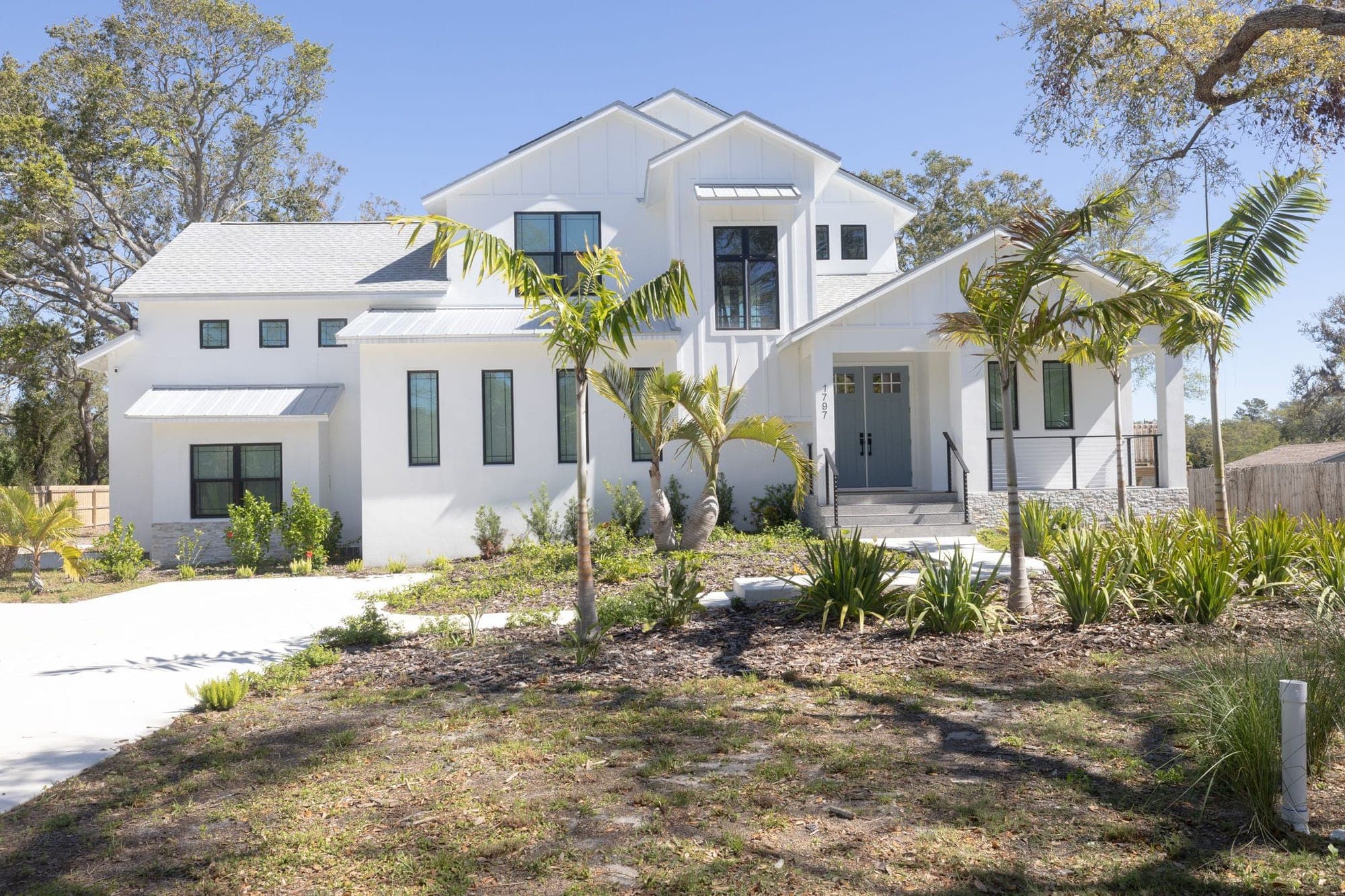
If you own property in a Pinellas County flood zone — Shore Acres, Snell Isle, Venetian Isles, Tierra Verde, St. Pete Beach, Treasure Island, Madeira Beach, or any of the barrier islands — an Elevation Certificate is one of the two documents that decide whether your renovation, elevation, or rebuild goes smoothly or gets stuck. The other is your FIRM panel showing your Base Flood Elevation.
Most Pinellas homeowners find out about the Elevation Certificate at exactly the wrong moment: mid-project, when their permit application gets kicked back because the Certificate is missing or expired. This guide covers what the Certificate is, what it costs, who prepares it, when you need it, and how it interacts with the FEMA 50 percent rule that governs every flood-zone renovation in the county.
Twelve atomic questions with the answers you actually need to make decisions before construction starts.
The 12 Questions Homeowners Ask
1. What is a FEMA Elevation Certificate and who needs one?
An Elevation Certificate is a FEMA-standard form (FEMA Form 086-0-33) completed, signed, and sealed by a Florida-licensed Professional Surveyor and Mapper (PSM). It documents your property's flood zone designation, the FIRM panel it sits on, the applicable Base Flood Elevation (BFE), and the measured elevations of your building — lowest finished floor, lowest adjacent grade, machinery and equipment elevations. If your property sits in a Special Flood Hazard Area (SFHA) designated AE, AH, AO, VE, or A-numbered by FEMA, you need an Elevation Certificate for most flood-zone permits, flood insurance pricing, and any substantial-improvement or substantial-damage calculation under the 50 percent rule. Properties in X zones typically do not require one, though your lender or insurance carrier may still request it.
2. How much does an Elevation Certificate cost in St. Petersburg?
A standard residential Elevation Certificate from a licensed Florida surveyor in the St. Petersburg market runs $400-$800. Complex sites, post-construction certificates, or Letter of Map Amendment (LOMA) or Letter of Map Revision (LOMR) amendment packages run $700-$1,500. The variables: property complexity, whether benchmark work is required, whether the surveyor has recent data on your parcel from a previous engagement, and turnaround urgency. VE-zone barrier-island properties tend to run at the higher end because tidal benchmarks and shifting sand baselines make the survey work more technical. Rush turnaround (under a week) can add 20-40 percent to the cost. Get quotes from at least two Florida-licensed PSMs before committing.
3. Who prepares an Elevation Certificate in Florida?
A Florida-licensed Professional Surveyor and Mapper (PSM), licensed and regulated by the Florida Board of Professional Surveyors and Mappers, is the primary professional who prepares the Certificate. Florida law also permits an appropriately authorized professional engineer or registered architect to complete certain sections when the work falls within their licensed scope. In practice, PSMs handle the overwhelming majority of Elevation Certificates in Pinellas County because the field measurement and benchmark work is squarely surveying discipline. When hiring, verify the license number against the Florida Department of Business and Professional Regulation database and ask for two recent Pinellas flood-zone Certificates as work samples. General contractors, home inspectors, real estate agents, and insurance agents are not qualified to prepare an Elevation Certificate — do not accept one from a non-PSM as a substitute.
4. When do I need an Elevation Certificate — before or during construction?
Both, depending on your project shape. If your project involves construction in a Pinellas floodplain, most jurisdictions require either a pre-construction Elevation Certificate (documenting existing conditions before work starts) or a floodproofing permit application that references measured existing elevations. For substantial-improvement or substantial-damage projects that trigger the 50 percent rule, you also need a post-construction Certificate documenting the new lowest finished floor once construction is complete. Revolution pulls the existing Elevation Certificate — or coordinates a fresh one — during pre-construction on every flood-zone project, before we finalize scope pricing. Waiting until the permit application stage to request an Elevation Certificate is the most common cause of permit-application delays we see.
5. Where do I find an existing Elevation Certificate for my property?
Start with Pinellas County. The county's flood-elevation-certificate portal at pinellas.gov/flood-elevation-certificate lets you search an address for available Elevation Certificates and download attached documents. For records held by the City of St. Petersburg specifically, call Floodplain Management at 727-893-7231 or email floodplain@stpete.org. For County-level assistance locating an existing record, call Pinellas County Flood Information Services at 727-464-7700. If your property was permitted for flood-zone construction in the past — additions, elevations, or major renovations — an Elevation Certificate should be on file. Older Pinellas waterfront homes built before FEMA mapping standardized (pre-1975) may have no Certificate at all; you will need to commission a fresh one before pulling any permit.
6. What information does an Elevation Certificate include?
The Certificate has nine sections. Section A identifies the property and owner. Section B lists FEMA map data — community name, panel number, FIRM index date, and flood zone designation (AE, VE, X, etc.) with the applicable Base Flood Elevation. Section C is the meat: measured building elevations for lowest finished floor, lowest adjacent grade, highest adjacent grade, and lowest elevations of machinery and equipment (HVAC compressors, generators, elevator equipment). Section D is the surveyor's certification and seal. Sections E-H handle special cases: buildings without basements, buildings with attached garages, buildings with LOMA amendments, and detached garages. Section I is optional photo documentation. Every section relevant to your property must be completed for the Certificate to be usable for permitting and flood insurance underwriting.
7. How long does it take to get an Elevation Certificate?
Standard turnaround from a Florida-licensed PSM in the St. Petersburg market is 2-3 weeks from scheduling the site visit to receiving the signed and sealed Certificate. Site visit itself takes 1-2 hours for a standard residential property, longer for complex sites or those requiring benchmark tie-ins. Rush turnaround (under a week) is available from most PSMs for a 20-40 percent premium. If your surveyor already has recent data on your parcel from a previous engagement — a boundary survey, topographic map, or prior Elevation Certificate — turnaround shortens to 1-2 weeks and cost typically drops toward the low end of the range. Plan the Certificate into your project timeline before scheduling anything else with the permit office.
8. Can my contractor prepare the Elevation Certificate for me?
No. The Elevation Certificate must be prepared and sealed by a Florida-licensed Professional Surveyor and Mapper, engineer, or architect within the scope of their licensure. A general contractor is not qualified to prepare or sign it. What a flood-zone contractor can and should do: coordinate scheduling the surveyor as part of pre-construction, receive the Certificate directly and interpret the numbers for you, use the Certificate data to calculate your substantial-improvement runway before scope is finalized, and submit the Certificate as part of the permit application package. Revolution handles all of that on every flood-zone project we run. If a contractor claims they can prepare the Certificate themselves without a licensed PSM in the process, they either misunderstand the licensing requirements or they are asking you to accept an unsigned document that will fail permit review. Walk away.
9. Does an Elevation Certificate expire?
The Certificate itself does not have a formal expiration date printed on the form. However, its usefulness expires the moment conditions change. A pre-construction Certificate becomes stale when construction starts and the elevations change. A post-construction Certificate becomes stale if your municipality updates the freeboard requirement, if FEMA updates the FIRM panel your property sits on, or if your building is altered in a way that changes the lowest finished floor or the lowest machinery elevation. For flood insurance underwriting, insurers generally accept Certificates up to 5-10 years old if no changes have occurred; some carriers require a fresh Certificate every renewal cycle regardless. For FEMA 50 percent rule calculations, always work from a Certificate current within the last 12 months.
10. How does an Elevation Certificate affect my flood insurance premium?
Directly and significantly. National Flood Insurance Program (NFIP) rating factors depend on your lowest finished floor elevation relative to Base Flood Elevation. A home elevated to BFE plus 1 foot (Pinellas' Design Flood Elevation) typically pays 30-60 percent less than an identical home at BFE-minus-1-foot. Private flood insurers use Elevation Certificate data too, often with more granular rating tables than NFIP. Without a valid Elevation Certificate, insurers default to the worst-case assumption — usually rating your property as if the lowest floor is well below BFE — and premiums can run 3-5x higher than they should. If you are paying $6,000-$15,000 a year in Pinellas flood insurance on a Shore Acres or Snell Isle waterfront home and you have never provided an Elevation Certificate, get one and shop your policy. The Certificate cost often pays for itself in the first year premium reduction.
11. What is the difference between a pre-construction and post-construction Elevation Certificate?
A pre-construction Certificate documents your property elevations as they exist before work starts — used for scope calculation, permit application, and baseline flood insurance rating. A post-construction Certificate (sometimes called a final Elevation Certificate) documents the new elevations after construction is complete — required by most Pinellas jurisdictions before issuing a Certificate of Occupancy on flood-zone new construction, elevation, or substantial-improvement work. On projects that involve raising the lowest finished floor, both are required: pre-construction to prove the old baseline, post-construction to prove the new one meets current flood code. On projects that stay under the 50 percent threshold and do not change floor elevations, only the pre-construction Certificate is typically required. Ask your Floodplain Administrator which their jurisdiction requires for your specific scope.
12. What is a LOMA or LOMR amendment and how does it relate to the Elevation Certificate?
A Letter of Map Amendment (LOMA) is a FEMA-issued document that removes a property from a Special Flood Hazard Area based on evidence that the property (or a structure on it) is naturally above Base Flood Elevation. A Letter of Map Revision (LOMR) is a FEMA-issued document that revises the FIRM panel itself, typically after physical changes to the terrain or flood-control infrastructure. Both require Elevation Certificate data as supporting evidence — you cannot successfully submit a LOMA or LOMR application without one. If your property sits on naturally-high ground within a mapped flood zone (some parts of the Old Northeast, higher elevations in Snell Isle, certain Shore Acres parcels), a LOMA may remove your flood insurance requirement entirely. Cost to prepare and submit a LOMA package: typically $700-$1,500 for the Elevation Certificate plus LOMA support work, plus FEMA application fees. Worth investigating if you believe your property may be misclassified.
When to Start the Elevation Certificate Conversation
Before you commit to any Pinellas flood-zone renovation or elevation scope, before you sign a design-build contract, before you meet with your architect. The Elevation Certificate anchors every downstream calculation: substantial-improvement runway under the 50 percent rule, Design Flood Elevation for structural design, flood insurance premium projections, permit-application completeness. Waiting until permit application is the most common cause of project delays we see in Pinellas flood-zone work.
About Revolution Contractors
Revolution Contractors is a St. Petersburg design-build general contractor family-owned since 2016. We have completed $10-20M+ of coastal Pinellas flood-zone work with 20+ W-2 carpenters on payroll. Florida licenses CRC1331628 and CGC1522463. Owner Jeremy Wharton personally coordinates every Elevation Certificate on every flood-zone project we take on, and runs every substantial-improvement calculation before scope is finalized. Free written FEMA assessment within 48 hours: (727) 888-6161.
For the underlying 50 percent rule mechanics, see our FEMA 50 Percent Rule Florida guide. For a 15-minute phone screen you can use to vet Pinellas flood-zone contractors on their FEMA vocabulary, see our 12 FEMA-Vocabulary Questions to Ask blog. For scope, process, and pricing on Revolution's flood-zone work, see our flood zone construction service page.