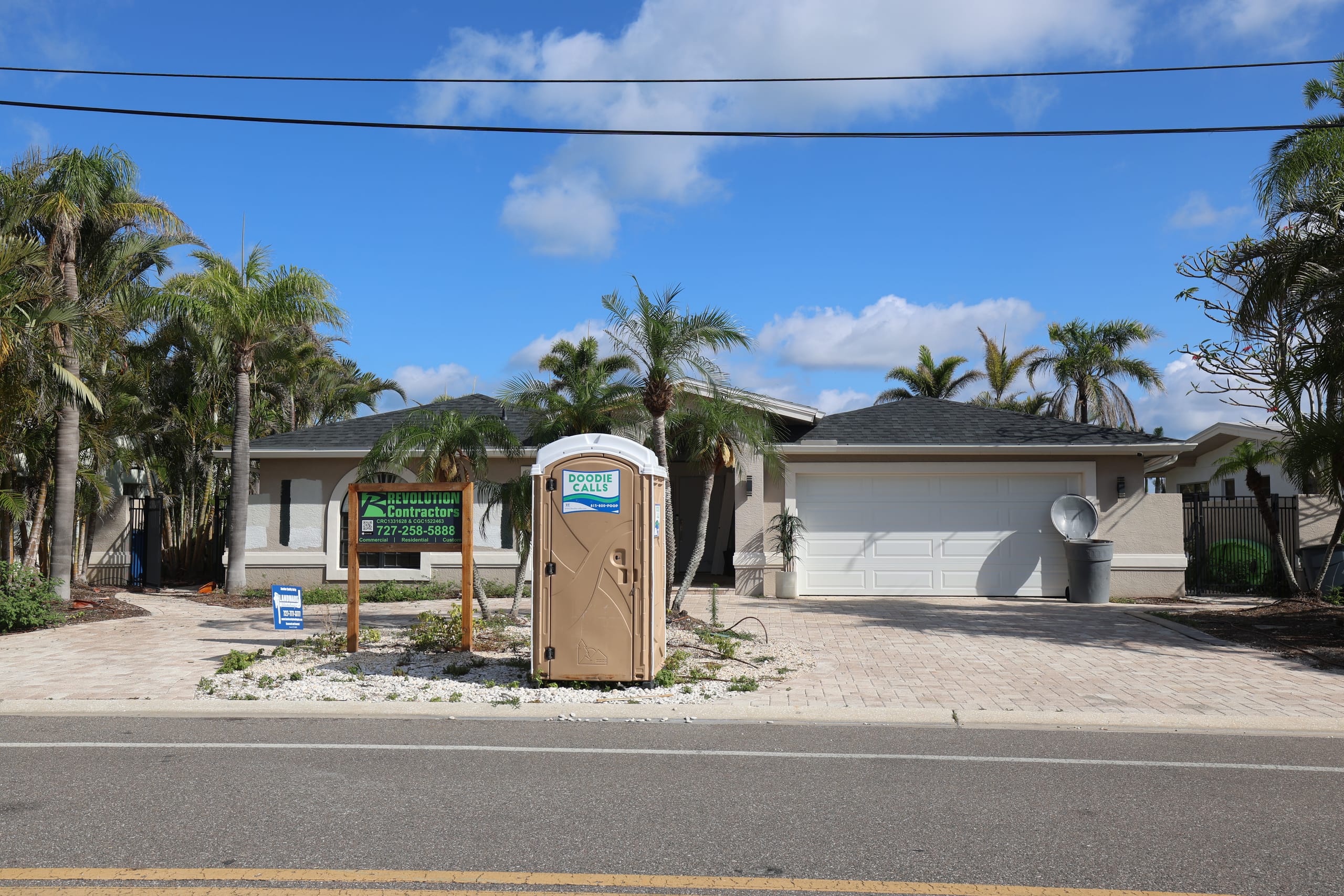
Vulnerability Assessment Grants in Pinellas: What's Real for Homeowners After Helene and Milton


Your neighbor got a letter about a Resilient Florida grant. A contractor door-knocker promised to get your house funded through "the state vulnerability assessment program." Someone at church mentioned $159 million the city is sitting on. So you want the honest answer: can you actually get a grant to pay for a home vulnerability assessment on your Pinellas property?
Here is the honest answer in one sentence. The Resilient Florida Grant Program (RFGP) does not fund single-property assessments for private homeowners. It funds counties, cities, and special districts to do community-level work. There are still real paths for your house, but they run through private engineering, FEMA mitigation grants, or the City of St. Pete's Sunrise CDBG-DR program. This guide walks you through each one, tells you what a Vulnerability Assessment (VA) actually produces, how it differs from an Elevation Certificate (EC) or a Substantial Damage Determination, and where Revolution Contractors plugs in as your general contractor (GC) when it's time to build.
What is a home vulnerability assessment and why do you need one?
A home vulnerability assessment is an engineering-grade evaluation of your specific property's exposure to natural hazards. In Pinellas, the hazards that matter are riverine and stormwater flooding, coastal storm surge, sea level rise (SLR) over a 30 to 50 year planning window, wind load under the Florida Building Code (FBC), and shoreline erosion on narrow Gulf and bay parcels.
A VA is not an Elevation Certificate. An Elevation Certificate captures one data point: the lowest floor elevation of your structure relative to Base Flood Elevation (BFE). Your surveyor measures it, FEMA uses Form 086-0-33 to document it, and your insurance carrier reads it for rating. A VA uses the EC as one input, but the VA itself is a full risk analysis.
A VA is also not an insurance 4-point inspection, not a home inspection for a real estate deal, and not a Substantial Damage Determination. A Substantial Damage Determination is a property-level finding your local floodplain administrator produces after a disaster, telling you whether your repair cost crosses 50% of your structure's market value. It triggers the FEMA 50% Rule. A VA is broader. It tells you what you should build, in what order, at roughly what cost, and with what expected risk reduction over the next three decades.
Here's who performs VAs in Pinellas:
- Florida-licensed Professional Engineers (PEs). This is the primary path.
- Certified Floodplain Managers (CFMs), often working with a PE on NFIP compliance questions.
- FEMA-approved mitigation consulting firms that package VAs specifically for grant applications.
- Local-government floodplain coordinators, but only for community-level VAs. Your municipal floodplain office does not write private property-level VAs for homeowners.
Revolution Contractors does not perform vulnerability assessments. Rev is a licensed general contractor. We read your completed VA, translate the engineering recommendations into a scope of work, and build the mitigation project. That fence matters, and we'll keep coming back to it in this guide.
How does a vulnerability assessment unlock FEMA mitigation grants in Florida?
Most FEMA Hazard Mitigation Assistance (HMA) grants require a Benefit-Cost Analysis (BCA) of 1.0 or greater. That means the dollar value of expected losses avoided over the project's useful life has to meet or exceed the project cost. FEMA uses its BCA Toolkit (currently version 6.0) to score applications. You cannot produce a credible BCA without underlying engineering data, which is exactly what a VA gives you.
Lowest floor elevation. Base Flood Elevation. Expected losses per flood event. Storm surge exposure. Wind design pressure. Structure replacement cost. All of it feeds the BCA.
So the pipeline looks like this:
- You get a property-level VA from a FL-licensed PE.
- The VA generates the technical inputs for a BCA.
- The BCA supports a FEMA grant application (Flood Mitigation Assistance (FMA), Hazard Mitigation Grant Program (HMGP), or Elevate Florida).
- The state or county reviews, prioritizes, and forwards.
- If awarded, the grant funds construction, which is where Rev comes in.
No VA, no credible BCA. No credible BCA, no FEMA HMGP, FMA, or Building Resilient Infrastructure and Communities (BRIC) application. The VA is not optional engineering. It is the substrate every mitigation application sits on.
If you want the full picture on the funding paths downstream of the VA, read our FEMA flood mitigation grants in Pinellas guide and our home elevation grants in Pinellas guide.
What does the Resilient Florida grant program fund?
The Resilient Florida Program is administered by the Florida Department of Environmental Protection (DEP). It was authorized by Senate Bill 1954, signed May 12, 2021, and codified in Section 380.093 of the Florida Statutes. DEP describes it as the largest investment in Florida's history for community resilience work. Program contact is [email protected] or 850-245-7600. The grant-specific inbox is [email protected].
RFGP funds three categories of work:
Planning grants. These pay for community-level vulnerability assessments and adaptation plans at the local government level. A county or city hires an engineering firm to produce a jurisdiction-wide VA that identifies vulnerable zones, prioritizes critical facilities, and models future SLR scenarios.
Implementation grants. These pay for actual construction that carries out the mitigation priorities a completed VA identified. Think seawalls, stormwater upgrades, pump stations, elevation of fire stations and water treatment plants, living shoreline installations. These are municipal projects, not private home retrofits.
Regional resilience entity subgrants. These fund the coordinating bodies that stitch county VAs together into regional plans. The Tampa Bay Regional Resiliency Coalition is the one most relevant to Pinellas.
Historical awards have ranged from roughly $100,000 for small planning grants to $5 million or more for county-scale implementation projects.
For the 2026 Notice of Funding Availability (NOFA) cycle, the application window ran July 1, 2026 through September 1, 2026, and the cycle was implementation-only. Planning projects and regional resilience entity applications were not accepted in that cycle. Future cycles may reopen the planning track, so read the current NOFA when it posts rather than assuming the 2026 structure holds.
Can you apply for Resilient Florida funds as a homeowner?
No. This is the single biggest piece of confusion in Pinellas right now, so we'll say it plainly.
The Resilient Florida Program accepts applications only from:
- Counties
- Municipalities
- Special districts with specific flood-related or coastal responsibilities
- Regional resilience entities
Private homeowners are not eligible. Private businesses are not eligible. HOAs are not eligible.
If a door-to-door contractor tells you they can "get your house funded through Resilient Florida," they're either confused about the program or selling something else. Ask them to show you the statutory eligibility language. It's in Section 380.093 F.S., and homeowners aren't on the list.
So why does RFGP matter for your property? Because your indirect benefit is real, and it's bigger than most people realize.
When Pinellas County, the City of St. Petersburg, Treasure Island, Madeira Beach, Gulfport, Pinellas Park, or another Pinellas municipality wins a Resilient Florida planning grant, that money funds a community-level VA. That VA identifies priority mitigation zones. If your property sits inside a priority zone, your neighborhood becomes a stronger candidate for downstream FMA, HMGP, and Elevate Florida applications in the next three to five years.
Translation: RFGP does not write your check. It writes the check that funds the engineering study that identifies your neighborhood as a mitigation priority, which then feeds the FEMA grants that can pay for elevation or floodproofing on your house.
What a homeowner can actually do:
- Track your municipality's Resilient Florida application status through city council and county commission agendas.
- When a grant is awarded, read the implementation project boundaries. Is your property inside the designated zone?
- Request Local Mitigation Strategy (LMS) data (hazard overlays, repetitive-loss designation) from Pinellas County Planning. That data strengthens your own property-level VA and your eventual grant application.
- Vote for stronger floodplain management at your local level. Community Rating System (CRS) class improvements lower every homeowner's NFIP flood insurance premium.
What's in a typical Pinellas vulnerability assessment report?
When you hire a PE for a property-level VA, the report should contain the following items. If the PE gives you a shorter report and calls it a VA, you got a flood zone letter, not a vulnerability assessment.
- Flood zone verification. Current FEMA FIRM zone plus preliminary FIRM zone if your area has one pending.
- Lowest floor elevation measurement. Measured by a licensed surveyor in NAVD88. May reference an existing EC rather than reproducing the work.
- BFE plus freeboard recommendation. Pinellas typically recommends BFE + 1 or BFE + 2 feet, depending on jurisdiction.
- Substantial improvement threshold analysis. The dollar amount of remodeling that would trigger the FEMA 50% Rule for your structure. Read our FEMA 50% Rule explainer.
- Wind exposure category and design pressure. Per the 8th Edition FBC (2023), with values for openings, roof systems, and wall cladding.
- Storm surge exposure. SLOSH category or Pinellas county-specific surge model overlay.
- Utilities vulnerability. HVAC pad elevation, electrical panel height, water heater placement, generator and transfer switch locations relative to BFE.
- Prioritized mitigation recommendations. A ranked slate, not a single project.
- BCA inputs for each recommendation. Expected loss avoided over 30 years, project cost estimate, benefit-to-cost ratio.
- FEMA grant-eligibility screening per recommendation. Which recommendations map to FMA, HMGP, Elevate Florida, or private pay.
If you ask for "a VA," you may get Items 1 through 3 only and a very short invoice. If you ask for "a grant-ready VA with BCA inputs," you get Items 1 through 10 and a report your state grant reviewer can actually use. Specify. The delta in cost is modest. The delta in downstream value is large.
How much does a private vulnerability assessment cost in Pinellas?
Three paths, three cost profiles, three turnaround windows.
Path A: Private engineer consultation. You hire a FL-licensed PE directly. No grant involvement, no eligibility paperwork, no waiting on a government cycle.
- Basic residential flood risk assessment: $300 to $1,000.
- Full grant-ready VA with wind load, surge model, prioritized mitigation recommendations, and BCA inputs: $1,500 to $5,000.
- Turnaround: 2 to 6 weeks. Deliverable: PE-sealed VA report. Fastest path. Report is yours and travels with the property. You pay out of pocket.
Path B: Insurance-driven Elevation Certificate. An NFIP renewal, a private flood policy quote, or a Risk Rating 2.0 reassessment can trigger demand for an EC. It captures lowest floor elevation only, but it's often the data point that unlocks real savings on your flood insurance premium.
- Cost: $400 to $800 from a FL-licensed surveyor in Pinellas.
- Turnaround: 1 to 3 weeks. Deliverable: FEMA Form 086-0-33.
See our Elevation Certificate in Pinellas guide for the full process.
Path C: Grant-funded VA embedded in a project application. When you apply for FMA, HMGP, or Elevate Florida for a specific project, some pre-mitigation activity costs including project-scoped VA work can be included in the project envelope.
- Cost to homeowner: Depends on grant cost share. Elevate Florida 75/25. FMA up to 100% for SRL, 90% for RL, 75% for other NFIP-insured. HMGP typically 75% federal.
- Turnaround: Months to a year or more, depending on cycle and state review queue.
- Catch: The VA has to be embedded in a specific project application. You can't get grant money for a standalone VA to figure out what to build next. You already need a candidate project in mind.
For most Pinellas homeowners who just took water in Helene or Milton and are trying to decide whether to repair, elevate, or walk away, Path A is the right starting point. The $1,500 to $5,000 for a grant-ready VA pays for itself the first time it prevents a wrong repair decision or qualifies you for a 75% federal cost share.
FEMA BRIC Capability and Capacity Building: is it still an option in 2026?
Short answer: no. Longer answer below.
The Building Resilient Infrastructure and Communities (BRIC) program is FEMA's pre-disaster mitigation grant vehicle. Under the Fiscal Year 2024-2025 Notice of Funding Opportunity (NOFO), FEMA made $1 billion available across multiple project categories. The application deadline was 3:00 p.m. ET July 23, 2026. That deadline has passed. FEMA posted: "The application period for the Fiscal Years 2024 and 2025 Building Resilient Infrastructure and Communities annual grant cycle is closed. FEMA is no longer accepting applications."
FEMA is currently reviewing the submissions. Previous BRIC subapplications submitted in the January 2025 initial opportunity will not be reviewed under the current cycle.
Within BRIC, the Capability and Capacity Building (C&CB) subgrant category funds work that isn't bricks-and-mortar construction. Engineering studies supporting a specific infrastructure project. Preliminary project design. Benefit-cost analyses. Staff training on technical delivery. Adoption of up-to-date building codes. Enforcement training. Under the FY24-25 NOFO, C&CB activities had to be directly tied to a specific infrastructure project. General hazard mitigation plan development or updates were no longer eligible as standalone work.
Why this doesn't help a homeowner directly. BRIC eligible applicants are states, U.S. territories, federally recognized Tribal Nations, and local governments. Not homeowners. C&CB is a government-to-government capacity building stream. The homeowner benefit is downstream. Better-staffed floodplain management offices mean faster permit turnaround. Better-written county VAs mean stronger HMGP and FMA applications in your area. More successful grant applications mean more projects built in your neighborhood.
Program future. Uncertain. The Government Accountability Office has reported that billions in BRIC subgrants remain unawarded from prior cycles (GAO-26-107774). There is ongoing litigation around BRIC program suspension and restoration, with court orders issued on specific grant restoration questions. We're not going to tell you BRIC is permanently closed, because that isn't verifiable. We're not going to tell you BRIC is coming back in some specific month, because that isn't verifiable either. What we can tell you: as of research for this guide, BRIC is not a path for your Pinellas home.
The honest line: BRIC is a government-to-government program that strengthens the system around you. You don't apply. You benefit indirectly when your local floodplain management office gets stronger.
How do vulnerability assessment findings translate into mitigation construction projects?
A completed VA points you to one of four construction categories. Each one maps to a different FEMA grant lane and a different scope of work for the GC.
Category A: Elevation. Physically lift your structure above BFE plus Pinellas freeboard. VA findings that point here: lowest floor below BFE, substantial damage determination under the FEMA 50% Rule, repetitive loss or severe repetitive loss designation. Funding path: Elevate Florida at 75/25 cost share, HMGP, FMA Swift Current for post-disaster expedited funding. Read our full home elevation grants in Pinellas guide and our elevated house plans for Pinellas flood zones guide for the construction specifics.
Category B: Floodproofing. Dry floodproofing keeps water out with a sealed envelope and flood gates. Wet floodproofing lets water in and designs for it with flood-resistant materials and breakaway elements. VA findings that point here: utilities below BFE in a structure where full elevation is impractical (historic district, bedrock constraint, deed restriction). Funding path: FMA, HMGP, some wind-focused subgrants under the Hazard Mitigation Grant Program's non-disaster lanes.
Category C: Hardening. Wind-load upgrades, impact-rated windows and doors, roof-to-wall strap retrofits, roof deck sheathing upgrades, garage door reinforcement. VA findings: wind exposure category increase from a FIRM revision, aging roof system, pre-code openings. Funding path: My Safe Florida Home (MSFH) program for the non-grant insurance-discount pathway, plus some HMGP wind-only sub-tracks.
Category D: Acquisition, Buyout, or Reconstruction. Structure is beyond cost-effective mitigation. VA findings: BCA for elevation stays above 1.0 but the property has crossed the substantial-damage threshold repeatedly; property sits in a VE or Coastal A zone with recurring loss. Funding path: FMA acquisition, HMGP buyout, Elevate Florida acquisition or mitigation reconstruction track (up to $375,000 per property, with up to $30,000 additional NFIP Increased Cost of Compliance supplement), St. Pete's Sunrise buyout component.
Here's the decision matrix in table form.
| VA finding | Funding path | Rev's role |
|---|---|---|
| Elevation | Elevate Florida, HMGP, FMA | GC on the lift. Foundation, utility re-attach, breakaway walls, exterior tie-ins, finish work |
| Dry floodproofing | FMA, HMGP | GC on envelope sealing, flood-gate installation, interior rebuild, mechanical relocation |
| Wind hardening | MSFH, HMGP wind tracks | GC on roof deck sheathing, impact windows and doors, roof-to-wall straps, garage door reinforcement |
| Reconstruction | FMA, HMGP, Elevate Florida | Full teardown and rebuild to code with flood and wind compliance baked in |
| Compliant accessory structure | See ADU grant guide | ADU construction. Standalone FL ADU grant funding is thin; see our ADU grant guide |
What Rev needs from your VA to produce a bid: lowest floor elevation, BFE per current FIRM, required freeboard, substantial improvement threshold, design wind pressure per FBC 8th Edition, PE-sealed structural recommendations for lift method, permit pre-screening notes, and any special inspector requirements. If your VA covers all of it, Rev can produce a fixed-price bid off it. If it covers only the elevation and threshold items, Rev will quote T&M pending completion of the structural engineering package.
What VA findings trigger the FEMA substantial improvement rule?
The FEMA 50% Rule is codified at 44 CFR 59.1 under the heading "Substantial Improvement." It applies to every structure in a Special Flood Hazard Area (SFHA), which in Pinellas means zones A, AE, AO, AH, V, and VE. X and D zone properties are exempt.
The trigger: any improvement, reconstruction, rehabilitation, or addition costing 50% or more of your structure's market value (land excluded). Once you cross the threshold, you are required to bring the entire structure into compliance with current floodplain management standards. In Pinellas, that typically means:
- Lowest floor elevated to BFE + 1 foot of freeboard (BFE + 2 in some municipalities).
- Flood-resistant materials below BFE.
- Compliant utility placement (HVAC, electrical, water heater all above BFE).
- Breakaway walls for enclosed areas below BFE in V zones.
This is where the VA pays for itself. The VA tells you two things the local floodplain administrator alone cannot tell you:
- Your structure's market value (land excluded), which sets the 50% threshold in dollars.
- The anticipated cost of the repair or remodel you're considering.
If item 2 is at 45% of item 1, you have room. If item 2 is at 52%, you've crossed and you're building to full compliance. The VA is how you know which side you're on before you sign a GC contract, not after.
If Helene or Milton damaged your home and you've received a Substantial Damage Determination from the Pinellas County Flood Program or the City of St. Petersburg Floodplain Administrator, the 50% trigger has been evaluated for you. The determination letter tells you whether repair alone is permitted or whether full code compliance applies. Read our Substantial Improvement Determination guide for Pinellas flood zone remodels for the full mechanics.
How does a vulnerability assessment affect your flood insurance premium?
Not directly. Your NFIP premium is set by Risk Rating 2.0, which prices your policy based on property characteristics (elevation, construction type, foundation, distance to water) and your community's CRS class.
Here's what your VA can do. It identifies improvements that, once built, lower the inputs Risk Rating 2.0 uses to price you. Elevating the lowest floor. Installing flood vents to match flood opening requirements. Moving HVAC and electrical above BFE. Each one of those changes feeds back into the next policy quote.
Your community's CRS class is the other major lever, and this is where Pinellas has real news.
- Unincorporated Pinellas County: CRS Class 2. This is the highest CRS rating any Florida community has ever achieved and places unincorporated Pinellas in the top 1% of CRS communities nationwide. The projected annual savings on flood insurance for unincorporated residents has been reported in the millions of dollars.
- St. Petersburg: CRS Class 5, which qualifies SFHA residents for up to a 25% discount on NFIP premiums.
- Pinellas Park: CRS Class 5.
CRS classes update roughly every three years, and they move based on how well your local jurisdiction scores on floodplain management activities: higher regulatory standards, better public information programs, stronger flood warning systems, and documented vulnerability work. When your city funds and completes a community-level VA under Resilient Florida, that work contributes to CRS score improvements. Better CRS class means bigger NFIP discount for every policyholder in that jurisdiction.
That's the self-interested case for supporting your city's resilience planning. Your flood insurance bill tracks your community's CRS class, and the community VAs feed the CRS score.
Post-Helene vulnerability assessment priorities in Pinellas
Hurricane Helene (DR-4828-FL) and Hurricane Milton (DR-4834-FL) reshaped the Pinellas mitigation funding landscape. If you took water or wind damage, there are three programs you should know about right now.
Pinellas County Action Plan for Disaster Recovery
The Pinellas County Action Plan for Disaster Recovery was published in draft form in April 2025. It allocates federal recovery dollars across housing, infrastructure, economic recovery, and mitigation. If you live in unincorporated Pinellas, the Action Plan is the document that defines your downstream mitigation eligibility windows.
Pinellas County Substantial Damage Reassessment Program
Post-Helene and post-Milton, Pinellas conducted property-level damage assessments for Substantial Damage Determinations under the FEMA 50% Rule. These are property-level assessments triggered by the disaster declaration, not by homeowner request. If you received a determination letter, read it carefully. It tells you whether repair alone is permitted or whether crossing the 50% threshold requires full code compliance for the entire structure.
The county has published separate instructions for mobile and manufactured homes and standard instructions for site-built homes. If you have not received a determination letter and your property took significant damage, contact the Pinellas County Flood Program directly. Determination findings drive what mitigation grants you can apply for and on what timeline.
Read our repetitive loss properties in Pinellas guide if your property has flooded more than once in recent years. Repetitive Loss and Severe Repetitive Loss designations open additional FMA funding paths and in some cases shift the federal cost share up to 90% or 100%.
Sunrise St. Pete
The City of St. Petersburg has a $159.8 million HUD Community Development Block Grant-Disaster Recovery (CDBG-DR) allocation triggered by Hurricane Idalia and Hurricane Helene impacts. The program is called Sunrise St. Pete. It includes:
- Residential Recovery and Elevation (for homeowners and small landlords of up to four units)
- Voluntary buyouts in flood-prone areas
- Affordable housing addition
- Home buyer assistance
HUD prioritizes low-to-moderate income households (80% of Area Median Income (AMI) and below), with some assistance available up to 120% AMI. The Residential Recovery and Elevation program was targeted to launch in November, with the exact date pending.
Sunrise St. Pete runs parallel to the FEMA mitigation grant chain, not through it. It has its own eligibility screening (city limits of St. Petersburg plus income thresholds), its own application process, and its own cost share mechanics. If you live inside St. Pete city limits and your household income qualifies, this is a direct homeowner funding path that doesn't require a FEMA BCA or an LMS designation. A property-level VA still strengthens your application, but the review mechanics are different.
For context on the broader St. Pete planning framework, the city's Integrated Sustainability Action Plan (ISAP) contains 70+ strategies and 200+ actions for resilience and sustainability at the city scale. It's a planning document, not a homeowner funding source, but it's the backbone the city uses to prioritize where recovery dollars flow.
Can Revolution Contractors help if your VA recommends elevation or hardening?
Yes, and here's exactly where we fit.
Revolution Contractors is a licensed Pinellas general contractor. Jeremy Wharton (CRC1331628) and Brent Patterson (CGC1522463) lead the firm, with 20+ years of combined Pinellas construction experience. We employ W-2 carpenters on payroll, not subcontracted labor-only crews, and we run a Time and Materials (T&M) model on most mitigation projects with weekly budget reports to the owner.
What we do:
- Read your completed VA and translate the engineering recommendations into a buildable scope.
- Produce a fixed-price bid if your VA covers all 10 items above, or a T&M bid with weekly budget reports if structural engineering is still in progress.
- Execute the mitigation construction, from elevation coordination with the specialist lift sub, to floodproofing envelope sealing, to full teardown and reconstruction.
- Coordinate with the engineer-of-record, the local floodplain administrator, and the state grant program throughout construction.
- Deliver the completed work with the inspection paperwork your grant reimbursement submission requires.
What we don't do: perform VAs, write VA reports, apply for FEMA mitigation grants on behalf of homeowners, or act as your grant consultant or insurance adjuster. The applicant of record on FMA, HMGP, Elevate Florida, and Sunrise St. Pete is you, flowing through your state and county. Grant packaging is a mitigation consultant scope.
This fence matters. Overlap between engineering, grant application, and construction creates liability exposure for everyone involved. We stay on our side of the line, work alongside the PE and the mitigation consultant you choose, and build what the paperwork says to build.
If your VA recommends elevation, read our home elevation services in Pinellas page. If your VA identifies a 50% Rule trigger, our FEMA 50% Rule help page walks through the compliance pathway. If you're a St. Pete flood-zone owner weighing repair versus rebuild, our flood zone contractor St. Petersburg page covers the general-contractor workflow.
FAQ: vulnerability assessment questions Pinellas homeowners ask
What is a home vulnerability assessment in Florida?
An engineering-grade evaluation of a specific property's exposure to flood, storm surge, wind, sea level rise, and erosion hazards. In Pinellas, it's typically performed by a FL-licensed PE. The report identifies prioritized mitigation projects, cost estimates, and risk-reduction benefits. It's the data you need to apply for FEMA grants.
Can a homeowner apply for a Resilient Florida grant?
No. The program accepts applications only from counties, municipalities, special districts, and regional resilience entities. Homeowners benefit indirectly when their local government wins a planning or implementation grant that funds community-wide VAs and mitigation projects. Track your city or county's applications through public council agendas.
How much does a vulnerability assessment cost in Pinellas?
A basic residential flood risk assessment runs $300 to $1,000. A full engineering-grade VA with wind-load analysis, surge modeling, prioritized mitigation recommendations, and BCA inputs runs $1,500 to $5,000 from a FL-licensed PE. An Elevation Certificate alone runs $400 to $800 from a FL-licensed surveyor.
Is FEMA BRIC still open in 2026?
No. The BRIC FY24-25 application period closed July 23, 2026. FEMA is no longer accepting applications. Reviews are in progress. BRIC Capability and Capacity Building subgrants were included in the same cycle and are also closed. Program future is uncertain pending FY24-25 review and ongoing litigation.
Does a vulnerability assessment lower my flood insurance premium?
Not directly. Your NFIP premium is set by Risk Rating 2.0 based on property characteristics and your community's CRS class. A VA identifies improvements (elevation, flood vents, raised utilities) that lower your rate once you build them. Unincorporated Pinellas is Class 2, the highest CRS rating any Florida community has ever achieved. St. Pete SFHA residents get a 25% discount under Class 5.
What triggers the FEMA 50% Rule?
Any improvement, reconstruction, rehabilitation, or addition costing 50% or more of the structure's market value (land excluded). In SFHA zones (A, AE, AO, AH, V, VE), the entire structure must be brought to BFE plus 1 foot of freeboard, with flood-resistant materials below BFE and compliant utility placement. X and D zone properties are exempt.
Who writes vulnerability assessment reports in Pinellas County?
FL-licensed Professional Engineers are the primary providers, often working with Certified Floodplain Managers. Some FEMA-approved mitigation consulting firms also package VAs for grant applications. General contractors like Revolution Contractors do not perform VAs. That's an engineering scope. Rev builds what the VA recommends.
How does a VA help me qualify for FEMA elevation grants?
FEMA HMGP and FMA grants require a BCA of 1.0 or greater. You cannot produce a credible BCA without the engineering data a VA provides: lowest floor elevation, BFE, expected losses over a 30-year horizon, and project cost estimates. The VA is the technical substrate every FEMA mitigation grant application sits on.
What's the difference between a VA and an Elevation Certificate?
An EC captures one data point: lowest floor elevation relative to BFE, measured by a surveyor on FEMA Form 086-0-33. A VA is the full package: flood zone, wind exposure, surge model, utility placement, substantial improvement threshold, prioritized mitigation recommendations, and BCA inputs. The EC is one input into a full VA.
Will the Sunrise St. Pete program fund my home elevation?
Possibly. The $159.8 million HUD CDBG-DR allocation includes a Residential Recovery and Elevation program for homeowners with remaining Idalia or Helene damage inside St. Pete city limits. Priority goes to households at or below 80% AMI, with some assistance available up to 120% AMI. Check current eligibility at stpete.org.
How do I use my VA to apply for a grant?
You don't apply directly to FEMA. HMGP and FMA applications flow through the Florida Division of Emergency Management and your county's Local Mitigation Strategy Working Group. Elevate Florida accepts direct homeowner applications through its state portal. In both cases, your VA provides the required engineering data your application rides on.
Does Revolution Contractors perform vulnerability assessments?
No. Rev is a general contractor, not an engineering firm. VA generation requires a FL-licensed PE. What Rev does: read your completed VA, translate the recommendations into a buildable scope, provide a fixed-price or T&M bid, and execute the mitigation construction.
Next steps: how to get your home assessed and funded
Here's the sequence, in order.
Step 1. Hire a Florida-licensed Professional Engineer for a grant-ready VA. Specify all 10 deliverables from the "What's in a typical Pinellas vulnerability assessment report" section. Budget $1,500 to $5,000. Timeline 2 to 6 weeks. Request the report in digital form with the PE seal, and keep an electronic copy with your property records.
Step 2. Decide which funding path fits. Elevation, floodproofing, wind hardening, or reconstruction. Your VA should map each recommendation to a candidate grant lane. The four candidate lanes for a Pinellas homeowner are Elevate Florida (direct homeowner application, 75/25 cost share), FMA (through FDEM, up to 100% for SRL), HMGP (through FDEM post-disaster declaration), and Sunrise St. Pete (city residents only, income-qualified).
Step 3. Build your application package. A mitigation consultant can help here if your VA did not include full BCA inputs. For Elevate Florida, the application portal is at fdem-resmit.my.site.com/Elevate. For FMA and HMGP, you work through your county's Local Mitigation Strategy Working Group. For Sunrise St. Pete, you apply through the city once the Residential Recovery and Elevation program launches.
Step 4. Once awarded, select your GC. Revolution Contractors is available for construction scope on elevation, floodproofing, hardening, and reconstruction builds in Pinellas County. Bring us your VA, your award letter, and your engineer-of-record contact, and we'll produce a buildable scope of work and bid off it.
Step 5. Build. Document. Reimburse. Grant reimbursement submissions depend on specific inspection milestones, photo documentation, and compliance paperwork. We coordinate with the grant administrator throughout construction so the reimbursement submission at the end is clean.
If you want to talk through where your property sits in this pipeline before you hire an engineer, we offer a no-cost 30-minute consultation. Call Revolution Contractors or send a note through the contact form. Bring your address, your Helene or Milton damage status, and any insurance or FEMA paperwork you've received. We'll tell you honestly which path makes sense for your situation and which engineer we'd point you to for the VA.
That's the real path. Not the door-knocker version, not the one that promises a state grant will pay for your whole project. The one where the VA comes first, the grant follows, and the construction happens when the paperwork is clean.