Home Addition Cost in Pinellas County 2026: Permits, Timelines, FEMA Rules

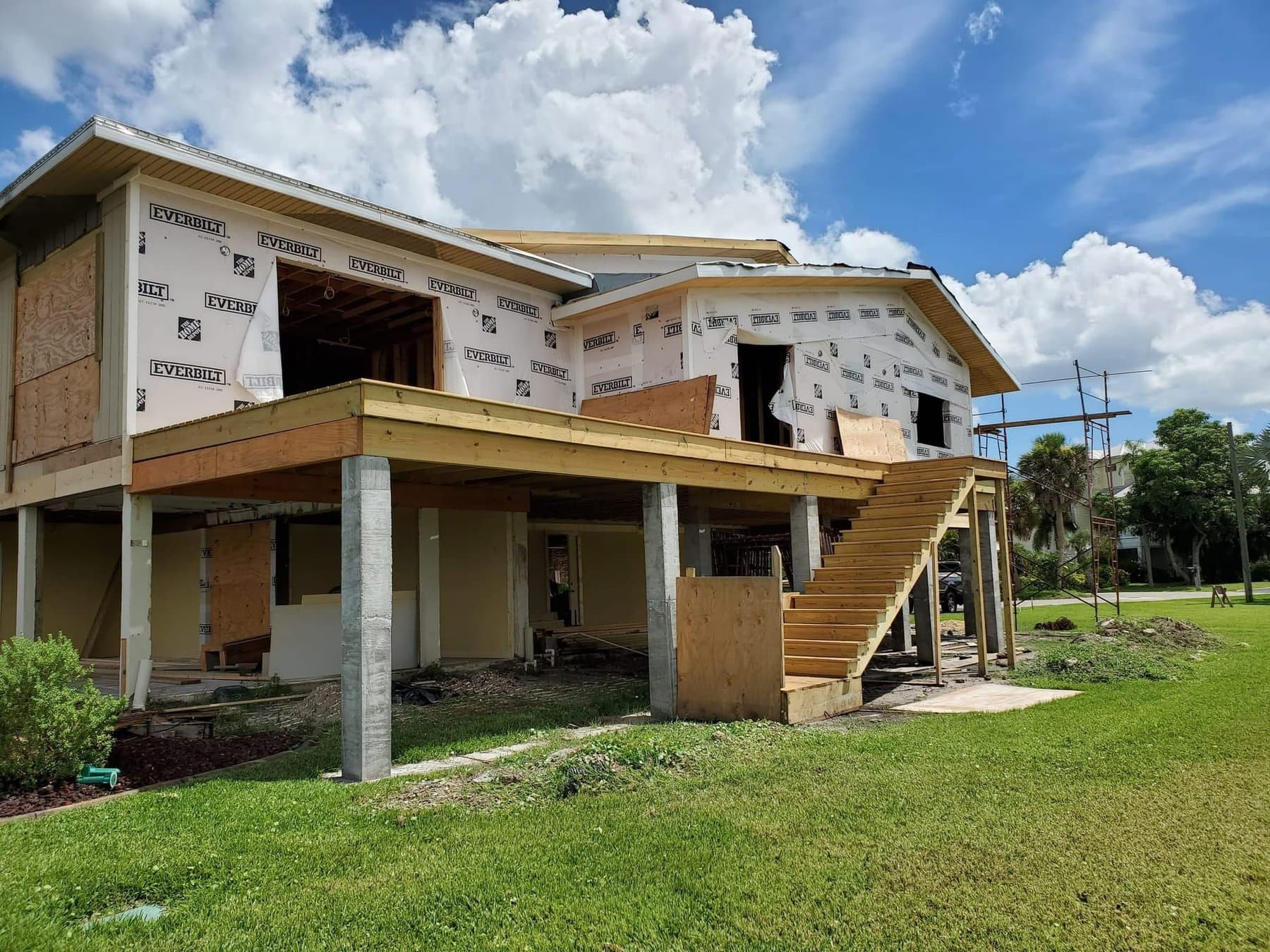
A home addition in Pinellas County usually runs $250 to $400 per square foot in 2026 once you factor in permits, slab prep, roof tie-in, and the hurricane envelope Florida code requires. That number swings up 20 to 30 percent if your lot is in an AE or VE flood zone, and higher still if your home sits inside the FEMA 50 percent substantial-improvement window. Below is the honest math on what drives your addition cost, how long permits actually take, and how to decide between adding on, building up, or going with an ADU.
This is written for homeowners planning a 500 to 1,500 sqft addition in Pinellas County. If you’re weighing a full teardown-and-rebuild or a whole-home renovation, see our custom home cost guide instead. For the full service page on how we build additions, visit Home Addition Contractors in St. Petersburg.
What a Pinellas County Addition Actually Costs in 2026
National cost guides will tell you $120 to $200 per square foot. That number does not apply here. Pinellas County sits in a 150 mph wind zone, which means every window, door, and roofing assembly needs a current Florida Product Approval (NOA) number. Every strap and connector on the load path needs to be Simpson Strong-Tie hurricane-rated. Flood maps shape half of what we build. Coastal materials (Hardie fiber-cement siding, hot-dip galvanized fasteners, impact glass, marine-grade stainless hardware near the water) cost more up front and last decades longer than the mainland equivalents.
Here are the real 2026 ranges from our active jobs:
| Addition Type | Cost per sqft | Typical Total |
|---|---|---|
| First-floor, no wet rooms (500 sqft) | $250–$300 | $125K–$150K |
| First-floor, with bath or kitchenette (500 sqft) | $300–$375 | $150K–$190K |
| Primary suite addition (500 sqft + wet) | $350–$450 | $175K–$225K |
| Second-story addition (1,000 sqft) | $350–$450 | $350K–$500K |
| Detached ADU (600 sqft standalone) | $275–$375 | $165K–$225K |
| Any of the above, in an AE/VE flood zone | +20–30% | Elevated foundation + flood materials |
A 1,000 sqft first-floor addition with a primary suite, coastal materials, and no flood-zone trigger typically lands between $325K and $425K in Pinellas in 2026. For a county-wide pricing breakdown that goes deeper on construction mechanics, see our St. Petersburg home addition cost guide.
What Drives Your Budget Up (or Down)
Five variables account for about 80 percent of the cost spread between a $250/sqft project and a $450/sqft project on the same square footage.
1. Slab prep and foundation tie-in
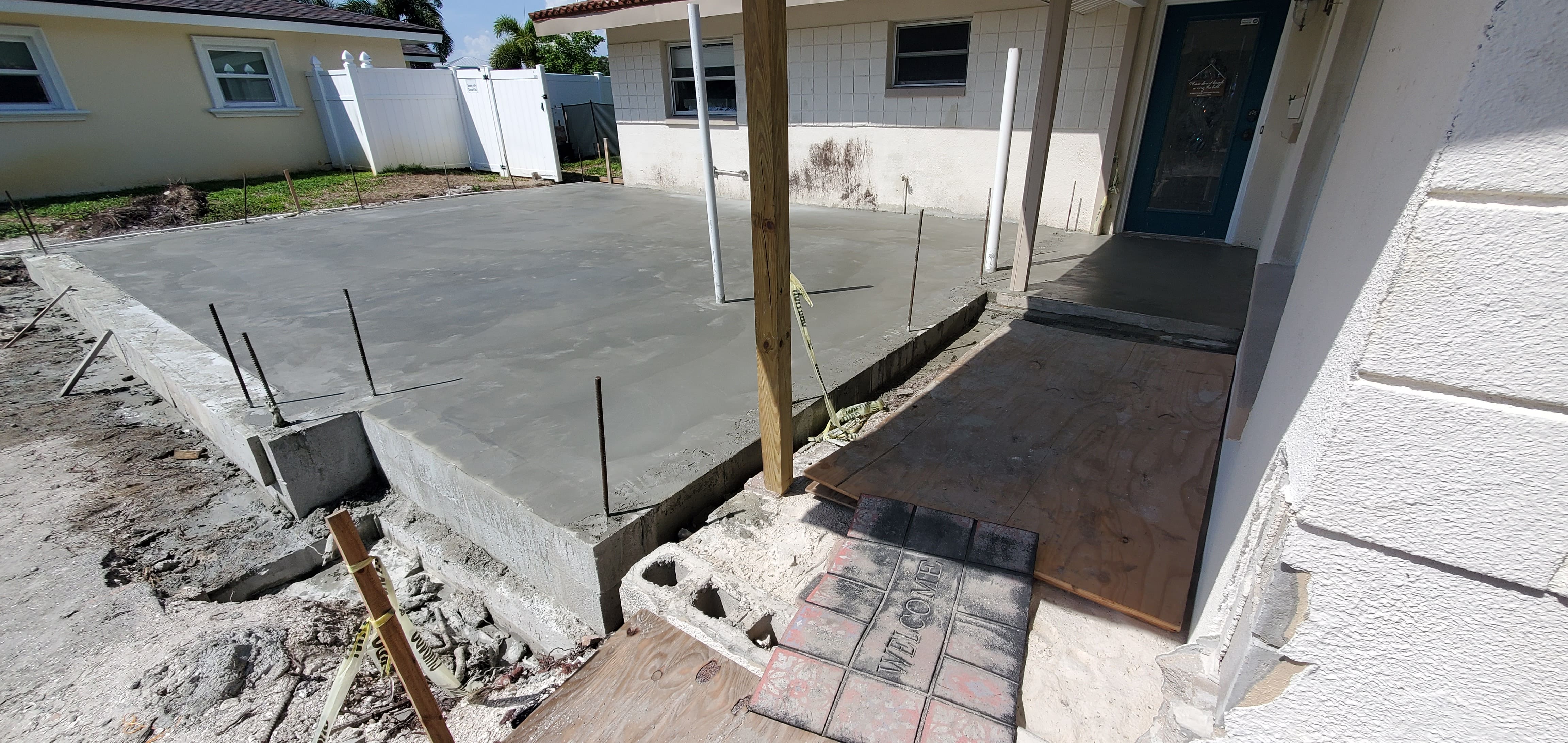
Most Pinellas homes built between the 1950s and 1980s sit on a shallow monolithic slab. Extending that slab for a new addition means saw-cutting the existing edge, epoxy-setting rebar through the cut joint, and pouring a new spread footer sized by your structural engineer. On homes with CBS (concrete block stucco) exterior walls, which is roughly 70 percent of St. Petersburg’s mid-century housing stock, new block courses tie into the existing cells with steel rebar bonded into poured cells. Budget $8K to $25K for this scope alone, depending on size.
2. Roof tie-in and re-roof decisions
Where a first-floor addition ties into an existing roof line, the affected section typically gets stripped and rebuilt. On homes with a 15-year-old or older roof, we often recommend re-roofing the entire house during the addition so the shingle color, age, and warranty match. That adds $12K to $30K but avoids a visible two-tone roof at resale. GAF Timberline HDZ shingles over ZIP System sheathing is our default stack.
3. Electrical and HVAC upgrades
Most Pinellas homes built before 1980 have 100-amp electrical panels. Adding significant square footage usually triggers a 200-amp panel upgrade under Florida Building Code (FBC) load calculations. Budget $2K to $4K for that. HVAC is the other quiet cost driver: your contractor should run a Manual J load calc during pre-construction. If the existing system can’t absorb the new square footage, you’re looking at either a ductwork extension ($3K to $8K), a dedicated mini-split zone ($4K to $9K), or a full system replacement ($8K to $20K depending on tonnage).
4. FEMA elevation if coastal
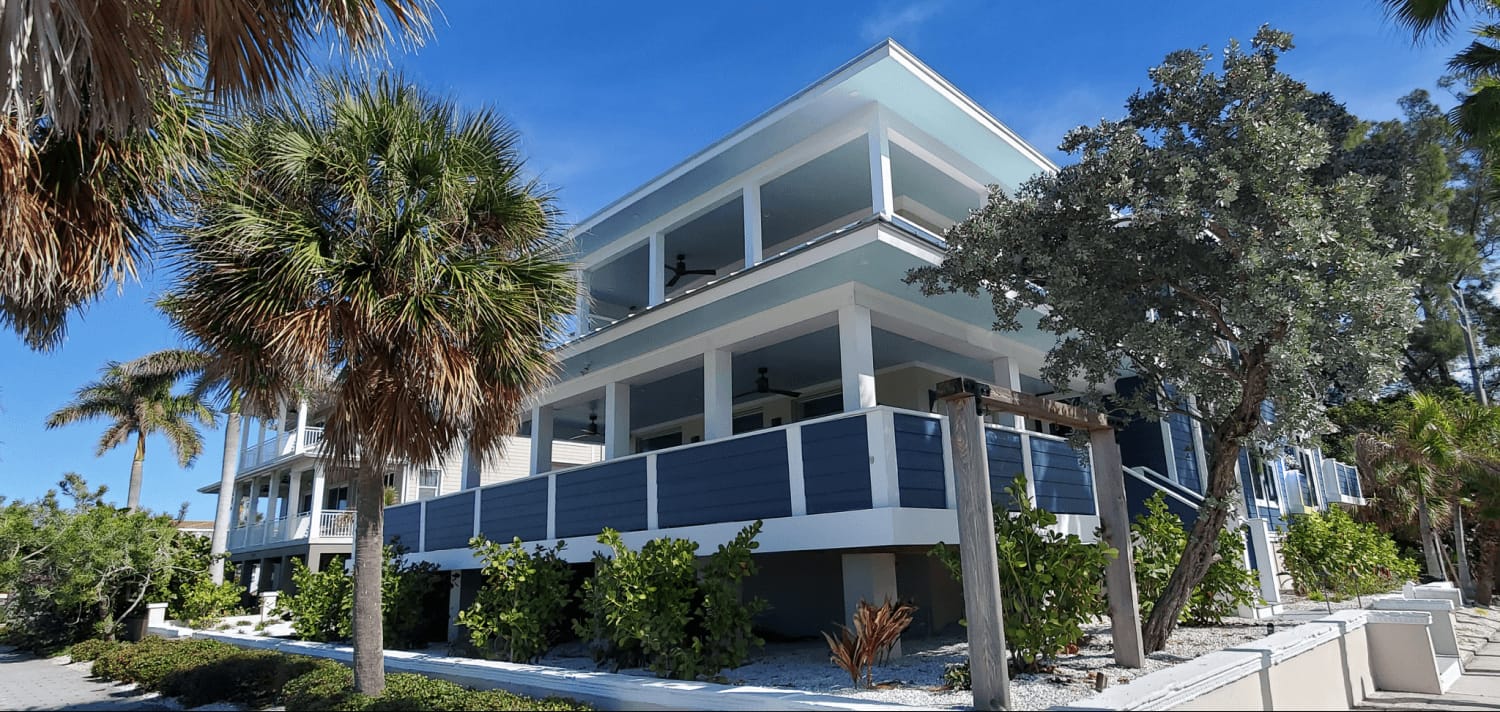
In AE or VE flood zones, the finished floor of any addition has to sit at or above base flood elevation (BFE, the local water surface elevation FEMA predicts during a 1-percent-annual-chance flood). That usually means elevated stem-wall or pier foundations, flood-resistant materials below BFE, a new elevation certificate from a licensed surveyor, and sometimes a structural dry-flood-proofing plan. Add 20 to 30 percent on top of base construction cost.
5. Wet rooms
Every bathroom, kitchen, or laundry in your addition adds $100 to $150 per square foot on that specific room because of plumbing rough-in, waterproofing, tile, and fixtures. A 500 sqft bedroom addition with no wet room runs $125K to $150K. Add a full bath and you’re at $160K to $200K for the same footprint.
Planning a Pinellas County Home Addition?
We'll walk your lot, check the flood map and setback envelope, and give you a real 2026 cost range before you commit to a design.
The Real Permit Timeline in Pinellas County
Home additions pull the same permit stack as new construction: building, electrical, plumbing, mechanical, roofing, and windows. Each has its own plan review and its own mid-construction inspection sequence. Here’s what’s actually happening in 2026 at the St. Petersburg Building Department and Pinellas County unincorporated:
- Pre-construction phase (design, engineering, permitting): 3 to 5 months. This includes architectural drawings, structural engineering stamp, MEP specs, impact-opening product approvals, and the permit application itself.
- Permit plan review (clean first-floor addition, no overlays): 4 to 7 weeks in 2026.
- Second-story addition: add 2 to 4 weeks for structural review.
- AE or VE flood zone: add flood-compliance review plus FEMA 50 percent substantial-improvement calculation review.
- Historic district (Old Northeast, Old Southeast, Kenwood, Roser Park, Granada Terrace): add 6 to 12 weeks for Certificate of Appropriateness (COA) through the Community Planning and Preservation Commission before the building permit review can start.
- Active construction (300 to 500 sqft first-floor): 4 to 7 months from permit issue to final inspection.
- Active construction (1,000 sqft second-story): 7 to 10 months.
Permit fees in Pinellas run roughly $7 to $10 per $1,000 of project value. On a $200K addition, that’s $1,400 to $2,000 in permit fees plus $500 to $1,500 for plan review, $2K to $8K for the structural engineer stamp, and separate trade permits for electrical, plumbing, mechanical, and roofing. Budget $5K to $12K total for permitting and engineering on a $200K project.
The FEMA 50% Rule: The Number That Can Kill Your Project
If your home sits in an AE or VE flood zone and you’re planning an addition, this is the single most important number in your pre-construction package.
The FEMA 50 percent rule (called the substantial-improvement rule) says that if the total cost of improvements to your home, cumulative over a defined period, exceeds 50 percent of the structure’s pre-improvement market value (structure only, not land), the entire home has to be brought to current flood code. In practice that usually means elevating the entire house above base flood elevation. That’s a $60K to $200K+ cost on top of the addition itself, and for some homeowners it tips the whole project toward teardown-and-rebuild.
We check this before we draft plans. Our pre-construction process pulls the Pinellas County Property Appraiser’s assessed structure value, calculates projected improvement cost against that baseline, and gives you a clean “over 50 / under 50” answer before you spend money on design. For a deeper read on how this calculation works, see our FEMA 50 percent rule guide and Pinellas flood zone guide.
Addition vs. Second Story vs. ADU: Which Makes Sense for Your Lot?
Three variables decide this for you: lot room within setback requirements, zoning, and what you’re trying to accomplish with the new space.
First-floor addition
Cheapest per square foot. Works when your lot has room within St. Petersburg setback requirements (typically 6 to 7 ft side, 20 to 25 ft rear, varies by zoning district). Best for growing families, primary suites, home offices, and spaces that benefit from being on grade. Permit path is the fastest of the three options.
Second-story addition
Roughly 40 to 50 percent more per sqft than a first-floor addition. Works when your lot is small, maxed out on footprint, or when you want to preserve yard space. Requires foundation underpinning, a continuous Simpson Strong-Tie hold-down load path from ridge to footer, engineered truss submittals, and often a full re-roof. For the full scope, process, and structural feasibility, see our Second Story Addition Contractors page.
ADU (accessory dwelling unit)
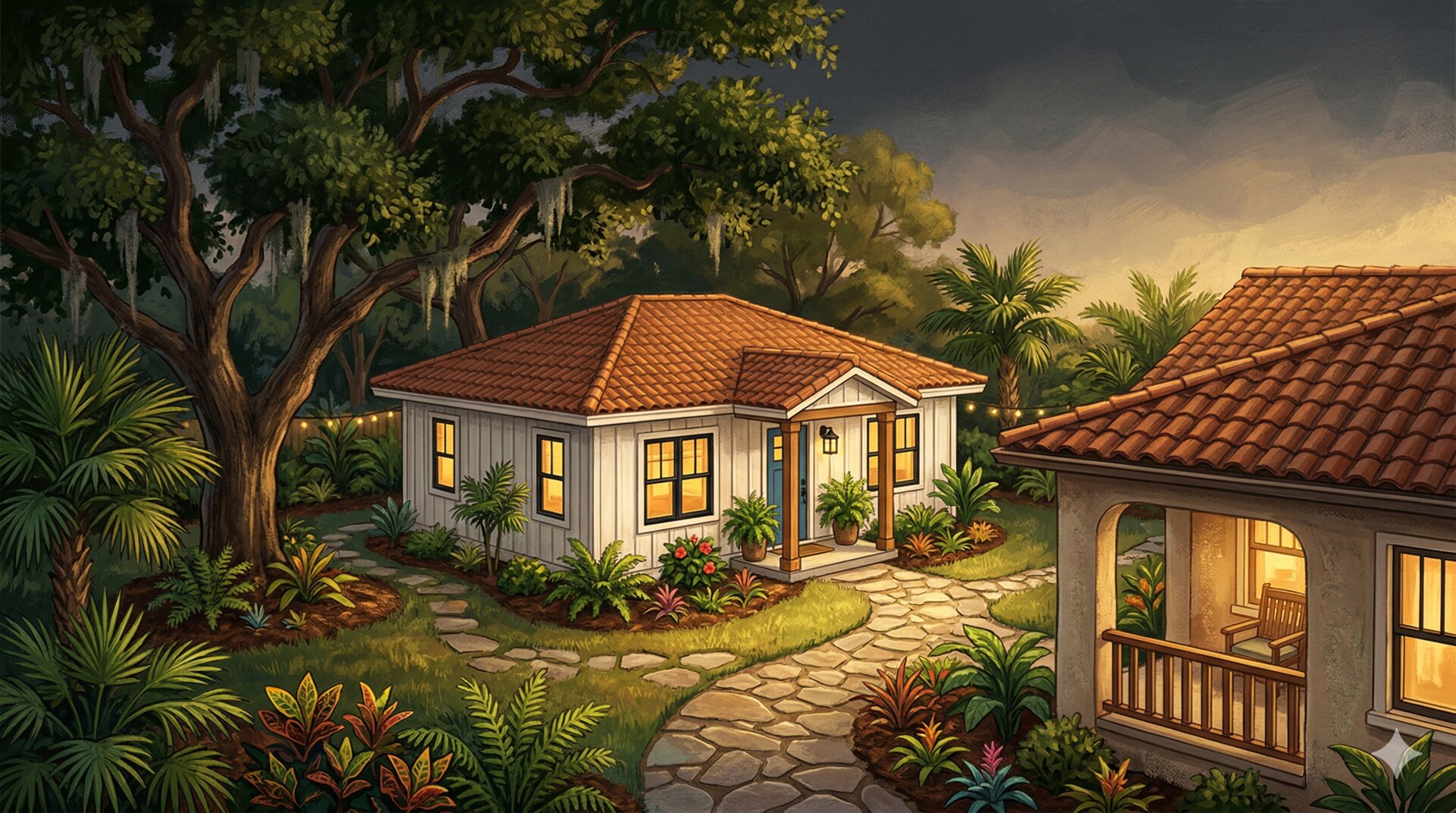
A detached or attached independent living unit with its own kitchen, bath, and entrance. Pinellas and St. Petersburg allow ADUs in most residential zoning districts, with size caps that vary by district. Great for aging parents, adult children, remote-work studios, or long-term rental income. Cost per sqft lands between a first-floor addition and a custom home because you’re essentially building a tiny standalone house with its own foundation, roof, and utilities. Deep dive in our ADU and mother-in-law suite guide.
How We Build Additions at Revolution
Revolution runs a hybrid design-build model. We pair you with an independent architect or designer we’ve worked with before, then coordinate the design, engineering, permitting, and construction under one contract with us as your single point of accountability. You’re not managing a separate designer, builder, and permit expediter. We handle the whole flow.
On the construction side, Revolution keeps 20+ W-2 carpenters on payroll. That matters for additions because the hardest work on an addition, the structural tie-in between old and new, framing continuity, finish matching, happens when your crew is the same people from week one to final inspection. Subcontracted framing crews move between jobs and rarely see the finish stage. Our carpenters do.
On pricing, we use Time and Materials (T&M) with weekly open-book budget reports instead of a padded fixed-bid price. You see the actual labor hours, the actual material invoices, and the actual markup line by line. If something goes faster than estimated, you save money. If unforeseen conditions add cost (and on additions, they often do), you see it in real time, documented. We lock roughly 75 percent of your line items to confirmed cost during pre-construction, which gets your total budget certainty to 90 to 95 percent before the first nail goes in.
Pinellas County Home Addition FAQ
What does a home addition cost in Pinellas County in 2026?
Most first-floor additions in Pinellas County run $250 to $350 per square foot. Second-story additions run $350 to $450+ per square foot. A 500 sq ft primary suite addition typically lands $140K to $200K. Flood-zone sites add 20 to 30 percent on top of that for elevated foundations and flood-resistant materials below base flood elevation (BFE). These are ranges from active 2026 projects, not fixed quotes. Every project gets priced from the specific lot, soil, flood map, and selection set.
How long does the permit take in Pinellas County?
A clean, fully engineered plan set for a first-floor addition with no flood or historic overlay runs 4 to 7 weeks through plan review in 2026. Second-story additions add 2 to 4 weeks for structural engineering review. Flood-zone parcels add a flood-compliance review plus a FEMA 50 percent substantial-improvement calculation. Historic districts (Old Northeast, Granada Terrace, Old Southeast, Kenwood, Roser Park) add 6 to 12 weeks for Certificate of Appropriateness (COA) review through the Community Planning and Preservation Commission before the building permit review can even start.
What is the FEMA 50% rule and how does it affect my addition?
If the cost of your addition, plus any other improvements made within the same rolling period, exceeds 50 percent of your home's pre-improvement market value (structure only, not land), the entire home has to be brought to current flood code. That usually means elevating the whole house above base flood elevation (BFE), a $60K to $200K+ undertaking depending on home size and foundation type. Pinellas County is one of the strictest enforcement jurisdictions in the country on this rule. We check cumulative improvement value before we ever draft plans.
Is a 1,000 sqft addition cheaper than a second story?
Almost always, yes. A 1,000 sqft first-floor addition on a buildable lot typically runs $250K to $350K. The same square footage added as a second story typically runs $350K to $500K because of foundation underpinning, structural engineer review, a continuous Simpson Strong-Tie hold-down load path from ridge to footer, and often a full re-roof of the existing structure for visual match. The exception: tight urban lots where setback requirements (6 to 7 ft side, 20 to 25 ft rear in most Pinellas zoning) leave no room to build outward.
Should I build an addition, a second story, or an ADU?
Depends on three things: your lot, your zoning, and what you're trying to accomplish. First-floor addition: cheapest per sqft, needs lot room within setbacks, best for growing families and primary suites. Second story: almost 50 percent more per sqft but doubles your footprint on a tight lot, works when setbacks are the blocker. ADU (accessory dwelling unit) or detached mother-in-law suite: fully separate kitchen and bath, independent entrance, often rentable or usable as extended-family housing. Pinellas allows ADUs in most residential zoning districts, but detached ADU construction runs $200 to $350 per sqft because you're building a small freestanding structure with its own foundation, roof, utilities, and envelope.
Key Takeaways
- Pinellas home additions run $250 to $400+ per sqft in 2026, with flood zones adding 20 to 30 percent.
- Permits take 4 to 7 weeks on a clean set. Historic districts add 6 to 12 weeks for COA review before building-permit review starts.
- The FEMA 50 percent rule can force whole-house elevation if cumulative improvements exceed 50 percent of structure value. Check this before you draft plans.
- Second-story additions cost 40 to 50 percent more per sqft than first-floor. ADUs cost more than attached additions because you’re building a standalone structure.
- Wet rooms (bath, kitchen, laundry) add $100 to $150 per sqft on that specific room because of plumbing rough-in, waterproofing, and fixtures.
If you’ve walked your lot, checked your flood map, and you’re ready for real numbers on your specific project, that’s where we come in. Every pre-construction walk-through at Revolution is honest about what’s buildable, what the setbacks allow, and where the cost math actually lands.
Want a Real 2026 Cost Range for Your Pinellas Addition?
Call Revolution at (727) 888-6161 or request a free consultation. We'll check setbacks, pull the flood map, and give you honest numbers before you spend a dollar on design.