Home Addition Cost in St. Petersburg: What to Budget in 2026

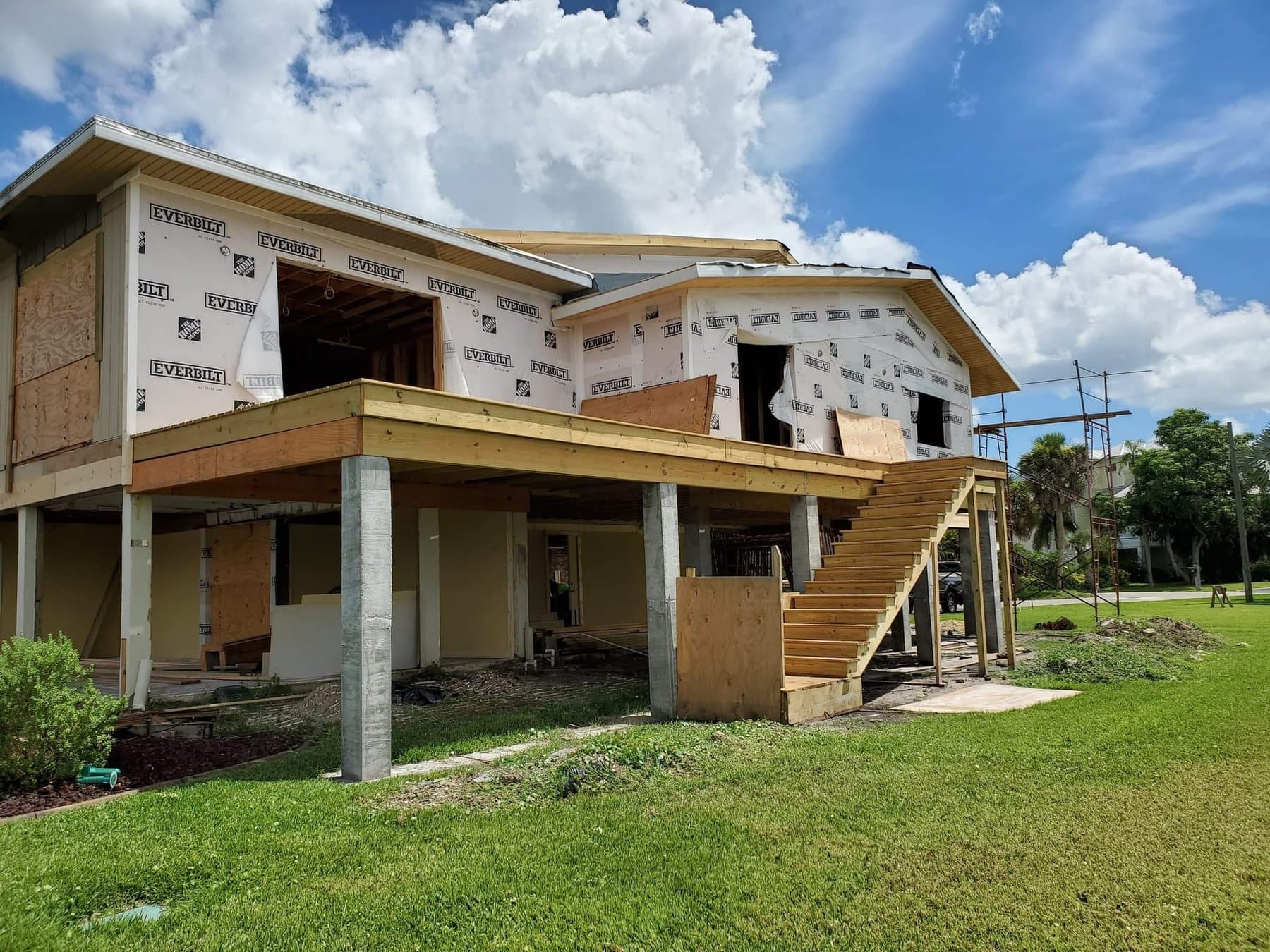
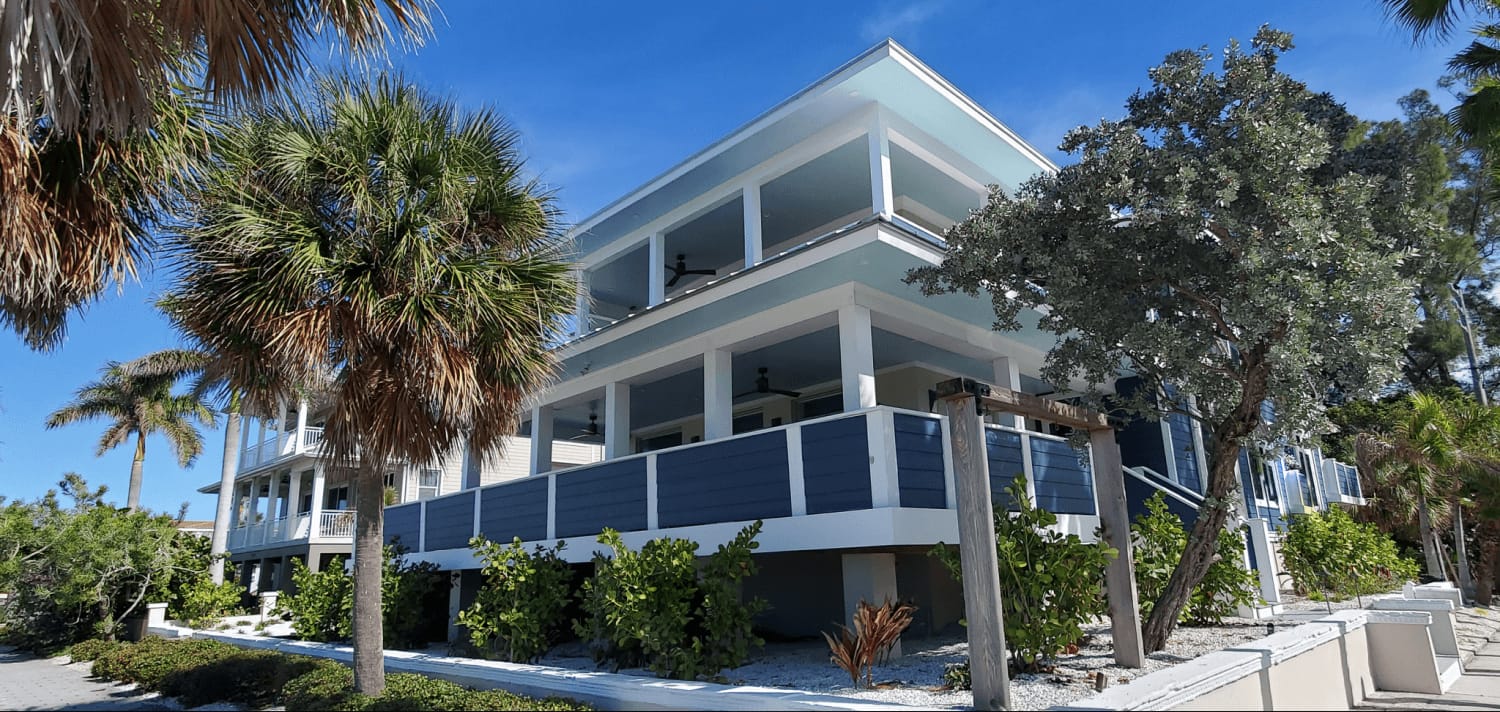
A home addition in St. Petersburg is new-construction conditioned space added to an existing home, first-floor room additions, second-story additions, master-suite bump-outs, or accessory dwelling units (ADUs), permitted under the Florida Building Code with Pinellas County coastal-zone requirements (FEMA elevation above Base Flood Elevation in AE/VE zones, 150 mph impact-resistant envelope, hurricane strapping). Historic-district properties require Certificate of Appropriateness (COA) review before permit issuance; flood-zone properties trigger the FEMA 50% substantial-improvement calculation on cumulative permit cost.
A home addition in St. Pete typically runs $200–$300 per square foot for a first-floor addition and $300–$400+ per square foot for a second story. That’s the honest answer, and it’s very different from the $80–$200/sqft you’ll see on most national cost guides.
Scope note: this guide covers home addition costs: expanding conditioned space onto an existing home. If you’re looking for standalone remodel pricing on a specific room, see our dedicated bathroom remodel cost guide, kitchen remodel cost guide, or custom-home cost guide.
Those national numbers are pulled from markets where labor is cheaper, building codes are simpler, and a hurricane hasn’t made landfall recently. Florida has its own math. Pinellas County sits in a 150 mph wind zone, every impact window and door needs a FL Product Approval (NOA) number, every strap and connector on the load path has to be Simpson Strong-Tie (or equivalent) hurricane-rated, and flood zone lots trigger FEMA base flood elevation review before design even starts. Wind code compliance, flood zone requirements, and coastal-grade materials: Hardie fiber-cement siding, GAF Timberline HDZ shingles, ZIP System sheathing, PGT WinGuard impact windows. All push your project budget higher than the national average. Here’s what you’ll actually pay in this market, and what to expect when you start calling home addition contractors in St. Petersburg for real bids.
Cost by Addition Type in St. Pete
The single biggest cost driver for any addition is whether it includes wet rooms: a bathroom, kitchen, or laundry. Plumbing rough-in, waterproofing, tile, and fixtures can add $100–$150 per square foot to a room that would otherwise cost half as much to build. For pillar-specific pricing (bathroom-only or kitchen-only projects, not additions), see our dedicated St. Petersburg bathroom remodel cost breakdown or St. Petersburg kitchen remodel cost guide.
Here’s how that plays out across the most common addition types:
| Addition Type | St. Pete Cost Range |
|---|---|
| First floor: no wet rooms | $200–$250/sqft |
| First floor, with bath or kitchen | $250–$300/sqft |
| Second story | $300–$400+/sqft |
| Garage conversion: no wet rooms | ~$100/sqft |
| Garage conversion, with bath and kitchen | $250/sqft+ |
| ADU / guest house | $200–$350/sqft |
Scoping a single-room addition? If you’re adding one bedroom, a home office, or a sunroom, rather than a full second-story or whole-home expansion, the math compresses. See our single-room addition page for scope boundaries, permit timeline, and a typical $80K–$120K St. Pete cost range.
Considering a Florida room? Florida rooms use more glass and less structural wall, so the cost math is different from a traditional addition. See our Florida room addition cost breakdown for St. Pete-specific pricing, the impact glass exemption, and permit details.
Considering an ADU, in-law suite, or garage conversion? The cost math diverges sharply once a kitchen and bath enter the scope: see our St. Pete ADU and in-law suite cost guide for detached-vs-attached, garage-conversion economics, and the City of St. Pete approval path.
What Does a 20×20 Addition Actually Cost?
A 400 sqft first-floor addition with no wet rooms: roughly $80,000–$100,000 ($200–$250/sqft). Add a wet room and you’re at $100,000–$120,000 ($250–$300/sqft): the added plumbing and finish scope is what drives the delta. A 400 sqft second-story addition: $120,000–$160,000 ($300–$400/sqft) because of the structural retrofitting required to support the new load. If you’re in a flood zone, add 20–30% to any of those numbers for FEMA compliance.
To put real numbers to this: a 2,000 sqft garage conversion with two offices and no wet rooms came in at $200,000. Adding wet-room scope to the same footprint would push it closer to $500,000. That’s not a rounding difference: wet rooms change the entire scope of the project.
For deeper scope specificity on the 400-800 sqft band, see our traditional room addition page: foundation-extension mechanics, MEP rough-in sequencing, and the typical 3-6 month construction window on non-structural single-room scope.
What Drives Your Cost Up
Wet Rooms
Already covered above, but worth repeating: every wet room in your addition multiplies the cost per square foot significantly. If you’re planning a guest suite, the difference between a bedroom-only addition and a bedroom-plus-wet-room addition can be $100K+ depending on size. For pillar-scope pricing on the wet-room half (bathroom-only or kitchen-only, not addition), see the canonical bathroom cost breakdown.
Building Up vs. Building Out
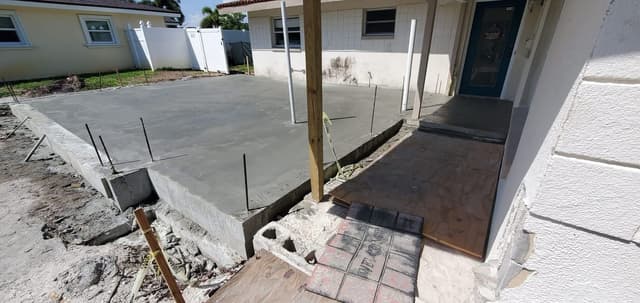
First-floor additions are almost always cheaper. Your existing foundation and exterior walls weren’t built to carry a second story, so adding one often means foundation underpinning, new engineered trusses, a continuous Simpson Strong-Tie hold-down load path from ridge to footer, and a structural engineer stamp on every sheet. That engineering and labor adds up fast. Timeline-wise: a 400 sq ft first-floor master suite typically runs 8–12 weeks of active construction; the same footprint as a second-story addition stretches to 14–18 weeks because of the structural tie-in work.
“Biggest cost drivers: foundation, windows and doors, roofing (often we re-roof the whole house). Building up versus out: we do more first-floor additions because building up is more expensive; existing foundations and walls aren’t built for a second story, so retrofitting or rebuilding can double the cost. Additional unexpected costs include electrical, plumbing, and HVAC upgrades since efficiency standards (SEER ratings) keep rising. Often a complete HVAC revamp is needed to handle added square footage.”
HVAC and Electrical Upgrades
Every addition triggers a mechanical load calculation. If your existing HVAC system is sized for your current square footage, it likely won’t handle the addition, which means either extending ductwork, adding a dedicated zone, or replacing the system entirely. Figure $5,000–$20,000 depending on what your system can support.
Electrical panels are the other quiet cost driver. Most St. Pete homes built before 1980 have 100-amp panels. Adding significant square footage usually pushes you into a panel upgrade ($1,920–$4,050 for a 100 to 200 amp upgrade). The permit inspection will require it if load calculations say you need it.
Foundation Conditions
What’s beneath your slab is unknown until the ground opens up. Soft spots, buried debris, underground utilities that weren’t mapped correctly: these show up during excavation and drive cost in one direction only. Budget a contingency.
Finishes and Materials
The range between standard and premium finishes on a $300K addition can be $40,000 or more. This is largely within your control, but it’s worth clarifying early. The per-square-foot estimates above assume mid-range finishes.
Planning a Home Addition in St. Pete?
We'll walk through your specific project, assess the scope, and give you real numbers based on your lot, your home, and your goals.
Florida-Specific Cost Factors
Hurricane Code Compliance
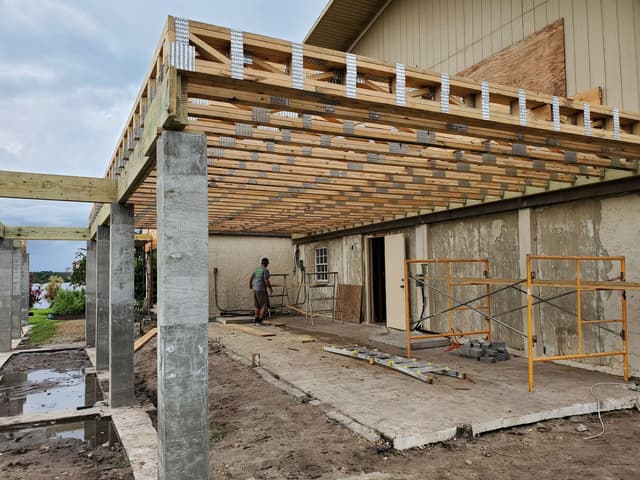
Florida Building Code wind requirements are non-negotiable. Pinellas County is a 150 mph wind zone. Every impact window (PGT WinGuard or CGI Sentinel), every door (Therma-Tru or Clopay impact-rated), and every roofing assembly (GAF Timberline HDZ over ZIP System sheathing is our default) needs a current FL Product Approval (NOA) number on the permit submittal. Add Simpson Strong-Tie hurricane straps at every truss-to-top-plate and top-plate-to-stud connection, plus engineered wind-load calculations on the structural drawings, and you’re looking at 10–15% added to your total project cost compared to a comparable addition in a non-hurricane state. This isn’t optional padding: it’s required by code.
Flood Zone Additions
If your property is in an AE or VE flood zone on the FIRM map, and a significant portion of St. Pete is: your addition triggers FEMA compliance review against the base flood elevation (BFE) for your FIRM panel. Elevated foundations (stem wall or pier), flood-resistant materials below BFE, a new elevation certificate, and the compliance process itself add 20–30% to your budget before you hang a single door. Expect water/sewer connection fees and Pinellas County impact fees on any square footage you add, typically $3K–$8K depending on addition size.
The number that matters most in flood zone additions is the FEMA 50% rule (we work within 50% to be safe): if the total cost of all improvements to your home exceeds 50% of its assessed structural value, you’re required to bring the entire home up to current FEMA compliance. That usually means elevating the entire structure: a $50,000–$150,000+ undertaking (see our house elevation cost guide for a full breakdown). Your contractor needs to track this carefully.
Revolution has completed $10–20M in flood zone work across Pinellas County. We know which neighborhoods trigger what, and we track cumulative improvement values before we ever pull a permit. For a complete breakdown of foundation options and elevation requirements, see our elevated house plans guide.
St. Pete Building Permits and Fees
Pinellas County calculates permit fees at roughly $7–$10 per $1,000 of project value. On a $200,000 addition, that’s $1,400–$2,000 in St. Petersburg Building Department permit fees before you add plan review fees ($500–$1,500), a structural engineer stamp ($2,000–$8,000), and mid-construction inspection rounds (rough framing, electrical rough-in, plumbing rough-in, insulation, and final: each one a scheduled trip by the county inspector). Budget $5,000–$12,000 total for permitting and engineering on a $200K project, and expect a 3–6 week permit turnaround on a clean set (longer if your home is in a historic district and requires a Certificate of Appropriateness first).
Jeremy is direct about the permitting environment here: “The St. Pete building department is known as being very difficult. It requires a contractor with significant experience and relationships inside that building department.” This isn’t a complaint: it’s a selection criterion. The contractor you hire needs to know how to navigate it.
Salt Air and Coastal Materials
Coastal homes, especially within a mile of the Gulf or Tampa Bay, require marine-grade hardware, stainless Simpson Strong-Tie connectors, hot-dip galvanized fasteners, and impact glass throughout. Hardie fiber-cement siding handles salt air better than LP SmartSide in these exposure zones. Add 5–10% to material costs if your home is in a coastal exposure zone.
The Hidden Costs Nobody Warns You About
Every cost guide tells you to budget a 10–20% contingency. Very few explain why. Here’s the mechanism:
Structural surprises at excavation. Until the ground opens, you don’t know what’s down there. Soft soil, old footings from a previous structure, buried utilities: these add cost and can’t be priced until they’re found.
Permit-triggered code upgrades. When you pull a permit in Florida, the inspector looks at your existing structure too. If your current wiring, plumbing, or insulation doesn’t meet code, the permit may require you to bring those elements up to current standards, even in portions of the home that aren’t part of the addition.
The wet room multiplier. You planned a bedroom addition. Then someone asks, “what would it cost to add a half bath?” The plumbing rough-in alone can run $8,000–$15,000 on the addition scope. Know your scope before construction starts. (This is addition-scope pricing: for a bathroom-only remodel not tied to an addition, our St. Pete bathroom cost guide covers the standalone scope.)
HVAC capacity. Your contractor should run a Manual J load calculation during pre-construction. If they don’t, you may discover mid-build that your existing system can’t handle the new square footage. Catching this early is cheaper than catching it after framing is complete.
The $1M home rule on second stories. Second-story additions on homes in higher-value St. Pete neighborhoods (Old Northeast, Snell Isle) often require architectural matching, roof pitch, window proportions, exterior material, trim detail, that drives both design time and material cost well above the base per-square-foot number.
Is It Cheaper to Add On or Move?
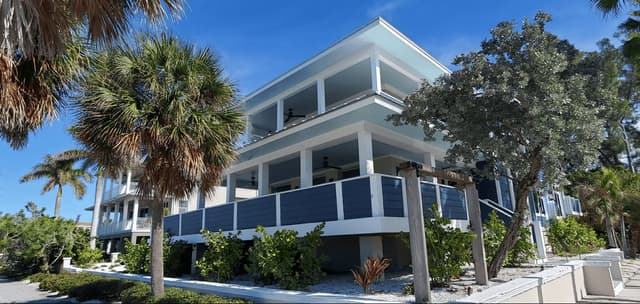
This is the question your realtor probably won’t give you a straight answer on, because the answer often favors staying. Here’s the actual math.
In most established St. Pete neighborhoods, a comparable home with the square footage you need is trading at $650–$700 per square foot or more. Add 6–8% in closing costs, moving expenses, and the premium on updated homes, and you’re looking at a real cost of $750+/sqft to upgrade your living situation by moving.
Adding on at $200–$400/sqft is often the better financial move: especially when you factor in that you’re keeping the location you chose, the school zone you chose, and the neighbors you know.
As Jeremy frames it: “Often adding on at $400–$500 per sqft is cheaper than buying a new home at $700 per sqft in the same neighborhood.”
When adding on makes sense:
- You love your location and aren’t willing to leave
- Your lot has room (check setback requirements, typically 6–7 ft sides, 20–30 ft front, 25 ft rear in St. Pete)
- Your home’s bones are solid: no deferred structural issues, no termite damage
- You’re under the FEMA 50% threshold if you’re in a flood zone
When moving makes more sense:
- Your lot coverage is maxed out: no room to expand within setbacks
- You’re already at or near the FEMA 50% cumulative improvement limit
- The addition would make your home significantly larger than surrounding properties (affects future sale)
- Your foundation has existing issues that would cost more to remedy than the addition itself
How T&M Keeps Your Addition Budget Honest
Most contractors price additions as fixed bids. The problem: they can’t actually predict what they’ll find inside your walls or beneath your slab, so they build contingency into the bid whether problems arise or not. You pay for that risk cushion regardless of what happens.
Revolution uses Time & Materials (T&M): you pay for the actual labor and materials used, with a fixed markup on both. If things go faster than estimated, you save money. If unforeseen conditions add cost, you see that too: in real time, with documentation.
Before construction begins, our team locks down roughly 75% of your line items to a confirmed cost during pre-construction. Subs provide hard bids for foundation, framing, and MEP work. Materials get specified and priced. That 75% locks brings your total budget certainty to 90–95% before the first nail goes in.
Then every week during construction, you get a budget report comparing actuals to budget, not a summary, but a real line-item comparison so you can see where your money is going.
“The biggest challenge with additions is unforeseen faults and custom work for every trade: costs never go down, only up,” Jeremy acknowledges. “We handle it with transparent communication and a robust pre-construction process.”
That’s not a sales line. It’s a process description.
Structural Tie-In: What Actually Happens When Old Meets New
The part of a home addition that fails most often, and the part most contractors underestimate: is the structural tie-in between the new addition and the existing structure. Here’s what that actually involves on a typical St. Pete addition, and where the cost hides.
Foundation Tie-In
Most St. Pete homes built 1920s–1970s sit on a slab-on-grade or shallow stem-wall footer. Adding square footage means extending that foundation: either a new poured-slab pad tied to the existing slab with epoxy-set rebar through a saw-cut joint, or a spread-footing extension sized by the structural engineer for the new load.
On masonry-wall homes (CBS construction: the dominant build type in St. Pete’s mid-century neighborhoods from Crescent Lake to Jungle Terrace), the new block courses tie into existing cells with epoxy anchors and steel rebar. Per Florida Building Code (FBC) Section 1810 and Pinellas County setback requirements (typically 6–7 ft side, 20–25 ft rear), the engineer’s stamped plans dictate the exact tie-in geometry before ground breaks. Skipping the engineer stamp is not a cost-saving option: St. Petersburg Building Department will not review the permit without one.
Framing and Load-Path Continuity
On second-story additions, the highest-stakes tie-in, shear-wall reinforcement is almost always required. Simpson Strong-Tie hold-downs (HD series) anchor new wall framing to the existing slab or foundation stem; Simpson A35 framing angles connect new rafters to existing top plates. Wood-frame existing walls use heavy-duty steel connections engineered for a solid load-transfer joint; masonry existing walls use epoxy and steel rebar bonded into poured cells.
The framing crew uses ZIP System structural sheathing (Huber Engineered Woods) on all exterior walls and roof decking: the integrated water-resistive barrier eliminates the separate house-wrap step and gives plan review a single-source documentation trail for the FBC energy compliance submittal.
Roof Transition
Where a first-floor addition ties into the existing roof line, the affected roof section typically gets stripped, often more than the addition footprint, because roof valleys have to drain cleanly, and rebuilt with GAF Timberline HDZ shingles matched to the existing profile. Some projects re-roof the entire house for visual continuity, which pushes the addition budget up but avoids a two-tone roof at resale.
PGT WinGuard impact-rated windows and doors go in every new opening. Florida Product Approval (NOA) numbers get submitted to St. Petersburg Building Department with the permit set so plan review doesn’t stall on wind-resistance documentation.
The Six-Permit Stack for St. Pete Additions
Home additions in St. Petersburg pull the same permit stack as new construction: building, electrical, plumbing, mechanical, roofing, and windows. Each has its own submittal package, its own plan review, and its own mid-construction inspection sequence. Skipping any one of them stalls the certificate of occupancy at the end.
Typical review windows on a clean, fully-engineered plan set:
- First-floor addition, no flood or historic overlay: 3–6 weeks
- Second-story addition: add 2–4 weeks for structural engineering review (foundation underpinning, shear-wall load paths, engineered truss submittals)
- AE / VE flood-zone parcel: add a special-department flood-compliance review layer plus FEMA 50% substantial-improvement calculation review
- Local historic district (Old Northeast, Old Southeast, Kenwood, Historic Uptown, Roser Park, Granada Terrace): add 6–12 weeks for Certificate of Appropriateness (COA) review through the Community Planning & Preservation Commission before the building permit review can start
Revolution pulls every permit ourselves: building, electrical, plumbing, mechanical, roofing, windows, with Florida Product Approval (NOA) numbers pre-attached to every impact opening and every roofing assembly. There’s nothing left for the homeowner to chase on the permitting side.
Garage Conversion to Conditioned Living Space
A garage conversion turns an existing attached garage into permitted conditioned living space: a bedroom suite, home office, in-law room, or ADU. The shell is already there, so framing and roof are mostly a non-issue; the budget goes into bringing the space up to conditioned-living code. Typical Pinellas garage conversion runs $60K–$120K for dry scope (bedroom / office) and $150K–$250K for wet scope (full ADU kitchen + bath).
Six items drive the cost and timeline on every garage conversion:
- Mini-split HVAC. FBC Mechanical requires the converted space carry its own conditioning load. A ductless mini-split sized for 400–500 sqft (typically 12,000–18,000 BTU at 18+ SEER2) is the cleanest path: your existing house system usually can’t absorb the added square footage, and the 2026 FBC Energy Code SEER2 minimums for new equipment are non-negotiable.
- Insulation upgrade. Garages are typically uninsulated. Conditioned living space in Florida’s Climate Zone 2 requires R-30 ceiling and R-13 wall minimums per the FBC Energy Code: new batt or spray foam in the wall cavities and either blown-in or batt insulation in the attic plane.
- Electrical panel coordination. A 200A panel is the typical baseline for a converted garage used as living space: older 100A or 150A panels often need an upgrade to carry the added HVAC, lighting, and outlet circuits. Sometimes a subpanel off the main works; sometimes the service entrance has to be replaced.
- FBC change-of-use code path. Converting a garage from accessory storage to habitable space is a change-of-use under the FBC. That triggers egress window sizing, smoke + CO detection, ceiling height verification (7’6” minimum), and impact-rated openings if you’re replacing the garage door with a window or wall.
- Property tax reassessment risk. Adding heated, conditioned square footage to your tax record triggers reassessment by the Pinellas County Property Appraiser. The Save Our Homes 3% annual cap does not shield new construction: the converted space gets assessed at full market value on the next January 1 after the certificate of occupancy.
- Whether to keep the garage door for resale. Replacing the overhead door with an insulated wall + window gives the cleanest finished interior but eliminates the visual cue that the space was once a garage. Some owners in markets with covered-parking demand prefer to keep the original door visible from the street while finishing the inside as living space, so a future buyer could re-convert. Either path is permittable; the choice is resale strategy, not code.
Full ADU-vs-detached-vs-garage-conversion cost comparison and zoning path in our ADU and mother-in-law suite guide. Considering an addition instead of a conversion? See the funnel-ready home addition service page for the free-estimate walk-through.
Home Addition Cost FAQ
How much does a home addition cost in St. Petersburg?
These are ranges from active 2026 St. Pete projects, not fixed-price quotes — every addition is priced from the actual lot, BFE, soil, and selection set. Most home additions in St. Pete run $350–$550 per square foot. A 400 sq ft master suite addition typically lands $150K–$220K. Two-story additions and additions on slab homes (which is most of St. Pete) cost more because of foundation tie-in, roof structure, and HVAC integration. In flood zones — which covers most of east and south St. Pete — there are FEMA rules that can drive elevation work on the addition.
Do I need to elevate a home addition if my house is in a flood zone?
It depends on the FEMA 50% rule. If the cost of the addition (plus any other improvements within the same year) exceeds 50% of the structure's pre-improvement market value, the entire structure has to be brought to current flood code — including elevation. That's a budget killer and often a project killer. We evaluate this on every Pinellas project before you commit. Pinellas is one of the strictest counties in the country on this.
How long does a home addition take in St. Pete?
A typical 300–500 sq ft addition runs 4–7 months from permit to final inspection. Pre-construction (design, structural engineering, permitting) is another 2–4 months. Pinellas County permit times have stretched in 2025–2026, so plan conservatively. We pull permits ourselves and have relationships with the inspectors — that matters more than people think.
Will a home addition add value to my house in St. Pete?
Generally yes, especially functional additions — bedrooms, bathrooms, primary suites. In St. Pete, additions in Old Northeast, Snell Isle, and waterfront neighborhoods see strong returns because the lots are valuable but the original homes are small. ROI is weaker on bonus rooms and oversized luxury additions in mid-tier neighborhoods. We can talk through the comp picture before you commit to scope.
How much more does a second-story addition cost than a first-floor addition?
Plan on $300–$400+/sqft for a second-story addition versus $200–$300/sqft for a first-floor addition in St. Pete — a 30–50% premium driven by foundation reinforcement, full roof rebuild, structural engineer stamp, and a continuous Simpson Strong-Tie hold-down load path from ridge to footer. A 400 sqft second-story addition typically lands $120K–$160K versus $80K–$100K for a first-floor addition the same size. For the full scope, process, and structural feasibility detail, see our dedicated <a href="/services/home-addition/second-story">Second Story Addition Contractors</a> page.
How much does a master suite addition cost in St. Petersburg?
A 350–500 sq ft master suite addition with a primary bath in St. Pete typically runs $150K–$280K, or roughly $400–$560 per square foot once you include the wet-room premium, impact windows, Hardie siding to match the existing envelope, Simpson Strong-Tie hurricane-strap tie-in to the old structure, HVAC extension or a dedicated mini-split, the St. Petersburg Building Department permit and inspection fees, and a structural engineer stamp. Plan on 8–12 weeks of construction after permit issue, plus 3–6 months of design and pre-construction. Slab-on-grade tie-in is harder than you'd think — the existing slab edge has to be prepped, epoxied, and pinned with rebar before the new footer can go in.
What does an addition cost per square foot in a Pinellas flood zone?
Add 20–30% to the base $200–$400/sqft range. In an AE or VE flood zone on the FIRM map, the finished floor of any addition (and in some cases the entire house) has to sit at or above base flood elevation (BFE), which means elevated stem-wall or pier foundations, flood-resistant materials below BFE, a new elevation certificate, and in some cases a FEMA 50% rule review against the structure's pre-improvement value. A $250K non-flood-zone addition typically lands $300K–$325K inside an AE zone, and more if the project pushes you over the 50% cumulative improvement threshold and triggers full-structure elevation.
Key Takeaways
- Home additions in St. Pete cost $200–$300/sqft for first floor and $300–$400+/sqft for second story: well above national averages due to Florida building code and coastal construction requirements
- Wet rooms are the single biggest cost multiplier: adding one to the addition can increase your per-sqft cost by $100–$150
- Flood zone properties face 20–30% cost premiums plus the critical FEMA 50% rule that can trigger whole-home compliance
- At $200–$400/sqft, adding on is almost always cheaper than buying a comparable larger home at $650–$700+/sqft in the same neighborhood
- A T&M pricing model with weekly budget reports gives you real cost visibility instead of a padded fixed bid
When a planned addition starts approaching 50–60% of the existing home's value, either through scope creep, deep flood-zone elevation requirements, or owners realizing they want to redo the original house too, the math often tips toward teardown-and-rebuild instead of additive work. If you're anywhere near that decision point, our custom home building process guide covers the eight-phase sequence for new construction in Pinellas County, including flood-zone elevation timing, permit review windows, and how the schedule compares to a major addition.
Ready to explore more? Related guides:
- Home Additions service page: addition types, the build process, and what makes St. Pete additions different
- St. Petersburg Home Addition Service: city-permitting context, Old Southeast project work
- What to Expect During a Home Addition: a step-by-step walkthrough of the build process
- Remodel, Add On, or Build New?: the BOFU decision framework when the cost math gets close
- Pinellas County flood zone guide: what you need to know before pulling a permit
- Kitchen remodel costs in St. Pete: comparing renovation options
- Custom Home Cost Guide: Real Numbers for St. Pete, when the addition math tips toward teardown-and-rebuild instead
- Condo renovation costs in St. Pete: if you're also evaluating a condo vs. expanded single-family home
Want to Know What Your Home Addition Will Actually Cost?
Call Revolution at (727) 888-6161 or request a free consultation. We'll assess your specific lot, your home's condition, and give you a real estimate.