Remodel, Add On, or Build New? How St. Pete Homeowners Decide

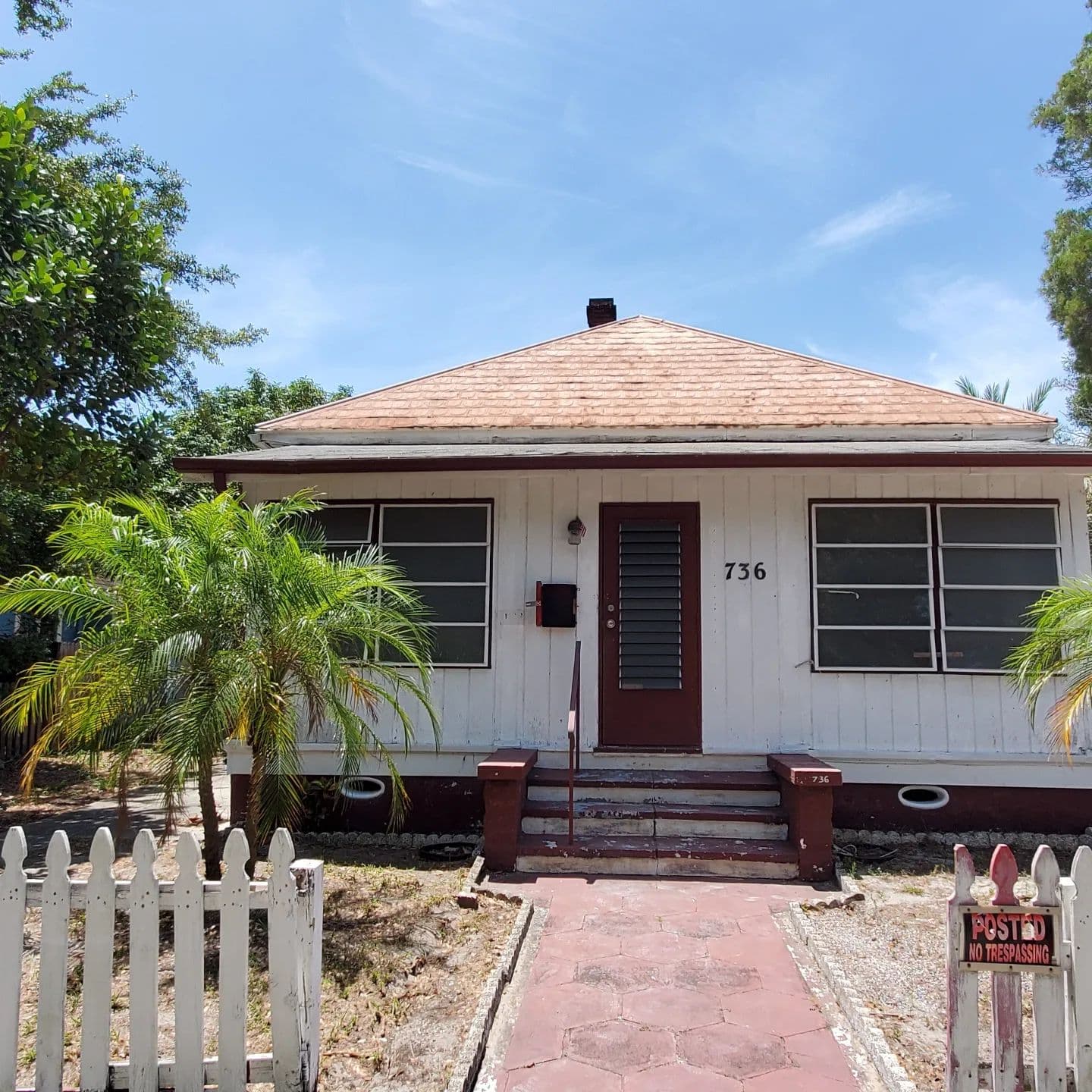
If you’re weighing whether to remodel, add on, or build new, the first decision isn’t which contractor to hire. It’s which path to take. Each of those is a fundamentally different project with different costs, timelines, and triggers. In St. Pete, one of those triggers isn’t even your choice.
Here’s the framework we use with clients who are trying to figure out which direction actually makes sense for their situation.
Three Paths, Three Different Problems
These three options aren’t interchangeable. They solve different problems.
Remodeling is for homes with enough square footage but the wrong layout, outdated systems, or finishes that no longer work. You’re not changing the footprint — you’re changing what’s inside it. That might mean opening up a kitchen, converting an attic, or gutting a bathroom and doing it right. The structure stays; the interior changes.
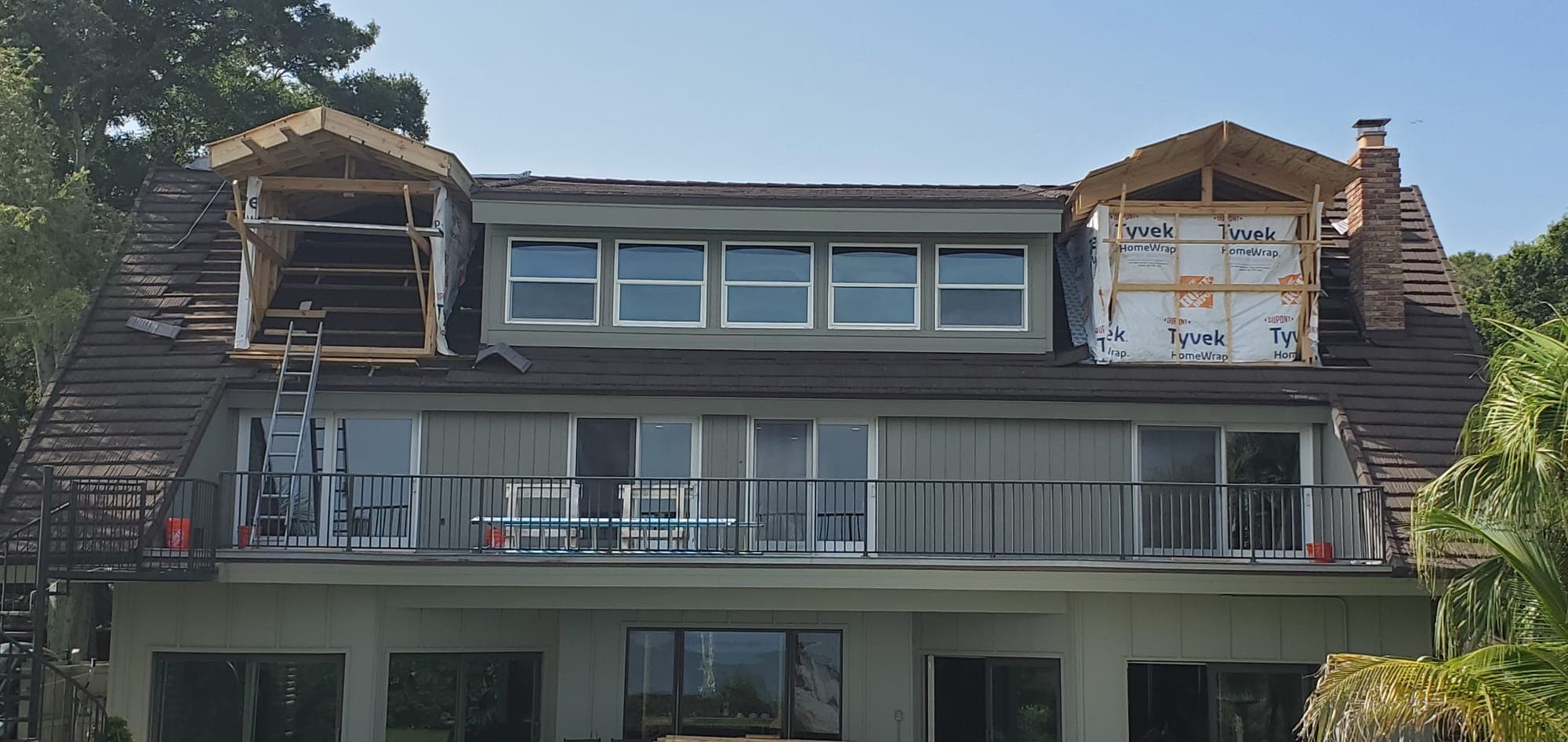
Adding on is for homes where the bones are solid and the lot has room, but you genuinely need more square footage. You love the location. You don’t want to move. You just need another bedroom, a primary suite, a garage, or a family room that doesn’t also have to be the office. An addition expands the envelope of the house rather than reworking what’s already there.
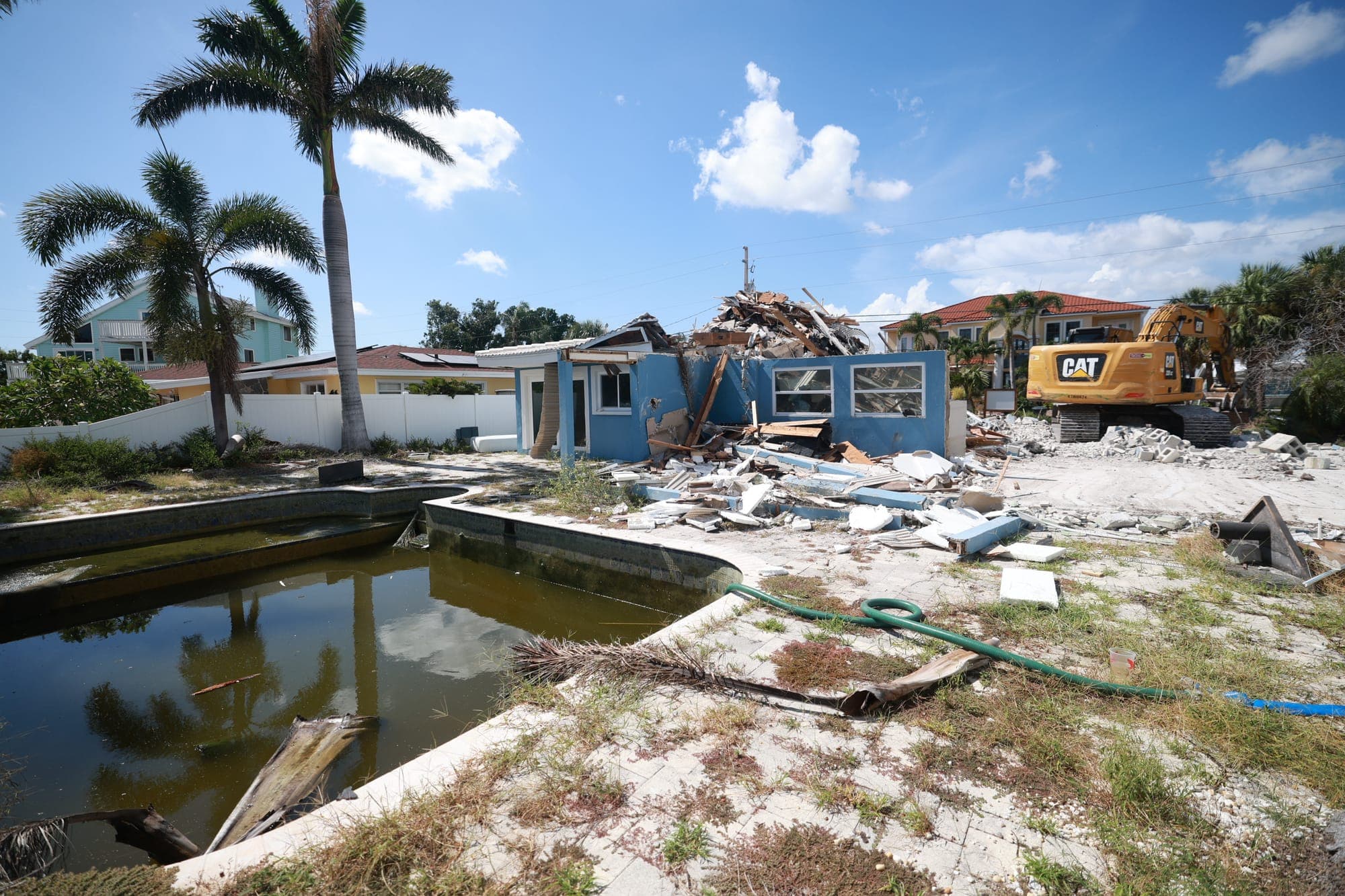
Building new (teardown and rebuild) is for homes where the existing structure is more problem than asset. Bad foundation. Major flood damage. A slab-on-grade house in a flood zone that’s been repaired one too many times. Or a homeowner who wants full design control with no constraints from existing framing, layout, or plumbing. You’re starting over on the same lot — or on a new one.
Knowing which problem you actually have points you to the right path before a contractor ever walks through your door.
What Each Path Costs in St. Petersburg
Cost per square foot in Pinellas County varies significantly by path — and within each path, by scope. Here’s how the numbers break down in today’s St. Pete market:
Remodel Costs
| Scope | Cost Per Sqft | Example Project |
|---|---|---|
| Cosmetic (no structural work) | $50–$100/sqft | New floors, paint, fixture updates, cabinet refinish |
| Mid-range (some structural) | $100–$175/sqft | Open-concept conversion, kitchen gut, bath remodel |
| Whole-home gut remodel | $200–$400/sqft | New systems, premium finishes, full interior rebuild |
A 2,000 sqft whole-home gut remodel starts around $400,000 and can climb past $800,000 depending on existing conditions and finish level. The biggest variable is the canvas you’re starting with — turning a 1960s house into a 2026 home means touching every system, and wet rooms (kitchens and baths) are always the most expensive square footage in the project.
Addition Costs
| Addition Type | Cost Per Sqft | Notes |
|---|---|---|
| First-floor (no wet rooms) | $100–$250/sqft | A basic garage or office addition can run ~$100/sqft; more finished space pushes toward $200–250 |
| First-floor (with plumbing) | $250–$300+/sqft | Add a bath or kitchen and costs jump significantly |
| Second-story addition | $300–$400+/sqft | No new foundation, but major structural tie-in and HVAC re-run |
To put those numbers in real terms: a 2,000 sqft garage plus two offices with no wet rooms runs around $200,000. Add a bathroom and a kitchenette to the same footprint and you’re closer to $500,000. The wet rooms are where the money goes.
There’s a financial case for adding on that gets overlooked. You’re building equity at the market rate without paying closing costs, moving expenses, or — crucially — giving up your mortgage rate.
“When it makes more sense to add on versus move depends on how much people love their location, land cost, transaction costs, tax implications, and insurance. Often adding on at $400–500 per sq ft is cheaper than buying a new home at $700 per sq ft in the same neighborhood.”
New Construction Costs
| Build Type | Cost Per Sqft | Total Range |
|---|---|---|
| Builder-grade / semi-custom | $250–$350/sqft | Standard finishes, limited customization |
| Full custom home | $400–$500/sqft | One-of-one design, all custom finishes, full client control |
| Custom luxury / waterfront | $500–$1,000+/sqft | High-end finishes, coastal hardening, elevated foundation |
| Teardown + rebuild (flood zone) | $400–$500/sqft elevated | Often $1.2M–$1.7M+ total for 2,000–3,000 sqft |
A 3,000 sqft custom home in St. Pete typically lands in the $1.2–$1.5 million range. A 2,000 sqft home runs just shy of $1 million. We recently had a client whose remodel-plus-addition was approaching $1 million — by the time we ran the numbers on a full custom build with an extra thousand square feet, custom cabinetry, and high-end finishes, the new home came in at $1.6–$1.7 million. More money, but they got exactly what they wanted across every surface instead of compromising with existing walls.
Once the cost tiers line up, the next question is sequencing — lot evaluation, schematic design, permitting, foundation, vertical framing, dry-in, finish work — and how long each phase takes inside Pinellas County. Our custom home building process guide for St. Petersburg walks through the eight-phase sequence we use on every new build, including flood-zone elevation timing and Pinellas County permit review windows.
These costs assume you already own the land — if you need to buy a lot, the economics shift hard against new construction in most scenarios.
The Mortgage Rate Reality
If you bought your home at 3–3.5% interest and you’re considering selling to move up, run this math before you call a realtor: swapping that rate for a current mortgage at 6.3% on a $400,000 loan adds roughly $700 per month in interest — $8,400 per year, every year, for the life of the loan. That’s before transaction costs, moving expenses, or the premium you’ll pay for a larger home in the same neighborhood.
For many St. Pete homeowners, that moving penalty is the reason the conversation shifted to adding on in 2025. It’s not sentiment — it’s math.
How Long Each Path Takes
Timeline is where a lot of homeowners get surprised. Here’s what to budget for each path:
| Path | Design + Permits | Construction | Total |
|---|---|---|---|
| Cosmetic remodel | 0–4 weeks | 4–12 weeks | 1–4 months |
| Structural remodel | 4–8 weeks | 8–16 weeks | 3–6 months |
| Whole-home gut remodel | 8–12 weeks | 16–24 weeks | 6–9 months |
| Room addition (first floor) | 6–10 weeks | 12–20 weeks | 4–7 months |
| Second-story addition | 8–12 weeks | 16–24 weeks | 6–9 months |
| New construction (custom) | 3–6 months | 6–12 months | 12–18 months |
| Teardown + rebuild (flood zone) | 3–6 months | 12–18 months | 18–24 months |
One thing that compresses timelines across all three paths: the design-build model. When your designer and your builder are the same team, design and permitting can run concurrently with contractor procurement instead of sequentially. That’s weeks, sometimes months, off a standard timeline. On new construction especially, the design-bid-build process — where you finish design, then shop for a contractor, then wait for their schedule — can add four to six months before a shovel moves.
Not Sure Which Path Fits Your Home?
Call Revolution at (727) 888-6161 or request a free pre-construction consultation. We'll assess your home, your lot, and your goals — then tell you which path makes sense.
The FEMA 50% Rule: When St. Pete Homeowners Don’t Get to Choose
Here’s the part of this decision that most national guides skip entirely: in St. Petersburg and Pinellas County, a significant percentage of homeowners don’t get to choose between remodeling and building new. The FEMA Substantial Improvement Rule makes that choice for them.
How the rule works: If you’re in a FEMA flood zone — AE, VE, or similar — and your cumulative improvements over a rolling 12-month period equal or exceed roughly 49–50% of your home’s pre-improvement assessed value (excluding land), you trigger full current-code compliance. That includes elevating the lowest finished floor to Base Flood Elevation (BFE — the flood elevation FEMA has designated for your property), upgrading to current wind-load standards, and bringing electrical and mechanical systems up to modern code.
What this means in practice:
- A homeowner in Shore Acres budgets $150,000 for a kitchen and bathroom remodel. Their home’s assessed structure value is $200,000. That remodel represents 75% of assessed value — the rule triggers, and full elevation is now required. Their $150K project becomes a $300K+ project overnight.
- For slab-on-grade homes — common in older St. Pete neighborhoods — elevation is often physically and economically infeasible. For the full math on what elevation costs vs. rebuilding, see our house elevation cost analysis. When the numbers don’t work, the practical outcome is demolition and a full rebuild on a properly elevated foundation.
- Additions count toward the cumulative total. If you added a garage three years ago and that addition was logged with the county, a subsequent remodel could push you over the threshold even if no single project was large enough to trigger it alone.
Who this affects: Post-Hurricane Helene and Milton in 2024, enforcement has intensified across Pinellas County. If your home is in an AE or VE zone — Shore Acres, Snell Isle waterfront, Gulfport, Tierra Verde, and many others — this isn’t theoretical. It’s the reality of the permitting process you’ll go through.
That said, the regulations aren’t as draconian as the fear suggests. A skilled contractor and designer working with the municipality can usually get you what you want with relatively low compromise — sometimes an appraisal helps increase the assessed valuation, and there are ways to structure a project to stay under the threshold. The key is knowing the math before you start, not after.
Before you commit to a remodel or addition scope in a flood zone, get your home’s current assessed structure value from the Pinellas County Property Appraiser and add up any improvements from the last 12 months. Then you’ll know whether your project is a remodel or — involuntarily — a rebuild.
(Note: the exact percentage threshold varies — unincorporated Pinellas County uses 50%, the City of St. Petersburg may use 50%. Confirm with your permit office before finalizing any flood zone project scope.)
A Simple Decision Framework: When Each Path Wins
Remodel wins when:
- You have enough square footage but the layout doesn’t work, the systems are outdated, or the finishes are holding the house back
- Your lot doesn’t have room for an addition — setbacks, tree protections, or flood zone constraints eat the available land
- You’re in a historic district (Old Northeast, Kenwood, Roser Park) where exterior changes require Historic Preservation Board approval — adding on may not be feasible, but interior work usually is
- You want to stay in your home during construction — some remodels allow phased occupancy
- Budget is in the $100K–$300K range for a 2,000 sqft home — that’s remodel territory
An addition wins when:
- You love your location and genuinely need more square footage — a bedroom, a primary suite, a garage
- The existing structure is sound: solid foundation, functional roof and HVAC, no major systems failures
- You’re well below the FEMA 50% threshold on prior cumulative improvements
- The neighborhood’s home values support the investment — adding on at $400/sqft into a $700/sqft market makes financial sense; adding on at $400/sqft into a $300/sqft market does not
- The mortgage rate lock-in math makes moving economically painful
Building new wins when:
- The existing structure has foundational failure, major structural damage, or systems that are beyond economical repair
- You’re in a FEMA flood zone and the 50% rule has been triggered — especially in a slab-on-grade home where elevation isn’t feasible
- The home is significantly undersized relative to the neighborhood and can’t be expanded within setbacks
- Comprehensive renovation costs approach what new construction would cost (this happens more often than homeowners expect in heavily deteriorated or flood-damaged homes)
- You want full design control with no constraints from existing framing, plumbing routing, or load-bearing layout
- Long-term residency (10+ years): new construction delivers lower ongoing maintenance, potential insurance benefits from modern systems, and flood insurance premium reductions of 40–60% from proper elevation — meaningful savings over time
How a Hybrid GC Navigates All Three
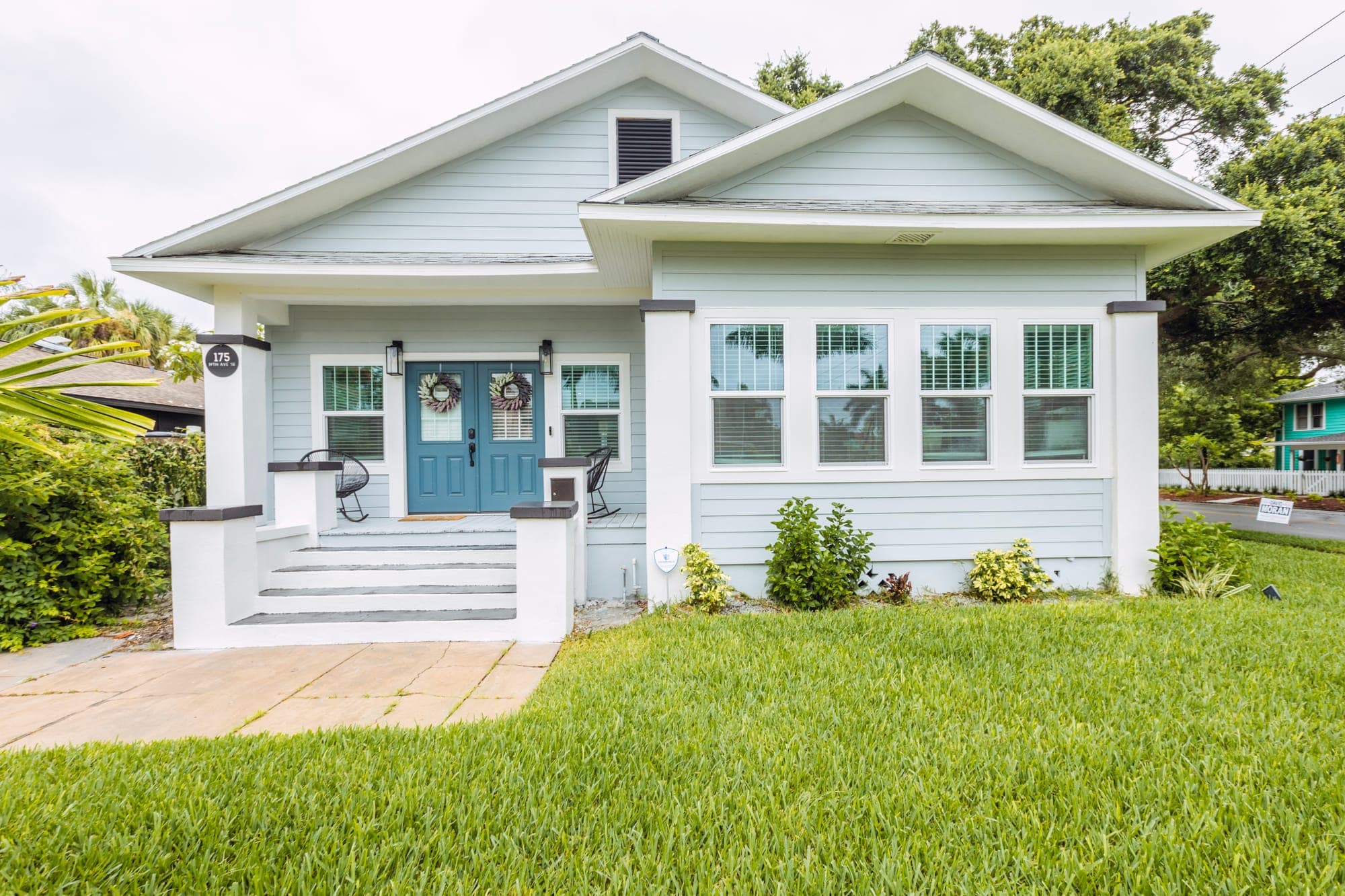
At Revolution, we work across all three paths. The reason that matters for you is that our advice isn’t steered by what we specialize in — it’s based on what your situation actually calls for.
A few things apply regardless of which path you choose:
In-house labor means schedule control. We have 20+ W-2 carpenters on payroll. When work needs to happen, our crew shows up. We’re not calling a sub who has three other jobs this week.
T&M pricing means you’re not paying for unknowns we invented. Time & Materials construction means you pay for what we actually use. You get weekly budget reports and see every invoice. On a decision-stage project where you’re comparing three paths with different risk profiles, you don’t want a padded fixed bid that buries the uncertainty in the bottom line.
FEMA and flood zone work is part of our regular practice. We’ve built in every flood zone in Pinellas. If your project sits in an AE or VE zone, we know how to scope it correctly from day one — not after a permit office sends you back to the drawing board.
Design-build coordination compresses the timeline. Whether you’re remodeling, adding on, or starting over, coordinating design and construction under one contract — with us as your GC paired with an independent architect or designer we’ve worked with for years — means you’re not waiting for a contractor to schedule your architect’s drawings.
Frequently Asked Questions
Is it cheaper to add on to a house or build new?
These are ranges from active 2026 St. Pete projects, not fixed-price quotes — every path is priced from the actual lot, BFE, soil, and selection set. In most St. Pete scenarios, an addition costs less than a teardown and rebuild. A first-floor addition without plumbing runs $200–$250/sqft. New construction runs $250–$350/sqft for standard builds and $400–$500+/sqft for flood zone teardown-rebuilds. If your existing structure is sound, adding on typically costs less per square foot than replacing the whole house. The exception: if you’re in a flood zone and elevation compliance is required, a rebuild may be the more economical path long-term despite higher upfront costs.
Is it better to renovate or build new?
Depends entirely on the condition of your existing structure and your goals. If the bones are solid — good foundation, functional systems, no major structural issues — renovating is usually faster and cheaper. If the structure is compromised, a flood zone has forced full code compliance, or you want design control you can’t achieve within existing walls, building new may be the smarter long-term investment. There’s no universal answer.
When does a renovation cost more than building new?
More often than you’d expect. A whole-home gut remodel at $200–$400/sqft on a 2,000 sqft home runs $400K–$800K — approaching new construction territory in some configurations. Add in flood zone elevation requirements, historic district constraints, or deteriorated structural systems, and the gap narrows further. Get both numbers from your contractor before assuming the renovation is the cheaper path.
What is the FEMA 50% rule?
The FEMA Substantial Improvement Rule states that if you improve a home in a FEMA flood zone by an amount equal to or exceeding approximately 49–50% of the structure’s pre-improvement assessed value (not including land), you trigger full current-code compliance — including elevation to Base Flood Elevation. In practice, this can turn a planned remodel into a teardown-rebuild, because elevation on an existing slab-on-grade foundation is often not feasible. It applies to cumulative improvements over a rolling 12-month window, not just a single project.
How long does a home addition take in Pinellas County?
A first-floor room addition typically runs 4–7 months from design through completion — roughly 6–10 weeks for design and permits, then 12–20 weeks of construction. A second-story addition adds complexity: structural tie-in, HVAC re-routing, and full roof involvement push the timeline to 6–9 months. Pinellas County permit review typically takes a few weeks for standard projects, longer for additions and new construction that require full plan sets with engineering stamps.
For related reading: What Does a Home Addition Cost in St. Pete? | Custom Home Cost Guide | Whole-Home Remodel in St. Pete | What to Expect During a Home Addition | Home Additions in St. Petersburg | Whole-Home Remodel | Custom Homes
Ready to Figure Out Which Path Fits Your Home?
Call Revolution at (727) 888-6161 or request a free consultation. We'll tell you what we see and what it'll cost — no sales pitch, no padded estimates.