How Much Does a Condo Renovation Cost in St. Petersburg, FL?

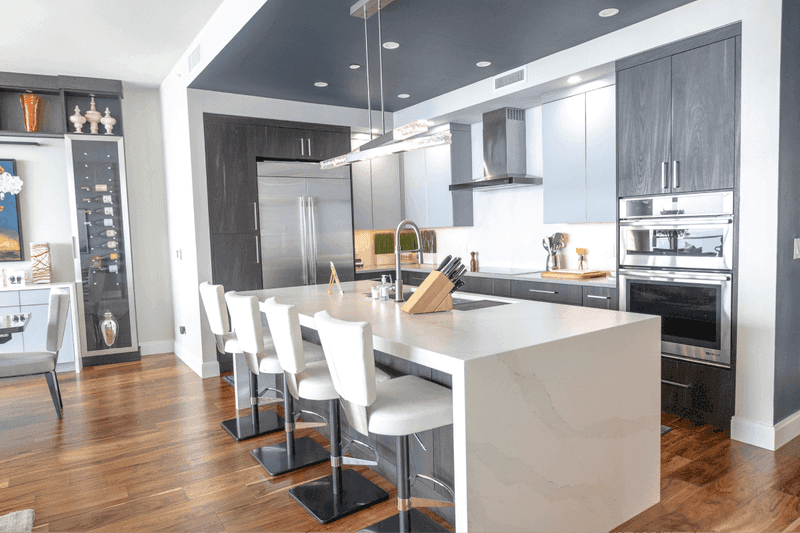
A condo renovation in St. Petersburg runs $200 to $400 per square foot, depending on scope, finish level, and the building you live in. For a 1,200-square-foot downtown unit, that puts your total somewhere between $240,000 and $480,000 for a full renovation. A kitchen-only or bathroom-only remodel falls on the lower end of that range.
That per-square-foot number is roughly the same as renovating a single-family home, which surprises most condo owners. You save on foundation and roofing costs, but those savings get eaten by logistics premiums that are unique to condo work: elevator scheduling, HOA compliance fees, restricted work hours, and material staging in shared spaces. The net cost per square foot ends up comparable. For owners weighing alternatives, a home addition on a single-family property or a ground-up custom home build can land in the same per-square-foot range once condo logistics premiums are factored in.
Here is what drives your number up or down, and where every dollar actually goes, from our team's direct experience with condo work across downtown St. Petersburg and the beaches.
In This Article
What Drives Condo Renovation Costs
Not all condo remodels are the same project, and the cost differences come down to a handful of factors that are specific to your building and your unit.
Scope of work. A cosmetic refresh, new flooring, paint, updated fixtures, runs $100 to $150 per square foot. A full gut renovation with layout changes, new plumbing, and electrical upgrades pushes toward $300 to $400. Most projects land somewhere in between. Our condo remodel HOA & elevator process covers the full range, from a single-room refresh to a gut-down-to-studs unit rebuild.
Finish level. The gap between builder-grade and custom selections adds up fast. A kitchen with stock cabinets and laminate countertops costs half as much as one with custom cabinetry and quartzite. Your selections coordinator will walk you through where to spend and where to save, but the decisions are yours.
Building logistics. This is the cost category most contractors do not talk about. Elevator reservations for material deliveries. Restricted work hours (most buildings limit construction to 8 AM–5 PM weekdays). Noise restrictions that affect demolition scheduling. Hallway protection for common areas. These are real line items that add real cost, and they vary by building.
Structural constraints. Concrete ceilings and fixed plumbing stacks limit what you can move. You cannot relocate load-bearing walls or change your unit's footprint. Working creatively within those constraints is part of the scope, and the cost.
HOA requirements. Every building has different rules. Some require architectural review board approval before any work starts (add 2–6 weeks). Some charge refundable damage deposits. Some require specific insurance coverage from your contractor. These requirements are not optional, and navigating them takes time and documentation.
Cost Breakdown by Project Type
Here is what different condo remodel contractors in St. Petersburg scopes typically cost in the St. Petersburg market:
Kitchen remodel: $40,000–$120,000. The range is wide because it depends on whether you are resurfacing cabinets and swapping countertops or gutting the space and reconfiguring the layout within your existing plumbing stack.
Bathroom remodel: $25,000–$75,000. Waterproofing is critical in multi-story buildings, a shower leak in your unit becomes your downstairs neighbor's ceiling problem. Revolution uses the Schluter Kerdi waterproofing membrane system on all bathroom remodels, Kerdi-Board on the walls, Kerdi-Drain in the shower pan, lifetime manufacturer warranty. In older downtown St. Pete buildings (anything built before 1985), we also budget for cast iron drain replacement: the original 4-inch cast iron stacks are usually scaled, cracked, or leaking at the hub joints, and replacing the section serving your unit with PVC adds $3,000–$8,000 depending on access and how many floors of stack are involved. We coordinate that work through the building engineer and the HOA because it touches the common-element plumbing.
Full unit renovation: $200,000–$500,000+ for a 1,000–1,500 square foot unit. This includes all rooms, new flooring throughout, updated electrical and plumbing, and a full finish package. Timeline: 10–16 weeks depending on scope and building access restrictions.
Cosmetic refresh: $80,000–$150,000. New flooring, paint, updated light fixtures, hardware, and minor finish upgrades without structural or plumbing changes. Fastest timeline: 4–6 weeks.
Want Real Numbers for Your Condo?
We'll assess your unit, your building's requirements, and give you a detailed budget breakdown.
Why Condo Remodels Have Hidden Logistics Costs
The biggest sticker-shock moment for condo owners is not the cabinets or the tile, it is the logistics line items that show up because of where your unit sits.
Elevator costs. Every material delivery, every debris haul-out, and every large equipment move requires an elevator reservation. Some buildings charge for this. All of them require scheduling days or weeks in advance. A single delivery that does not get an elevator slot can push your timeline by a week.
Work hour restrictions. Your building probably limits construction noise to 8 AM–5 PM, Monday through Friday. Some restrict Saturday work entirely. That compressed schedule means projects take longer calendar-time than the same work would in a single-family home.
Staging limitations. In a house, materials go in the garage or the driveway. In a condo, you might have a loading dock with a 30-minute window. Some buildings do not allow any hallway staging, meaning materials go directly from the truck to your unit. That requires more precise delivery coordination and sometimes more expensive smaller deliveries. For downtown condo owners who expect logistics to be handled cleanly, every coordination cost — loading-dock fee, smaller-delivery freight premium, weekend reservation surcharge — shows as a separate line item on the weekly budget report, not buried in a padded bid.
Neighbor considerations. Demolition noise, dust control, common area protection, your contractor needs to manage all of this without alienating the people who live next door and downstairs from you. This is not just courtesy; it is an HOA requirement in most buildings.
“Typical timeline for a condo remodel can be pretty fast but depends on the building. HOA rules, management, and neighbors affect schedule and hours. Sometimes we have short days or late starts depending on how strict the building is. We’ve had to schedule elevators — one downtown building after COVID had a service elevator shared with dog owners that kept malfunctioning, so carpenters dragged tools 28 flights of stairs up and down. All that time is billed to the owner because it’s not our fault.”— Jeremy Wharton, Revolution Contractors (Interview 3)
How Revolution Prices Condo Work (and Why It Is Different)
Revolution uses a Time & Materials pricing model, which means you pay for actual costs plus a stated 30% markup. No padded bid. No mystery math.
For condo work specifically, this matters because logistics costs are unpredictable. Elevator fees vary by building. HOA timelines vary by board. Work hour restrictions vary by season and management company. A fixed-bid contractor has to pad all of those unknowns into their price upfront, which means you pay for the worst-case scenario whether it happens or not.
With T&M, every one of those logistics costs shows up as a line item on your weekly budget report. You see the actual elevator fees. You see the actual material costs. You see exactly where your money is going, and by construction start, 90–95% of your budget is already locked in through hard bids from subcontractors and finalized material selections.
“Biggest challenge with condo remodels is dealing with the association and nosy neighbors — they’re a hindrance, never a help. We minimize disruption by befriending neighbors and letting them know what we’re doing. In higher-end condos if we’re jackhammering floors or ceilings we have to give a short window and notify neighbors. Sometimes we put notes on doors — it’s good marketing and makes us look less like assholes.”— Jeremy Wharton, Revolution Contractors (Interview 3)
Weekly budget reports compare actuals to budget. If something comes in under estimate, that savings is yours, it does not disappear into the contractor's margin.
What Your Contractor Needs to Handle in a Condo
The cost conversation is incomplete without understanding what you are paying your contractor to manage. In a condo, the project management burden is significantly higher than a house remodel.
HOA approval submission. Plans, specifications, contractor documentation, insurance certificates, Revolution manages the entire submission. You do not deal with the board. Approval takes 2–6 weeks depending on the building. Some buildings require board meeting approval; others have an architectural review committee with faster turnaround.
Building management coordination. Elevator scheduling, loading dock access, common area protection, contractor parking, all coordinated with building management before work starts and throughout the project.
Permit pulling. Permits are required for any work involving structural changes, plumbing, electrical, or mechanical systems. Revolution handles all permitting through the St. Petersburg Building Department, typical condo permit issuance runs 2–4 weeks for interior work, longer if structural review is triggered. Cosmetic-only work (paint, flooring swap, cabinet face replacement) typically does not require a city permit but still needs HOA architectural approval. We also pull the certificate of insurance the building requires, naming the association as additional insured, and re-issue it every renewal cycle the project crosses.
In-house labor. Revolution has 20+ W-2 carpenters on payroll, not subcontractors who show up when it suits them. In a condo building where everyone notices who is coming and going, having the same reliable crew on a predictable schedule matters. Your neighbors will appreciate it. Your HOA board will too.
For high-rise work specifically, Revolution holds a commercial unlimited GC license, which means the team can legally work on buildings of any height. Most residential contractors cannot touch a building over three stories, they do not have the right license class.
How Long Your Condo Renovation Will Take
Timeline affects cost because longer projects mean more weeks of logistics coordination, more elevator reservations, and more building management interaction.
- Kitchen or bathroom only: 6–10 weeks
- Full unit renovation: 10–16 weeks
- Cosmetic refresh: 4–6 weeks
Revolution provides a detailed schedule during pre-construction that accounts for your building's specific work hour limits, elevator availability, and HOA approval timeline. The schedule is realistic, not optimistic, because in a condo, a missed week cascades into the next elevator reservation slot.
Key Takeaways
- Condo renovations run $200–$400 per square foot in St. Pete, comparable to house remodels because logistics premiums offset the savings on foundation and roofing
- Elevator scheduling, HOA compliance, work hour restrictions, and staging limitations are real cost drivers that most contractors do not itemize
- T&M pricing shows you every logistics line item instead of burying them in a padded bid
- HOA approval adds 2–6 weeks before construction starts, factor it into your timeline and your budget
- Your contractor needs a commercial GC license for high-rise work, most residential contractors do not have one
Frequently Asked Questions About Condo Renovation Costs
How much does a full condo renovation cost in downtown St. Petersburg?
Most full condo renovations in downtown St. Pete run $90K–$250K depending on square footage and finish level. A 1,200 sq ft Beach Drive or Bayfront unit typically lands $120K–$180K for kitchen, bathrooms, flooring, and paint. Waterfront high-rises push higher because of HOA requirements, elevator reservations, and protected delivery hours. We give weekly budget reports on every job so you see exactly where the money's going.
Do I need HOA approval before starting a condo remodel?
Yes — every downtown St. Pete high-rise requires written HOA approval before any demo. The HOA package usually wants licensed and insured contractor docs, scope of work, schedule, and a certificate of insurance naming the association. We handle the full submission. Most St. Pete buildings take 2–4 weeks to approve; some downtown towers run 6+ weeks, so build that into your timeline.
Why are condo remodels more expensive than house remodels of the same size?
Three reasons: elevator logistics, restricted work hours, and protected-surface requirements. Every piece of demo and material moves through a freight elevator on a reservation — no dumpsters out front. Most downtown buildings only allow construction noise 8am–5pm weekdays. And HOAs usually require floor protection, hallway protection, and neighbor notifications. That overhead adds 15–25% to the same scope of work.
How long does a downtown St. Pete condo renovation take?
A typical 1,200–1,800 sq ft full condo renovation runs 10–16 weeks once permits are pulled. Kitchen-and-bath-only jobs run 6–10 weeks. The HOA approval process before that adds 2–6 weeks depending on the building. We've done 30+ condo projects in downtown towers, so we plan around the elevator and noise rules from day one — that's where most contractors lose weeks.
Can you work in waterfront buildings like Signature Place or 400 Beach?
Yes — we've done projects in most of the major downtown towers and waterfront buildings in St. Pete. Each building has its own quirks: which elevator is freight, what hours are protected, which inspectors the building prefers, how the HOA wants the COI written. Twenty years of work in this market means we already have those relationships.
How much does it cost to renovate a condo bathroom in St. Petersburg?
A condo bathroom renovation in downtown St. Pete runs $25,000–$75,000 depending on size, finish level, and whether the cast iron drain stack needs replacement. A primary bathroom with a tiled curbless shower, Schluter Kerdi waterproofing, new vanity, quartz top, and porcelain tile typically lands $40,000–$55,000. Add $3,000–$8,000 if the original 4-inch cast iron stack serving the unit needs to be cut out and replaced with PVC. Permits, HOA approval, and elevator-scheduled material delivery are all included in our line-item budget.
What does HOA approval add to condo renovation cost?
HOA approval itself is rarely a hard dollar fee — most St. Pete buildings charge $100–$500 for the application — but the time and documentation cost is real. Plan on 2–4 weeks for the architectural review board in most downtown towers, and 4–6 weeks for buildings that require full board meeting approval. Some HOAs require a refundable damage deposit ($1,000–$5,000) and a certificate of insurance naming the association as additional insured. Indirectly, the schedule delay can add 5–10% to the project total because crew and material lead times have to be re-sequenced around the approval window.
How much do elevator fees and logistics premiums add to a St. Pete condo remodel?
Across the downtown St. Pete buildings we work in, elevator and logistics premiums typically add 15–25% to a comparable house remodel of the same scope. Elevator reservation fees themselves run $150–$500 per scheduled use in most buildings, and a full unit renovation needs 15–30 reservations across demo haul-out and material delivery. Add hallway and elevator-cab protection ($800–$1,500), restricted 8 AM–5 PM weekday work hours which extend the calendar timeline by 20–30%, and dust containment requirements for shared HVAC systems. Every one of those line items shows on the weekly budget report.
Related Resources
- Condo Remodel HOA & Elevator Logistics Guide, how HOA approvals and elevator scheduling shape your timeline
- Downtown St. Pete Condo Remodel Guide, what high-rise owners need to know about commercial licensing and logistics
- Condo Remodel Services, full breakdown of our condo renovation process
- Downtown St. Pete Condo Neighborhood Guide, building-specific notes on Beach Drive, Bayfront, and waterfront tower work
- Kitchen Remodel Cost in St. Petersburg, detailed kitchen pricing for comparison
- Home Addition Cost Guide: What St. Petersburg Homeowners Pay, if you're comparing condo renovation to expanding your single-family home
- Custom Home Cost Guide: Real Numbers for St. Pete, for owners evaluating condo remodel vs. ground-up new construction