Remodeling a Downtown St. Pete Condo: What High-Rise Owners Need to Know
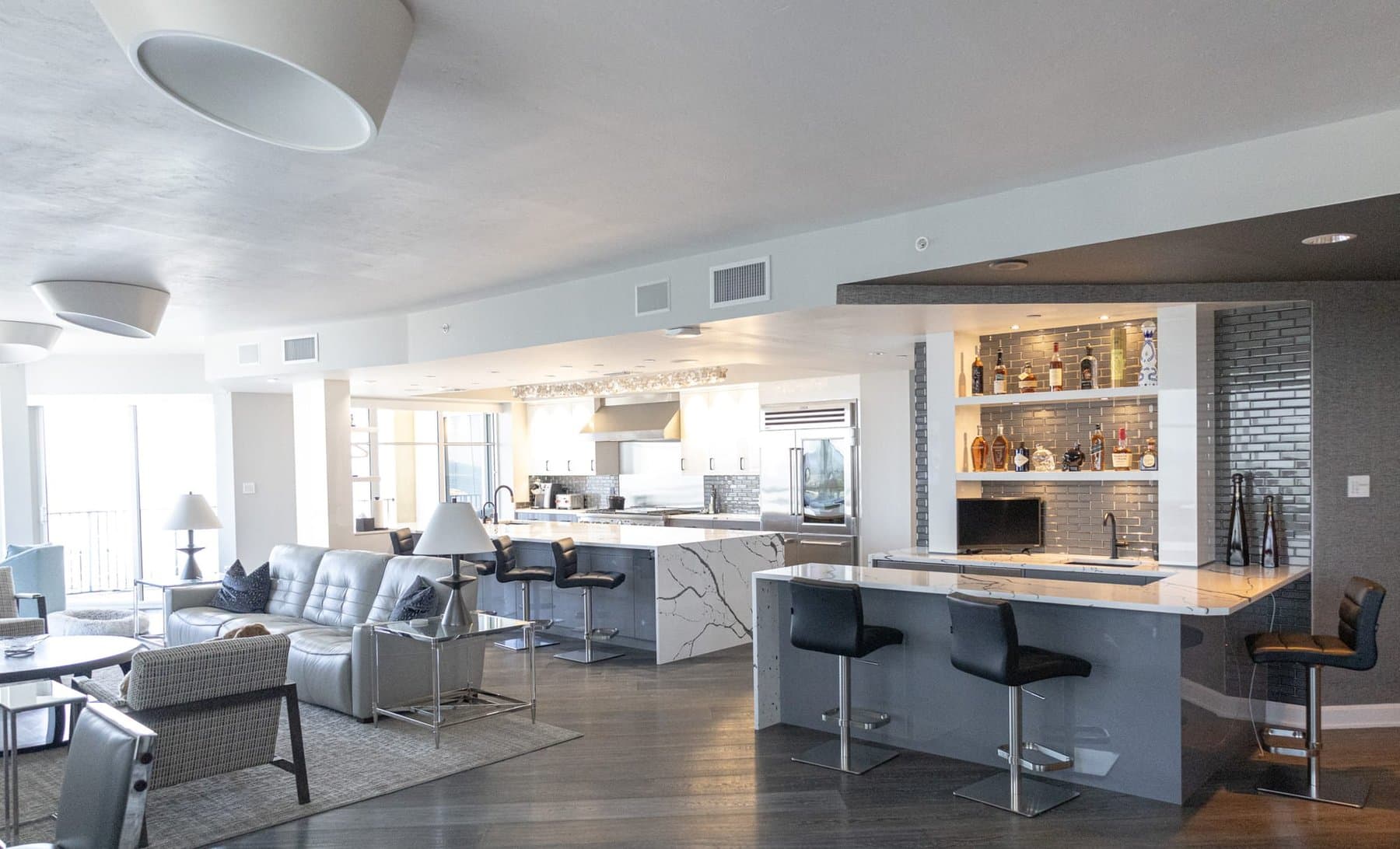
A downtown St. Petersburg high-rise condo remodel runs $200 to $400 per square foot, takes 6 to 16 weeks of construction (plus 2 to 6 weeks of HOA approval), and requires a contractor holding a Florida commercial unlimited GC license, the only license class that legally covers buildings four stories or higher. Most residential contractors don’t hold one. Revolution does, plus 20+ in-house W-2 carpenters who run downtown jobs on a Time & Materials open-book model with weekly budget reports so elevator fees, HOA permit-application costs, structural engineer reviews for slab penetrations, and impact-window compliance show as line items rather than buried lump sums.
This guide is for downtown owners in the towers along Beach Drive, the high-rises on Central Avenue, and the waterfront buildings in Downtown Condos. The building dictates what you can do (concrete ceilings, fixed plumbing stacks, post-tension cables in the slab), when you can do it (8 AM to 5 PM weekdays in most St. Pete buildings, no weekends), and who’s allowed to do it (commercial-unlimited-license contractors only, with the building’s additional-insured certificate of insurance and waiver-of-subrogation rider). For broader scope and pricing across all condo work, see the downtown high-rise condo remodel hub; for component-by-component cost breakdown, see the condo renovation cost guide.
In This Article:
Why Downtown High-Rise Remodels Are Different
A downtown St. Petersburg high-rise condo remodel adds five layers of complexity beyond a single-family home project, building access controlled by freight elevator schedules, HOA approval boards with real veto power, concrete structural envelope that can’t be modified without engineering review, neighbor-relations rules with strict noise restrictions, and Florida Building Code permitting through the St. Petersburg Building Department that requires the building’s commercial license class. Here’s how each one runs on a typical downtown project:
Building Access Controls Everything
Every material delivery, every dumpster load, every piece of drywall moves through a freight elevator on a schedule the building’s property manager controls. Most downtown St. Pete buildings set elevator windows of two to four hours per day, with quilted padding required before every load and corner-guards mandatory in shared hallways. Miss your reserved slot and a four-person crew sits idle on the clock.
There’s also a geometry constraint most owners don’t know about: if the service elevator’s longest dimension is 10 feet, 12-foot baseboards and casing get cut down in the parking garage and lose roughly 15 percent of trim material to the cuts. With 20+ in-house W-2 carpenters on payroll instead of subcontractors juggling three other jobs, downtown crews show up on the reserved window and stay productive across the full reserved block. Elevator reservation fees, padding rentals, and the trim-loss material cost all show as separate Time & Materials line items in the weekly budget report.
HOA Boards Have Real Power
Before a single wall gets touched, the HOA needs to review and approve a complete submission package: stamped architectural plans, finish specifications, contractor licensing documentation (your GC’s commercial unlimited license number), the certificate of insurance naming the association as additional insured, the waiver-of-subrogation rider, the hold-harmless agreement, the construction schedule with elevator-window assignments, and (in some downtown buildings) sound-attenuation specifications for floor assemblies. Most St. Petersburg buildings approve in 2 to 6 weeks; the board meeting cadence is the floor, associations that only review at monthly meetings set the longer end. Revolution submits the full package, tracks every board comment, coordinates re-submissions for revision requests, and pulls the City of St. Petersburg building permit through the Florida Building Code permitting workflow once the HOA clears.
Concrete Structure Limits Your Options — But Not Your Results
In a downtown St. Pete high-rise, the ceilings are post-tension concrete (with steel cables embedded in the slab, cutting through requires a structural engineer review to avoid hitting a cable), the plumbing stacks are fixed in their original 1980s or 1990s riser locations, and the unit footprint can’t change without rezoning the building. Load-bearing walls stay. Shifting a bathroom to the opposite side of the unit isn’t feasible without major HOA-and-engineering work. What does work: reconfigure non-bearing layouts within the structural envelope, replace every finish surface, swap plumbing fixtures within the existing stack location, upgrade the unit’s electrical panel and add circuits for modern appliances, install Schluter Kerdi waterproofing membranes in bathrooms (which carries a separate lifetime manufacturer warranty), drop a sleeper system overhead for thin wafer can lights and recessed fans where concrete ceilings would otherwise block lighting, and open sightlines by removing non-bearing partition walls.
“Unique problems condo owners try to solve — they often want to change layouts even though they can’t because plumbing lines in a 20-story building can’t be moved without major approval. Usually it’s just dated finishes. Sometimes ceilings are concrete so we can’t add lighting unless we drop a sleeper system for thin wafer can lights and fans.”— Jeremy Goodwin, Co-Founder
Your Neighbors Are Three Feet Away
Noise restrictions in downtown St. Pete high-rises are strict, typically 8 AM to 5 PM on weekdays, no weekends, no holidays. Some buildings restrict hammering and demolition to a 9 AM to 3 PM window with a hard stop for jackhammering or floor saws (concrete cutting on slab penetrations gets confined to the shortest possible windows with neighbor notification 48 hours in advance). Revolution’s on-site superintendent, one of multiple superintendents on payroll, manages day-to-day noise compliance, posts written notices on adjacent unit doors before any disruptive work, coordinates with the building’s property manager on weekly schedule confirmations, and handles real-time neighbor communication so the owner isn’t fielding complaints. In higher-end downtown buildings where common-area protection (floor runners, corner guards, elevator quilts) is enforced by the property manager, the cost of that protection time shows as a separate T&M line item.
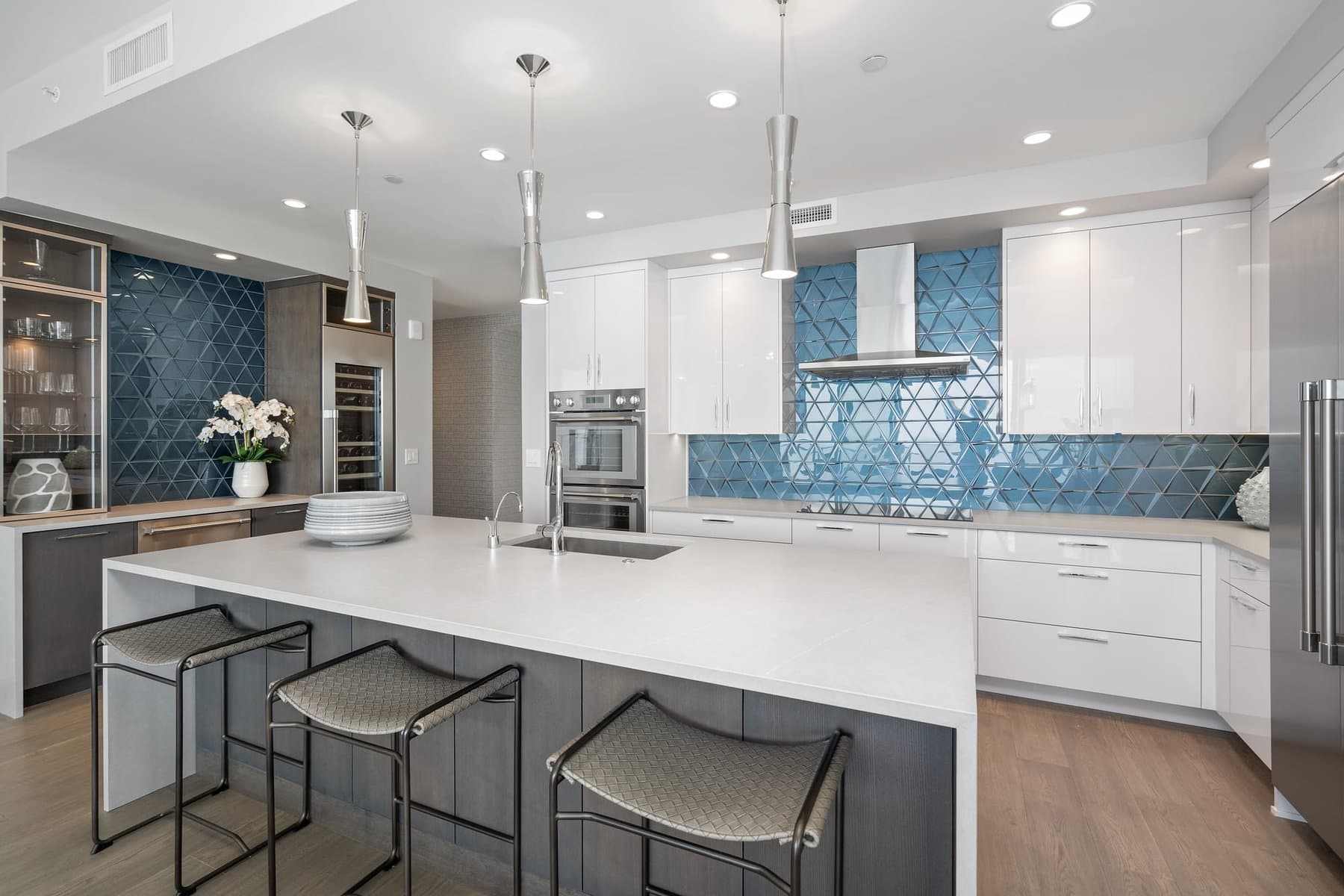
What a Downtown St. Pete Condo Remodel Actually Costs
Budget $200 to $400 per square foot for a downtown St. Petersburg high-rise renovation. Per square foot, that’s comparable to a single-family house remodel, you save on foundation and roofing because the building owns those, but downtown logistics premiums (elevator reservation fees, HOA application + insurance riders, structural engineer reviews for slab penetrations, impact-window compliance, restricted work hours, material staging, parking pass coordination) typically add $20,000 to $60,000 on a full-unit renovation versus a comparable single-family scope. Pinellas County permit fees through the City of St. Petersburg Building Department vary by scope. For component-by-component cost breakdown across kitchen, bathroom, and whole-unit scopes, see the condo renovation cost guide; for the broader cost framework on cast-iron drain replacement (a frequent surprise on pre-2000 downtown buildings), see cast iron plumbing in older homes.
What drives cost in a downtown St. Pete condo specifically:
- Unit size and finish tier, a 1,200 sqft kitchen-and-bath refresh lands at the lower end of the band; a 2,500 sqft full-unit gut renovation with custom cabinetry, Schluter Kerdi waterproofing, and stack reconfiguration lands at the upper end
- Building logistics premium, elevator reservation fees, association insurance riders, HOA application fees, sound-attenuation requirements, and staging restrictions typically add 10-15% to comparable single-family project costs
- Structural and stack modifications, anything involving the concrete structure (opening a wall between units, modifying soffits, cutting through the slab for new plumbing locations) requires structural engineer stamps, may trigger post-tension cable mapping, and adds engineering plus permit lead time
- Floor height + access, upper floors in 20-story towers cost more for material transport than third-floor units; freight elevator capacity and 10-ft elevator geometry constrain trim selections (12-ft baseboards lose 15 percent in cuts)
- Drain-line replacement, pre-2000 downtown buildings often need cast-iron drain replacement during any open-wall remodel; the best time is now while walls are open, but it’s a budget line most owners don’t anticipate
Revolution prices downtown condo work on a Time & Materials basis with a 30 percent markup on labor and 15 percent on materials, open-book accounting where you see every receipt, every subcontractor invoice, and every elevator reservation fee. Weekly budget reports compare actual spend against the approved budget so you catch variance early instead of at final invoice. Elevator costs, HOA application fees, sound-attenuation upgrades, structural engineer reviews, and impact-window compliance all show as separate line items rather than disappearing into a lump sum. By the time construction starts, multiple rounds of pre-construction budget sharpening lock in 90 to 95 percent of the budget, the remaining 5 to 10 percent absorbs the surprise items that downtown high-rises always produce (corroded original hardware behind a stack chase, a cast-iron drain that needs full replacement, a sound-attenuation requirement that surfaces at the architectural review committee).
Ready to Get Real Numbers for Your Downtown Condo?
We’ll walk your unit and give you a range based on your actual building and scope.
The Commercial License Advantage
Most condo owners don’t think to ask about contractor licensing classes, but for downtown St. Pete buildings, it’s the first qualifying filter.
Florida’s Construction Industry Licensing Board issues different general contractor license classes based on building height and use. A standard residential GC license (Certified Residential Contractor, CRC) covers single-family homes and buildings up to three stories. Anything four stories or higher, which includes the vast majority of downtown St. Petersburg high-rises, requires a commercial unlimited license (Certified General Contractor, CGC). Different exam, different insurance and bonding requirements, different experience thresholds. The license class is verifiable on the Florida Department of Business and Professional Regulation (DBPR) license search before you sign any contract.
Revolution holds the commercial unlimited Certified General Contractor license, which covers any building height in downtown St. Pete, Beach Drive towers, Central Avenue high-rises, the waterfront condos in Downtown Condos, and the higher floors of older buildings in Old Northeast and Snell Isle that exceed three stories.
“Realistic budget for condo remodels is similar to a house remodel except no roof or foundation work. Costs unique to condos include parking and extra protection time for carpenters and subs. Most HOAs require an application and want to see the permit before work starts — adds a week or two but mostly an annoyance. Insurance requirements are standard — liability and workers’ comp — and you need a commercial unlimited GC license for buildings over four stories.”— Jeremy Goodwin, Co-Founder
Two things to verify on any contractor before signing a downtown contract: (1) the commercial unlimited Certified General Contractor license is current with no disciplinary actions on the DBPR record, and (2) the contractor’s general liability and workers’ comp insurance limits meet the building’s additional-insured requirements (most downtown St. Pete buildings require $1M minimum general liability per occurrence and standard workers’ comp coverage). The HOA management company will request the certificate of insurance with the association named as additional insured, plus a waiver-of-subrogation rider, before issuing the work-authorization letter.
This matters because some of downtown’s most desirable buildings, the towers along Beach Drive, the high-rises on Central Avenue, the waterfront condos, are four stories or higher. If your contractor doesn’t hold this license and they’re working in your building, that’s a compliance problem for you and the HOA.
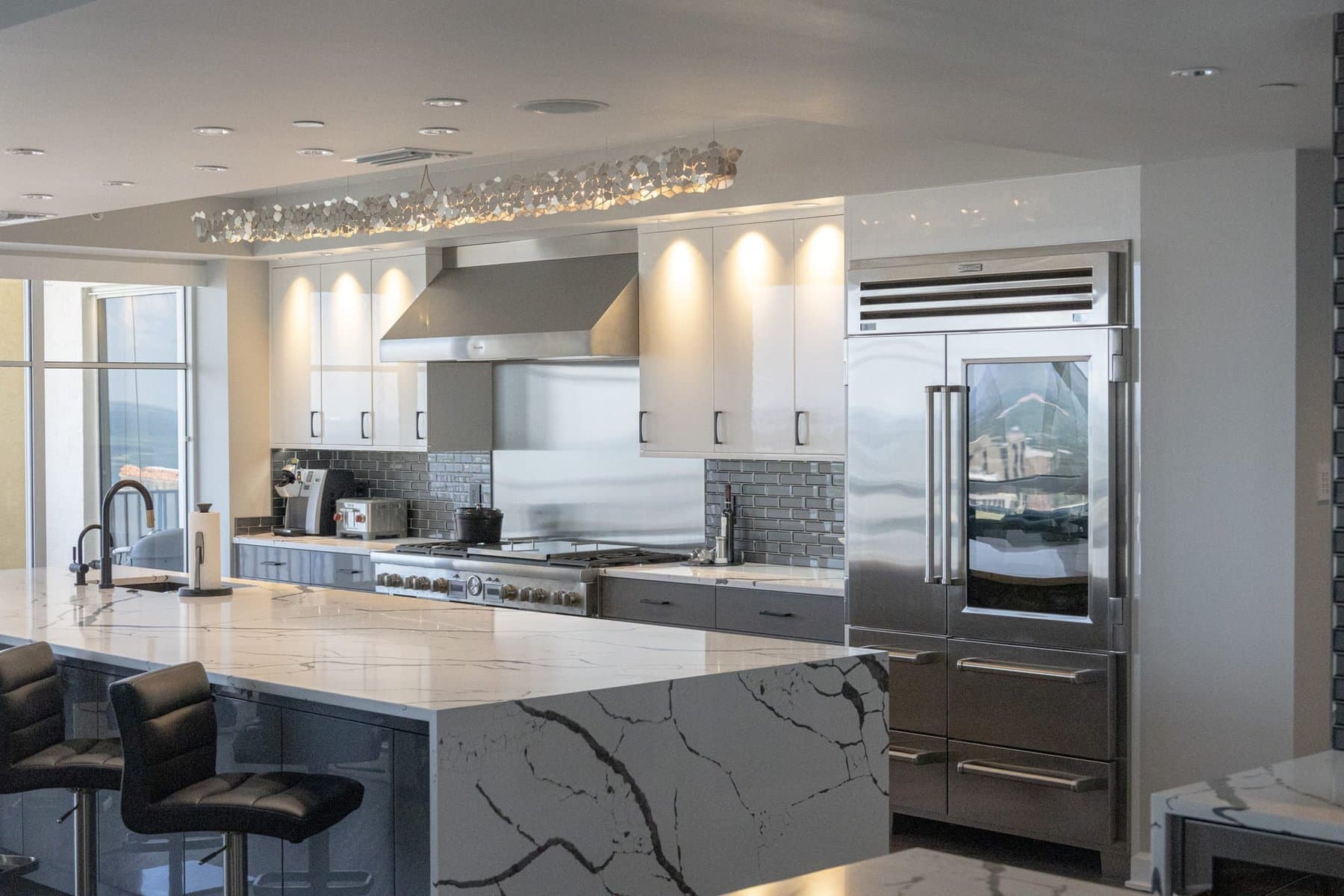
What Makes Downtown Different From Beach Condos
Downtown St. Pete and the Pinellas beaches are both condo markets, but the remodeling experience differs across building age, HOA structure, building code overlays (including the Florida Building Code high-velocity hurricane zone provisions on the beaches), and material requirements:
Downtown High-Rises
Tend to have stricter HOA boards, more complex elevator logistics, and higher-end finish expectations. The buildings are taller, the management companies are more involved, and the approval processes are more formal. Revolution knows which downtown management companies move quickly and which ones require extra lead time.
Beach Condos
Beach condos in St. Pete Beach, Treasure Island, Madeira Beach, and Indian Rocks Beach contend with salt-air corrosion (which dictates stainless or marine-grade fixtures + sealed-stainless-steel hardware), high-velocity hurricane zone material requirements per Florida Building Code chapters 16 and 30 (impact glass + tested anchorage assemblies), separate municipal building departments (each beach city issues permits through its own department, with St. Pete Beach + Treasure Island + Madeira Beach each running different review timelines), and seasonal occupancy patterns that constrain scheduling around snowbird arrivals and departures. The HOA culture in smaller beach buildings is often less formal than downtown high-rises, but the environmental engineering requirements are more demanding.
“The beaches are different in that the construction is generally newer. There are a lot of small condo buildings on the beaches that require interacting with HOAs that are smaller and so a little bit more difficult to work with. The beaches are likely to be in the higher velocity zones requiring heavier-duty materials and finishes. There’s extra consideration that needs to be paid on the beaches in terms of area knowledge and how the design professionals and budgets are being represented.”— Jeremy Goodwin, Co-Founder
Revolution runs both downtown and beach work. The crews and the Time & Materials open-book model stay the same; the inputs change, downtown means freight elevator logistics, formal HOA processes, and post-tension concrete structural reviews. Beach means corrosion-resistant material specs, high-velocity-zone tested assemblies, and city-specific permitting through St. Pete Beach, Treasure Island, or Madeira Beach building departments. The 20+ in-house W-2 carpenters work both contexts.
Timeline: What to Expect
- Single-room scope (kitchen-only or bathroom-only): 6-10 weeks from construction start; tighter elevator-window buildings push toward the longer end
- Full unit renovation: 10-16 weeks from construction start for standard finish; 16-24 weeks for high-end with custom cabinetry, structural engineering on stack reconfiguration, and HARC-equivalent design review on architectural changes
- HOA approval window: 2-6 weeks before construction starts (board meeting cadence is the floor; monthly-meeting boards take longer)
- City of St. Petersburg Building Department permit: 2-4 weeks for standard remodel scope; longer for structural engineer-stamped slab penetrations or impact-window replacement
- Pre-construction design + engineering + budget sharpening: 4-8 weeks before HOA submission (longer if architect engagement is part of scope)
Building-specific restrictions drive timeline more than scope does. A downtown St. Pete building with two-hour elevator windows and a 9 AM-3 PM noise window can extend a 10-week kitchen remodel by 30 to 50 percent versus a building with four-hour elevator windows and standard 8 AM-5 PM hours, same scope, same crew, same materials, different building rules. The construction schedule Revolution issues during pre-construction maps your building’s specific elevator reservation policy, noise window, weekday-only construction rule, and inspection-access coordination requirements against the project’s critical path.
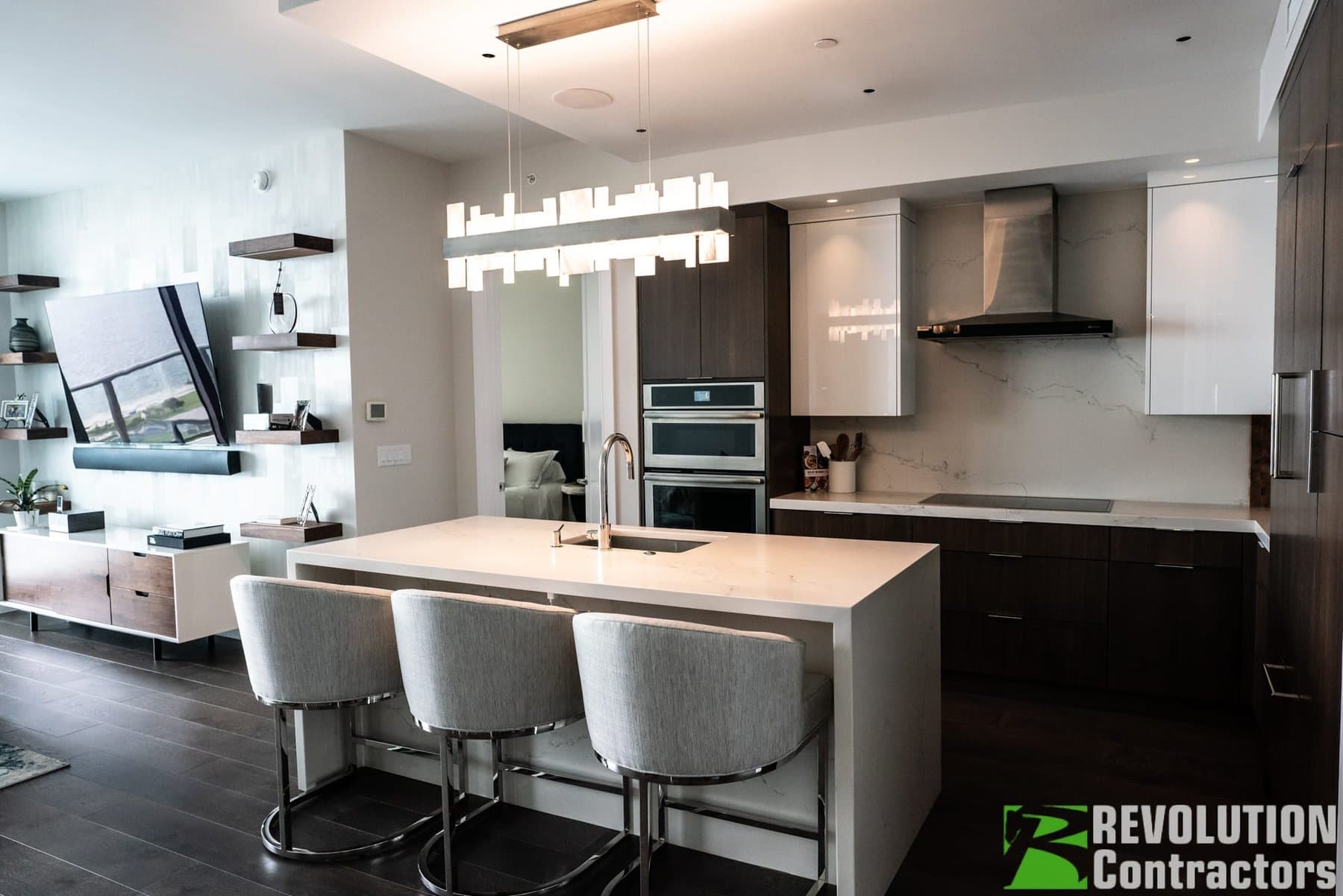
Snowbird Scheduling
For owners who split time between downtown St. Pete and somewhere else (a common pattern in the Beach Drive and Bayfront-area towers per the Downtown Dweller demographic), scheduling the remodel while you’re away is the cleanest path. Revolution handles HOA communication, building property management coordination, City of St. Petersburg inspector access scheduling for the rough-in / framing / drywall / final inspections, design decisions within written parameters set before departure, weekly budget report email updates against the approved Time & Materials budget, and post-completion punch list resolution. The unit is move-in ready when you return.
Winter months (November through April) are prime for snowbird scheduling because that’s when most owners are out of the unit. Lock in pre-construction and HOA approval through the fall (September-October), start construction in November, and heavy construction completes by February with finishes in March. For full-unit renovations that span 16-24 weeks, the schedule needs to clear by April when warm-weather visits resume.
Frequently Asked Questions
Do I need a contractor with a commercial license for my condo remodel?
If your building is four stories or higher, yes. Florida requires a commercial unlimited GC license for any construction in buildings above three stories. Most residential contractors hold only a residential license and legally cannot work in downtown high-rises. Revolution holds a commercial unlimited license, no building height restrictions.
How long does HOA approval take for a condo remodel in downtown St. Pete?
Typically two to six weeks, depending on your building's process. Some downtown buildings require full board approval at a monthly meeting, which can add calendar time. Others have an architectural review committee that moves faster. Revolution manages the entire submission, plans, insurance certificates, contractor documentation, so you don't have to navigate the board yourself.
Does a condo remodel cost more than remodeling a house?
Per square foot, they're comparable, $200 to $400 depending on scope and finish level. You save on foundation and roofing costs, but elevator fees, HOA requirements, restricted work hours, and material staging add logistics premiums that offset those savings. Revolution shows every logistics cost as its own line item so you see exactly where your money goes.
Can I stay in my condo during a remodel?
It depends on scope. A kitchen or bathroom remodel is disruptive but livable with planning. A full-unit renovation typically requires you to vacate for the construction period. Revolution is upfront about this, remodeling is disruptive, and we won't pretend otherwise. For snowbird owners, the best approach is scheduling the remodel while you're away.
What can't be changed in a condo remodel?
Concrete ceilings and fixed plumbing stacks are structural constraints, you can't move load-bearing walls or change the unit's footprint. But you can reconfigure layouts within the structural envelope, update all finishes, replace plumbing fixtures within existing stack locations, upgrade electrical systems, and completely transform the space. The constraints are real, but they're not deal-breakers.
What is the difference between a downtown condo remodel and a beach condo remodel in St. Pete?
Downtown St. Pete high-rises tend to have stricter HOA boards, formal property management companies, and more complex elevator logistics, but consistent material specs because they're inland of the high-velocity hurricane zone. Beach condos in St. Pete Beach, Treasure Island, and Madeira Beach contend with salt-air corrosion (requiring marine-grade or stainless hardware), Florida Building Code high-velocity hurricane zone material requirements (impact glass + tested anchorage), and separate city building departments with different review timelines. Beach buildings are often smaller with less formal HOAs but tougher environmental engineering. Revolution runs both markets with the same 20+ W-2 carpenter crew and same Time & Materials open-book model.
Do downtown St. Pete condos require a 4-story commercial unlimited GC license?
Yes. Florida law requires a Certified General Contractor (CGC) commercial unlimited license for any construction in buildings four stories or higher, which covers the vast majority of downtown St. Petersburg high-rises along Beach Drive, Central Avenue, and the waterfront. A standard residential GC license (Certified Residential Contractor, CRC) only covers single-family homes and buildings up to three stories, those contractors legally cannot work on a downtown high-rise. Verify the license class on the Florida Department of Business and Professional Regulation (DBPR) license search before signing any contract. Revolution holds the commercial unlimited CGC license.
Key Takeaways
- Downtown high-rise condo remodels require a commercial unlimited GC license — most residential contractors don’t have one
- Budget $200-$400/sqft; logistics premiums (elevator, HOA, restricted hours) offset savings from no foundation/roof work
- HOA approval adds 2-6 weeks before construction can start — Revolution manages the entire submission
- In-house W-2 carpenters handle elevator scheduling, noise compliance, and neighbor relations on a predictable schedule
- Snowbird owners: schedule your remodel while you’re away for minimal disruption
Related Articles
- Condo Remodel HOA & Elevator Logistics Guide
- Condo Renovation Cost Guide: What to Budget in 2026
- How to Renovate a Condo: Step-by-Step Process
- Cast Iron Plumbing in Older St. Pete Buildings
- Downtown Condos Neighborhood Page (Beach Drive, Central Ave, Bayfront waterfront)
Our Condo Remodeling Services
Ready to start a downtown St. Pete condo remodel? Explore the condo remodel contractors in St. Petersburg for full scope and pricing, or see how high-rise constraints (concrete ceilings, post-tension slabs, fixed plumbing stacks) shape downtown condo kitchen remodels and downtown condo bathroom remodels with Schluter Kerdi waterproofing. Permit and inspection workflow runs through the City of St. Petersburg Building Department under Florida Building Code 2026.
Own a Condo in a Downtown St. Pete High-Rise?
We’ll assess your unit, review your building’s specific requirements, and give you a realistic scope and budget — no obligation, no surprises.