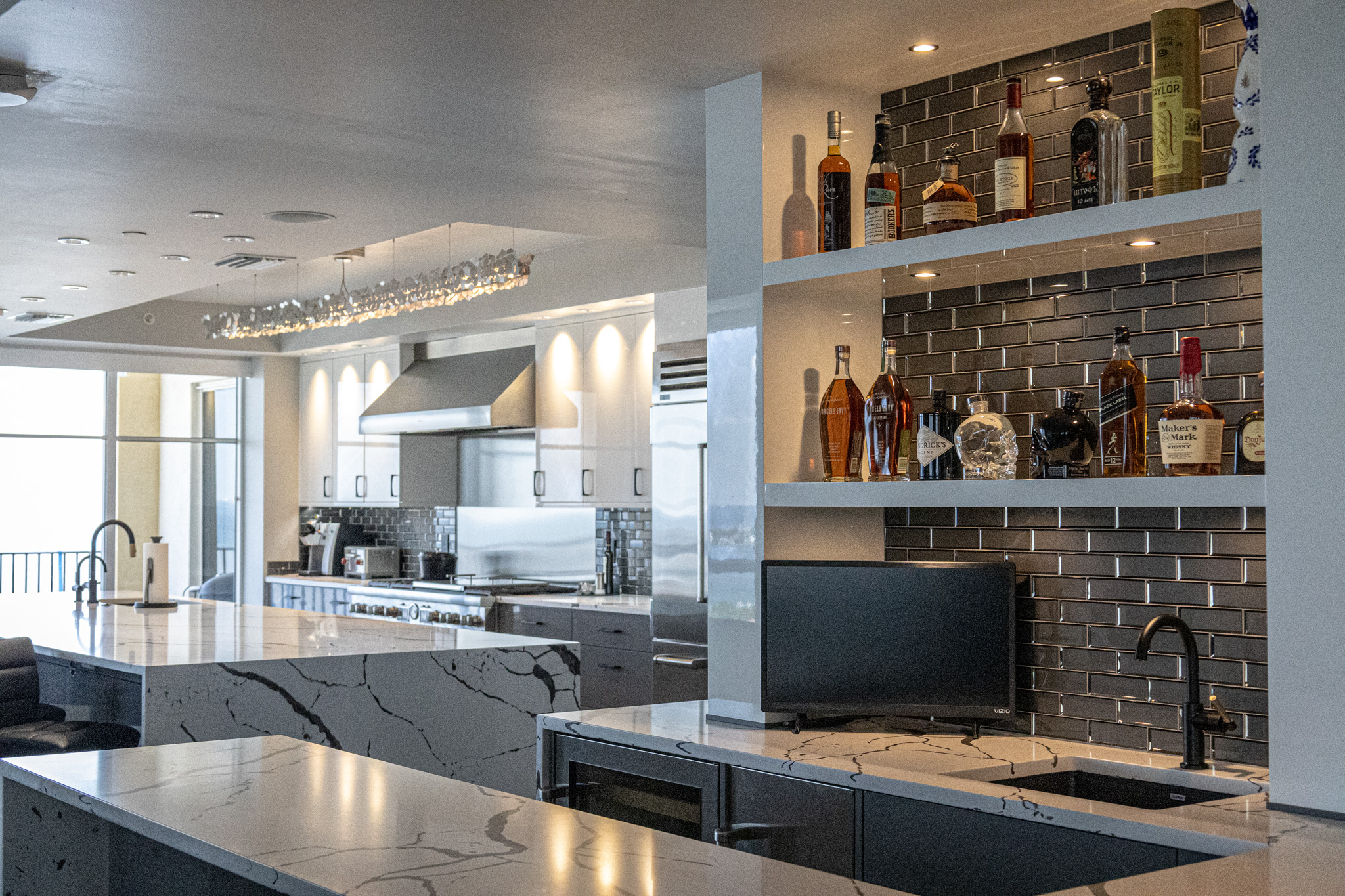
Downtown St. Pete condo renovation by Revolution Contractors

Condo Renovation in Downtown St. Petersburg

Bayfront Tower went up in 1975. ONE St. Petersburg opened in 2018. Saltaire delivered in 2023. Five decades of concrete construction — and every era has different plumbing, electrical, and structural realities behind your walls.

39 Five-Star Reviews
FL #CRC1331628
Licensed & Insured

The Neighborhood: What You're Working With

If you're planning a condo renovation in downtown St. Petersburg, you're choosing from one of the densest concentrations of residential high-rises on Florida's Gulf Coast. The downtown condo market runs from 1970s-era towers with cast iron plumbing and 60-amp panels to modern luxury buildings with post-tension concrete, 200-amp service, and smart building systems.

Typical units range from 1,100 to 3,800 square feet. Values run $300,000 for a mid-rise studio to well over $3 million for a waterfront penthouse — with the active market concentrated between $500,000 and $1.2 million for two- and three-bedroom units in established buildings. Every building has an HOA board, every building controls elevator access, and every building has noise restrictions that shape your renovation timeline.

Here's the renovation reality: your condo's concrete structure, plumbing system, and electrical capacity were locked in the day the building was poured. Your contractor needs to know which era your building belongs to — because the renovation approach for a 1975 tower with cast iron waste lines is fundamentally different from a 2018 building with PVC stacks and post-tension ceilings.

Completed downtown St. Pete condo renovation by Revolution Contractors

Services We Offer in Downtown St. Pete Condos

Condo Remodel

Full-unit renovations, partial remodels, and cosmetic refreshes — all managed through your building's HOA approval process, elevator scheduling, and work-hour restrictions. Revolution handles the entire HOA submission: plans, insurance certificates, contractor documentation, neighbor notifications. Our commercial unlimited GC license means we work in buildings of any height — most residential contractors can't legally touch anything above three stories.

Learn about condo remodeling →

Kitchen Remodel

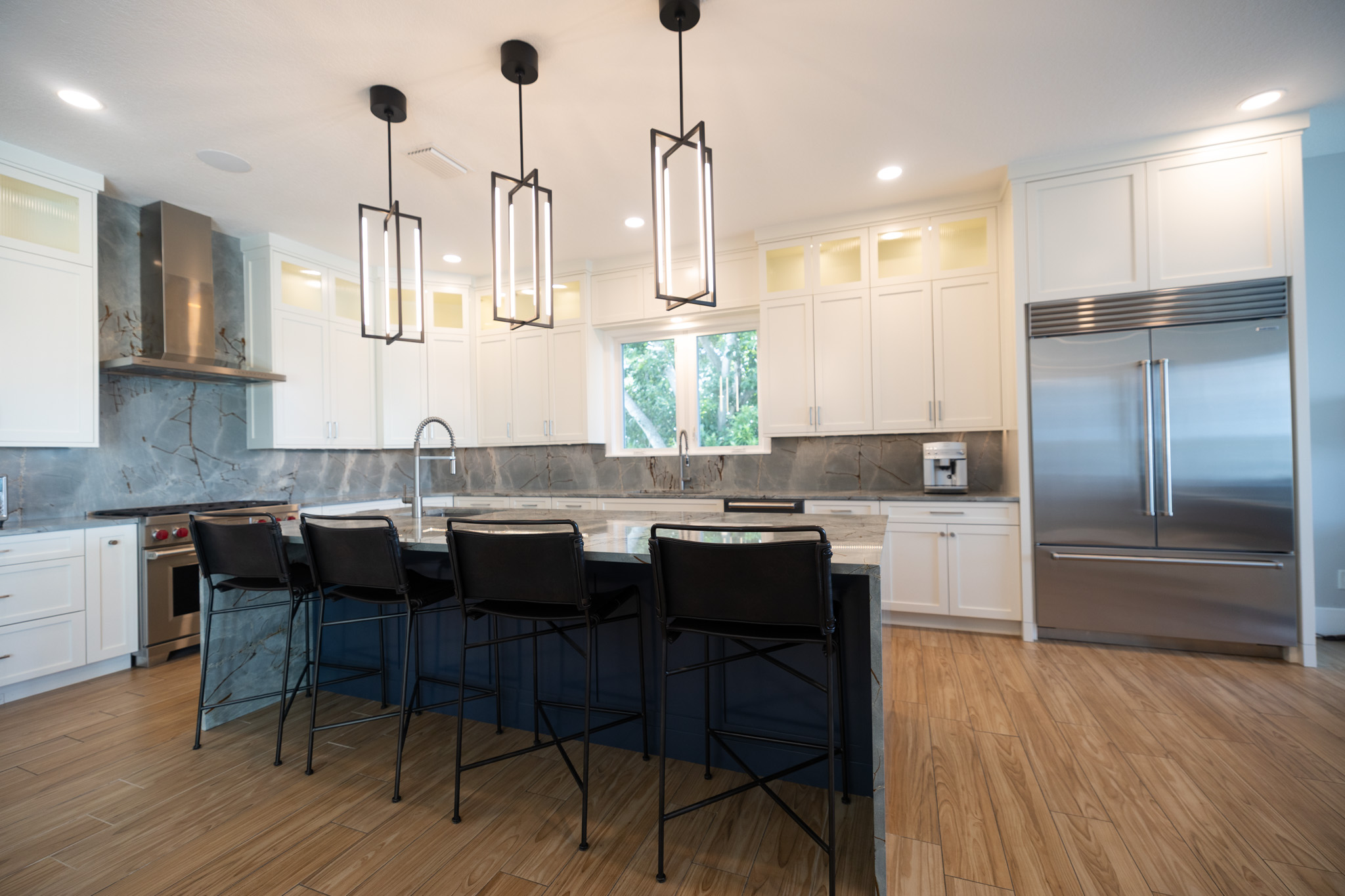
Downtown condo kitchens range from 1970s galley layouts with cast iron drains and undersized panels to modern open plans with island electrical that needs to run through a concrete slab. In older buildings, a kitchen remodel often triggers a panel upgrade and drain line replacement. In newer buildings, the challenge is working creatively within fixed plumbing stack locations. Either way, our in-house carpenters handle it under one contract — no coordination gaps between trades.

Learn about kitchen remodeling →

Bathroom Remodel

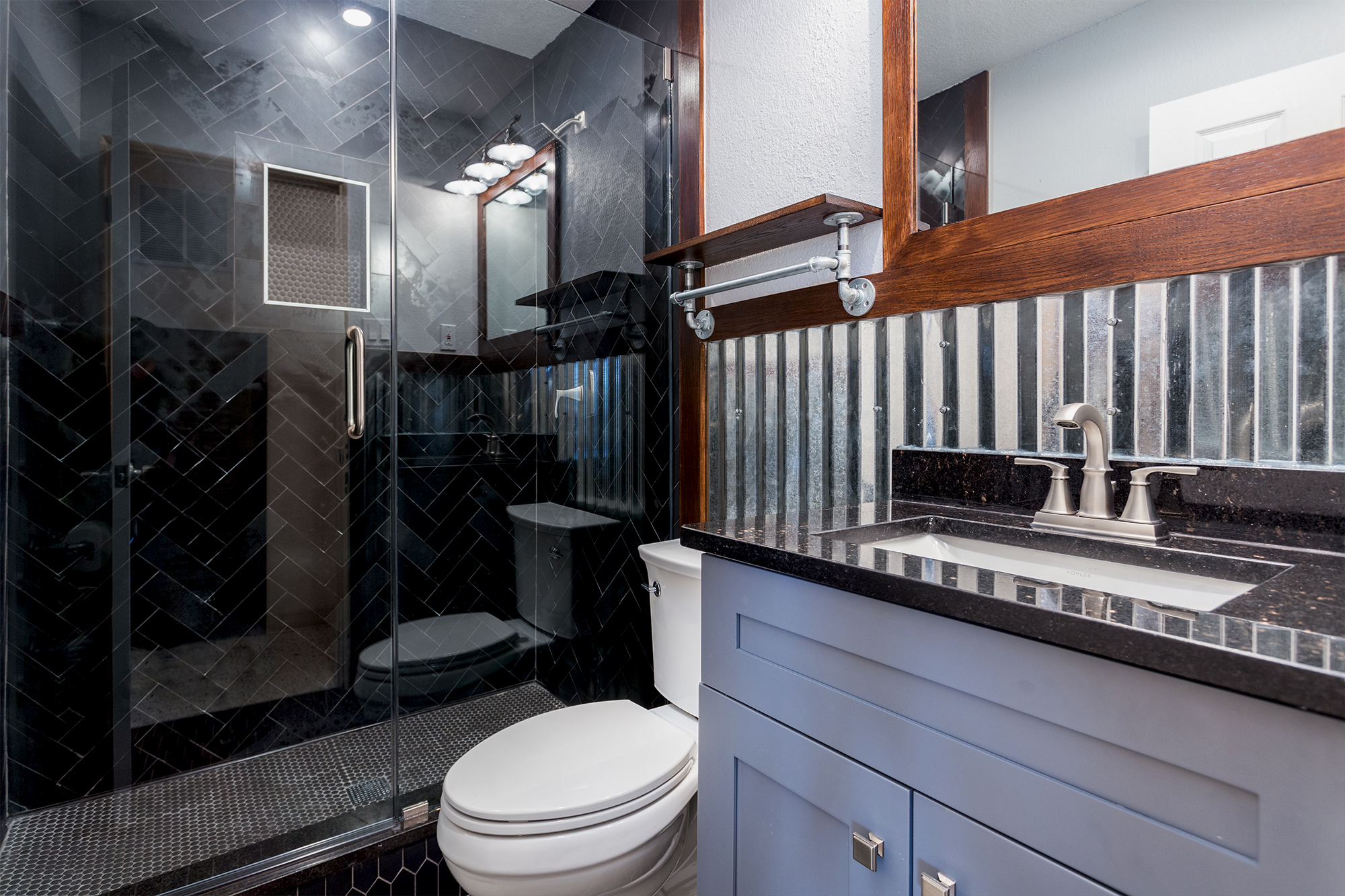
Waterproofing matters more in a condo than anywhere else — a shower leak in your unit becomes your downstairs neighbor's ceiling problem. Revolution uses the Schluter waterproofing system on all bathroom remodels, which carries a lifetime warranty from the manufacturer. In older downtown buildings, expect cast iron waste line replacement and potential asbestos abatement in pre-1980 stock. We scope all of this before your budget is finalized.

Learn about bathroom remodeling →

Downtown Condo Renovation Challenges: Five Decades of Concrete Behind Your Walls

1. Three Eras of Construction — Three Different Renovation Realities

Not all downtown condos are the same building, and the era yours was built determines what your renovation actually involves.

1970s–1980s buildings (conventional reinforced concrete): Cast iron plumbing nearing or past its 50-year life. Electrical panels at 60–100 amps — barely enough for a modern kitchen. Thicker concrete slabs with lower ceiling heights. Potential lead paint and asbestos in pre-1978 stock. These buildings need the most renovation scope, and they're often the most rewarding transformations.

1990s–2000s buildings (post-tension concrete transition): PVC plumbing in most, but some still have cast iron in shared stacks. 100–150 amp panels. Post-tension cables in the ceiling slabs — which means you cannot drill, cut, or penetrate any ceiling without a structural engineer's sign-off first. A single cable holds 30,000+ psi of tension. This isn't a caution — it's a hard constraint that changes how every overhead fixture, light, and HVAC modification is planned.

2010s–2020s buildings (modern post-tension): 200-amp service, PVC throughout, smart building systems. Fewer hidden-scope issues, but HOA and warranty restrictions tend to be stricter. Some newer buildings limit renovation scope within the first 5–7 years to protect developer warranties.

Your contractor needs to know which era they're walking into. We do.

Illustration showing post-tension cable danger in condo ceiling slabs — do not drill without structural engineer sign-off

2. HOA Approval: The Gatekeeper Before Any Work Begins

Every downtown condo renovation starts with the HOA — not the building department. Your building's board or architectural review committee must approve your renovation plans before you can even apply for a city permit.

A complete HOA submission requires architectural plans, material specifications, contractor documentation (license verification, general liability and workers' comp insurance certificates), a proposed construction schedule with work hours and elevator reservation requests, and typically a refundable compliance deposit of $1,000 to $5,000.

Approval takes 2–6 weeks depending on your building. Some boards meet monthly — miss the submission deadline and you wait another month. Others have an architectural review committee that turns approvals in 10–14 days. Under Florida Statute §718.113, condominiums have a 30-day default approval timeline unless governing documents specify otherwise.

Revolution manages the entire submission. We know which downtown management companies move quickly and which ones need extra lead time — you stay out of the board process entirely. For a deeper breakdown of what goes into a condo HOA submission, see our HOA approval and elevator logistics guide.

3. Elevator Logistics and Restricted Work Hours

Every sheet of drywall, every cabinet, every bag of demolition debris moves through the freight elevator — and you're sharing it with every other resident in your building. Most buildings allow reservations in 2–4 hour blocks. A full condo renovation needs 8–12 separate delivery windows over the course of the project. Miss your window, and your materials don't arrive that day.

Work hours in most downtown buildings: 8 AM to 5 PM, weekdays only. Some restrict it further to 9 AM to 4 PM. A condo renovation that would take 8 weeks in a house can take 10–12 weeks in a building with strict access limits — not because the work takes longer, but because you have fewer hours per day to do it.

Elevator fees are a real line item: $200–$500 per reserved block, adding $2,000–$5,000 to a full renovation. Revolution shows these as a separate line on your weekly budget report. No buried charges.

Infographic showing 8-12 elevator delivery windows needed per downtown condo renovation project
Downtown condo kitchen renovation by Revolution Contractors
Downtown condo bathroom renovation by Revolution Contractors
Finished downtown St. Pete condo living space by Revolution Contractors

Ready to Start Planning Your Downtown Condo Renovation?

Call 727-888-6161. We'll walk through your building's specific HOA process, structural constraints, and elevator logistics before any design work begins.

Permitting for Downtown Condos

All downtown St. Petersburg condo permits run through the City of St. Petersburg Development Services — not Pinellas County. Standard review timeline: 2–5 weeks.

Permits are required for any work involving structural changes, plumbing, electrical, or mechanical systems. Cosmetic-only work — paint, flooring, hardware swaps — typically doesn't require a city permit but may still need HOA approval.

Important distinction: HOA approval and city permitting are separate processes that run sequentially. Your HOA must approve before you submit to the city. Budget 4–11 weeks total for both before construction can begin.

HOA Approval

2–6 weeks

Board meeting schedules vary by building

City Permit Review

2–5 weeks

City of St. Petersburg Development Services

What Projects Cost in Downtown Condos

Condo renovations in downtown St. Pete run $200 to $400 per square foot — comparable to house remodels on a per-square-foot basis. You save on foundation and roofing, but elevator fees, HOA compliance, restricted work hours, and material staging add logistics premiums that offset those savings.

The biggest cost variable by building era: 1970s–1980s units typically add $15,000–$30,000+ for cast iron plumbing replacement and electrical panel upgrades that aren't needed in newer buildings. Post-tension ceiling work in 1990s–2000s buildings requires a structural engineer ($3,000–$8,000) before any overhead modifications.

Cost Ranges for a 1,200 sq ft Unit

Cosmetic Refresh

$80,000–$150,000

Kitchen Remodel

$40,000–$120,000

Bathroom Remodel

$25,000–$75,000

Full Unit Renovation

$240,000–$480,000+

We price on Time & Materials. You get a detailed estimate upfront, weekly budget reports, and you see every invoice.

Before and after comparison of a 1975 downtown condo unit upgraded by Revolution Contractors

Revolution prices all condo work on Time & Materials — open book, weekly budget reports, every invoice visible. By construction start, 90–95% of your budget is locked in through pre-construction budget-sharpening rotations. You see the actual elevator fees, the actual material costs, and exactly where your money goes. For detailed cost data, see our condo renovation cost guide.

THE REVOLUTION DIFFERENCE

WHY DOWNTOWN CONDO OWNERS CHOOSE REVOLUTION

What sets us apart for condo renovation in downtown St. Petersburg.

COMMERCIAL UNLIMITED GC LICENSE

Most residential contractors can’t legally work in buildings above three stories. Revolution holds a commercial unlimited license — no building height restrictions. We can pull permits for any building in downtown St. Pete.

20+ W-2 CARPENTERS

In-house crew who know the rhythm of condo work — elevator scheduling, tight staging, noise-conscious work in shared buildings. No subcontractor coordination gaps.

OPEN-BOOK T&M PRICING

Elevator fees, HOA compliance costs, logistics premiums — all shown as separate line items on your weekly budget report. No buried charges, no renegotiation when scope changes.

HOA PROCESS MANAGEMENT

We handle the entire HOA submission — plans, insurance certificates, contractor documentation, elevator reservations. We know downtown management companies and their timelines. You stay out of the board process.

TESTIMONIALS

LOVED BY OUR CUSTOMERS

Nothing means more to us than making our clients happy, unless perhaps it is making them so happy they come back to us or refer us to their friends and family!

"Condos are interesting — they’re kind of fun to do in a sense because they’re always dated and there’s a lot of room for improvement, but the logistics are a headache. Elevator scheduling, HOA approvals, noise restrictions, working around neighbors..."

Jeremy

Downtown Condo Renovation FAQs

What makes renovating a downtown St. Pete condo different from a house?

Three things compound: your building’s concrete structure limits what you can move (plumbing stacks are fixed, ceilings are concrete, footprints don’t change), the HOA controls when and how work happens (approval, elevator access, noise restrictions), and your contractor needs a commercial GC license for any building above three stories. In a house, you deal with permits and inspections. In a downtown condo, you deal with permits, inspections, HOA approval, elevator scheduling, neighbor relations, and building management — all before drywall goes up.

Does my contractor need a special license for high-rise condo work?

Yes. Florida requires a commercial unlimited GC license for any construction in buildings four stories or higher. A standard residential GC license doesn’t cover it. Revolution holds a commercial unlimited license — no building height restrictions. If your building is four stories or taller, ask any contractor you’re considering about their license class. Many residential contractors can’t legally work in downtown high-rises.

How much does a downtown condo renovation cost?

$200 to $400 per square foot depending on scope, finish level, and building era. A 1,200-square-foot full renovation runs $240,000–$480,000. Older buildings (1970s–1980s) add $15,000–$30,000+ for cast iron replacement and panel upgrades. Revolution prices on Time & Materials with weekly budget reports — you see every line item including elevator fees and logistics costs.

How long does a condo renovation take from start to finish?

Total timeline from “let’s do this” to move-in: 14–26 weeks. That breaks down as 4–8 weeks for design and pre-construction, 2–6 weeks for HOA approval, 2–4 weeks for city permitting, and 6–16 weeks for construction depending on scope. Building-specific work hour restrictions can extend the construction phase 20–30% compared to equivalent house projects.

Do I need permits for a downtown condo renovation in St. Petersburg?

Yes — for any work involving structural changes, plumbing, electrical, or mechanical systems. All downtown St. Petersburg condo permits run through the City of St. Petersburg Development Services, not Pinellas County. Standard review timeline is 2–5 weeks. Important: HOA approval and city permitting are separate sequential processes. Your HOA must approve before you submit to the city. Cosmetic-only work (paint, flooring, hardware swaps) typically doesn’t require a city permit but may still need HOA approval.

What is post-tension concrete and why does it matter for my condo renovation?

Post-tension concrete uses high-strength steel cables tensioned to 30,000+ psi after the concrete is poured. Buildings from the 1990s onward commonly use this system in ceiling slabs. The critical renovation impact: you cannot drill, cut, or penetrate any post-tension ceiling without a structural engineer’s sign-off first. Hitting a cable can cause catastrophic structural failure. This constraint changes how every overhead fixture, recessed light, and HVAC modification is planned. A structural engineer review ($3,000–$8,000) is required before any overhead work in these buildings.

SCHEDULE FREE CONSULTATION!