How to Retrofit a 1960s Old Northeast Bathroom for Aging in Place

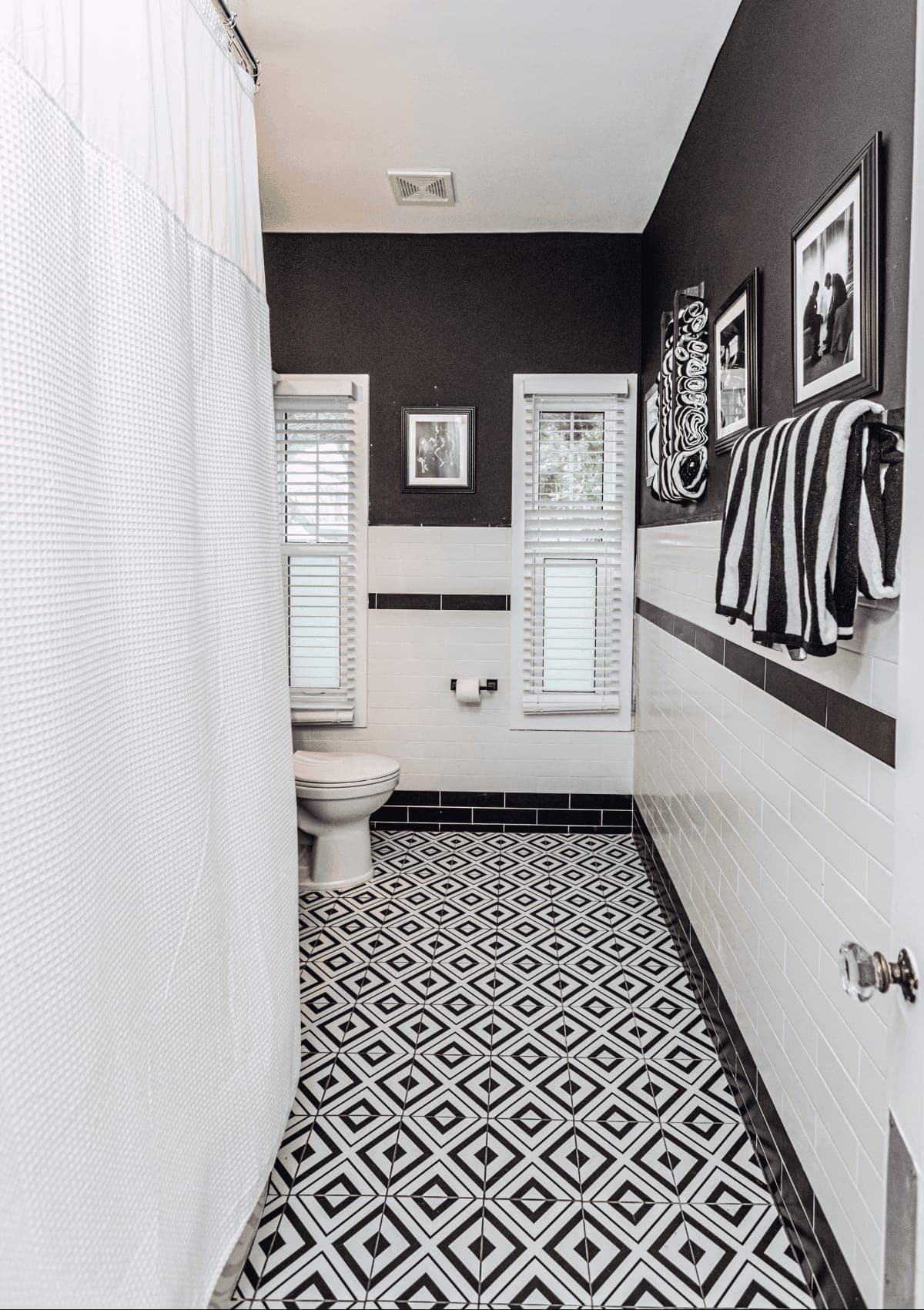
A 1962 bathroom in Old Northeast St. Petersburg wasn't designed for a walker. The standard 5×8 footprint, the cast-iron drain stack, the sunken tub, the tile substrate that crumbles when you breathe on it — none of it lines up with what an aging homeowner needs to stay safe and independent.
Curbless showers, grab bars, comfort-height toilets, and wider walking lanes are the four changes most aging Old NE homeowners need. Florida Building Code allows all of them. But a 1960s slab home needs four structural decisions made before any tile gets ordered — and missing one of them is how a retrofit doubles in cost halfway through.
Here's the order to make those decisions, the code citations behind each one, and what's specific about doing this work in a 1960s Old NE bathroom.
Why a 1960s Old NE Bathroom Is Its Own Problem
The 1955-1972 stock in Old Northeast was built on slab, with cast-iron drains, narrow 5×8 to 6×9 bathroom footprints, and tub-shower combos as the standard. Most have one bathroom upstairs and one down, original tile to the ceiling, and a sunken or platform tub that's heavier and deeper than current code anticipates.
Three things about that vintage matter for an aging-in-place retrofit:
- Cast-iron waste lines are still bonded into the slab. Rerouting a drain to relocate a toilet or shower means slab cutting, repacking, and rebar fish. It's not impossible. It just isn't a one-day plumbing call. See our cast iron plumbing in older St. Pete homes guide for what to check first.
- The wall framing is real 2×4 lumber on 16-inch centers, often with no insulation and original galvanized supply lines. Grab-bar blocking has to be added before the new tile substrate goes up.
- Original ceramic tile is mud-set, not thinset. Demo is heavier and slower than a modern tile rip. Expect more dust containment, more debris haul, more day-one labor than a 2010-era bathroom.
Decision 1: Curbless Shower in a Slab Home
A curbless (zero-threshold) shower is the single change that does the most for aging-in-place safety. Stepping over a tub edge is the highest-fall-risk moment in most older bathrooms. But “curbless” on a slab home means cutting the slab to set a drain trench below the finished floor plane — the water has to go somewhere, and gravity needs the headroom.
The pieces:
- A linear or trench drain set roughly 1.5-2 inches below the finished tile plane, sloped to a relocated waste connection
- A waterproof membrane (Schluter Kerdi or equivalent) over the entire wet area, lapped onto the bathroom floor for the splash zone
- A tile choice rated for slip resistance per ASTM C1028 in the wet condition (most polished tiles fail this; honed porcelain or small-format mosaic passes)
- A glass panel or shower curtain track instead of a hinged door, so a walker or wheelchair has clear passage
This is the most labor-intensive part of a 1960s Old NE bathroom retrofit and the change with the biggest safety payoff.
Decision 2: Grab-Bar Blocking Goes In Before the Wall Closes
The right time to install grab-bar blocking is during demo, before the new tile substrate goes up. The wrong time is two years later, when a homeowner needs a bar and the studs are buried behind tile.
Jeremy Wharton's framing in our owner interviews: “Adding in blocking for future handrails is a good example of minor [accessibility work]. That’s different than creating a zero-curb roll-in shower with fixtures set low.”
What blocking actually means: 3/4-inch plywood, 12 inches tall, screwed flat to the face of the studs in every location a grab bar might eventually go — toilet wall, shower walls, transition wall by the door. Done at the framing stage, it adds an hour of carpentry. Done after tile is up, it's a new tear-out.
Decision 3: ANSI A117.1 Dimensions in a Small Footprint
Most 1960s Old NE bathrooms are 35 to 48 square feet. ANSI A117.1 (the accessibility standard the Florida Building Code references) calls for a 60-inch turning radius for a wheelchair, 32 inches of clear door opening, 17-19 inches to the center of a toilet from the side wall, and 27 inches of knee clearance under any roll-under sink.
You can hit some but not all of those in a 5×8 footprint without taking down a wall. The retrofit math usually looks like:
- 60-inch turn radius — only if the tub footprint is converted to a barrier-free shower, and even then a wall to the closet or hallway sometimes has to move
- 32-inch door clearance — existing 28-30 inch doors usually have to widen one inch in either direction, which means re-trimming and sometimes header reframing
- Comfort-height toilet (17-19 inch seat) — straightforward swap if the drain location is workable
- Roll-under sink with 27-inch knee clearance — requires either an open-front vanity or a wall-mount sink, plus insulated supply and a horizontal-discharge offset trap
A partial retrofit (curbless shower + grab-bar blocking + comfort-height toilet + 32-inch door) is achievable in most 5×8 footprints. Full wheelchair-accessible (60-inch turn radius) usually requires expanding into an adjacent closet or hallway.
Decision 4: Anti-Scald and Thermostatic Shower Valves
Anti-scald valves are required by the Florida Building Code for new and replacement shower valves, and the practical version for aging-in-place is a thermostatic mixing valve with a maximum hot-water output set at 110-115°F. Older homes in Old NE often still run 140°F at the tank for legionella prevention; a mixing valve at the shower decouples the tank temperature from the user-facing temperature.
This is a small fixture call with a meaningful safety result: a slip in the shower doesn't compound with a scalding stream of water from a knocked-loose hot handle.
Costs and Grant Programs
A partial 1960s Old NE bathroom retrofit (curbless shower + grab-bar blocking + comfort-height toilet + door widening + new tile + anti-scald valve) is a 4-6 week project in most cases, with pricing driven by tile selection, fixture choice, and how much drain rerouting the slab cut requires.
Funding paths worth knowing about:
- VA SAH/SHA grants — Qualified veterans with service-connected disabilities may access Special Housing Adaptation grants that cover bathroom accessibility work. Eligibility and current dollar ceilings change; the VA's regional office is the authoritative source.
- My Safe Florida Home grant — Funds wind-hardening work, not aging-in-place modifications directly, but stacking a hardening project with an interior retrofit can spread mobilization costs. See our My Safe Florida Home grant guide for details.
- Pinellas County rehabilitation programs — Income-qualified homeowners may access county-administered rehab funds for accessibility modifications. The Pinellas County Housing and Community Development office maintains the current program list.
We don't process the grant applications ourselves; we coordinate the construction scope and timing so the work qualifies.
What We Tell Every Old NE Aging-in-Place Client
Decide the spectrum first. Blocking-for-later plus a comfort-height toilet plus an anti-scald valve is a one-week, low-cost retrofit that buys 10 years of optionality. A full curbless-shower-plus-60-inch-turn-radius retrofit is a different project on a different timeline and budget. Both are valid; the wrong move is starting one and pivoting to the other halfway through.
We coordinate the design, permitting, framing, and finish work on bathroom retrofits like these as the general contractor; trade partners handle the plumbing and electrical pieces. If you're planning a 1960s Old NE bathroom retrofit for aging-in-place — whether for yourself, a parent, or planning ahead — a 30-minute conversation about the spectrum is the right first step.
Frequently Asked Questions
Can a 5×8 Old NE bathroom be made wheelchair-accessible without taking down a wall?
A partial retrofit — curbless shower, comfort-height toilet, 32-inch door, grab-bar blocking — fits in most 5×8 footprints. Full 60-inch wheelchair turning radius usually requires expanding into an adjacent closet or hallway. Either path starts with a measured footprint walk-through.
Do I need a permit for an Old Northeast bathroom retrofit?
Bathroom work that includes drain relocation, slab cutting, door widening, or shower-valve replacement requires a permit through the City of St. Petersburg. Tile replacement on existing fixtures generally doesn't. Old Northeast historic-district homes may have additional review steps for exterior changes; interior bathroom work is typically straightforward. See remodeling in Old Northeast St. Pete for the broader historic-district process.
How long does a 1960s Old NE bathroom aging-retrofit take?
A partial retrofit (curbless shower, grab-bar blocking, comfort-height toilet, door widening, anti-scald valve, new tile) runs 4-6 weeks in most cases. A full ADA-accessible retrofit with footprint expansion runs longer because of the framing and permit timeline.
Will VA grant funds cover the whole project?
VA SAH/SHA grants are need-tested and capped at specific dollar ceilings the VA updates annually. They cover accessibility-related scope (curbless shower, grab bars, door widening) but typically not full bathroom finish work. The VA regional office is the authoritative source for current eligibility.
Related Reading
For broader context on aging-in-place work in St. Pete, see our aging-in-place service page. Kitchen-scope companion piece: kitchen retrofits for limited mobility. Whole-home accessibility framing: accessible home renovations. Cost-arc sibling: aging-in-place modifications in St. Pete. Historic-district scope: historic renovation service.
Contact Revolution Contractors or call (727) 888-6161. Florida licensed CRC1331628 + CGC1522463.