Home Building Checklist for Custom Homes in St. Petersburg, FL

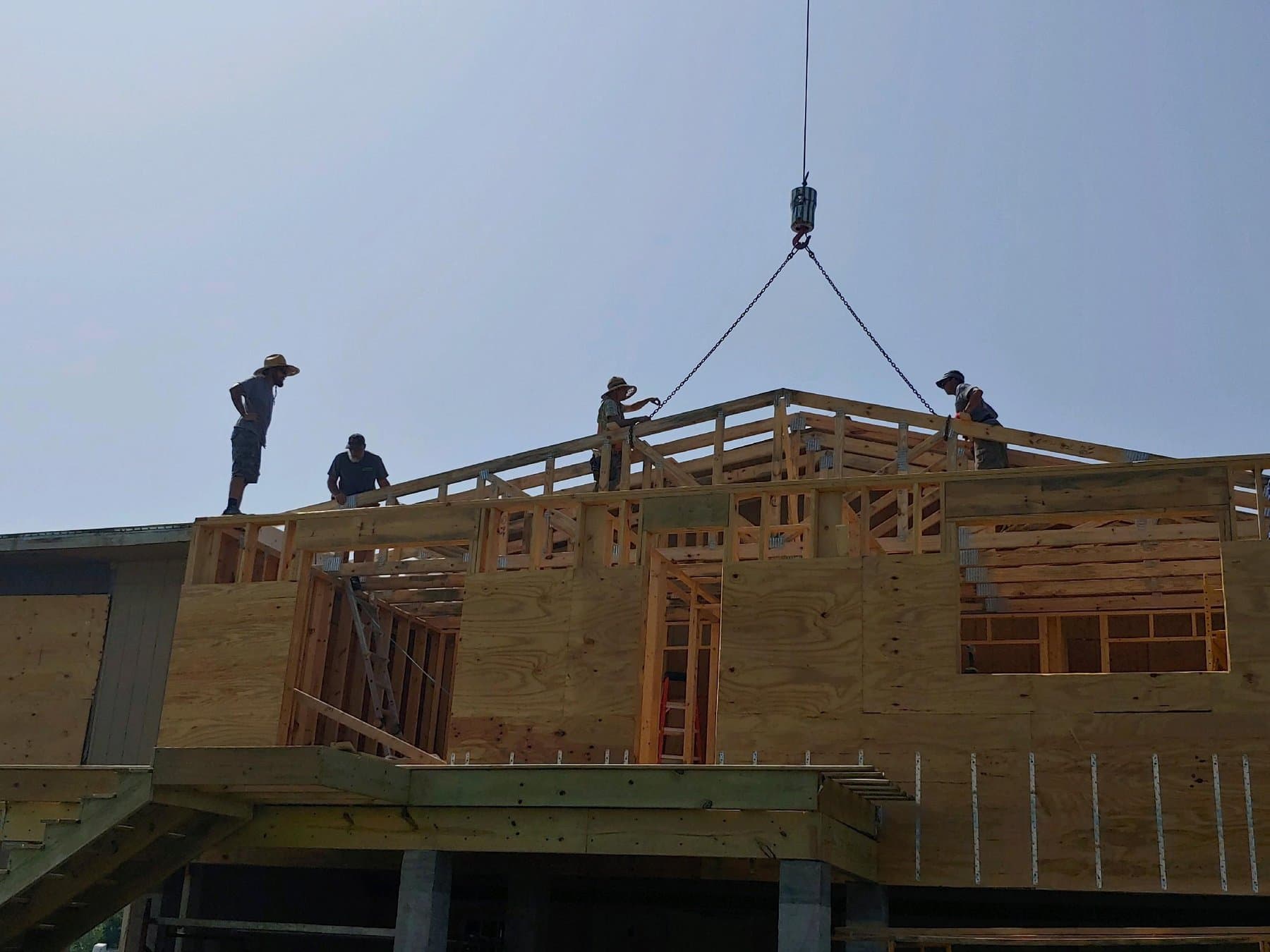
Use this home building checklist before you break ground in St. Petersburg. A custom home here takes 16–24 months from design to move-incosts $400–$500 per square foot for full custom construction, and runs through a permit process that surprises even experienced developers. If you’re planning a ground-up build in Pinellas County — whether you’re relocating from out of state or upgrading your footprint in an established neighborhood — this checklist covers what national guides leave out: Florida’s flood zone requirements, the real St. Pete permit timeline, and the lot due diligence questions you need answered before you make an offer.
The Full Timeline: What Actually Takes How Long in St. Petersburg
Most online guides say 12–16 months for a custom home build. That’s an optimistic number that doesn’t account for how Pinellas County actually works. Here’s what you’re actually looking at:
| Phase | Duration |
|---|---|
| Design (architect + interior design) | 3–6 months |
| Permitting | 3–6 months |
| Construction | 10–12 months |
| Total: design to move-in | 16–24 months |
The gap between the national estimate and the St. Pete reality comes from two things: design complexity and the building department’s review process. Simple permits in St. Pete run 30–60 days. A complex custom home with multiple comment rounds can run 4–6 months. If your architect submits plans that generate clarifications — structural, electrical, flood zone compliance — each round adds weeks. Planning your timeline around the optimistic scenario and signing a lease-end date to match is how cash flow problems start.
What accelerates your timeline: Arriving at pre-construction with design work already done. If your architectural drawings are complete when you engage a contractor, you skip 3–4 months of back-and-forth. What slows it down: choosing a builder who isn’t familiar with the St. Pete building department, or discovering flood zone compliance issues mid-design.
One note for 2025–2026 projects: As of October 1, 2025, the St. Petersburg building department now requires a notarized application for all permit submittals prior to issuance. Out-of-area builders often don’t know this requirement exists until it causes a delay. Your contractor should know it cold.
Lot Due Diligence: Nine Florida-Specific Questions to Ask Before You Make an Offer
This is where national home building checklists fall completely flat. Buying a lot in Pinellas County without answering these questions first is how you end up with a $75,000 surprise after closing. Check every item before you commit.
1. What Flood Zone Is the Lot In?
Pull the FEMA Flood Map Service Center (msc.fema.gov) and Pinellas County GIS — both, because they don’t always match. AE zone means elevated foundation required. VE zone (coastal high hazard, primarily barrier islands) means open piling foundation, no fill, breakaway walls below the base flood elevation. X zone means slab-on-grade is typically permitted. Your flood zone designation determines your foundation type and adds 20% or more to your construction cost if you’re in AE or VE. See our Pinellas County flood zone guide for a full breakdown.
2. What Is the Base Flood Elevation, and How Far Above It Must You Build?
Pinellas County requires construction at BFE plus one foot of freeboard. Get an elevation certificate for the specific lot early in your design phase — your architect needs it to design the lowest floor correctly. For detailed numbers on how elevation drives foundation costs, see our house elevation cost guide.
3. Are There Wetlands, Mangroves, or Protected Habitat on the Lot?
Check Florida DEP mapping and the county GIS overlay. Protected wetlands and gopher tortoise habitat can halt construction or require extensive mitigation. Wetland delineation surveys are sometimes required before permitting will proceed on coastal lots.
4. What Foundation Type Does the Soil Require?
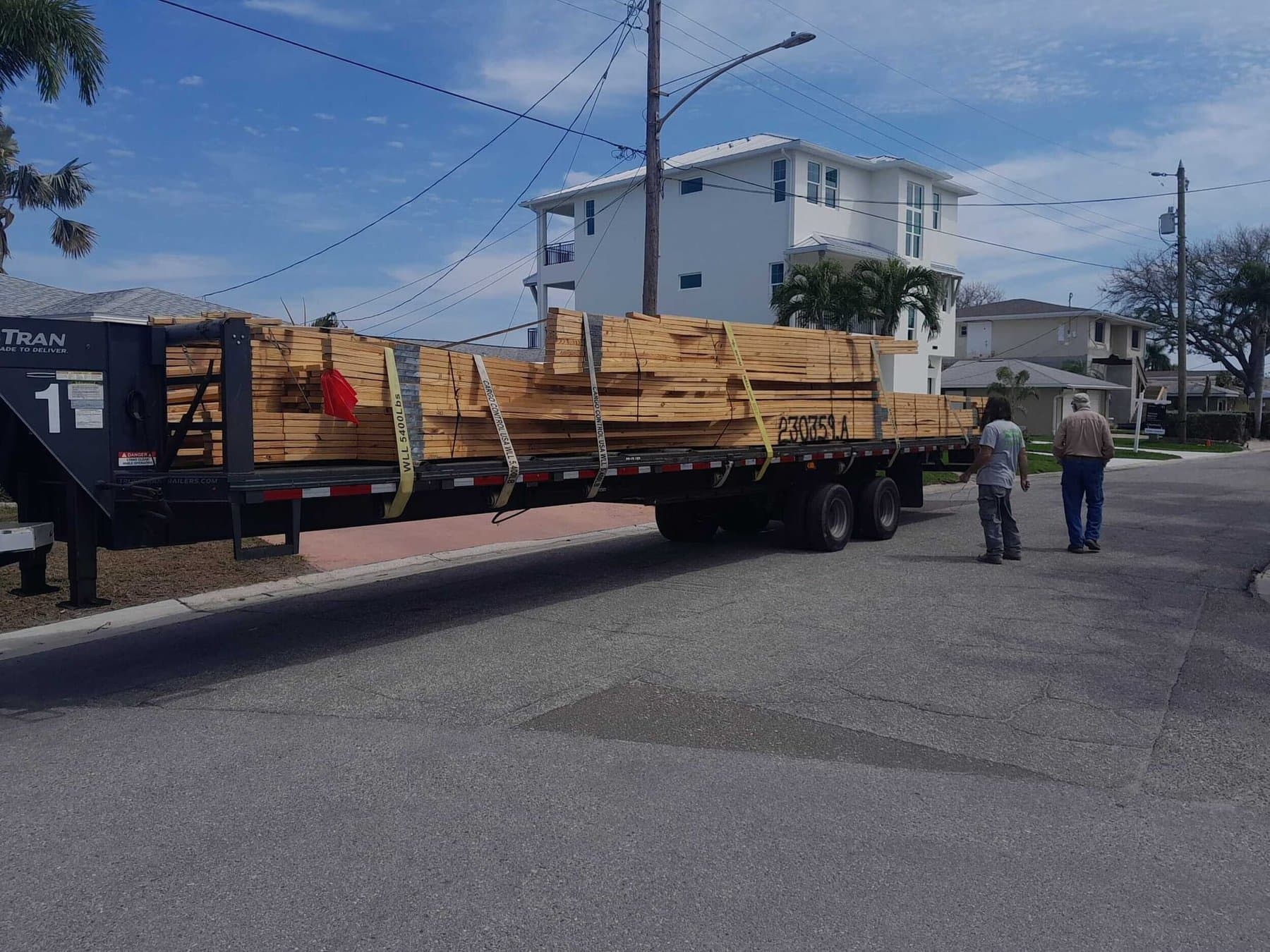
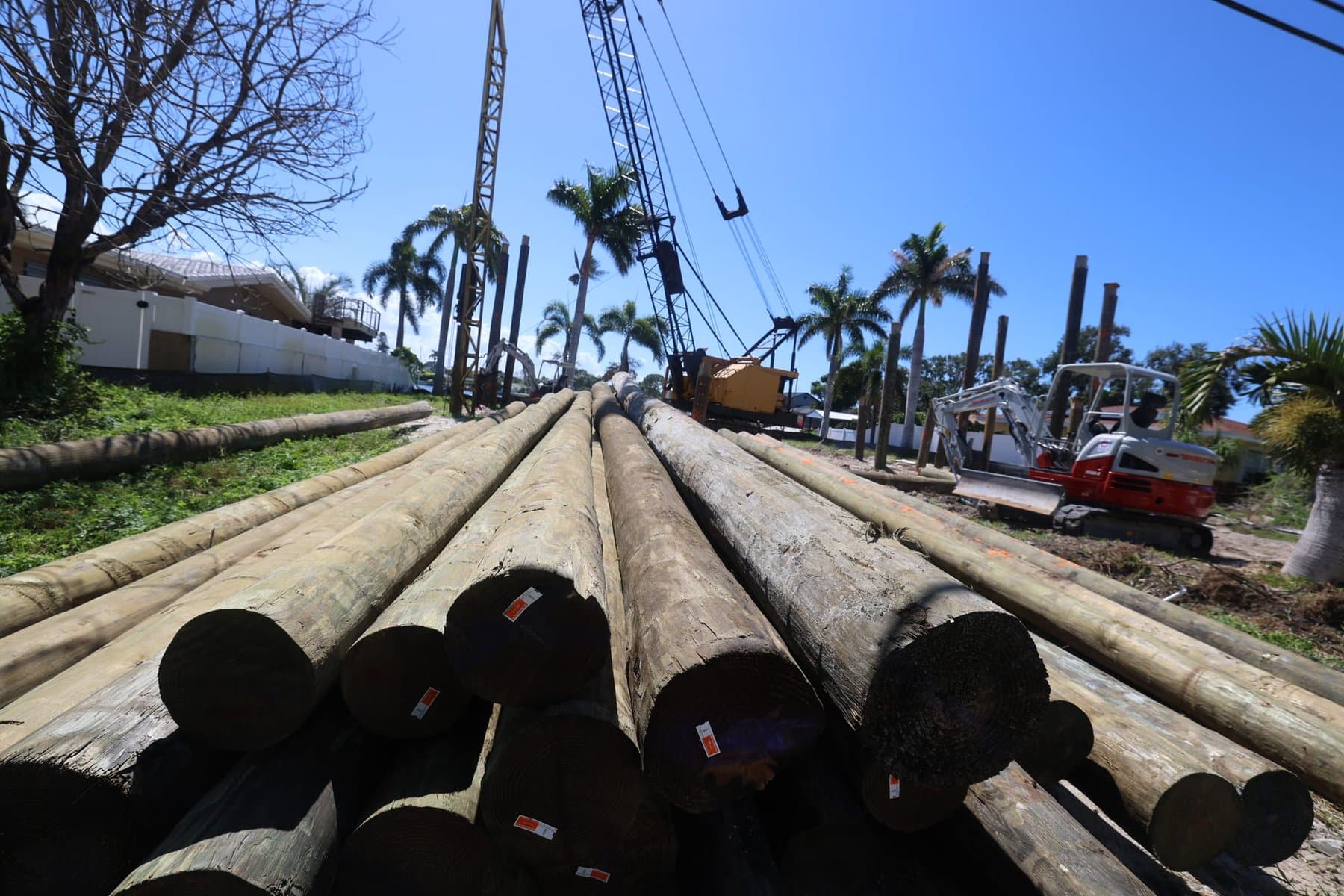
A geotechnical (soil) assessment determines whether your lot can support spread footings or requires driven piles. In coastal Pinellas, roughly half of lots need driven piles. That’s a cost swing of $50,000–$100,000 on a 2,000–4,000 square foot home. You want that answer before you finalize a budget — not after your contractor breaks ground.
5. What Are the Setbacks, and What’s Your Actual Buildable Area?
Pinellas County setbacks vary by lot type. Factor in wetland setbacks (30–50 feet in some areas), the Coastal Construction Control Line (CCCL) for beach properties, and local zoning minimums. A lot that looks large on paper can have 40% of its area constrained by setback rules. Our guide on elevated house plans in flood zones covers how these constraints shape your design.
6. Is There Utility Access, or Will You Need a Well and Septic?
Most urban St. Pete lots connect to city sewer and water. Coastal and unincorporated lots sometimes don’t. A well and septic system adds $15,000–$30,000 to your budget. Confirm utility availability before your offer, not after.
7. Are There Easements or Rights-of-Way That Affect Your Footprint?
A title search and boundary survey reveal underground utility easements, drainage easements, and shared access rights that can limit where your foundation can go. Your builder needs to see these before designing the footprint.
8. What Are the Impact Fees?
Pinellas County impact fees can run $5,000–$25,000 depending on home size and location. These are separate from permit fees and are frequently omitted from early builder quotes. Ask about them specifically.
9. Is This Property on a Barrier Island Subject to the CCCL?
For beach properties — Tierra Verde, St. Pete Beach, Treasure Island — no construction can occur seaward of the Coastal Construction Control Line without a Florida DEP variance. If you’re buying a lot on a barrier island, confirm the CCCL position before you negotiate the price.
Planning a Custom Home in St. Petersburg?
We build custom homes in Pinellas County using a design-build T&M model. You see every invoice, you're in the room for every budget decision, and you have 20+ W-2 carpenters on Revolution's payroll on your schedule from foundation to finish.
Budget Planning: Real Numbers for Pinellas County
Here’s what full custom construction actually costs in St. Pete right now, not what national cost estimators say.
| Build Type | Cost per Sq Ft | Notes |
|---|---|---|
| Builder-grade / semi-custom | $250–$350 | Package selections, limited customization |
| Full custom (design-to-finish) | $400–$500 | One-of-one design, your specifications |
| Luxury waterfront custom | $500–$1,000+ | High-end finishes, complex site, custom everything |
One caveat worth understanding on semi-custom: packages look flexible until you try to go beyond them. The moment you start customizing outside the package, costs jump — and at some point you’ve effectively converted a $300/sqft project into a $450/sqft project anyway. Decide upfront which path you’re on. (For a deeper dive on pricing, see our custom home cost guide.)
Flood zone and coastal premiums:
- Elevated coastal home (pilings, elevated slab) vs. inland slab-on-grade: ~20% cost premium
- Driven piles where soil density requires them: +$50,000–$100,000 additional
- Impact-resistant windows (required in coastal zones): +$50–$100/sqft
Budget contingency for coastal FL: Standard guidance is 10–15% contingency. For a coastal Pinellas custom home, consider 20%. Hurricane season delays, material cost spikes, and mid-project flood zone compliance discoveries can consume a thin contingency before you reach the finish line.
Weekly budget tracking: If your builder doesn’t send you a weekly budget report during construction, you’re flying blind on a 10–12 month project. By the time you see a variance on a monthly statement, you’ve lost weeks of course-correction opportunity.
“With a new build, that budget conversation can happen pretty early because of the size of the line items needed before we ever get to finishes — the foundation, the masonry, the site work, any demolition, then framing. An example: if someone just needed raw square footage, we’d be able to design a more simple house — maybe a more rectangular design with a plain hipped roof that we would have seen built here in the mid-century. Versus something with more cuts and hips in the roof and more intentional spaces like butler’s pantries or sculleries that begin to drive cost up.”
Design-Build vs. Architect-First: The Budget Alignment Argument
This is the decision that most determines whether your project ends on budget or blows up at bid time.
The traditional path is architect-first: you hire a designer, develop a set of plans, then go to market for bids. The problem is that architects design for beauty — and sometimes that results in a set of plans that comes in significantly over what you expected when real bids arrive. At that point you’re either redesigning, cutting scope, or proceeding with a project you can’t fully afford.
A design-build approach puts the contractor in the room during the design phase. Your builder is telling the architect what’s buildable and what it costs as the design developsnot after the plans are stamped. In coastal Florida, where flood zone requirements, hurricane code, and material costs all inflate project scope in ways that aren’t obvious on paper, this integration prevents the worst outcome.
The way it works in practice: multiple pencil-sharpening rotations before construction begins. Each pass aligns scope with real-world cost. By the end of pre-construction, 75% of line items are confirmed on cost — and those confirmed items bring total budget confidence to 90–95% accuracy before a single hammer swings.
The T&M (time and materials) side of this matters too. On a fixed-price project, a builder who submits a low bid has every incentive to control his costs after signing — which means substituting materials and cutting corners you won’t see until years later. On a time-and-materials basis, you see every invoice and every markup. The builder’s costs are your costs. If the tile you want costs more than what was estimated, you see it that week. You make the call — upgrade, substitute, or adjust scope elsewhere.
Pinellas County Permits: What to Actually Expect
For a full custom new construction, here’s how the permit process unfolds:
What you need to submit:
- Building permit application (notarized, as of October 1, 2025)
- Digital plans with encrypted signatures and seals
- Current boundary and topographic survey (issued within 5 years)
- Notice of Commencement (required for any project over $5,000 — must be recorded with the Clerk of Court before work begins)
What triggers the clock:
Initial plan review runs approximately 4 weeks. If the reviewer generates comments — structural clarifications, flood zone compliance questions, electrical conflicts — your contractor responds, and a second review runs about 5 business days. For a complex custom home, two to three rounds of comments is common. That’s where the 3–6 month total estimate comes from.
After permit issuance:
Construction mobilizes about a week after permit. Then your project follows an inspection sequence: foundation and footing → framing → electrical rough-in → plumbing rough-in → mechanical rough-in → insulation → all-trade final inspections. Each inspection needs to pass before the next phase can proceed.
The inspection process itself is where an experienced local contractor earns their money. Knowing which inspectors favor which documentation, what calls to make in advance, and how to present work that’s not yet conventional in this market — that institutional knowledge shortens your build timeline in ways that don’t show up in any permit guide.
Florida Construction Requirements: What the Code Actually Mandates
Flood Zone Construction (AE/VE Zones)
- Lowest floor at BFE + 1 foot (Pinellas County freeboard requirement)
- All utilities above BFE
- Flood-resistant materials below BFE: concrete, masonry, metal, pressure-treated wood — no standard drywall, no particleboard
- VE zone: open foundation required (pilings or columns), no fill, breakaway walls below BFE
- Soil assessment for driven pile vs. spread footing determination
The FEMA 50% rule also applies if you’re considering buying an older home and rebuilding: if your project value exceeds 50% of the structure’s assessed value, you’re required to bring the entire home up to current FEMA compliance. Revolution tracks these thresholds on every flood zone project we touch.
Wind / Hurricane Code
New construction in coastal Florida must meet current Florida Building Code wind load requirements — 180+ mph rated in some coastal zones. In practice, this means hurricane clips and straps on all roof framing, impact-resistant windows and doors (now mandated in coastal construction zones), and reinforced roof systems. Homes built to current code receive wind mitigation credits that reduce windstorm insurance premiums by 30–50%. Building to code isn’t optional, but understanding why you’re doing it — and what it’s doing for your long-term insurance cost — is a different conversation than most builders have with their clients.
Seven Mistakes First-Time Custom Home Builders Make in Florida
1. Buying a Lot Without Flood Zone Due Diligence
The most common and most expensive mistake. Discovering an AE zone designation, wetland encroachment, or pile requirement after closing eliminates your negotiating leverage and can add $100,000+ to a project budget you thought you understood.
2. Not Involving the Builder Early Enough
Designers without a builder in the room design what looks beautiful. Builders know what it costs to build it. In a coastal Florida market where every design decision has regulatory and cost implications, late builder involvement creates late surprises.
3. Underestimating the Permit Timeline
National guides say 30–60 days. The honest St. Pete range for a complex custom home is 3–6 months. If your construction loan draw schedule or your relocation timeline is built around 60 days, you’re setting yourself up for a cash flow problem.
4. Running a Thin Contingency
Ten percent works in predictable markets. In coastal Pinellas, where hurricane season delays, material spikes, and mid-project flood zone discoveries are real risks, 20% is a more honest buffer.
5. Skimping on Impact-Resistant Windows and Roofing
Hurricane-rated construction isn’t optional — it’s code. But the quality of installation and the product tier you choose within code compliance have a direct relationship to your long-term insurance premium and your home’s storm performance. Don’t trade down here.
6. Confusing Custom with Semi-Custom
Semi-custom homes start at $250–$350/sqft because you’re working within a package. The moment you try to go beyond the package, costs jump fast. Know which product you’re buying before you sign anything.
7. Not Getting a Soil Test Before Finalizing Your Budget
Whether your lot needs driven piles is a $50,000–$100,000 line item. A geotechnical report before budget commitment costs a few thousand dollars and eliminates one of the largest unknowns in your project.
Working With a Local Contractor Who Knows This Market
The St. Pete building department has a reputation among experienced contractors for complexity — multiple comment rounds, detailed documentation requirements, and a review process that benefits from local relationships. An out-of-area builder or a contractor without a track record in Pinellas can add months to your timeline just by not knowing the system. That’s why working with a custom home builder who operates in Pinellas every week matters so much on a ground-up project.
Here’s what to look for when you’re evaluating contractors for a custom home in Pinellas County:
- How many W-2 carpenters do they have on payroll? A contractor with 20+ W-2 carpenters on payroll controls their own schedule and runs the job under one open-book budget. On a 10–12 month build, that’s a real differentiator.
- How do they handle budget transparency? Ask specifically: will you receive a weekly budget report? Can you see invoices? On a project of this scale and timeline, open-book construction is the only model that protects you from surprises.
- How much FEMA flood zone work have they done in Pinellas? Ask for specific projects. This isn’t a credential you want to discover they lack in month four of your build.
- Do they understand the FEMA 50% rule on existing structures? If you’re considering buying an older home and rebuilding, the FEMA Substantial Improvement rule can require full code upgrade if your project value exceeds 50% of the structure’s value. Contractors who don’t know this rule will give you a renovation quote on a project that legally requires a full tear-down and rebuild.
- Are they licensed and insured for new construction in Florida? Verify on the Pinellas County Access Portal (contractorsearch.pcclb.com) and Florida DBPR (myfloridalicense.com) before signing anything.
Mid-Build Checklist: Questions to Ask at Each Phase
Once your project is underway, keep these questions in your back pocket at each milestone:
- Pre-construction complete: Are at least 75% of line items cost-confirmed? Do you have the final permit in hand? Is the Notice of Commencement recorded?
- Foundation phase: Has the soil assessment been completed? Is the foundation elevation certified above BFE + 1 foot?
- Framing phase: Are hurricane clips and straps installed per the structural engineer’s drawings? Has the framing inspection passed?
- Rough-in phase: Are all utilities stubbed above BFE? Has the plumbing rough-in been inspected?
- Windows and doors: Are all products impact-rated per the permit drawings? Are the product approvals on file with the building department?
- Final inspections: Are all trades signed off? Has the elevation certificate been updated to reflect as-built?
Frequently Asked Questions
What's the first step in building a custom home in Florida?
Before you talk to a builder, get clarity on three things: the lot, your budget range, and your timeline. The lot drives everything in Florida — flood zone, soil, setbacks, and review-board status all change what you can build. We do free pre-construction walkthroughs of any lot you're considering and tell you what the build will actually cost.
When should I hire a builder versus an architect first?
For most St. Pete custom builds, hire a contractor who coordinates design-build with an independent architect on a single contract — get both at once. Splitting them — architect first, then bid out to builders — almost always produces a design that's 20–40% over budget by the time real numbers come in. A coordinated design-build approach runs cost analysis at every design phase, so you don't fall in love with a plan you can't afford. That's how we work — Revolution as the GC under one contract, paired with an independent architect or designer rather than carrying designers in-house, so your design IP stays yours and you have a single point of accountability.
How much should I budget for unexpected costs?
These are ranges from active 2026 St. Pete projects, not fixed-price quotes — every contingency is sized from the actual lot, BFE, soil report, and selection set. For new custom builds, plan a 10–15% contingency on top of the contract; for coastal Pinellas builds in AE or VE flood zones, 20% is the more honest buffer because of hurricane delays and mid-project flood compliance discoveries. For renovations and additions, plan 15–20% — older houses always hide things behind the walls. With a fixed-price contract, that contingency is hidden in padded line items whether you use it or not. With our Time & Materials model, unused contingency stays in your pocket.
What permits do I need to build a home in St. Pete?
At minimum: building permit, electrical, plumbing, mechanical, and roofing. Coastal lots add FEMA elevation review. Historic districts (Old Northeast, Roser Park) add a Certificate of Appropriateness from the historic review board. Lots in flood zones need FIRMs and elevation certificates. We pull all of these as part of pre-construction — you don't chase permits.
How do I know if a contractor is legit in Florida?
Three checks: verify the CGC license at MyFloridaLicense.com (general contractors need a Certified General Contractor license, not just a residential license), confirm they carry both general liability and workers' comp insurance with you named as additional insured, and ask whether their carpenters are W-2 employees or 1099 subs. Paper contractors who sub everything out are the source of most horror stories in this market.
Related reading: Custom Home Building Services | Custom Home Build Timeline | The Custom Home Building Process | Remodel, Add On, or Build New? | Luxury-Tier Checklist Additions: Luxury Home Remodeling in St. Pete | Remodeling instead of building new? See our home remodel checklist.