How Long Does It Take to Build a Custom Home in St. Petersburg, FL?
Timeline only for the full service overview including design-build approach, T&M open-book pricing, and flood zone expertise, see our custom home builders page. For cost breakdowns by square footage and flood zone tier, see the custom home cost guide.

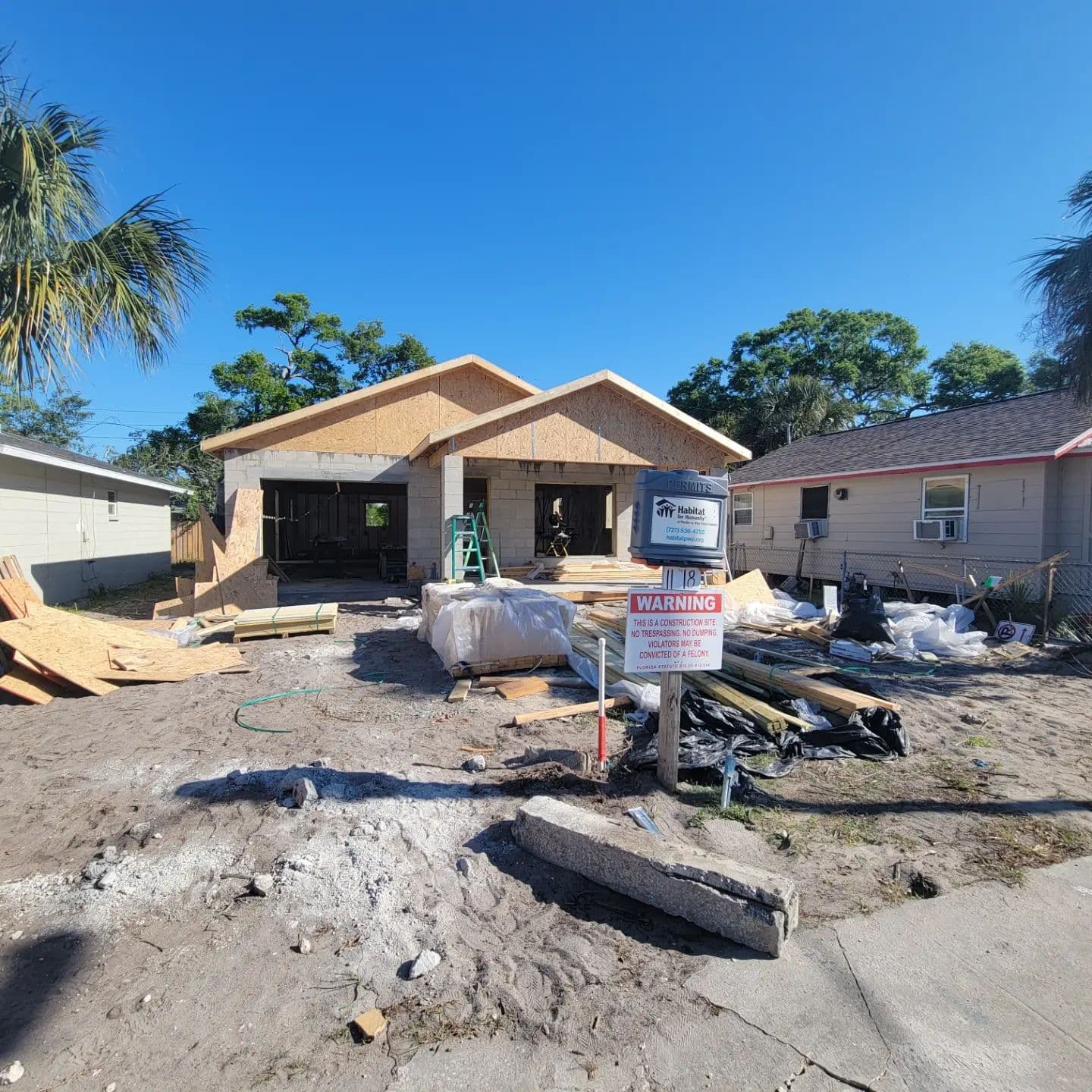
The real custom home build timeline in St. Petersburg runs 16–24 months from the day you first sit down with an architect to the day you turn the key. If you've heard 9–18 months elsewhere, that's probably the construction phase alone — not the full picture. Here's what the custom home construction timeline in Florida actually looks like, broken down by phase.
In This Article
The Honest Number: Two Years
“It oftentimes takes two years to go from concept to move-in,” says Jeremy Wharton, co-owner of Revolution Contractors. “No matter how decisive and motivated a client is, a custom new home is going to take longer than they think.”
That's not pessimism. That's calibrated honesty from running custom builds in Pinellas County for years. Most national content quotes 9–18 months — and that figure isn't wrong, it's just incomplete. It typically describes construction only, leaving out the 6–12 months of design and permitting that happen before a single shovel hits the ground. (For the full sequence we run on every project, see our construction process.)
Here's the phase-by-phase breakdown:
| Phase | Typical Duration | What Drives the Range |
|---|---|---|
| Design & Pre-Construction | 3–6 months | Scope complexity, architect availability, how many decisions are locked |
| Permitting | 3–6 months | St. Pete building department, flood zone review, plan revision rounds |
| Construction | 10–12 months | Pilings, finish level, change orders, inspection backlog |
| Total | 16–24 months | Every phase compounds |
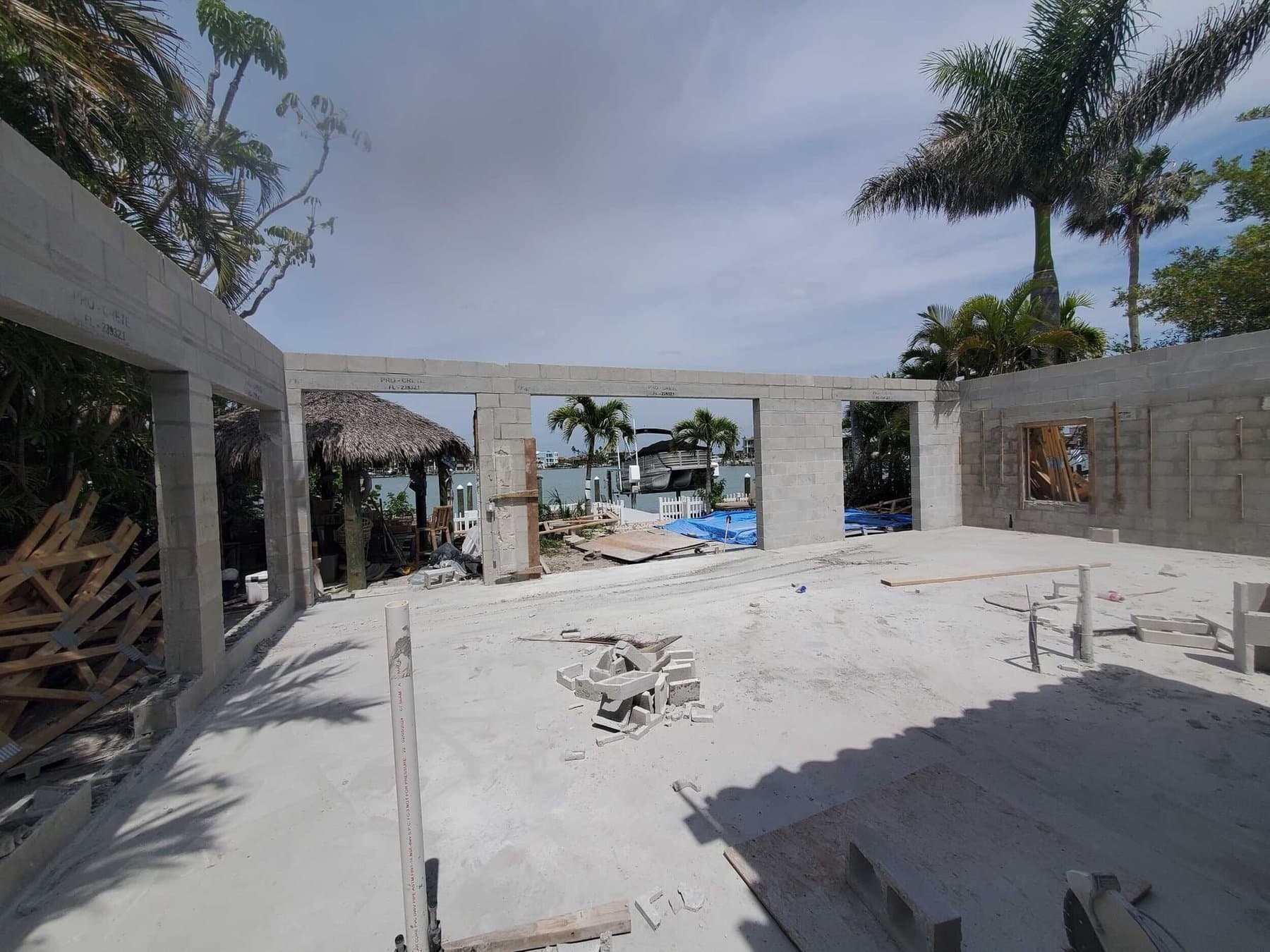
Plan for 18 months. Hope for 16. If you're building near the water — and many of the best lots in St. Pete are — add time at every phase.
“Typical timeline from design to move-in for a custom home: design process is three to six months with an architect, depending on the architect and how decisive the client is. Permitting is three to six months for a new home. Construction is going to be somewhere in the ten to twelve month range, depending on a few things — if we have to drive pilings, if the foundation is extensive, and then how luxurious the interior finishes are.”
Phase 1: Design and Pre-Construction (3–6 Months)
This is the phase most people don't count, and it's the longest single phase before construction begins.
Here's what's happening during design: you're not just picking paint colors. You're producing a full set of stamped, engineered construction documents that a city plan reviewer can approve. That process has multiple stages — schematic floor plans, structural engineering review, MEP (mechanical, electrical, plumbing) drawings, energy compliance, and budget development running parallel to all of it.
“Simple drafting might only take four to six weeks,” Jeremy says. “But getting a stamped set of plans should be assumed to take three to six months.” Every structural revision requires a new stamped set. If your design has a complex roof line or requires a second structural engineering review cycle, add another 3–6 weeks per round.
What compresses this phase: If you walk in with a full set of blueprints already completed, design time can collapse to 4–6 weeks. If you're starting from “I want a four-bedroom house with a pool and a view,” three to six months is right.
Where Revolution's approach matters here: With a traditional architect-then-contractor model, you hire an architect for six months, get a beautiful set of plans, and then — for the first time — find out what they actually cost when you go to bid. Revolution operates as a hybrid — we coordinate design and construction under one contract and pair you with an independent architect or designer rather than carrying designers in-house. That coordination runs budget reality in parallel with design. By the end of pre-construction, roughly 75% of line items are locked as hard costs. You don't discover the house is $400,000 over budget after the plans are done.
Revolution matches clients to the right design professional for their project — sometimes an architect, sometimes an interior designer, sometimes both — and stays engaged through the entire design process, not just construction. That coordination shortens the gap between design decisions and budget consequences.
Phase 2: Permitting (3–6 Months for Custom New Builds)
Permitting is where the most optimistic timelines fall apart, and it's the phase competitors most consistently under-disclose.
The St. Pete building department runs a 10-day initial review cycle per round — that's per round, not total. A custom new build typically goes through multiple rounds: the city returns comments, your architect responds and resubmits, the city reviews again. For a complex custom home, three to four rounds is not unusual. The 9th-edition Florida Building Code (effective 2026) added new windborne-debris and energy-compliance review items that can drive an extra round on flood-zone builds — see what changed in the 2026 FBC.
“St. Pete is known as being very difficult to move through,” Jeremy says. “It requires a contractor with significant experience and relationships inside that building department.” Those relationships matter. An experienced contractor knows which comments to pre-empt — meaning the plans go in cleaner, fewer rounds are needed, and the permit comes out faster.
For large remodels (typically $100K–$500K), permitting in St. Pete runs 1–2 months. For a custom new build, budget 3–6 months. If your lot is in a flood zoneadd a separate FEMA compliance review layer that runs alongside — not after — standard plan review.
The single biggest lever you control: Submit a complete, clean, stamped set of plans the first time. Incomplete submissions restart review cycles. Every round of comments adds 3–5 weeks. The permit timeline is largely set by the quality of the drawings that go in on day one.
Ready to Map Out Your Custom Home Timeline?
Talk to Jeremy about your lot, scope, and realistic schedule. We'll tell you what we see.
Phase 3: Construction (10–12 Months)
Once the permit is in hand, Revolution mobilizes within a week. The construction sequence for a custom home runs approximately like this:
- Site prep and demo (if replacing an existing structure): 1–2 weeks
- Survey, staking, layout: 1 week
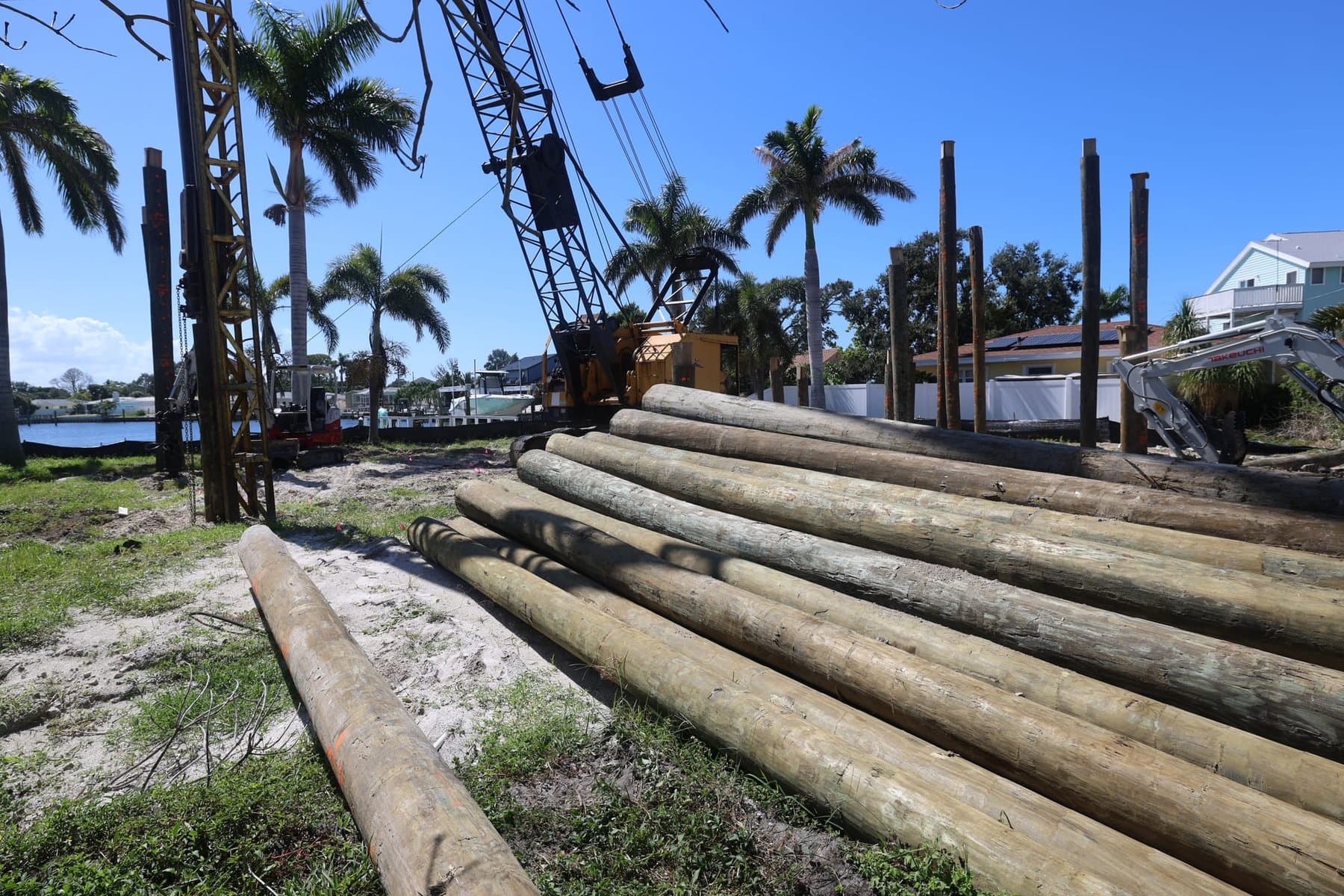
- Foundation — excavation, footings, slab or pilings: 2–6 weeks (pilings add 2–3 weeks)
- Masonry/CMU walls or wood frame vertical: 4–8 weeks
- Rough framing and roof structure: 6–8 weeks
- MEP rough-ins (mechanical, electrical, plumbing — run simultaneously): 2–4 weeks
- Insulation, framing inspection: 1–2 weeks
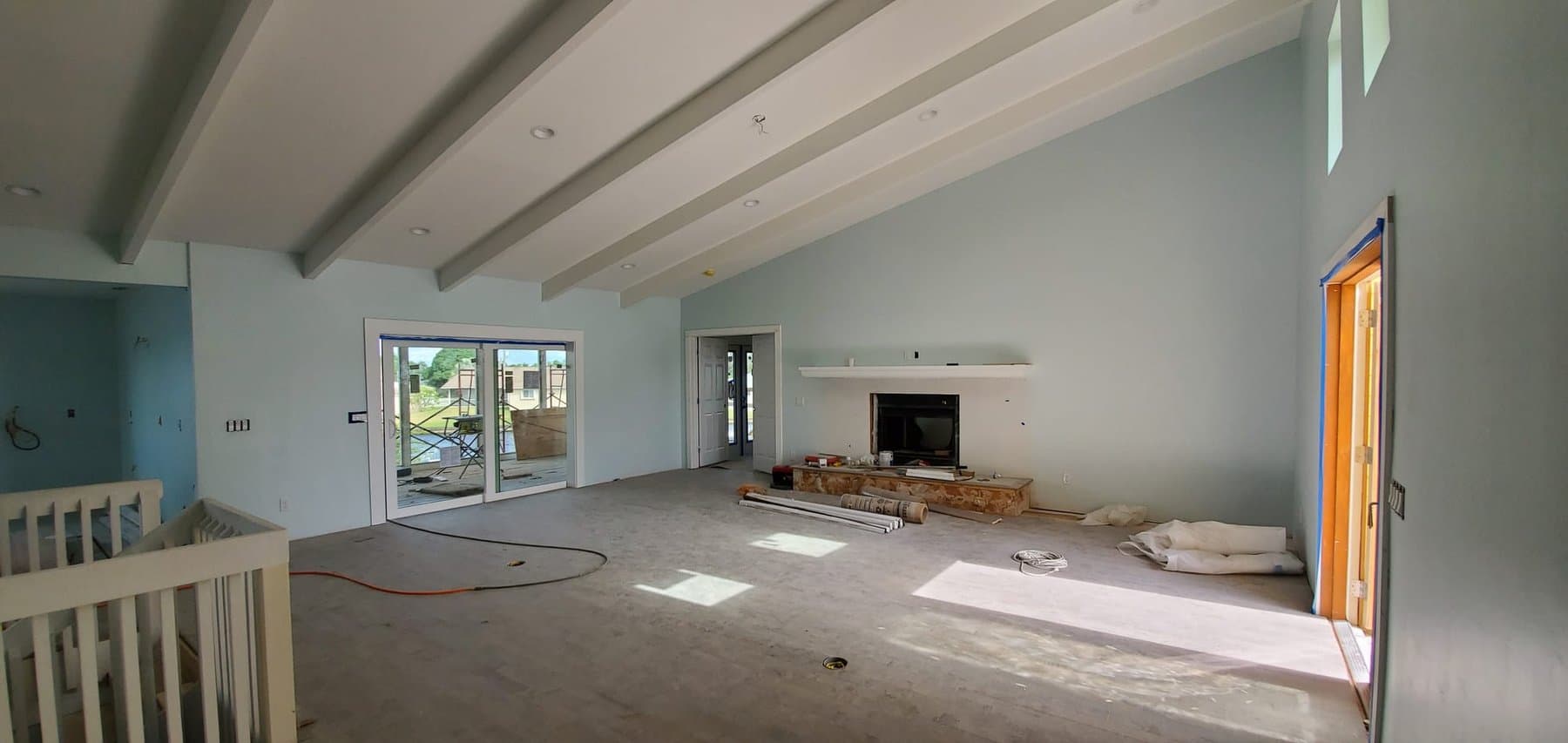
- Drywall and finishing: 2–3 weeks
- Interior finishes — cabinets, tile, flooring, millwork: 4–8 weeks (highest variability)
- Exterior finishes — stucco, windows, doors: overlaps with interior
- Fixtures, appliances, hardware, final trim: 2–3 weeks
- Landscaping and flatwork: 2–4 weeks
- Punch list, walkthrough, final inspections, Certificate of Occupancy: 3–6 weeks
That's 10–12 months for most St. Pete custom builds. What pushes it toward 12:
- Driven pilings — flood zone lots near the water require pile foundations. Add 2–3 weeks of foundation work and $50,000–$100,000 to the budget.
- High-end finishes — floating staircases (which we install with specialty crews), custom millwork, stone, glass railings. Each specialty trade extends the interior finish schedule.
- Selection delays — your tile setter is scheduled; if you haven't picked tile yet, that schedule slot either waits or moves to another job. Either way, you lose 2–4 weeks and the ripple hits three other trades.
- Change orders — every change to a permitted element may require a permit amendment. Budget 2–4 weeks of schedule impact per meaningful change order.
- Impact window lead times — custom impact-resistant windows in Florida run 8–12 weeks from order. Miss this window and you're waiting. Cabinet lead times are 6–10 weeks.
- Hurricane season (June–November) — mostly a minor factor, but rain delays hit exterior work and concrete pours. Worth knowing if your construction phase spans summer.
Revolution's 20+ W-2 carpenters on payroll means scheduling is under our control — we don't call a sub and wait to see if they show up. When the foundation is done, our framers are there. That continuity is what keeps the 10–12 month range realistic.
The St. Pete Wrinkle: Flood Zones and Infill Lots
Two things about building custom in St. Pete that don't apply in most other markets:
Flood Zones
Most of the desirable lots in St. Pete — anywhere near Tampa Bay, Boca Ciega Bay, the intercoastal, or the Maximo area — are in FEMA-designated AE or VE flood zones. Building in a flood zone adds:
- A separate FEMA compliance review at the city (not the same reviewer as standard plan review)
- Elevation certificates, required before and after construction
- Design Flood Elevation (DFE) requirements that affect your floor heights, utility placement, and foundation design from day one
- Pilings if your lot requires them — the foundation type that adds 2–3 weeks and $50,000–$100,000
DFE (Design Flood Elevation) is the target height your lowest floor must meet or exceed — it's the Base Flood Elevation (BFE, or the 1% annual flood level) plus any additional freeboard the city requires. Your architect incorporates DFE into the plans from the start. Get the DFE wrong, and you're redesigning.
“We've built in every flood zone in Pinellas,” Jeremy says. “We know what FEMA wants.” That matters when FEMA compliance review is a separate gate your permit can't pass without.
Infill Lots
Because Pinellas County is the most densely populated county in Florida, most custom builds in St. Pete aren't on raw land — they're replacing an existing structure. That adds a separate demo permit, utility disconnections and reconnections, tree surveys (protected trees require arborist review and can add 1–3 weeks), and in some cases HOA notification requirements. Build that into your pre-construction timeline.
Design-Build vs. Traditional: Where You Save Time
The Construction Industry Institute has studied this: design-build projects deliver 33% faster on average than traditional design-bid-build.
The reason isn't magic — it's the handoff gap. With the traditional approach:
- You hire an architect (months 0–6)
- Architect delivers plans (months 6–12)
- You go to bid with multiple contractors (months 12–14)
- You select a contractor and negotiate (months 14–16)
- Contractor submits for permits — now learning your project for the first time (months 16+)
- Construction begins (months 18+)
With Revolution's design-build approach to custom homesthere's no handoff gap. We're engaged from week one. When your plans are complete, we submit for permits the same week — because we've been involved throughout and already know the project inside and out. No re-bid. No contractor learning curve. No 2–4 month dead period.
The other advantage: weekly standing calls with your superintendent and budget actuals reviewed every week. “Almost any time we've gotten into trouble, had a project go badly, had a relationship go badly with a client, the issues always can be traced directly back to communication,” Jeremy says. Weekly T&M reporting isn't just transparency — it's the mechanism that keeps your timeline from compressing at the end.
A Word on Decisions
Your timeline is partially in your hands. Custom homes require hundreds of decisions — not just the big ones (floor plan, exterior materials), but selections that have lead times: cabinets, windows, specialty tile, appliances, hardware.
Revolution's pre-construction process identifies every selection that needs to be made before ground breaks, not just before installation. If your custom windows take 8–12 weeks from order, those need to be selected and ordered during design or early construction — not when the framer is waiting to close in the roof.
Homeowners who lock selections early finish faster. Homeowners who want to “figure it out along the way” add 2–4 months to the construction phase. That's not a judgment — it's just the math.
Before you lock a square-footage target with the architect, see our deep dive on right-sizing lifestyle vs lot for a St. Pete custom home. Oversizing the house drives timeline, cost per square foot, and carrying cost in the directions most buyers underestimate.
Frequently Asked Questions
How long does it take to build a custom home in Florida?
In the St. Petersburg / Tampa Bay area, plan for 16–24 months total from initial design through move-in. The major phases: design and architecture (3–6 months), permitting (3–6 months for custom new builds), and construction (10–12 months). Projects on flood zone lots near the water typically land at the higher end of all ranges.
How long does permitting take for a custom home in St. Petersburg?
3–6 months is a realistic range for a custom new build in St. Petersburg. The city runs a 10-day initial review cycle per round, but complex new builds typically require multiple review rounds with plan revisions between each. Flood zone projects require additional FEMA compliance review running alongside standard plan review. Contractors with established relationships inside the St. Pete building department reduce the number of revision rounds, which is where real time gets saved.
What causes the most custom home delays?
Change orders and homeowner selection delays are the largest client-controlled causes. Permitting complexity is the largest external cause. Design changes after permit submission can require re-review, adding 4–8 weeks per revision. Locking selections before ground breaks — not just structural decisions but fixtures, tile, cabinetry, and windows — is the single most effective way to protect your timeline.
Does design-build take less time than hiring an architect separately?
Yes, typically. Design-build eliminates the gap between design completion and contractor selection and permitting. It also runs budget reality-checking in real time during design, reducing the risk of discovering your original plan is unaffordable after the drawings are done. Industry research cites design-build projects completing 33% faster on average compared to traditional design-bid-build.
What is the relationship between timeline and cost on a custom home?
Timeline directly drives cost — longer pre-construction phases mean more construction-loan interest carry, and extended permit timelines push material deliveries. For detailed per-square-foot cost ranges by flood zone and finish tier, see our custom home cost guide. The short version: $350-$500/sqft for most St. Pete builds, $500-$700+ for coastal waterfront with premium finishes. A 16-24 month timeline on a $1.5M build carries $30,000-$60,000 in construction loan interest depending on your rate — that line item belongs in your budget model from day one.
What happens if I want to make changes during construction?
Changes during construction are common, but each one has a real cost in time and money. Changes to permitted elements may require a permit amendment, which means resubmitting to the city and waiting for re-review. Scheduling changes ripple through multiple subcontractors. For most meaningful change orders, expect 2–4 weeks of schedule impact and a corresponding cost increase. Most of the delays on custom homes trace back to mid-construction scope changes that could have been resolved in pre-construction.
What to Do With This Information
If you're planning a custom home in St. Petersburg, here's the practical takeaway: put 18–24 months on your calendar between “first meeting” and “move-in day.” If things go well, you'll be in early. If you encounter the delays that are common in this market — and there's a reasonable chance you will — you won't be blindsided.
The contractors quoting you 9–12 months aren't necessarily lying. They may just be quoting construction only, or describing best-case conditions, or working in a market without Pinellas County's permitting complexity or St. Pete's density and flood zone exposure.
We'd rather you plan for two years and be pleasantly surprised than plan for nine months and spend a year frustrated.
Want to talk through your specific lot, scope, and timeline? Start the conversation with Revolution. We'll tell you what we see and what it'll realistically take. Wondering about the budget side? Read our custom home cost guide for real St. Pete numbers. Want to understand the step-by-step process? See our custom home building process guide. Or use our home building checklist for Florida to stay on track. Explore our custom home building services. For luxury timeline considerations on the higher-finish tiers, see luxury home remodeling in St. Pete.