The Custom Home Building Process in St. Petersburg, FL: What to Actually Expect
Process only — for the full service overview including design-build pairing, T&M open-book pricing, and flood zone expertise, see our custom home builders page. For a month-by-month timeline breakdown, see how long a St. Pete custom home actually takes.
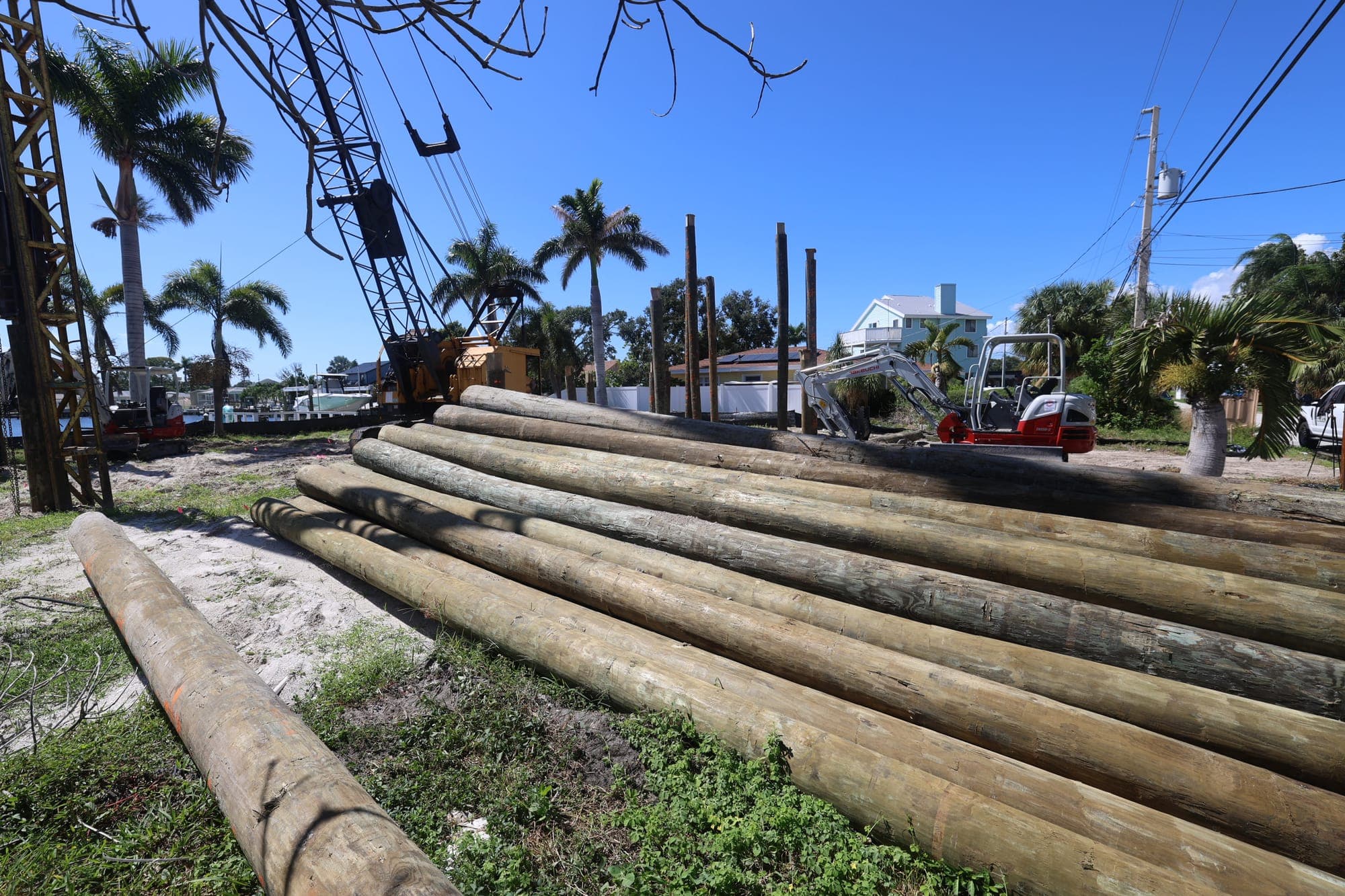
Most clients start the custom home building process expecting a twelve-month build. We tell them to plan for two years from first conversation to move-in. Here's what fills that time — and why any builder who tells you otherwise is probably selling you something.
Building a custom home in St. Petersburg is different from building one almost anywhere else in the country. You're dealing with Pinellas County flood zone rules, one of the more demanding building departments in Florida, coastal construction requirements, and a lot that was almost certainly previously developed. None of that is a reason to walk away. It's a reason to go in with accurate expectations and a builder who's navigated this process before.
This is the honest phase-by-phase breakdown.
Pre-Construction: The Phase That Determines Everything (3–6 Months)
Pre-construction is where the project either gets built on a solid foundation or inherits problems that surface later at the worst possible time. Most cost overruns and schedule failures trace back to decisions — or skipped steps — during this phase.
Feasibility and Scope
Before a single line gets drawn, we need to understand what you're actually building and whether the budget parameters match the program. That means talking through square footage, story count, finishes level, lot constraints, and your construction timeline. We're looking for misalignments early — before they cost money to unwind.
This is also when we review the lot. In St. Pete, almost every infill lot carries site-specific considerations: flood zone designation, prior utilities, setbacks, impervious surface limits, and sometimes deed restrictions tied to the neighborhood. All of it shapes what can be built and what it will cost.
“What decisions need to be made before breaking ground? Most decisions are going to be handled through permitting. The decisions left could be finish-based selections — we may not have paint colors picked out; a client may want to wait to pick the tile based on what the bathrooms look like with natural lighting. Everything except for cosmetics is typically going to be settled before we break ground so we can move forward at an efficient pace.”
Pairing with a Design Team
Once scope is established, we pair you with an architect who fits the project. Not every architect is the right fit for every home. A 2,500 sq ft coastal contemporary on a flood-zone lot in Coquina Key is a different design problem than a 4,000 sq ft traditional in Snell Isle. We have established relationships with several St. Pete architects and match based on project type, aesthetic direction, and working style.
The builder-architect relationship matters more than most clients realize. When we've worked with a design team before, constructability reviews happen earlier, drawings come in with fewer surprises, and plan review goes smoother.
Design and Plan Development
Design moves through schematic design, design development, and construction documents. Each phase refines scope, locks in decisions, and advances the level of detail needed for permit submission. We stay in the loop throughout — not as design decision-makers, but as constructability reviewers flagging anything that will create cost or timeline issues in the field.
Budget sharpening happens in parallel. As drawings develop, we convert design intent into real cost estimates. This is how we keep the project from arriving at permit submission with a design that's out of budget. Because we coordinate construction alongside an independent architect we've worked with before — rather than handing off a finished plan to a builder who's seeing it for the first time — the budget runs in parallel with the design instead of after it. That's what prevents the budget surprises that plague the traditional bid-and-handoff method.
The Field Walk and Handoff
Before permit submission, we do a field walk with the architect on the actual lot. We review site access, staging areas, soil conditions, utility locations, and any conditions that didn't show up on the drawings. This is also when we finalize the site plan details that Pinellas County will scrutinize during review.
Permitting in Pinellas County: Your Rights and the Real Timeline (3–6 Months for New Builds)
Permitting is the most common place where client expectations and reality separate. A custom home in Pinellas County does not permit in 30 days. On a straightforward plan, expect 90-120 days. On anything with complexity — flood zone requirements, HVHZ structural details, stormwater management, fire sprinklers — plan for longer.
Jurisdiction Matters
Your permit is filed with the city or county where your lot sits — not a single unified agency. A lot in unincorporated Pinellas County goes through the county building department. A lot in the City of St. Petersburg goes through the city. St. Pete, Gulfport, Treasure Island, and the townships all have their own review processes, timelines, and reviewer tendencies. We know which jurisdiction is reviewing your project and what they focus on.
Your Rights Under HB 267
Florida's HB 267 established review timelines that building departments must follow. For a new single-family home, the initial review must be completed within 30 business days. If corrections are required and resubmitted, the re-review clock is shorter. If a department misses its deadline, the permit must be approved or the applicant is entitled to a refund of permit fees. Knowing this doesn't speed up the process, but it gives you leverage when a review stalls without explanation.
Flood Zone Requirements
Most St. Pete lots are in FEMA flood zones — AE, VE, or X. If your lot is in an AE or VE zone, your home must be elevated to the Base Flood Elevation (BFE) plus any local freeboard requirement. That elevation drives foundation design, first-floor finish height, stair count, and how the home presents from the street. It also affects your flood insurance premium for the life of the structure, so getting the elevation right matters beyond just passing inspection. For a detailed cost breakdown of how elevation affects your overall project budget, see our house elevation cost guide.
Site Prep and Foundation: Florida's Ground Rules
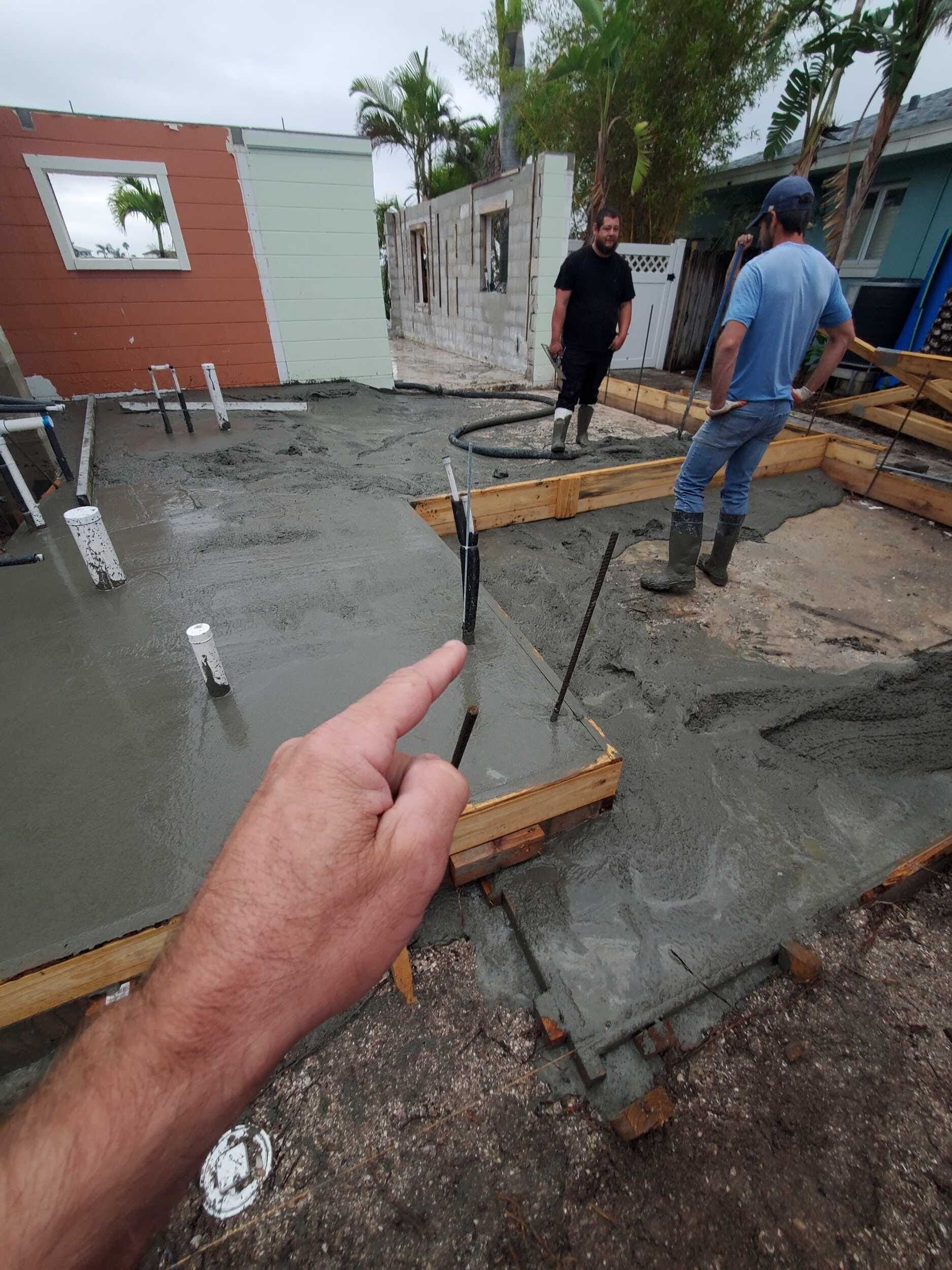
Florida's soil is not like soil elsewhere. In Pinellas County, you're often working in fill material, silty sand, or muck — none of which behaves like the compacted clay or rock you'd find in other regions. Site prep starts with clearing, demolition of any existing structure, and soil testing to confirm what's actually under the surface before foundation decisions are locked in.
Stormwater management also gets addressed at this stage. Pinellas County has specific requirements about impervious surface coverage and drainage, and the site plan has to satisfy those before construction begins. For lots in flood zones, the grading plan is critical — it determines how water moves around and away from the structure.
Pilings
In coastal and flood-zone areas of St. Pete, piling foundations are common — and often required. Concrete pilings are driven or drilled to depth to reach stable bearing material below the problematic surface soils. For a VE zone (velocity wave zone), the foundation design must account for wave action, which means open foundation construction with breakaway walls rather than an enclosed ground floor.
Piling work adds cost and time compared to a slab-on-grade foundation, but it's not optional where the soil and flood zone require it. The upside: a properly engineered piling foundation is one of the most durable structural systems available in coastal Florida.
Framing Through Mechanicals: The Production Phase (14–20 Weeks)
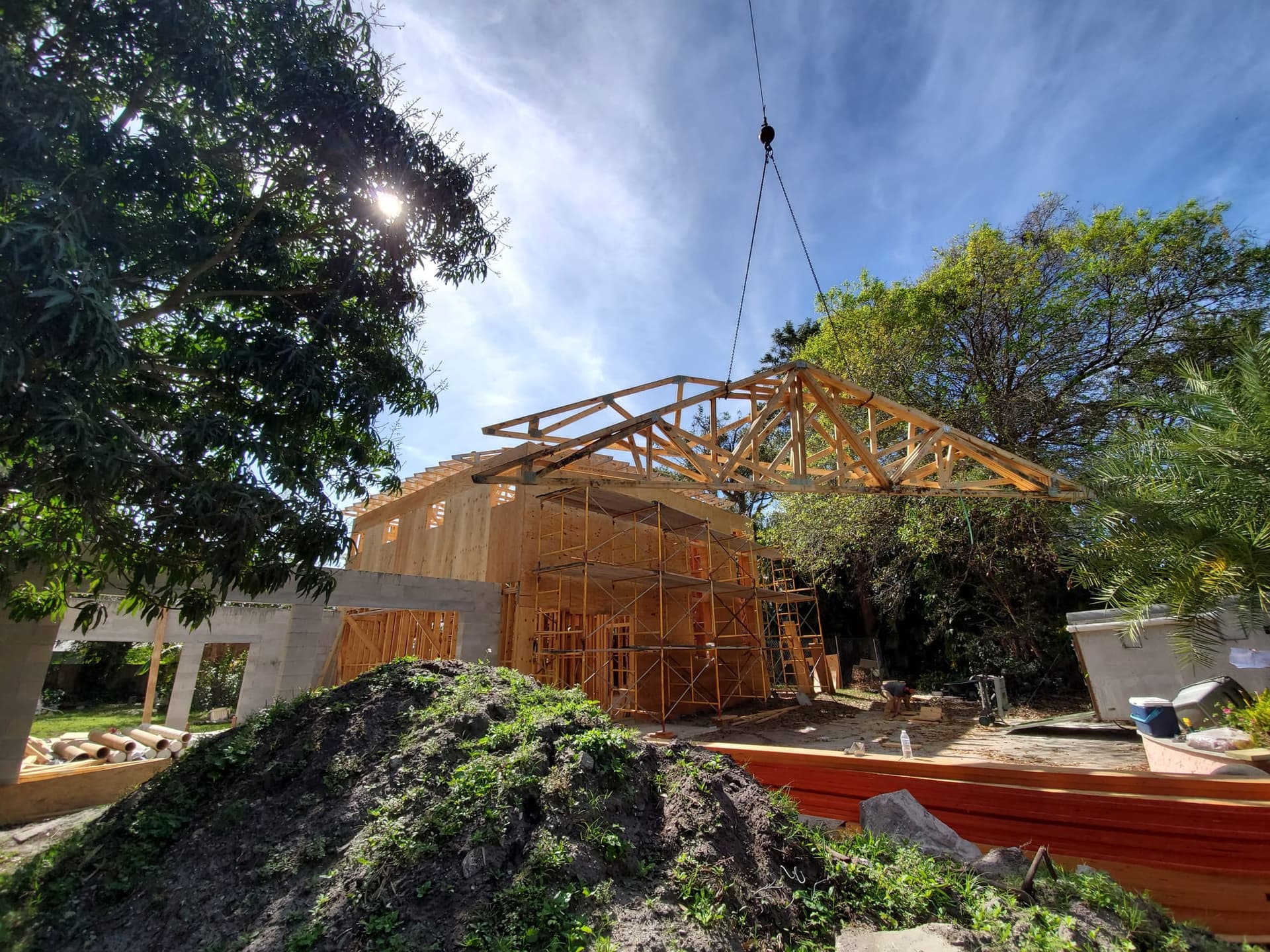
Once the foundation is set and inspected, construction moves into its most visible phase. Framing, roofing, windows, and rough mechanicals happen in sequence, with inspections gating each stage. This is where the home begins to look like a home — and where schedule discipline matters most.
Hurricane-Impact Windows
In Pinellas County, all new construction requires hurricane-impact windows and doors — no exceptions, no storm shutters as an alternative. Impact windows are specified during design, ordered after permit approval, and typically carry a 10-16 week lead time depending on the manufacturer and configuration. We order them early. A window delivery delay late in framing is one of the most common causes of schedule compression in coastal Florida construction.
Rainy Season Scheduling
Tampa Bay's rainy season runs June through September. Afternoon thunderstorms are near-daily, and tropical weather events can shut down outdoor work for days at a time. We build rainy season into the schedule — not as an excuse for delays, but as a realistic constraint that affects concrete pours, roofing, and any work that can't get wet. Projects that start foundation work in spring are in better shape than those hitting framing during peak hurricane season.
20+ W-2 Carpenters on Revolution's Payroll
Revolution has 20+ W-2 carpenters on payroll. That matters during the production phase. Our crews are on this project consistently, not splitting time across five jobs with different GCs. When inspections require rework or a detail needs to be resolved in the field, the people doing the work are accountable to Revolution directly.
Every week during construction, we hold a standing call with you to review budget actuals against the estimate. You see what we see. No surprises at the monthly statement.
Planning a custom build in St. Pete?
Start with a feasibility conversation — we'll walk through your lot, scope, and realistic budget before you commit to anything.
Interior Finishes: Where the Design Actually Lives (6–10 Weeks)
After rough mechanicals pass inspection and insulation is in, the home gets closed up and finish work begins. This is the phase most clients are most emotionally invested in — it's where the design selections they've been making for months finally appear in physical form.
Drywall goes up first, followed by paint, then flooring, cabinetry, tile, plumbing trim, electrical trim, and millwork in roughly that sequence. The schedule is tight and interdependent — tile has to be done before vanities go in, flooring before base molding, painting before fixtures. A late delivery on custom cabinetry or tile can ripple through several subsequent trades.
This is why finish selections need to be complete and ordered before construction starts, not being finalized during framing. We have a selections deadline built into every project schedule. If selections aren't locked by that date, we flag it as a schedule risk — because it is.
Our design team works with clients throughout pre-construction to make selections in sequence. Countertops inform backsplash. Flooring informs base trim profile. Hardware finishes tie to plumbing fixtures. Getting to a complete, coordinated selections package before construction starts is one of the highest-leverage things you can do to protect the finish phase schedule.
Final Inspections, Punch List, and Certificate of Occupancy
The final phase is more involved than clients expect. Getting to a Certificate of Occupancy (CO) requires passing a series of inspections — final electrical, final plumbing, final mechanical, final framing, final life safety — plus the building department's own final inspection. Each trade's final inspection has to pass before the overall final can be scheduled. One failed inspection extends the timeline.
The punch list runs concurrently with inspections. Our superintendent walks the home with you before the final inspection and documents every item — paint touch-ups, hardware adjustments, tile grout repairs, door alignments. The punch list is a normal part of every construction project; what matters is that it's managed systematically and closed completely before you move in.
The CO is issued by the building department after all inspections pass and all outstanding items are resolved. You cannot legally occupy the home until the CO is in hand. We target CO as the project completion milestone, not "construction done" — because done means done.
The Contract Question Nobody Tells You to Ask
Before you sign with any builder, ask what contract type they use and why. The answer matters more than most clients realize going in.
Fixed-Bid
A fixed-bid contract gives you a single number upfront. It feels like certainty, but it's not — it's the builder's estimate of costs plus contingency for unknowns plus profit margin. On a complex custom home, that contingency can be substantial. If actual costs come in under the bid, the builder keeps the difference. If costs run over, the builder absorbs it — which creates incentive to cut costs in ways you may not see until after you move in.
Cost-Plus
A cost-plus contract means you pay actual costs plus a fixed percentage for builder overhead and profit. This is more transparent than fixed-bid, but the percentage markup can be significant, and "actual costs" can include items you didn't expect. Cost-plus works when the scope is genuinely unknown — a good fit for renovations where hidden conditions are likely, less ideal for new construction where scope can be defined before breaking ground.
T&M (Time & Materials)
T&M is our default for custom home construction. You pay actual labor hours and material costs at cost, plus a transparent markup that covers our overhead and margin. Every invoice is itemized. You receive weekly budget reports. When a scope question comes up, you make the decision with real cost information in front of you — not a builder guess that gets reconciled at the end.
On a $1.2M-$1.5M project, the T&M model means you're not funding a contingency reserve for problems that never materialize. The money you save on unbaked-in contingency is yours to keep or reallocate to finishes.
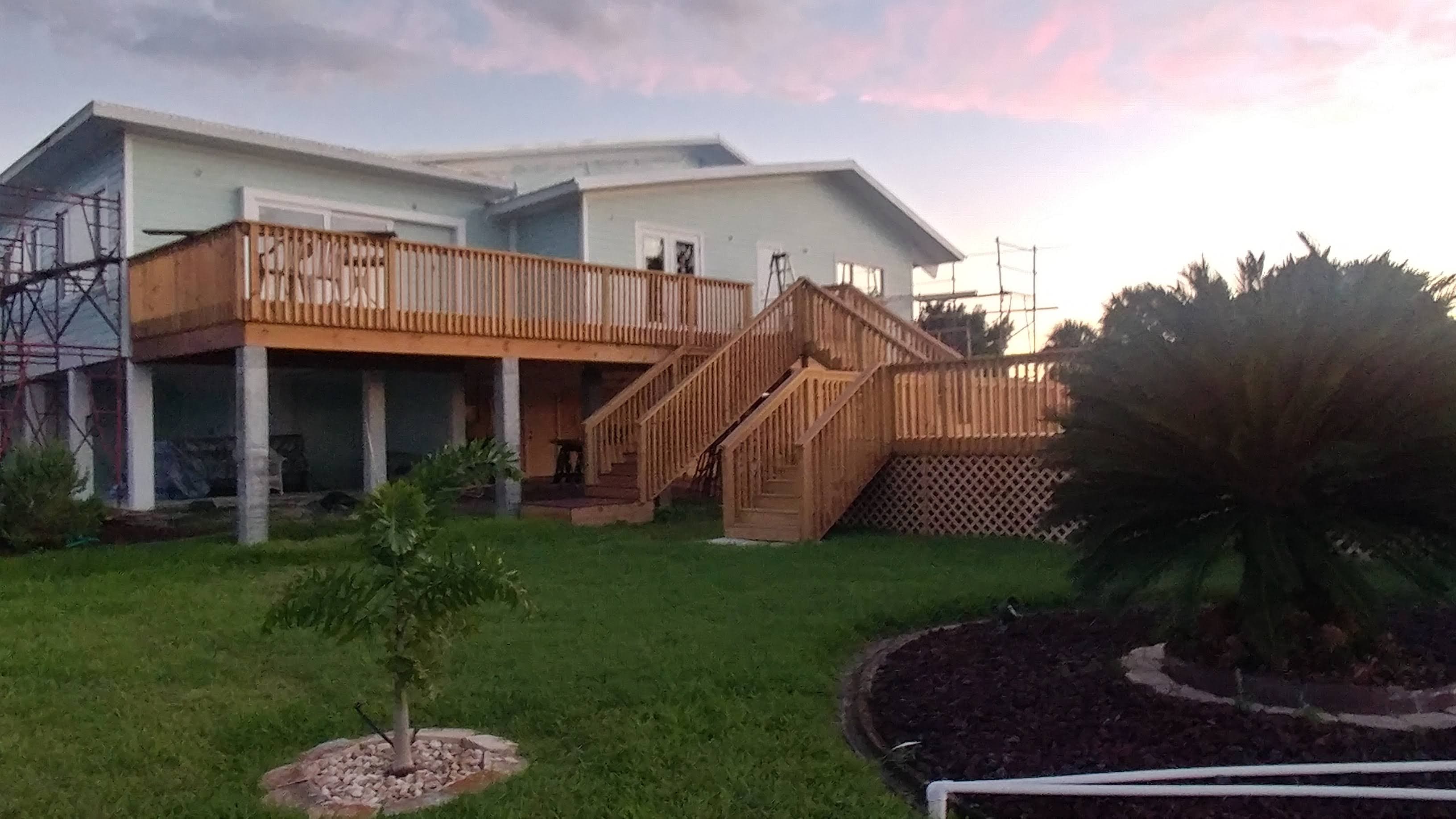
How Long Does a Custom Home Build Actually Take in St. Pete?
Here is the honest timeline, phase by phase:
| Phase | Timeline |
|---|---|
| Pre-construction (feasibility, design, budget) | 3–6 months |
| Permitting | 3–6 months |
| Site prep and foundation | 4–8 weeks |
| Framing through rough mechanicals | 14–20 weeks |
| Interior finishes | 6–10 weeks |
| Final inspections, punch list, CO | 3–5 weeks |
| Total (concept to move-in) | ~24 months |
“Typical timeline from design to move-in for a custom home: design process is three to six months with an architect, depending on the architect and how decisive the client is. Permitting is three to six months for a new home. Construction is going to be somewhere in the ten to twelve month range, depending on a few things — if we have to drive pilings, if the foundation is extensive, and then how luxurious the interior finishes are.”
Where delays actually happen — and what drives them:
- Design revision cycles that extend the plan development phase
- Permit review comment rounds requiring plan resubmission
- Soil conditions requiring additional geotechnical engineering
- Hurricane-impact window lead times ordered late
- Finish selections incomplete at construction start
- Custom cabinetry or tile orders with extended fabrication timelines
- Failed inspections requiring rework before re-inspection
- Rainy season weather impacting outdoor work windows
Most of these are manageable with early action. The ones that aren't — permit review timelines, weather — are the reason we build float into every schedule rather than presenting an optimistic best-case sequence. A builder who has done this before builds these buffers into the schedule rather than discovering them mid-project.
Thinking About a Custom Build? Let's Run the Numbers Together
Before you commit to a design, a lot, or a lender conversation, it helps to understand what your project would actually cost to build in St. Petersburg. We'll tell you what we see and what it'll take to get there — no surprises.
Contact Revolution Contractors to start a custom home feasibility conversation — or call us at (727) 888-6161.
Related reading: Custom Home Building Guide | What Does a Custom Home Cost in St. Pete? | Custom Home Build Timeline | Home Building Checklist for Florida | Remodel, Add On, or Build New? | High-End Finish Progression: Luxury Home Remodeling in St. Pete
FAQ
How Much Does It Cost to Build a Custom Home in St. Petersburg, FL?
A normal custom home in St. Pete currently runs $400-$500 per square foot for construction. A 3,000 square foot home falls in the $1.2M-$1.5M range; a 2,000 square foot home comes in just under $1M, or slightly over if finishes are on the higher end. Luxury waterfront builds with premium finishes can reach $1,000/sqft. The per-square-foot number is less useful than the total project number — fixed costs (engineering, permits, utility connections, foundation work) spread over fewer square feet make smaller homes cost more per square foot, not less. Ask your builder for a total project estimate, not a per-foot rate.
How Long Does It Take to Build a Custom Home in Florida?
Plan for approximately two years from first concept conversation to move-in. Pre-construction and design: 3-6 months. Permitting: 3-6 months for a custom new build in St. Pete. Construction: 10-12 months. The timeline is longer than most national guides suggest because they're not accounting for Florida's permitting requirements, coastal construction standards, and flood zone compliance layers. Any builder quoting you 12 months total for a full custom home in St. Pete is quoting construction time only, not total project time.
What Is the First Step in Building a Custom Home with Revolution?
A feasibility conversation — usually a few weeks of back-and-forth to understand what you're building, where, and what your budget parameters are. From there, we pair you with the appropriate architect and design team, begin plan development, and start the first round of budget sharpening. We don't start with a fixed quote; we start with enough real information to give you a grounded number.
What's the Difference Between a Custom Home and a Production Home?
A production home (also called a spec home or builder-grade home) is built from a fixed set of plans and finish packages at $250-$350/sqft. You choose from a menu of pre-approved options. A custom home is designed from scratch for your lot, your program, and your preferences — different floor plan, different structural approach, different finishes. The tradeoff is timeline and cost: custom homes take longer and cost more per square foot, but the result is a home built specifically for how you live, on a lot you've chosen.
Do I Need to Own a Lot Before Starting the Custom Home Process?
No — but you should have a lot identified or be actively searching before design begins, because your lot's flood zone, setbacks, utility connections, and any deed restrictions shape the design from the first drawing. Most custom builds in St. Pete are infill projects on previously-developed lots; vacant land is rare in Pinellas County (the most densely populated county in Florida). We can review a lot with you during feasibility to identify any site-specific cost or timeline factors before you commit to purchasing.
What Does T&M Mean and Why Does Revolution Use It for Custom Homes?
T&M stands for Time & Materials — you pay for actual labor hours and material costs plus a transparent markup, rather than a padded fixed-bid estimate. On a project in the $1.2M-$1.5M range, this model means you're not paying for contingency that doesn't materialize. You see every invoice, receive weekly budget reports, and make good/better/best selections with real cost information. We do occasionally use a fixed-price contract when the situation calls for it, but T&M is our default because it aligns our incentives with yours: we don't make money by padding estimates.
What Happens If My Custom Home Project Runs Over Budget?
With our T&M model and pre-construction budget process, significant overruns are rare — not because surprises don't happen in construction, but because they're identified and managed in real time rather than discovered at closing. If a scope change is needed, you make that decision with current cost data in front of you, not at the end of the project. The weekly budget calls and open-book billing are specifically designed to prevent end-of-project surprises.
Revolution Contractors is a St. Petersburg-based general contractor with 20+ W-2 carpenters on payroll. We coordinate design and construction under one contract by pairing clients with independent architects and designers we've worked with for years — Revolution stays the single point of accountability through the build. We build custom homes, additions, and renovations across Pinellas County. License: CGC1522463 / CRC1331628. (727) 888-6161.