Design-Build vs. Design-Bid-Build vs. Hybrid: Which Delivery Model Fits Your St. Pete Project?

Three delivery models dominate residential construction in St. Petersburg: design-build (one firm draws plans and builds them), design-bid-build (architect designs, contractors bid against each other, you sign two separate contracts), and hybrid (a general contractor coordinates the project under one contract while pairing you with independent architects and designers — IP stays with you, not the firm). Each has tradeoffs on cost certainty, schedule, accountability, and design ownership.
This guide compares all three so you can pick the right lane for your project — whether that's a downtown condo remodel, a Snell Isle waterfront custom home, or a flood-zone addition that requires FEMA elevation coordination. Revolution Contractors operates in the hybrid lane (more on where we fit at the bottom). The first 80% of this article is delivery-model comparison, not a Revolution pitch.
The Three Delivery Models At a Glance
Before the deep-dives, here's the side-by-side. Most St. Petersburg residential builders fall into one of these three lanes — knowing which lane your contractor is in helps you set expectations on cost, schedule, accountability, and who owns the drawings when the project is done.
| Design-Build | Design-Bid-Build (Traditional) | Hybrid | |
|---|---|---|---|
| Contract structure | One contract, one firm | Two contracts (architect + GC) | One GC contract; separate engagement with design partner |
| Who designs | The firm's in-house designers/architects | Independent architect you hire | Independent architect/designer paired by the GC |
| Who owns the drawings | The firm | You | You |
| Bid cycle | None | 6–12 weeks | None or compressed |
| Cost visibility during design | High | Low until bids return | High (especially under T&M open-book) |
| Single-point accountability | Yes | No (you mediate) | Yes (GC coordinates) |
| Design IP portability | Limited (firm may retain) | Full | Full |
| Common in St. Pete residential | Less common (few in-house design teams) | Most common for high-end custom | Growing — common for $250K+ remodels and custom homes |
Design-Bid-Build (Traditional): How It Works
Design-bid-build (DBB) is the oldest delivery method in residential construction. You hire an architect, the architect produces schematic design (SD), design development (DD), and construction documents (CD), then those finished plans go out for competitive bids from multiple general contractors. You sign two separate contracts — one with the architect, one with the GC who wins the bid. Bid-leveling and value engineering happen during the bid cycle.
- You hire an architect or designer to draw plans. They design based on your vision, but they're not pricing materials or labor in real time. They're designing under their own AIA-style contract (often A201/A102 reference framing).
- Plans go out for competitive bids. Multiple general contractors estimate the project. This bid cycle takes 6 to 12 weeks for residential, longer if scope keeps shifting.
- You pick a GC and sign a separate contract. The GC inherits plans they had no input on and begins figuring out how to build them within your budget. Pinellas County permitting starts here.
- Construction begins. If the design calls for something that doesn't work structurally, or costs more than the bid estimated, change orders stack up. The owner-architect-contractor triangle is yours to mediate.
Pros. You own the drawings. You can switch GCs without losing your design. Competitive bidding can pressure margins down. The architect is contractually independent from the builder — useful if you want a design advocate on your side.
Cons. No cost-reality input during design — your architect can spec a floating staircase nobody priced. The 6-to-12-week bid cycle adds calendar time. At every friction point during construction, you mediate between two professionals who have no contractual obligation to each other.
Design-Build: How It Works
Design-build (DB) puts design and construction under one roof, one contract, and one team. The design-build firm employs designers, interior designers, or architects on staff. Your contractor is involved from day one — not after the plans are done, but while they're being drawn. There's no bid cycle because the firm both designs and builds.
Pros. Budget shapes the design in real time — instead of designing something beautiful and discovering it costs twice your budget, the design team is speaking to the budget as the design develops. The 6-to-12-week competitive bid cycle disappears entirely. Single-point accountability — when the same firm that designed it is building it, there's no finger-pointing. Industry-pattern data suggests fewer change orders because design conflicts get caught during planning, not during construction.
Cons. The firm typically retains the drawings — your design IP portability is limited. If the relationship breaks down mid-project, your design may not travel with you to a new builder. Pure design-build firms with full in-house architecture teams are less common in St. Petersburg residential — most builders who use the "design-build" label are operationally closer to hybrid (general contractors who pair you with outside designers under one contract). Ask early about whether designers are W-2 employees or third-party partners.
One more caveat for design-build evaluation: many contractors who call themselves "design-build" still sub out every trade on the construction side. They manage contracts and write checks, but they don't swing hammers, pull wire, or hang cabinets. The schedule-control and quality-control benefits of design-build only work when the builder actually controls the labor — not when subs juggle three other jobs.
Hybrid: How It Works
Hybrid is the model where a general contractor coordinates the entire project under one contract, but pairs you with independent architects and designers from a partner network. The GC participates in design meetings from the start — bringing construction reality and pre-construction sub-quotes to the table — but the design professionals work under their own engagement with you, not under the GC's salary line. The drawings are your intellectual property when the project is done.
This model is especially common on custom home projects where coastal flood-zone permitting and FEMA elevation drive tight design-build coordination, on $250K+ remodels where allowance and contingency math gets serious, and on Pinellas County builds where FBC 2026 and shoreline setback rules require the GC and architect to be in the same conversation early.
Pros. You get single-point accountability (the GC coordinates) without surrendering design IP — the drawings stay yours. The GC's real-time budget input prevents the architect-budget disconnect that plagues design-bid-build, but you still get an independent design advocate. T&M open-book pricing is easier to layer on because the GC isn't selling you their internal design hours. Pre-construction phase runs in parallel with design development, eliminating most of the bid-cycle pause.
Cons. Less common than DBB in St. Petersburg historically — fewer builders operate this way, so you'll have fewer apples-to-apples comparisons during your search. Requires a GC with an established design partner network; if the GC's designer relationships are thin, the model doesn't work. Also requires a homeowner who's comfortable trusting the GC's pairing recommendation rather than running an independent architect search.
Cost Comparison: What the Research Actually Shows
Cost variance between design-build, design-bid-build, and hybrid has more to do with how change orders are handled than with the contract structure itself. Industry research on delivery-method cost is mixed — the most-cited study is the Penn State / Construction Industry Institute (CII) "Comparison of U.S. Project Delivery Systems" work, but it's commercial-project data from the late 1990s and doesn't cleanly map to St. Petersburg residential remodels and custom homes.
The bigger cost lever is contract structure, not delivery model. Time-and-materials open-book pricing — available under any of the three lanes — gives you the most line-item visibility and the fewest hidden contingencies. Fixed-price contractors build contingency into their bids whether problems occur or not; you're paying for their risk even when the risk never materializes. Time and materials pricing can attach to design-build, design-bid-build, or hybrid — it's an independent variable.
What does change cost meaningfully across delivery methods: change orders. Both design-build and hybrid catch design conflicts during planning rather than during construction, where they're typically much more expensive to fix. By the time plans are finished under either model, the majority of line items are confirmed on cost — pre-construction sub-quotes harden in real time when the builder is in the design room, not in the bid queue.
Schedule Comparison: Where the Bid Cycle Lives
The biggest schedule difference between the three models is the bid cycle. Design-bid-build adds 6 to 12 weeks for the bid cycle between finished plans and construction start — that pause is real calendar time when nothing is being built. Design-build and hybrid eliminate that pause because pre-construction and design overlap.
Industry-pattern data suggests a 2-to-4-month net schedule difference on a typical residential project, but the actual gap depends on permit timing, scope changes, and how aggressively pre-construction sub-quotes are pulled. A St. Pete custom home that takes 14 months under design-bid-build might take 10 to 11 months under design-build or hybrid — but this is industry-pattern guidance, not a guarantee. Pinellas County permit queues and FBC 2026 inspection scheduling can move that number in either direction.
For projects with FEMA elevation requirements, flood-zone scoping, or coastal construction control line interactions, the integrated models (design-build and hybrid) usually win on schedule because the elevation and permit conversations happen alongside design rather than after.
Who Owns the Drawings — And Why It Matters
Design IP ownership is the question most homeowners forget to ask, and it matters most if the relationship breaks down mid-project. Under design-bid-build, your architect's contract typically grants you full rights to the drawings — you own them, you can take them to a new GC, you can use them for a future addition. Under hybrid, same answer: the design partner is engaged separately, drawings stay with you. Under design-build, the firm often retains the drawings as work-product, which can make it costly or impossible to switch builders without redrawing the project.
If you're building in a Pinellas County historic district where future-permit redrawings may be required, drawing ownership matters even more. Same for FEMA-elevated coastal builds where future as-builts and elevation certificates reference the original construction documents.
How to Tell Which Model a Contractor Actually Operates Under
Marketing labels are unreliable — many builders use "design-build" loosely. Three questions cut through the language and tell you which lane the contractor genuinely operates in:
- Do you have designers or architects on payroll? Yes means design-build firm. No means hybrid or design-bid-build.
- Do you bid against other contractors after plans are drawn? Yes means design-bid-build only. No means design-build or hybrid.
- Who owns the drawings when the project's done? "We do" means design-build firm. "You do" means hybrid or design-bid-build.
Cross-reference those answers with two more practical questions: how many W-2 carpenters does the builder employ on the construction side, and who actually runs the framing and trim crews? A builder with W-2 employees on payroll controls schedule and quality directly. A builder who subs out every trade has the same coordination problems as design-bid-build, just bundled into one contract.
How T&M Open-Book Pricing Works Under Any Delivery Model
Delivery model tells you who's accountable. Contract structure tells you exactly what you're paying for. The two are independent variables, and T&M open-book pricing can attach to design-build, design-bid-build, or hybrid.
When your contractor — under any of the three delivery models — operates on an open-book T&M model, you get financial transparency on top of whatever accountability structure the delivery model gives you. You see every invoice. You get weekly budget reports. When framing goes up faster than estimated, you pay for the hours actually worked — not the hours someone guessed.
Fixed-price contractors build contingency into their bids whether problems occur or not. You're paying for their risk, even when that risk never materializes. T&M open-book pricing eliminates the hidden markup and lets you make real-time decisions about where your money goes — good, better, or best on every finish and material — regardless of whether the project is design-build, design-bid-build, or hybrid.
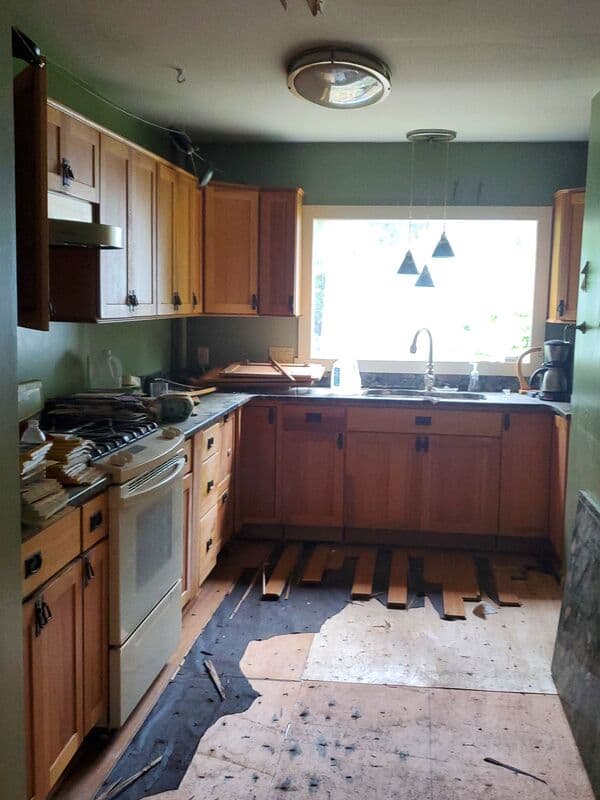
Before
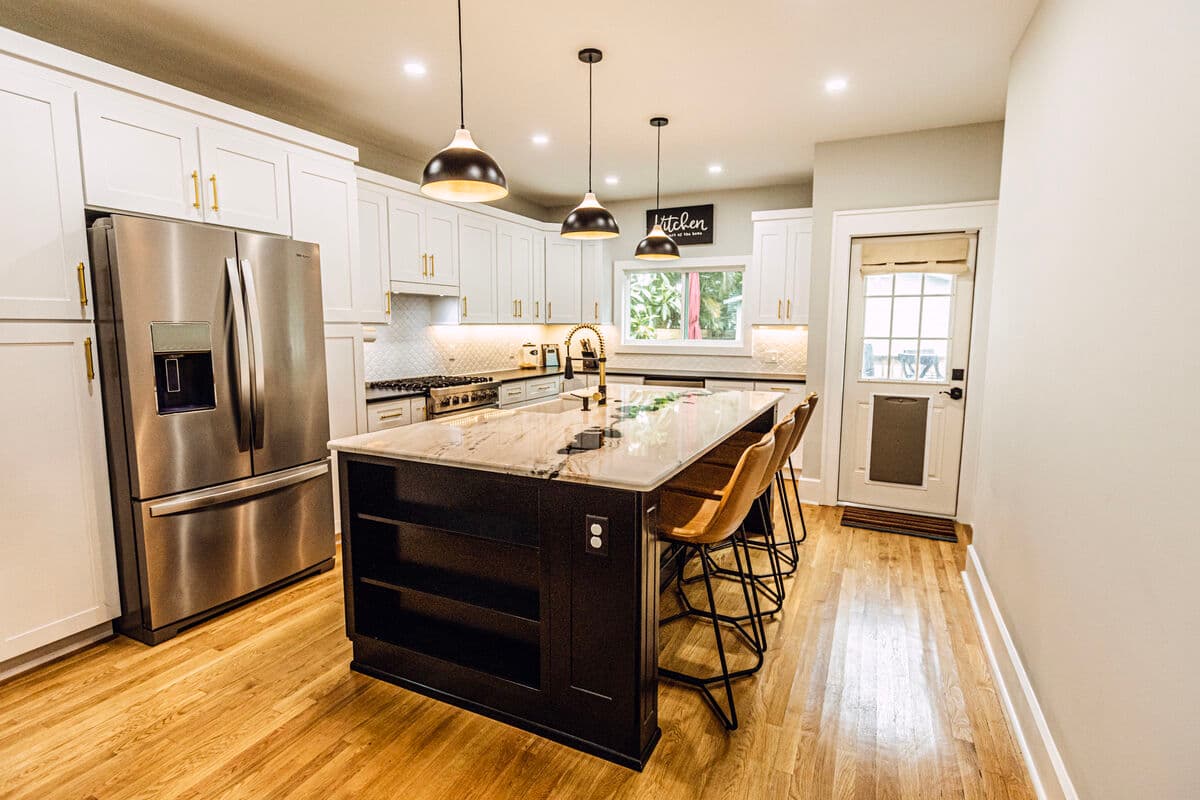
After
Want to See How This Works on Your Project?
Call (727) 888-6161 or schedule a consultation — we'll walk your property and talk real numbers before you commit to anything.
Where Revolution Fits in the Hybrid Lane
Revolution Contractors operates in the hybrid lane — a general contractor coordinating design-build via independent architects and designers, not a design-build firm with in-house design staff. The clearest statement of our posture comes from owner Jeremy:
"We're not technically a design-build firm — we don't keep design professionals on salary but use third-party folks we've worked with for years. We're a hybrid — we can handle design and charge for it but usually pair a client with a designer so their intellectual property remains theirs."
— Jeremy, Revolution Contractors
That posture shows up in two places on every project. First, the design partner network — we don't employ architects or interior designers; we pair you with the right design partner from a network of folks we've worked with for years, and the drawings stay your intellectual property. Second, the construction-side ownership — Revolution does carry the construction labor in-house with 20+ W-2 carpenters on payroll plus four dedicated superintendents, which is what makes the schedule and quality side of the hybrid model actually work in practice rather than just in marketing copy. Florida licenses CRC1331628 and CGC1522463; 10+ years building across Pinellas County.
On the designer-pairing question specifically, here's how Jeremy frames it:
"If they are a high-end client needing more luxurious finishes that might require a designer, we're going to make sure they're paired with that person. We don't want to try and figure that out by ourselves."
— Jeremy, Revolution Contractors
Inside that hybrid structure, we run T&M open-book pricing as the default contract — weekly budget reports during pre-construction, every invoice visible, no contingency markup baked into a fixed bid. The combination of hybrid delivery plus T&M open-book is what makes pre-construction sub-quotes harden into real numbers in real time, rather than waiting for a bid cycle to close. Read how Revolution operates as a hybrid contractor for the full picture of how the model runs on a remodel.
Frequently Asked Questions
What is the difference between design-build, design-bid-build, and a hybrid contractor?
Design-build is one firm that draws plans and builds them under a single contract — the firm employs designers or architects on staff. Design-bid-build (also called the traditional method) splits the work into two contracts: an architect you hire designs the project, then general contractors bid against each other to build it. Hybrid is a general contractor who coordinates the project under one contract while pairing you with independent architects and designers — your drawings stay yours, not the firm's. Most St. Petersburg residential builders fall into one of these three lanes.
Which delivery method costs less?
It depends on scope, region, and how change orders are handled. Industry data on delivery-method cost variance is mixed — the leading research is the Penn State / Construction Industry Institute "Comparison of U.S. Project Delivery Systems" study, but it's 1990s commercial data and doesn't cleanly translate to St. Petersburg residential. The bigger cost lever is contract structure, not delivery model. Time-and-materials open-book pricing — available under any of the three lanes — gives you the most line-item visibility and the fewest hidden contingencies.
How long does each delivery method take?
Design-bid-build adds 6 to 12 weeks for the bid cycle between finished plans and construction start. Design-build and hybrid eliminate that pause because pre-construction and design overlap. Industry-pattern data suggests a 2-to-4-month net schedule difference on a typical residential project, but the actual gap depends on permit timing, scope changes, and how aggressively pre-construction sub-quotes are pulled. See our custom home timeline guide for detailed phase breakdowns. This is industry-pattern guidance, not a Revolution-specific guarantee.
Can I keep my own architect with a design-build or hybrid contractor?
Under hybrid, yes — that's the whole point of the model. The general contractor pairs you with a design partner, but the drawings stay your intellectual property. Under design-build, it varies depending on whether the firm employs designers in-house. Some design-build firms will collaborate with an outside architect; others insist on their internal team. Ask early. A hybrid contractor pairs you with a design partner you'll own the IP with — your drawings stay yours, not the firm's.
How do I tell which delivery model a contractor actually operates under?
Ask three questions. (1) Do you have designers or architects on payroll? Yes means design-build firm; no means hybrid or design-bid-build. (2) Do you bid against other contractors after plans are drawn? Yes means design-bid-build only. (3) Who owns the drawings when the project is done? "We do" means design-build firm; "you do" means hybrid or design-bid-build. The answers will tell you which lane the contractor genuinely operates in — regardless of what their marketing page says.
Ready to Talk About Your Project?
If you're planning a remodel, addition, or custom home in St. Petersburg and you want a hybrid GC who pairs you with the right design partner rather than selling you in-house design hours, we'd rather walk your property than make you read more of an article. We'll talk real numbers — same T&M open-book conversation we'd have if we were building it tomorrow.
Call us at (727) 888-6161 or request a consultation. We'll tell you what we see and what it'll cost.
Not sure what to ask during that first meeting? Our guide to the 10 questions to ask before hiring a contractor covers everything from licensing to change management — including the three delivery-model questions from this guide.