Builder's Risk Insurance for a St. Petersburg Custom Home: What It Covers, Who Buys It, and When It Kicks In

If you're financing a custom build in Pinellas, your lender is going to ask about Builder's Risk before your first draw clears, and your broker is going to ask about the named-storm deductible before they bind. Here's what nobody tells you at the lot walk: on a $1.5M coverage limit at a 3% named-storm deductible, that's $45,000 out of pocket before the policy pays if a hurricane hits the site during construction. The design-phase decisions you make before ground-breaking move that number more than any renegotiation at renewal.
Every custom home built in Pinellas County needs Builder's Risk insurance (also called Course of Construction, or COC) from the moment the foundation goes in until the certificate of occupancy is issued. It covers the structure while it's under construction against fire, wind, theft, vandalism, and water damage from a burst pipe or a torn-open wall in a rainstorm. What surprises first-time custom-home owners is who buys it (usually the owner, not the contractor), what it doesn't cover, and how the Florida-coastal version differs from the standard policy.
Revolution has built custom homes in St. Petersburg since 2016 under an open-book Time-and-Materials contract (both Revolution Contractors LLC licenses, CRC1331628 and CGC1522463), and Builder's Risk shows up on every one of those jobs as a soft-cost line item long before the crew arrives. Here's how the policy actually works and where the coordination gets tricky.
What Builder's Risk Covers on a Pinellas Custom Home
A standard Builder's Risk policy is written on a special-form (all-risk) basis and covers direct physical loss to the structure while it's under construction. The scope typically includes:
- The building itself: foundation, framing, sheathing, roof deck, mechanical rough-ins, finishes, from ground-breaking through certificate of occupancy.
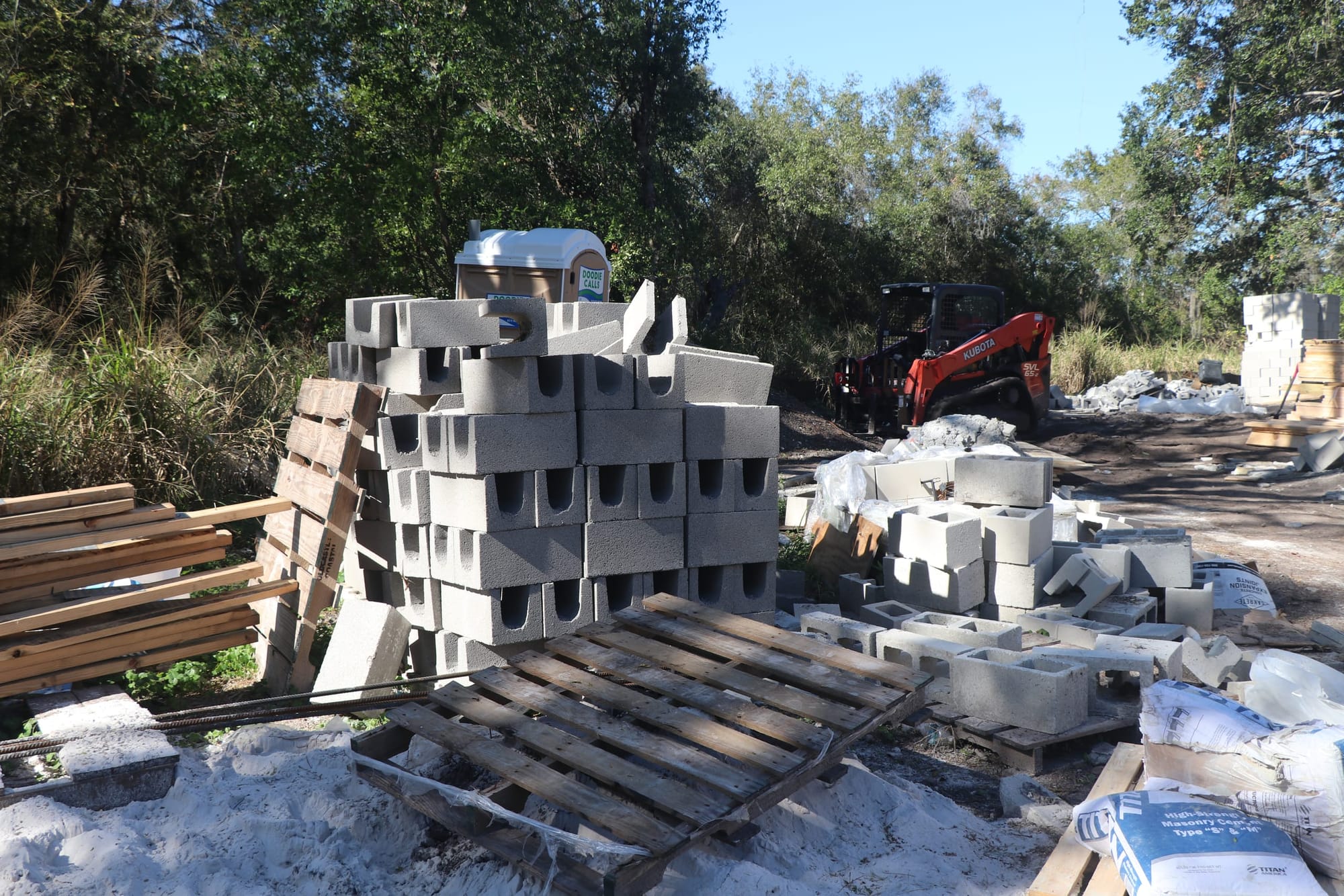
- Materials on-site: lumber stacks, drywall bundles, cabinetry crates staged in the garage, tile pallets in a covered area.
- Materials in transit and materials in temporary off-site storage (with sub-limits). This matters on custom homes where cabinetry, windows, and specialty finishes often ship weeks before install.
- Debris removal after a covered loss and soft costs (loan interest, property taxes, additional legal fees) if the project is delayed by a covered event.
Common exclusions worth naming out loud so you're not surprised:
- Employee theft (needs separate crime coverage on the owner's homeowner umbrella).
- Earth movement, sinkhole activity, and flood. Flood requires a separate flood policy, which matters on any lot inside a Pinellas flood zone.
- Wear and tear, faulty workmanship, and defective materials. That's what Revolution's warranty and the sub-trade warranties cover, not the insurance policy.
- Mold, unless it results from a covered event and is discovered within a defined window.
Who Buys Builder's Risk Under a Time-and-Materials Contract
Under Revolution's T&M open-book model, the owner buys and holds the Builder's Risk policy, and Revolution (both Revolution Contractors LLC, CRC1331628, and any sub-trade with a separate contract) gets named as an additional insured. That's the same allocation most Pinellas lenders require if you're building with a construction loan.
The reason the owner carries the policy under T&M rather than the contractor is that the coverage limit tracks total construction cost, which under T&M is the true dollar figure of what's spent on your job, not a fixed bid that would have baked in a contingency. Your insurance broker sets the limit at the projected hard-cost total (build cost, not lot value or design fees) and adjusts if the project scope grows. Revolution's T&M contract framework already produces the weekly budget reports your broker needs to keep the coverage limit in sync.
If you're financing with a Pinellas construction-to-permanent loan, the lender will require proof of Builder's Risk before the first draw. Revolution coordinates the certificate-of-insurance handoff with your broker so the closing timeline doesn't slip. More detail in the custom-home construction loan guide.
When Coverage Starts and Ends
Policies vary by carrier, but the standard rhythm on a Pinellas custom home looks like this:
- Effective date: ground-breaking, or in some carriers as early as the permit issue date. Confirm the trigger language with your broker before signing.
- Term: 12 months is the default, extendable in 30- to 90-day increments if the build runs long. Revolution's custom-home timeline typically lands between 12 and 18 months from permit to CO, so an extension is normal on larger builds.
- Termination: the earlier of certificate of occupancy, project acceptance, or the policy expiration date. Some carriers auto-terminate at CO even if you paid through the end of term, so read the endorsements.
Coverage does not overlap with your standard homeowner's policy. The day the certificate of occupancy is issued, your homeowner's binder needs to be in force. There's a hand-off window your broker needs to close cleanly.
Florida-Coastal Specifics That Catch First-Time Owners
Pinellas County sits inside the 150 mph wind zone under the Florida Building Code, and any lot on or near open water triggers a specific set of insurance-carrier behaviors:
- Separate named-storm deductible. Standard Builder's Risk policies in Florida carve out named storms from the base deductible and apply a percentage-of-coverage deductible instead, commonly 2%, 3%, or 5% of the coverage limit. On a $1.5M coverage limit at 3%, that's $45,000 out of pocket before the policy pays if a named storm damages the site during construction. Budget for it.
- Windstorm exclusion or excess policy required. In VE-zone or barrier-island builds, some carriers exclude wind entirely from the Builder's Risk policy and require a separate windstorm policy (often through Citizens Property Insurance). That's a coordination step Revolution flags at the pre-construction meeting so your broker has time to place the excess coverage before ground-breaking.
- Impact glazing and wind-mitigation design decisions matter to the premium. Impact-rated windows, hip roof geometry, and hurricane strap upgrades that Revolution documents during the wind-mitigation design phase show up on the wind-mitigation form your broker submits with the application. Lower premium, higher coverage acceptance, a design-phase decision that pays back on your first policy year.
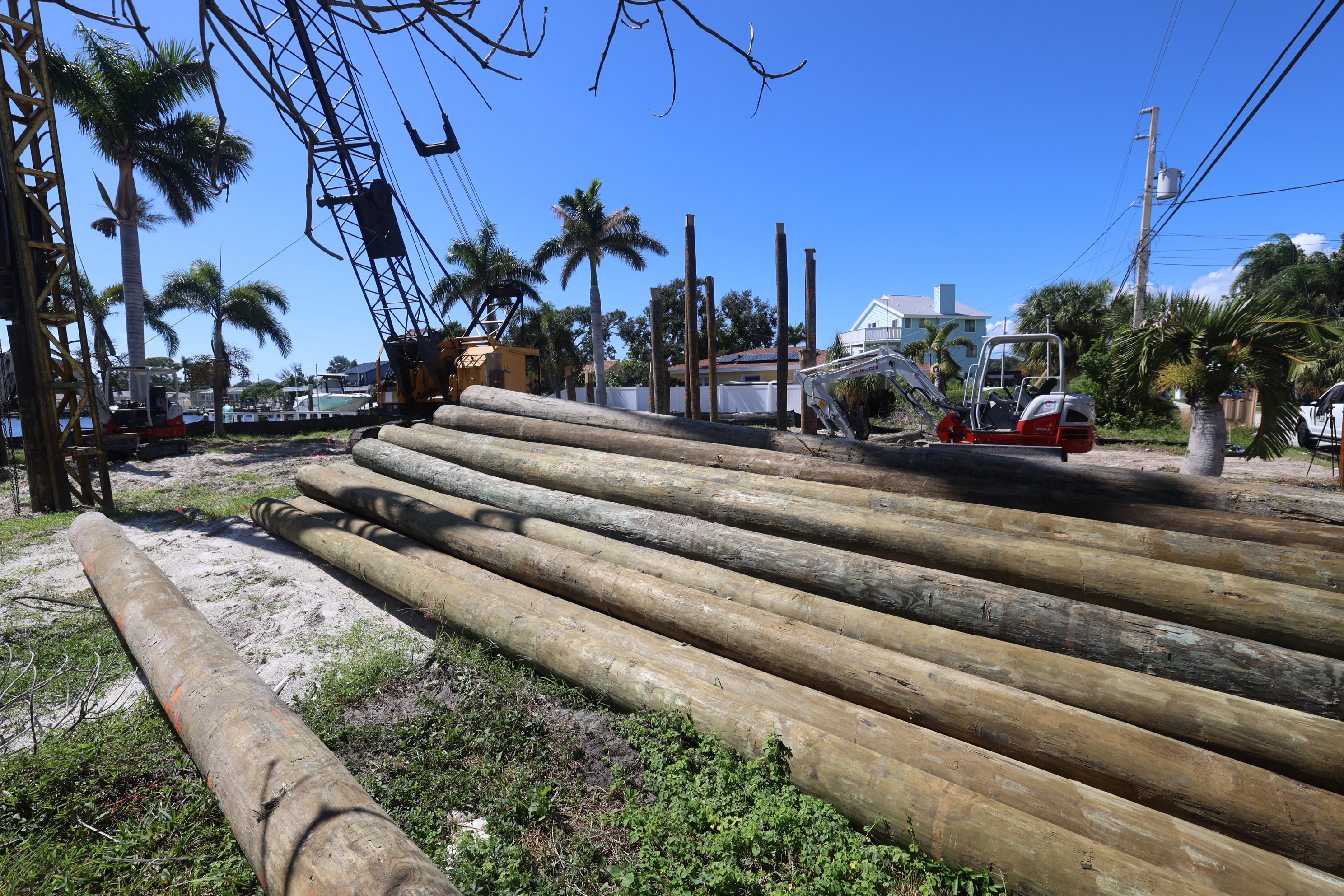
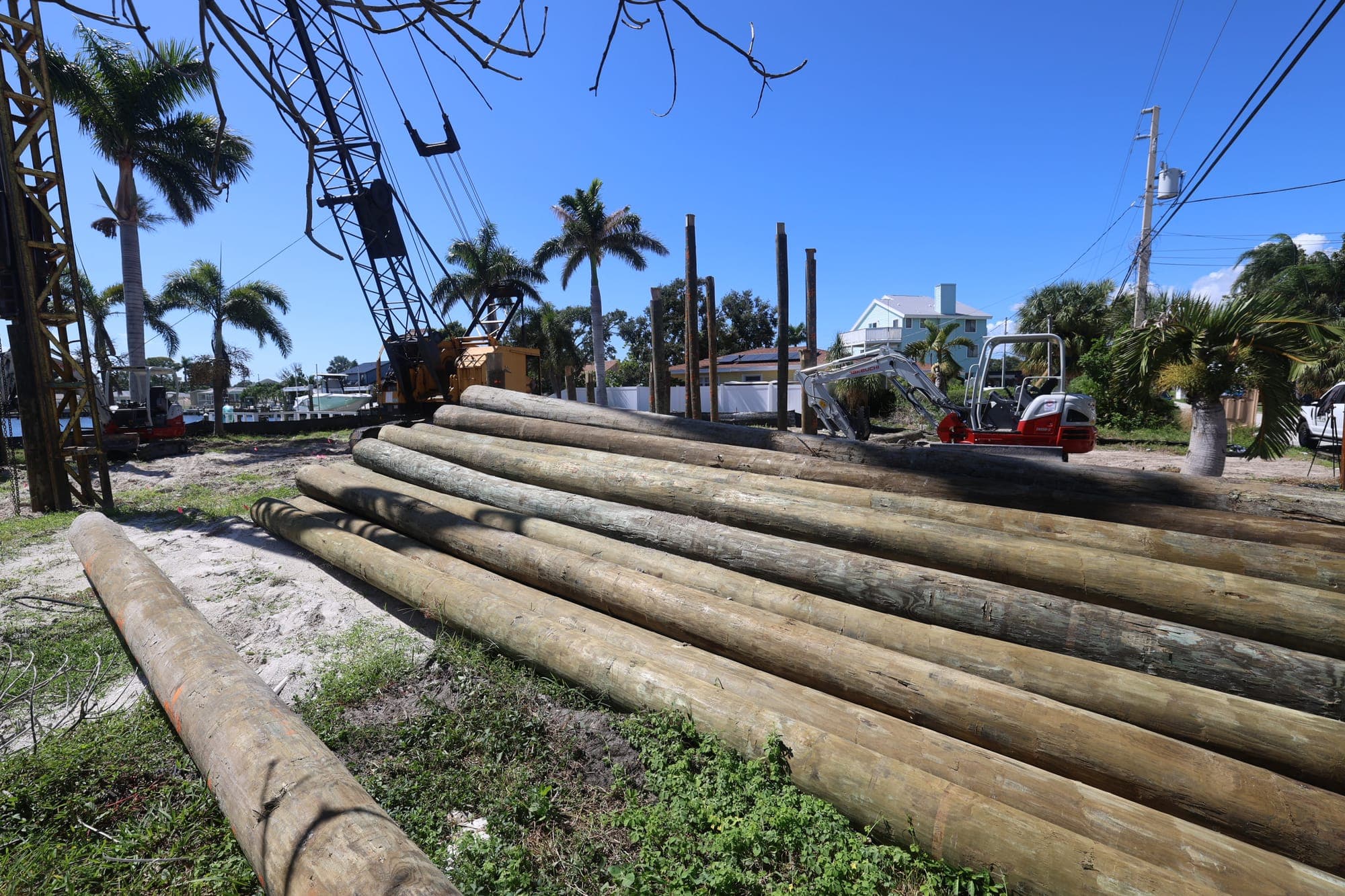
If your lot sits in a Pinellas VE zone and needs a driven-pile foundation, your carrier may also require documentation of the geotechnical report and the engineered foundation design before binding coverage. Revolution's superintendent and Brent Patterson (Revolution's construction lead, CGC1522463) coordinate that paperwork alongside the permit package.
How Revolution Coordinates the Policy With Your Build
At the pre-construction meeting, Revolution reviews the Builder's Risk requirements with you and your broker: coverage limit tied to hard-cost projection, named-storm deductible discussion, windstorm rider or excess policy sequencing if you're in a VE or barrier-island zone, and the certificate-of-insurance handoff to your lender. Weekly budget reports from BuilderTrend keep the coverage limit synchronized as scope evolves. At CO, we confirm the homeowner's policy is in force before the crew demobilizes so there's no coverage gap on the day you get the keys.
The Takeaway
The play we see work in Pinellas: get your broker on the pre-construction call before you've picked a foundation type. Named-storm deductibles, windstorm riders, and wind-mitigation discount paperwork all live in the design phase, not the framing phase. The owners who treat Builder's Risk as a design-phase line item (not a soft-cost afterthought) are the ones who don't eat a $45,000 deductible surprise two months into their build. If you want us to walk the lot with your broker's phone number in the room, call (727) 888-6161.