Construction Loans for a Custom Home in St. Pete — How Draw Schedules and Builder's Risk Actually Work

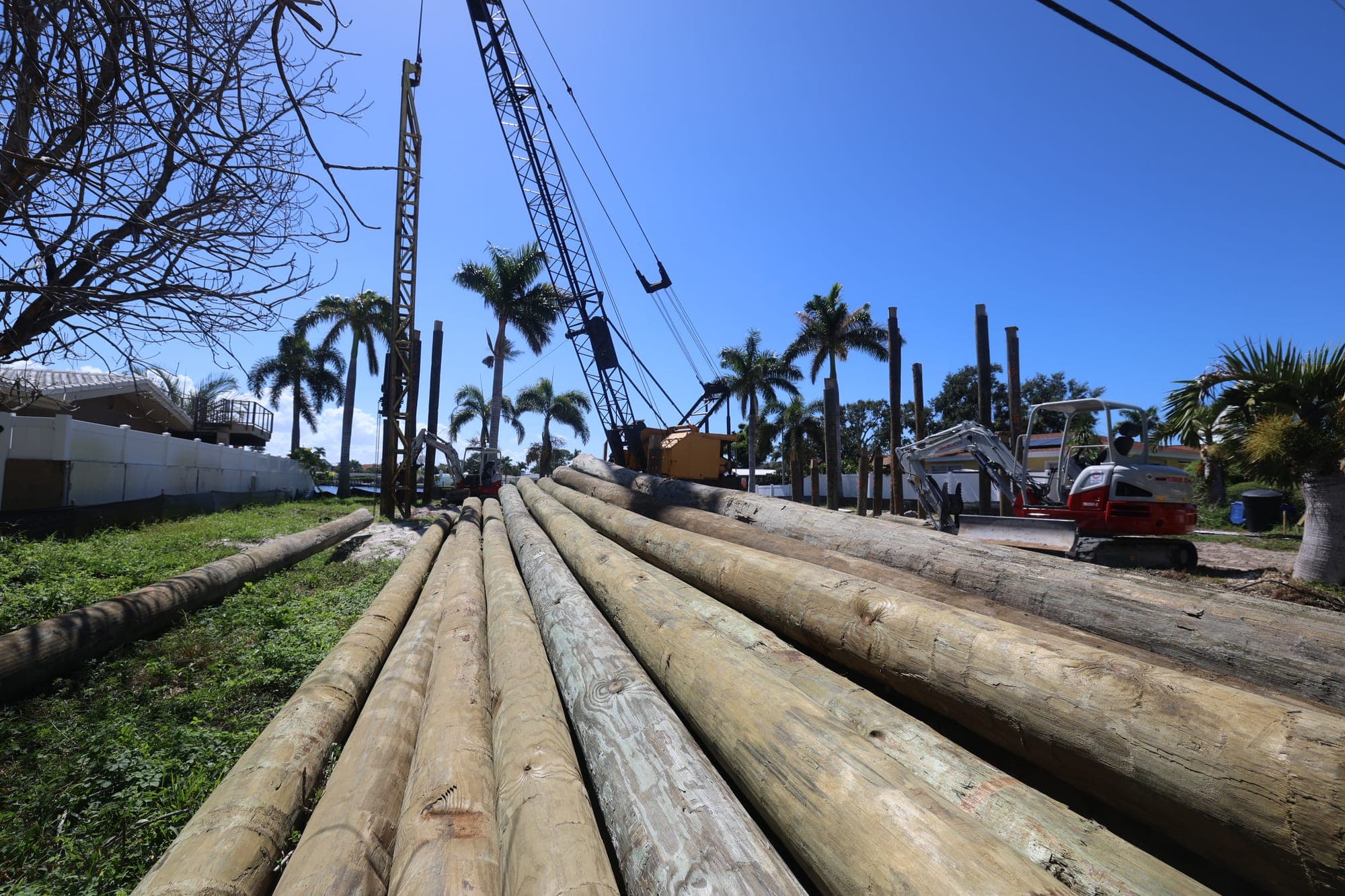
If you're sizing up a custom home in St. Pete, you've probably already spent more time thinking about the kitchen island than the loan structure — and the loan structure is the part that decides whether the build feels controlled or chaotic. Custom home construction loans run on different rules than a regular mortgage. The money is released in stages, every release is gated by an inspection, and there's a separate insurance policy you didn't need on your last house purchase. None of it is complicated once you've seen it once. Here's how it actually works.
Construction-to-Permanent vs. Two-Step Financing
There are two common ways to finance a custom build in Florida. A construction-to-permanent loan is a single closing: you sign once at the start, the lender disburses money in draws during the build, and at completion the loan automatically converts to your long-term mortgage at a pre-agreed rate. A two-step (or “stand-alone”) construction loan is two closings: a short-term construction loan during the build, then a separate permanent mortgage you close on at completion.
Most St. Pete custom-home buyers go construction-to-permanent because there's only one closing, one set of fees, and the long-term rate is locked early. The trade-off is less flexibility if your financial picture changes during the build. A two-step loan keeps more options open but exposes you to whatever rates do over a 12-18 month build window. Your lender will walk you through which one fits — and your CPA should look at both side-by-side before you sign.
How Draw Schedules Actually Work
The construction loan doesn't hand you the full balance up front. It releases money in stages tied to physical project milestones. A typical Pinellas custom-home draw schedule looks roughly like this:
- Lot acquisition / closing costs — if rolled into the construction loan
- Foundation complete — usually 10-15% of the construction budget
- Framing complete — often the largest single draw, 20-25%
- Mechanical, electrical, plumbing (MEP) rough-in — 15-20%
- Drywall and interior trim — 15-20%
- Final finish and certificate of occupancy — the remaining balance
Every draw is gated by a lender-ordered site inspection that verifies the milestone is actually complete. The inspector is typically a third-party firm the lender hires — not the contractor and not the architect. The draw doesn't release until the inspector's report clears.
That's why a sloppy paper trail kills custom builds. If your contractor can't show clean line-item billing aligned to the inspector's milestone definition, the draw can hang up. We've watched first-time custom buyers panic over draw delays caused by contractor invoicing that didn't break out the labor and materials the inspector was looking for. The fix is upstream: pick a builder whose invoicing actually maps to how lenders release money.
Builder's Risk Insurance
While a house is under construction, it's not yet a “house” for insurance purposes — it's a partially-completed structure that doesn't qualify for a standard homeowner's policy. That gap is filled by builder's risk insurance, a separate policy that covers the structure, the materials on-site, and (depending on the policy) the materials in transit to the site.
Three things to know:
- Who buys it. Sometimes the owner. Sometimes the contractor. Sometimes both, with named insured parties on a single policy. Your contract should say explicitly. Lenders almost always require it before they fund.
- What it covers. Fire, theft, vandalism, wind, and storm damage to the work in progress. Florida policies need to be read carefully for hurricane and named-storm carve-outs — the deductible structure on named storms is often a separate, much higher number than the base policy deductible.
- When it ends. Builder's risk converts to a standard homeowner's policy at certificate of occupancy or at first move-in. Don't let one expire before the other starts — there's no such thing as too thorough a hand-off here, and the gap between policies is where uninsured losses happen.
How Revolution's Open-Book T&M Billing Integrates with Construction Draws
Revolution operates under a Time and Materials open-book contract with weekly budget reports. For a construction-loan project that matters in a specific way: every dollar of labor and every materials invoice is tracked at the line-item level the lender's inspector is going to ask for. When the framing draw comes up, we can hand the inspector and the lender a paper trail that maps exactly to the milestone definition in the loan agreement — not a single lump-sum invoice that requires the inspector to take our word on what's done.
That alignment is part of why we choose T&M over fixed-price billing on custom builds. Fixed-price contracts hide the line-item math behind allowances and contingencies; lenders' inspectors prefer the line-item math visible. With 20+ W-2 carpenters in house, the labor side of every draw is documented payroll. Our Florida commercial GC license (CGC1522463) covers the structural sign-off required at each milestone.
Timeline Reality: Loan Close to Permanent Conversion
A Pinellas custom build runs roughly 14-18 months from groundbreaking to certificate of occupancy on a 3,000-5,000 sq ft home, depending on permit timing, weather, and supply chain on long-lead items (windows, custom millwork, specialty appliances). Permits before that add 4-6 months. So from loan close to permanent conversion: budget 18-24 months on a typical custom home; longer on FEMA flood-zone elevation builds (16-22 month construction phase plus permit time on the front). For more on custom home timeline, see our sibling piece.
Your loan agreement will spell out the maximum construction period — usually 12 months with one paid extension available. Build that buffer into your lender conversation before you sign. A build that runs past the maximum without a planned extension turns into a refinance scramble at the worst time.
Three Things That Trip Up First-Time Custom Home Buyers
- Underestimating the down payment. Construction loans typically require 20-25% down on the total project (lot value can count toward this if you already own the lot). Buyers who plan for a 10% conventional mortgage down payment get blindsided.
- Missing the interest-only payment during construction. During the build, you pay interest on whatever has been drawn — not on the full loan balance. That number starts small at foundation and grows through final finish. Plan for the closeout months when interest is at its highest.
- Treating the lender's inspection as a formality. It isn't. Draw inspections are the gate between you and the next stage of construction. A contractor who treats the inspector as an obstacle, instead of as a documentation partner, is going to cost you build time. Pick a builder who runs toward the inspector, not away from them.
Frequently Asked Questions
Will a regional Florida bank or a national lender be a better fit?
Most custom builds in St. Pete are financed by regional Florida banks and credit unions that know the local builder market. National lenders are an option, but the underwriting friction on a 12-18 month construction-loan product is often heavier than a regional bank's portfolio loan. Your lender choice is one of the highest-leverage decisions you make pre-construction.
Can I lock the permanent rate at the start?
On a true construction-to-permanent loan, yes — the long-term rate is set at initial closing. On a two-step structure, you carry market risk through the build. Lock-and-shop programs exist as a middle path. Ask explicitly.
What happens if construction overruns the loan budget?
Owner-funded overruns come straight out of your reserves. That's why a T&M contract with weekly budget reporting matters: the early-warning signal that the budget is drifting shows up week-over-week, not at month-12 closeout. Pick a builder who flags drift the day it shows up.
Does the construction lender require a specific contractor license?
Yes — the contractor must hold the appropriate Florida license for the work scope (CGC for residential custom builds with commercial components; CGC1522463 in our case). The lender's underwriting will pull and verify the license number before construction-loan close. If your builder hands you a license number that doesn't pull clean at MyFloridaLicense.com, walk.
Free 48-Hour Pre-Construction Estimate
We'll walk through scope, sequencing, and a draw-schedule mapping with you and your lender — so the loan paperwork and the build itself stay on the same page from day one.
Related reading: Custom Home Cost Guide | Custom Home Timeline | The Custom Home Building Process | Home Building Checklist for Florida | Waterfront Home Construction