Jungle Terrace Renovation Challenges: Ranch Homes, Real Numbers
Concrete block, slab-on-grade, and 70-year-old systems — here's what the scope looks like.
1. Concrete Block Kitchen Opens
This is the project that defines mid-century ranch renovation in Jungle Terrace. Your kitchen is walled off from the living space by 8-inch concrete masonry units. Unlike the wood-frame walls in Old Northeast bungalows or Kenwood Craftsman homes, you can't just pull drywall and remove studs. Opening a CMU wall requires:
- Structural engineering — a licensed PE stamps a beam design (steel I-beam or engineered LVL) sized for the span. Typical fee: $800–$1,500.
- Temporary shoring — the roof load above the wall needs to be supported before any block is removed. Needle beams through the wall, hydraulic jacks on both sides.
- Lintel installation — the new beam spans the opening and transfers load to pockets cut into the remaining block on each side. Simpson Strong-Tie post bases or embedded plates anchor the connection.
- MEP rerouting — electrical circuits, sometimes plumbing vents, and occasionally HVAC ducts run through or alongside that wall. These get rerouted before demo, not discovered during it.
Cost for the structural open alone (not the full kitchen remodel): $8,000–$15,000 depending on span width and what's inside the wall. Revolution coordinates the structural work, the finish framing, and the drywall under one open-book budget with 20+ W-2 carpenters on payroll.
2. Slab-on-Grade Plumbing Access
Every ranch home in Jungle Terrace sits on a concrete slab — no crawl space, no basement. Your original drain lines and some supply lines run under or through that slab. When you want to move a toilet, add a bathroom, or reconfigure a kitchen layout, you're talking about cutting concrete.
Slab cuts for plumbing relocation run $2,000–$5,000 per fixture depending on distance and depth. The alternative — routing new drains through the attic using an overhead system or along exterior walls — sometimes works for additions but rarely for existing footprint reconfigurations. We scope this during pre-construction: exactly which fixtures move, how far, and whether cutting or rerouting is the better path. No surprises when the jackhammer shows up.
If your 1950s ranch still has original galvanized steel supply lines, a repipe to Uponor PEX-A or copper during renovation is $5,000–$12,000 depending on home size. PEX-A is the standard replacement for Florida slab homes — it's flexible enough to route through attic and wall cavities without the rigid fittings copper requires, and it carries a 25-year warranty. Your water pressure tells the story before we open anything: if it's dropping at distant fixtures, the galvanized is corroding from the inside.
3. Florida Room and Addition Integration
Half the ranch homes in Jungle Terrace have a screened porch or carport that a previous owner enclosed, or that you're thinking about enclosing. These conversions are the most common “addition” in mid-century ranch neighborhoods, and they're also the most commonly done wrong. For first-time buyers working a starter-ranch budget, the Florida room conversion is also where Revolution's in-house design support comes in: cabinetry, flooring, tile, and paint coordination is included in the build cost, so a first-time renovator doesn't need to hire and pay a separate designer to make the porch addition decisions.
Common issues with existing enclosed porches:
- Floor level mismatch — the porch slab is often 2–4 inches lower than the main house slab, creating a step that doesn't meet current accessibility or building code standards.
- No insulation — jalousie windows, single-pane glass, no wall insulation. The room is 10 degrees hotter than the rest of the house in summer. Replacement with PGT WinGuard impact-rated windows and LP SmartSide or Hardie board siding brings the envelope to current Florida Building Code standards.
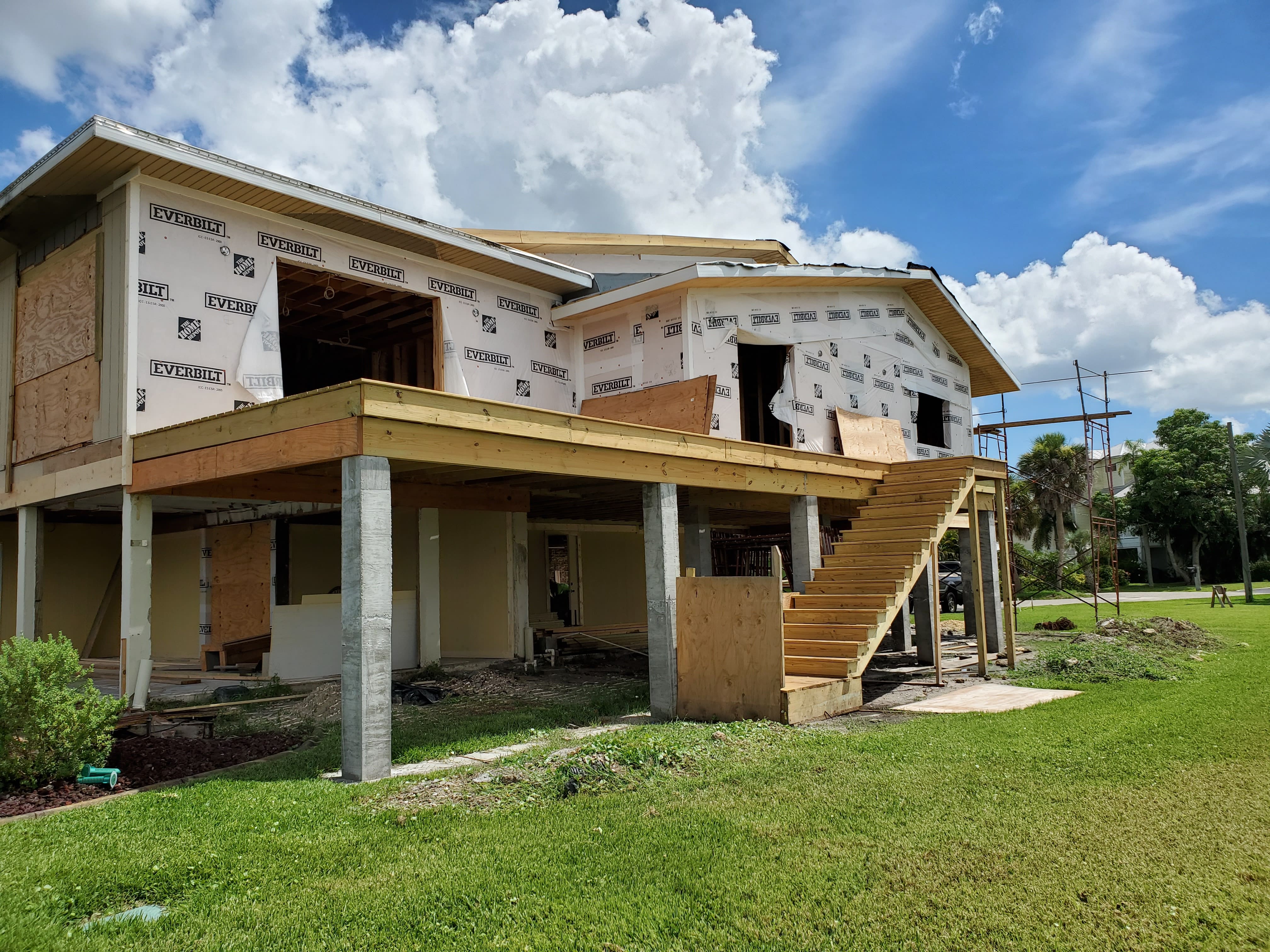
- Structural disconnection — the porch roof ties to the main structure at the fascia, not at the top plate. Wind loads aren't properly transferred. Proper hurricane tie-ins with Simpson Strong-Tie connectors and ZIP system sheathing are required to meet Pinellas County's 150 mph wind zone rating.
- Electrical bootlegging — power run from an interior outlet on a 15-amp circuit, not a dedicated panel circuit.
A proper Florida room integration — level the floor, insulate the envelope, tie the structure to the main house, run dedicated HVAC and electrical — turns dead square footage into real living space. Budget $25,000–$60,000 depending on size and how much of the existing structure can be retained. For ground-up additions, see our home addition cost guide for current St. Pete pricing.