Crescent Lake Renovation Challenges
What makes this neighborhood different — and what you need to plan for
1. Mixed-Era Housing Stock Means No Single Remodel Playbook
Most St. Pete neighborhoods are era-consistent. Old Northeast is 1920s. Kenwood is bungalows. Shore Acres is mid-century. Crescent Lake is all of the above on the same block. A contractor who only knows bungalows will quote your 1955 ranch wrong, and vice versa.
We've worked across every era of central St. Pete housing and know where the surprises hide in each: the 1920s cast iron and knob-and-tube wiring, the 1950s ungrounded copper supply lines and slab-on-grade drain reroutes, the 1970s aluminum branch circuits and Federal Pacific panels. The era dictates the scope before we ever open a wall, and on most Crescent Lake remodels we camera-scope the cast iron during pre-construction so the budget lands honest before demo. See our guide to cast iron plumbing for what the bungalow-era infrastructure typically involves.
2. Small Lots Force Vertical Thinking on Additions
Standard Crescent Lake lots are 50 feet wide. After side setbacks, you have roughly 35 feet of buildable width. That kills most rear additions before they start — by the time you carve out the required rear setback and account for existing footprint, there's nowhere to go but up.
Second-story additions on 1920s bungalow foundations require structural engineering to confirm the existing footings can take the load (they usually can't without reinforcement). We plan for this from day one of design, not week three of demo. Rear additions on the mid-century ranches are more straightforward — slab-on-grade foundations handle the loads differently.
3. The Lake Itself Is Zone AE — And Homes on It Follow Different Rules
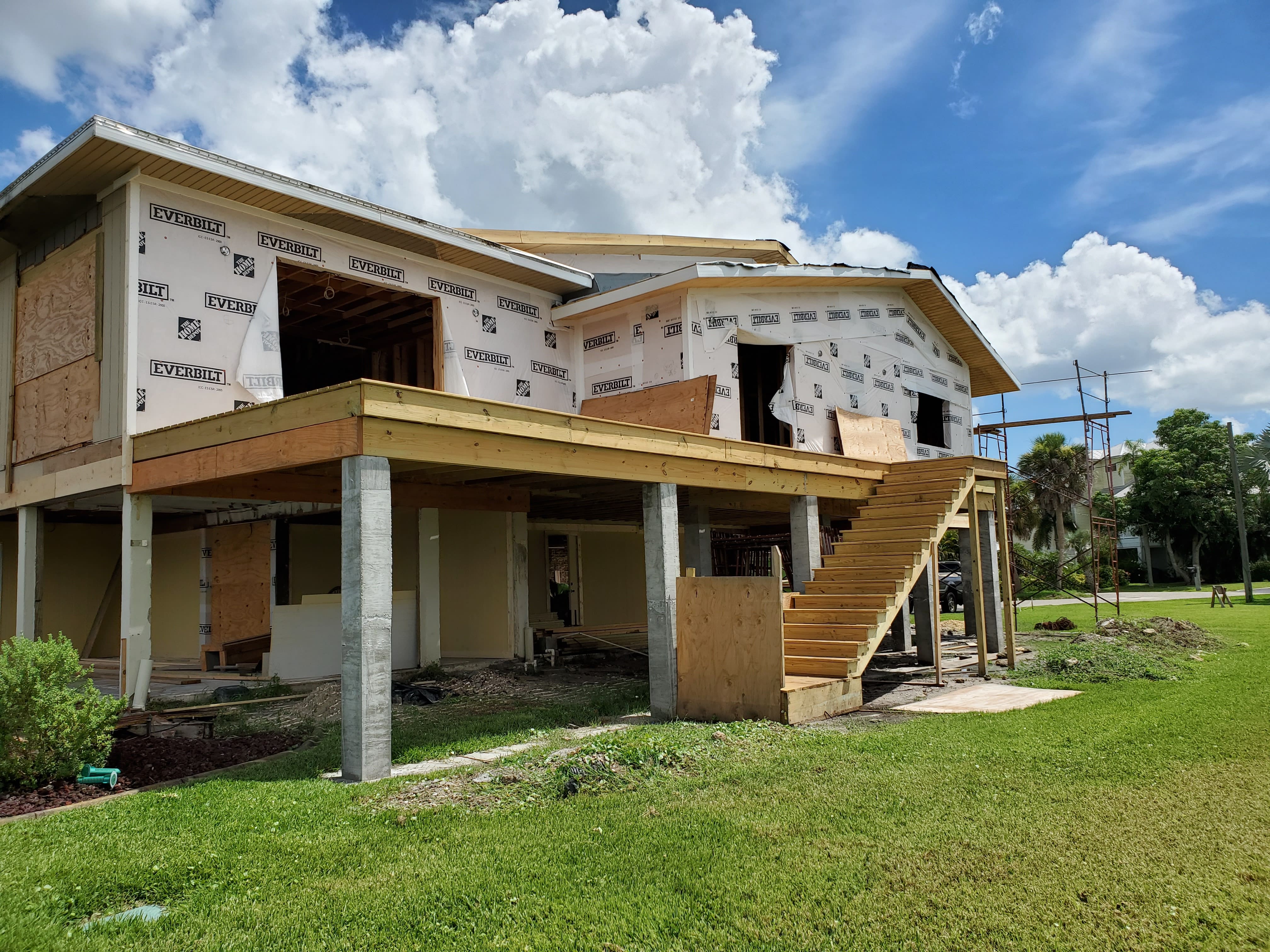
Most of Crescent Lake sits in FEMA Zone X, which means standard flood insurance rates and no elevation requirements. But the homes along the lake edge — roughly the block ringing Crescent Lake Park — are in Zone AE. Any substantial improvement on those homes triggers St. Pete's 50% threshold rule and cumulative-improvement tracking over a rolling 12-month window.
If your home is in that ring, the remodel conversation changes: elevation certificate first, valuation second, scope third. We handle both sides of the line and know when the FEMA math changes the project before design starts. See our FEMA 50% rule guide for a full breakdown of how this threshold works.