How to Pay for Aging-in-Place Modifications in St. Pete — VA Grants, Tax Deductions, and the 10-20% Rule

Most St. Pete families researching aging-in-place modifications get stuck on the same question: is it cheaper to modify the house we own, or move into assisted living? The answer depends on three financial levers that get talked about less than the modifications themselves — a VA grant if there is a service-connected veteran in the household, a federal medical-expense deduction most homeowners miss, and the percentage premium a contractor adds for accessibility scope on top of a regular remodel budget. Our owner, Jeremy Wharton, has a working rule for that last one. We will walk through all three.
Jeremy's 10-20% Rule for Aging-in-Place Scope
When clients ask Jeremy what aging-in-place adds to a remodel budget, his on-record answer is direct: “Budget range might be a standard budget for a standard remodel, plus 10 to 20 percent for aging-in-place considerations. But if we were talking about nothing more than laying in some blocking for future modifications, it’s almost a negligible cost during the scope of a larger project.” That is the working spread on full-scope retrofits. Future-proofing a bathroom you are already remodeling — blocking inside the walls so grab bars can be added later — is closer to “negligible” than to 10%.
The Minor-to-Major Spectrum
Jeremy on the spectrum: “Adding in blocking for future handrails is a good example of minor. That’s different than creating a zero-curb roll-in shower with fixtures set low and even slings and cranes to move someone in and out of a chair. The difference is based solely around the client’s needs.” The cost question is mostly an answer to the mobility question. A household planning for a relative who walks unaided is at the bottom of the range. A household planning for wheelchair use, ALS progression, or post-stroke recovery is at the top.
Most Impactful Modifications Dollar-for-Dollar
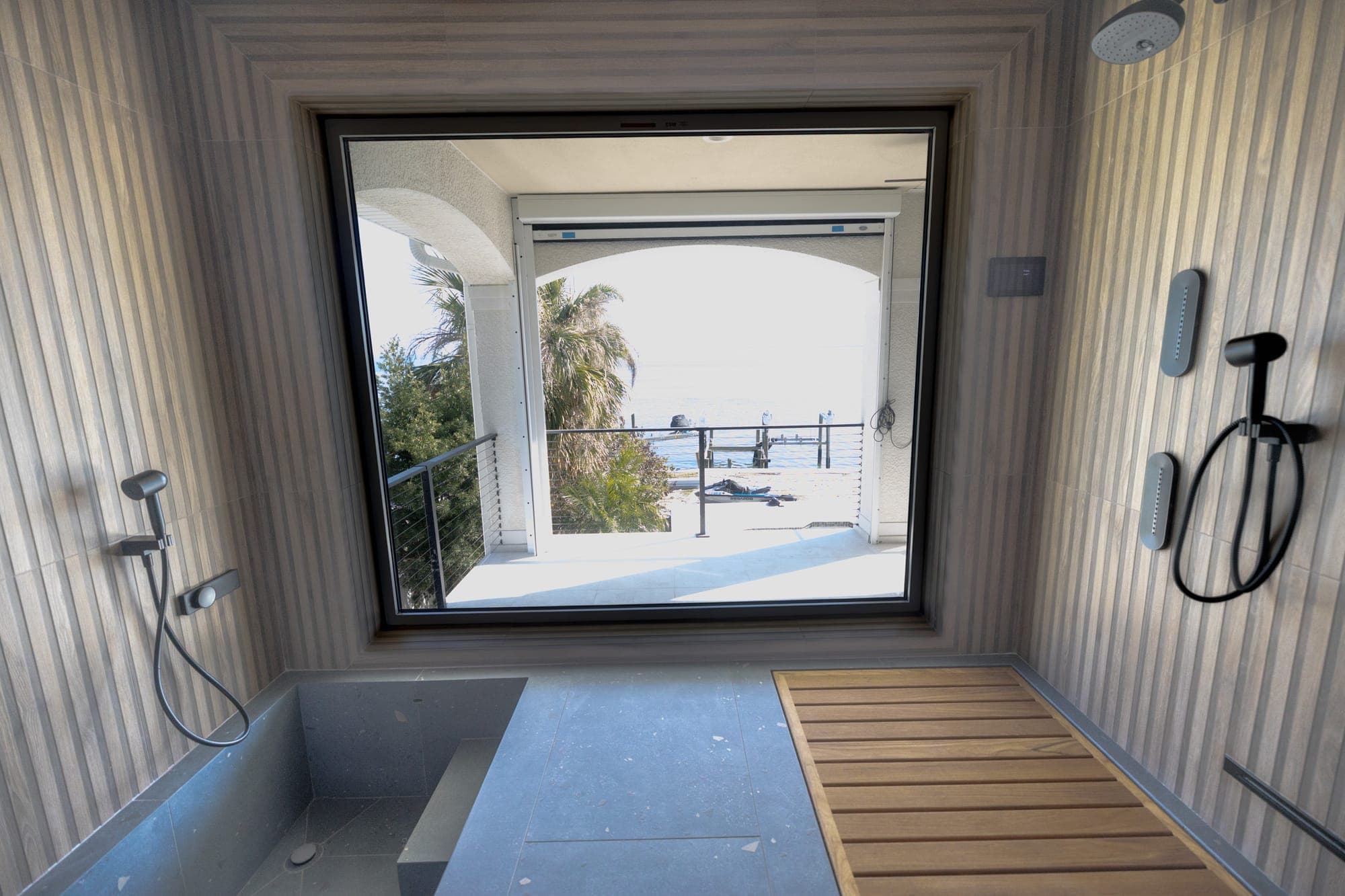
Jeremy ranks these by impact-per-dollar: “Making roll-in ability important whether it’s a walker, cane, or wheelchair. Being able to remove thresholds, remove steps whenever possible, adding ramps. Making showers walk-in and large enough for wheelchair turning radiuses, and increased space for medical equipment to accompany someone with mobility problems.” Translation: if the budget forces a sequence, do the bathroom roll-in shower first, then the doorway widenings, then the ramp at the entry. Kitchen modifications and progressive-needs upgrades come later when the lever-most-applied surface is locked in.
VA Specially Adapted Housing (SAH), SHA, and HISA Grants
If there is a service-connected disabled veteran in the household, the VA covers a significant portion of aging-in-place construction directly. Three programs you should know:
- SAH (Specially Adapted Housing) — the largest grant. Awarded for permanent and total service-connected disabilities including loss of use of both lower extremities. FY2026 maximum is in the low six-figures (current published VA figure should be confirmed with the VA at the time of application).
- SHA (Special Housing Adaptation) — for service-connected disabilities affecting vision or upper extremity function. Smaller than SAH but still covers most bathroom and entry retrofits.
- HISA (Home Improvement and Structural Alterations) — a smaller grant available to a broader veteran population for medically-necessary structural changes including roll-in showers, ramps, and widened doorways.
The VA application is paperwork-heavy but the eligibility decision is the gate, not the scope of the work. If your veteran qualifies and the SAH or SHA grant is approved, the household becomes the project lender for the portion the grant does not cover and the VA wires the rest directly.
Federal Medical-Expense Deduction (IRS Publication 502)
For non-veteran households, the most-missed financial lever is the federal medical-expense itemized deduction on Schedule A. The rule per IRS Publication 502: medically-necessary home modifications are deductible — but only the portion of the cost that does NOT increase the property's fair market value. So if you spend $30,000 on a roll-in shower and a certified appraiser estimates the modification adds $10,000 to the property value, $20,000 is deductible (subject to the 7.5%-of-AGI medical-expense threshold). Documentation matters here: a physician letter of medical necessity, a contractor invoice that breaks out the medically-required scope, and an appraiser opinion are the three documents most CPAs ask for. We will write our invoice in that breakdown by default.
What Medicare Does NOT Cover
Original Medicare (Parts A and B) does NOT cover home modifications. Period. This is the most common myth in our pre-construction conversations. Some Medicare Advantage plans (Part C, private insurer Medicare) offer limited supplemental “home safety” benefits — a few grab bars, a stair-lift consultation, occasionally a small one-time benefit. These are plan-specific and cap-limited; never the funding source for a roll-in shower or doorway widening project. If a sales pitch promised otherwise, ask for the plan name and the benefit document.
Pinellas-Specific Resources
Pinellas County and the City of St. Petersburg have changed accessibility funding programs several times since 2020. The two worth a phone call:
- Pinellas County Community Development (HOME Investment Partnerships Program) — income-restricted but covers accessibility modifications for qualifying low-and-moderate-income households.
- Florida Department of Elder Affairs — some elder-care community-care waiver programs route modest accessibility funding through Area Agencies on Aging.
Neither program is large enough to fund a $30,000 bathroom retrofit on its own. They stack on top of VA grants or family financing. The state's storm-mitigation grant (My Safe Florida Home) is a separate program covering wind retrofits, not accessibility — see our My Safe Florida Home grant guide for that.
How Revolution Prices an Aging-in-Place Scope
Revolution operates as a general contractor under a Time and Materials open-book contract. For an aging-in-place scope that means the medically-necessary portion of the budget is itemized separately from the rest of the remodel — specifically so the household has the line items it needs to claim the federal medical-expense deduction or submit to the VA grant administrator. With 20+ W-2 carpenters on staff and weekly budget reports, the line-item accuracy is built into the process. The free 48-hour pre-construction estimate is included. Our CGC1522463 license covers the structural and code-stamp work the VA grant administrator requires.
Frequently Asked Questions
Will aging-in-place modifications hurt our resale value?
Modern accessible design doesn't look medical anymore. Per Jeremy: “We don’t need to put in stainless steel grab bars — there are different finishes and designs.” Curbless showers, lever hardware, wider doorways, and one main-floor primary suite are all selling features in the current Florida market where the largest buyer demographic is over 55.
Can we just do the bathroom first and rest later?
Yes — and we usually recommend it. The bathroom roll-in shower is Jeremy's highest impact-per-dollar priority. Doorway widenings and ramp installation can be staged in a second phase once the household has lived with the bathroom changes for a few months.
How long does an aging-in-place retrofit take?
A full primary-bathroom roll-in shower retrofit including permit and tile work runs three to five weeks in Pinellas. A doorway widening pass on two or three interior doors runs one to two weeks. Combined scopes run six to eight weeks.
Do we need to be a veteran to get a VA grant?
The veteran is the household member who must be eligible — the home being modified does not need to be in the veteran's name alone. Spouses and primary caregivers can manage the application and the construction process. The VA approval is the gate; the household structure around the veteran is flexible.
Free 48-Hour Pre-Construction Estimate
We will visit the home, walk through the modifications you are considering, and price the medically-necessary scope as a separate line item — ready for your CPA or VA grant administrator. Schedule a pre-construction walkthrough or call (727) 888-6161.
Related reading: Aging-in-Place Modifications cost guide | Bathroom Remodel Checklist | Cast Iron Plumbing in Older Homes | Old NE 1960s Bathroom Aging Retrofit | Kitchen Retrofits for Limited Mobility
By Jeremy Wharton, founder of Revolution Contractors. Revolution is a St. Petersburg general contractor (CGC1522463) operating under a Time and Materials open-book pricing model with 20+ W-2 carpenters on staff. Aging-in-place quotes in this article are excerpted verbatim from a 2026 owner interview transcript on file at the company.