MSFH vs Florida Roof Relief Program: Which Grant Fits Your Roof (2026)

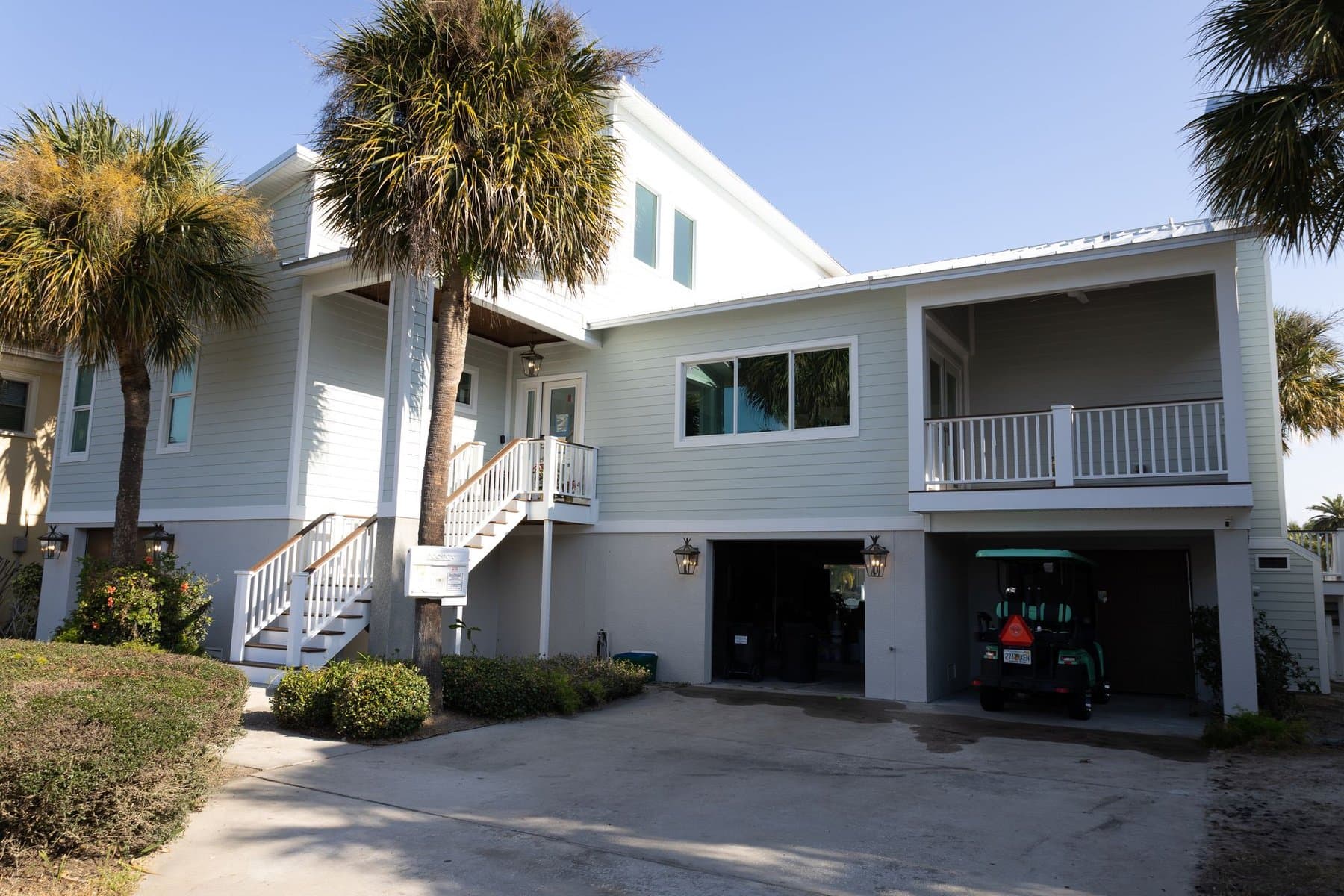
Two different Florida grant programs pay for roof work in 2026, and Pinellas homeowners keep confusing them. My Safe Florida Home (MSFH) is the state matching grant, up to $10,000 for hurricane-hardening upgrades (roof, windows, doors, gable-end bracing, secondary water resistance). Florida Roof Recovery Assistance Program is a separate post-disaster program administered through Florida Commerce that funds full roof replacement or major roof repair for low-income households whose roofs were damaged by a declared disaster. They are not the same fund. They do not stack the same way. They fund different scopes, run on different timelines, and use different eligibility rules.
If you are trying to figure out whether you should be applying to My Safe Florida Home, Florida Roof Recovery Assistance, or both, here is the honest comparison, how each program works, which one pays for your specific roof scope, what stacks with your insurance carrier's mitigation credit, and how a Pinellas homeowner picks.
We're Revolution Contractors, a St. Petersburg licensed general contractor (CRC1331628, CGC1522463). We install the upgrades MSFH pays for, we do not administer either grant, we do not decide eligibility, and we do not sell insurance. What follows is the framework we walk homeowners through when they call us confused about which program to apply to.
On This Page
- MSFH in one paragraph
- Florida Roof Recovery Assistance in one paragraph
- Side-by-side comparison
- Which grant fits which roof scenario
- Can you use both programs on the same roof
- How this connects to your Citizens or private-carrier premium
- Common mistakes Pinellas applicants make
- FAQ
MSFH in one paragraph {#msfh-summary}
The My Safe Florida Home program, authorized under Florida Statute 215.5586 and administered by the Florida Department of Financial Services (FL DFS), pays up to $10,000 per eligible homeowner on a 2:1 state match (state pays $2 for every homeowner $1) toward hurricane-hardening upgrades. Roof scope is one of several eligible upgrade categories, roof-deck attachment, secondary water resistance (SWR), and roof-to-wall connection all qualify. MSFH funds do not pay for a full new roof if the existing roof is at end of life for age reasons alone. The program is proactive, not disaster-triggered, and requires a free state-authorized wind mitigation inspection first. Full walkthrough on our My Safe Florida Home grant guide.
The MSFH grant reimburses after installation, after final inspection, and after full documentation is uploaded through the Neighborly Software portal at mysafeflhome.com. Homestead is required. Insured value cap sits at $700,000 for the 2025-2026 and 2026-2027 cycles. Low-income applicants (at or below 80% of county median income) can receive up to the full $10,000 with no homeowner match.
Florida Roof Recovery Assistance in one paragraph {#roof-relief-summary}
The Florida Roof Recovery Assistance Program, sometimes searched as "Florida Roof Relief Program" or "Florida Roofing Program", is a separate state-funded program administered through Florida Commerce (formerly the Department of Economic Opportunity) to help low-income and moderate-income Florida households repair or replace roofs damaged by federally-declared disasters. Unlike MSFH, this is a post-disaster recovery program, not a proactive hardening program. Eligibility keys off disaster declarations (Hurricane Ian, Idalia, Helene, Milton, etc.), income tier, and homeowner-of-record status at the time of the storm event. Funding cycles open and close as legislative appropriations flow, verify current eligibility windows at floridajobs.org before assuming your address qualifies.
Roof Recovery Assistance pays for the roof itself, repair or replacement to bring a storm-damaged roof back to habitable, code-compliant condition. It does not pay for hurricane hardening beyond code, does not pay for opening protection, and does not stack with insurance settlement payouts on the same damage. If your insurance carrier already paid a claim for the same roof damage, you are not eligible on that scope.
Side-by-side comparison {#side-by-side}
| Attribute | My Safe Florida Home (MSFH) | Florida Roof Recovery Assistance |
|---|---|---|
| Authority | Florida DFS / CFO's office (Statute 215.5586) | Florida Commerce (formerly DEO) |
| Program type | Proactive hurricane hardening | Post-disaster recovery |
| Trigger | Homeowner application, no storm required | Federally-declared disaster damage |
| Grant cap | $10,000 (state match) | Varies by cycle and household size (has run $10,000-$50,000 per household in past appropriations, verify current cycle) |
| Match required | 2:1 state match; 1:0 for low income | No homeowner match required (income-tested need) |
| Income limits | Homestead required; insured value under $700K; low-income tier gets no-match option | Low-income and moderate-income prioritized; some cycles cap at 120% of area median income |
| Roof scope covered | Roof-deck attachment, secondary water resistance, roof-to-wall connection (hardening upgrades only) | Full roof repair or replacement to restore storm-damaged roofs to code |
| Non-roof scope covered | Impact windows, impact doors, hurricane shutters, gable-end bracing | None, roof only |
| Free inspection | Yes, wind mitigation inspection (OIR-B1-1802 form) at no cost to homeowner | No separate free inspection; damage assessment happens as part of application |
| Payment structure | Reimbursement after final inspection | Direct-pay to contractor in most cycles; verify current cycle |
| Stacks with insurance | Yes, hardening upgrades earn separate wind mit premium credit | No, cannot double-recover on same damage already covered by insurance settlement |
| Contractor selection | Homeowner picks any Florida-licensed contractor; verify approved-contractor status on MSFH portal | Contractor typically assigned or selected from a state-approved list per cycle |
| Application portal | mysafeflhome.com (Neighborly Software) | floridajobs.org (varies by administering sub-agent) |
| Typical timeline | 6-12 months application to reimbursement, see our MSFH timeline breakdown | Varies by disaster; some post-Ian applicants waited 12-18 months for funds to disburse |
Which grant fits which roof scenario {#which-grant}
Four common Pinellas roof situations map cleanly to one program or the other. If you recognize your situation in one of these, you know where to start.
Scenario 1, Roof is intact, near end of design life, and you want to harden it before the next storm
Fit: MSFH. This is the classic MSFH use case. Your roof is not damaged. You are not filing an insurance claim. You want to add secondary water resistance (peel-and-stick underlayment beneath the shingles), improve roof-deck attachment to current Florida Building Code fastening schedules, and possibly add roof-to-wall connectors (hurricane straps). MSFH matches 2:1 up to $10,000 on those specific upgrades. Roof Recovery Assistance does not apply, there was no declared disaster event affecting this roof.
Typical Pinellas job under this scenario: a 1970s-era Old Northeast or Historic Uptown bungalow with the original roof deck, sheathing nailed to 1970s fastening standards, no SWR underlayment. Homeowner adds SWR + re-nailing on a re-roof cycle, pays roughly $3,000-$5,000 out of pocket, MSFH reimburses roughly $6,000-$10,000.
Scenario 2, Roof was damaged by Hurricane Helene, Milton, Ian, or Idalia and insurance has denied, low-balled, or exhausted your claim
Fit: Florida Roof Recovery Assistance (if you meet income limits), not MSFH. MSFH does not repair storm damage. It pays to harden a functional roof. If your roof was compromised by a declared disaster and your insurance settlement did not cover the full repair, Florida Roof Recovery Assistance is the program that fills the gap for income-qualified households. Verify the specific storm event is a covered declaration on the current program cycle at floridajobs.org before applying.
Scenario 3, Roof needs full replacement, you have no storm damage, and you also want impact windows
Fit: MSFH, applied to the hardening portion only. MSFH will not pay to replace a functional roof, but it will pay for the hardening deltas layered onto a homeowner-funded re-roof (SWR upgrade beyond code minimum, upgraded fastening beyond code minimum, roof-to-wall connectors). Pair that with the MSFH-funded impact windows on the same $10,000 grant cap and you can push a large portion of your hurricane-hardening spend onto the state match. See our MSFH grant amount breakdown by upgrade type for how the $10,000 splits across roof + windows on a single application.
Roof Recovery Assistance does not apply, no declared disaster event.
Scenario 4, Roof was damaged in a declared disaster, insurance paid the full claim, and you want to upgrade beyond the insurance repair scope
Fit: MSFH for the hardening delta. Insurance settled the damage repair, Roof Recovery Assistance will not double-fund that same scope. But if your re-roof scope now includes upgrades beyond the insurance-approved repair (add SWR, upgrade fastening, add roof-to-wall connectors), those hardening deltas are eligible for MSFH matching funds on a separate application track.
Can you use both programs on the same roof {#stacking}
Yes and no. The rule is scope-based, not timeline-based.
- Same scope, both programs, no. You cannot receive Roof Recovery Assistance funds AND MSFH matching funds on the same physical work item (same square footage of SWR, same set of fasteners, same roof-to-wall strap). Double-recovery on identical scope is disallowed under both program rules.
- Different scope, both programs, yes. If Roof Recovery Assistance replaces your storm-damaged shingle roof to code minimum, you can then apply MSFH funds toward the hardening deltas above code (upgraded SWR, upgraded fastening pattern, roof-to-wall connectors) on the same physical roof. The MSFH application is a separate track and requires its own wind mitigation inspection through the MSFH portal.
- Sequencing matters. In practice, Roof Recovery Assistance runs first (post-disaster, urgency-driven), then MSFH runs as a second-pass hardening layer. Filing them concurrently is possible but administratively complex, the MSFH portal will want documentation that the underlying roof repair was NOT paid for from the same MSFH grant dollars.
- Insurance settlement + MSFH, yes. Your insurance carrier's settlement on wind damage is not a grant, and MSFH does not treat it as one. You can accept an insurance settlement for storm damage AND apply MSFH funds toward hardening upgrades that go beyond the repair scope.
Stacking Citizens or private-carrier wind mitigation premium credits with the hardening work is a separate calculation. See MSFH vs Citizens Insurance: how the grant impacts your Florida homeowners premium for the specific premium-credit math.
How this connects to your Citizens or private-carrier premium {#insurance-connection}
Both programs produce hardening that can qualify for wind mitigation premium credits on your Florida homeowners policy, but through different mechanisms.
- MSFH-funded upgrades are documented on the same Uniform Mitigation Verification Inspection Form (OIR-B1-1802) your Citizens or private carrier already uses for premium credit calculation. One inspection triggers both grant eligibility (going in) and insurance premium credit (coming out).
- Roof Recovery Assistance-funded work typically restores your roof to code minimum, which may or may not upgrade your mitigation credit tier depending on what the code minimum for your address looks like today versus your prior roof's documented features. If the recovery job installs current-code-required SWR where your prior roof had none, that shows up as a credit-eligible feature on the next OIR-B1-1802 inspection.
Either way, request the OIR-B1-1802 inspection form from your inspector at final and forward it to your insurance carrier for premium re-rating. Your carrier will confirm the exact credit your specific policy earns.
Common mistakes Pinellas applicants make {#common-mistakes}
Four patterns come up repeatedly on our estimate calls.
- Applying to MSFH expecting it to fund a full re-roof. MSFH funds hardening deltas, not roof replacements. If your roof is at end of life, plan and finance the re-roof separately, then structure the MSFH application around the SWR + fastening + connector upgrades layered onto that re-roof.
- Applying to Florida Roof Recovery Assistance without a covered disaster event. Recovery Assistance keys off federally-declared disasters. A storm that hit Pinellas but was not declared a federal disaster does not trigger eligibility. Verify the specific declaration on the current program cycle before applying.
- Assuming the two programs administratively coordinate. They do not. Neighborly Software (MSFH) and the Florida Commerce grantee network (Roof Recovery Assistance) are separate systems. You must apply to each program independently, meet each program's separate documentation requirements, and track each program's separate timeline. Nothing about applying to one triggers, notifies, or feeds the other.
- Starting hardening work before the MSFH award letter is issued. Per FL DFS program rules, pre-approval work is not reimbursable. Even if the work is otherwise eligible, MSFH will decline the reimbursement request if the invoice date precedes the award letter date. This is the single most common reason MSFH applications stall at the reimbursement gate.
Frequently asked questions {#faq}
Is the Florida Roof Relief Program the same as My Safe Florida Home?
No. Florida Roof Relief (formally, the Florida Roof Recovery Assistance Program) is administered through Florida Commerce and funds post-disaster roof repair or replacement for income-eligible households. My Safe Florida Home is administered through Florida DFS and funds proactive hurricane hardening upgrades, up to $10,000 on a 2:1 state match, for homesteaded homeowners with insured values under $700,000.
Which grant should I apply to first if my roof was damaged in Hurricane Helene or Milton?
If your roof was damaged in a declared disaster and your insurance settlement did not cover the full repair, apply to Florida Roof Recovery Assistance first for the damage repair, then apply to MSFH for hardening deltas beyond code minimum. Confirm you meet income eligibility for Recovery Assistance before assuming the program will fund your scope.
Does MSFH pay for a full new roof?
Not for age-related replacement. MSFH funds hardening upgrades to a functional roof, roof-deck fastening beyond code, secondary water resistance (SWR) underlayment, and roof-to-wall connectors (hurricane straps). If you are re-roofing for end-of-life reasons, MSFH pays only for the hardening deltas layered onto that re-roof, not the base shingle replacement.
Can a Pinellas homeowner apply to both MSFH and Florida Roof Recovery Assistance in the same year?
Yes, provided the scopes do not overlap. You cannot receive both grants for the same physical square footage of the same upgrade. You can receive Roof Recovery Assistance for the disaster damage repair AND separately receive MSFH for hardening upgrades beyond the recovery scope. Documentation on the MSFH portal must show that the scope you are billing MSFH for was not paid by Recovery Assistance.
Does Revolution Contractors administer either grant?
No. Both programs are state-administered and homeowners apply directly. Revolution installs the construction-side work, impact windows, roof hardening upgrades, opening protection retrofits, that qualifies for MSFH reimbursement on flood-zone and coastal projects. Grant paperwork stays between the homeowner and the program.
What if my income is above the low-income threshold, can I still apply?
For MSFH, yes, moderate-income applicants apply on the 2:1 state match structure (you pay $1, state pays $2, up to the $10,000 cap). For Roof Recovery Assistance, program cycles have historically prioritized low-income and moderate-income households; check the current cycle's income limits at floridajobs.org before applying.
How do I verify which contractor to pick for MSFH-funded roof work?
Your contractor must hold an active Florida DBPR license in an eligible classification (General Contractor, Building Contractor, Residential Contractor, or Roofing Contractor) and maintain proper insurance and Workers' Compensation coverage. See our MSFH-approved contractor selection guide for the 60-second verification workflow and the red flags to avoid.
Talk to a licensed Pinellas contractor before you apply
If you are trying to figure out whether your roof scope fits MSFH, Florida Roof Recovery Assistance, or both, and what the hardening deltas would actually cost on your specific home, call Revolution Contractors at (727) 888-6161 or visit our flood-zone and coastal projects service page. We do not administer either grant, but we install the hardening upgrades MSFH funds and we can walk you through what the OIR-B1-1802 inspection is likely to recommend on a home like yours before you file the application.
Licenses: CRC1331628 (Certified Residential Contractor) and CGC1522463 (Certified General Contractor).
Verify current program cycle status, funding availability, and eligibility rules at mysafeflhome.com (MSFH) and floridajobs.org (Florida Roof Recovery Assistance) before committing to any scope decision. Program parameters change with legislative sessions and appropriation cycles, the numbers in this piece reflect the 2026 cycle as of publication.
Ready to Start Your Project?
Get a free estimate within 24 hours