Building a New Custom Home in a St. Pete Historic District: Navigating the COA Process for New Construction

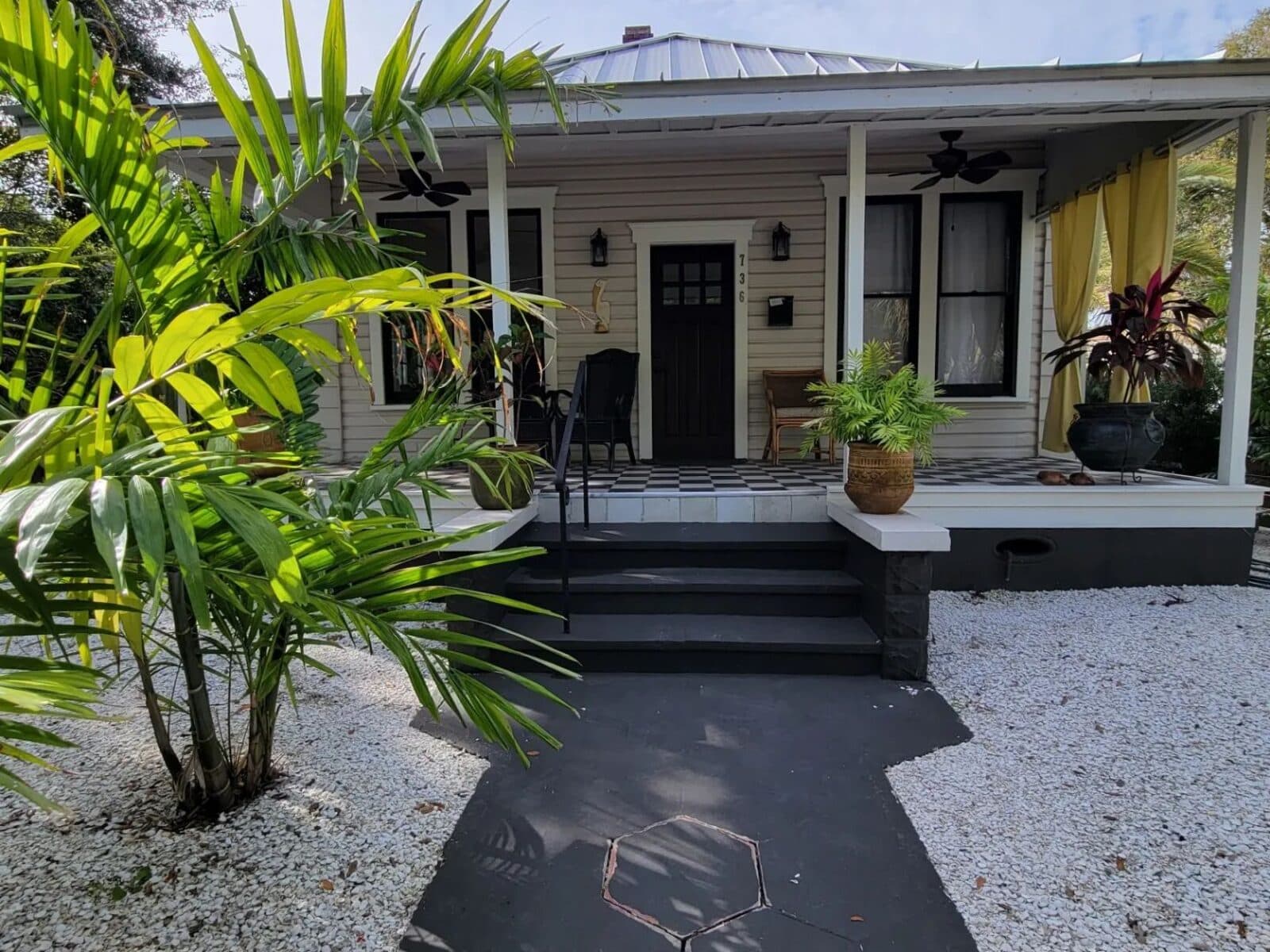
If you own an empty lot — or a teardown-candidate lot — inside a locally designated St. Petersburg historic district, and you’re planning to build a new custom home, the Certificate of Appropriateness (COA) process is going to shape your design before you shape it yourself. New construction inside a locally designated district goes through a fuller COA review than most remodels do: the review board looks at massing, height, street-facing elevation, roof pitch, material palette, and how the house sits relative to its neighbors. Here’s what the review actually examines, which St. Pete neighborhoods trigger it, and how it changes your architect selection and timeline.
Which St. Petersburg historic districts actually trigger COA review for new construction?
This is the first question every prospective builder asks, and it’s the one most easily gotten wrong. Not every neighborhood commonly called “historic” carries local design review. The distinction matters:
- Locally designated districts — governed by the City of St. Petersburg Historic Preservation Commission. New construction, demolitions, and significant exterior alterations require a Certificate of Appropriateness. Roser Park (locally designated 1987, the city’s first) and Granada Terrace within Old Northeast (locally designated 1988, the second) are the two most-referenced examples. Individually landmarked properties anywhere in the city carry the same requirement regardless of neighborhood.
- National Register districts — honorary designation. The broader Northshore/Historic Old Northeast is a National Register district. For a residential owner, National Register status does not trigger design review or COA requirements. You can tear down and rebuild without a preservation commission signoff — the standard building department process applies.
Jeremy Wharton lists the St. Pete neighborhoods with historic character this way:
“In St. Petersburg, neighborhoods with historic designation are Old Northeast, Old Southeast, Ingleside, Roser Park, Granada Terrace, Historic Kenwood. I am not sure if any of the neighborhoods like Allendale or Wagner Terrace have it. I think the ones that I listed are primarily the neighborhoods that have historic designation, but we should check that if we’re going to put on the website.”
— Jeremy Wharton, Revolution Contractors
His caveat is worth honoring — historic-character neighborhoods and locally designated review-triggering districts are not the same list. Before you sign an architect, confirm with the City of St. Petersburg Historic Preservation Office whether your specific parcel sits inside a locally designated district or is individually landmarked.
If your lot is in Granada Terrace, Roser Park, or is individually landmarked, plan for a full COA review before your building permit clears. If it’s in the broader Northshore/Old Northeast without local designation, the review is off the table and you’re on the standard permit path.
How is the COA review different for new construction than for a remodel?
Both processes flow through the same Historic Preservation Office and the same commission when a hearing is required. What changes is the scope of what gets reviewed.
For a remodel, the COA typically looks at specific exterior alterations — a window replacement, a rear addition, a roof detail, an exterior door relocation. Interior scope is generally outside the review. Most remodel COAs are handled at staff level and move quickly.
For new construction, the review is broader. The commission is being asked whether an entire new building fits the district. That means the submission set has to speak to:
- Massing and scale — footprint, height, number of stories relative to neighboring structures
- Street-facing elevation — window rhythm, entry placement, porch presence
- Roof form and pitch — whether the roof reads as compatible with the district vernacular
- Material palette — siding material, trim profiles, window materials, foundation treatment
- Setbacks and site relationship — how the house sits on the lot relative to the neighbors and the streetscape
New-construction submissions are far more likely to go to full Historic Preservation Commission hearing rather than clearing at staff level. Plan for it — don’t hope for a staff-level clearance on a new build inside a locally designated district.
How much does COA review add to a new custom home timeline?
Jeremy is direct on this in owner interviews:
“In the actual historical areas, there is an additional level of review for permitting that in St. Pete is extremely inefficient. That department is really bad at any level of timeliness or accountability, so it very easily adds two to four months, and possibly more if there needs to be any sort of variance or board hearing that accompanies the application.”
— Jeremy Wharton, Revolution Contractors
For a new-construction project — where a board hearing is likely by default — plan the two-to-four-month window into your schedule from the day you sign an architect. That window is on top of the standard building department permit review, not in parallel with it in most cases. If your architect is telling you a new custom home in Granada Terrace can permit in six weeks, they either haven’t done one there or they’re being optimistic about the calendar.
What should you look for when selecting a historic-district architect?
Design for new construction inside a locally designated district is not a place to save on architect fees. The board is going to hold the submission to the district’s design guidelines. An architect who hasn’t submitted to St. Pete’s Historic Preservation Commission before will spend your money learning the process — and you’ll wear the timeline hit.
Ask any architect you interview:
- How many COA submissions have you made in the last three years, and in which St. Pete historic districts?
- Have any of your submissions gone to full commission hearing? What was the outcome?
- What material palette do you plan to use, and how does it match the district guidelines?
- How do you handle massing and street-facing elevation in a way that clears the review on first submission?
An architect with St. Pete historic-district submission experience is worth their fee. One without it can still do the work — but you should build a longer design phase and probably a longer permitting phase into your contract.
What COA fees should you budget for?
The City of St. Petersburg publishes a Historic Preservation fee schedule that changes periodically. Rather than quote a dollar figure that will drift out of date, we recommend confirming current COA application and hearing fees with the Historic Preservation Office at the time you submit. Budget for both a base application fee and, if your submission goes to full commission hearing (likely for new construction), any associated hearing costs.
The design and permitting fee stack matters more than the COA fee itself. Historic-district architects charge more because there is genuinely more work involved in preparing a compliant submission. Jeremy on this: “The architects that work on the historic houses tend to charge a little bit more because there is a little bit more that goes into the planning as well as their interaction throughout the project.”
Does everything have to look historic?
No — and this is the design conversation worth having with your architect early. The COA guidelines are about compatibility, not literal replication. A new build in Granada Terrace does not have to be a 1920s bungalow to clear review. It has to read as compatible with the district in massing, scale, materials, and street presence. Modern detailing inside that envelope is negotiable with the board when the submission is thoughtful.
The projects that get pushed back on hardest are the ones that ignore the district context — a modernist glass box on a bungalow street, a mansard roof where hip roofs dominate, a foundation treatment that reads as suburban. The projects that clear cleanly are the ones where the architect has clearly studied the block.
What does Revolution’s role look like on a historic-district new build?
We function as the general contractor. We do not have architects on salary — we pair you with an independent architect appropriate for your project and coordinate under a single Revolution contract from design through completion. That single-point-of-accountability structure matters more on a historic-district new build than on a standard build, because the review process is going to require close coordination between architect, GC, and the Historic Preservation Office through submission and any revisions.
Our historic-district work is coordinated across Old Northeast, Granada Terrace, Roser Park, Historic Kenwood, and other St. Petersburg historic areas. For lot analysis and design envelope questions before you commit to a design, see our piece on lot survey and custom home design envelope. For the COA-shapes-your-layout question on a historic remodel scenario, see Old Northeast historic kitchen renovation COA process. For the full custom-home process from initial meeting through certificate of occupancy, see the custom home building process. For historic renovation cost context, see historic renovation cost in St. Petersburg. Our custom home services hub covers the full new-build scope.
Frequently Asked Questions
Does every St. Petersburg historic neighborhood require COA review for new construction?
No. Only locally designated historic districts (Roser Park, Granada Terrace, and any others carrying local designation) and individually landmarked properties require COA review. Neighborhoods on the National Register only -- such as the broader Northshore/Historic Old Northeast -- do not trigger design review at the residential level.
How long does the COA process add to a new custom home timeline?
Plan for two to four months on top of the standard building permit review, and possibly longer if the submission goes through revisions at commission hearing.
Can I tear down an existing house on my historic-district lot to build new?
In a locally designated district, demolition itself requires a Certificate of Appropriateness. The commission reviews the demolition proposal separately from the new construction proposal. Both approvals are required before permits clear.
What does the review board actually look at on a new-construction submission?
Massing and scale, height, street-facing elevation, roof form and pitch, exterior material palette, window rhythm, entry placement, and how the house sits on the lot relative to its neighbors and the streetscape.
Does my new house have to look like a historic bungalow?
No. The guidelines are about compatibility with the district, not literal reproduction. Modern detailing within a compatible envelope is workable if the submission is thoughtful about massing, scale, and materials.
What are the current COA application fees?
The City of St. Petersburg publishes a Historic Preservation fee schedule that changes periodically. Confirm current application and hearing fees with the Historic Preservation Office at the time you submit.
Should I pick my architect before or after confirming my lot's designation status?
Confirm the designation status first. If your lot is inside a locally designated district or individually landmarked, prioritize an architect with recent St. Pete Historic Preservation Commission submission experience.
Building new in a St. Petersburg historic district is a longer, more coordinated project than building the same house on a lot outside a designated district. It’s also, done well, one of the most rewarding kinds of custom home work — a new build that fits its block and adds to the district rather than fighting it.
Revolution coordinates historic-district custom home projects as the general contractor across Old Northeast, Granada Terrace, Roser Park, Historic Kenwood, and other St. Petersburg historic areas. If you own a lot in a designated district and want to talk through the design, permitting, and construction sequence before you sign an architect, call (727) 888-6161.
Related Resources:
- Custom Home Services — our custom home hub
- Old Northeast Historic Kitchen Renovation: COA Process — remodel-COA sibling
- Lot Survey and Custom Home Design Envelope — pre-design lot analysis
- Custom Home Building Process — timeline overview from design through move-in
- Historic Renovation Cost in St. Petersburg — cost framing on historic residential work
Own a Lot in a St. Pete Historic District?
Call Revolution at (727) 888-6161 or request a free 48-hour consultation. We'll walk the lot, review the designation status, and give you a real read on COA scope, architect selection, and permit timing before you sign a design contract.