Old Northeast Historic Kitchen Renovation: How the COA Process Shapes Your Layout Choices

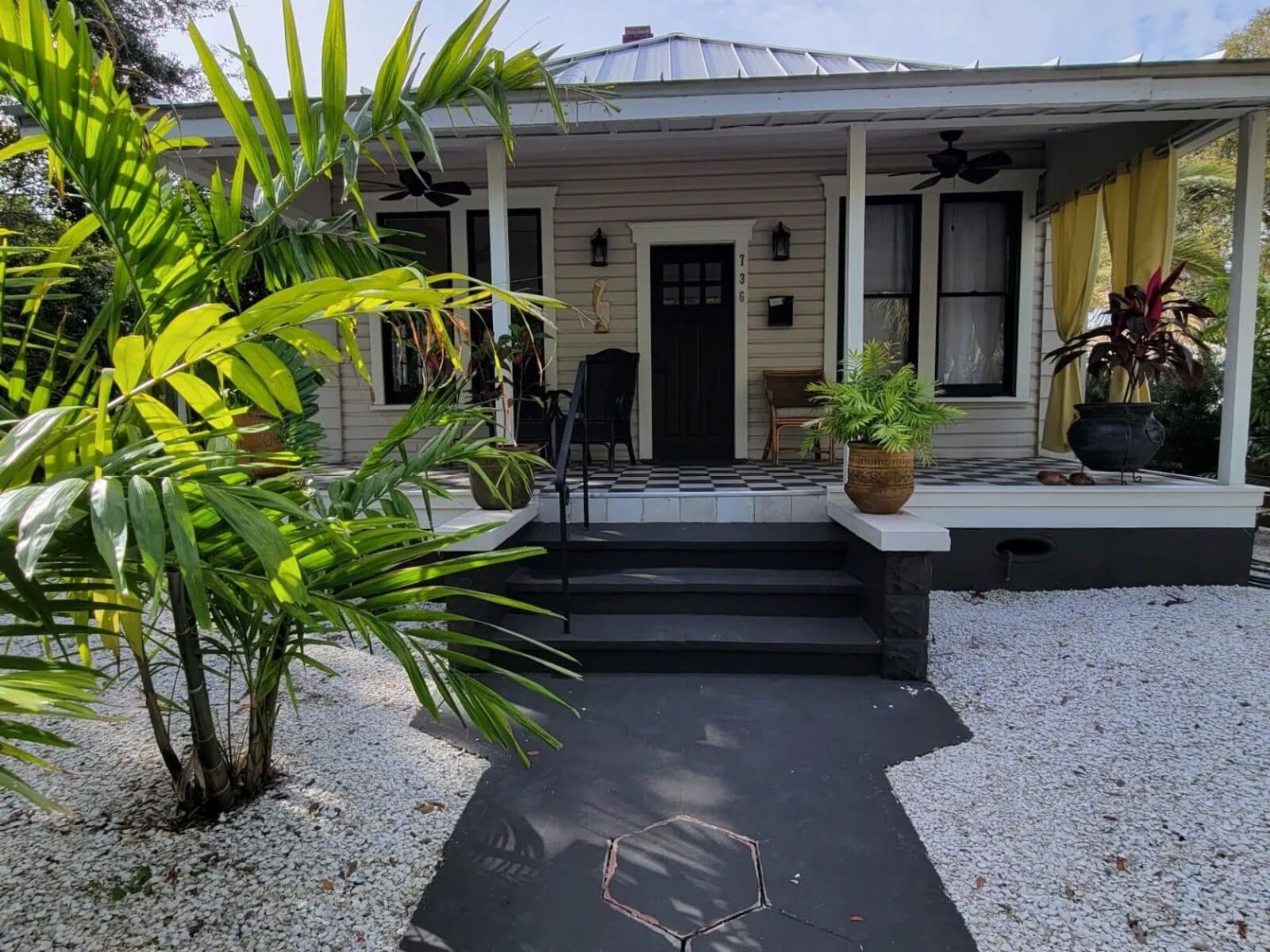
Most Old Northeast kitchen renovations do not require a Certificate of Appropriateness (COA). The Northshore neighborhood commonly called the Historic Old Northeast is a National Register district, honorary at the residential level, no design review. Granada Terrace within Old Northeast is a locally designated district, and there COA review applies before any significant exterior alteration.
The trap is that many kitchen decisions look like interior work, and are, until you get to the range hood vent, the window over the sink, or the chimney flue that a range wall backs into. This piece walks through where the line falls, how the process changes your timeline, and why some Old Northeast kitchens end up preserved as galleys while others open up.
Which Old Northeast Homes Are Subject to COA Review
The distinction between National Register and local historic designation does the work here.
Per the City of St. Petersburg Historic Preservation Office and Preserve the 'Burg, the broader Northshore/Historic Old Northeast is listed on the National Registerwhich is primarily honorary for residential owners and does not trigger design review or COA requirements.
Granada Terrace, a neighborhood within the historic Old Northeast, is a locally designated district (designated in 1988, the second local district in the city after Roser Park in 1987). Locally designated properties go through COA review for significant exterior alterations, demolitions, and new construction. Individually landmarked properties also carry COA requirements regardless of neighborhood.
If you are not sure whether your property is locally designated, the Pinellas County Property Appraiser record or the city's Historic Preservation Office can confirm in a phone call.
Jeremy Wharton has framed the practical experience like this: "In the actual historical areas, there is an additional level of review for permitting that in St. Pete is extremely inefficient. That department is really bad at any level of timeliness or accountability, so it very easily adds two to four months, and possibly more if there needs to be any sort of variance or board hearing that accompanies the application."
Two to four months is the practical delay to budget for on COA-required scope.
What COA Does and Doesn't Touch Inside Your Kitchen
Preserve the 'Burg puts the interior question directly: "You will not be told what color you can paint your house or what can be done inside your house." That is the general rule. Interior kitchen scope, cabinetry, countertops, flooring, appliance selection, non-load-bearing wall changes, plumbing and electrical work inside the envelope, is not subject to COA review.
The exceptions are the seams where an interior kitchen decision affects the exterior:
- Window replacement for a range wall or over-the-sink daylighting. Changing size, location, or material triggers COA review; restoring in kind usually clears with staff-level review.
- Range hood venting through an exterior wall. Cutting a vent penetration in a historically significant elevation is exterior alteration.
- Chimney modifications when a wall you want to remove backs into an original masonry flue.
- Load-path changes that require structural additions readable from outside.
- Dormer additions for taller cabinet volume in an attic-story kitchen, entirely exterior fabric.
- Rear-elevation changes to accommodate a wider kitchen (relocating a rear door, enlarging a window bank for daylighting).
Rule of thumb: if the change is fully behind the drywall and the exterior looks identical afterward, it is not a COA question. If the exterior looks different, even slightly, it probably is.
The COA Review Workflow
Most COA requests are handled at staff level, not full commission hearing. Per Preserve the 'Burg, "In 2017, only 13% of the COA requests were subject to preservation commission and public hearing review."
Staff-level review typically covers window-to-window replacement in matching material, standard vent penetrations on secondary elevations, and other alterations that fit the city's Design Guidelines for Historic Properties. Turnaround is often within days.
Full Historic Preservation Commission review kicks in for demolitions, additions, major exterior massing changes, or work that departs from the guidelines. Commission hearings run on the city's calendar and add the two-to-four-month window Jeremy referenced.
For kitchen layout planning: staff-level COA items can generally be absorbed into the design phase without changing the construction schedule. Commission-level items need to be identified early and either scheduled around, redesigned to clear staff, or accepted as timeline extensions.
How This Shapes Kitchen Layout Choices
Three patterns show up repeatedly in Old Northeast kitchen work in COA-bound properties:
Pattern One: Galley Preserved
Many 1920s-40s Old Northeast homes have galley kitchens on the rear, sometimes on what was originally a sleeping porch. Jeremy has described this from job walks: "We saw one today that had the kitchen stuffed onto what used to be, I think, a sleeping porch, so it was part of an addition with a sloped floor, and the kitchen itself was an afterthought." When the range wall backs into a chimney flue or the sink wall carries the original rear-elevation window bank, opening the galley requires COA-reviewable exterior work. Some clients invest in what is inside the galley, cabinetry, appliances, lighting, rather than trigger the review.
Pattern Two: Interior Wall Removal
Where the wall between the kitchen and an adjoining pantry, breakfast room, or dining room is fully interior and non-load-bearing, layout can open up without COA involvement. Structural permits still run through the building department, but the historic review is off the table. This is the sweet spot for many Old NE kitchen renovations.
Pattern Three: Rear-Elevation Project
Bigger ambitions, expanded footprint, new window bank, exterior door relocated for pantry access, move fully into COA-reviewable scope. On these projects the design phase gets front-loaded so the COA submission runs in parallel with the standard permit application and the timelines overlap.
Which pattern fits your property is the layout decision, not just what looks good on paper.
Where the COA Process Actually Helps
Framing COA as a restriction misses part of the picture. Handled early, the review protects the elements that make Old Northeast homes valuable: original hardwood floors, plaster crown work, historic tile in an adjacent butler's pantry, wood windows that cost more to replicate than to restore. Preserve the 'Burg documents that property values in locally designated neighborhoods have "increasing more or holding their property value better than in comparable non-designated neighborhoods."
That is an argument for treating COA scope as part of the kitchen design brief, not a late-stage compliance step.
What We Tell Every Old Northeast Kitchen Client
Start with the designation question. Pull the property record and confirm whether it is locally designated, National Register only, or individually landmarked. That single answer decides whether COA is a design constraint or not.
If it is, identify the COA touchpoints in the first design meeting, windows, venting, chimney, rear elevation, and decide which the project will avoid, which will go staff-level, and which need commission scheduling. That framework turns the two-to-four-month timeline into a planning input rather than a surprise.
Revolution coordinates historic-district kitchen renovations as the general contractor across Old Northeast, Granada Terrace, Roser Park, Historic Kenwood, and other St. Petersburg historic areas. Interior scope on these projects follows the same shape as our full St. Petersburg kitchen remodel service , the COA layer is added around it, not instead of it. See remodeling in Old Northeast St. Pete and historic renovation cost in St. Petersburg for broader context.
Frequently Asked Questions
Does Every Old NE Kitchen Renovation Require a COA?
No. Northshore/Historic Old Northeast is National Register (honorary). Granada Terrace within Old Northeast is locally designated and does require COA review.
Can I Change Cabinets, Counters, Flooring Without COA?
Yes. COA is limited to exterior alterations, demolitions, and new construction.
How Long Does COA Take?
Staff-level review often within days to a couple of weeks. Commission review adds roughly two to four months.
What Triggers COA Review?
Exterior-affecting scope: window replacement (size/location/material), range hood venting through exterior walls, chimney modifications, dormer additions, rear-elevation changes, and structural work readable from outside.
Ready to Plan a Historic-District Kitchen Renovation?
Call (727) 888-6161 for a free 48-hour estimate, or visit our historic renovation page to start a scope conversation.
Ready to Start Your Project?
Get a free estimate within 24 hours