How Much Does a Historic Home Renovation Cost in St. Petersburg?

Cost only — for the full service page covering process, dual-track Certificate of Appropriateness navigation, and St. Pete historic-district expertise, see our historic renovation contractors page.
The historic renovation cost in St. Petersburg runs 25-40% higher than a standard remodel of the same size. That's the honest answer, and the reasons are worth understanding before you set a budget.
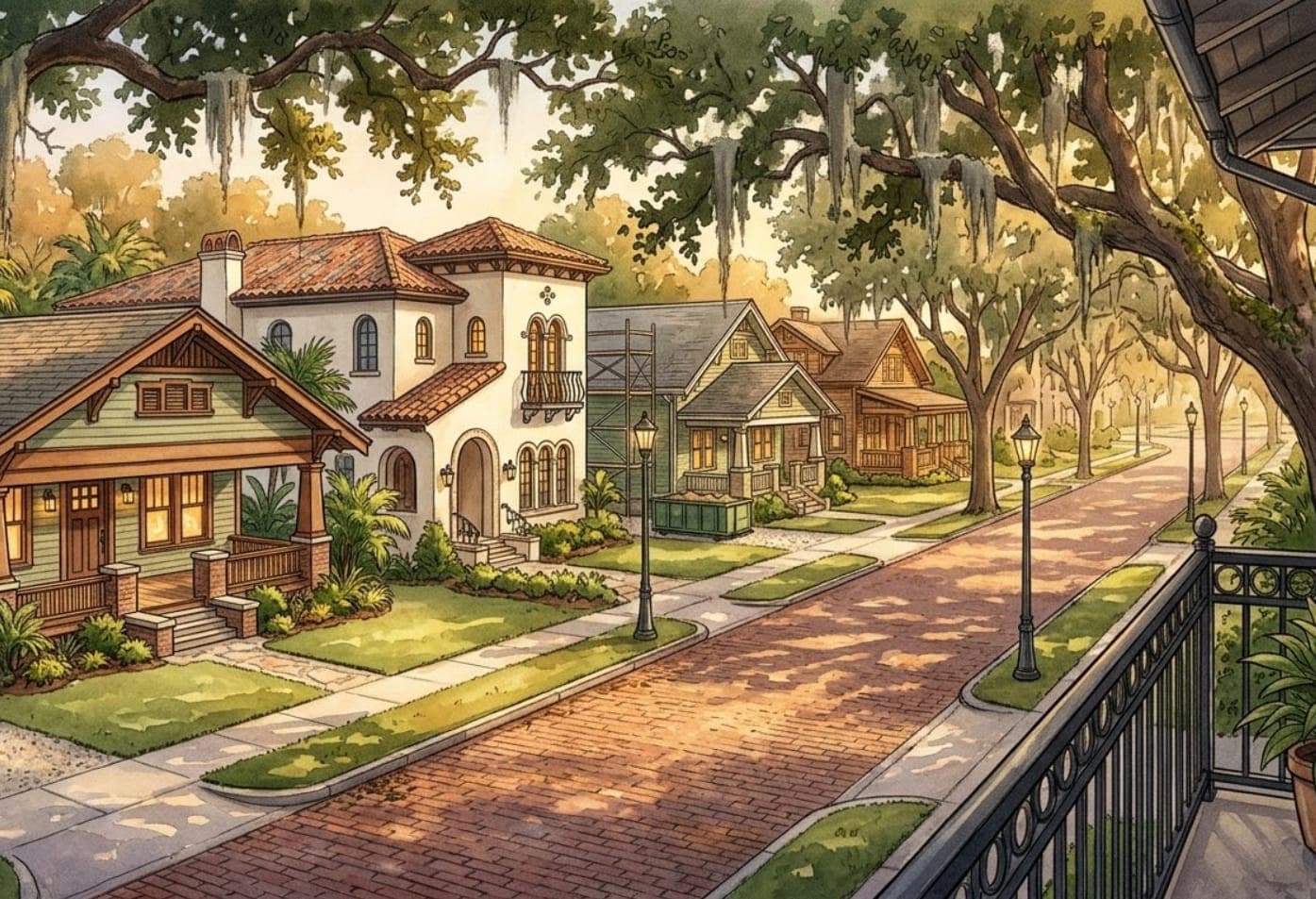
We've renovated homes across Old Northeast, Kenwood, Roser Park, Old Southeast, and Granada Terrace — houses built between the early 1900s and the 1940s, many on pier-and-beam foundations with original lath-and-plaster walls. The pattern is consistent: historic renovation budgets run 25-40% higher than equivalent standard remodels, and the reasons have nothing to do with gold-plated finishes. They have everything to do with skilled labor, period-correct materials, and the Certificate of Appropriateness reality of working in a designated district under St. Pete's historic preservation board.
Here's where the money actually goes.
Three Cost Tiers for Historic Renovation
Not every historic renovation is the same scope. Your budget depends on what you're trying to accomplish.
Targeted Preservation: $50,000 – $100,000
You're addressing specific issues without gutting the house. This might look like:
- Repairing or replacing damaged wood sash windows in kind
- Restoring a front porch to meet historic guidelines
- Updating one bathroom with period-appropriate finishes
- Addressing a termite-damaged section of trim and millwork
- Encapsulating lead paint in targeted areas
At this level, you're preserving what's there and fixing what's failing. The historic review board interaction is usually straightforward — staff-level approval, often within a day for like-for-like repairs.
Comprehensive Renovation: $150,000 – $300,000
This is the most common range for homeowners who want to modernize the systems while keeping the character. You're updating the wiring, the plumbing, the HVAC — the guts of the house — while preserving the woodwork, the doors, the trim, and the exterior details that make it a historic home.
A comprehensive renovation typically includes:
- Full electrical rewiring (replacing knob-and-tube or cloth-wrapped wiring)
- Plumbing replacement (galvanized to copper or PEX)
- HVAC upgrade with ductwork routed to minimize visible impact
- Kitchen and bathroom remodels within the existing footprint
- Exterior repairs: stucco, siding, roofing to match original materials
- Lead paint and asbestos remediation as encountered
- Selective millwork restoration or replication
This is where you'll interact with St. Pete's historic preservation board for a Certificate of Appropriateness if you're changing anything visible from the street. Plan for that to add 2-4 months to your permitting timeline.
Full Historic Restoration: $400,000+
You're restoring the house to its full potential — or close to it. This is the scope where we're rebuilding structural elements, replicating original millwork profiles, and making decisions about every surface in the house.
One of our most recognized projects fell in this range: the King House restoration in Old Southeast — a hundred-year-old home rebuilt from the studs out, preserving the original framing, doors, and woodwork while upgrading every system to current code. That project won a 2025 Preserve the ‘Burg Residential Rehabilitation award — not because it was expensive, but because the care showed. For more examples in the same scope range, see our other featured projects.
At this level, the budget is driven almost entirely by craft labor and custom materials. Off-the-shelf products don't exist for what you need. This is the tier where our 20+ in-house W-2 carpenters do most of the finish work directly — period-correct casing, scribed millwork joints into out-of-plumb century-old framing, lath-and-plaster repair tied into modern Florida Building Code wiring runs — because this kind of carpentry doesn't survive being subbed out to a low-bid crew.
Why Historic Renovation Costs More (The Real Reasons)
Reason 1: The Labor Bill Is the Biggest Line Item
In a standard remodel, your budget splits roughly evenly between materials and labor. In a historic renovation, that balance swings heavily toward labor.
“The custom nature of working, especially with old wood houses, requires an extensive amount of labor,” says Jeremy Wharton, Revolution's owner. “The balance of materials and labor swings heavily towards the labor side.”
Here's why. Your 1920s Craftsman bungalow in Old Northeast has trim profiles that don't exist at Home Depot. The crown moulding, the window casings, the baseboards — they were milled to a specific profile a century ago. To match them, we send dimensions to a lumber yard that sets knives on their machines to plane and joint the material to your house's exact profile. That custom milling isn't exorbitant on any single piece, but it adds up across an entire house.
Then there's the installation. Fitting custom millwork into walls that aren't plumb or square — because no 100-year-old house is — requires carpenters who can read the wood, scribe the joints, and make it look like it was always there. That's skilled, slow work. You're paying for the hands, not the hammer.
This is why we keep 20+ carpenters on our W-2 payroll. Historic finish work demands craftspeople who've done it before. We don't sub this out — our guys handle it.
Reason 2: The Materials Cost More
Period-appropriate materials are harder to source and more expensive to work with than modern alternatives.
Wood windows are the clearest example. There are only a few specialists in town who can repair original wood sash windows, and they stay busy. If your windows are beyond repair, historically appropriate replacements cost significantly more than standard vinyl or aluminum. True divided lights, wood frames, and period-correct hardware all carry a premium.
Custom-milled woods for trim, casings, and mouldings cost more than stock lumber. If you're matching an unusual profile, the lumber yard charges for the knife setup plus the material — and the wood itself may need to be a species that isn't standard anymore.
Roofing materials, exterior finishes, and hardware all follow the same pattern. The closer you stay to historically accurate materials, the more you'll pay. That said, the historic preservation board allows modern alternatives in many cases — vinyl windows are generally not acceptable, but fiber cement siding may be. Your architect and contractor should know where the flexibility is.
Reason 3: The Experts Cost More
Historic renovation requires specialized professionals who charge a premium because they bring knowledge you can't get elsewhere.
- Architects for historic work charge more because there's more planning involved and they interact with the historic review board throughout the project — not just at permitting
- Lead paint and asbestos professionals are needed for any pre-1970s home. Remediation has specific safety protocols and disposal requirements that standard demo crews aren't equipped for
- Administrative time is higher because every historic project involves more documentation, more review board interaction, and more back-and-forth with the city than a standard remodel
On our end, this translates to more hours from our project management team navigating the application process, attending review hearings if needed, and coordinating with the city's historic preservation department — which in St. Pete is notoriously slow. Jeremy puts it plainly: “That department is really bad at any level of timeliness or accountability, so it very easily adds two to four months.”
Ready to Get Real Numbers?
We'll walk your historic property and give you an honest budget range.
What Causes Cost Overruns on Historic Projects
The biggest budget risk in historic renovation is hidden scope. Not design changes, not material upgrades — what's behind the walls.
A house built in the 1920s has had a century of owners making repairs, upgrades, and modifications — some permitted, most not. When we open walls, we regularly find:
- Knob-and-tube wiring that has to be replaced entirely
- Galvanized plumbing that's corroded from the inside out
- Termite damage to structural framing that's been painted over
- Pier-and-beam foundation issues with mortar deterioration
- Previous DIY work that doesn't meet code and needs to be corrected
None of this is visible until demo. It's not a surprise in the sense that we expect it — but the specific extent varies house to house.
This is exactly why we use a Time & Materials pricing model for historic work. Fixed-price contracts on old homes force contractors to either pad the estimate heavily (you overpay) or cut corners when surprises appear (you get inferior work). With T&M, you pay for what the project actually requires. We provide a detailed estimate upfront — by construction start, roughly 75% of line items are fixed-price from our subs, giving you 90-95% budget certainty. The remaining variable is what the house reveals.
Weekly budget reports compare actuals to estimate so you're never blindsided. If we find something unexpected, we show you, explain the options, and add it at actual cost.
How to Offset Your Costs
The 10-Year Tax Freeze
St. Petersburg offers a property tax incentive for historic preservation: a multi-year freeze on your ad valorem (property) taxes for qualifying rehabilitation work. Per Jeremy Wharton: “We've had property owners that have had their taxes — I believe it's the ad valorem taxes — they'll freeze them for a period of years in order to incent the owners to maintain some historical accuracy and preserve some of the historical materials in place. That usually is worked out with the historical review folks on kind of a list of things that have to be adhered to and finishes that have to be preserved or added in order to qualify for the tax incentives.” On a property in Old Northeast, Kenwood, or Roser Park, this can offset a meaningful portion of your renovation investment over the freeze window.
It's worth exploring during the design phase — your architect and contractor should be familiar with the program requirements.
Smart Phasing
Not everything needs to happen at once. A skilled contractor can help you prioritize: address the systems that are failing or dangerous first (wiring, plumbing, structural), then tackle the visible restoration work in a later phase. This spreads the cost without compromising the outcome — and if you're doing the systems work anyway, adding blocking for future modifications costs almost nothing while the walls are open.
Ready to get real numbers for your historic home? Schedule a consultation — we'll walk your property and give you an honest budget range based on what we see. Or explore our historic renovation service page for the full process breakdown. For neighborhood-specific cost drivers and review-board timeline impact, see Remodeling in Old Northeast St. Pete; for how pre-1978 abatement affects the bottom line, see Lead Paint and Asbestos Cost Adders.
Know Where the Flexibility Is
The historic preservation board's guidelines have more room than most homeowners expect. Per Jeremy Wharton: “There aren't really a ton of very burdensome requirements. Typically, most of the finishes could be replaced with modern finishes if it's the homeowner's decision rather than a full preservation where we'd be using period-accurate materials. An example of that is the windows — staying with wood windows versus switching to modern materials.” Most interior work doesn't require review at all — you can modernize every bathroom and kitchen without board approval unless you're applying for the tax freeze program. Exterior changes visible from the street need a Certificate of Appropriateness — we've navigated dozens without an outright rejection. The goal is guiding appropriate changes, not preventing modification.
Understanding where the flexibility is can save you money. Modern alternatives that match the historic character are often significantly cheaper than full period-accurate restoration — and the board may accept them.
What a Historic Renovation Budget Should Include
When you're estimating your historic renovation, make sure your budget accounts for:
- Pre-construction: Architect fees (expect a premium for historic expertise), structural engineering if needed, survey update
- Permitting: Standard building permit fees plus historic review. Budget 3-6 months for the full permitting process
- Hazardous materials: Lead paint testing and remediation, asbestos testing and abatement. Not optional in pre-1970s homes
- Construction contingency: 15-20% for hidden scope. Non-negotiable on homes this old
- Custom materials: Millwork, windows, specialty hardware — get estimates early because lead times are longer
- Administrative overhead: More project management hours than a standard remodel due to board interaction and coordination
Frequently Asked Questions About Historic Renovation Costs
Why Do Historic Renovations Cost More Than Standard Remodels?
Three reasons: the labor is more intensive (custom millwork, period-accurate trim, skilled carpentry), the materials are harder to source and more expensive (custom-milled woods, historically appropriate windows), and the regulatory process adds administrative time (Certificate of Appropriateness applications, historic review board interaction). Expect 25-40% more than an equivalent standard remodel.
Are There Tax Incentives for Renovating a Historic Home in St. Petersburg?
Yes. St. Petersburg offers a 10-year freeze on your ad valorem (property) taxes for qualifying historic rehabilitation work. The specifics are negotiated with the historic preservation board based on preservation elements you agree to maintain. On a property in Old Northeast or Kenwood, this can offset a meaningful portion of your renovation investment over the decade.
How Do You Bring an Old Home Up to Code Without Destroying Its Character?
Most of the character is in the finished materials — the trim, the doors, the woodwork — not in the guts of the house. Modern wiring, plumbing, and HVAC all go behind the scenes without affecting the historic charm. We update every system to current code while preserving what makes the house special.
What's the Biggest Budget Risk on a Historic Renovation?
Hidden scope — what's behind the walls. A century-old home has had generations of owners making modifications, and you won't know the full picture until demo. Knob-and-tube wiring, galvanized plumbing, termite damage, and previous unpermitted DIY work are all common. Build in a 15-20% construction contingency.
Why Does Revolution Use Time & Materials Pricing for Historic Work?
Because fixed-price contracts on old homes force contractors to either pad the estimate (you overpay) or cut corners when surprises appear (you get inferior work). With T&M, you pay for what the project actually requires. By construction start, roughly 75% of line items are fixed-price from our subs — giving you 90-95% budget certainty with full transparency on the rest through weekly budget reports.
The Bottom Line
Historic renovation in St. Petersburg costs more because it demands more — more skill, more care, more coordination with the city. The labor is the biggest line item because this is handcraft work, not assembly. The materials cost more because they're sourced to match what was built a century ago. And the regulatory process takes longer because the city has a role in protecting what makes these neighborhoods special.
But the result is a home that's been standing for a hundred years and is now set up for another hundred. The character stays. The systems modernize. And the investment holds — homes in Old Northeast, Kenwood, and Roser Park continue to appreciate specifically because the preservation standards protect the neighborhood's value.
If you're considering a historic renovation in St. Petersburg, start with our Old Northeast renovation guide or contact us to discuss your project. We've been doing this work across St. Pete's historic neighborhoods for over 20 years, and we're happy to walk through what your house needs.
Revolution Contractors is a general contractor based in St. Petersburg, FL — a hybrid coordinating design with independent architects and designers, with 20+ W-2 carpenters in-house. All of our historic renovation work has been in St. Petersburg — Old Northeast, Kenwood, Snell Isle, Roser Park, and Old Southeast. We operate on Time & Materials with weekly budget reporting. Contact us to talk through your project.