FBC 2026 vs 2020: What Changed for Pinellas Remodels (Side-by-Side)

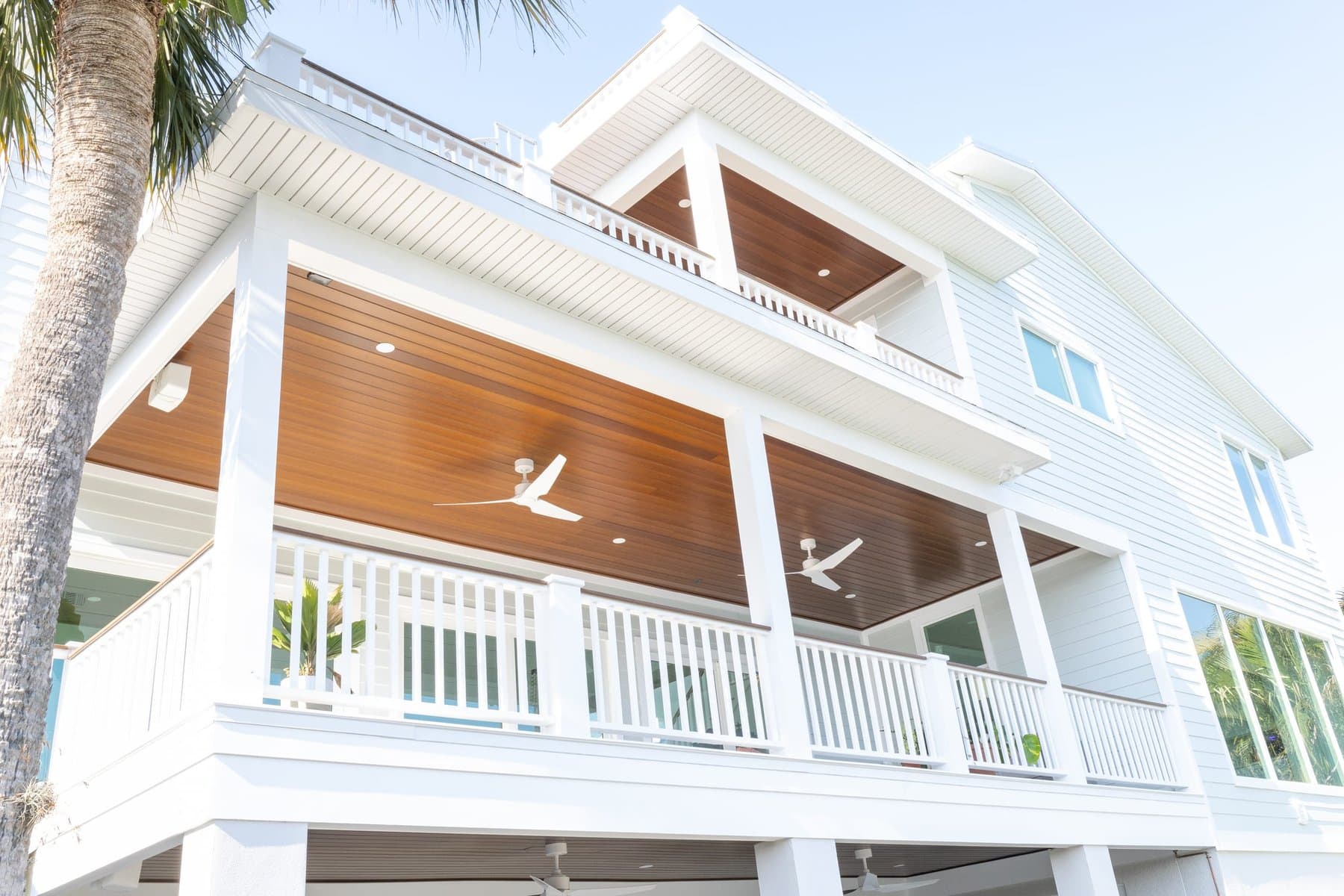
If your last Pinellas permit was pulled in 2020 and you're planning another remodel now, you're not stepping across one code cycle, you're stepping across two. The Florida Building Code ran through the 8th Edition (2023) and lands at the 9th Edition on December 31, 2026, and five categories carry real cost impact for Pinellas work: wind loads, flood loads, fenestration, energy code, and coastal fasteners.
Below is a chapter-by-chapter comparison table, then the plain-English explanation of what each change actually costs or saves on a Pinellas project. If your remodel is in a flood zone, run the numbers against the FEMA 50% Rule calculator before you plan scope.
We're Revolution Contractors, a St. Petersburg licensed general contractor (both Revolution Contractors LLC licenses, CRC1331628 and CGC1522463). Code cycles are the kind of thing that quietly changes your scope and your budget. The side-by-side below is how we walk clients through what the 9th Edition means for a Pinellas job compared to what they built under the 7th.
The Two-Edition Jump (Why 2020 to 2026 Is More Than One Cycle)
The Florida Building Code updates on a three-year cycle. The 7th Edition took effect in 2020, the 8th Edition took effect December 31, 2023, and the 9th Edition takes effect December 31, 2026. If your last permit was pulled under the 7th Edition and your next permit lands in 2027, you're stepping across two full editions, not one. That matters because some changes accumulated across both cycles.
A few examples of accumulated change:
- Wind design references moved from ASCE 7-16 (in the 7th Edition) through ASCE 7-16 amendments (in the 8th) to ASCE 7-22 (in the 9th).
- Flood design references moved from ASCE 24-14 (in both the 7th and 8th) to ASCE 24-24 (in the 9th). One big jump, but it lands in the 9th Edition.
- Energy code moved from IECC 2018 baseline (7th Ed) through IECC 2021 (8th Ed) to IECC 2024 (9th Ed). Each step tightened envelope and mechanical efficiency requirements.
So the comparison below is 7th Edition to 9th Edition, the practical delta for anyone whose last project was permitted in 2020, 2021, 2022, or early 2023.
Side-by-Side Comparison Table
| Category | 7th Edition (2020) | 9th Edition (2026) | What it means for Pinellas remodels |
|---|---|---|---|
| Effective date | December 31, 2020 | December 31, 2026 | Permits submitted after 12/31/2026 use 9th Ed. |
| Wind design standard | ASCE 7-16 | ASCE 7-22 | Design wind pressures recalculated; some changes to component and cladding loads. |
| Flood load standard | ASCE 24-14 | ASCE 24-24 | Tighter breakaway wall provisions in V zones; V-zone-equivalent treatment for Coastal A zones explicit. |
| Freeboard (Pinellas local) | BFE +1 | BFE +1 | No change locally. |
| Impact-rated fenestration | Required in WBDR | Required in WBDR + label-visibility rule | Windows/doors must have FL# label visible at final inspection. |
| Garage doors (WBDR) | Impact OR pressure with shutter | Impact AND pressure combined | Cheaper pressure-only doors with plywood cover no longer qualify. |
| Fastener corrosion (coastal) | Type 304 SS common | Type 316 SS or HDG 3.0 oz/ft² for 3,000-ft coastal zone | Costlier hardware in beachside remodels. |
| Elevator machinery (flood zones) | Elevation recommended | Elevation required above BFE or flood-resistant machinery | Coastal elevated homes with residential elevators face redesign. |
| Energy code baseline | IECC 2018 | IECC 2024 | Higher envelope R-values in some assemblies; heat pump water heater more common. |
| Egress (residential) | Emergency escape opening 5.7 sq ft min | Same 5.7 sq ft min | No change for typical bedrooms. |
WBDR = wind-borne debris region. Pinellas County is entirely within the WBDR.
Wind Loads: ASCE 7-16 to ASCE 7-22
ASCE 7 is the American Society of Civil Engineers standard for minimum design loads. The 7th Edition of the FBC referenced ASCE 7-16 (published 2017). The 9th Edition references ASCE 7-22 (published 2022). For a typical Pinellas single-family remodel, four practical differences show up:
- Basic wind speed maps got more granular. Design wind speeds in Pinellas didn't change much (Risk Category II ultimate design wind speed remains around 150 mph on the coast, tapering inland), but the mapping resolution improved. Sites near the shoreline may see slightly higher design wind speeds than they did under ASCE 7-16, particularly on the barrier islands.
- Component and cladding loads shifted. The tributary area calculations for windows, doors, roof edges, and wall corners were updated. Some assemblies see slightly lower design pressures; others see slightly higher. For most residential replacement windows this is a wash, but for large custom windows or curtain walls it can affect product selection.
- Roof pressure zones re-defined. Roof edge and corner zones got redefined with a new fourth zone. This affects fastener spacing for roof sheathing at eaves and corners on new roofs. On a re-roof triggered by remodel scope, expect closer fastener spacing at edges.
- Ground snow load unchanged for Florida. Florida remains a zero-snow-load state, but the standard added an “extreme heat” load category that doesn't affect residential.
If your remodel includes new roof structure, a new addition footprint, or replacement of large fenestration, ASCE 7-22 changes what your structural engineer or window supplier calculates. On smaller cosmetic remodels, the wind load change is largely invisible.
Flood Loads: ASCE 24-14 to ASCE 24-24
Covered in more depth in the effective date explainer, but the short version:
- ASCE 24-24 requires V-zone-equivalent design for Coastal A zones (also called LiMWA, Limit of Moderate Wave Action). Pinellas has extensive Coastal A zone mapping along the barrier islands and parts of Snell Isle and Shore Acres. Under the 7th Edition, this was interpretive. Under the 9th, it's explicit.
- Breakaway wall load path provisions tightened in V zones.
- Utility elevation requirements expanded: electrical panels, HVAC condensers, water heaters, and elevator machinery must be elevated to at least design flood elevation.
For a Pinellas homeowner in a Coastal A zone, the practical effect is that enclosed areas below elevated homes need V-zone-style design (breakaway walls, flood vents sized to V-zone requirements, no rigid utility connections). Your structural engineer's fee may go up modestly to account for the additional analysis.
Fenestration and Impact Ratings
Pinellas is in the wind-borne debris region under both editions. What changed:
- Label visibility. Under the 9th Edition, the Florida Product Approval (FL#) label on every impact-rated window, door, skylight, and garage door must be visible and legible at final inspection. Removing labels during trim work has started to cause failed inspections. Keep labels on.
- Garage door combined ratings. Under the 7th Edition, garage doors in the WBDR could meet either an impact rating or a pressure rating with an approved shutter. Under the 9th Edition, garage doors have to meet both impact and pressure ratings simultaneously. Cheaper pressure-only doors with plywood covers no longer qualify unless the plywood system itself is specifically approved for that door assembly.
- Skylight impact ratings. Skylights in the WBDR now require impact ratings whether or not shutter systems are proposed. Under the 7th Edition, skylights could sometimes be exempted with alternative protection plans. Under the 9th, impact rating is the default.
For a window schedule under the 9th Edition (which flood zone matters, impact-rated glass thresholds, WPI certification), see the window schedule guide for flood zone properties. If you're weighing insurance impact alongside code compliance, the MSFH vs Citizens breakdown shows how impact-rated glass earns wind mitigation credit.
Energy Code: IECC 2018 to IECC 2024 Baseline
The 7th Edition energy code (Chapter 13 of the FBC) was based on IECC 2018 with Florida amendments. The 9th Edition uses IECC 2024. Three areas matter for residential remodels:
- Envelope R-values. Some assemblies see slightly higher minimum R-values. Attic insulation minimum in Climate Zone 2A (Pinellas) moved from R-38 to R-49 as part of the IECC 2021 baseline that carried into IECC 2024. If you're re-insulating an attic under a remodel permit, expect the higher R-value.
- Water heater efficiency. Standard-efficiency electric resistance water heaters can still pass under the prescriptive path, but the performance path favors heat pump water heaters. For custom homes trying to hit performance targets, HPWH is becoming the practical default.
- Duct leakage. Total duct leakage tests tightened. The 7th Edition allowed 4 CFM per 100 sq ft of conditioned area; the 9th Edition requires 3 CFM per 100 sq ft (or lower depending on system location). Duct blaster tests at rough-in and final have become routine.
Most cosmetic remodels don't trigger a full energy code review, but additions, mechanical replacements, and roof re-decks with re-insulation do.
Hurricane Fasteners for Coastal Exposure
Chapter 22 of the FBC (Steel) and Chapter 20 (Aluminum) tightened corrosion requirements for coastal exposure. Under the 7th Edition, Type 304 stainless steel fasteners were common in the coastal zone. Under the 9th Edition, within 3,000 feet of saltwater, fasteners generally require:
- Type 316 stainless steel for structural connectors, or
- Hot-dip galvanized 3.0 oz/ft² zinc coating minimum, or
- Approved equivalent corrosion-resistance rating.
This affects hurricane straps, joist hangers, framing anchors, and the fasteners used to attach roof sheathing. Cost impact per project is modest (a few hundred dollars in hardware for a typical remodel) but adds up on new construction and additions where fastener count is high.
What Actually Costs More (And What Got Easier)
Costs more under the 9th Edition:
- Substantial improvements in flood zones (ASCE 24-24 tighter than ASCE 24-14).
- Custom garage doors in the WBDR (impact + pressure combined).
- Coastal fasteners within 3,000 feet of saltwater (Type 316 SS or HDG 3.0 oz/ft²).
- Residential elevators in flood zones (elevated machinery).
- Duct systems in unconditioned space (tighter leakage requirements + more testing).
Got easier or stayed the same:
- Cosmetic remodels not touching structural, flood, or energy scope: largely unaffected.
- Egress requirements: no meaningful change for typical bedroom windows.
- Freeboard in Pinellas: still BFE +1, no change.
- Wind mitigation program eligibility: unchanged, though individual credit criteria updated.
- Existing permits issued under the 7th or 8th Edition: remain valid through their full life.
The Takeaway
The play we see work in Pinellas: if your remodel scope includes a garage door replacement, a flood-zone structural element, or any coastal fastener work within 3,000 feet of saltwater, get the complete application in the door before November 15, 2026 to lock in 8th Edition review. If your scope is cosmetic (kitchen refresh, bath refresh, interior-only work), the edition transition is mostly invisible and the timing doesn't matter. If you want us to walk the house against the 9th Edition changes before you decide whether to rush a permit, call (727) 888-6161.
Frequently Asked Questions
Do I have to bring my 2020-permitted addition up to 9th Edition code?
No. Permits issued under the 7th Edition remain valid for their full life, and the constructed work is judged against the code in effect at time of issuance. Future modifications may trigger current-code review depending on scope.
Is Pinellas County stricter than the base Florida Building Code?
Yes on flood freeboard (Pinellas enforces BFE +1 while the state base is BFE). Otherwise Pinellas generally applies the state code without additional amendments. Individual Pinellas municipalities (St. Petersburg, Clearwater, beach cities) may have additional local rules. Check with the specific building department.
Does the 9th Edition change how the 50% Rule is calculated?
The 50% threshold and the value-and-cost calculation methodology don't change. What changes is the compliance standard triggered when a project exceeds 50%: the 9th Edition requires elevation and flood-resistant construction to ASCE 24-24, which is tighter than the ASCE 24-14 standard referenced in the 7th and 8th Editions.
Will my ASCE 7-16-designed structural drawings still work if my permit lands in 2027?
No. Plans submitted under the 9th Edition must reference ASCE 7-22 for wind loads and ASCE 24-24 for flood loads. Existing structural drawings would need to be re-analyzed and re-stamped by a Florida-licensed engineer.
How does the energy code change affect a kitchen remodel that doesn't touch HVAC?
Minimally. If you're not adding conditioned area, not replacing HVAC equipment, and not exposing exterior wall or attic insulation, the energy code changes are mostly invisible. If your kitchen remodel opens a wall and exposes the sheathing, insulation may need to be upgraded to current R-value.
Where can I check which edition my project falls under?
The rule is straightforward: complete application received before December 31, 2026 = 8th Edition review; complete application received on or after December 31, 2026 = 9th Edition review. Your building department intake staff can confirm the code edition your application will be reviewed under.