How to Verify a Florida Contractor's License (DBPR Walkthrough for Homeowners)
This guide walks through the exact DBPR verification steps every Florida homeowner should run before signing a construction contract. Revolution's own license of record is CRC1331628 — you can verify it live on DBPR right now at the static verify URL.

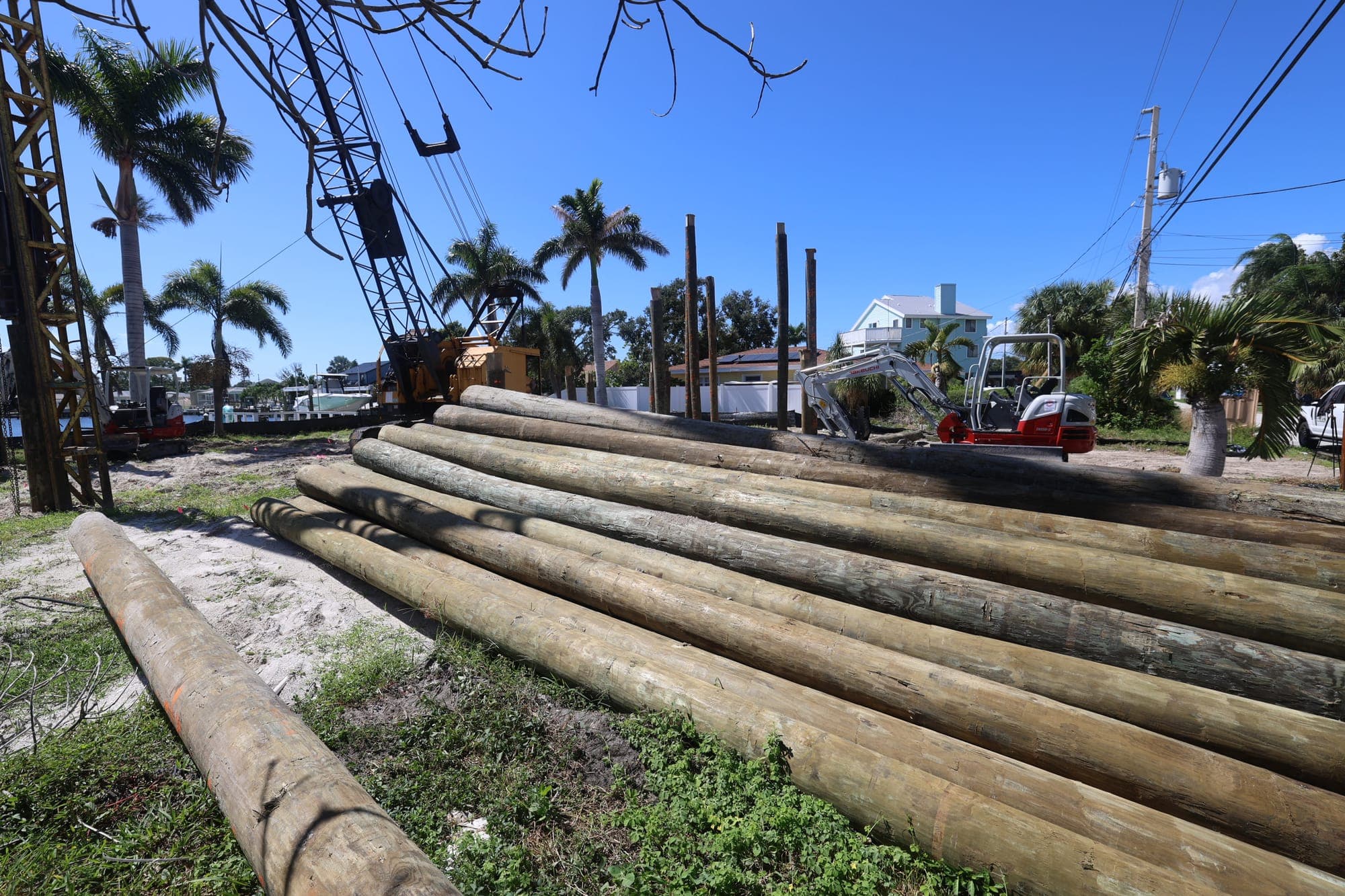
The Florida Department of Business and Professional Regulation (DBPR) maintains a free public search that lets any homeowner verify a contractor's license in under 15 minutes. Most homeowners skip this step. It is the single most valuable due-diligence action available before signing a construction contract, and it costs nothing. This guide walks through the entire process: what DBPR is, how to read a license record, what the license prefixes mean, what red flags look like, and why third-party directory platforms like Angi, Nextdoor, and Google Local Services Ads can lag the live DBPR record by weeks.
The Short Version
Go to myfloridalicense.com. Search the contractor by license number or licensee name. Confirm the license shows Current, Active, with an expiration date in the future and no unresolved discipline. Verify certified prefix (CGC, CRC, CBC) rather than registered-only (RG, RR, RB) if the project is regulated by permit. Cross-check insurance and workers' comp certificates. If any of those steps fails, do not sign the contract. Do the check yourself — do not rely on Angi, Nextdoor, or Google Local Services Ads badges, which cache older data.
In This Article
- What DBPR Is and Why Homeowners Must Verify
- Certified vs Registered — What's the Difference?
- Types of Florida Contractor Licenses (Plain English)
- Step-by-Step DBPR Portal Walkthrough
- Red Flags to Watch For
- What LSA, Angi, and Nextdoor Verification Miss
- Beyond DBPR — Verifying Insurance and Workers' Comp
- Revolution's License Transparency
- FAQ
Every year in Florida, thousands of homeowners sign construction contracts with contractors whose licenses are expired, delinquent, or in some cases entirely fabricated. The state's consumer-protection apparatus catches a fraction of the fraud after the fact, usually only after the homeowner has already paid money and the work has failed. The prevention is a 15-minute check that most homeowners never do.
This guide covers exactly what to check, in what order, and how to read what the state database is telling you. We work in a licensed industry, and we're transparent about it — Revolution's license of record is CRC1331628, active and canonical to the entity, verifiable at DBPR any day of the week. Everything below is what a licensed general contractor wishes every homeowner would do before the first meeting.
Revolution Contractors is a family-owned general contractor based in St. Pete since 2016. We run $20M+ of Pinellas County construction work with 20+ W-2 carpenters in-house on open-book Time and Materials (T&M) billing. Everything below reflects how we handle license transparency on our own projects and what we've learned coordinating with homeowners after they've been burned by contractors who couldn't pass a DBPR check.
What DBPR Is and Why Homeowners Must Verify
The Florida Department of Business and Professional Regulation (DBPR) is the state agency that licenses and regulates roughly 30 professional and business categories, including general contractors, residential contractors, building contractors, electrical contractors, plumbers, mechanical contractors, roofers, and specialty trades. Under Florida Statute Chapter 489, every contractor who performs work above the unlicensed handyman threshold ($500 total, no permits, no regulated trades) must hold an active DBPR license. The license is the state's certification that the contractor has passed the required trade examination, filed proof of financial responsibility, secured commercial general liability insurance, and (if employing workers) filed Florida workers' compensation coverage.
Verification matters because the license is the homeowner's legal and financial backstop. A licensed contractor is bound by state discipline rules, is required to carry insurance the homeowner can claim against, and is registered against a physical address the state can locate. An unlicensed contractor is none of those things. When the work goes wrong — and unlicensed work goes wrong disproportionately often — the homeowner discovers the recovery path was cut off before the first hammer struck the wall.
The DBPR public search is free and available 24/7 at myfloridalicense.com. No login, no fee, no waiting on a records request. Everything a homeowner needs to make a licensed-vs-unlicensed decision is one page-load away. And yet the majority of Florida homeowners either don't know the tool exists or trust a third-party badge (Angi, Nextdoor, Google) instead of the state record itself.
Why third-party badges are not enough
Directory platforms — Google Local Services Ads (LSA), Angi, Nextdoor Business, HomeAdvisor, Houzz, Yelp for Business — all display some version of a “license verified” badge. Every one of those badges is downstream of a cached snapshot of DBPR data, not the live DBPR record. Google LSA in particular has been observed to run against a DBPR snapshot that lags the live record by 10 to 15 days or more, and Angi has a comparable delay. During renewal cycles, the cached data will show a valid license as expired for weeks after the actual renewal cleared. During revocations, the reverse can happen: a revoked license may still show as verified on a directory platform for weeks after DBPR revoked it. Neither direction is safe to rely on for a signature-worthy decision. Go to DBPR yourself.
Certified vs Registered — What's the Difference?
Florida contractor licensing has two tiers, and the difference matters for anyone whose project touches more than one jurisdiction.
Certified contractors (state-level)
A certified contractor has passed the state-level Florida trade examination and holds a license issued directly by DBPR under Chapter 489. Certified licenses carry prefixes like CGC (Certified General Contractor), CRC (Certified Residential Contractor), CBC (Certified Building Contractor), CCC (Certified Roofing Contractor), CFC (Certified Plumbing Contractor), and CAC (Certified Air Conditioning Contractor). A certified contractor can legally work anywhere in Florida — every county, every municipality, every barrier island — without additional local registration.
Registered contractors (local-level)
A registered contractor has passed a local county or municipal exam and registered with DBPR to work only within the specific jurisdictions where they hold local approval. Registered licenses carry prefixes like RG (Registered General), RR (Registered Residential), and RB (Registered Building). A registered contractor's authority stops at the county line (or municipal line) where they're registered. If your project location is outside their registered jurisdiction, they legally cannot pull the permit or perform the work there.
Which one should a homeowner hire?
For most homeowners, a certified contractor is the safer default. The certified prefix confirms the contractor met the harder state-level examination and holds a license that travels with the project regardless of where it moves inside Florida. Registered contractors can be perfectly competent within their jurisdiction, but the jurisdictional boundary creates a landmine if your project scope grows or the site moves. Pinellas County is a good example — a homeowner in the City of St. Petersburg working with a registered contractor may find the contractor can't legally follow the project onto an adjacent unincorporated Pinellas parcel or a barrier-island annex site.
Types of Florida Contractor Licenses (Plain English)
Florida issues distinct license categories depending on the scope of construction work the contractor is authorized to perform. The prefix tells the homeowner what the contractor can legally build.
| Prefix | Category | Scope |
|---|---|---|
| CGC | Certified General Contractor | Unlimited — any construction scope, any height, commercial or residential |
| CRC | Certified Residential Contractor | One-to-three-family residential structures up to two stories |
| CBC | Certified Building Contractor | Commercial and residential up to three stories |
| CCC | Certified Roofing Contractor | Roofing systems only |
| CFC | Certified Plumbing Contractor | Plumbing installation and modification |
| CAC | Certified Air Conditioning | HVAC installation, service, and mechanical systems |
| EC | Electrical Contractor | Electrical installation and modification, all voltages |
| RG / RR / RB | Registered (local only) | Local jurisdiction only — not state-wide authority |
For a homeowner in Pinellas County planning a two-story residential remodel, a CRC or CGC is the correct authorization tier. For a full custom home over three stories or with commercial elements, a CGC is required. For a single-trade project (roof only, electrical only, plumbing only), the specialty license matches the trade.
Revolution's license of record is CRC1331628 — Certified Residential Contractor, active with DBPR, canonical to the entity. Every project we run is signed off under that license by our qualifier of record.
Step-by-Step DBPR Portal Walkthrough
The DBPR verify-a-license portal is straightforward, but the search behavior has quirks. Here's the exact sequence.
- Go to the DBPR verify portal. Direct URL: myfloridalicense.com/wl11.asp. This is the official public license search for every DBPR-licensed profession in Florida.
- Choose search type: License Number or Name. If the contractor already gave you a license number, that's the fastest search. If not, search by licensee name (the person). Note: the license is issued to a person (the qualifier), who then qualifies the business entity. The business name is not what DBPR searches on primarily.
- Read the license detail page. Click through to the specific license record. You should see: License Type (e.g., Certified Residential Contractor), License Number, Status, Effective Date, Expiration Date, Primary Address, Related License holders (if the qualifier holds multiple), and any active discipline actions.
- Confirm status shows Current, Active. This is the pass/fail question. Any status other than Current, Active warrants clarification before you sign a contract:
- Delinquent — renewal cycle passed without renewal filing. Not authorized to work.
- Expired — license lapsed and grace period passed. Not authorized to work.
- Null and Void — license terminated by state action. Not authorized.
- Revoked — license revoked for cause (discipline, fraud, etc.). Not authorized.
- Voluntary Relinquishment — contractor voluntarily surrendered the license. Not authorized.
- Check expiration date. Florida general contractor licenses renew every two years on an August 31 cycle. If expiration is within 90 days and the contractor hasn't started the renewal, ask when it will be filed. Late renewal creates a lapse period during which any work performed is technically unlicensed.
- Review discipline history. The license detail page lists any prior discipline actions, complaint filings, and citations. Some are administrative (missed continuing-ed hours). Others are substantive (defective workmanship, unlicensed sub-contracting, financial issues). Read what's posted.
- Cross-check bond and workers' comp. DBPR shows carrier information at the license detail level for both. Ask the contractor for a Certificate of Insurance (COI) listing you as certificate holder.
Red Flags to Watch For
Beyond the pass/fail on license status, DBPR and the associated public records surface several patterns that should trigger a second conversation before signing.
Red flag 1: The license number the contractor gave you doesn't appear on DBPR
This is the most serious red flag. Fabricated license numbers exist in the wild — contractors printing plausible-looking numbers on business cards, invoices, and directory listings without actually holding a license. If DBPR search returns no result on the exact number the contractor gave you, do not proceed. Ask for the licensee name (the qualifier person), and re-search by name. If that also returns nothing, the license does not exist.
Red flag 2: Business name on the contract doesn't match the qualifier's license entity
Every Florida contractor license is issued to a specific person (the qualifier), who then qualifies a business entity (the LLC or corporation). The business entity name on the DBPR record should match the entity on the contract you're about to sign. If the qualifier is licensed to Entity A but the contract is with Entity B, you have a mismatch worth resolving. Some legitimate structures involve multiple entities under common ownership, but the qualifier's license authority extends only to the entity they've formally qualified with DBPR. Work performed by an entity the qualifier hasn't formally qualified is technically unlicensed.
Red flag 3: Delinquent license the contractor claims was “just renewed”
DBPR's internal renewal processing does not lag — a paid, filed renewal shows up on the live database within a business day of DBPR posting the renewal. If DBPR shows Delinquent and the contractor claims the renewal cleared last week, one of two things is true: DBPR is right and the renewal didn't actually clear, or the renewal is in a pending queue that hasn't been processed. In either case, do not sign until the status shows Current, Active on the live record. Third-party directory platforms are a different story — their caches lag DBPR by weeks — but DBPR itself is authoritative and near-real-time.
Red flag 4: Active discipline actions or unresolved complaints
Some discipline is administrative and harmless in practice. Other discipline is substantive: prior workmanship citations, financial-responsibility failures, or evidence of unlicensed sub-contracting. Read what's on the record. Then cross-check the Florida Attorney General's consumer complaints database at myfloridalegal.com/consumer-protection and the Better Business Bureau at bbb.org for complaints that may not have escalated to DBPR discipline but tell you what customers have experienced.
Red flag 5: Contractor refuses to give you the license number
A licensed Florida contractor must include the license number on any contract, advertisement, or bid presented to a consumer. It's not optional. A contractor who cannot or will not produce a license number for you to verify has functionally answered the question. Do not proceed.
What LSA, Angi, and Nextdoor Verification Miss
Directory platforms attach a “verified” badge to their contractor listings, and homeowners often treat that badge as equivalent to the state record. It isn't. Every platform badge is downstream of a cached snapshot of DBPR data, with independent refresh schedules that lag the live record by different amounts.
Google Local Services Ads (LSA)
LSA runs its own contractor screening through a third-party background-check vendor, and the license portion of that screening pulls from a cached DBPR snapshot. In practice we've observed the LSA cache lagging the live DBPR record by 10 to 15 days or more — enough that a legitimately renewed license can show as Expired inside LSA's dashboard while DBPR itself shows Current, Active. During renewals this creates false alarms; during revocations it creates dangerous false positives.
Angi, HomeAdvisor, Nextdoor Business
These platforms operate similar screening flows with their own vendor relationships. They typically re-verify contractor credentials annually or when the contractor triggers a renewal in their internal system, not continuously against DBPR. This means a license that expired six months ago may still show “Verified” on the directory page. Conversely, a legitimately re-licensed contractor may have to wait weeks for the platform to update the badge.
The rule: always verify at DBPR direct
The homeowner's decision to sign a contract should be based on the live DBPR record, not on a directory badge. If DBPR shows Current, Active and the directory shows Expired, DBPR wins. If DBPR shows Revoked and the directory shows Verified, DBPR wins. The state record is authoritative; the directory record is marketing.
Beyond DBPR — Verifying Insurance and Workers' Comp
DBPR licensing confirms that the contractor has met the state's baseline credentialing. But the license itself doesn't guarantee that the contractor's insurance and workers' compensation coverage is currently active. Coverage lapses happen — missed premium payments, mid-year policy changes, changes in employment structure. Verify separately.
Commercial General Liability (CGL) insurance
Ask the contractor for a Certificate of Insurance (COI) naming you as certificate holder. The COI should show: policy number, carrier name, policy period (start and end dates), general aggregate limit, and per-occurrence limit. Typical minimums for a residential general contractor: $1M per occurrence, $2M aggregate. For larger residential projects (custom homes, elevated builds), $2M / $4M is more standard. The COI lets you contact the carrier directly to confirm coverage is active if any question arises.
Florida Workers' Compensation
Florida requires any contractor with at least one employee (including one W-2 carpenter) to carry active workers' compensation coverage. You can verify workers' comp separately at the Florida Division of Workers' Compensation portal: myfloridacfo.com/division/wc. A contractor using sub-contractors instead of W-2 employees still needs to ensure every sub carries their own workers' comp coverage or provides a valid exemption certificate. If workers' comp is missing and a worker is injured on your property, the homeowner's liability exposure can be substantial.
The W-2 vs 1099 distinction matters
A contractor whose crew is entirely W-2 (payroll employees) has one workers' comp policy that covers the whole team, one liability policy, and one point of accountability if anything goes wrong. A contractor whose crew is 1099 sub-contractors is coordinating a mesh of separate policies, separate licenses, and separate liability exposures — the homeowner ends up depending on whichever sub happened to be on-site when the incident occurred. Revolution keeps all our carpenters as W-2 employees on a single Florida workers' compensation policy specifically for this reason.
Revolution's License Transparency
We publish our license of record openly because there's no reason not to. Every homeowner who works with us can verify us at DBPR any day of the week without asking permission.
Revolution's license of record: CRC1331628 (Certified Residential Contractor).
Direct DBPR verify URL (bookmark this): myfloridalicense.com — CRC1331628 detail
This URL is a static-ID DBPR link that pulls the live license record every time it's clicked. Bookmark it. Cross-check us against it before signing a contract. The URL will remain valid across future renewal cycles.
How our license transparency plays into the work:
20+ W-2 carpenters in-house — one workers' comp policy covers the entire team. Every carpenter on-site at a Revolution project is on our payroll, covered by our commercial general liability policy, and covered by Florida workers' compensation. Not a paper contractor with a crew of 1099 subs and a mesh of separate liability exposures.
Family-owned in St. Pete since 2016 — same license, same qualifier, same team. The license of record has been continuously renewed since the entity was formed. No mid-cycle transfers, no qualifier changes, no reconstitutions of the business under a new name. Everything the state has on file traces back to the same operational entity that shows up on your site.
$20M+ of Pinellas flood-zone projects under CRC1331628. The license has been the license of record on every FEMA 50% Rule scope, every ICC-triggered compliance project, every LOMA-eligible property, every tear-down-vs-elevate-vs-deep-remodel decision we've run. When NFIP or the local floodplain administrator asks the license question, the answer is CRC1331628, active, canonical, and verifiable.
Time and Materials (T&M) open-book billing. Every line item on a Revolution project ties to a labor hour or a material invoice that's reviewable by the homeowner in real time. Weekly budget reports go out Friday during active construction. The license authorizes the work; the T&M billing lets the homeowner see the work as it happens.
If you're at the license-check stage in your contractor conversations, run the same DBPR check on us that you should be running on every other contractor you talk to. That's the point of the state database — it's available to every homeowner, and it's the same source of truth for every licensed general contractor in Florida.
Frequently Asked Questions
How do I know if my contractor's license is real?
Look it up yourself on the Florida Department of Business and Professional Regulation (DBPR) portal at myfloridalicense.com. Search by the contractor's name or license number. A legitimate Florida general contractor will have an active Certified General Contractor (CGC), Certified Residential Contractor (CRC), or Certified Building Contractor (CBC) license with a status of Current, Active. If the license number the contractor gave you doesn't appear on DBPR, or if it appears with a status of Delinquent, Expired, Null and Void, or Revoked, do not sign the contract. Also cross-check the license against the business name — a legitimate license is issued to a specific licensee (person) who then qualifies a business entity (the LLC or corporation). The DBPR page shows both.
What's the difference between a Certified and a Registered contractor?
Certified contractors are licensed by the state of Florida and can work anywhere in the state. Registered contractors are licensed only at the county or municipal level and can only work in the specific jurisdictions where they've registered. For any project that crosses jurisdictional lines — for example, a Pinellas homeowner hiring for a job in St. Petersburg city limits vs unincorporated Pinellas vs a barrier-island municipality — the safer path is a certified contractor, because a registered contractor's authority stops at the county line. Certified licenses carry prefixes like CGC (Certified General Contractor), CRC (Certified Residential Contractor), and CBC (Certified Building Contractor). Registered licenses carry prefixes like RG, RR, and RB.
Can I hire an unlicensed handyman for small jobs?
In Florida, the law draws the line based on scope and dollar amount, not just job size. Handyman-type work under $500 total (labor plus materials) that does not involve structural changes, roofing, electrical, plumbing, mechanical, or work that requires a permit can be performed without a contractor's license. Anything above $500, anything that requires a permit, or anything involving a regulated trade must be performed by a licensed contractor. Hiring an unlicensed contractor for permit-required work exposes the homeowner to major risk: no insurance backstop if the worker is injured on your property, no bond recovery if the work is defective, and potential permit rejection at inspection. If the job requires a permit, insist on a license.
What is Increased Cost of Compliance (ICC) and how does contractor licensing affect it?
Increased Cost of Compliance is a $30,000 flood-insurance benefit built into every NFIP flood policy that pays for the mandatory flood-code compliance upgrades triggered when a Pinellas property is declared substantially damaged or substantially improved. NFIP and the local building department both require the compliance work to be performed by a licensed general contractor whose credentials satisfy the local floodplain administrator. Hiring an unlicensed handyman or unqualified contractor for the compliance scope will invalidate the ICC claim. The full mechanics of ICC — trigger conditions, filing process, stacking with Elevate Florida — are covered in our ICC $30,000 flood-insurance guide.
What if my contractor's license was recently renewed but LSA or Angi shows it as expired?
Google's Local Services Ads (LSA) verification runs against a cached DBPR snapshot that can lag the live DBPR record by 10 to 15 days or more. Angi, Nextdoor, HomeAdvisor, and similar directory platforms have their own caching and re-verification schedules, most of which are slower than DBPR itself. The authoritative source is always DBPR direct at myfloridalicense.com — not the directory platform. If DBPR shows Current-Active and the directory shows Expired, DBPR is right. Ask the contractor for the direct DBPR verify URL, which stays static across renewal cycles and pulls the live record.
How often does Revolution verify its own team's licenses?
Revolution's license of record is CRC1331628 and is verified against DBPR by our internal operations team as part of monthly compliance review. Every project we run gets signed off under the license of record, and every carpenter on our payroll is a W-2 employee covered by our commercial general liability policy and Florida workers' compensation coverage — not a 1099 sub-contractor with their own separate license, insurance, and bond. Homeowners are welcome to verify our license at any time at DBPR directly, and we publish the direct verify URL on our site so there's never a step between you and the state record.
The Bottom Line
The DBPR verify-a-license portal is the single most useful due-diligence tool available to any Florida homeowner. It's free, it's open, and it takes 15 minutes to run through. Every contractor you invite to bid a project should give you a license number without hesitation, and every license number should verify Current, Active on the live DBPR record. If any part of that chain breaks — the number doesn't exist, the status shows Delinquent, the discipline history is loaded — take that as the state telling you what would otherwise take a year of hard experience to learn.
Trust the state record. Cross-check the insurance separately. Ignore the directory badges — not because they're dishonest, but because their refresh schedules are slower than the live DBPR record and they cannot substitute for the state's canonical source.
Revolution Contractors is a family-owned Florida CRC1331628 general contractor based in St. Pete since 2016. If you have a project you're scoping and you want to talk through the licensing side before you go further, flood-zone or otherwise, we'll walk through it with you. Schedule a consultation or call (727) 888-6161.
Getting bids in Pinellas? Verify us on DBPR first.
CRC1331628. Family-owned in St. Pete since 2016. 20+ W-2 carpenters in-house. Time and Materials open-book billing with weekly budget reports. Every project signed off under the license of record. Verify us live at DBPR before we ever meet.