Revolution Contractors in the Press
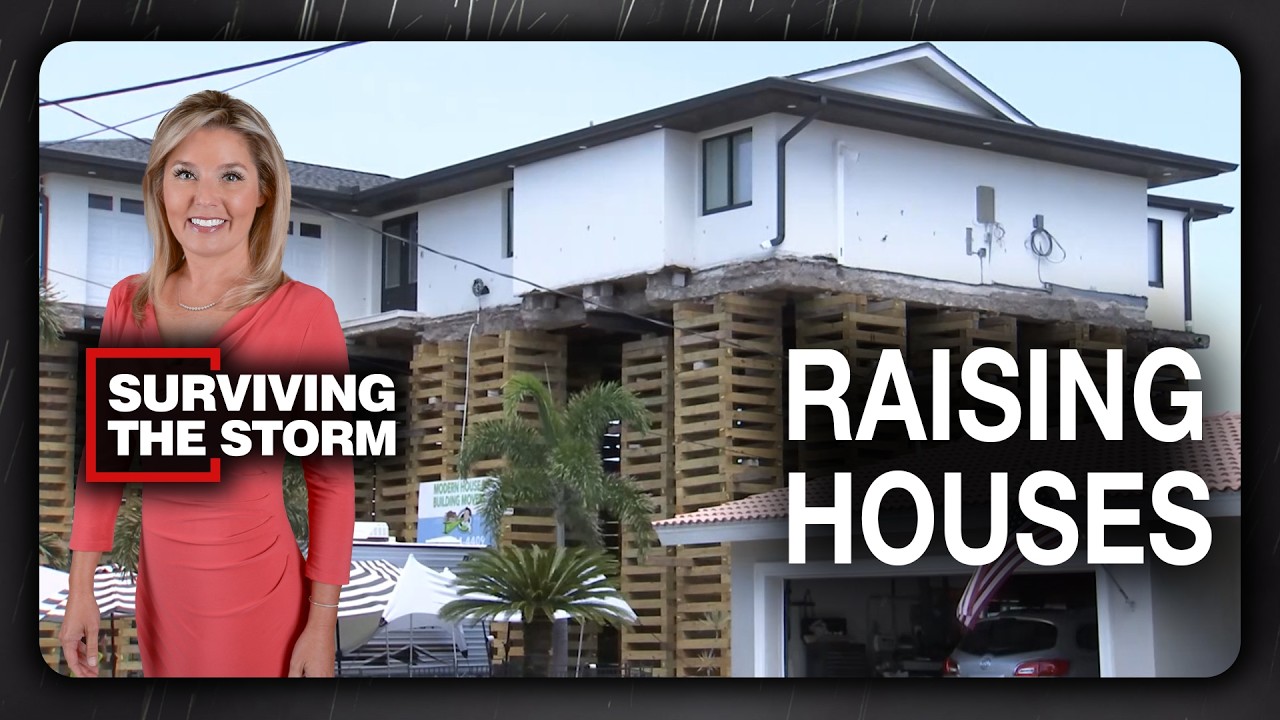
Co-principal Jeremy Patterson on WFLA News Channel 8’s “Surviving the Storm”: the engineering behind lifting a Pinellas home above base flood elevation.
Hurricane recovery in Pinellas County is not a sales pitch. It is work: driving steel beams under slabs, jacking homes two inches an hour, re-founding on helical pilings that reach 30 feet to firm soil. When WFLA News Channel 8 wanted to show Tampa Bay viewers how Pinellas homeowners survive the next storm, they called Jeremy Patterson. He went on camera and talked about the engineering the way you talk about it on a job site: honestly, with specifics, no softening.
The segment aired in June 2026 as part of WFLA’s “Surviving the Storm” series. WFLA attributed Patterson in the broadcast under Modern House and Building Movers, the deep-foundation entity Patterson runs. Modern House and Building Movers is the elevation discipline that backs Revolution Contractors’ coastal and flood-zone work. Patterson is co-principal of Revolution Contractors (CGC1522463, Certified General Contractor, Florida) and holds the deep-foundation discipline that lifts Pinellas homes above base flood elevation and keeps them standing when a bulkhead fails. The segment is embedded below, with the two quotes that mattered most.
WFLA News Channel 8, “Surviving the Storm” (June 14, 2026)
The 4-minute 24-second segment follows the engineering of a Pinellas home elevation project after a string of hurricanes (Eta, Helene, Milton) made the question of lifting a Pinellas home from theoretical to urgent. Reporters walked through the physical process: tunneling by hand under the slab, inserting steel beams, hydraulic jacks raising the structure two inches per hour, Jenga-block cribbing holding the house in place while helical pilings go in to tie the new footings to deep soil. The lift itself is fast. The reconnection of plumbing, electrical, and stair access is where the real time goes.
Then the camera cut to Jeremy Patterson for the engineering frame.
What Jeremy said about why the foundation matters
“We drive a deep foundation system, so if the bulkhead blew out and he lost 10 feet of soil, his house would still stand on our foundation system. [...] You could almost get $2 in return for the dollar you invest.”
The point: a home lifted on surface-level piers can be undermined when a storm scours out the soil around them. A home re-founded on driven piles or helical pilings is tied to firm soil 30 to 40 feet down. Scour at the surface does not reach the piles. Bulkhead failure does not reach the piles. The investment is in the piles, not the pier caps.
The dollar math he mentioned is a value frame homeowners rarely hear from contractors. Lifting a Pinellas home runs $350,000 to $650,000 for a standard lift and more for a complex waterfront project over 15 feet. Patterson’s point is that the resale value lift, the insurance premium reduction, and the storm-resilience make the cost math work for a homeowner planning to stay in the house. The two-to-one framing is not a sales number. It is how he explained the engineering to a reporter who wanted the honest answer on-camera.
What he said about the healing
“The healing process is when we start elevating, knowing you’re going to be safe for the next storm.”
This is the quieter quote and the harder one to replace. Pinellas homeowners who went through Helene and Milton did not just lose square footage. They lost the sense that staying in the home they picked was a decision they got to make. Lifting the house gives it back. Patterson has sat with enough homeowners through the first appraisal, the FEMA 50-percent-rule math, the “we might have to sell” conversation, and the eventual decision to stay and lift. The healing he is talking about is the point where the decision locks and the construction schedule starts.
Why Revolution was the GC WFLA called
Three things make Pinellas home-elevation a specific discipline rather than a general-contractor commodity: deep-foundation engineering (the bulkhead-failure answer above), municipal permit navigation across St. Petersburg, Treasure Island, Madeira Beach, and unincorporated Pinellas, and the integration of lift with everything that follows (utility re-connection, lower-level build-out, stair and landing additions, interior restoration). Patterson leads the deep-foundation side under his Modern House and Building Movers entity, and Revolution handles the full construction scope around it under CGC1522463 and CRC1331628 (Wharton residential license).
Revolution Contractors backs the elevation work with the same crew that handles the rest of the project: 20-plus W-2 carpenters in-house, open-book Time and Materials pricing, and a single superintendent running the project from permit to certificate of occupancy. The elevation is one phase. The rebuild around it is where the house becomes a home again.
What this means for a Pinellas homeowner considering a lift
If you are reading this because you saw the WFLA segment or because the FEMA 50-percent rule just landed on your property after storm damage, three things are worth knowing up front:
First, the engineering is settled. Deep foundations work. The question is not “can my house be lifted” but “how high does it need to go to meet current FEMA base flood elevation, and what is the permit path.” Patterson’s deep-foundation framing in the WFLA segment is the honest version of what a lift looks like done right.
Second, the timeline is longer than homeowners expect. The lift itself takes a weekend. The engineering, permitting, re-foundation, utility reconnection, and interior restoration take 12 to 18 months contract-to-completion. The WFLA segment homeowner started in early 2025 and expected to be back in the house by December 2026. That is a realistic timeline for a complex Pinellas lift.
Third, the insurance math is real but variable. A new elevation certificate at the post-lift base flood elevation reduces your flood insurance premium. In some cases, a Letter of Map Amendment removes the flood insurance requirement entirely. Revolution walks elevation clients through the three insurance-reduction mechanisms before the permit application goes in, because the math affects the lift height decision.
Related Revolution work
Revolution has one shipped home-lift case study and a growing coastal-flood project roster.
About Jeremy Patterson
Jeremy Patterson is co-principal of Revolution Contractors and holds CGC1522463 (Certified General Contractor, Florida) along with the Modern House and Building Movers deep-foundation discipline. He has driven piles for Pinellas elevation projects on Sunset Beach, Snell Isle, Shore Acres, Treasure Island, and across waterfront neighborhoods where storm surge is a design input, not an afterthought. He partners with co-principal Jeremy Wharton (CRC1331628, Certified Residential Contractor) on Revolution’s general-contracting side, which backs the elevation work with 20-plus W-2 carpenters, open-book Time and Materials pricing, and single-superintendent project management.
About Revolution Contractors
Revolution Contractors is a St. Petersburg general contractor serving Pinellas County. CGC1522463 (Patterson) and CRC1331628 (Wharton) licensed. Design-build hybrid model: Revolution coordinates construction and architect partnership under one contract, with independent architects you pick (not in-house salaried designers). Pinellas-only focus. Twenty-plus W-2 carpenters on payroll. Open-book pricing. Single superintendent per project. For press inquiries, interview requests, or future “Surviving the Storm” coverage, contact Revolution Contractors through the main contact form below.
Press, interviews, and homeowner inquiries
If you are a reporter working a Pinellas storm-recovery or home-elevation story, or a homeowner weighing a lift after storm damage, send us the lot, the question, or the pitch below.
SCHEDULE FREE CONSULTATION!
Ready to Start Your Project?
Get a free estimate within 24 hours