How a Custom Home Build Affects Your Pinellas County Property Tax Bill

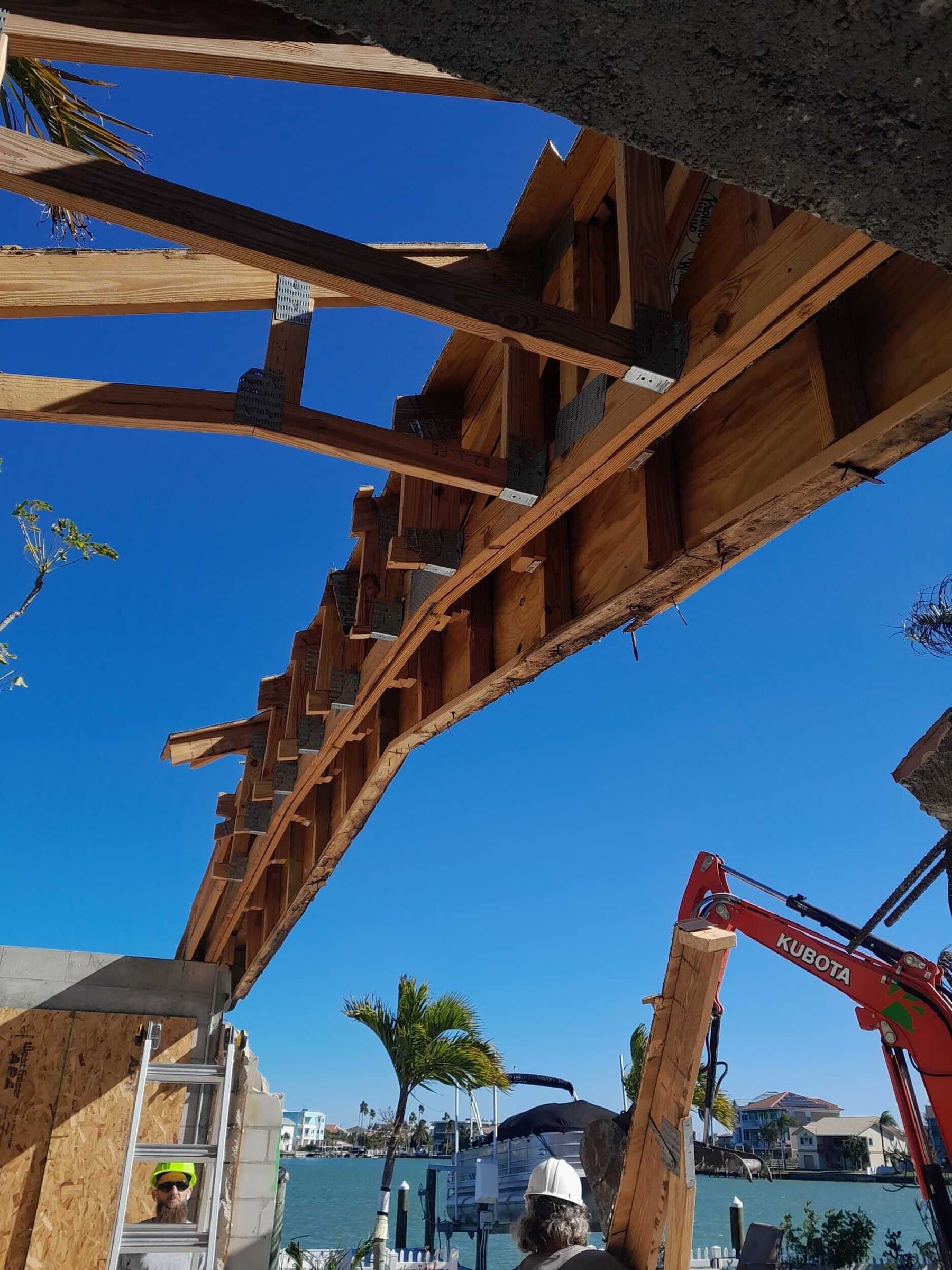
You are looking at a lot on Snell Isle. Or a 1950s block-and-frame ranch on Coffee Pot Bayou that you want to scrape and rebuild. Before you sign anything, one number is going to change: your property tax bill. Homestead exemption, the Save Our Homes 3% assessed-value cap, portability from your prior Florida home, these are the levers that decide whether your tax bill goes up 40% or 400% the year after your certificate of occupancy is issued. Revolution builds the house. Your Certified Public Accountant (CPA) and the Pinellas County Property Appraiser handle the tax math. But there are timing and sequencing choices during pre-construction that swing the outcome, and those decisions are where a general contractor (GC) who has done this before can save you real money.
The Question Your General Contractor Cannot Answer, But Should Point You Toward
Custom home clients ask Revolution about property tax more often than they ask about foundation depth. It makes sense: for a Coastal Visionary buyer who just sold a $2M home in New Jersey and is putting $1.5M into a Snell Isle new build, the property tax delta between year 1 and year 3 can move by tens of thousands of dollars depending on how homestead, Save Our Homes, and portability are handled.
We are not a tax firm. Nothing in this article is tax or legal advice. But we have watched enough custom home projects close over the last decade that the sequencing questions are predictable, and the county rules are public, and there is real money on the table if you understand the framework before you sign a lot contract.
What Save Our Homes Actually Does
The Save Our Homes cap is Florida Constitution Article VII, Section 4. Once a property has a homestead exemption filed, the assessed value can only rise by the lesser of 3% per year or the change in the Consumer Price Index (CPI). Market value can double; assessed value is capped.
The result on a long-held homestead is a large gap between market value and assessed value. A homeowner in Old Northeast who bought in 2009 might have a house worth $1.2M today but an assessed value of $450K. The tax bill is calculated on the assessed value plus the taxable value adjustments, not on market value. That gap is the accumulated Save Our Homes benefit.
New construction resets this. That is the mechanic every custom home buyer needs to understand.
What Happens on the Tax Roll When a Custom Home Hits the Property
The Pinellas County Property Appraiser assesses new construction at full market value on January 1 following the certificate of occupancy. If your certificate of occupancy is issued March 2027, your first full-value assessment lands January 1, 2028, and the tax bill for that assessment arrives in November 2028.
The prior Save Our Homes accumulated benefit on the demolished house, if there was one on the lot, does not transfer to the new structure automatically. The new house is treated as a new asset for assessment purposes. Your homestead exemption (up to $50,000 for owner-occupied primary residences under current Florida statute) can be reapplied, but the 3% cap resets and starts building again from the new assessed value baseline.
Translation: if you tear down a 1950s ranch that was assessed at $220K and build a $1.5M custom home, your January 1 assessed value likely lands closer to $1.4M. The tax bill jumps proportionally. This is not a surprise the county owes you, it is baked into the rules.
The Three Timing Patterns Revolution Clients Typically Face
Custom home buyers we work with usually fall into one of three patterns, and each has a distinct property tax trajectory.
Pattern 1: Vacant lot buyer + new construction. You bought a waterfront lot in Tierra Verde with no existing structure. The lot itself was already on the tax roll at land value. Your new home adds structure value on top. There is no prior homestead to reset, so no accumulated Save Our Homes benefit is being lost. Your first full-year tax bill after certificate of occupancy will be substantially higher than the lot-only bill you paid during construction. Plan the delta into your carrying cost model.
Pattern 2: Tear-down and rebuild on existing lot. You bought a 1960s block-and-frame home in Shore Acres, filed homestead the first year, and now you are ready to scrape and rebuild. This is where the reassessment hits hardest. The prior homestead cap benefit does not follow the new construction. Your first assessed value under the new home is full market value. Your CPA can help you understand whether the year of demolition triggers a partial reassessment on the interim vacant lot, rules vary and the Property Appraiser's office is the authoritative source.
Pattern 3: Existing Florida homeowner with portability. You are selling your current Florida homestead in Sarasota, moving to St. Petersburg, buying a lot, and building a custom home. Florida's portability provision (Florida Statute 193.155) lets you transfer a portion of your accumulated Save Our Homes benefit, up to $500,000, to the new homestead. The paperwork is Form DR-501T, filed with the Pinellas County Property Appraiser within two tax years of establishing the new homestead. This is the one pattern where careful sequencing can preserve meaningful tax savings, but the mechanics reward planning before you close on the lot.
When Your New Home Actually Shows Up on the Tax Roll
The trigger date is your certificate of occupancy. If we finish your project in October, the assessment shows up on the January 1 roll for the following tax year. If we finish in February, your first partial-year assessment may capture only the portion of the year the structure was substantially complete, again, Property Appraiser's office is authoritative.
The practical implication for scheduling: closing your custom home in late fall versus early spring can shift your first full-value tax year by a full cycle. On a $1.5M assessment in Pinellas County (2025 combined millage around 20 mills, or roughly 2% for planning purposes), that timing difference is worth tens of thousands of dollars in deferred tax carry.
We do not schedule around tax roll dates, weather, subcontractor sequencing, and code inspections drive the calendar. But if the finish window is naturally landing in Q4, it is worth asking your CPA whether a January closing is better than a November closing for your specific situation.
Portability: What a Returning Florida Homeowner Needs to Know
If you had a Florida homestead within the last three tax years, you likely qualify for portability. The Save Our Homes differential from your prior homestead, up to $500,000, can be transferred to your new homestead in Pinellas. This does not carry your full assessed value; it carries the difference between market and assessed value at the time you sold or abandoned the prior homestead.
Two mistakes we have seen relocators make:
- Waiting too long to file. The Form DR-501T window is limited. File promptly with the Pinellas County Property Appraiser after establishing the new homestead. Bring your prior homestead documentation.
- Assuming portability is automatic. It is not. You must apply. If you skip the filing, the county assesses your new custom home at full value with no ported benefit.
For the specifics that matter for your situation, talk to a Florida CPA and the Property Appraiser's office directly. Both have published guides. Our Coastal Visionary clients who handle this well typically start the paperwork before closing on the lot.
What Revolution Actually Does in the Sequence
We coordinate the design, permit, and build. We are not filing your homestead paperwork. But because we run a Time and Materials (T&M) open-book model, you see the substantially-complete milestone on our schedule as it approaches, which gives your CPA time to advise you on year-end timing. We flag the certificate of occupancy target date in advance so you can align with your tax planning.
The three sequencing conversations we recommend clients have during pre-construction:
- With your CPA: review portability eligibility, run the tax delta on your target build budget, and confirm the year of your first full-value assessment.
- With the Pinellas County Property Appraiser: confirm any interim assessment on the vacant lot during construction, and pre-file the homestead paperwork so nothing is delayed after certificate of occupancy.
- With Revolution: confirm the realistic certificate of occupancy target and any weather or permitting sensitivity that could push a Q4 close into Q1 of the following year.
Our licenses (CRC1331628 and CGC1522463) mean we can pull the permits and run the job. Your CPA runs the tax plan. The two conversations should happen in parallel, not in sequence.
Where This Fits in the Custom Home Decision Sequence
Property tax is one input into the total cost of ownership on a custom home build. Our cost guide covers per-square-foot budgeting. Our construction loan guide covers the financing side. Our design fees blog covers the architect and stamped-plan phase. This piece closes the fourth decision-stage question: what happens to your recurring tax exposure after we hand you the keys and the certificate of occupancy is signed.
If you are evaluating a Pinellas lot and want to walk through the sequencing with a general contractor who has watched twenty-plus of these close over the last decade, visit our custom home page or request a free 48-hour estimate. We will bring a Time and Materials open-book budget, and we will point you at the right CPA and Property Appraiser resources before you sign anything else.
Frequently Asked Questions
Will Building a Custom Home Reset My Save Our Homes Cap?
Yes. New construction resets to full market value on the January 1 following certificate of occupancy. Prior accumulated cap benefit on the demolished structure does not transfer. Portability from a different prior homestead can transfer up to $500,000 of differential to your new homestead.
How Much Will My Tax Bill Actually Increase?
Rough Pinellas County planning number: 2% of assessed value per year. On a $1.5M assessed home with $50K homestead exemption, the annual bill lands around $29,000. Your specific taxing district, city millage, and any special assessments change this, the Property Appraiser publishes the current millage table.
If I Sell My Prior Florida Homestead and Build a New One, Do I Lose Portability?
You typically have up to three tax years to establish the new homestead and file Form DR-501T. Confirm the current window with the Pinellas County Property Appraiser or your CPA, since the deadline has been legislatively adjusted before.
Does Revolution Help With the Property Tax Paperwork?
No. We provide the certificate of occupancy date, the address, and the assessed structure value on our final billing summary so your CPA and the Property Appraiser have what they need. The filings themselves are yours.
Ready to Start Your Project?
Get a free estimate within 24 hours