Custom Home Design Fees in St. Pete: What Architects Charge, Who Owns the Drawings, and How Your General Contractor Coordinates the Process

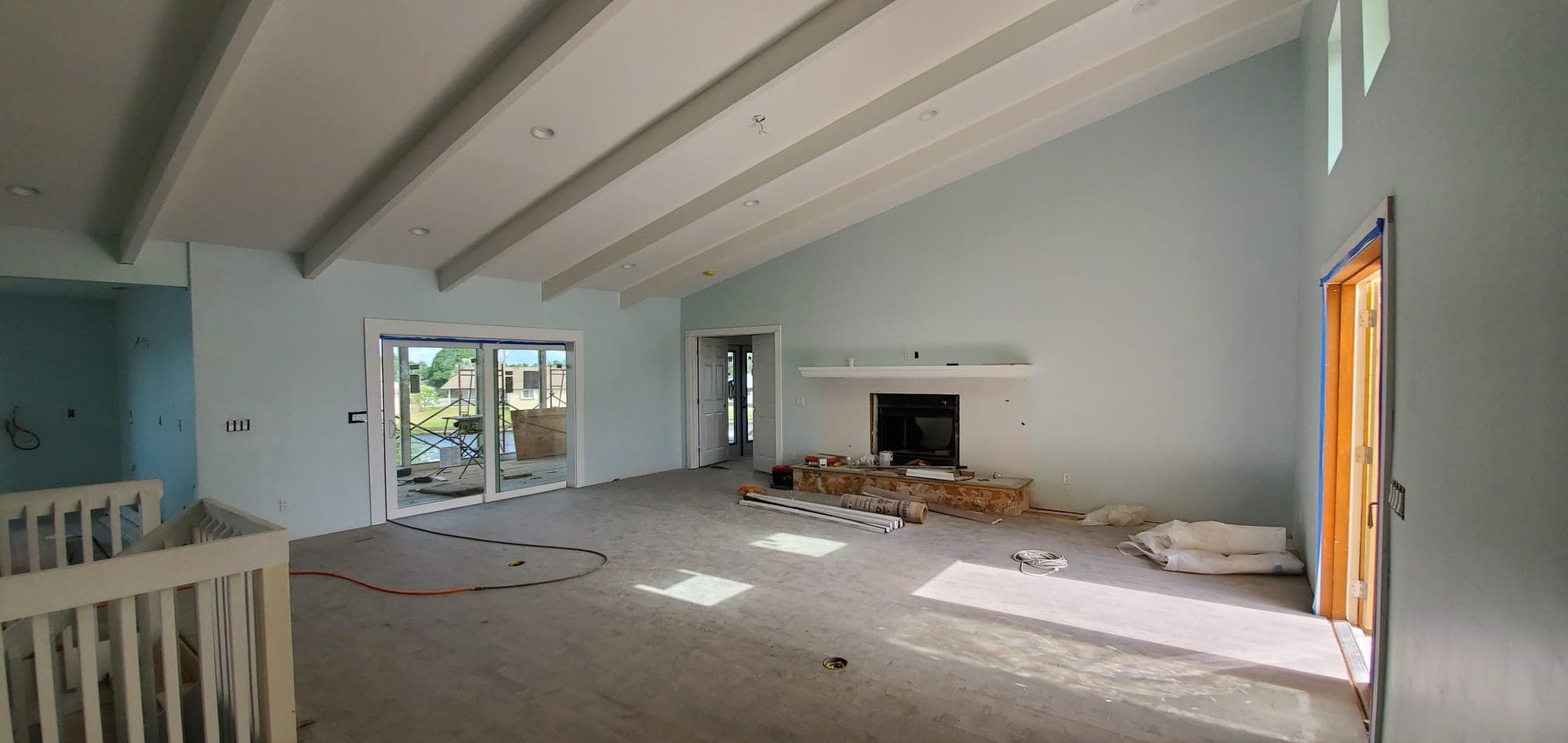
If you're researching a custom home build in St. Petersburg and you've started getting design quotes, you've probably noticed that design fees vary wildly. One architect quotes a flat fee of $35,000. Another quotes 12 percent of construction cost. A third quotes hourly with a not-to-exceed.
None of them is wrong. They're three different industry-standard models for charging design work, and which one fits your project depends on how much design is already done, how complex the structure is, and whether you need a designer too. This guide covers what design typically runs in Pinellas County, who owns the drawings, and how a general contractor coordinates the design process so what gets drawn matches what your budget can actually build.
What Design Fees Typically Include
A residential design fee on a custom home covers more than the drawings themselves. A full architect engagement usually includes the schematic design phase (early concepts and lot fit), design development (refining the schematic into buildable form), construction documents (the stamped permit set), bidding assistance (helping you evaluate contractor proposals if you're doing a hard bid), and construction administration (the architect's oversight visits during the actual build).
That last one — construction administration, often abbreviated CA — is the line item first-time buyers miss the most often. CA usually runs about 20 to 25 percent of the total design fee on its own, and it's the architect's billable time during the build, not the drawings. If you skip it to save money, you're on your own when a framing question or material substitution comes up during construction.
The Three Pricing Models
Percentage of construction cost. The architect quotes their fee as a percentage of the project's construction cost. The American Institute of Architects publishes guidance on typical residential percentages: around 8 to 15 percent for custom single-family work, with the higher end on complex coastal or historic projects that require more design iteration and engineering coordination. The pro is that the fee scales with project size. The con is that there's a built-in tension — the architect makes more money when the project gets more expensive.
Fixed lump sum. The architect quotes a stipulated sum after enough preliminary scoping to estimate their hours. This works well when the project scope is well-defined upfront (you have a clear floor plan vision, the lot is straightforward, you're not making major changes during design). It removes the cost-of-construction tension and lets you compare design quotes apples to apples.
Hourly with a not-to-exceed. The architect bills hourly against a cap. This works for smaller scopes or for clients who want to control exactly what they're paying for. Most experienced custom-home architects in Pinellas will tell you that hourly without a cap is risky for the client — design iteration cycles can blow through budget assumptions quickly.
There's no universally “best” model. The right one depends on how defined your project is when you sign.
What This Looks Like in Pinellas
For a custom home in St. Pete on a standard lot — say a $1.2 million construction cost on a 3,500-square-foot custom build — design fees will typically land between $96,000 and $180,000 across all phases, including construction administration.
A few Pinellas-specific factors push the design fee toward the higher end of that range:
- Coastal AE or VE flood zone lots require elevation certificates, FEMA freeboard calculations, and structural design that accounts for breakaway walls and pile foundations. That's more engineering coordination, which the architect bills.
- Old Northeast or other historic overlay lots require Certificate of Appropriateness review with the St. Petersburg Historic Preservation Commission. The architect typically handles that submission and the review board interaction, which adds billable hours.
- Multi-story or coastal custom builds with structural engineering for wind load (Florida Building Code wind zones) require a sealed structural set, which the architect coordinates with a licensed structural engineer.
Per Jeremy Wharton, Revolution's owner, getting a stamped set of plans for a custom new build should be assumed to take three to six months from kickoff. That's separate from the four to six months the project then spends in permitting with the St. Petersburg Building Department. For the full timeline picture, see Custom Home Build Timeline.
Who You Hire First — Architect or Builder?
There's no single right answer, but here's the trade-off.
Architect first, then builder (the traditional path). You engage an architect, develop full drawings, then put the drawings out to bid with multiple general contractors. The pro: you get competitive pricing on a defined scope. The con: the architect designs without ground-truth pricing, and bids often come back 20 to 40 percent over the budget you expected, which sends you back into redesign and burns more design fee.
Builder and architect together from day one (the integrated path). You engage a general contractor early — sometimes called pre-construction services or design-build coordination — and the GC sits in design conversations alongside the architect from the start, running budget takeoffs in parallel with the drawings. The pro: the design and the budget stay aligned as you go. The con: you're not putting the drawings out for hard bid at the end, so you need to trust the GC's pricing process upfront. For a deeper walk through delivery models, see Design-Build vs Design-Bid-Build vs Hybrid.
Revolution runs the integrated path. We don't keep architects on salary — we're not technically a design-build firm — but we pair clients with independent architects we've worked with for years, sit in design conversations from day one, and speak to budget throughout. Your designer's intellectual property stays with you, not locked into our firm. Per Jeremy: “we’re going to make sure they’re paired with that person. We don’t want to try and figure that out by ourselves.”
Who Owns the Drawings?
This is the question first-time custom-home buyers don't think to ask, and the answer matters if you ever want to make changes to the home, sell to a buyer who wants to renovate, or just keep a copy of your own design.
Under standard American Institute of Architects contract language, the architect retains copyright on the drawings as an instrument of service, but the owner gets a license to use them for the project they paid for. If you went with a true design-build firm that employs in-house architects, the firm typically owns the drawings outright. If you hired an independent architect — whether directly or through your general contractor — your license stays with you and is portable.
We've always preferred the second model. Your design IP belongs to you, not to the firm that built your house.
How Revolution Coordinates the Design Process
When a client comes to us for a custom home, our pre-construction phase typically runs one to three weeks of consultation and scope alignment, three to five weeks of narrowing costs and budget bracketing, then four to twelve weeks of conceptual and initial work with the architect. The budget runs in parallel the whole time. Our sales team works with the field team on takeoffs as the drawings sharpen, so when you see a design iteration come back from the architect, you also see what it does to the budget that same week. For the broader picture, see The Custom Home Building Process.
We use Time and Materials with open-book accounting on the construction contract. That means the design-phase allowances we set during pre-construction get replaced by actual line-item costs as selections firm up. You see every invoice that gets paid against the project — labor hours from our 20+ in-house W-2 carpenters, vendor invoices for materials, subcontractor invoices on electrical and plumbing and HVAC and roofing. The design fee structure is separate — that's a contract between you and the architect or designer, and we coordinate but don't mark it up.
Three Questions to Ask Before Signing Any Design Contract
- Which pricing model is the fee, and what's included? Percentage of construction, fixed sum, or hourly with a cap. And does the quoted number include construction administration, or is CA a separate line item?
- Who owns the drawings, and what's my license to use them? Are they portable if I change builders? Can I sell the house with the drawings later?
- How will the architect coordinate with my general contractor during the build? How many CA visits, who calls whom when a framing question comes up, and what happens if a design change is needed mid-build?
If your architect can't answer those three cleanly, that's a sign to keep interviewing.
Frequently Asked Questions
Do I need an architect for a custom home in Florida?
Florida requires a registered architect or licensed building designer to seal residential plans above certain thresholds. For most custom homes, you'll need a registered architect to prepare and stamp the permit set.
Can my general contractor draw the plans?
No. A general contractor cannot legally seal architectural plans in Florida. Your GC can advise on layout and budget during pre-construction, but the stamped drawings must come from a registered architect or licensed building designer.
What if I bring my own architect to Revolution — do you still want to be involved early?
Yes. We're happy to come in at whatever stage you're at. If you already have a relationship with an architect, we'll work alongside them. If you don't, we'll pair you with one of the independent design professionals we've worked with for years.
Do design fees get paid out of construction draws?
No. Design fees are a separate contract between you and the architect or designer, typically paid in tranches tied to design milestones (schematic complete, design development complete, construction documents complete, construction administration ongoing). Construction draws against your construction loan are separate and only cover construction costs.
Free 48-Hour Consultation
We'll review your lot, talk through the design path that fits your scope, and help you think through whether to engage an architect first, talk to a builder first, or run them together.
Related reading: Custom Home Cost Guide | The Custom Home Building Process | Custom Home Timeline | Design-Build vs Design-Bid-Build vs Hybrid | T&M vs Fixed Price Contracts
Jeremy Wharton is the founder of Revolution Contractors, a family-owned general contractor in St. Petersburg since 2016. Florida licensed CRC1331628 + CGC1522463.