Luxury Home Remodeling in St. Petersburg, FL

If you're thinking about putting $200,000 to $500,000 into your Snell Isle home — or your Old Northeast bungalow, or your Shore Acres waterfront — you have different questions than someone tiling a hall bathroom for $8,000. You want to know what you're actually buying, what the coastal and flood zone requirements mean for your budget, and whether the contractor you're talking to has done this before in your specific neighborhood.
This guide answers those questions directly. No fluff, no aspirational language about “transformative living spaces.” Just what high-end renovation in St. Pete actually looks like in 2026.
In This Article:
- What Separates Luxury Remodeling From Standard Work
- What Luxury Home Remodeling Costs in St. Petersburg
- St. Petersburg's Luxury Remodeling Neighborhoods
- FEMA and Coastal Building Codes
- Historic Homes: Old Northeast and the COA Process
- Why W-2 Carpenters on Payroll Matter
- The T&M Model
- What to Look for in a Luxury Remodeling Contractor
What Separates Luxury Remodeling From Standard Work
The word “luxury” gets overused. Here's what it actually means for a project in St. Petersburg.
Materials Are the Obvious Difference — But Not the Biggest One
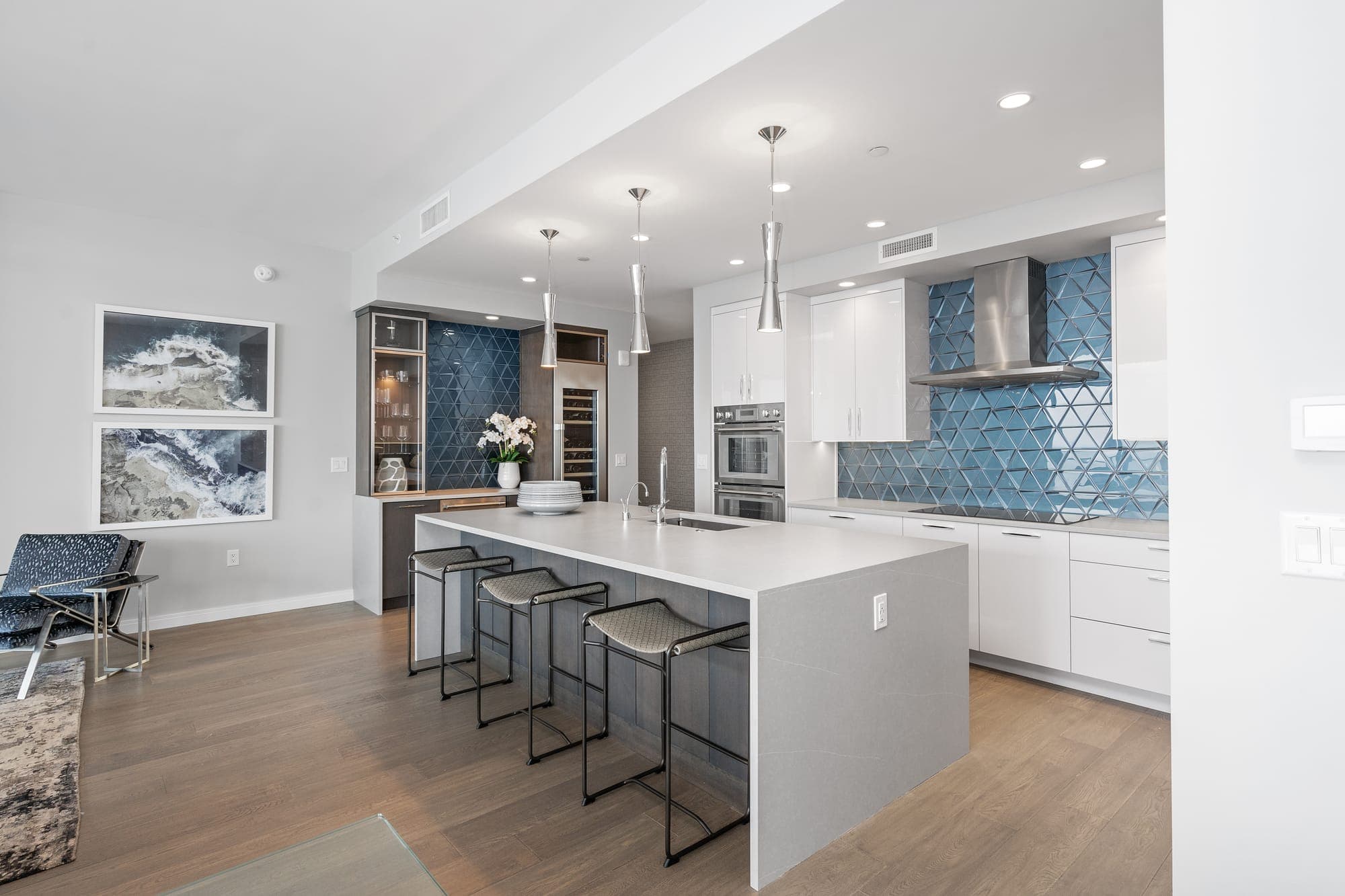
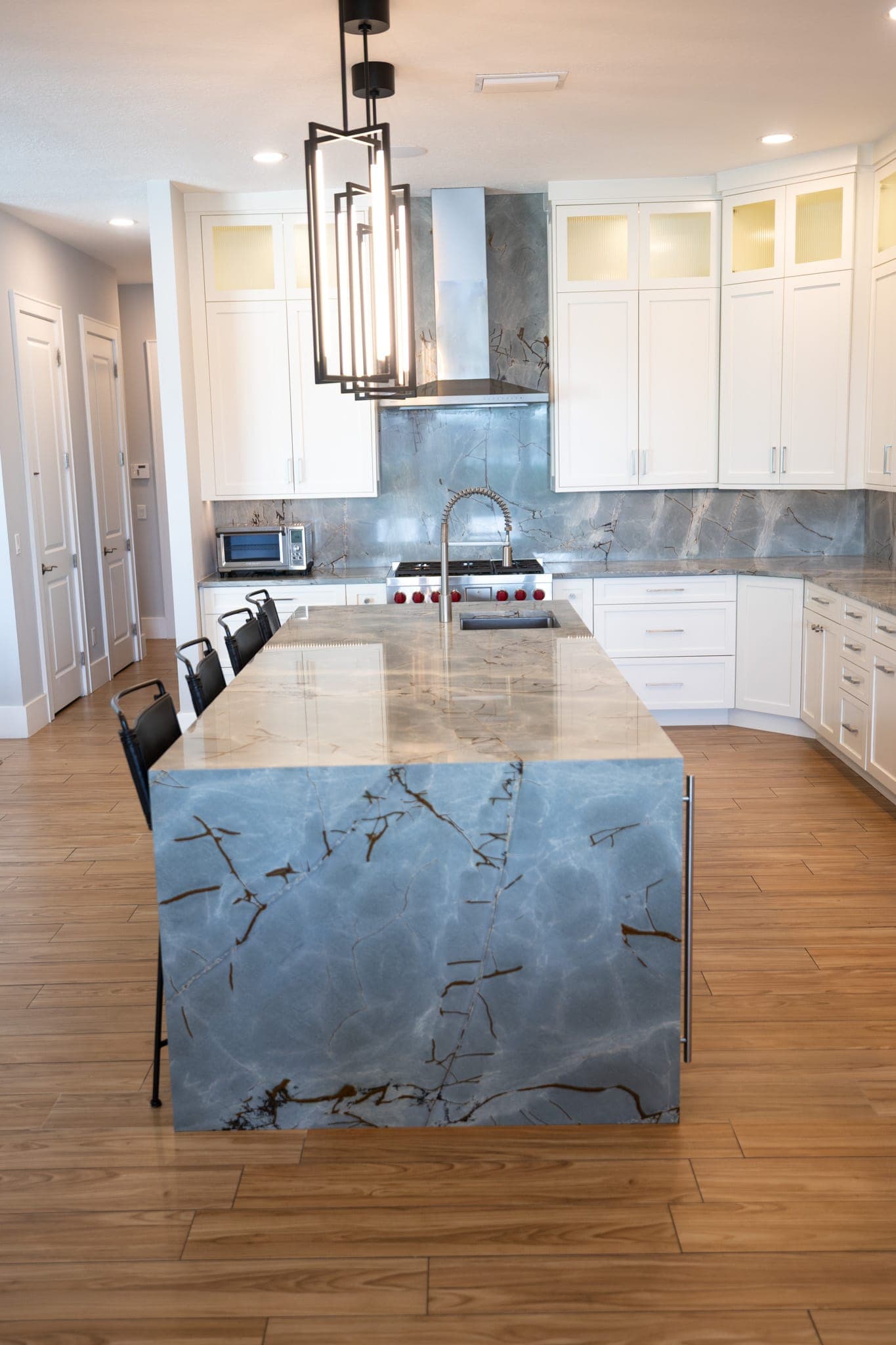
A luxury kitchen uses custom cabinetry built to your exact dimensions (not stock or semi-custom pulled from a catalog), natural stone counters cut from a single slab rather than prefab sections, and appliances in the Sub-Zero, Wolf, and Miele tier. For a coastal home, you're adding Type 316 stainless steel hardware and fasteners — standard 304 stainless degrades faster in salt air environments. None of this is exotic. It's just more expensive and it takes longer to source.
Project Management
A standard remodel often starts with demo before anyone's finished making decisions. A high-end project runs 4–8 weeks of pre-construction design before a single wall comes down: 3D renderings produced, a full material selection schedule locked, custom cabinet lead times (8–12 weeks) and specialty tile (4–6 weeks) ordered and confirmed before permits are even pulled. That sequencing is what prevents mid-project panics.
Labor
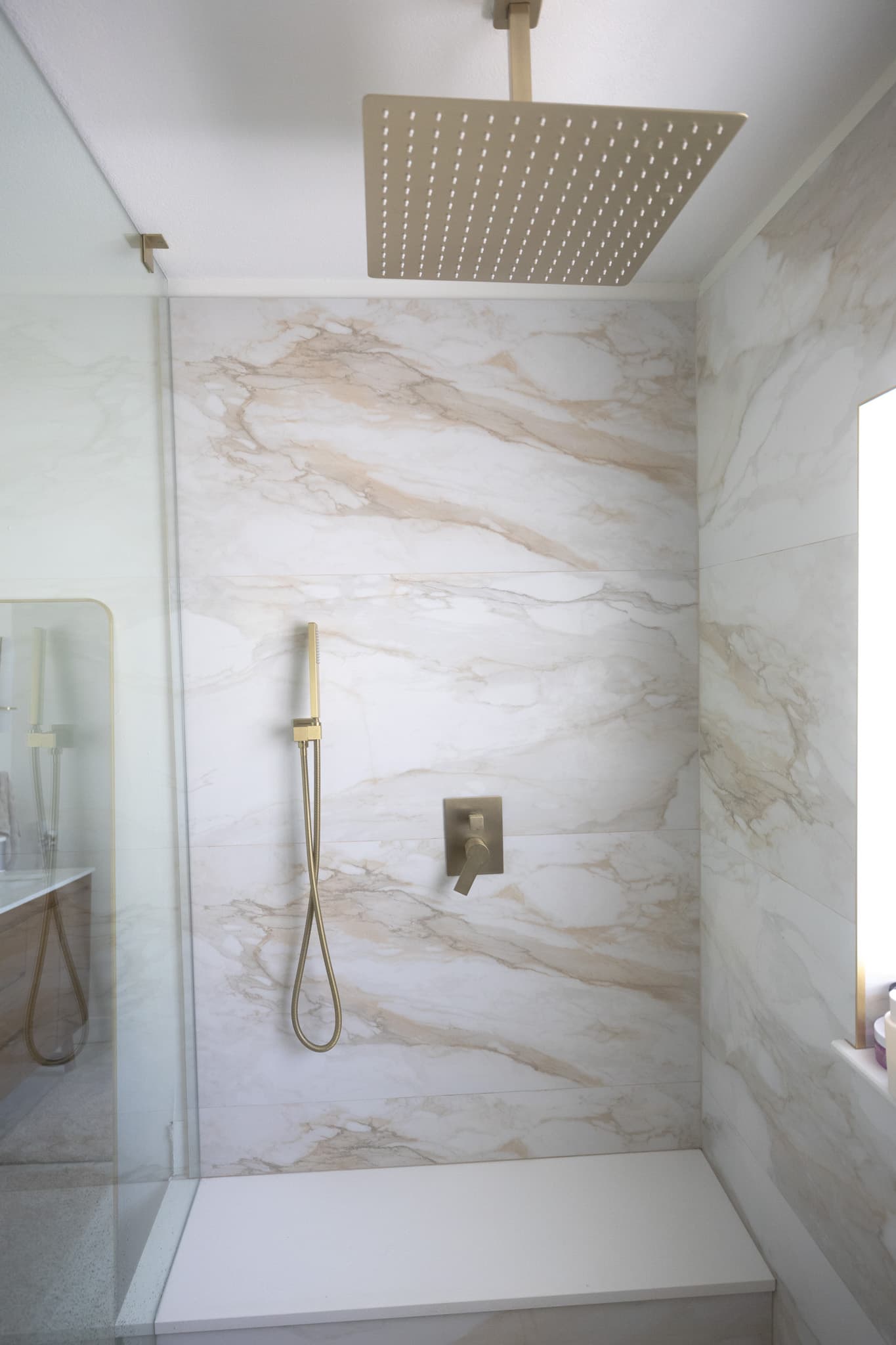
Custom work — book-matched tile, bespoke millwork, complex trim profiles on a 1920s Mediterranean Revival — requires carpenters who've done it before and who stay on your job from day one to punch list. Revolution has 20+ W-2 carpenters on payroll. They work on Revolution jobs. When a sub-dependent contractor has a scheduling conflict, your project gets punted while the sub takes a better-paying job elsewhere. Our crew doesn't have other clients.
Communication
On a luxury project, you get weekly budget reports. Not “we'll call you when something changes.” Every week you see where your money has gone and where it's headed. That's the standard, not an upgrade.
What Luxury Home Remodeling Costs in St. Petersburg
The St. Pete market average for all remodeling projects (per aggregated data from 1,292 local projects) is around $38,000. Luxury work starts where that average ends.
| Project Type | Typical Range | Notes |
|---|---|---|
| Luxury kitchen remodel | $100,000–$200,000+ | Custom cabinets, stone, professional appliances |
| Luxury primary bathroom | $60,000–$150,000+ | Full gut, custom tile, heated floors, designer fixtures |
| Luxury whole-home remodel (2,500 sqft) | $250,000–$600,000+ | Depends heavily on scope and finishes tier |
| Luxury whole-home + addition | $400,000–$900,000+ | Addition triggers FEMA compliance in many flood zones |
These ranges reflect the St. Pete coastal market. They'll land higher than national benchmarks for two reasons.
The coastal premium. Hurricane-resistant impact windows and doors, HVAC systems rated for salt-air environments, marine-grade hardware, and moisture-resistant substrates add 18–22% to project costs versus inland Florida construction. That premium isn't optional in Pinellas County — it's what the building code requires for renovation work, and it's what makes your finishes last.
FEMA flood zone compliance. In AE and VE flood zones (Shore Acres, Venetian Isles, Tierra Verde, parts of Snell Isle), a renovation that reaches 50% of your home's depreciated structure value triggers full flood compliance — potentially including elevation to Base Flood Elevation. On a $1.2 million waterfront home, the depreciated structure value may be $400,000–$500,000. A $200,000 kitchen and primary bath renovation is approaching that threshold. The compliance work itself can add $20,000–$50,000 to your budget.
Why T&M makes sense for a project this size. A fixed-price bid on a $300,000 renovation in a 1920s Snell Isle home requires opening walls. Nobody knows what's behind them until demo day. A fixed-bid contractor has to price that uncertainty into the contract — typically a 15–25% contingency — so you pay for their risk whether surprises show up or not. With Time & Materials, you pay for what the job actually costs, marked up at our disclosed rate. You get weekly invoices and weekly budget reviews, not a lump-sum shock at the end.
St. Petersburg's Luxury Remodeling Neighborhoods
Different neighborhoods require different expertise. Here's what you're dealing with depending on where you live.
Snell Isle
Developed in the 1920s by C. Perry Snell, this is St. Pete's original high-end island neighborhood. Mediterranean Revival architecture, canal-front and bay-front lots, and home prices regularly running $1M–$5M+ for waterfront.
Renovation constraints here are real. Many original 2-bedroom homes have been remodeled and expanded as the neighborhood's value has climbed — but the combination of AE flood zone status on canal-front parcels, Mediterranean Revival architectural character worth preserving, and outdoor living expectations (covered lanais, outdoor kitchens, dock access) means you need a contractor who has worked in exactly this environment.
For outdoor kitchens on Snell Isle specifically: marine-grade 316L stainless steel cabinetry, UV-rated countertops, and sealed storage are non-negotiable. A proper outdoor living component here runs $15,000–$40,000 as a project component, and it'll last if you spec it correctly.
Old Northeast
St. Pete's first established neighborhood, with homes dating from the early 1900s through the 1930s. Mediterranean Revival, Craftsman Bungalow, and Colonial Revival are the dominant styles. Original features — heart pine floors, plaster walls, double-hung wood windows, deep front porches — are part of what you're paying for when you buy here.
When you renovate in Old Northeast, the interior is yours to modernize freely. The exterior is another conversation. The Certificate of Appropriateness (COA) is required for exterior alterations to contributing structures in the historic district. We've navigated dozens of historic-district approvals without an outright rejection. The process isn't a wall; it's a design conversation. But it adds 30–45 days to your permit phase.
On the construction side, what's behind your plaster walls is unknown until you open them: knob-and-tube wiring, cast-iron plumbing, and galley kitchen configurations with limited structural options are standard discoveries. Your luxury renovation budget should assume surprises. Your contractor should know how to price them accurately week by week — not after a change order lands on your desk. For a deeper look at what's involved, see our guide to remodeling in Old Northeast.
Shore Acres and Venetian Isles
Both neighborhoods carry AE flood zone designations, and the 2024 hurricane season made the elevation question urgent for a lot of homeowners here. If you're choosing to stay and invest — whether in a remodel, an elevation project, or both — you need a contractor who understands the FEMA 50% calculation and can help you navigate the decision before you commit to a scope.
Tierra Verde and St. Pete Beach
Barrier island location means VE and AE flood zones both apply. Building code requirements for renovation work here are more stringent than mainland St. Pete. Vacation home conversions to primary residences — a common renovation type in this market — often require full system upgrades (electrical, plumbing, HVAC, impact glazing) that push projects well into the $200,000+ range. Our Pinellas County flood zone guide covers the full landscape.
Ready to Talk Through Your Project?
If you're planning a high-end renovation in St. Petersburg, contact Revolution Contractors to talk through your scope and neighborhood. Call us at (727) 888-6161.
FEMA and Coastal Building Codes: What Luxury Remodel Clients Need to Know
This section is the one most competitors skip. It's also where the most expensive surprises happen.
The 50% Rule, in Plain Language
If your proposed renovation reaches 50% of your home's depreciated structure value — not the market value, not the assessed value, the depreciated structure value as calculated by the building department — the entire home must be brought into full compliance with current floodplain management codes. That includes potential elevation to Base Flood Elevation (BFE) or higher.
Here's why this matters for luxury work specifically: the structure value of a high-value home in a flood zone is often much lower than the purchase price. Land values in Snell Isle and Shore Acres are substantial. A $1.5M home might carry a depreciated structure value of $400,000. Your $200,000 kitchen renovation is approaching that 50% threshold. Trigger it and you're looking at a much larger project than you planned.
The Phased Renovation Strategy
A well-sequenced luxury renovation can be planned across deliberate phases, each staying below the 50% threshold. Some Pinellas jurisdictions track cumulative costs over a 10-year lookback period. This is not a loophole — it requires careful documentation and a contractor who understands how the calculation works.
Impact Windows and Doors: Code, Not Optional
Pinellas County requires impact-rated glazing for new window and door installations on renovation and addition work. This isn't a premium upgrade you choose — it's the building code. Budget accordingly.
Coastal HVAC
Standard HVAC condenser coils degrade in salt-air environments. Coastal-rated equipment (aluminum microchannel coils) lasts 2–3 times longer. For a $300,000 renovation that includes HVAC replacement, the spec matters for total-cost-of-ownership, not just day-one cost.
Historic Homes: Old Northeast and the COA Process
The Certificate of Appropriateness is the single administrative step most Old Northeast homeowners don't know about until they're three months into planning.
What COA covers:
- Exterior alterations to contributing structures visible from the street
- Window replacements, siding changes, porch modifications
- Roofline changes, additions that alter the exterior footprint
- Any new construction on contributing lots
What COA does NOT cover:
- Interior renovations — your kitchen, bathrooms, mechanical systems, flooring, millwork
- You can gut and modernize the interior of a 1920s Craftsman Bungalow completely without COA review
In our work in the district, we've navigated dozens of COA applications without an outright rejection. The process isn't designed to stop renovation — it's designed to maintain the architectural character of the neighborhood. A well-designed addition that references the original structure's proportions and materials will pass.
The practical implication for your project schedule: add 30–45 days to the permit phase for COA applications. Your contractor needs to work with your architect or designer to prepare the application package — drawings, materials specifications, photographic context.
What “luxury renovation” means in a 1920s ONE home versus a 1990s suburban home is genuinely different. Your carpenters need to know how to work with original heart pine floors (refinish, not replace), match existing plaster profiles for new millwork, and integrate modern mechanical systems into historic wall cavities without destroying original character. For more on this work, see our historic renovation page.
Why W-2 Carpenters on Revolution's Payroll Matter for Work at This Level
Many general contractors — including some who market themselves as luxury firms — operate as paper contractors. They manage subcontractors. They coordinate. The people doing the work are whoever's available from their sub network that week.
For standard remodeling, that model works. For a $400,000 whole-home renovation with custom millwork, book-matched marble installations, and bespoke cabinet fits that require carpenter judgment and craftsmanship developed over years — the sub model introduces risk.
Revolution's carpenters are W-2 employees. All 20+ of them work on Revolution projects only. The same carpenters who start your project finish it. They know the foreman's standards. They're not pulled off your job because another client offered better margin that week.
On a project involving custom tile work, the installation time is roughly 3x standard tile. The math requires a carpenter who's done it before, who isn't learning on your dime, and who will be there every day.
The T&M Model: Why It's the Right Contract for Complex Work
Fixed-price bids on complex luxury projects are, by nature, padded. The contractor doesn't know what's behind your plaster walls. So they estimate high and build in a contingency. You pay for their uncertainty whether the surprises materialize or not.
Time & Materials means you pay for what the project actually costs — actual hours, actual materials — marked up at a disclosed, agreed-upon rate. Every week you receive a budget report showing exactly where your money has gone and a forecast for where it's headed.
What this looks like in practice:
- Week 1 demo reveals original cast-iron drain lines are failing. T&M: we show you the find, we agree on the fix, we add it to the week's report. Fixed-bid: you get a change order, and you wonder whether the contractor “discovered” this problem or already knew.
- Material prices shift mid-project. T&M: you see the actual invoice. Fixed-bid: the contractor keeps the margin if prices drop, passes costs if they rise.
- You change your mind about the master bath tile selection after seeing samples in your space. T&M: documented, agreed, adjusted on the next report. Fixed-bid: change order.
For a project in the $200,000–$500,000 range, weekly budget visibility isn't just reassuring — it's how you stay in control of a project that will take 6–12 months of your life.
What to Look for in a Luxury Remodeling Contractor in St. Petersburg
If you're interviewing contractors for a high-end renovation, these are the questions that separate the ones who've done this work from the ones who want to.
Ask about their labor model. Are their carpenters W-2 employees or subcontractors? If they hesitate on this question, they're a sub-dependent contractor. That's not disqualifying for all work — but it matters for yours.
Ask about their FEMA and flood zone experience. For any project near or above $150,000 in an AE or VE zone, your contractor should be able to walk you through the 50% substantial improvement calculation without looking it up. If they can't, you're their learning experience.
Ask about their permit history in your neighborhood. Have they pulled permits with the City of St. Petersburg building department? With the St. Petersburg Historic Preservation Commission? These are separate processes with separate timelines. A contractor who hasn't navigated both will cost you time.
Ask for St. Pete–specific references. Not Tampa. Not Clearwater. Homeowners in Snell Isle, Old Northeast, or Shore Acres who have completed a project with this contractor in the last three years.
Verify their license. Florida general contractors hold a CBC (Certified Building Contractor) or CGC (Certified General Contractor) license. Also verify they carry general liability and workers' compensation — ask for current certificates from their carrier.
Frequently Asked Questions
How much does a luxury home remodel cost in St. Petersburg?
High-end kitchen renovations in St. Pete typically run $100,000–$200,000+. Primary bathrooms run $60,000–$150,000+. Whole-home renovations on a 2,500 square-foot home run $250,000–$600,000+ depending on scope, materials, and coastal requirements. These ranges are higher than national benchmarks because Pinellas County's coastal building requirements — impact glazing, marine-grade materials, hurricane-resistant systems — add 18–22% to project costs versus inland construction.
How long does a high-end whole-home renovation take in St. Petersburg?
For a whole-home luxury renovation, plan for 8–18 months total: 4–8 weeks of pre-construction design and material procurement, 1–3 months for permitting (longer if a COA application is required for Old Northeast properties), and 6–12 months of construction depending on scope. Custom material lead times — cabinets at 8–12 weeks, specialty tile at 4–6 weeks — are built into the schedule before demo begins. Any contractor who quotes you a faster timeline without asking what's behind your walls is guessing.
What is the FEMA 50% rule and does it apply to my renovation?
If your proposed renovation reaches 50% of your home's depreciated structure value (calculated by the building department, based on structure only — not land), the entire home must be brought into full FEMA flood compliance. This can include elevation to Base Flood Elevation, which is a significant additional cost. This applies to properties in AE and VE flood zones — Shore Acres, Venetian Isles, Snell Isle canal fronts, and barrier island properties. If your home is in a flood zone, this calculation should happen before your design is finalized, not after you've picked your tile.
Can I renovate an Old Northeast home without the COA process?
Interior renovations — kitchens, bathrooms, flooring, mechanical systems, millwork — do not require a Certificate of Appropriateness. The COA process applies to exterior alterations on contributing structures: windows, siding, porch modifications, additions, and any exterior changes visible from the street. If your project is entirely interior, you're working through standard City of St. Petersburg building permits. If it includes exterior changes, add 30–45 days to your permit phase for COA review.
What's the difference between T&M and fixed-price contracts?
A fixed-price contract requires your contractor to estimate the full scope of your project before opening any walls. To cover unknown conditions, they build a contingency into the bid — typically 15–25% of project cost. You pay that contingency whether problems occur or not. Time & Materials means you pay for actual hours and actual materials at a disclosed markup rate. Every invoice is visible. Weekly budget reports show where you stand. For a luxury renovation in a pre-1950s St. Pete home, T&M gives you accurate cost data and eliminates the guessing game on both sides.
What makes a home remodel luxury versus standard quality?
Custom cabinets (built to dimension, not pulled from stock), natural stone slabs (not prefab sections), professional-grade appliances (Sub-Zero, Wolf, Miele tier), designer fixtures (Waterworks, Kohler Artifacts), and in a coastal environment, marine-grade materials specified for salt air. Beyond materials: a design-first process (4–8 weeks of pre-construction design before demo), dedicated project management with weekly owner meetings, and in-house craft labor with the experience to execute custom work.
Are there specific materials required for coastal St. Pete homes?
Yes. For hardware and fasteners within roughly one mile of salt water: Type 316 stainless steel, not standard 304 stainless. For exterior decking: teak, ipe, or composite materials rated for coastal environments. For windows and doors on any renovation or addition project: impact-rated glazing is required by Pinellas County building code — this is not optional. For outdoor kitchens: 316L stainless steel cabinetry and UV-rated countertops. For HVAC: coastal-rated condenser coils.
How do I know if my Snell Isle or Shore Acres property needs elevation compliance?
Start by getting your property's flood zone designation from the FEMA Flood Map Service Center or from the City of St. Petersburg's mapping tools. Then ask your contractor to walk you through the substantial improvement calculation for your proposed scope: what is the building department's assessed depreciated structure value for your property, and what percentage of that value does your renovation represent? If it's approaching or exceeding 50%, you need to know that before you sign a design contract.
What neighborhoods have the most complex remodeling requirements?
Old Northeast has the most regulatory layers: the COA exterior review process, plus the standard city permit process, plus the construction complexity of 1910s–1930s homes (plaster, knob-and-tube, cast iron, non-standard dimensions). Snell Isle, Shore Acres, Venetian Isles, and Tierra Verde have the most stringent flood zone and coastal construction requirements. Barrier island properties (Tierra Verde, St. Pete Beach) carry both VE and AE zones with the most restrictive code requirements in the county.
How do I get a sense of what my luxury remodel will actually cost?
The honest answer: you need a pre-construction phase before you can get reliable numbers. Any contractor who gives you a firm fixed price for a $300,000 renovation before opening a single wall in a 1920s home is padding heavily for uncertainty. What you should expect from a credible first conversation: an honest range based on project type and square footage, a clear explanation of what affects cost in your specific neighborhood (flood zone, historic district, coastal materials), and a transparent description of how their pricing model works. If you want to talk through your specific project, call (727) 888-6161 and we'll tell you what we see.
Ready to Talk Through Your Project?
If you're planning a high-end renovation in St. Petersburg — Snell Isle, Old Northeast, Shore Acres, Tierra Verde, or anywhere else in Pinellas County — we're happy to take a look and tell you what we see.
Revolution Contractors is a general contractor with integrated design partnerships, based in St. Pete. Our carpenters are W-2 employees. We've built in every flood zone in Pinellas. We run T&M with weekly budget reports and open-book pricing. You'll always know where your money's going.
Start a conversation | (727) 888-6161
For more on our approach to high-end home renovations, see our home remodeling service page. If your project involves flood zone compliance, our flood zone expertise page covers the FEMA landscape in detail. For historic homes, see our historic renovation page. For ground-up new builds in Pinellas, including elevated waterfront and historic-district infill, see our Custom Home Construction service.